
 雷科技





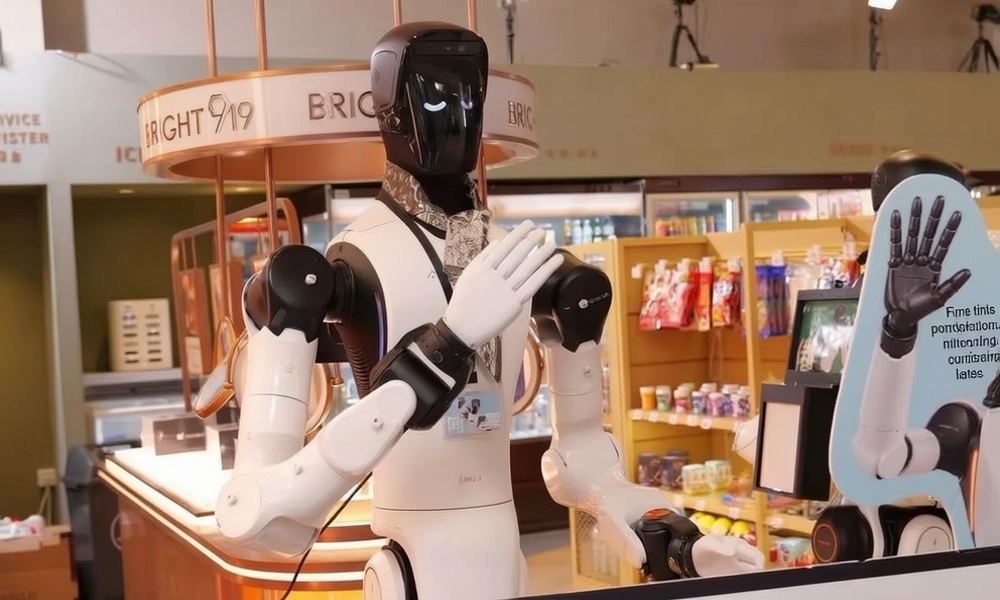

Since 2022, some convenience store brands have begun introducing intelligent robots into their daily store operations. However, handing over the entire store to robots was still a considerable challenge for the robotics industry at the time.
By 2026, things have finally started to change. On November 2, as the final stop of AGIBOT's AI WAVE campaign, AGIBOT deployed six robots at a fully operational convenience store in Shanghai, launching a 24-hour "Robot at Work Challenge." The challenge ended at 10:00 a.m. on November 3. Four of the six robots successfully completed the challenge and earned their positions as regular employees.
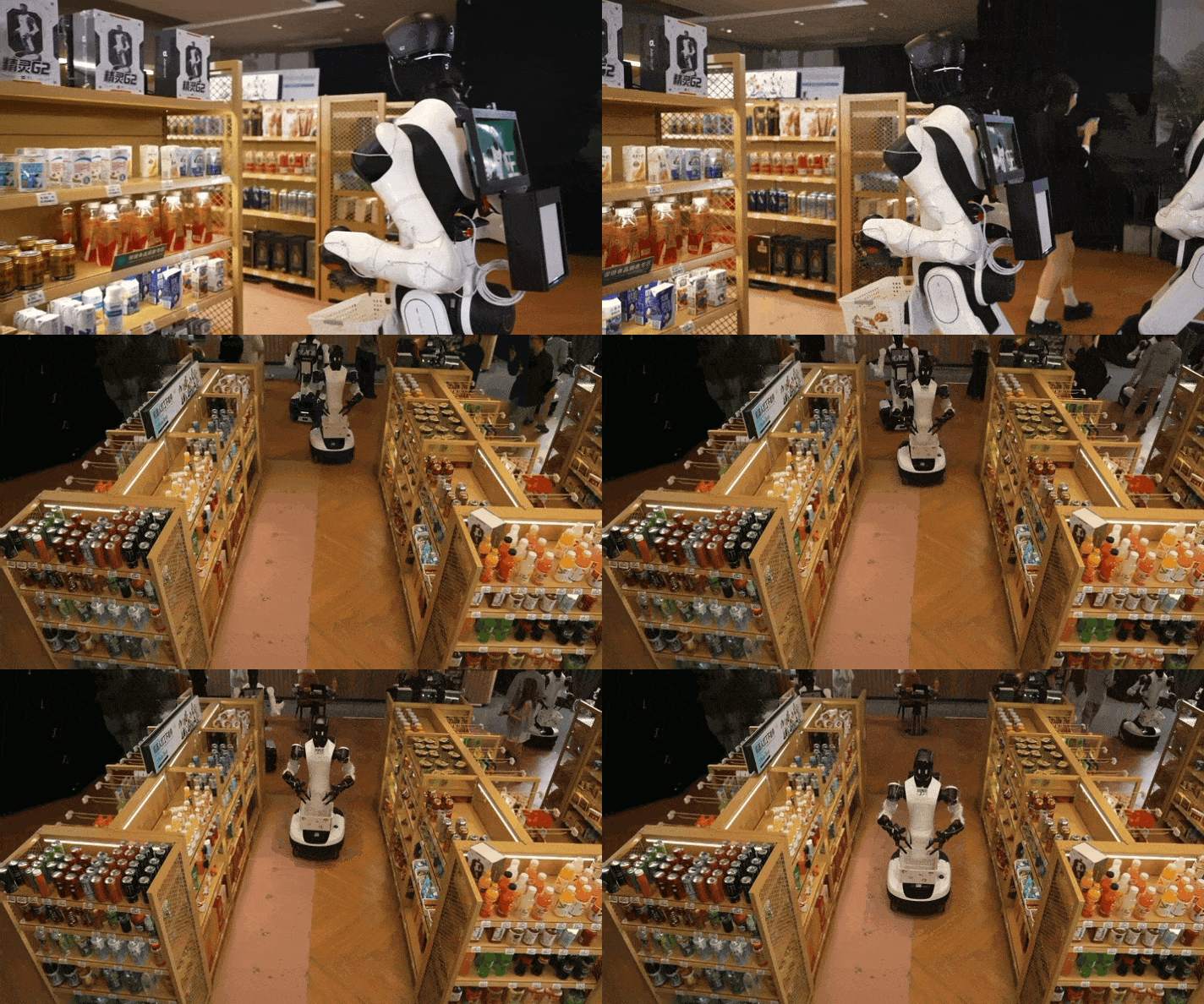
In the view of Leitech (ID: leikeji), this challenge offers a new perspective on addressing long-standing doubts about the practical value of embodied AI. For years, humanoid robots have often been criticized as products with more showmanship than practical value—essentially eye-catching machines suited for performing Tai Chi routines rather than doing real work. However, AGIBOT has now taken its robots directly into the frontline of the service industry, using the complex working environment of a convenience store to test the limits of embodied intelligence.
Although two robots failed to complete the challenge, the fact that four successfully passed under the watch of more than two million online viewers can still be regarded as an important milestone for the embodied AI industry in 2026.
Taking this opportunity, Leitech also spoke with Ren Guanghui, Vice President of AGIBOT's Embodied Intelligence Research Center, to gain further insights into the industry's development from a different perspective.
A Convenience Store Is Like the "College Entrance Examination" for Embodied AI Robots
When demonstrating their capabilities, embodied AI robots typically operate in environments such as industrial sorting facilities. AGIBOT's decision to use a convenience store as the stage for its challenge was therefore somewhat unexpected. When asked why the company chose a convenience store, Ren Guanghui, Vice President of AGIBOT's Embodied Intelligence Research Center, highlighted two key reasons:
"A convenience store is realistic enough, and challenging enough."
The first point is relatively easy to understand. Compared with meaningless demonstrations of physical movements or industrial environments that are relatively distant from ordinary consumers, convenience stores are familiar to almost everyone. Their operations also involve far more than simply selling products, making them an ideal environment for demonstrating a robot's diverse capabilities.
The second point, however, is more interesting. Convenience stores are inherently unpredictable environments. Customers move around the store, while product locations, orientations, and inventory conditions can change at any moment. As Ren Guanghui explained, "The robot must understand its surroundings while simultaneously adjusting its operations and task arrangements."
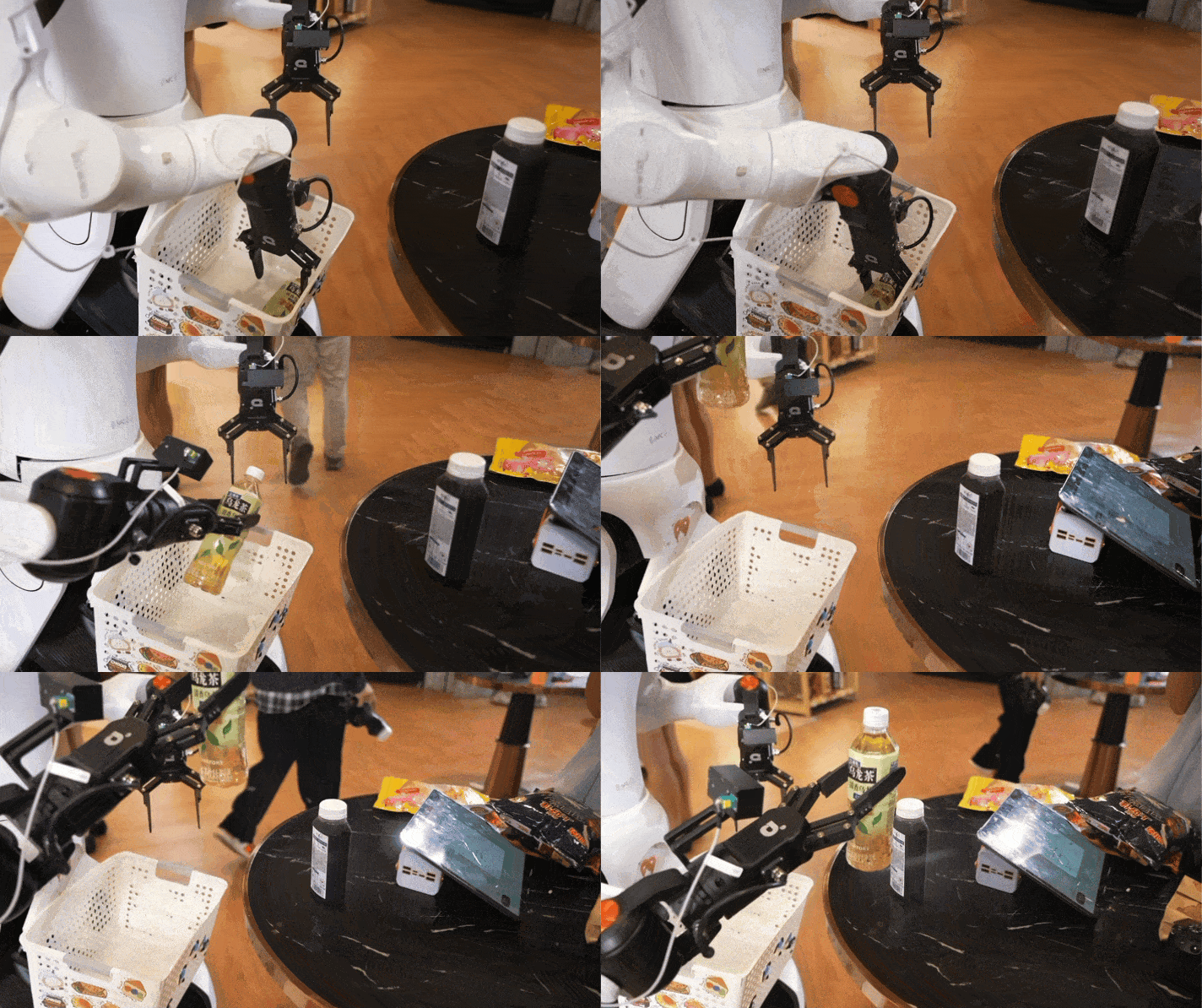
The robots' ability to perform under these uncertain conditions was one of the major highlights of the challenge. Ren Guanghui provided two examples:
When picking up food products, a robot must quickly determine the relative positions of its mechanical hand and the product, select the appropriate gripping force, and plan its movement path to avoid knocking over nearby items. In addition, robots must deal with interference from customers in the store. They need to maintain operational efficiency while ensuring that their actions do not create safety risks for customers. This comprehensive assessment of working capabilities is precisely what makes a convenience store such a suitable testing environment.
Making Mistakes Is Fine, as Long as Robots Learn from Them
During the livestream, viewers could also see moments when the robots made mistakes. Ren Guanghui acknowledged that the current limitations mainly involve handling flexible objects, performing complex physical interactions, and executing continuous multi-step operations. Compared with experienced human store employees, robots still have considerable room for improvement when it comes to adapting to changes in their surroundings and handling unexpected situations.
However, according to AGIBOT, the standard for determining whether these "new employees" are qualified is not whether they succeed every single time, but whether they can learn from their mistakes and correct them. During the interview, Ren Guanghui mentioned that the ordering system encountered several problems during the initial stages of the challenge, including failed orders, order statuses that failed to update, and conflicts between robot positions.
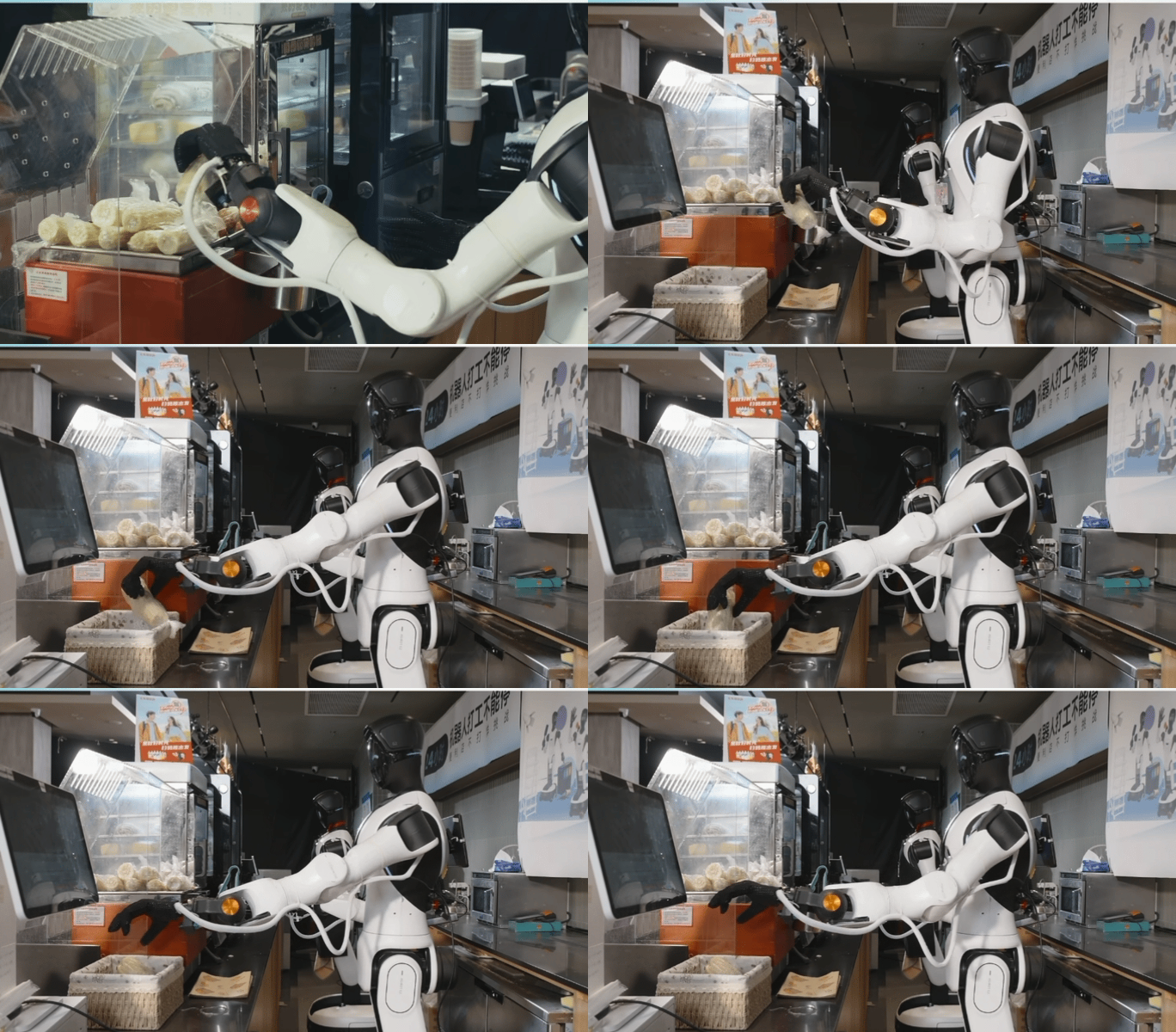
In response to the problems exposed during the challenge, AGIBOT introduced a two-step improvement approach:
For problems related to workflows and task orchestration, the team can review and adjust the system on the same day, with improvements implemented as early as the following day. For updates at the Policy RSI level, the frequency of improvements depends on data accumulation and training schedules. Nevertheless, a new iteration can still be completed within a few days. Ren Guanghui also noted that the success rate of individual tasks has now stabilized at a relatively high level, while errors can also be recovered from with guidance from the Agent.
Interestingly, when the store has no customers at night, the robots even practice tasks they struggled with during the day by returning to the shelves and repeating those operations. This training process is remarkably similar to how real convenience store employees are trained.
Becoming a Regular Employee Is Only the Beginning
Judging by the results, AGIBOT's robot employment challenge was clearly a success. However, AGIBOT emphasized that success at a single store represents only a small milestone in the company's broader efforts to bring embodied intelligence into real-world applications. In Leitech's view, AGIBOT's real ambition is to extend this approach of empowering traditional offline industries with embodied intelligence into a wider range of business sectors.
In terms of workload, the six robots were assigned six different positions and collectively completed 1,730 tasks, averaging more than 70 tasks per hour. This means that approximately one task was completed every minute. The complex daily operations of a convenience store also share many similarities with those found across other offline service industries.

The greater significance of this challenge lies in the fact that AGIBOT has established an evaluation framework that is much closer to real workplace requirements. Standardized products, clearly defined working areas, and easily verifiable task outcomes provide the first set of stable job opportunities for robots entering real business environments. Meanwhile, handling flexible objects, performing complex physical interactions, and executing continuous multi-step operations represent a clear list of capabilities that need to be developed in the next stage. By continuously exposing these problems in real commercial environments, AGIBOT can also identify specific areas for future improvements and iterations.
Bringing Successful Experiences to More Real-World Scenarios
According to AGIBOT, the next destination for AI WAVE is a wider range of real-world applications. Since the convenience store challenge marked the final stop of the campaign, AGIBOT is expected to bring its robot-operated store model to more retail locations. Through continuous learning and improvements, the company also aims to enhance the robots' overall capabilities and bring the concept of embodied intelligence into more industries.
It is also worth noting that two robots failed to complete the assessment during this challenge, yet AGIBOT chose to present the results openly. Under conventional industry practices, unsuccessful attempts like these would typically be edited out before publication. Being willing to acknowledge mistakes during a livestream suggests that AGIBOT has considerable confidence in its system. Unlike some brands that prefer to conceal their shortcomings, the company appears willing to let the public witness both its successes and failures.
There is little doubt that this real-world livestream demonstration will give AGIBOT greater confidence when promoting its embodied intelligence solutions. It may also help improve the industry's overall acceptance of humanoid robots in practical applications. Although we still do not know exactly when we will see a convenience store operated entirely by robots, AGIBOT's pioneering efforts have undoubtedly brought us one step closer to that reality.