
 雷科技





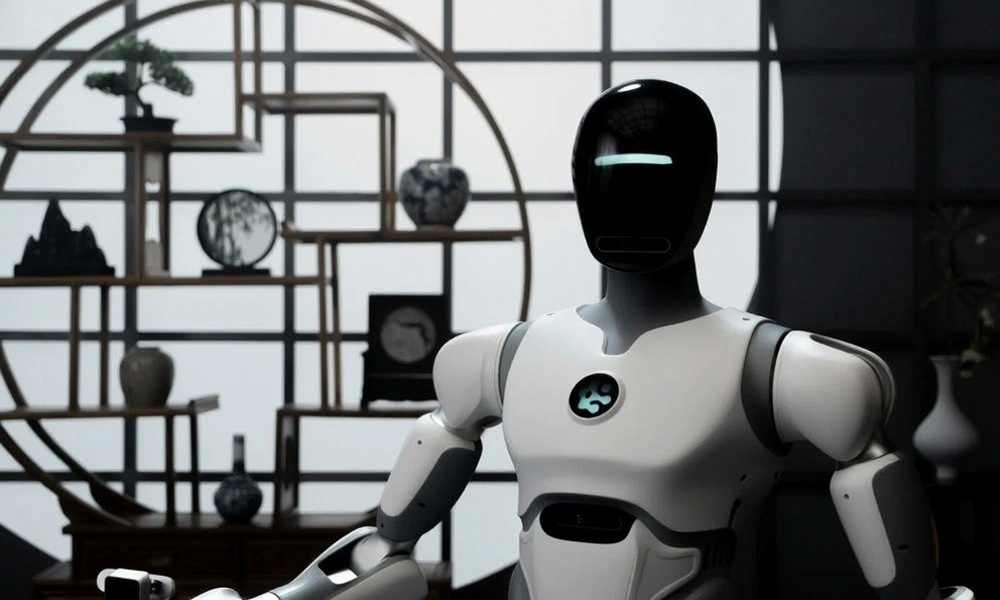

There’s a saying that the biggest difference between humans and robots is that humans can anticipate. Athletes and esports players, for example, often react physically before their opponent has finished making a move.
But this claim no longer holds true in 2026. Today, anticipation is no longer an absolute dividing line between humans and robots. Put simply, technology is endowing robots with this very capability. The difference is that human anticipation arises naturally from consciousness, experience and intuition, while robotic anticipation is a form of "computational prediction" built on data, models and computing power — in other words, what we call the robot’s "brain".
In recent months, there has been a flurry of news about giving robots the ability to "think one step ahead".
At the Beijing Zhiyuan Conference in mid-June, Zhipingfang unveiled NeuroVLA, the world’s first brain-inspired embodied intelligence system, which redesigns the robot’s brain to mirror the three-layer structure of the human brain: cortex, cerebellum and spinal cord.
Also in June, Qianxun Intelligent’s Spirit v1.6 claimed the top overall score in the RoboArena benchmark, surpassing NVIDIA’s Cosmos3 and Physical Intelligence’s π0.5 to become the first Chinese model to top the list.
After half a year of debate between VLA and world model approaches with no clear winner, brain-inspired architecture has suddenly emerged as the new buzzword. Just how intense has the competition in robotic brain technology become? Here’s Lei Technology’s analysis.
VLA and World Models Converge, Brain-Inspired Architectures Emerge
For the past two years and more, VLA has been the dominant narrative in embodied intelligence.
Short for Vision-Language-Action large model, VLA essentially enables robots to translate what they see and hear into physical actions. Google’s RT series, Physical Intelligence’s π0, Zhipingfang’s GOVLA, Zhiyuan’s GO-1 and Qianxun’s Spirit series all broadly follow this path.
VLA excels at semantic understanding: tell it to put an apple on the table into a basket, and it can plan a reasonable trajectory. But its shortcomings are equally clear: its understanding of the physical world relies heavily on experience learned from training data. When tasks grow more complex, execution takes longer, or the robot encounters objects and environments not seen in training, the model is prone to judgment errors and may gradually drift away from the original task goal during execution.
As a result, the industry has begun introducing world models.
A world model can be thought of as a rehearsal system inside a robot’s mind. Before taking real action, the robot first predicts how the environment might change and what outcomes its own movements could produce. For example, if a robotic arm reaching for a cup from the side might knock over a nearby plate, it needs to plan an alternative path in advance.
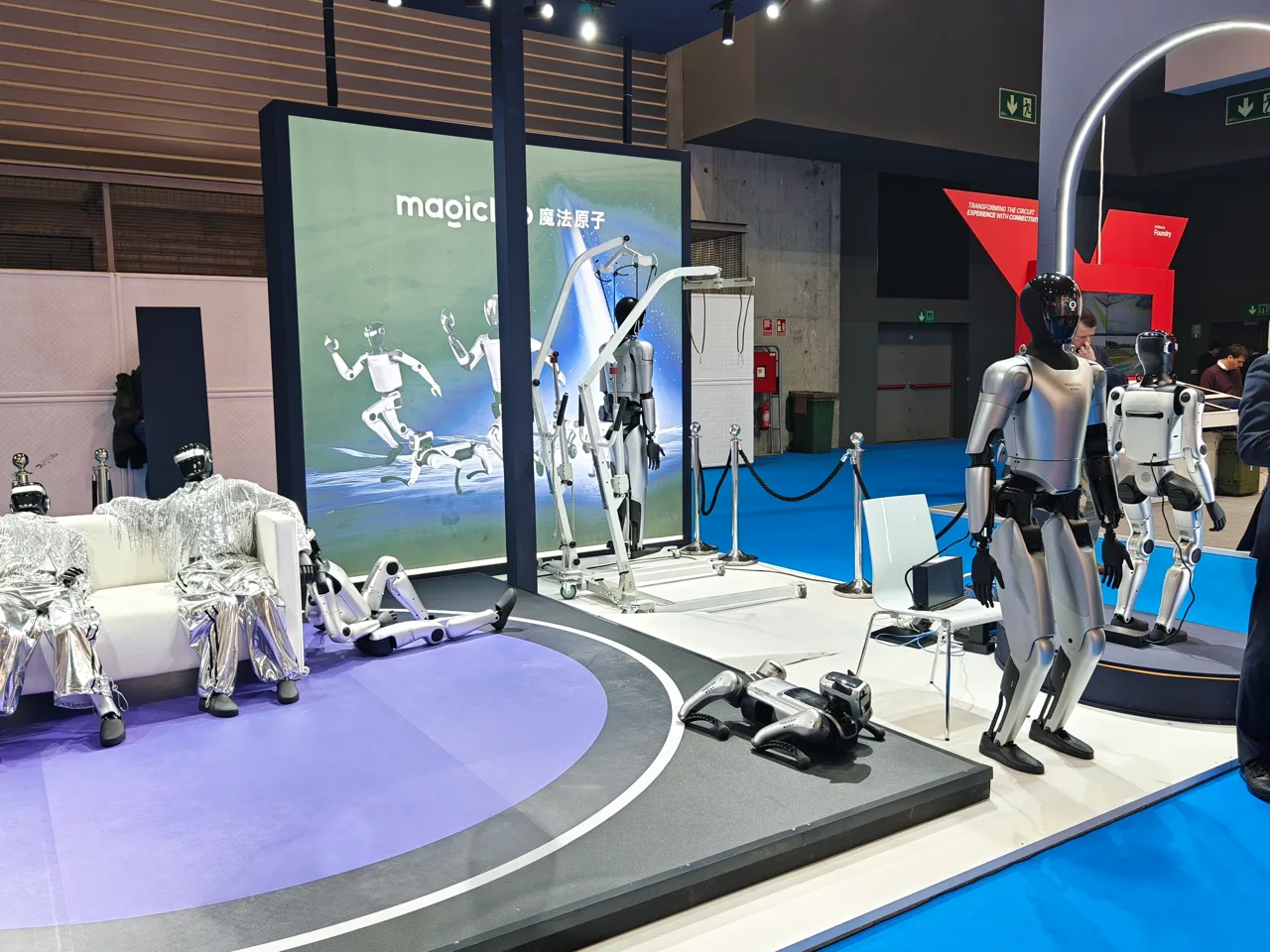
Image source: LeiTech
The key here is equipping robots with the ability to predict environmental changes. Where they once relied primarily on learned motor experience, researchers now want them to infer what might happen next based on the current environment and choose the most appropriate action accordingly.
Since the start of the year, the industry has debated "world models vs. VLA" for roughly half a year — and by the end of it, nearly all leading players have opted for a hybrid approach.
Zhiyuan, for instance, pairs its VLA with a world simulator to shore up weaknesses in physical understanding; GE 2.0 is a representative of this approach.
Gao Jiyang, CEO of Xinghaitu, noted in an interview that VLA and world models share the same underlying logic — both use Transformers to process interaction data, differing mainly in supervision methods and architectural details — and will eventually converge.
Guo Yandong of Zhipingfang has also stated that world models are not disruptors but enablers. Qianxun’s Spirit v1.6 is a direct product of deep integration between the two, unifying environmental perception, task understanding, motion planning and state prediction into an end-to-end pipeline — a major reason it topped the RoboArena rankings.
The result: companies that were still picking sides in the first half of the year have quietly shifted to the fusion camp in the second half.
And just when everyone thought convergence was the final destination, the term "brain-inspired" has started appearing frequently in product launches and news reports.
Three Hurdles to the Popularization of Human Brain-Inspired Architectures
Brain-inspired architecture is not as esoteric as it sounds. Instead of relying on a single giant model to handle everything, it adopts the division-of-labor approach of the human brain, splitting cognition and motion control across different layers.
Zhipingfang’s NeuroVLA, for example, is built on three layers modeled after the human brain. At the top is the "cortex", which handles semantic understanding and task planning — the big-picture thinking. In the middle is the "cerebellum", responsible for high-frequency motor coordination and dynamic correction, reading joint sensors hundreds of times per second to eliminate jitter and make real-time adjustments. At the bottom is the "spinal cord", which manages millisecond-level motor execution and safety reflexes, driven by spiking neural networks with a power consumption of just 0.4 watts and capable of triggering reflex actions within 20 milliseconds of a collision.
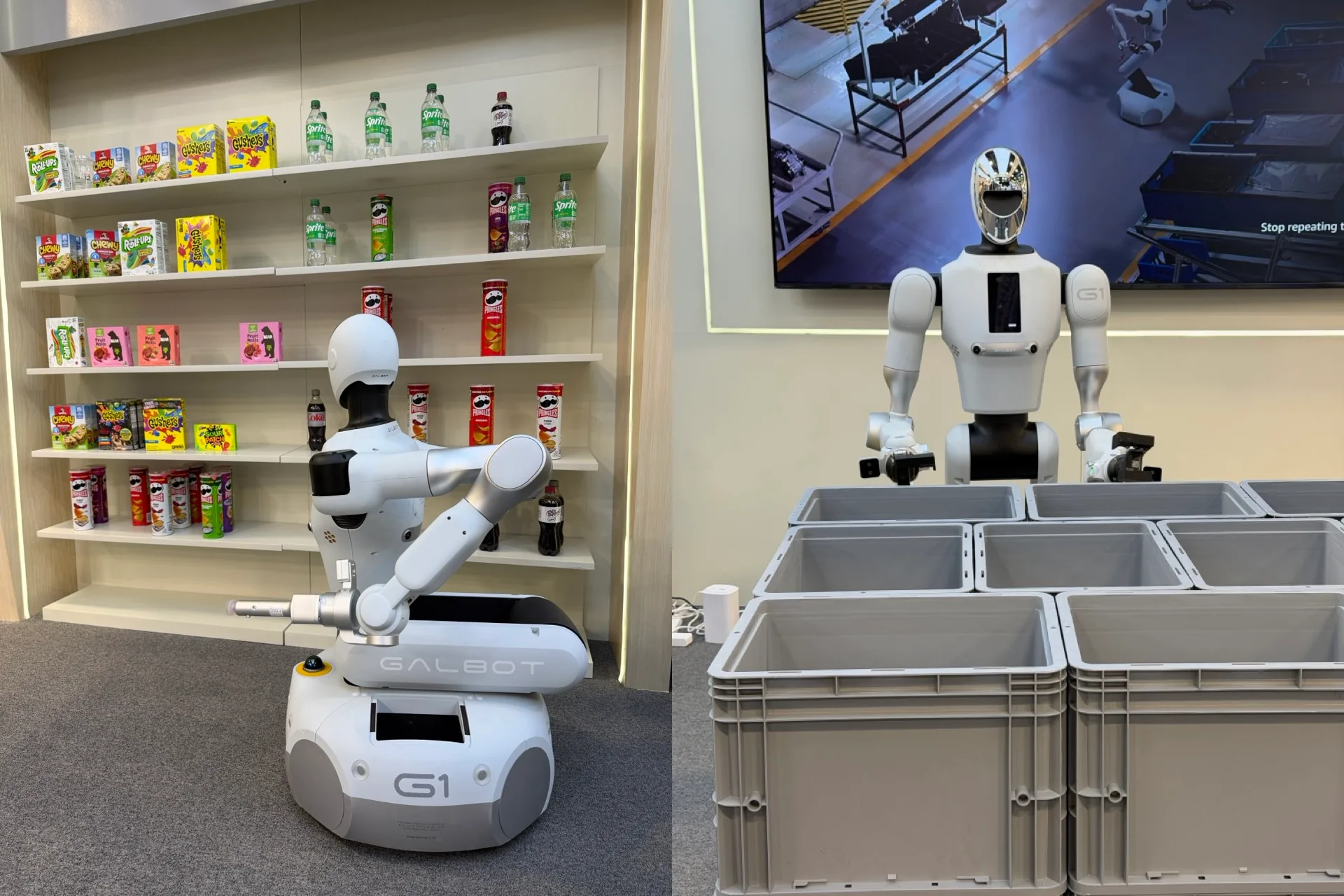
Image source: LeiTech
These three layers correspond to three fundamental challenges in robotics.
First is power consumption. The human brain’s 86 billion neurons operate on roughly 20 watts of power, while a single large model can draw thousands of watts — far too much for an on-board robot system. That’s why the most power-hungry cognitive tasks are assigned to the cortex, while high-frequency coordination and reflexes are offloaded to the cerebellum and spinal cord.
Second is real-time performance. Safety-critical reflexes cannot wait for cloud inference with its inherent latency; they must be executed locally at millisecond scale. As for data efficiency, the advantage of brain-inspired architecture lies mainly in how different layers can be trained and optimized for their specific tasks, reducing the burden of a single large model learning everything. This does not mean the overall robotic system no longer requires large amounts of data — low-level motor control still relies on continuous accumulation of real-world interaction experience.
Moves across the embodied intelligence industry show that brain-inspired design is not exclusive to Zhipingfang. Galaxy General’s AstraBrain is officially positioned as the world’s first full-body end-to-end embodied large model integrating "brain-cerebellum-neural control". It proposed the World-Action Model (WAM) at the top computer vision conference ICCV in 2025, and released the general brain base model AstraBrain WAM 0.5 this August.
Xinghaitu’s EFM-1 adopts a dual-system architecture of "slow-thinking VLM plus fast-executing VLA", following the same logic as layered brain-inspired design. Ziyuanliang’s WALL series pursues an end-to-end "unified cerebrum and cerebellum" approach.
We conclude that brain-inspired architecture is an emerging industry direction—though current implementations differ significantly across companies.
The question remains: why can’t a single giant model just handle all motor control directly? On this point, Li Tianyu, CEO of Source Future, remarked at the Tencent Global Digital Ecosystem Conference:
“The current mainstream approach for large models can be likened to ‘the large model playing the robot as if it were a game’. But when operating a robotic arm, it still uses coding as an intermediary, or relies on large-scale reasoning chains that can average thousands of tokens long. At that token scale, no amount of optimization can push execution frequency to even 1 hertz — far below what embodied applications demand.”
Assuming unlimited computing power and instant token generation, controlling a robot at 10 hertz with today’s reasoning intensity would cost tens of millions of yuan in token fees to run 24/7 for a month.
That magnitude of gap cannot be bridged by chip development alone. For this reason, Li Tianyu believes that even the scheduling brains of embodied systems will inevitably trend toward miniaturization.
Notably, Source Future itself develops embodied intelligence, focusing on "general full-body humanoid base models" that enable robots to coordinate limbs and torso to perform complex full-body tasks. As a recipient of the WAIC 2026 Yunfan Award "Rising Star" honor, Li Tianyu’s views to some extent reflect the industry’s perspective on this trend.
From Source Future’s standpoint, the core logic for embodied intelligence firms investing in brain technology first is this: a stronger base pre-trained model reduces the volume and difficulty of data collection required for downstream task adaptation, unlocking the potential for faster, larger-scale application deployment.
Robot Brain Routes Take Shape, Leading Players Emerge
When broken down by technical approach, at least four distinct paths can be identified in robotic brain development:
Native world model approach: Integrates world understanding, generation and action prediction into a single inference pipeline at the architectural level. Representatives include Daxiao Robot’s Kaiwu world model, UBTECH’s Thinker-WM, Zhiyuan’s GE 2.0 and Xinghaitu’s G0.5.
VLA-world model fusion approach: Uses the world model as an enhancement layer for VLA. Representatives include Qianxun’s Spirit v1.6 and Xingdong Era’s ERA-42.
Brain-inspired architecture approach: Draws on human brain mechanisms to pursue efficient learning with less data. Representatives include Zhipingfang’s NeuroVLA and Galaxy General’s AstraBrain.
Unified model approach: Relies on a single end-to-end model for all functions.
For a full overview of players and their technical routes, see the graphic below:
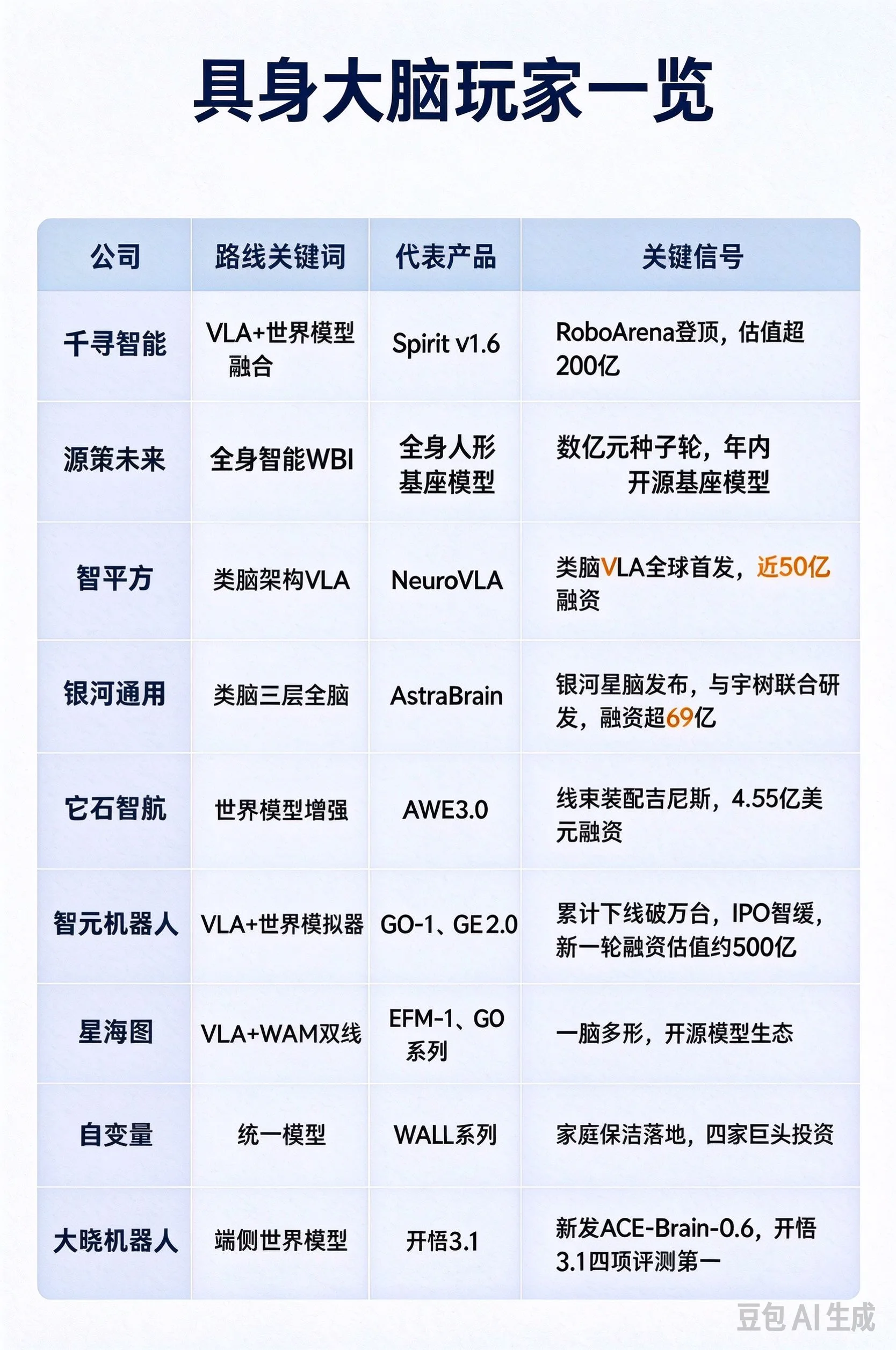
Image source: Doubao Production
It should be noted that there is no strict, unified technical classification standard for embodied intelligence brains yet. The four routes outlined above are a generalization of leading enterprises’ technical explorations, based on core model capabilities, architectural design and system organization. They are not mutually exclusive — some companies are even pursuing multiple directions simultaneously.
International players have also been active in the past six months.
NVIDIA occupies a unique position: it is the developer of the Cosmos world model, a driving force behind the open-source humanoid base model GR00T, and a co-founder of the RoboArena benchmark. While Physical Intelligence’s π0.5 was overtaken by Qianxun on RoboArena, its newer π0.7 continues to iterate.
Google has split Gemini Robotics 2 into a planning model and an execution model, offering both separately.
Even more notable is the entry of general-purpose large models. OpenAI confirmed in September that it is developing its own humanoid robot, and research has explored combining GPT-6 with π0.5 as a robot control strategy. Researchers at Galaxy General conducted comparative tests: across 10 dual-arm manipulation tasks in RoboDojo, the hybrid system scored an average of 62.6, significantly higher than GPT-6’s direct-drive score of 37.81. That said, for fine force control and contact stability tasks, models trained specifically on physical interaction — like π0.5 — are still needed as a reliable foundation.
Compared with international players, Chinese players hold a strong position in this brain technology race, with denser real-world deployment scenarios.
Yet declaring the competitive landscape settled would be premature.
All four routes are evolving rapidly, and brain-inspired architecture has only just emerged. There is no definitive answer as to which will be the endgame solution — even how much of the "brain-inspired" narrative is genuine technical judgment and how much is marketing packaging remains to be tested by time.
In Closing
Embodied intelligence shares a key trait with the automotive industry: model capabilities can only be demonstrated through the robot’s physical body.
No matter how intelligent the brain, if the robotic arm cannot grip objects reliably, if sensors are inaccurate, or if control systems lag behind, tasks will ultimately fail to complete. Conversely, no matter how advanced the hardware, a model that only repeats fixed motions will struggle to adapt to complex environments.
For this reason, competition going forward will increasingly test enterprises’ comprehensive capabilities. Models must keep advancing, real-world data must keep accumulating, robot hardware must be reliable enough, and viable application scenarios must be found where the technology can deliver real value. These elements are interdependent, and a weakness in any one can slow overall progress.
It is still too early to conclude whether brain-inspired architectures will become mainstream, or whether world models will deliver new breakthroughs. Embodied intelligence ultimately faces a real world that does not follow test scripts — and genuine progress in robotic brains must be proven in that world.