
 雷科技





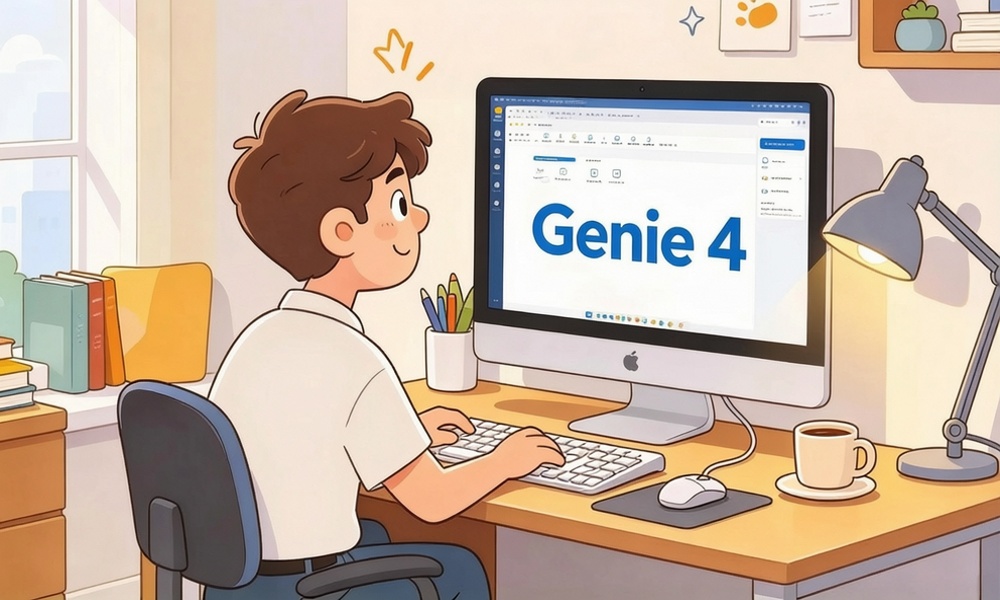

One year ago, Google launched Genie 3, billed as a "real-time interactive world model". Now, a year later, Genie 4 has arrived — touted as "the most realistic and interactive world model ever created".
One year ago, Google launched Genie 3, billed as a "real-time interactive world model". Now, a year later, Genie 4 has arrived — touted as "the most realistic and interactive world model ever created".
It is worth noting that this release remains a "research preview", currently available only to invited testers. It will roll out first to Ultra subscription users, with general access still pending. Lei Technology (ID: Leitech) has submitted an application at the earliest opportunity and will share hands-on impressions as soon as we gain access.
Over the past two years, companies in autonomous driving, robotics and video generation have all set their sights on the "world model" concept. The difference lies in use cases: in autonomous driving and robotics, world models serve two purposes — generating virtual worlds for model training, and making real-time predictions about events in the physical world. Google’s Genie 4, by contrast, can generate a virtual world and alter its state directly in response to user commands.
Real-Time Interaction: The Next Frontier for World Models
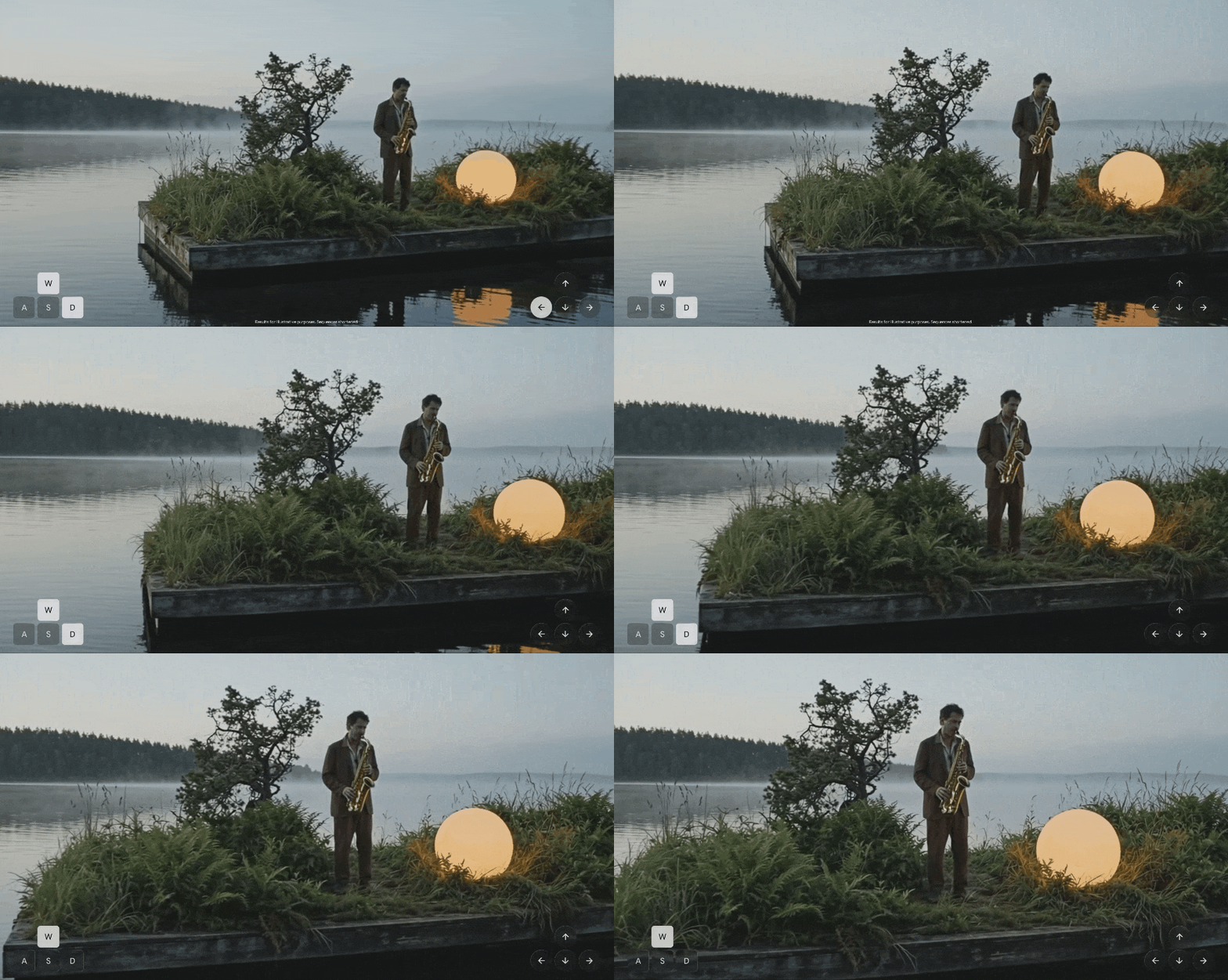
According to Google, Genie 4 natively supports multimodality, capable of synchronously generating music, ambient sound effects and interactive dialogue alongside the virtual world.
To ensure strong performance in long-duration scenarios, Genie 4 is integrated and scaled with the Gemini model family. Gemini Omni anchors the behavioral logic of simulated scenes to real-world physics, while other models handle the complex reasoning required to maintain simulation consistency. Details like the crash of waves on a beach and the rustle of wind through leaves are rendered with heightened realism.
(Video source: Google; image produced by LeiTech)
As Genie 4 generates worlds in real time, Gemini continuously observes the scene, breaks objectives into a sequence of steps, and reviews incoming frames to track progress and verify the success of each step. Drawing on Genie 4’s understanding of the physical world, airflow, object deformation and trajectory changes from collisions all appear convincing in the generated footage.
Most critically, users can issue commands mid-generation to modify the environment, introduce new objects or characters — and existing characters will react to these new additions and environmental shifts. This level of interactivity is not available in many competing world models.
At first glance, the most obvious application for Genie 4 appears to be video generation.
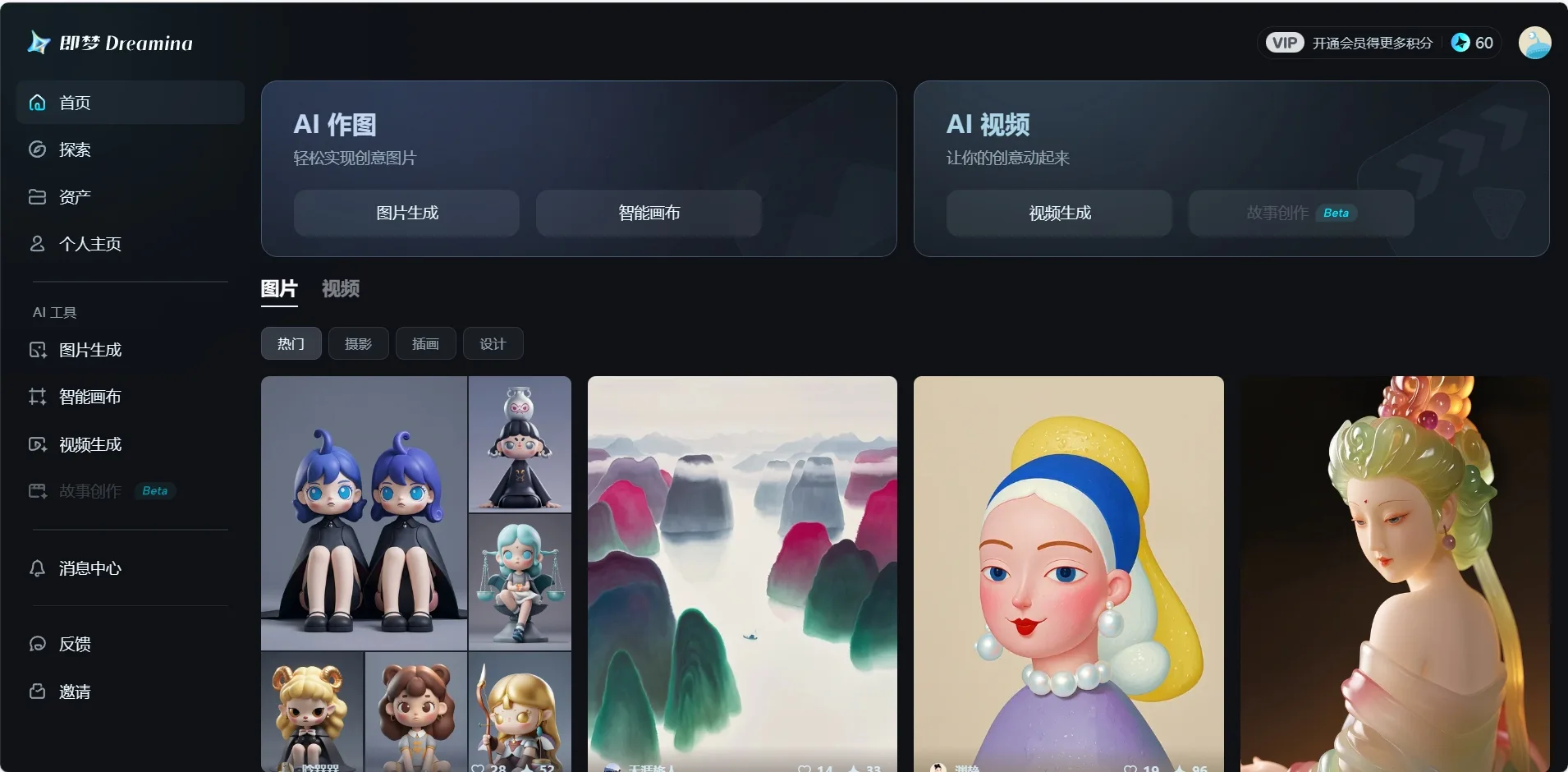
Since Sora ignited the video generation race, domestic players including Kuaishou and ByteDance have entered the fray. Chinese video generation AIs Keling and Jimeng have grown increasingly capable, producing ever more realistic visuals. What sets Genie 4 apart is that it pursues more than just visual quality — real-time interactivity is its greater priority.
(Visual source: JIMENG screenshot)
When creating content with standard video generation AIs, users typically input prompts and upload image or video footage first, after which the model generates the final video. There is no way to steer the process mid-generation; if the output deviates from the intended direction, users must regenerate it or make adjustments in post-production.
When Keling and Jimeng took the industry by storm, Lei Technology argued that the greatest value of video generation AI for ordinary people is empowering everyone to be a director and screenwriter, turning imagined scenes into visuals anyone can view. Genie 4 truly grants that directorial control: instead of waiting for a video to finish generating before making tweaks, users can direct characters, props and even the entire environment in real time.
Real-time interactivity is poised to become the next competitive frontier in the world model industry. Beyond Genie, models such as startup Runway’s GWM Worlds 2, JD.com’s JoyAI-EchoWM and Alibaba’s Happy Oyster offer similar capabilities.
That said, while Genie demonstrates video generation abilities, reducing it to a mere video tool would be a waste of its full potential.
Real-Time Interactive World Models Will Power Robotics Training
Following Genie 4’s launch, Lei Technology noticed that many reports, alongside highlighting its video generation capabilities, have drawn parallels to gaming — with some outlets even declaring "the game engine is dead".
It is true that its ability to generate interactive virtual worlds echoes the immersive VR games depicted in sci-fi fiction. Many netizens believe combining the model with VR would let users fully immerse themselves in digital worlds.
In Lei Technology’s view, however, neither Genie 4 nor other real-time interactive world models will be capable of powering full virtual world games anytime soon. Building a persistent virtual world costs far more than generating a short video, and local PC hardware is nowhere near powerful enough. What’s more, a game with save states, online multiplayer, precise collision detection and reproducible rules requires "computability in every frame" — the very thing generative models are worst at.

(Visual source: Doubao AI-generated)
While an upgrade over its predecessor, Genie 4 can only maintain coherence for roughly two minutes at most. For longer workflows, it struggles to preserve consistent object identity and state.
In Lei Technology’s assessment, the film and television industry will be the first to benefit from Genie 4 and similar models, as its steerable generation process holds a major advantage over traditional video models. Next come the sectors Google cites — news, education, gaming and engineering — where Genie 4 can serve as a creative prototyping tool, letting users quickly turn ideas into explorable mockups. Finally, and most importantly, there is embodied intelligence training.
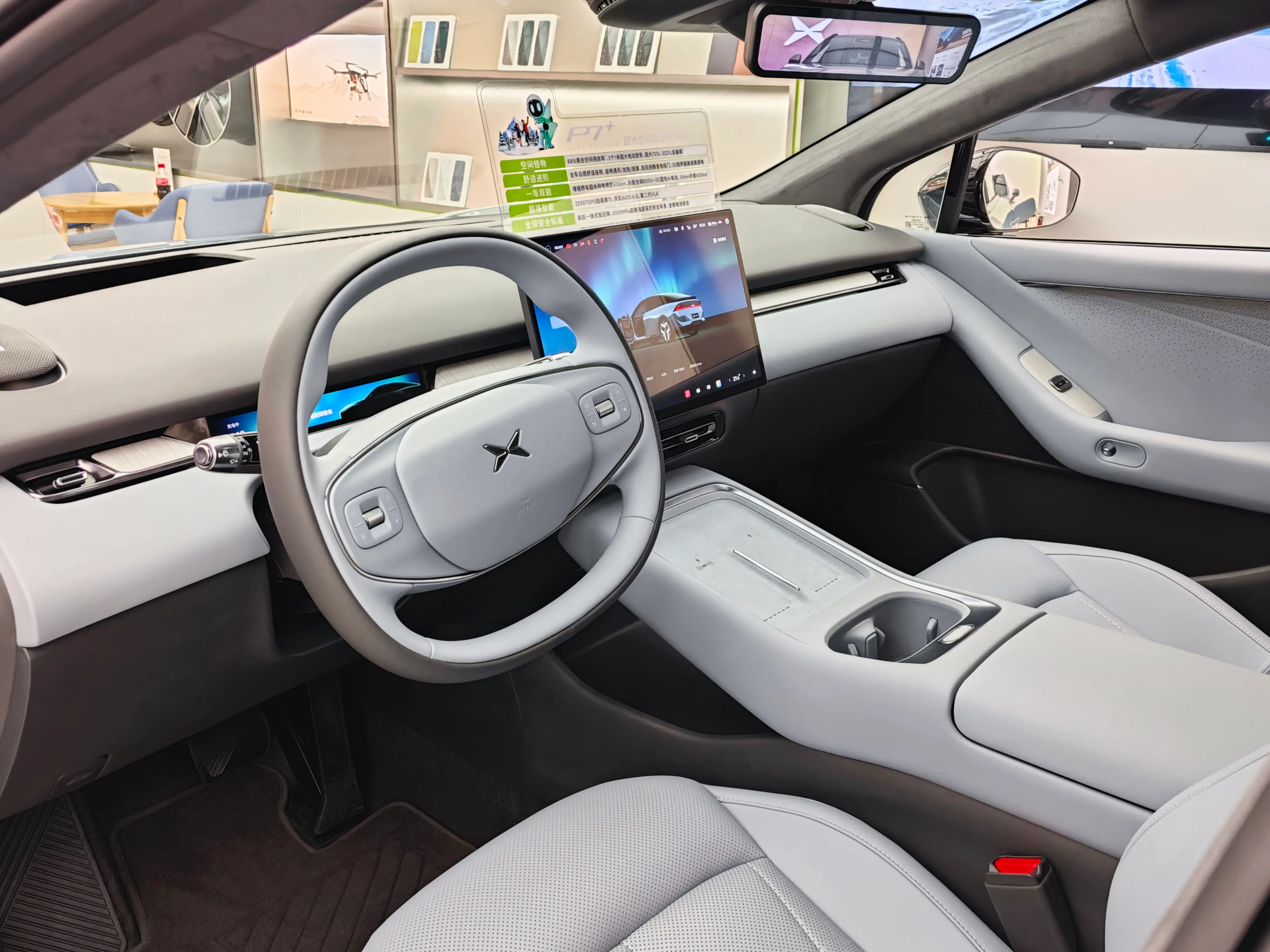
Take autonomous driving, for example. Companies including Huawei and XPeng use world models to generate training scenarios for their intelligent driving systems, improving performance in rare, complex edge cases.
(Visual source: LeiTech production)
Real-time interactive world models let operators inject "sudden events" into driving training on the fly — such as sudden fog banks or heavy rain ahead — further honing the system’s ability to handle unexpected situations.
The same applies to robotics. Real-time interactive world models can alter scenes, objects, lighting and layouts at any time via natural language commands, dynamically generating a vast range of open environments with movable, knockable objects and audio feedback. Combined with native synchronized audio, they can also train multimodal embodied intelligence (vision + hearing) — for example, recognizing the sound of a falling object and judging states from ambient audio. This is a dimension traditional simulation can rarely achieve at low cost.
Of course, the world simulated by Genie 4 only resembles the real world visually; meaningful differences remain. For the time being, enterprises cannot treat it as a substitute for physics simulation. Real-world robot data remains essential even as real-time interactive world models are used to train embodied intelligence.
Genie 4 Is Only the First Step — World Model Potential Remains Untapped
Over a year after the previous release, Google’s Genie 4 breaks the limitations of traditional AI video — which generates content in one shot with no mid-process edits — and establishes real-time interactivity as a new competitive direction for video generation. It has also sparked widespread imagination around use cases in gaming, embodied intelligence training and more.
Even so, three challenges lie ahead for Genie 4. First, its release timeline and pricing for general users will determine whether it remains a lab curiosity or becomes a production tool accessible to everyone. Second, long-duration coherence needs continuous improvement — two minutes is still too short for many workflows. Third, it remains to be seen whether the "generation-training-transfer" closed loop can be validated in embodied intelligence, a key test of physical AI capabilities.
Two years ago, AI couldn’t even draw hands correctly in static images. Two years later, it can already generate an interactive, audio-capable world in real time before your eyes. While Genie 4 currently only maintains coherence and object consistency for two minutes, its future will not be bounded by time.
Genie 4 is far from alone. Just as Keling and Jimeng have grown alongside Sora, models including GWM Worlds 2, JD.com’s JoyAI-EchoWM and Alibaba’s Happy Oyster will evolve alongside Genie. This industry holds boundless potential. After all, the second half of the world model era has only just begun.