
 雷科技





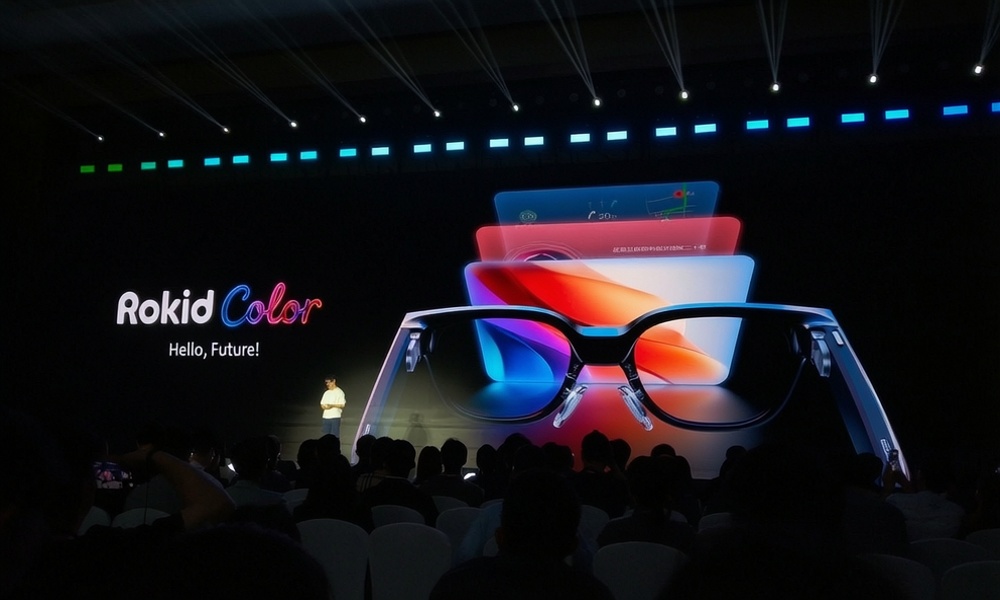

Rokid now has both its updated current-generation and forward-looking next-generation AI glasses.
On October 27, Rokid officially launched its second-generation Leqi AI glasses, the Rokid Glasses 2. Roughly a month has passed since their global debut at the Global Digital Trade Expo, and the build-up has certainly stoked plenty of curiosity.
The second-generation Leqi AI glasses bring varying degrees of upgrades to wearing comfort, design, imaging capabilities, AI interaction and battery life. For hands-on impressions and in-depth reviews of the device, please refer to LeiTech’s early preview and comprehensive review. Priced at 3,699 yuan for the black version and 3,849 yuan for the tortoiseshell edition (3,199 yuan and 3,349 yuan respectively after national subsidies), it remains to be seen whether the pricing will satisfy consumers.
But the biggest reveal of the event was yet to come. Holding nothing back, Rokid took the wraps off its next-generation AI glasses with full-color display — the Rokid Color — starting at 4,999 yuan, with rollout deliveries scheduled for April 2027.
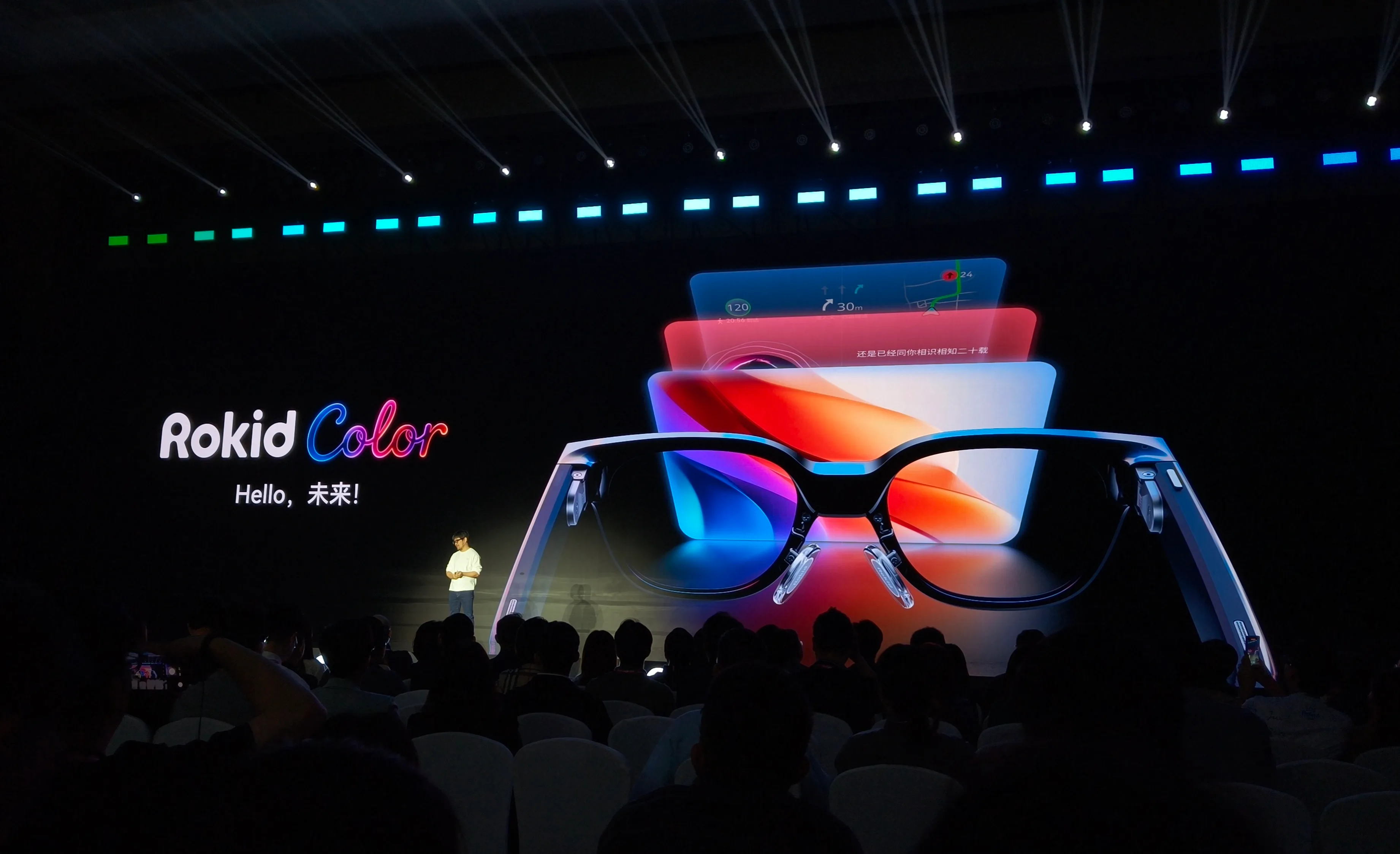
Image Credit: LeiTech
That Rokid was working on full-color AI glasses had long been an open secret in the industry, with Misa (Zhu Mingming), founder and CEO of Rokid, dropping multiple hints on the subject. Even so, the Rokid Color delivered plenty of surprises at its launch: it achieves binocular full-color display, retains the full-featured AI glasses positioning, and keeps weight down to just 55 grams.
It was a genuine "One more thing" moment.
Interestingly, just ahead of the event, fellow smart glasses maker Thunderbird made a pre-emptive move, announcing its upcoming fourth-generation binocular full-color AI glasses. Rather than a follow-up to the X3 Pro, the new model — the Thunderbird iO+ — builds on the Thunderbird iO and upgrades from monochrome green display to full color.
The Thunderbird iO+ is still some way off, but the Rokid Color has now officially made its debut.
Full-Color AI Glasses Finally Go Lightweight
In fact, Lei Technology got an early look at the Rokid Color prototype a month before the launch, with a brief hands-on session.
It was only around two minutes of use, but even that short time left a deep impression.
The most immediate change, of course, is the display.
Moving from the previous monochrome green output, the Rokid Color finally brings full color to the wearer’s field of view. And the upgrade goes beyond just color: interfaces that previously relied on text, lines and simple icons are now evolving toward the graphical UIs we are familiar with on smartphones.
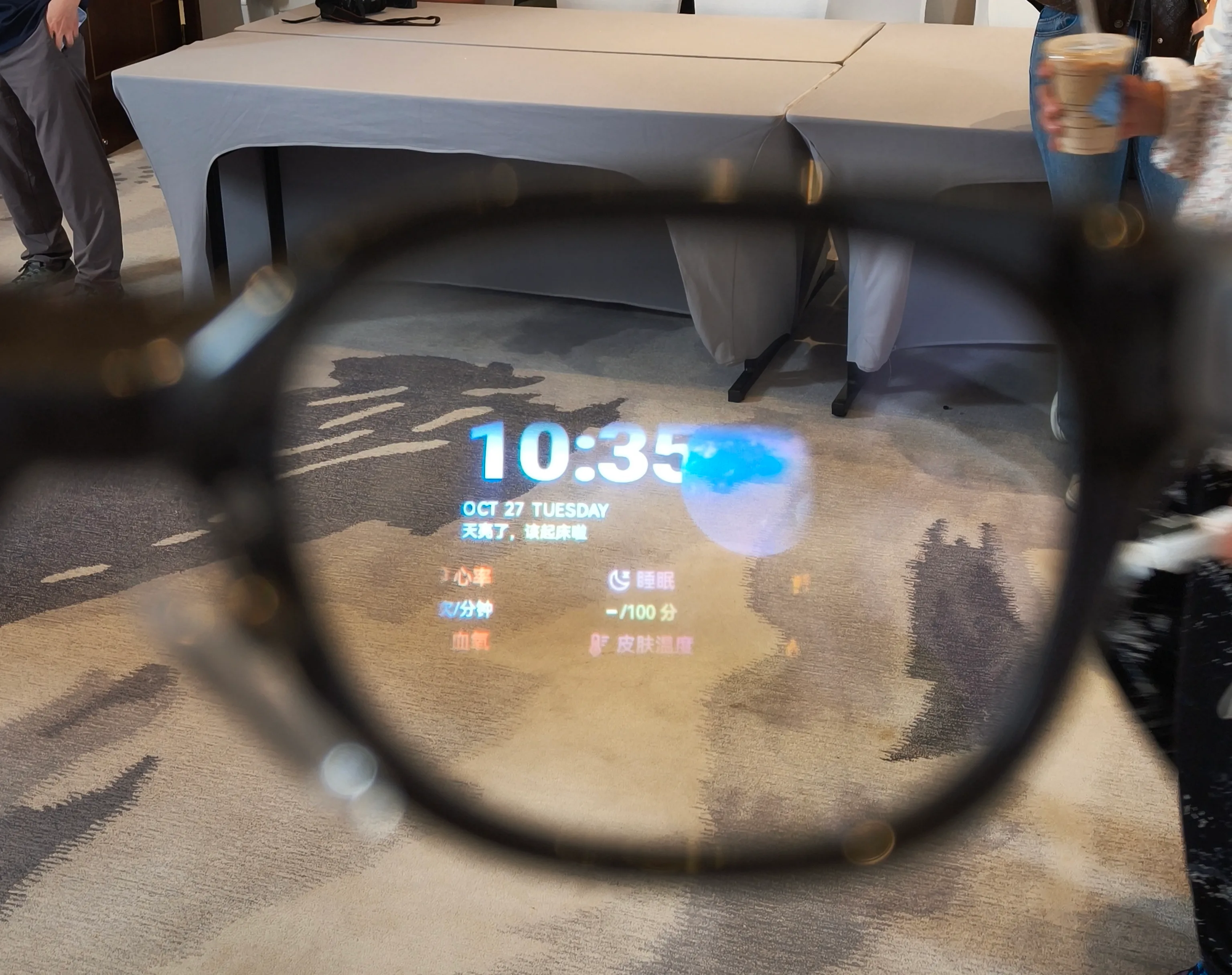
Visuals shown are subject to discrepancies between capture and actual performance—provided for reference only. Image Credit: LeiTech
What stands out most is the video viewing experience through the glasses. Previously, display-equipped AI glasses were mainly used for showing translation subtitles, navigation prompts, teleprompter text and basic notifications. While monochrome green displays could render graphics, they had clear limitations in both information richness and visual expressiveness.
Full color changes everything.
Ahead of the launch, Lei Technology got another chance to test the Rokid Color, trying out features including camera viewfinder, heads-up display and casual gaming.
None of these functions are fundamentally new — even monochrome green AI glasses could "do" camera previews and simple games. But when the same content shifts from monochrome to full color, the real-world experience improves dramatically.
Take the camera viewfinder, for example: before, you could only roughly frame shots via a monochrome green feed; now you see a full-color image, making it far easier to judge the final shot. The same goes for mini-games: a fishing game plays the same way, but the visual presentation is on a whole different level.
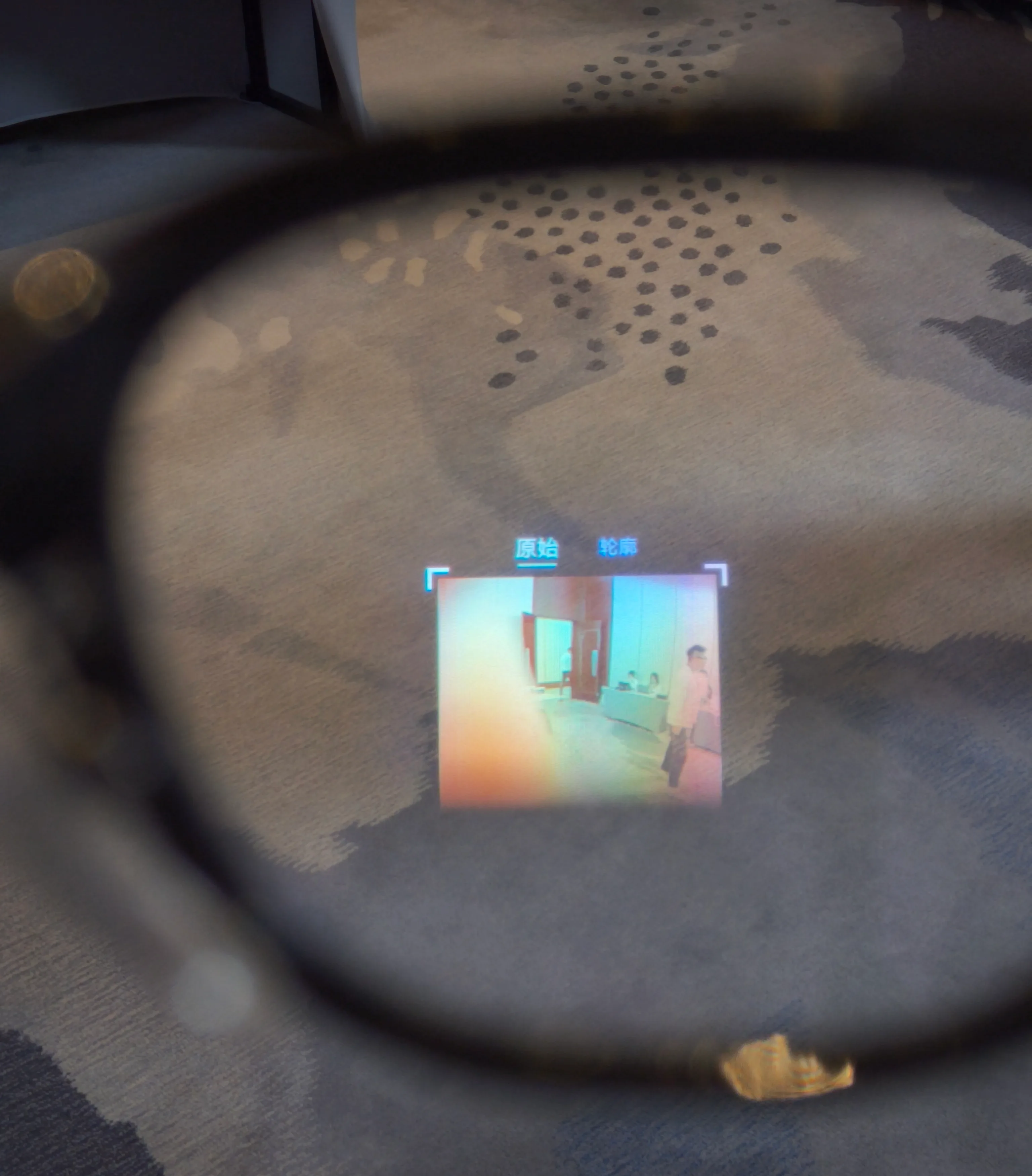
Visuals shown are subject to discrepancies between capture and actual performance—provided for reference only. Image Credit: LeiTech
The difference is even more striking with the new heads-up display feature. Compared to the monochrome green interface of the second-gen Leqi AI glasses, the Rokid Color can render richer visual elements — including graphical content like a 3D Earth model — making the overall experience far more vivid.
This is the underappreciated value of full-color display. It doesn’t have to invent entirely new functions; simply making existing features more intuitive and vivid is enough to noticeably improve the user experience.
"Even without any new features, the shift from monochrome to color alone makes it a must-have," Misa told Lei Technology and other media in a post-launch interview. "Human beings have an insatiable appetite for visual quality — it’s that dopamine rush."

Rokid Founder & CEO Misa (left) and Gary Cai, Rokid VP & Head of Ecosystem (right).
Image Credit: LeiTech
Of course, the Rokid Color has not yet achieved full spatial awareness and seamless virtual-real fusion. There is still a considerable gap before it delivers the kind of AR experience we imagine, where digital content blends naturally into the real world.
But progress happens step by step.
More importantly, Rokid did not sacrifice core features like the camera and speakers just to enable full-color display, nor did it turn the glasses into a bulky, unwearable device.
In fact, the Rokid Color is not the first full-color AI glasses on the market. The Meta Ray-Ban Display already offers full-color display with an integrated camera, speakers and AI interaction; the Thunderbird X3 Pro goes further with relatively complete AR capabilities. But the Meta model starts at 68 grams, while the Thunderbird X3 Pro weighs 76 grams — neither can claim to be designed for everyday all-day wear.
By contrast, the Rokid Color tips the scales at 55 grams, with concurrent improvements to design, materials and craftsmanship. In terms of wearing feel, it is barely distinguishable from the second-generation Leqi AI glasses.
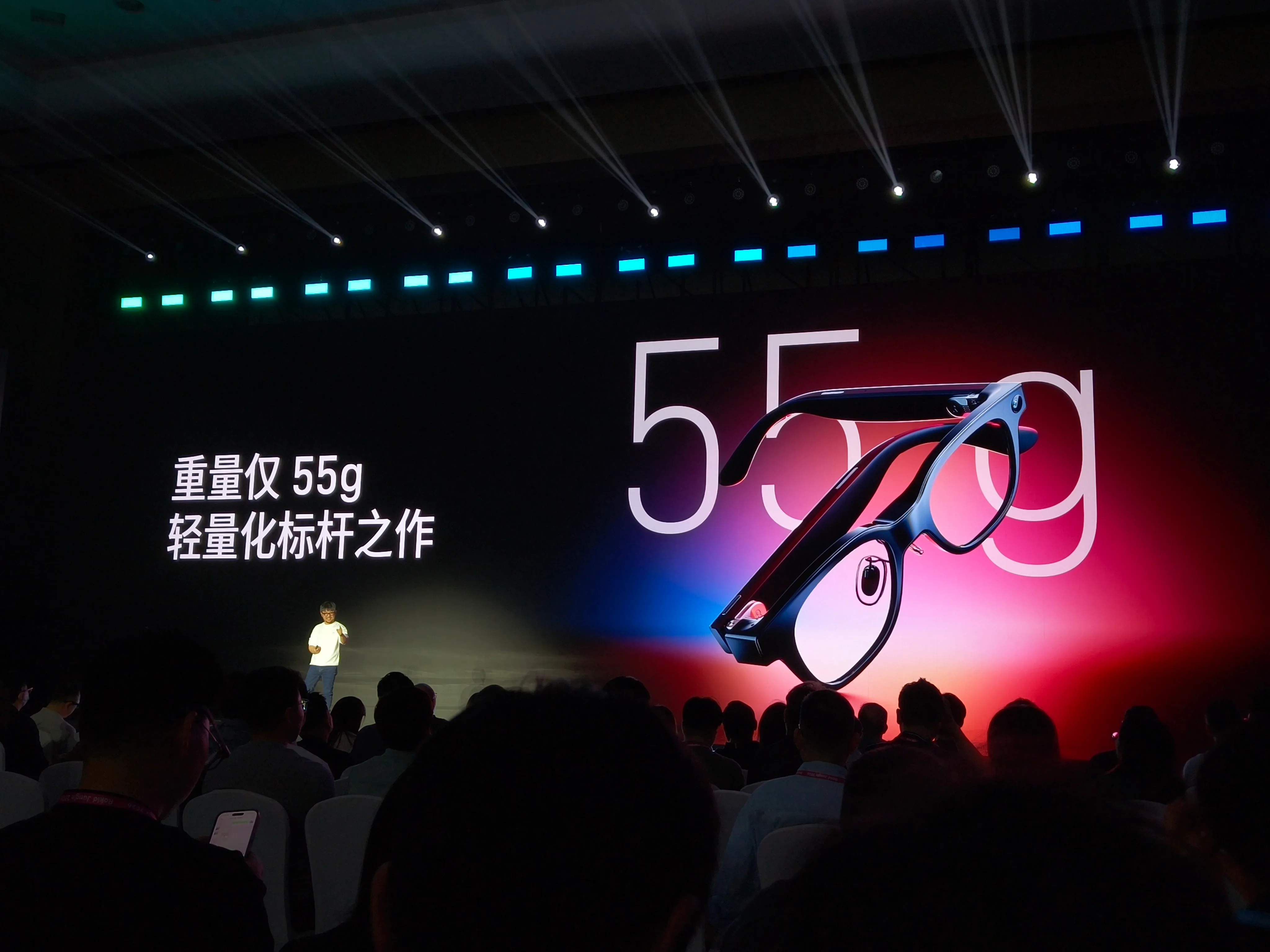
Image Credit: LeiTech
According to Misa, the company still aims to eventually bring full-featured, binocular full-color AI glasses like the Rokid Color down to under 45 grams.
The biggest hurdles remain battery capacity and power consumption.
That said, the current Rokid Color still has areas that need improvement. During hands-on testing, noticeable color fringing and rainbow artifacts were still visible. On the teleprompter interface, text rendering is somewhat affected by color "bleeding", which impacts readability.
All in all, the Rokid Color still has plenty of optimization and refinement ahead of it, which explains why deliveries are not slated to start until April next year.
An even bigger factor is the ecosystem. Misa stated that Rokid wants to wait until several key content partners have their apps fully up and running before shipping units to users.
On the software side, the Rokid Color’s current UI is largely a colorized version of the monochrome green interface. But the Rokid team has made clear that it is already rethinking, designing and developing a brand-new UI and experience built around full-color display.
"We want to deliver experiences on full-color that feel different from monochrome — a photo gallery, for example. It’s basically unviewable on monochrome, and we will definitely bring that kind of functionality to full-color."
Beyond Full Color: A Shift in Interaction
Rokid’s vision for next-generation AI glasses goes beyond upgrading from monochrome green to full-color display. In previous conversations with Lei Technology, Misa offered a judgment:
AI glasses will inevitably evolve toward "rich interaction and rich media".
Full-color display solves how content is presented, but as AI glasses begin to show increasingly rich visual content, how will users interact with that content? Another new product unveiled at the event — the Rokid Ring (Leqi Magic Ring) — is Rokid’s answer.
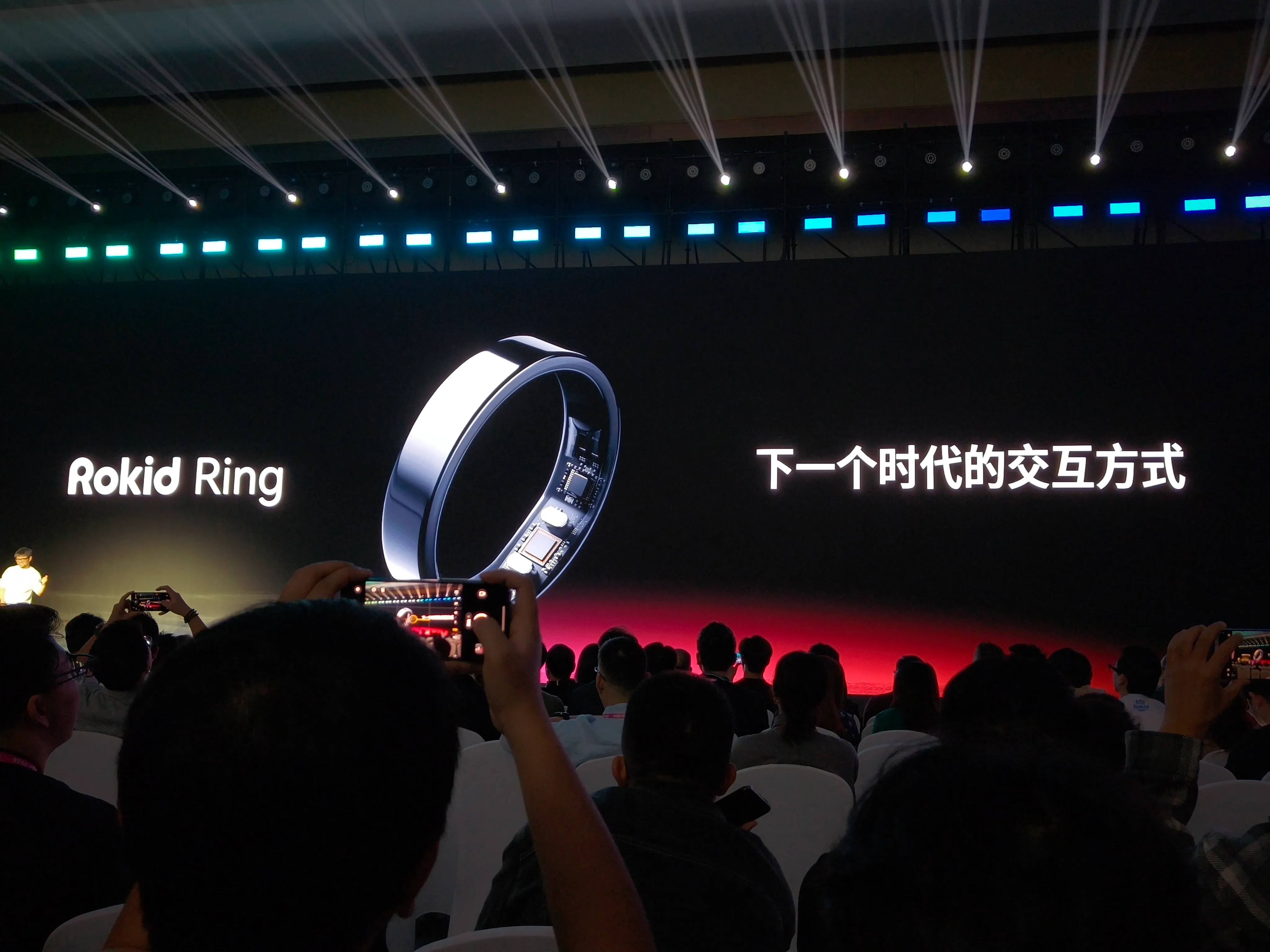
Image Credit: LeiTech
The Rokid Ring offers a more complete and intuitive interaction experience. Designed to be worn on the index finger, it lets users control the AI glasses via touch gestures between the thumb and other fingers, plus motions like snapping and drawing circles. It works with both the Rokid Color and the second-generation Leqi AI glasses.
It may sound complicated, but after a quick hands-on trial, Rokid’s design logic becomes clear. When fitted in the correct size, the Rokid Ring’s recognition accuracy for these gestures is fairly high — though mastering the controls does come with a learning curve.
Rokid says current gesture recognition accuracy exceeds 95%, with a target of 97–98% at commercial launch. These are manufacturer test figures, of course, and real-world performance will need to be verified across more users and scenarios.
Once you get the hang of it, though, the advantages are clear. Compared to repeatedly reaching up to tap the temple of the glasses, or issuing voice commands for every action, completing confirmations, returns and navigation via subtle finger movements offers a far more natural alternative.
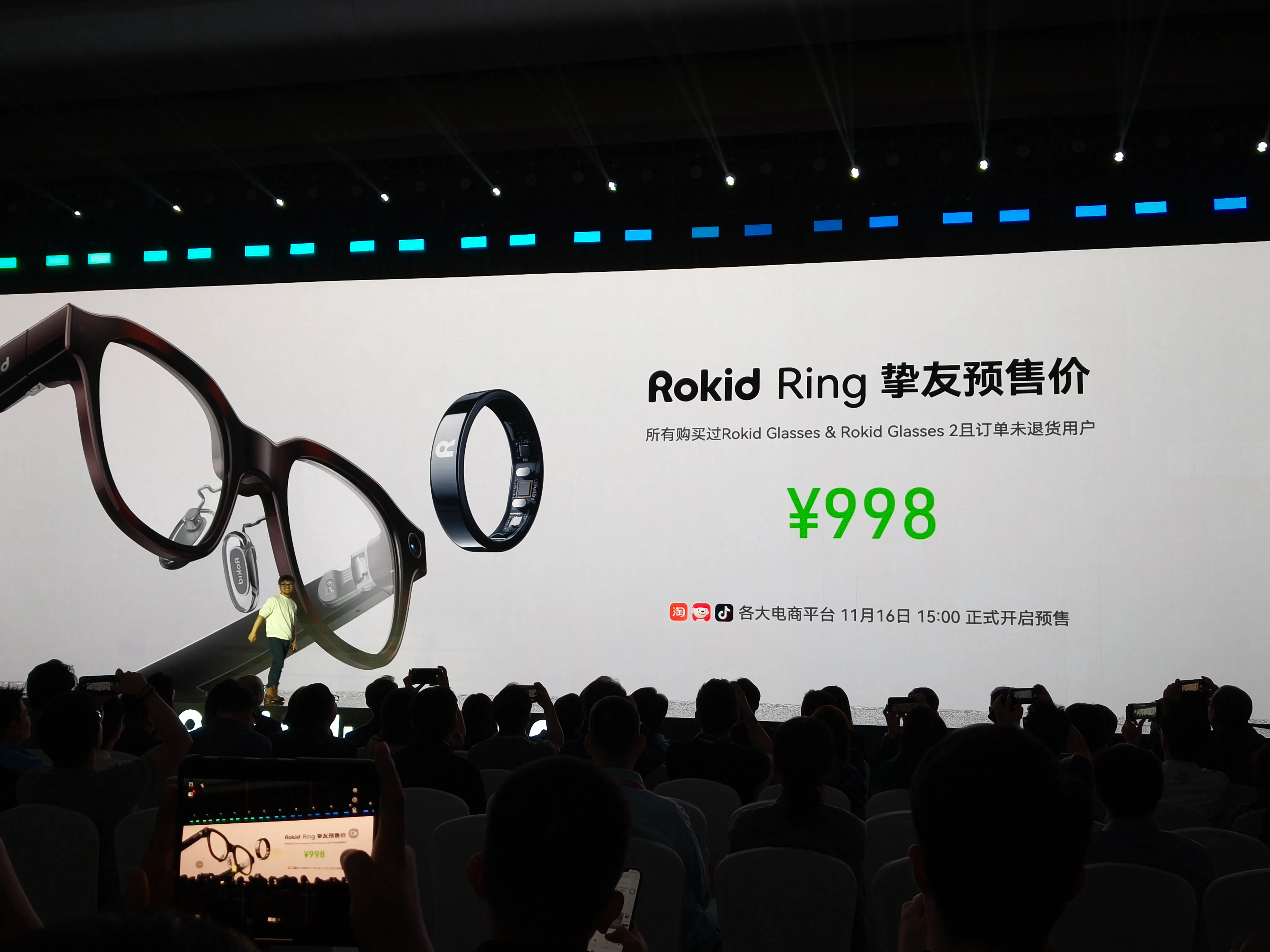
Image Credit: LeiTech
This low-distraction interaction method is especially valuable in public settings or situations where speaking aloud is inconvenient.
But does Rokid really need to add a separate ring? The answer is that this is the best interaction solution Rokid has been able to devise so far.
For previous display-equipped AI glasses, information presentation was relatively simple, and voice commands plus temple touch controls were enough for daily use cases like translation, teleprompting and navigation. But when glasses start showing richer graphical interfaces and even playing video, users naturally demand more control options.
Think about quickly selecting content, switching pages, pausing playback, or choosing between multiple AI-generated answers. Doing all of this by voice alone is not always efficient, and can be disruptive in public. Repeatedly tapping the glasses, meanwhile, feels unnatural.
Meta previously launched a neural wristband for the Ray-Ban Display, also exploring hand-motion control for AI glasses. Where Meta uses electromyographic signal recognition, Rokid has partnered with the Tsinghua University Human-Computer Interaction Lab to implement glasses control via touch and gesture sensing on a smart ring. The two share a similar interaction goal but take different technical approaches.
Beyond health monitoring capabilities, the Rokid Ring is more than just a simple gesture remote.
At the launch event, Rokid demonstrated even more interaction possibilities, including adjusting scroll speed and intensity based on gesture speed and force, iPod click-wheel-style list navigation, and using surfaces like desks or knees as touchpads for mouse movement and two-finger scrolling.
If these capabilities can be implemented reliably, they could free content browsing, photo viewing and content selection on glasses from the limitations of repetitive voice commands or basic page scrolling.
That said, these advanced interaction features still need to be validated on final commercial products.
An interesting detail revealed by Misa in the post-event group interview: Rokid began work on the Rokid Color back in November 2024, and integrating interaction between the smart ring and glasses took more than half a year. This was even one of the key reasons the launch event was pushed back to late October.
This focus on interaction speaks to Rokid’s roots as a human-computer interaction company.
The Next-Generation AI Glasses Race Begins
To sum up the new products from the event:
The second-generation Leqi AI glasses continue to target utility scenarios like translation, teleprompting and navigation, refining the everyday experience of the existing product. The Rokid Color breaks beyond the limits of monochrome green display, positioning the glasses as a terminal for entertainment, socializing and content consumption. The Rokid Ring, for its part, adds the interaction capabilities needed to match increasingly rich content.
Rokid has also clarified the distinct positioning of its two product lines. The Rokid Glasses series will remain focused on utility scenarios such as translation, teleprompting and navigation, while the Rokid Color will move further into entertainment, social interaction and content consumption as a more general-purpose personal terminal.
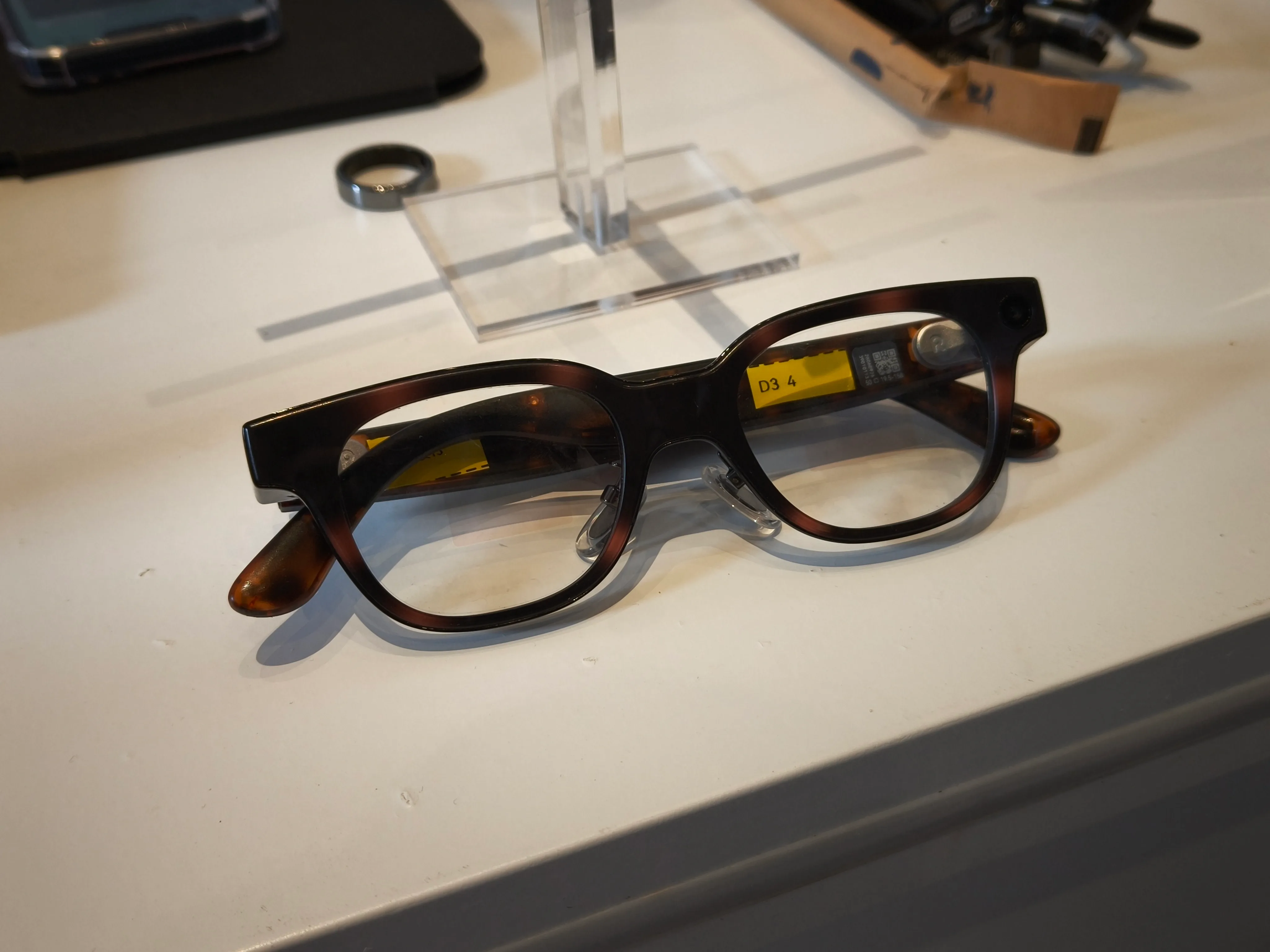
Rokid Color prototype used for evaluation. Image Credit: LeiTech
Misa went so far as to say that once the cost and price of the Rokid Color drop to a widely affordable level, the monochrome Rokid Glasses product line may no longer need to exist.
For now, though, the Rokid Color still has plenty of ground to cover.
The content ecosystem, in particular, is a major challenge. Simply porting existing mobile apps to glasses does not mean they are inherently suited to the form factor. Whether the future holds more video streaming and image browsing right before users’ eyes, or entirely new apps native to AI glasses, remains to be explored.
Gary Cai Guoxiang, Vice President and Head of Ecosystem at Rokid, noted in the group interview that the team has been searching for native AI glasses applications — especially "killer apps" that most users will use frequently. The teleprompter, for example, makes great use of the glasses’ strengths but is not a high-frequency feature for the majority of consumers.
Full-color display opens up far more room for this exploration.
Meanwhile, Thunderbird’s same-day teaser for the Thunderbird iO+ also sets its sights on lightweight full-color display. The fact that two leading domestic players are accelerating their market deployment at this point marks, in a sense, the start of the next round of competition in full-color AI glasses.
What will ultimately determine consumer choice, however, is who can deliver real, tangible value with full-color display.
The Rokid Color has given us an early glimpse of that potential, and the Rokid Ring adds another layer of possibility. The next step — figuring out exactly what full-color enables users to do — will require a collective push across the ecosystem.
As for how far we are from the "iPhone moment" Misa speaks of, that question will likely be answered when the Rokid Color officially ships next year.