
 雷科技





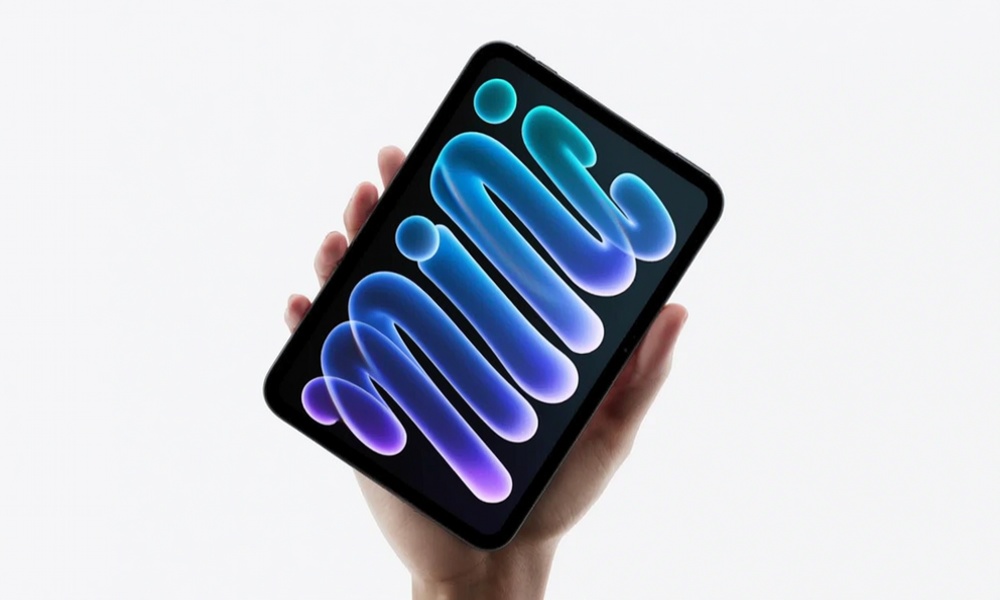

On October 27, news broke that Apple quietly dropped new products on its official website overnight. The iPad mini 8, which fans have been waiting nearly two years for, has finally arrived.
Put simply, this is by far the most transformative generation the iPad mini line has ever seen.
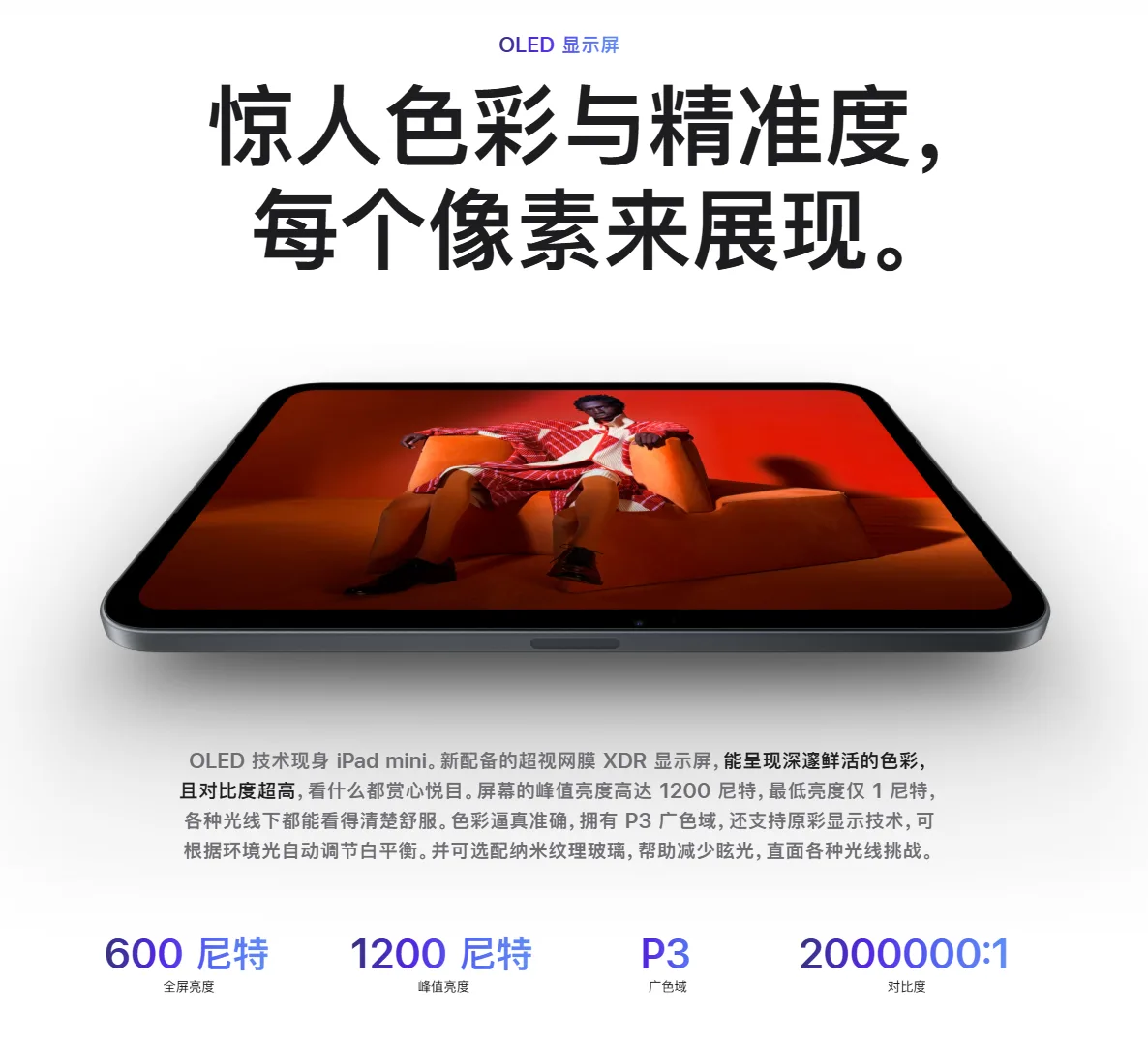
The most immediate change is the display. It jumps from an 8.3-inch LCD panel to an 8.5-inch OLED screen, with bezels narrowed by 24%. The overall footprint of the device stays almost identical, yet the screen is larger.
The long-complained-about "jelly scroll" effect — the blurry text and ghosting that appeared during fast scrolling — has been fixed at its root this time.
With pixel-level self-emissive OLED technology, there is no refresh latency from a liquid crystal layer, making scrolling far more responsive. The contrast ratio reaches 2,000,000:1 for deeper, purer blacks, and the display also features an anti-reflective coating.
(Image source: Apple’s official website)
The body is also noticeably thinner than the previous generation, coming in at just 5.4mm thick. For the first time ever, the iPad mini gets IP67 dust and water resistance. It comes in just two colors, Midnight and Starlight, keeping the design simple and understated.
A few other practical upgrades are also worth mentioning.
Base storage starts at 128GB, finally ditching the 64GB entry-level configuration.
The front camera is now horizontally oriented, matching the iPad Pro lineup, for more natural Center Stage framing during landscape video calls.
The audio system adopts Acoustic Display technology, where upper and lower micro-slot speakers produce sound through screen vibration, delivering noticeably better speaker performance than the previous generation.
There’s also an optional nano-texture glass finish — not the same one as the Duo, but the same anti-glare glass used on the iPad Pro, which reduces reflections in bright sunlight. It’s a worthwhile upgrade for anyone who uses their tablet outdoors regularly.
The chip is no slouch either: it packs the A20 Pro built on a 2nm process, with hardware ray tracing support. Fitting this chip into an 8.5-inch mini makes it a bona fide compact gaming tablet.
With the key upgrades covered, let’s now address the aspects that LeiTech finds most frustrating.
Now, onto the part that Xiaolei finds most frustrating: Apple’s ruthlessly precise product segmentation.
(Image source: Apple’s official website)
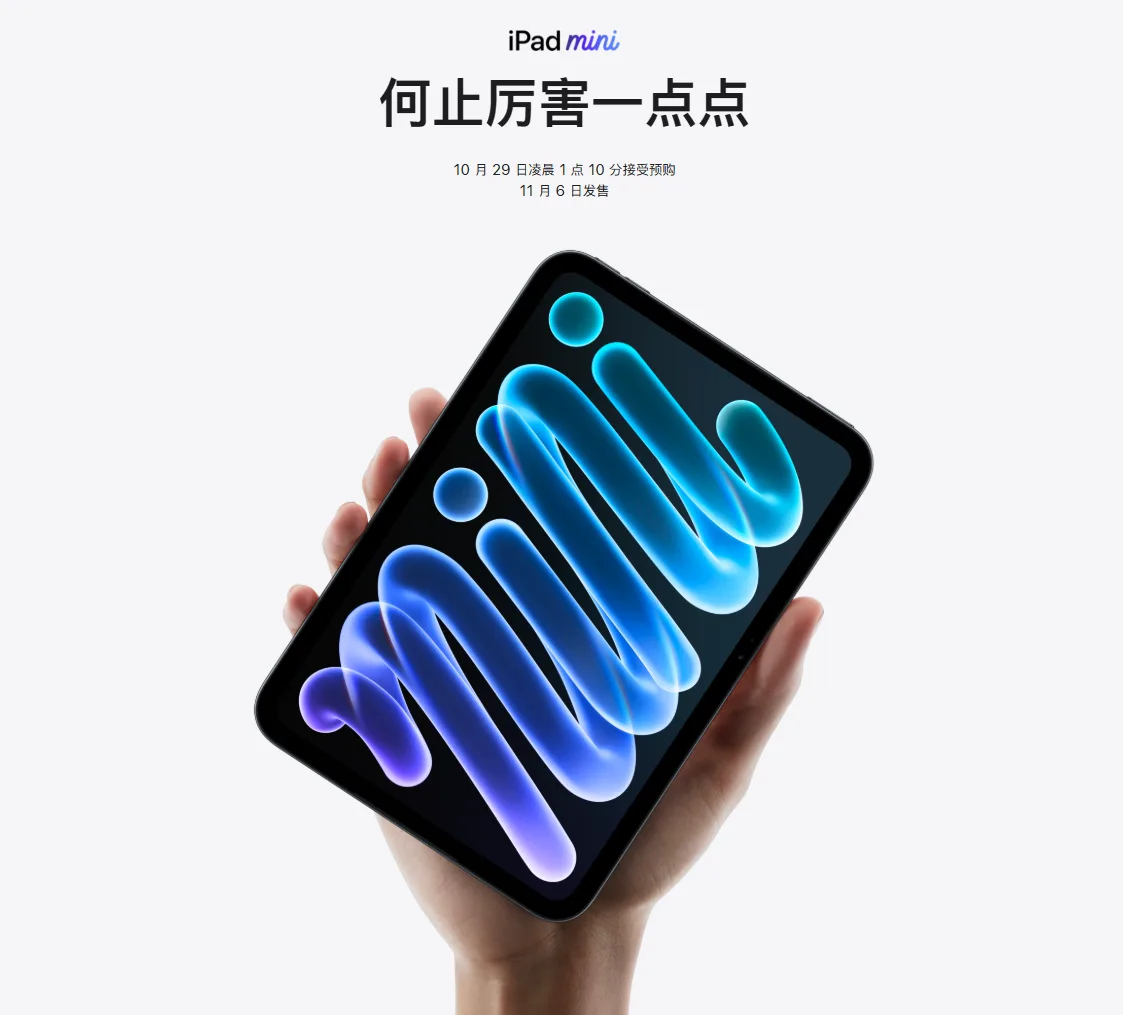
That’s right, you read that correctly. It’s 2026, and this tablet starting at over 5,000 yuan sports the latest OLED display — yet still only has a 60Hz refresh rate. I genuinely did a double-take when I saw the spec.
Even the base iPhone models now ship with high-refresh-rate OLED displays. Apple would rather commission a dedicated 60Hz OLED production line for the iPad mini than give it 120Hz.
According to Xiaolei Bibibi (ID: xiaoleibbb), this is a deliberate move to create a clear experience gap between the mini and the iPad Pro.
The Pro line gets ProMotion adaptive refresh rate, so the mini must be capped firmly at 60Hz — even though it’s technically entirely feasible and would add minimal cost.
No other major manufacturer would deliberately gimp the user experience just to enforce product line hierarchy. Even budget Android phones have had high refresh rates for years, yet Apple is taking a step backward with its tablet lineup.
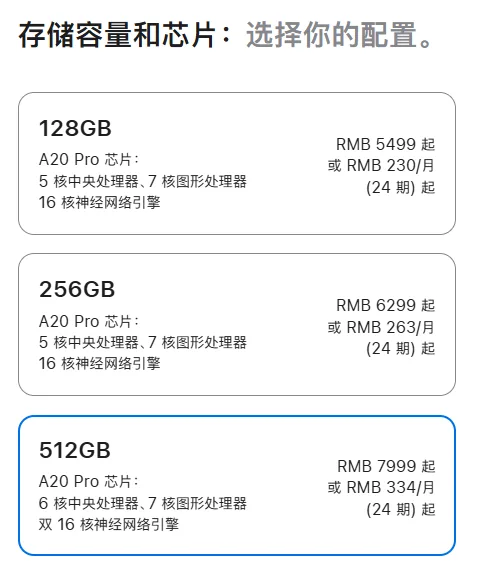
The second puzzling choice: the full-fat A20 Pro is exclusive to the top 512GB model.
Xiaolei found that the 128GB and 256GB variants come with a cut-down 5-core CPU. Only the 512GB model gets the full 6-core CPU and dual 16-core Neural Engine of the A20 Pro.
(Image source: Apple’s official website)
Go for a lower storage tier, and you’re getting a crippled chip. Previously, Apple only differentiated models by RAM and storage; now it’s even slicing up chip specs. Its tiered strategy is getting more granular by the year.
Third, the price.
The previous mini 7 launched at 3,999 yuan. This generation starts at 5,499 yuan — a 1,500 yuan increase. Want the 512GB Wi-Fi model? That’ll cost 7,999 yuan, nearly 8,000. Add nano-texture glass and a cellular model, and the top-spec unit easily breaks 10,000 yuan.
Spending 8,000 yuan on a 60Hz tablet is a hard sell for most people. At that price point, you can get an iPad Air, or even spring for the base iPad Pro with a little extra cash.
All in all, the iPad mini 8 brings genuinely substantial upgrades, with all the core hardware specs improved. For daily use, gaming and streaming, the experience will definitely be better than the previous generation.
Most notably, the long-standing jelly scroll pain point is finally resolved, restoring the mini’s core competitive edge.
For casual users, 60Hz is perfectly usable — especially for those upgrading from an older LCD mini, where the visual improvement will still feel massive.
But if you’re already used to 120Hz devices, going back to 60Hz will feel like a noticeable step down.
So the question is: would you pay 5,000-plus, or even 8,000 yuan, for this 60Hz OLED iPad mini? Let us know in the comments.