
 雷科技






This year marks China's APEC host year. The 33rd APEC Economic Leaders' Meeting will be held in Shenzhen from November 18 to 19, under the theme "Building an Asia-Pacific Community for Common Prosperity", with openness, innovation and cooperation identified as the three priority areas.
For the Greater Bay Area — China's most concentrated manufacturing hub — this is also an opportunity to showcase its industrial strengths to the Asia-Pacific region.
On October 20, ahead of the APEC meeting, the online themed publicity campaign "Witness the New Power of China's Intelligent Manufacturing — APEC in the Bay Area" kicked off in Guangzhou. A delegation of journalists, internet influencers, experts, scholars and young students visited key enterprises and industrial platforms in Guangzhou, Dongguan and Shenzhen. Lei Technology joined the tour to witness the power of intelligent manufacturing in the Bay Area.
On October 20, we visited XPeng Motors' Guangzhou Intelligent Manufacturing Base, CanSemi Technology, and Fushan Circular Economy Industrial Park, all located in Huangpu District, Guangzhou.
The three enterprises — one building cars, one making chips, and one processing municipal waste — form a complete industrial chain spanning from underlying chips to smart terminals to green circular economy. Chips are supplied locally to vehicle manufacturers, and the waste generated by operating vehicles is recovered and converted into electricity within the same region.
Smart, Efficient and Green: XPeng Turns Its Manufacturing Base into a Research and Learning Destination
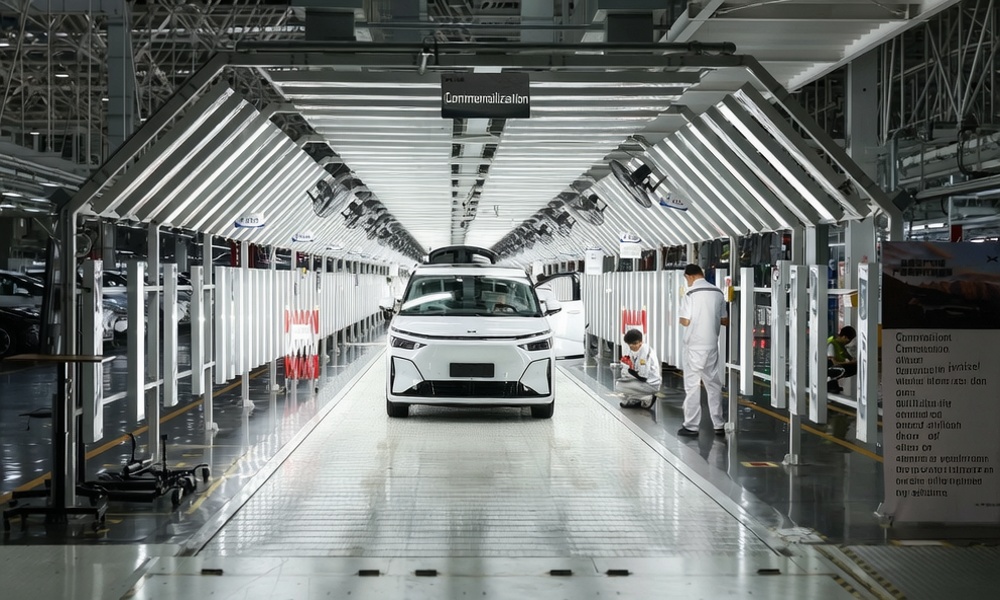
Our first stop was XPeng Motors' Guangzhou Intelligent Manufacturing Base in the Sino-Singapore Guangzhou Knowledge City. Upon entering, the first thing that catches the eye is the brand exhibition building, with a XPeng P7 mounted high on the exterior wall. It is said that this car is no ordinary display piece — it is the third XPeng P7 to officially roll off the production line, bearing serial number 003.
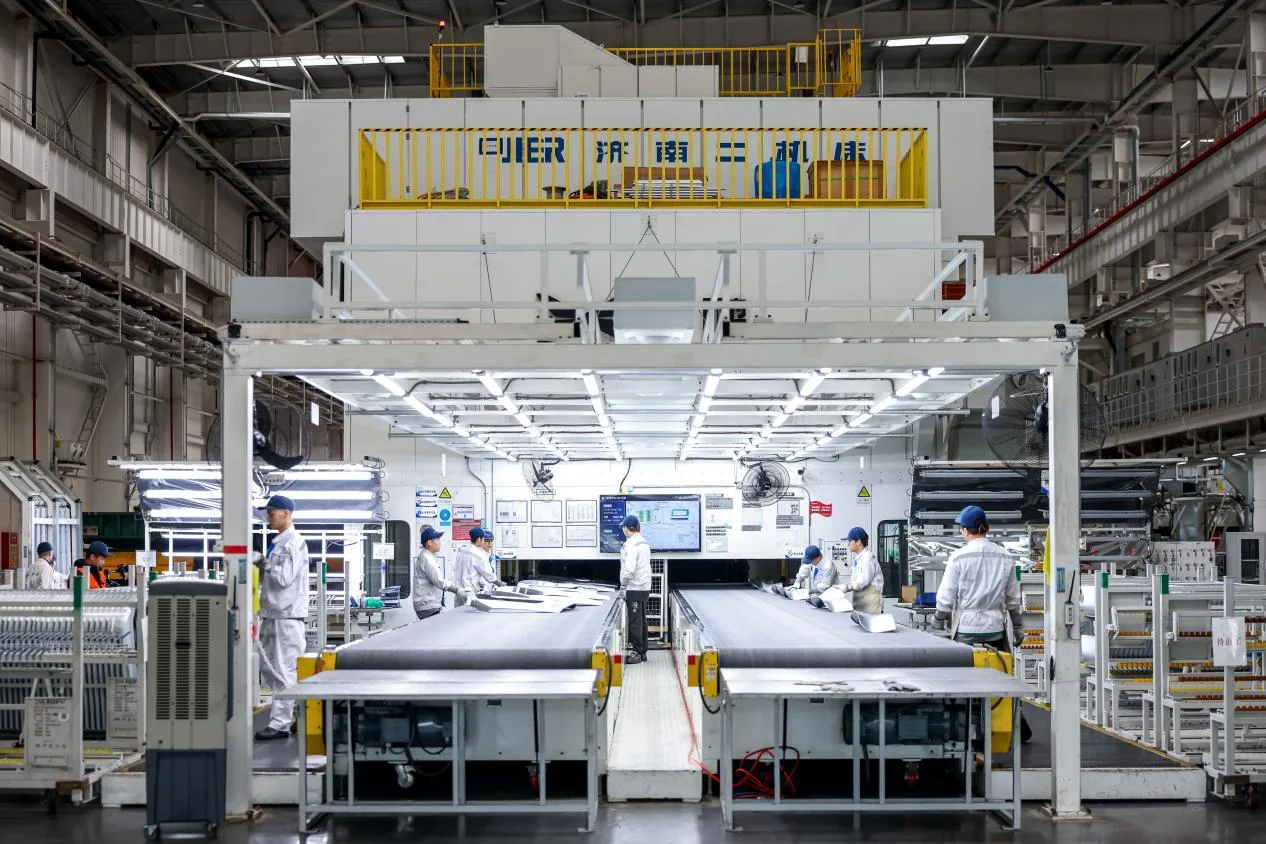
Inside the plant, we saw a production line built to Industry 4.0 standards. The intelligent manufacturing base adopts XPeng's own X-SEG philosophy — a combination of Smart, Efficient and Green — with a Manufacturing Execution System (MES) at its core, connecting Internet of Things and monitoring technologies throughout the entire production process.
(Photograph source: XPeng Motors)
Four categories of information — equipment status, process flow, quality data and production progress — are all visible in real time on the digital system, turning the factory into a highly transparent quality intelligent manufacturing platform.
A vehicle here undergoes four major processes: stamping, welding, painting, and final assembly. Following the production flow, we watched how a steel sheet and individual components gradually evolved into a complete vehicle.
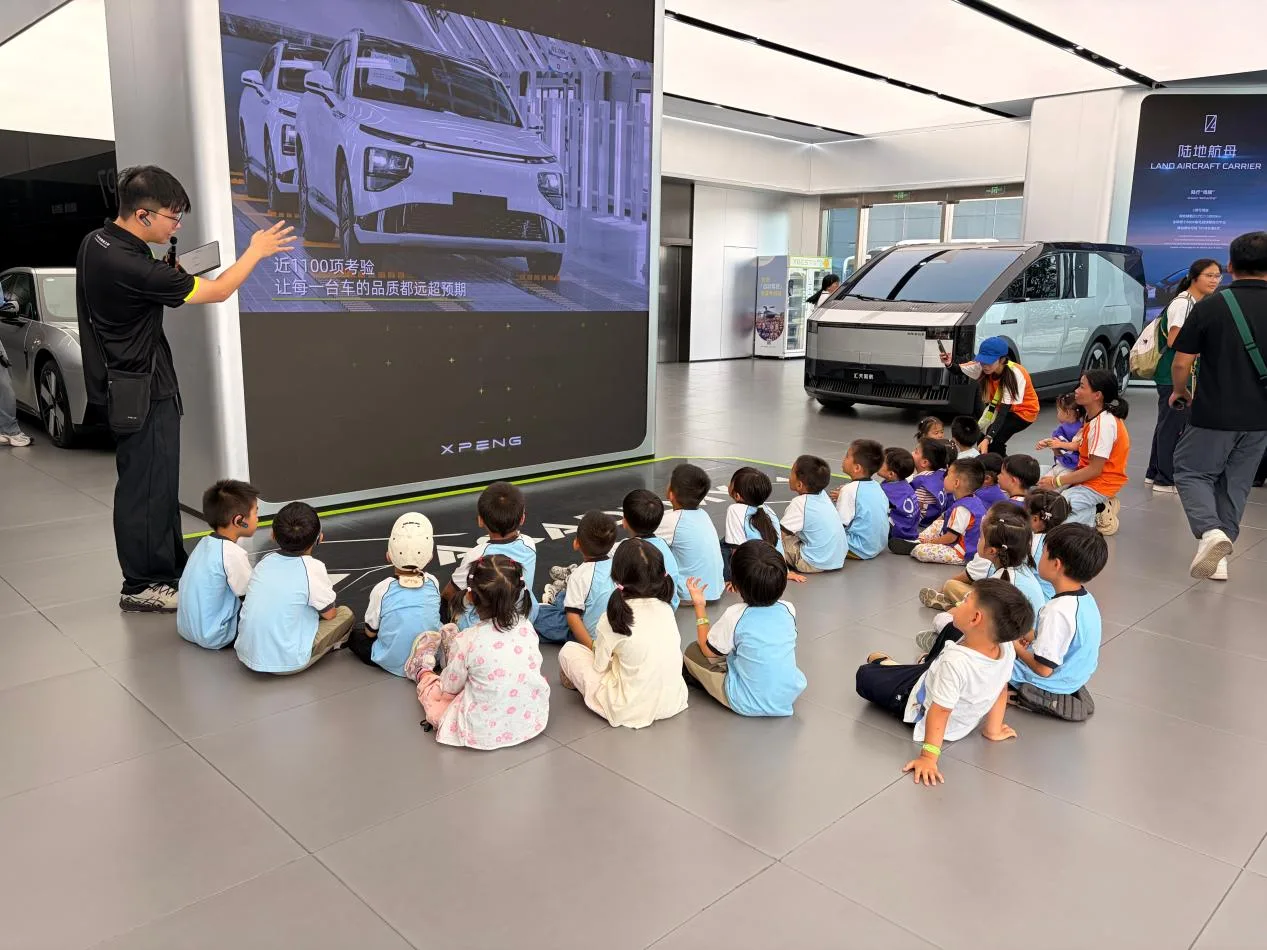
Interestingly, the base does not position itself as a closed production workshop. Centered around the "XPeng Intelligent Manufacturing Academy", it integrates the brand exhibition hall, production lines, research and learning workshops, and photo-worthy landmarks into an industrial cultural tourism space that hosts team building activities and study tours for primary and secondary school students.
We saw many kindergarten children and foreign visitors on site. The brand exhibition hall on the first floor has been upgraded into a technology center, the third floor features immersive interactive learning workshops, and even the second and fourth floors house XPeng staff canteens, making factory visits far from tedious.
(Photograph source: LeiTech)
Lei Technology has closely followed XPeng's developments. After more than a decade of growth, XPeng Motors now ranks among the Top 500 Chinese Manufacturing Enterprises and Top 500 Chinese Private Enterprises. It has won the First Prize of the Science and Technology Award of the Society of Automotive Engineers of China, and is recognized as a National High-Tech Enterprise, Guangdong Provincial Engineering Technology Center and Guangdong Provincial Enterprise Technology Center.
120,000 12-Inch Wafers Per Month: Huangpu Builds Its Own Chip Manufacturing Capacity
Leaving XPeng's manufacturing base, our second stop was CanSemi Technology, also located in the Knowledge City.
Integrated circuits are known as the jewel in the crown of industry, and CanSemi focuses on the most critical segment: wafer fabrication.
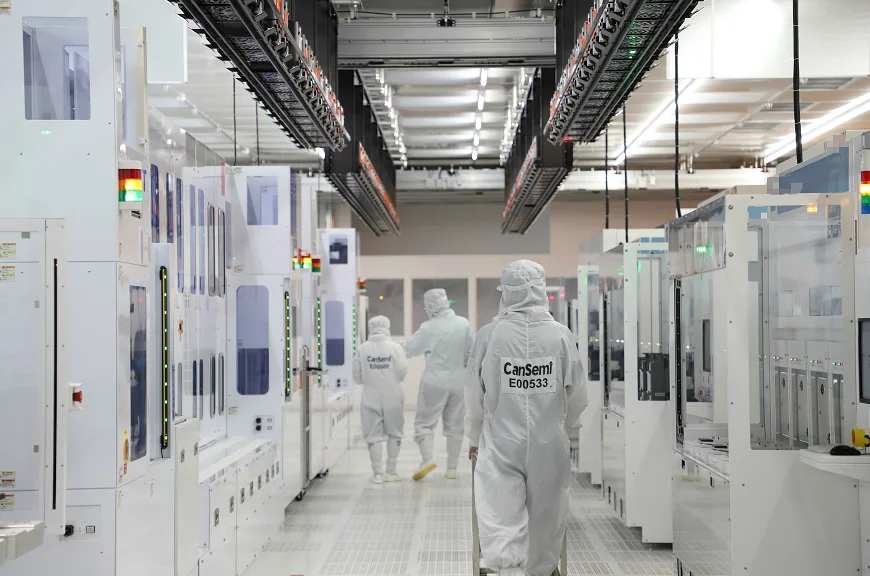
Founded in December 2017, CanSemi is the first 12-inch analog chip manufacturer in Guangdong Province and the Guangdong-Hong Kong-Macao Greater Bay Area to enter mass production, mainly targeting practical application scenarios such as the Internet of Things and automotive electronics.
(Photograph source: Yuexin Semiconductor)
CanSemi's pace of development is known in the industry as "CanSemi speed".
Groundbreaking for the Phase I project began in March 2018, and mass production was achieved in 2019 — in just 18 months. While advancing rapidly, the company completed production line construction, team building and process standard setting in parallel, achieving stable production from day one of mass manufacturing and premium quality alongside stable output.
According to the plan, when all four phases are fully completed and operational, the site will have a monthly production capacity of 120,000 12-inch wafers.
In the center of the exhibition hall, we saw the core product: 12-inch wafers. The larger the wafer diameter, the more chips can be cut from a single wafer, leading to higher efficiency and lower costs — but the requirements for material purity and equipment precision also grow exponentially.
The silicon wafers used by CanSemi have a purity of over 99.9999999%. A single wafer goes through four core processes — photolithography, etching, diffusion and thin film deposition — with hundreds of process steps repeated and stacked in cycles to build the three-dimensional internal structure of the chip. Photolithography imprints designed circuit patterns with nanometer-level precision; etching transfers the patterns into physical form; diffusion alters the electrical conductivity of materials through ion implantation; and thin film deposition grows a uniform and stable solid layer on the surface. Parameters at every step are strictly controlled.
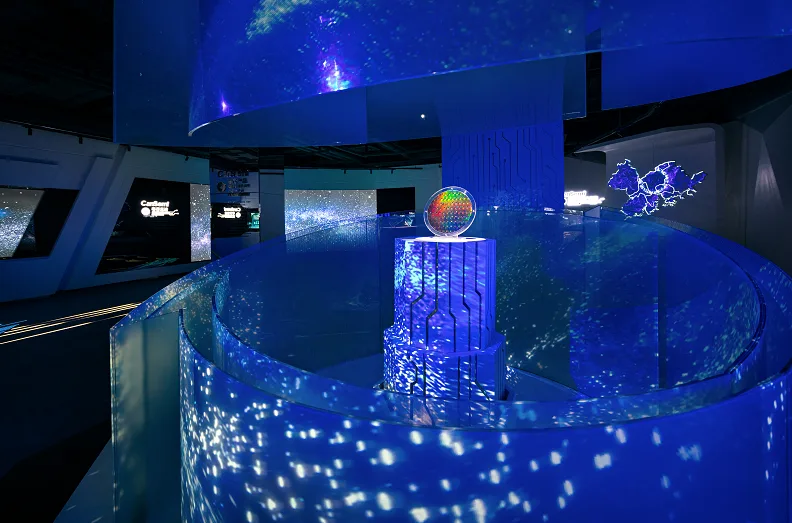
(Photograph source: Yuexin Semiconductor)
Entering the workshop, we saw the automated material handling system, also known as the "overhead crane system". The deep integration of virtual and physical systems minimizes human-induced variations. Combined with real-time monitoring, Statistical Process Control (SPC) and automated defect inspection, every wafer and every process is under lean management. It is said that CanSemi's product yield exceeds 98%. Its industrial-grade and automotive-grade chips are already used in products from automakers including GAC Group, and the company has received the Nomination Award of the 8th Guangdong Provincial Government Quality Award.
Notably, Yuexin serves as Chair of both the Guangzhou Semiconductor Industry Association and the Guangdong Integrated Circuit Industry Association, and as Founding Chairman of the Guangdong-Hong Kong-Macao Greater Bay Area Semiconductor Industry Alliance.
Since settling in Guangzhou, CanSemi has leveraged its manufacturing capacity and process standards to drive upstream and downstream industries, attracting nearly 150 semiconductor enterprises to set up operations in the area, 90 of which have already signed agreements and settled. A complete industrial chain covering material R&D, equipment manufacturing, chip design, packaging and testing, and end applications has gradually taken shape around Huangpu.
A Unique AAA Scenic Spot: An Industrial Park That Turns Waste into Electricity
Our third stop, Fushan Circular Economy Industrial Park, has a very different character from the first two. Located in Huangpu, it is invested, constructed and operated by Guangzhou Environmental Investment Fushan Environmental Energy Co., Ltd., a wholly-owned subsidiary of Grandtop Yongxing Group Co., Ltd.
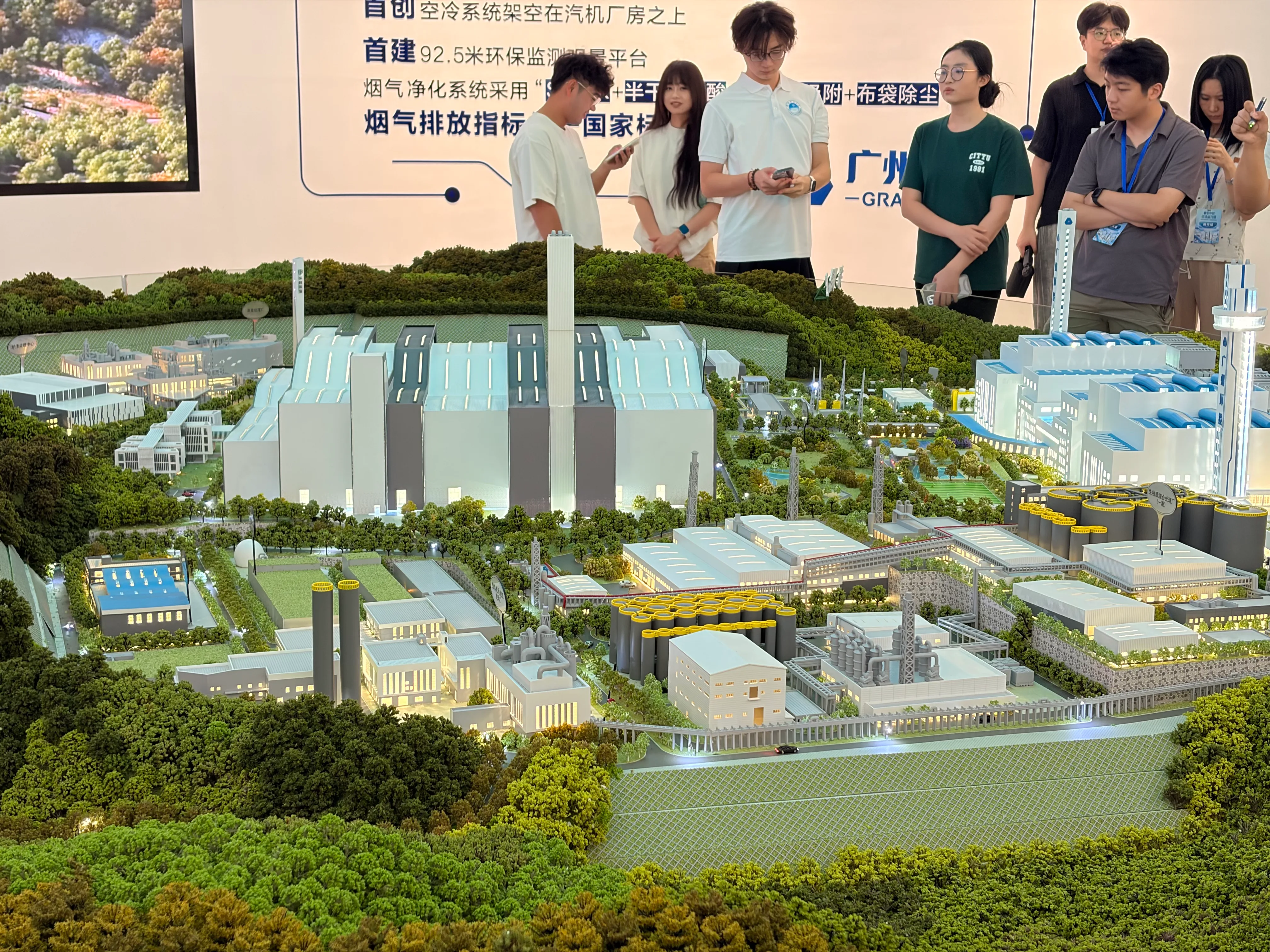
(Photograph source: LeiTech)
Covering an area of 1,604 mu, the park has a total domestic waste treatment capacity of 12,600 tons per day, plus a hazardous waste treatment capacity of 78,000 tons per year. It integrates multiple projects including waste incineration, biomass treatment, hazardous waste disposal, medical waste treatment, sewage treatment and slag treatment, making it one of the most comprehensive circular economy industrial parks in China in terms of planning and treatment technologies.
The most eye-catching feature in the park is a 262.5-meter-high observation tower built atop the chimney. Designed with the traditional Chinese concept of "round sky, square earth", it is the first of its kind in China to directly convert a waste-to-energy plant's chimney into an industrial tourism observation tower. Visitors standing on the observation deck 262.5 meters above the ground can see the production facilities below through the floor-to-ceiling glass — a truly spectacular view.
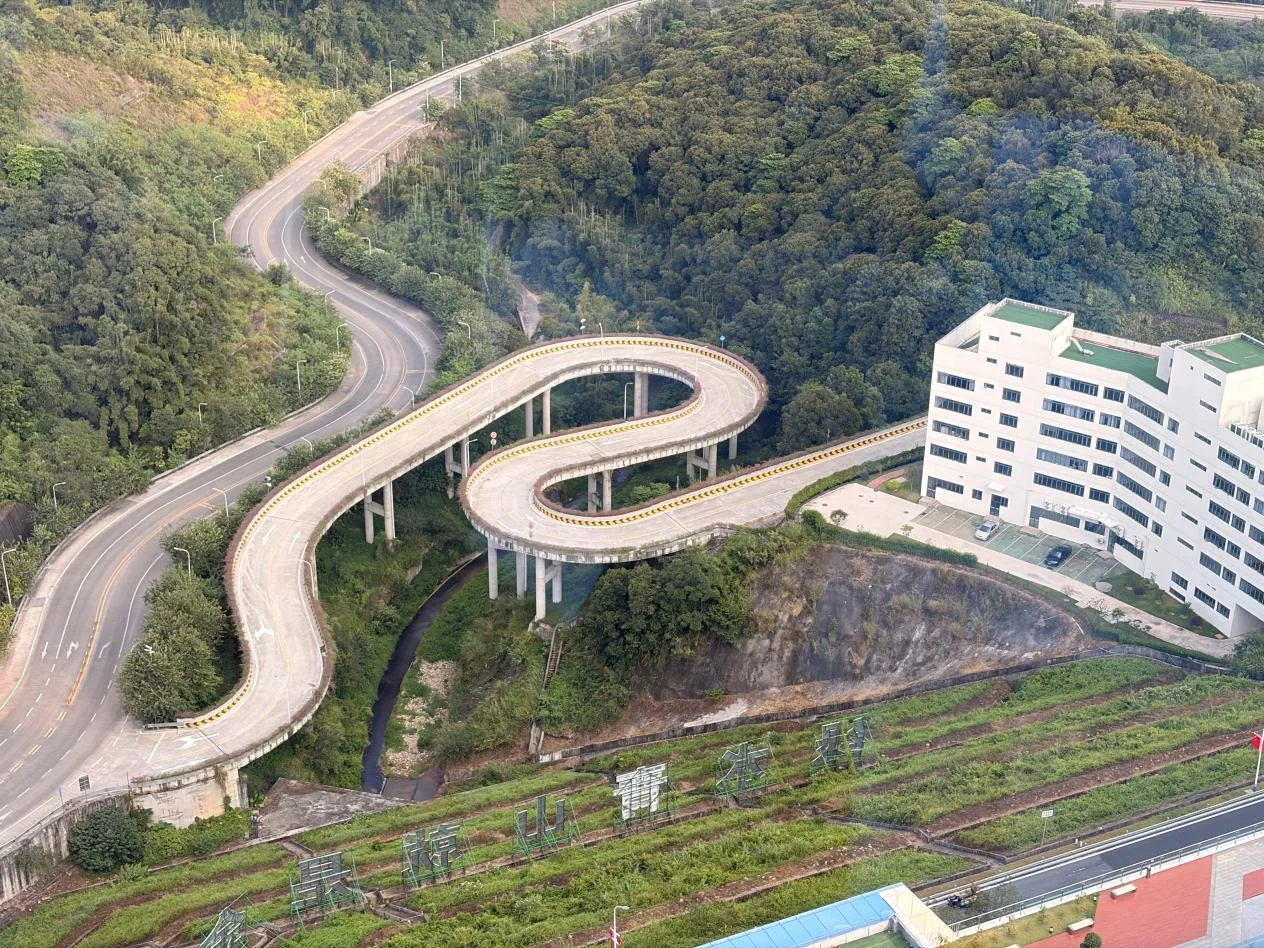
(Photograph source: LeiTech)
The main power generation facility is Guangzhou No.3 Resource Thermal Power Plant, built in two phases with a total treatment capacity of 9,300 tons per day. It is one of the largest and most technically challenging waste incineration power plants in China.
It is also the first incineration power plant in China built on a 60-meter-high fill slope, with an elevated structure for the turbine and main control buildings. The plant mainly treats domestic waste from Guangzhou's central urban area, processing 3.1 million tons of waste annually. Through high-temperature incineration, waste is converted into electricity, with an annual on-grid power output of over 1.2 billion kilowatt-hours — enough to meet the annual electricity needs of 420,000 households — helping Guangzhou achieve zero landfill of raw domestic waste.
The park also houses the Guangzhou Eastern Solid Resource Regeneration Center’s Biomass Comprehensive Processing Plant, with a daily processing capacity of 3,300 tons. Recognized as the world’s largest integrated urban organic waste treatment facility, it features the world’s largest single-unit co-anaerobic digestion system. By converting biogas into electricity and steam, it generates 240,000 kWh of electricity and 150 tons of steam daily.
How is such a vast facility managed? The park uses digital systems for management and monitoring to realize resource sharing. It also applies intelligent tools such as infrared thermal imaging, inspection robots and drone patrols for equipment inspections and high-altitude facility tours, reducing manual operations in high-risk scenarios.
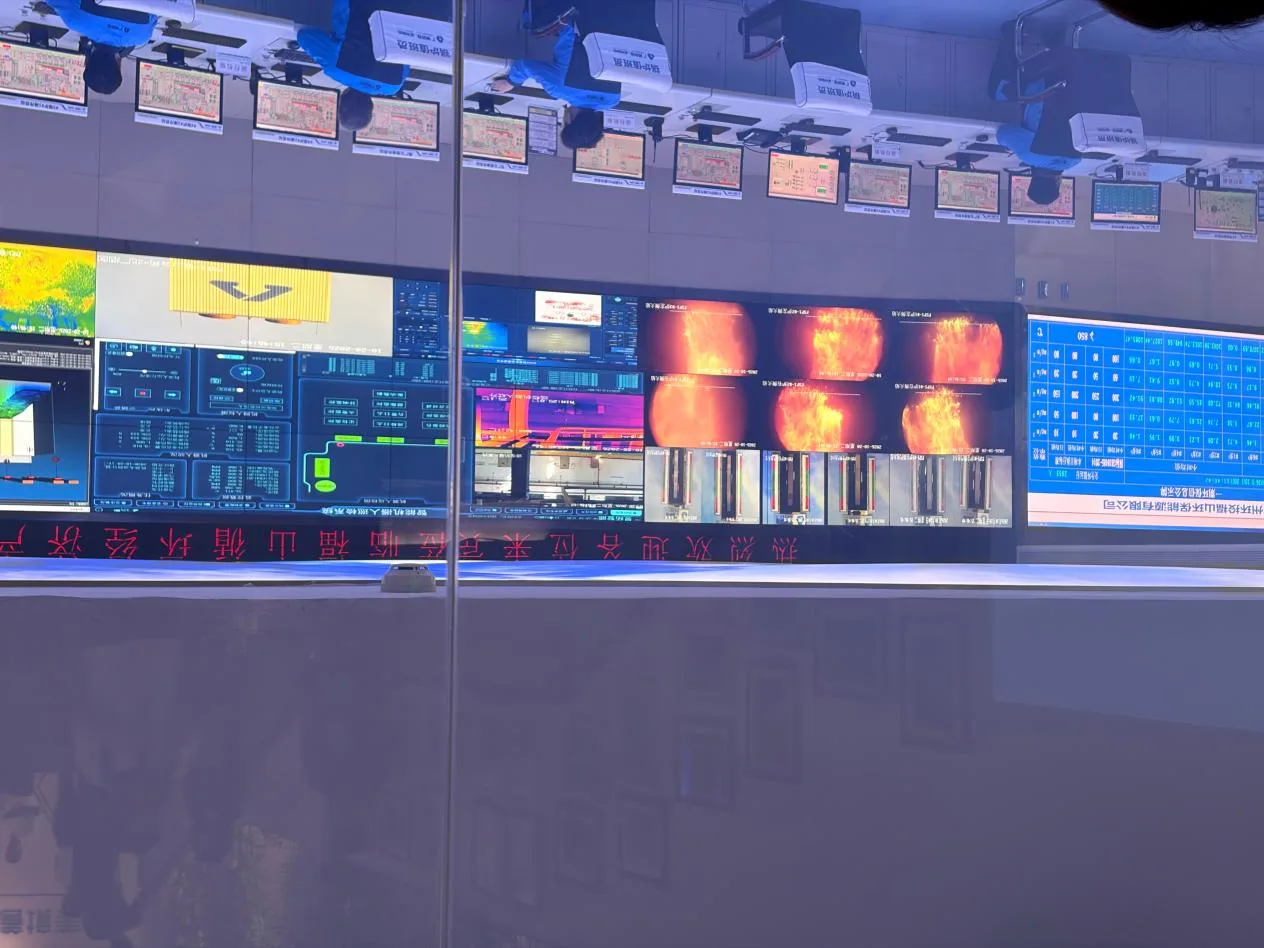
(Photograph source: LeiTech)
For this reason, Fushan is more than just a treatment plant. It is a National AAA-level Tourist Attraction, one of the first batch of National Science Popularization Education Bases for 2021–2025, and a National Eco-Environmental Education Base. It has won the Tien-yow Jeme Civil Engineering Prize, the National Quality Engineering Gold Award, and the China Steel Structure Gold Award "Guangdong Steel Award". Now open to the public free of charge, it educates citizens on waste sorting and terminal treatment technologies through physical exhibits, photos and videos.
In Closing
Over the course of the day, we saw how these three enterprises represent three distinct industries: XPeng represents intelligent terminals serving consumers; CanSemi fills the critical link of chip manufacturing; and Fushan recovers waste generated by urban operations and converts it back into energy. The three form a self-sustaining industrial ecosystem in Huangpu, and there are many similar examples across the region.
In fact, Guangdong's industrial enterprises above designated size achieved operating revenue of 9.34 trillion yuan in 2025, ranking first in the country. It is home to 8 national advanced manufacturing clusters and 10 trillion-yuan-level industrial clusters. What this media tour aims to showcase, however, is the new growth beyond sheer scale — whether the region can independently fill the critical links of its industrial chain, and whether technologies can connect with each other within the same region.
In one month, the APEC Economic Leaders' Meeting will be held in Shenzhen. As the Asia-Pacific region turns its gaze to the Guangdong-Hong Kong-Macao Greater Bay Area, what new industrial segments is this highly concentrated manufacturing hub developing, and how does it plan to carry out industrial cooperation with the Asia-Pacific region? The vehicle manufacturing, chip production and power generation facilities we visited in Huangpu offer one concrete answer.