
 雷科技





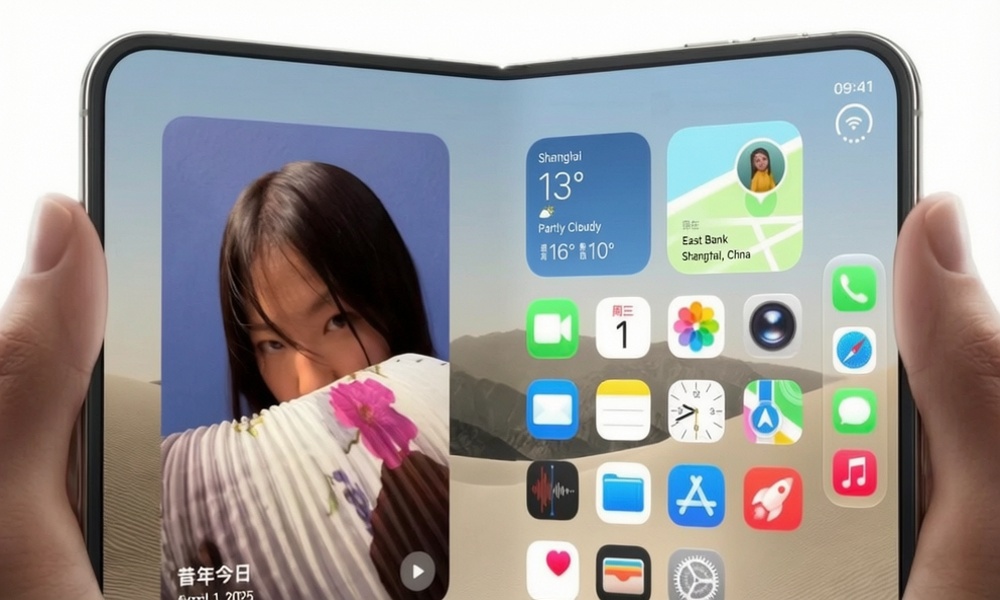

If there’s one device that’s dominated conversation in tech circles lately, it has to be Apple’s first foldable smartphone, the iPhone Duo.
Ever since its launch, it has never been short of debate.
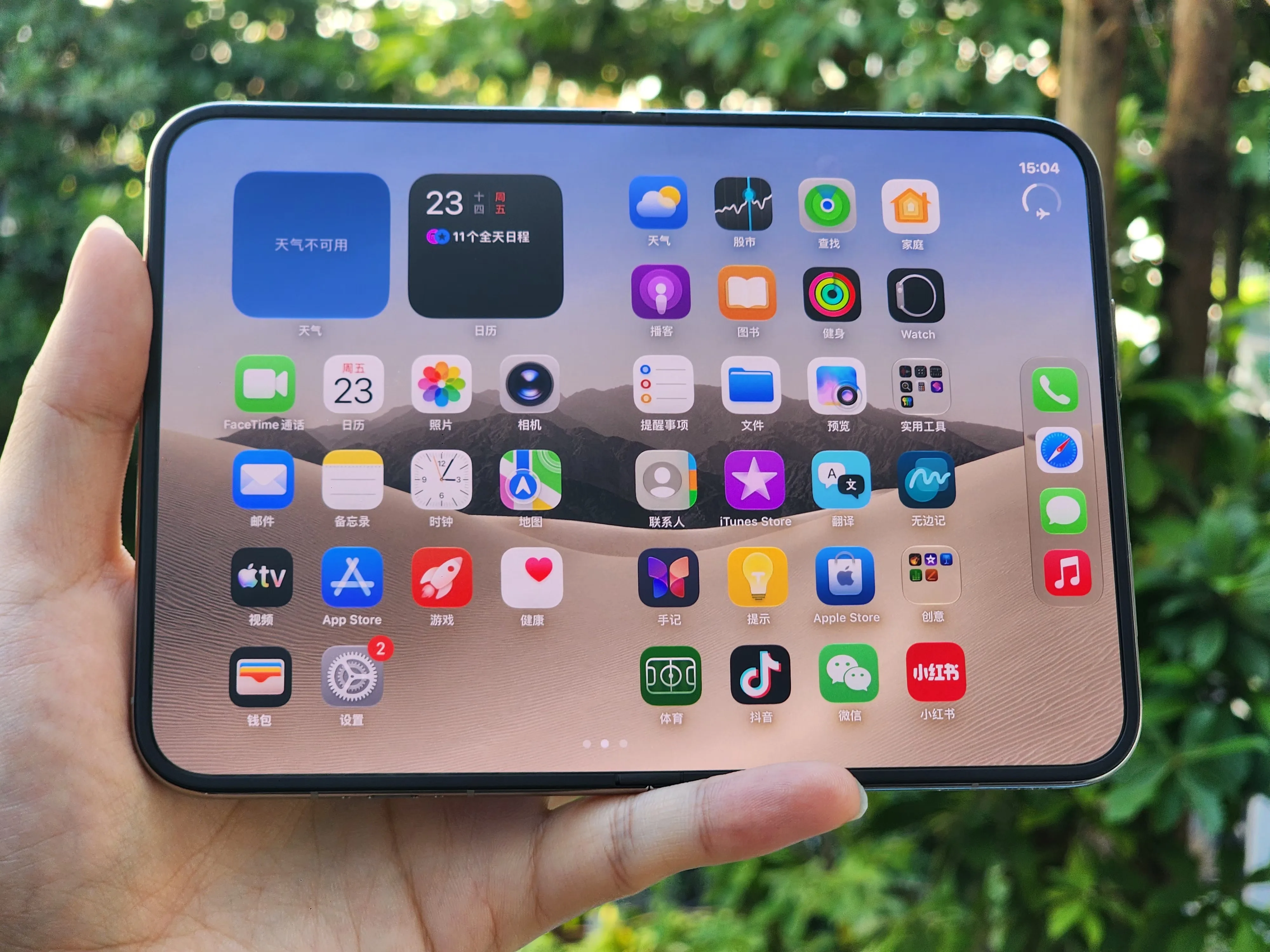
Image source: Xiaolei Bibibi
At first, Xiaolei Bibibi (ID: xiaoleibbb) assumed that no matter how divisive the product was, Apple’s brand power would guarantee at least a month of launch-day price premiums. But reality has delivered a harsh blow to everyone.
Just two days after going on sale, the iPhone Duo has already fallen below its official launch price of 15,999 yuan, making it by far the fastest new iPhone to drop below its release price in recent years.
This speed is extremely rare in Apple’s history.
On its October 23 launch day, when stores first opened in the morning, in-stock units at offline retail stores and through channel dealers were still selling for thousands of yuan above retail. Many scalpers lined up before dawn, hoping to cash in big on the hype around Apple’s first foldable device.
Scrolling through WeChat Moments that day, Xiaolei saw the 256GB version being snapped up instantly even with a 3,000-yuan markup. But by afternoon, the market price took a nosedive: the premium shrank to under 1,000 yuan in an instant, and some channels began offloading stock at the original retail price.
When combined with e-commerce platforms’ multi-billion subsidy programs, the 256GB version dropped to 15,769 yuan after subsidies — 200 yuan cheaper than the official website price.
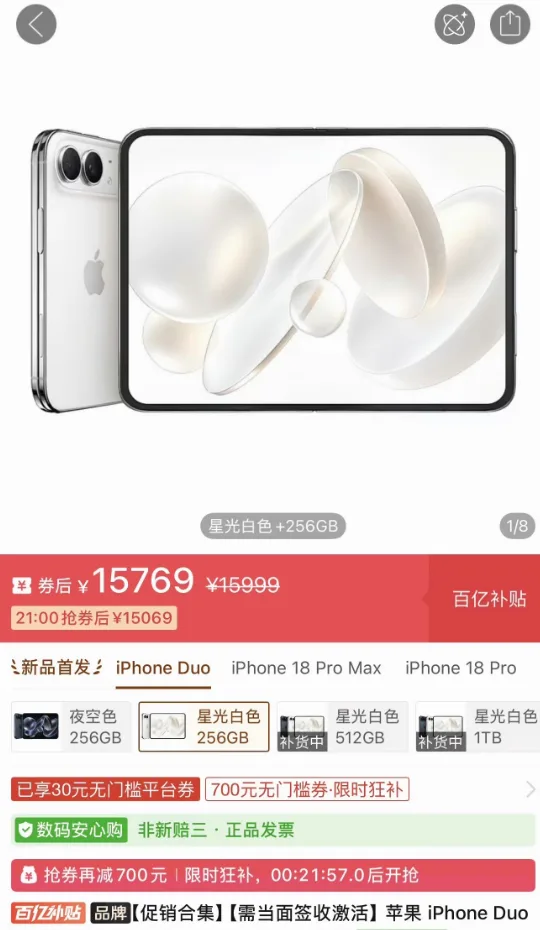
Image source: Screenshot from Weibo
At the root of this rapid price collapse is that the product simply failed to live up to expectations.
The most widely criticized issue is software optimization. Hard as it may be to believe, for a 16,000-yuan foldable phone, over 80% of commonly used apps have yet to be properly adapted for its large foldable display.
When unfolded, many apps simply stretch the standard mobile version of the interface,resulting in blurry image quality and awkward layouts. WeChat, in particular — an app people use every day — has thick black bars on both sides when expanded, making it look like nothing more than a “giant remote control” that completely wastes the advantages of a large screen.
Hardware problems are also serious. Early adopters have been reporting cracks or bright lines appearing at the hinge area of the inner screen. For a foldable device, the inner display and hinge are the most delicate components — any damage here drives the repair cost through the roof.
A quick check of official repair prices shows a single inner screen replacement costs nearly 8,000 yuan, almost the price of a standard iPhone.
From Xiaolei Bibibi’s perspective, the iPhone Duo’s rapid price slump boils down to four factors: its price tag, screen crease issues, the lack of Face ID, and poor software optimization.
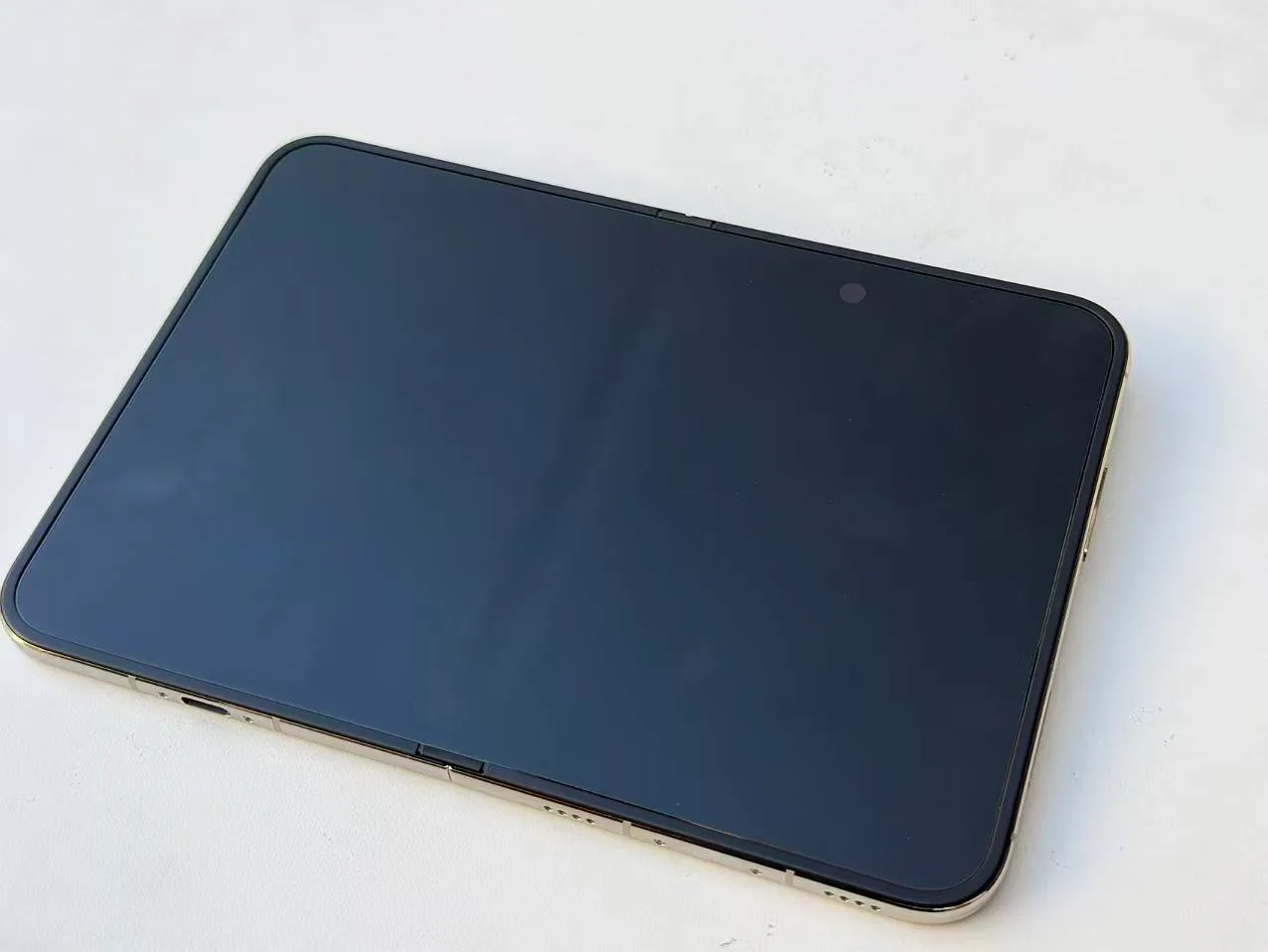
Image source: Xiaolei Bibibi
A starting price of 15,999 yuan is simply too high. For the same budget, you can get a top-spec Android foldable with large memory, plus mature features like hover mode and multi-screen collaboration — experiences refined over three or four generations. Apple’s foldable, by contrast, is a first-generation tentative product. Charging such a high price before quality control and ecosystem are polished makes little sense.
Second is the crease issue. Crease control is the top concern for foldable phone users, and Apple’s performance here is only mediocre — even falling behind the third or fourth-generation products of some Android makers.
Third is the absence of Face ID. Anyone used to iPhones knows how convenient Face ID is, especially now that people often wear masks and glasses. Yet the iPhone Duo has scrapped Face ID entirely, relying only on side-mounted fingerprint unlock. Not only is this a step backward in user experience, it also removes one of Apple’s biggest signature features — even Xiaolei, a long-time Apple fan, finds it hard to accept.
Finally, there’s software optimization. What is Apple’s greatest strength? Its ecosystem and app compatibility. But when it comes to foldables, that ecosystem advantage has turned into a weakness. Most apps remain unoptimized, rendering the large screen essentially useless. What’s the point of buying a foldable, then?
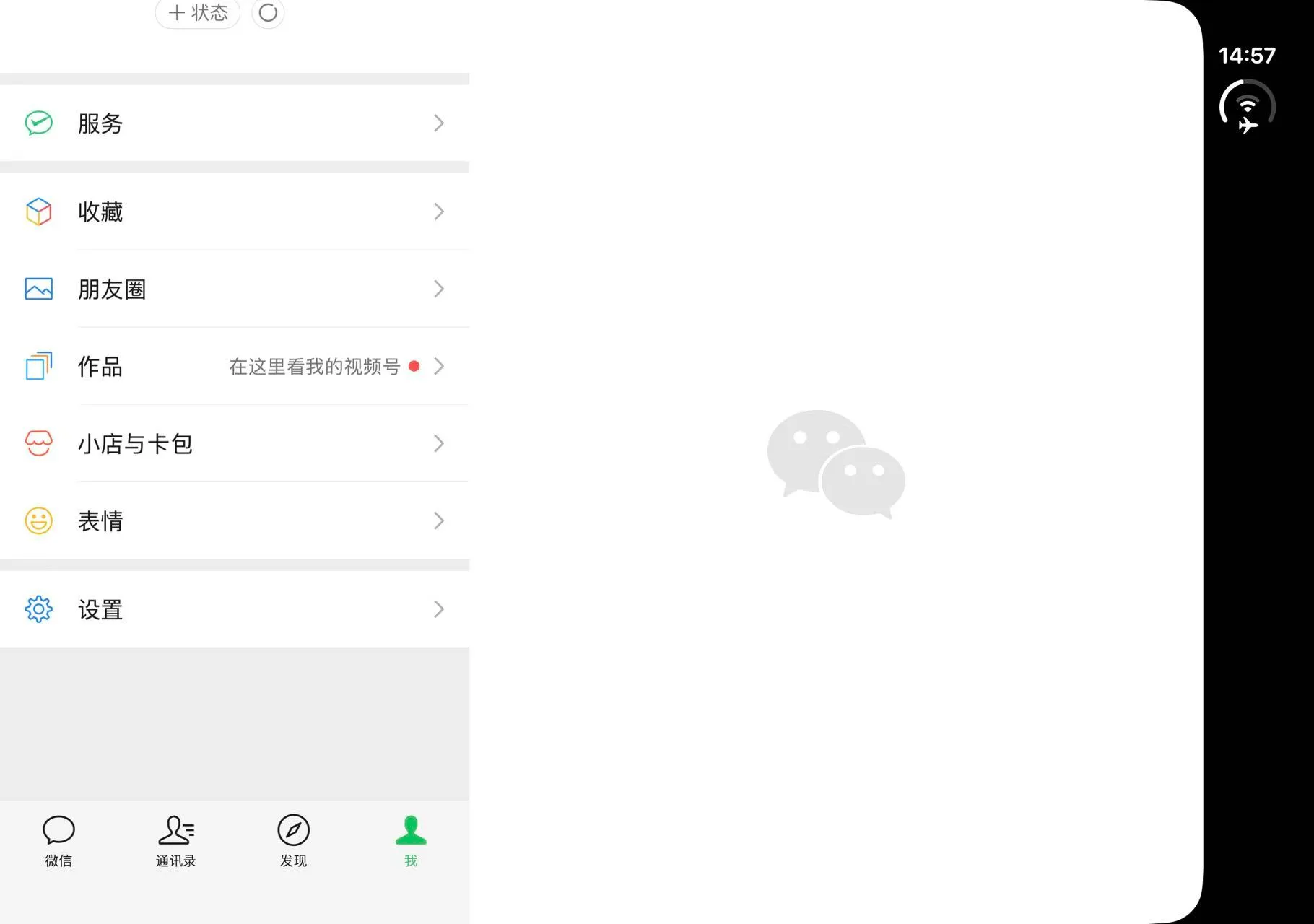
Image source: Xiaolei Bibibi
That said, consumers are growing increasingly rational these days. Gone are the days when people would buy whatever Apple releases. If a product doesn’t deliver on value, most shoppers won’t pay for it.
Of course, this is just the launch-phase market. It’s still too early to tell whether prices will rebound as production ramps up and software optimization catches up, or whether they will keep falling.
One last question:
Would you spend 16,000 yuan on Apple’s first foldable phone? Feel free to share your thoughts in the comments — let’s talk about it.