 雷科技






Not Content With Car Repairs, JD.com Is Determined to Succeed in the "Robot Repair" Business
As early as a year ago, JD.com launched its robot maintenance and repair business under the brand "JD Services". After more than ten months of development, nearly 100 robot enterprises including Zhiyuan, Yunshenchu and Zhongqing have reached after-sales repair cooperation with JD.com. The company has also rolled out the JoyRobocare brand for the European market, kicking off the global layout of its robot maintenance and repair services.
The prerequisite for scaling up robot maintenance and repair operations is a team of professionally competent technicians. JD.com plans to create 100,000 robot technician jobs in the next five years, but in this emerging industry, technicians need to be trained entirely from scratch.
In response, JD.com will roll out systematic training programs for frontline workers represented by couriers to help them transition into robot technicians. When robots take over parcel delivery from couriers, having these workers take charge of robot maintenance will not only rapidly build a large service team, but also generate a substantial number of jobs.
Elon Musk has repeatedly stated publicly that robots will become more ubiquitous than cars in the future. Right now, countless enterprises have set their sights on this embryonic blue-ocean market of robot maintenance and repair.
Will Robot Maintenance Spawn the Next JD Auto or Tuhu Car Care?
Although the embodied intelligent robot industry is still in its infancy, countless precedents since the Industrial Revolution have provided ample reference for its future development. In the third-party maintenance sector, the best benchmark is undoubtedly third-party car repair shops. Building robot repair services into the equivalent of JD Auto and Tuhu Car Care is also the goal of industry players.
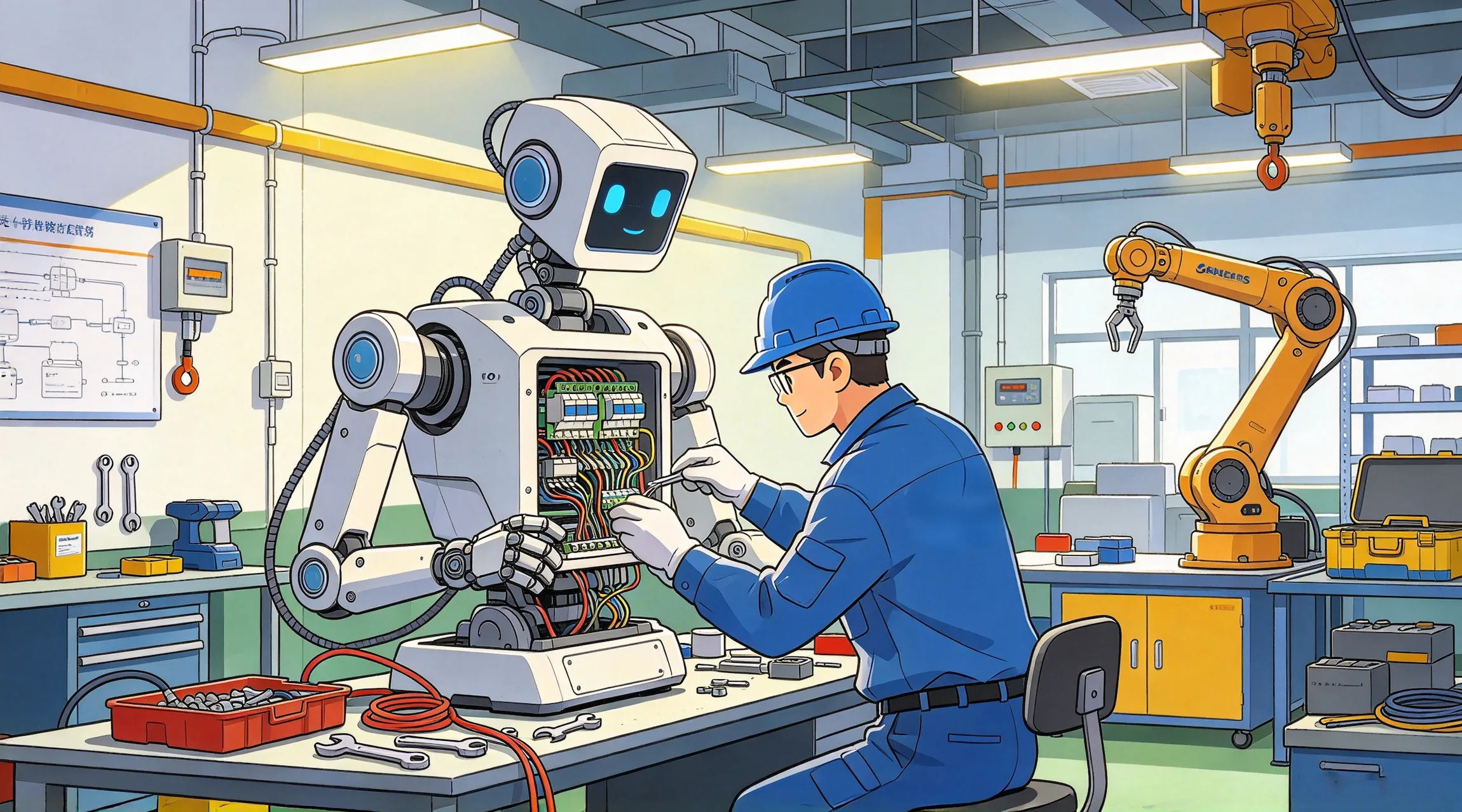
After Unitree Robotics rose to fame at the 2025 Spring Festival Gala, Xinghuo Embodied Intelligent Robot (Jinan) Co., Ltd. quickly targeted the robot maintenance segment and built a full-category repair technology system covering humanoid robots, quadruped robots (robot dogs) and other embodied robots. Enterprises including Bangtian Technology, Kaogong Yunji and Pingyun Xiaojiang have also entered the market one after another, launching after-sales services such as robot installation and repair.
(Photograph source: Doubao AI generation)
Even on video platforms, live streams selling robot repair courses have emerged, claiming that short-term intensive training can master robot repair skills, allowing graduates to take orders independently and easily earn over 20,000 yuan per month.
Admittedly, third-party robot maintenance is a vast blue-ocean market, but entering the market now does not guarantee profits. After all, current robot production capacity, ownership and market penetration remain limited, leaving relatively few robots in need of repair.
More critically, unlike the mature automotive industry, the robot sector has not yet formed unified interface standards. Most core robot components are custom-built exclusively by manufacturers and not sold publicly, making them incompatible across brands. Spare parts are literally the lifeline for third-party repair agencies.
With official authorization from robot enterprises, third-party repair agencies can purchase genuine parts; without it, they can only source used disassembled components. To prevent copying and reverse engineering, some companies even grind off model markings on chips, further raising the barrier for third-party repair.
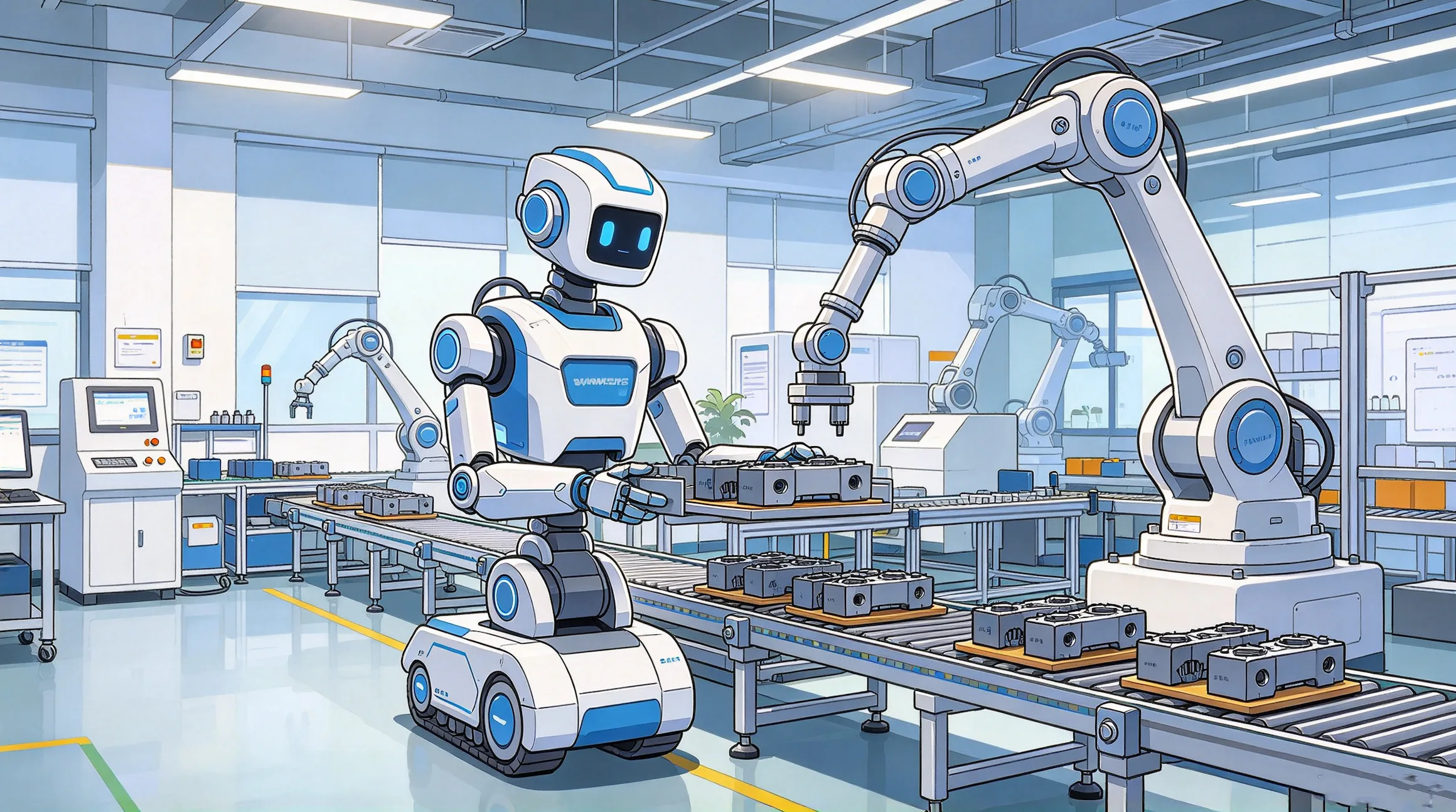
Robot manufacturers generally adopt a layered opening strategy: underlying control systems and encryption chips remain firmly in their hands, while debugging software and repair documentation are completely closed to the public. For core failures, third parties are simply unable to carry out repairs. What is more, many enterprises prohibit unauthorized repair, disassembly and modification of robots, and users may void their factory warranty by using third-party repair services.
(Photograph source: Doubao AI generation)
Compared with other third-party maintenance providers, JD.com's advantage lies in its status as one of China's top three e-commerce platforms, with proven strengths in self-operated business models and services. After rolling off production lines, consumer-facing robot products need to be sold through online or offline channels. Piled-up inventory would make it hard for robot companies to recoup their R&D and production costs.
The JD.com platform not only provides sales channels, but its self-operated model also helps robot enterprises share financial pressure — a double win. This is precisely why JD.com has secured cooperation with nearly 100 robot companies and dares to target 100,000 robot technician jobs within five years.
As for third-party repair, enterprises and individuals need not feel discouraged. The robot industry is in a phase of rapid growth. Just like the AI sector, the first wave of profits went not to those creating value with AI, but to those selling courses and teaching others how to use AI. When the industry matures and robots penetrate industrial, household, educational and other scenarios, there will be no shortage of robots requiring maintenance.
JD.com Is in the Robot 4S Shop Business, But Not Following the 4S Model
Due to constraints around spare parts, underlying protocols and access permissions, third-party maintenance cannot challenge the dominance of original factory service in the short term. In the long run, however, the rise of the third-party maintenance industry is inevitable.
We can take the automotive industry as a parallel case. In its early days, the auto sector also suffered from fragmented interfaces and incompatible protocols. On top of that, automakers required vehicles to be serviced at authorized dealerships during the warranty period, or the warranty would be void. Closed parts channels and undisclosed repair technical information held back the development of third-party repair services.
In 2014, 10 government departments including the Ministry of Transport issued the Guiding Opinions on Promoting the Transformation and Upgrading of the Automobile Repair Industry and Improving Service Quality, explicitly breaking the monopoly on repair parts channels and establishing a system for public disclosure of repair technical information.
Subsequently, the Anti-Monopoly Guidelines on the Automobile Industry further specified rules for "dual-standard parts" and the accessibility of repair technical information. In 2026, nine departments including the Ministry of Commerce released the Notice on Several Measures to Cultivate and Expand Consumption in the Automotive Aftermarket, requiring automakers not to restrict consumers' independent choice of repair providers or refuse to fulfill Three Guarantees liability on those grounds, and guiding vehicle and power battery enterprises to open up repair technology authorizations.
After these restrictions were lifted, JD Auto and Tuhu Car Care grew rapidly. By the end of 2025, JD Auto operated more than 4,000 stores; by the first half of 2026, Tuhu Car Care had 8,825 stores, with a net increase of 1,620 locations in the past year.
Lower prices than dealership service have made JD Auto and Tuhu Car Care hugely popular among car owners. Adopting an "if you can't beat them, join them" approach, automakers including NIO, Dongfeng Peugeot and Dongfeng Citroën have successively partnered with Tuhu Car Care this year to supply original factory parts.
The robot industry will follow a similar trajectory. In its early, unregulated growth phase, interface standards are disunified, companies guard against technology leaks with heavy confidentiality measures for core components, and prohibit users from using third-party maintenance. As the industry matures, interfaces and protocols will most likely be standardized, and regulators will introduce rules to break corporate monopolies.
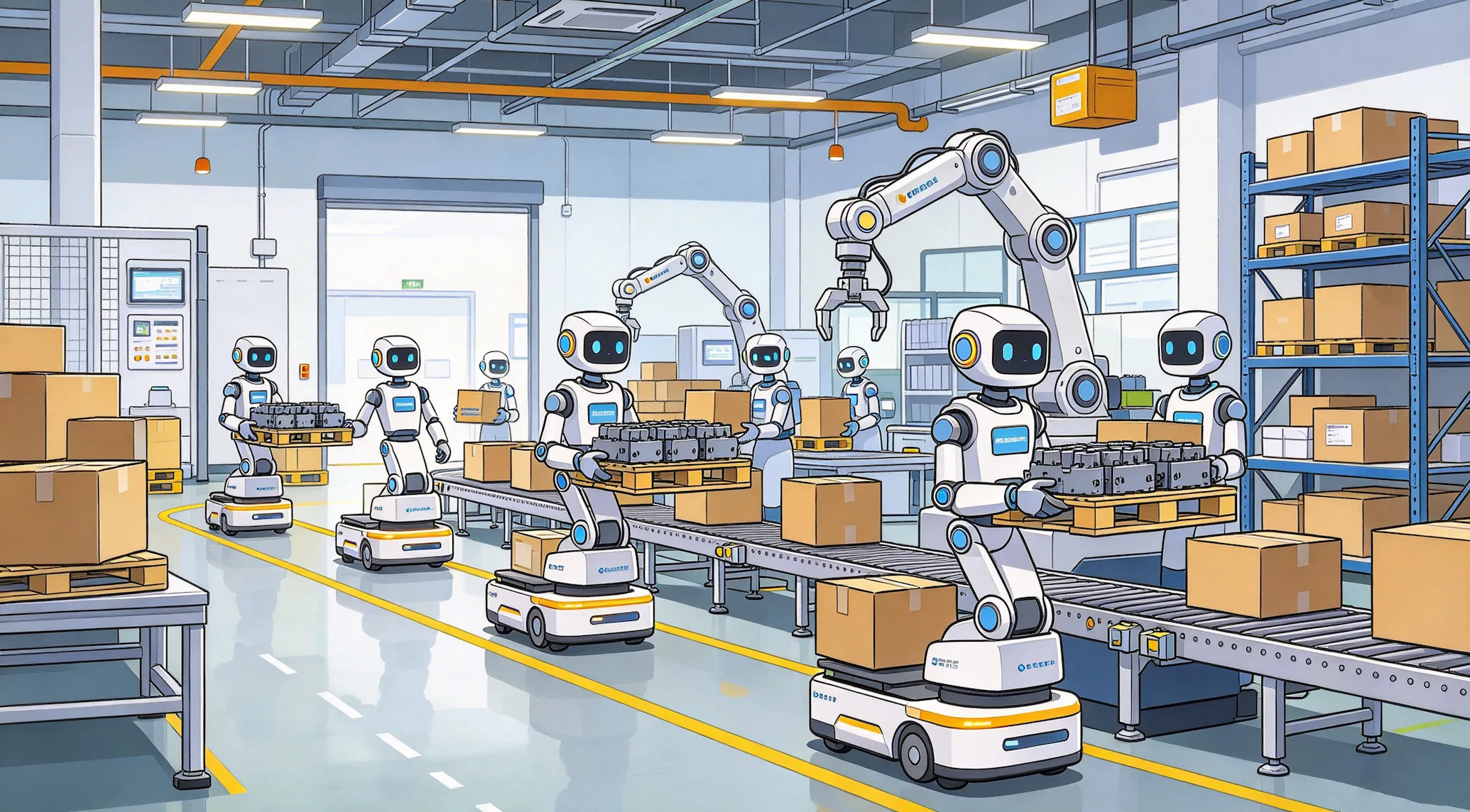
(Photograph source: Doubao AI generation)
Lei Technology (ID: dianchetong233) notes that many media outlets describe JD.com's 100,000-strong robot maintenance team as a "4S shop model", but typical 4S shops sign exclusive agreements with a single brand — a model fundamentally different from JD Services.
In Lei Technology's view, JD.com's robot maintenance service adopts the classic 4S shop value chain of "sales – parts – service – information feedback", running a 4S-style business but following the same path as JD Auto: the IAM (Independent Aftermarket) model.
Rather than tying itself to any single robot manufacturer, JD Services will leverage JD.com's strengths in channels, warehousing, logistics and service to build an after-sales system covering the world's major robot brands.
Third-Party and Factory Maintenance Will Coexist, Not Replace Each Other
The large-scale robot repair business has barely emerged, yet it has already drawn a host of players into the market. With its massive scale and multifaceted advantages, JD.com is both partnering with nearly 100 enterprises and accelerating the buildup of its technician team. It has even launched a "robot ambulance" service offering on-site repairs.
That said, no matter how large third-party repair platforms grow, they can never fully replace factory-authorized repair. Coexistence is the industry's mainstream trend. Access permissions and core algorithms remain with manufacturers, so complex faults, major overhauls, software upgrades and data calibration cannot bypass original manufacturers. Third-party chains, by virtue of their dense network and price advantages, cater to users' needs for high-frequency, low-difficulty services such as routine maintenance, standard part replacement and on-site quick fixes.
The booming robot industry has also given rise to many new occupations, such as robot trainers and robot maintenance workers. Many of my acquaintances work in robot back-end development, data collection, data annotation and related fields.
It is worth noting that the 100,000-job target is set for five years from now, not a reality today. Given current robot ownership and order volume, many third-party repair shops may only receive single-digit orders per month. Banking on a "20,000-yuan monthly income" right after entering the market will most likely lead to disappointment.
For those planning to launch a robot repair company or learn robot repair skills, Lei Technology's advice is to go ahead — entering now offers a chance to secure an early foothold as the industry flourishes. However, there is no need to pour excessive resources into the business at the initial stage, as current repair volumes can barely sustain profitability for companies or individual operators.