
 雷科技





Imoo kids’ smartwatches have landed back in the eye of the storm these days, dominating the top of social media trending lists.
Image source: Weibo
The trigger is straightforward. Many parents have found that even if they buy kids’ smartwatches from brands like Huawei or Xiaomi, their children can hardly fit into the “Imoo social circle” among classmates. To let their kids chat and interact with friends, parents end up having to buy an Imoo watch.
This seemingly absurd phenomenon stems from Imoo’s years of cultivating a social ecosystem for children.
Imoo has long dominated China’s kids’ smartwatch market, with Huawei and Xiaomi trailing behind. Beyond hardware features such as location tracking, calling and battery life, Imoo’s unique competitive edge lies in its relatively closed social network built around functions like adding friends by “tapping watches”, private chat and friend feeds.
Social options on children’s smartwatches are limited to begin with. Apart from Imoo’s proprietary social system, the main alternatives are the kids’ versions of WeChat and QQ. Even Xiaomi’s Mitu chat service is losing ground. The key difference is that Imoo tightly links social connections to its own hardware. Kids wearing watches from other brands can still make calls and send messages, yet they cannot fully join most social interactions among Imoo users.
For most people, switching phone brands won’t make you lose your WeChat contacts. But for some primary school students, switching watch brands may mean getting locked out of chats with classmates.
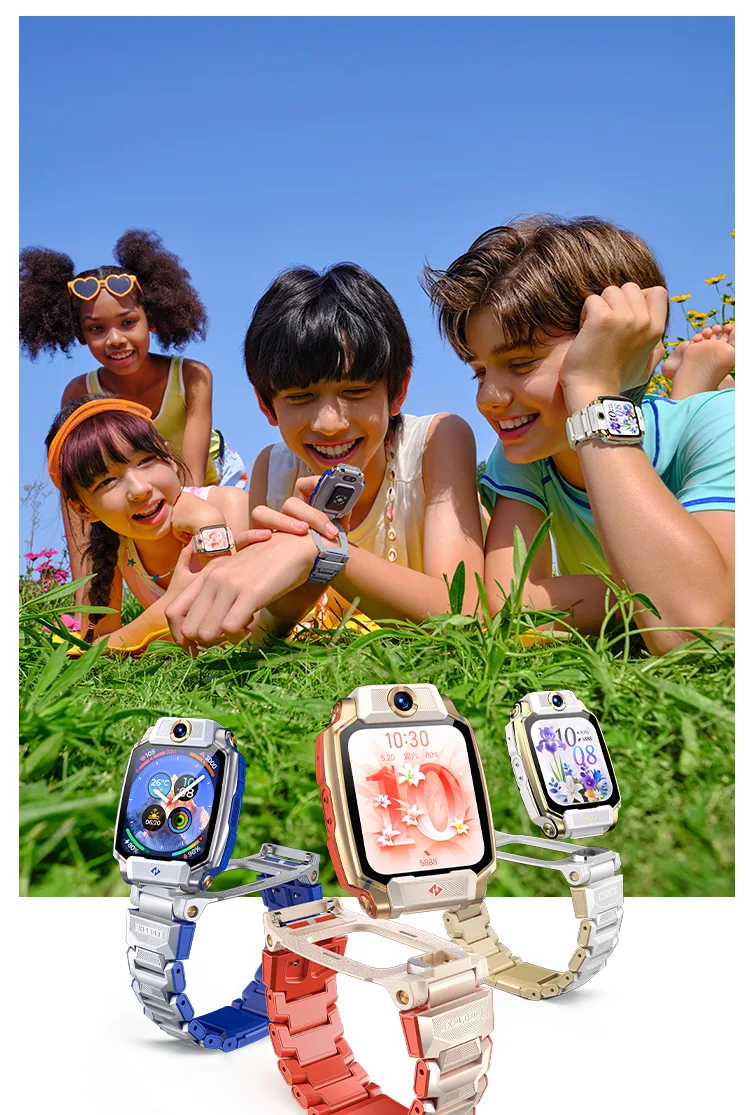
Image source: Xiao Tiancai
It comes as no surprise that Imoo can afford such aggressive pricing. Both the Z12 and Z12 Teen Edition are priced at 2,699 yuan. That is higher than Huawei’s Supernova X1 series, which has repositioned itself this year (1,598 yuan / 2,298 yuan), and Xiaomi’s very‑first kids’ smartwatch at 1,399 yuan.
Yet is this “primary‑school social hegemony” finally coming to an end? Will the new national standard for children’s watches, taking effect on January 1, 2027, mark a turning point for the industry?
Apple has long proven that closed‑off social ecosystems can be a lucrative business
Imoo’s playbook is hardly original. Across the Pacific, Apple leveraged iMessage’s blue‑and‑green text‑bubble divide to build similar social barriers among American teenagers, even giving rise to a form of “social stigma”.
A 2022 Wall Street Journal report cited one telling case. After 19‑year‑old US college student Adele Lowitz swapped her iPhone for an Android device, someone in her group chat quickly asked:
“Who turned green?”
Within Apple’s iMessage ecosystem, messages sent between iPhone users appear in blue bubbles. Communications with Android users show up in green bubbles. Historically, this was more than just a color difference. It translated to tangible gaps in experience, including high‑definition images, read receipts and group‑chat features.
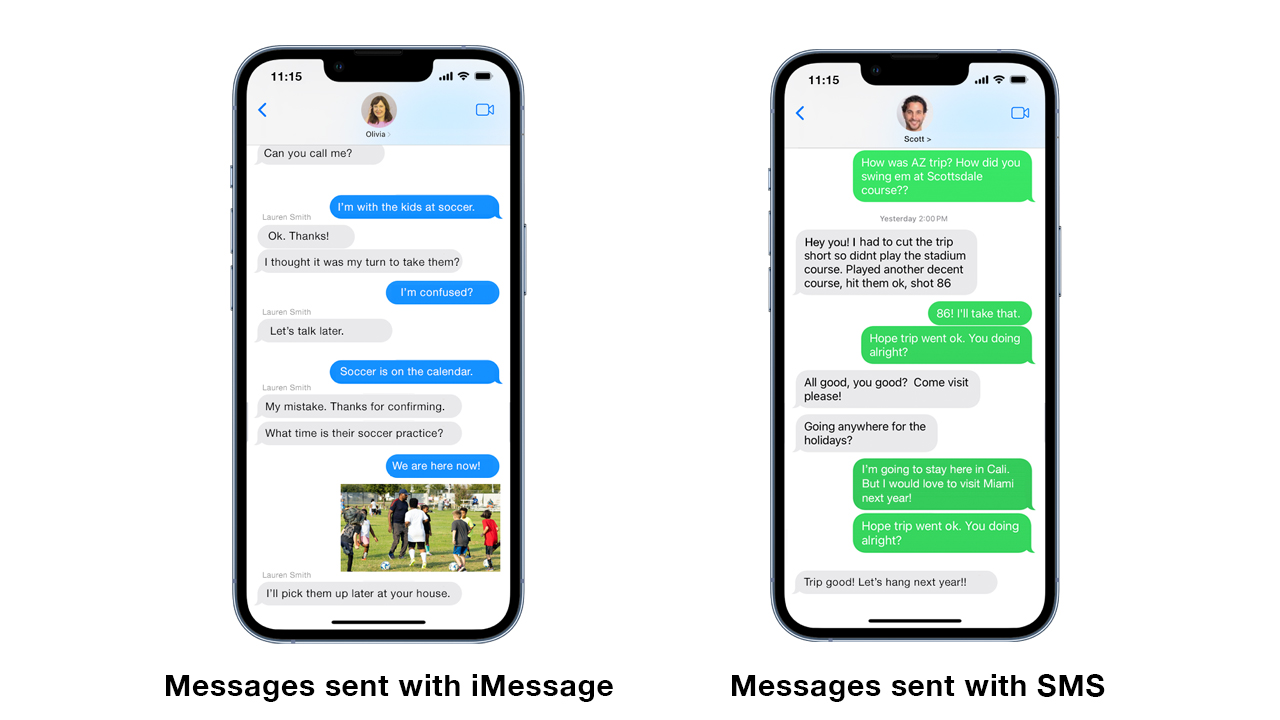
Image source: X
For young Americans using iMessage, adding an Android user to a group chat can degrade the entire conversation experience. Over time, blue bubbles became a marker of social status, while green bubbles could lead to exclusion and even mockery from peers.
Apple is fully aware of iMessage’s immense value. Internal emails uncovered during the Epic Games lawsuit against Apple laid bare how its executives viewed the service.
Back in 2013, Craig Federighi, Apple’s senior vice president of Software Engineering, voiced clear concerns. Bringing iMessage to Android, he feared, would remove a key barrier stopping iPhone-owning families from buying Android phones for their children.
In 2016, Apple’s marketing chief Phil Schiller put it even more bluntly: “Moving iMessage to Android will hurt us more than help us.”
This is one of Apple’s greatest product-design successes. With iMessage, Apple turned interpersonal social connections into a formidable competitive advantage for the iPhone. People pick an iPhone not merely because the device works well, but often because all their friends are on iPhones too.
Imoo follows much the same logic.
Features such as tap‑to‑add‑friends, in‑app chat and friend feeds genuinely tap into real‑world social needs among children. They have transformed kids’ smartwatches from mere tools for parents to contact and locate their children. Imoo deserves credit for building out its present‑day social network.
At the end of the day, communication is a fundamental human need, and segmented social circles are simply part of human nature. Much like WeChat versus QQ, or Facebook versus iMessage, teenagers and their parents hold vastly different social priorities. Imoo has dug deeper into the unique social demands of primary‑school and even some middle‑school students.
A senior Imoo product official noted in an interview : “In the long run, we believe communication sits at the core of market demand. Communication is a basic human need for adults and children alike. Therefore, the core value of kids’ smartwatches lies in two‑way communication: between parents and children, and between children themselves. The core functions of our 2015 launch were calling, location tracking and in‑app chat.”
By measurable outcomes, Imoo has undoubtedly been a success.
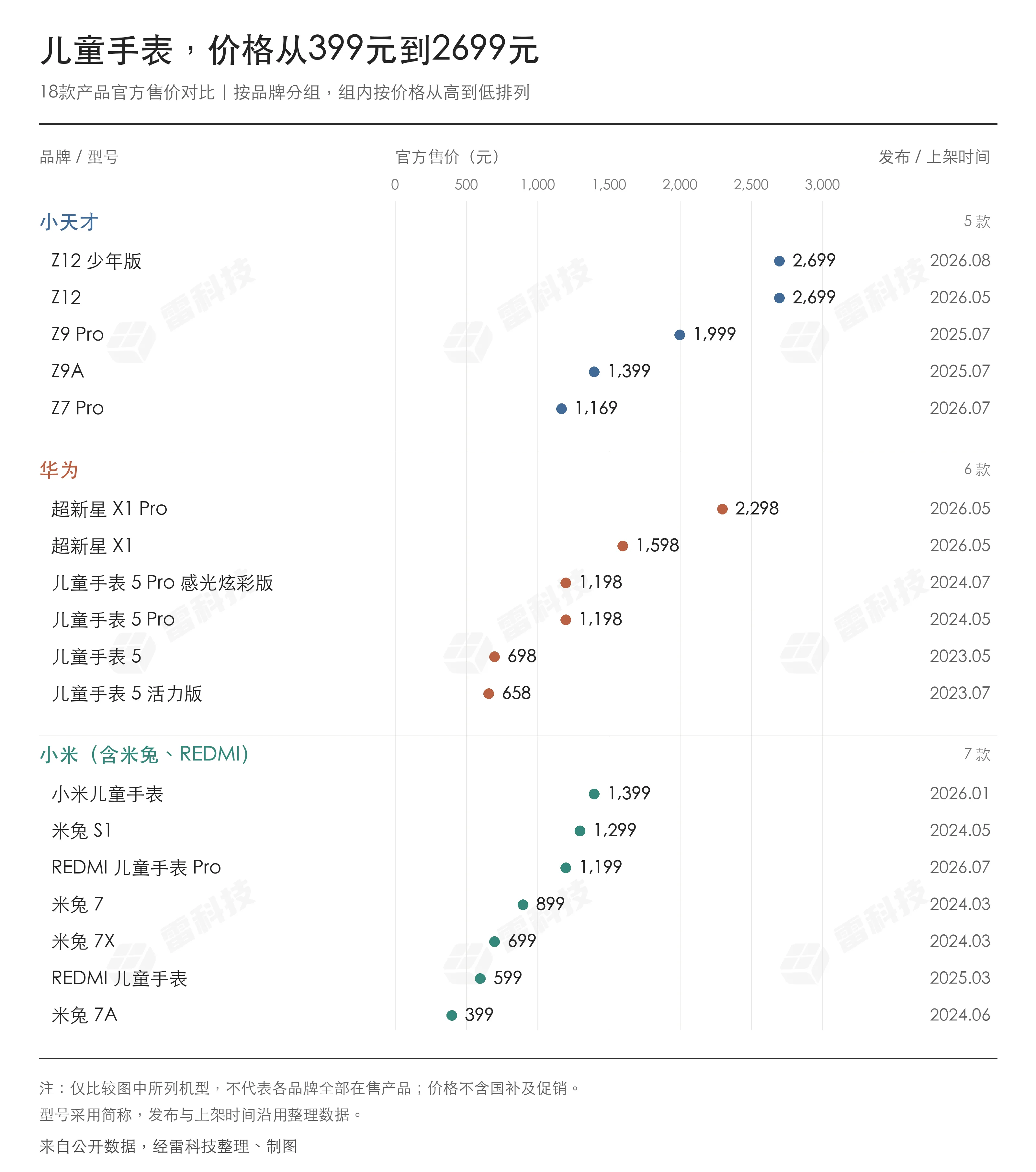
Image source: LeiTech
In fact, before Xiaomi rolled out its first ever branded kids’ smartwatch and Huawei launched its Supernova series in 2026, Huawei and Xiaomi lagged behind Imoo in pricing power and were nowhere near matching Imoo’s sales volume.
According to data from LuTu Technology, online sales of children’s smartwatches in China hit 11.224 million units in 2025, a year-on-year rise of 7.5%. Imoo captured 30.3% of the market, Huawei held 10%, and Xiaomi followed with 9.4%. Even in August, after Huawei and Xiaomi ramped up their efforts, Imoo still ranked first on both metrics, holding a 27.8% unit-share and 52.6% revenue-share of the online market.
Bear in mind: these figures only cover online sales. A large portion of Imoo’s competitive advantage lies in offline channels that are not included in the dataset.
Still, whether Apple or Xiao Tiancai, the success of their product design does not obscure another reality: Restricting cross-brand communication to convert social relationships into hardware sales is itself a deliberate, commercially driven choice.
In recent years, mounting external criticism and regulatory pressure have prompted Apple to gradually open up its closed social ecosystem.
In 2024, Apple officially enabled Rich Communication Services (RCS) support in iOS 18, allowing iPhones to exchange high-resolution photos and videos with Android devices, and supporting features such as read receipts and typing indicators. This May, Apple partnered with Google to introduce end-to-end encrypted RCS messaging in iOS 18.5, further narrowing the gap in cross-platform user experience.
Yet Apple has not opened iMessage itself—precisely illustrating that preserving a distinctive user experience and enabling basic cross-platform communication are not mutually exclusive choices.
For Xiao Tiancai, the question isn’t whether to abandon its social network—but rather, why children’s social relationships must be confined exclusively within a single smartwatch brand.
The New National Standard Is Not a Silver Bullet—But It’s a Good Start
Rome wasn’t built in a day.
Many parents have long voiced dissatisfaction with Xiao Tiancai’s “closed social” model. In 2024, China Newsweek published an article titled “How Many Children Are ‘Trapped’ Inside Smartwatches?”, recounting one parent’s experience:
After her son explained that all his classmates used Xiao Tiancai watches—and that he couldn’t add friends without one—she reluctantly purchased one. Only later, upon discovering he spent nearly two hours daily on the watch’s chat app, did she grasp the severity of the issue.
Similar complaints are widespread across social media. Children’s smartwatches increasingly resemble smartphones: Kids become engrossed in chatting, compete for likes, and parents find themselves torn—fearing their children will be socially isolated if they don’t join in, yet equally concerned about excessive screen time and digital addiction. Devices originally bought for safety have instead become a new source of anxiety.
By the end of 2025, mounting dissatisfaction—from consumers to industry stakeholders—culminated in the mandatory national standard GB 46859-2025, “Technical Requirements for Children’s Smartwatch Safety” (hereinafter referred to as the “New National Standard for Children’s Smartwatches”). Beyond provisions covering personal information protection, content safety, anti-addiction mechanisms, and payment controls, one clause stands out:
Children’s smartwatches from different brands must be capable of exchanging phone numbers and nicknames.
According to the official announcement, the New National Standard takes effect on January 1, 2027, mandating compliance for all newly launched children’s smartwatches. In practice, however, several leading manufacturers involved in drafting the standard have already taken proactive steps. Huawei, for instance, has enabled cross-brand contact addition in its Children’s Watch 5 and Supernova X1 series—supporting interoperability with the latest-generation models from other top-tier brands.
This includes the Xiao Tiancai Z12.
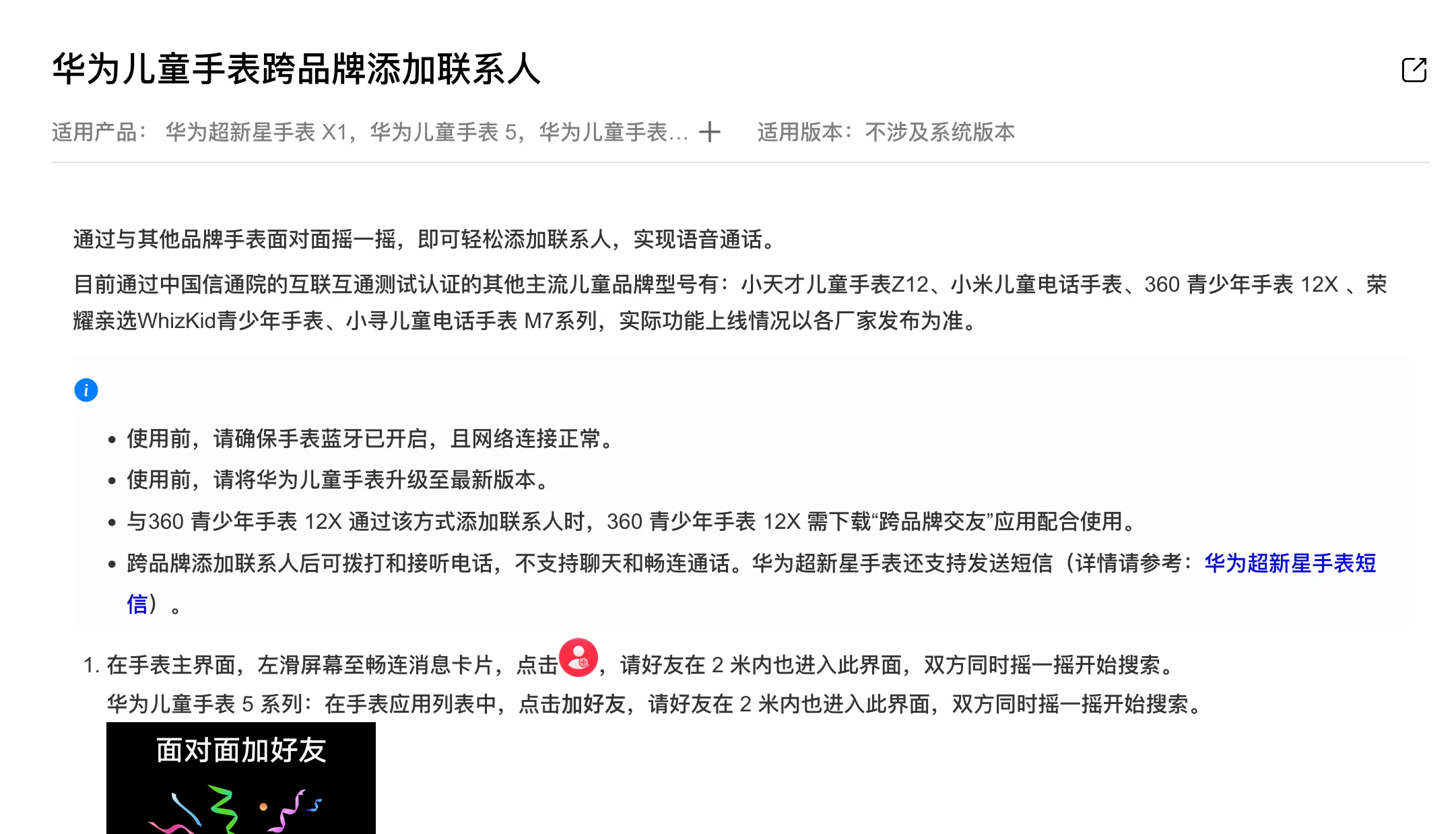
Image source: Huawei
Yet dismantling Xiao Tiancai’s social barriers remains a long road ahead. The New National Standard primarily mandates interoperability at the contact-list level—it does not require unification of different vendors’ social networks. Even after full implementation next year, children using Huawei or Xiaomi watches still won’t be able to join Xiao Tiancai’s Micro Chat group conversations or participate in Friend Circle interactions.
This clearly falls short of what many parents and children truly hope for.
On the other hand, it’s at least a promising start. Enabling cross-brand contact exchange involves resolving challenges around identity verification, encrypted transmission, and parental oversight—and the New National Standard demonstrates that major manufacturers can indeed establish unified technical specifications grounded in child safety. If phone numbers can be shared seamlessly, why shouldn’t vetted friend relationships, chat messages, or even group chats—subject to parental approval—also become interoperable?
Certainly, further opening up social networks will require addressing additional complexities: unified account systems, content moderation, data protection, and responsibility allocation. Yet these are largely technical implementation and industry collaboration challenges—not sufficient justification for maintaining brand-based isolation.
Ultimately, Xiao Tiancai bears no obligation to dismantle its social ecosystem and remains free to attract children and parents through superior product design and richer features. However, it has yet to demonstrate why safeguarding children’s social safety necessitates restricting normal communication across competing brands.
Apple’s actions prove that preserving a distinctive social experience and improving cross-platform communication are compatible. Meanwhile, the New National Standard marks the industry’s first concrete step forward in China. Ultimately, we hope to see children freely choose the smartwatches they love—without having to pick a brand solely to preserve a friendship.