
 雷科技





How Will Robots Finally Step Into Our Daily Lives?
This is arguably one of the most frequently asked questions in the embodied intelligence industry over the past few years. Some believe robots should first master housework and elderly care, eventually evolving into all-purpose home assistants. Others argue that instead of waiting for a humanoid robot capable of doing everything, we should let robots excel at one specific task first.
For example, taking photos and shooting videos.
Back in July this year, Insta360 unveiled its long-term vision for Cameraman, a "photography robot". It aims to build a Camera Agent that can autonomously perceive surroundings, scout shooting positions, frame shots and track subjects, without being confined to any fixed product form.
Image Source: Insta360
Simply put, what Insta360 wants to create is a camera that can complete shooting tasks on its own, instead of requiring constant manual control.
At almost the same time, Beni, a wheeled pet-like robot developed by Movel AI — founded by a former senior DJI engineer — hit the market. It can follow users, avoid obstacles, jump, and capture 4K footage.
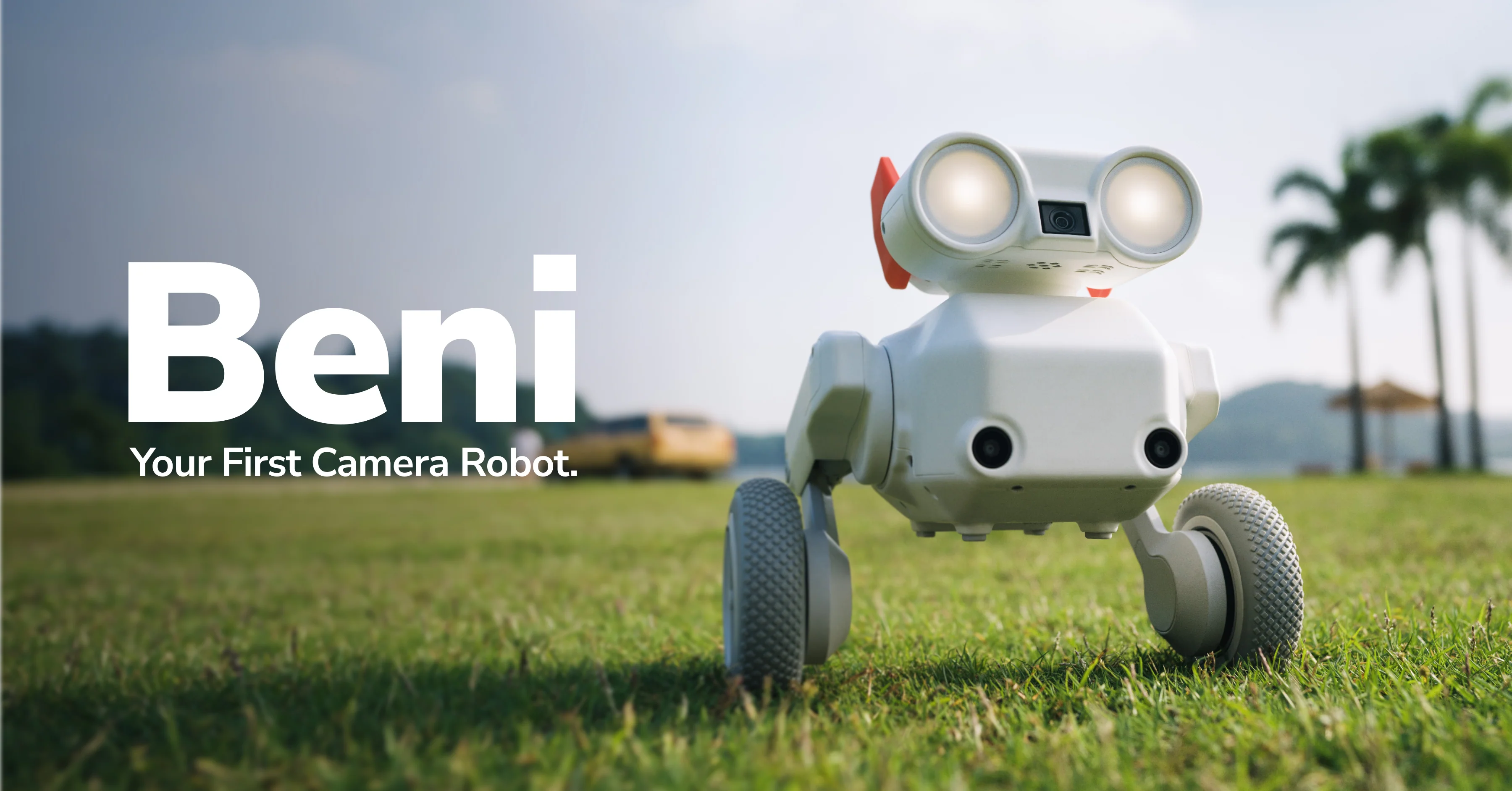
Image Source: MiaoDong Technology
Compared with Insta360’s Cameraman, which is still in the exploratory phase, Beni has finished its crowdfunding campaign. Its early-bird price starts at $549 (roughly 3,674 CNY). Shipping will begin in November, with domestic releases aligned with large-scale overseas deliveries.
It is now just one step away from reaching consumers.
And these two are far from the only players betting on photography robots. DJI and HOVERAir have long explored autonomous tracking shots with drones. The Qiyuan T1 and Weitu Dynamics’ quadruped robots have also taken on mobile photography roles. Even Honor has integrated a motorized gimbal and AI Agent into its Robot Phone. The divide lies in this: some build robots purely for photography, while others teach existing robots how to shoot.
As the saying goes, all roads lead to Rome. But on the journey of embodied intelligence reaching ordinary users, will photography turn out to be a narrow trail or a broad highway?
Letting Cameras Move on Their Own
If we define a photography robot as an autonomously mobile device that follows users to shoot, it has already landed in the consumer market — it just rarely got labelled as a robot before.
Drones are the prime example. Take DJI Neo 2: this tiny 151-gram drone supports palm takeoff and landing, gesture control, smart follow and omnidirectional obstacle avoidance. Users do not need to hold a remote controller nonstop; it can trail them while they run or cycle, and execute cinematic moves such as orbiting and pull-back shots.
HOVERAir, under Zero Zero Robotics, launched its X1 flying camera with automatic shooting back in 2022, followed by the X1 Pro and X1 Pro Max. Unlike traditional drones, it markets itself first and foremost as a flying camera rather than a drone. It supports palm launch, auto-follow and preset camera movements, stripping flight operation out of the shooting workflow as much as possible.
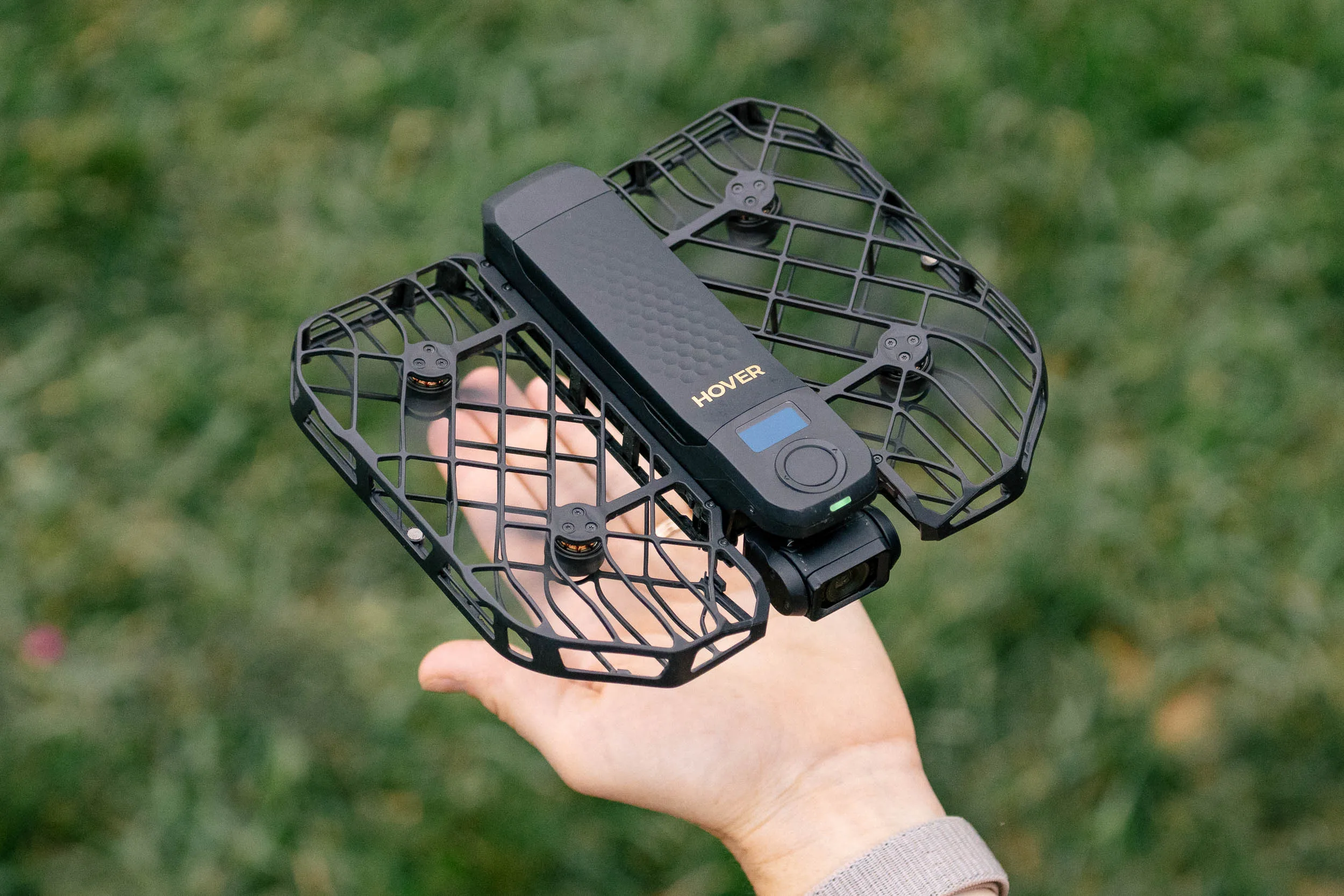
X1 ProMax, Image Source: HOVERAir
In a sense, these products already possess the fundamental characteristics of photography robots: they can perceive targets, control their own motion, and autonomously complete filming to a certain degree.
Flying platforms, however, come with inherent limits. Battery life, noise, venue restrictions and safety rules mean drones cannot cover every shooting scenario. Especially indoors or in crowded streets, ground-based mobile robots may hold the upper hand.
That is the core reason Movel AI chose the wheeled-legged form factor for Beni.
Unlike drones that shoot from above, Beni follows users on the ground. Its dual wheels and articulated joints let it steer, jump and adjust its posture. It records 4K video, capturing low-angle dynamic footage of pets chasing, kids playing or skateboarding. Its movements, paired with expressions and sound effects, also give it a pet-like interactive personality.
TechRadar was particularly impressed by Beni’s interaction design, noting that its expressions, sounds and rolling motions make it feel like a lively robotic pet.
More manufacturers are joining this track. Qiyuan Robot’s T1 features a transformable design switching between dual-wheel and quadruped modes. It can mount action cameras including Insta360 models, supporting voice-triggered shooting, auto-tracking and orbital shots. The Vbot quadruped robot also offers autonomous follow, obstacle avoidance and payload carrying, plus an action camera mount to work as a mobile cameraman for outdoor activities.
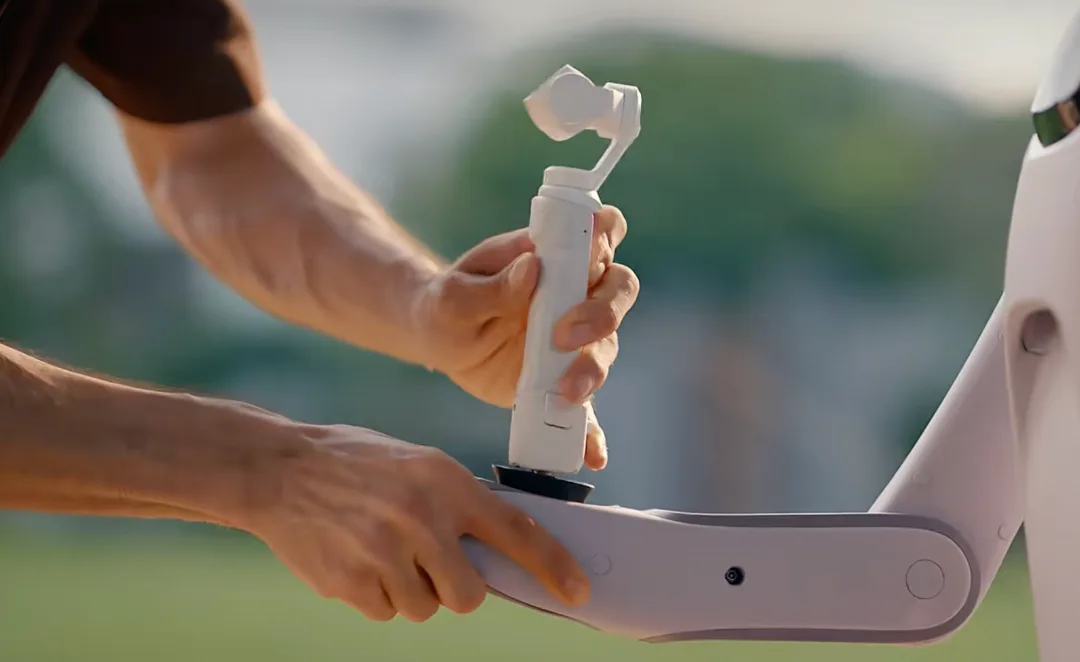
Qiyuan T1 equipped with Insta360 Luna Ultra, Image Source: Qiyuan Robotics
Unlike Beni, these two are not built around photography from the ground up. Shooting is just one of their key functions, and the robots are designed to do much more. This distinction is thought-provoking.
Even HONOR’s newly launched Robot Phone packs a motorized gimbal right inside the handset. Powered by AI subject recognition, auto-follow and pre-framing, its lens swivels to track moving people and pull off some professional camera movements.
Another comparable product is the Tail 2 by ONEX. Its active AI gimbal enables subject tracking, alongside a well-implemented gesture control system (you can read our full review on Leike Tech: “Xunying Tail 2 Live Streaming Camera Review: An AI Gimbal Camera and an Imaging Robot”):
The active gimbal of the ONEX Tail 2 does not mean you can place it anywhere out of sight. For solo creators, it supports gesture controls: an L-shape formed by thumb and index finger zooms the lens, while the OK gesture starts or stops recording. Still, the camera may fail to recognise the OK gesture reliably if it is not positioned facing you.
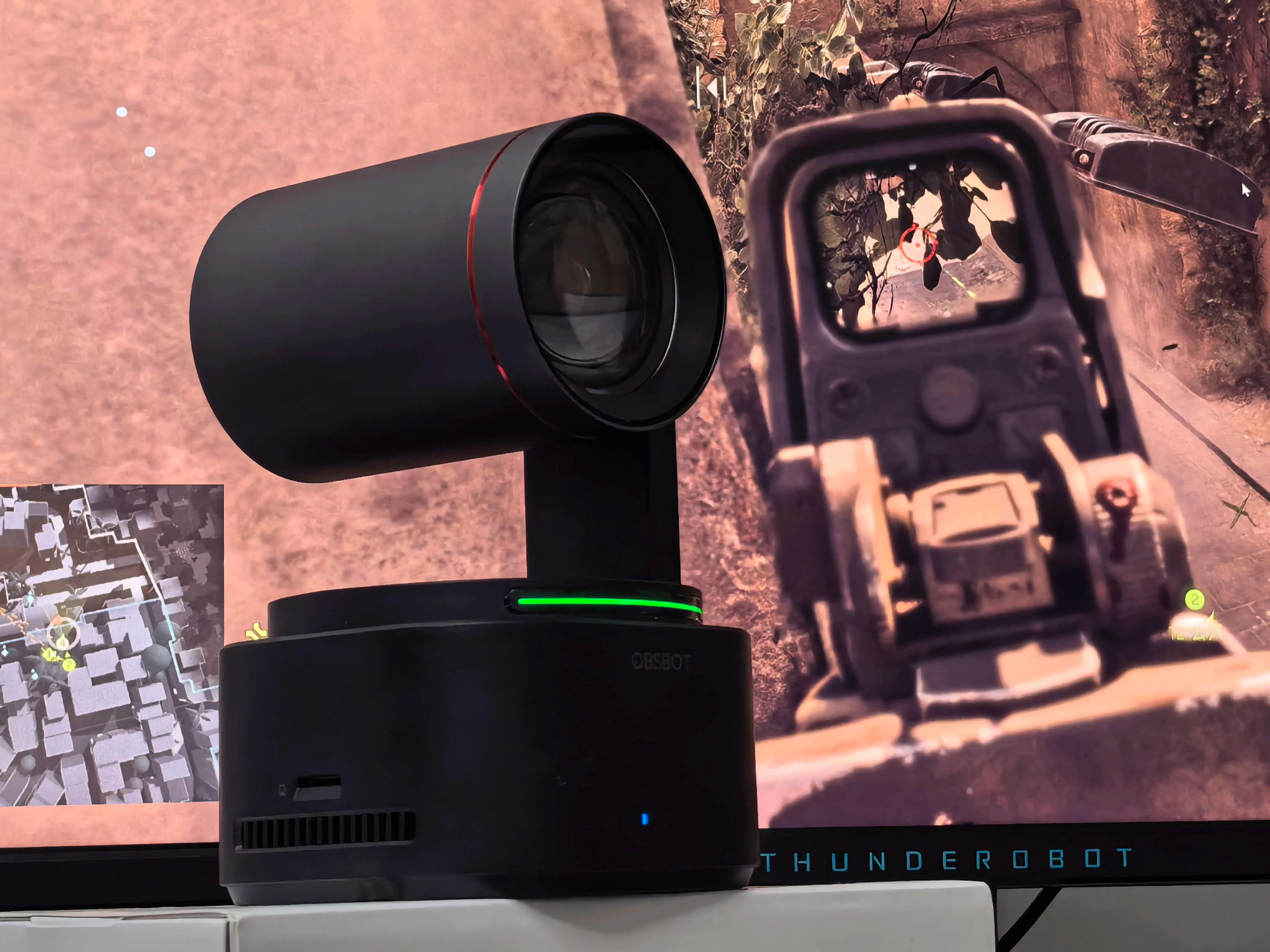
Image Source: LeiTech
Older tracking cameras could adjust picture parameters with smart algorithms, yet they could not physically shift the lens position or angle. Broadly speaking, both Honor’s Robot Phone and the ONEX Tail 2 qualify as photography robots: at minimum, they turn the camera from a passive device waiting for inputs into one with limited autonomous physical agency.
At minimum, they free the camera from passively awaiting user commands, granting it tangible, physical autonomy.
As for Insta360, Cameraman does not yet have a fixed standalone form factor. Still, the company has accumulated rich relevant technology across its lineup: panoramic cameras, Flow phone gimbals, Luna gimbal cameras and the Insta360 Ace drone. Its vision is not to release one specific robot hardware, but to build cameras that interpret user intent and autonomously shoot, edit and even share footage.
It must be said that today’s photography robots resist a single definition. They can fly through the air, roll across the ground, look like quadruped pets, or simply be a motorized gimbal attached to a smartphone.
In public interviews, Wang Mengqiu, founder of Zero Zero Robotics, stated: “Flying is just a means, not the goal for a camera.” When discussing Cameraman, Insta360’s Liu Jingkang also noted: “Most people do not actually want to operate equipment. What they want is great photos and videos.”
Photography robots are not a sudden new concept. They mark the intersection of two trends: imaging devices growing more autonomous, and consumer robots moving toward real-world use. At its narrowest definition, the robot side of a photography robot is the tool, not the end goal.
That said, photography robots represent a viable pathway for robots to enter everyday human life.
Master Tracking First, Before Aiming for Omnipotence?
To many, the ultimate form of embodied intelligence is the humanoid robot.
Yang Shuo, CEO of Movel AI, does not believe every robot needs to follow a humanoid blueprint. Yang led the development of DJI’s flight control systems, holds a PhD in robotics from Carnegie Mellon University, and previously worked as an architect on Tesla’s Optimus humanoid robot program.
He offered an analogy in a prior interview: if a user wants a robot to hold an Osmo and follow them filming, why build a bipedal humanoid robot with dexterous hands gripping the camera? A wheeled chassis or a simpler mobile rig could get the same job done.
In fact, Shenzhen-based firms—including Insta360, HOVERAir, DJI, and MiaoDong—adopt a more pragmatic focus, emphasizing concrete “user needs” and commercial viability.
This explains Movel AI’s design call for Beni. It does not mimic a human body or perform intricate fine manipulation. Its core job is stable subject tracking and shot positioning to capture footage.
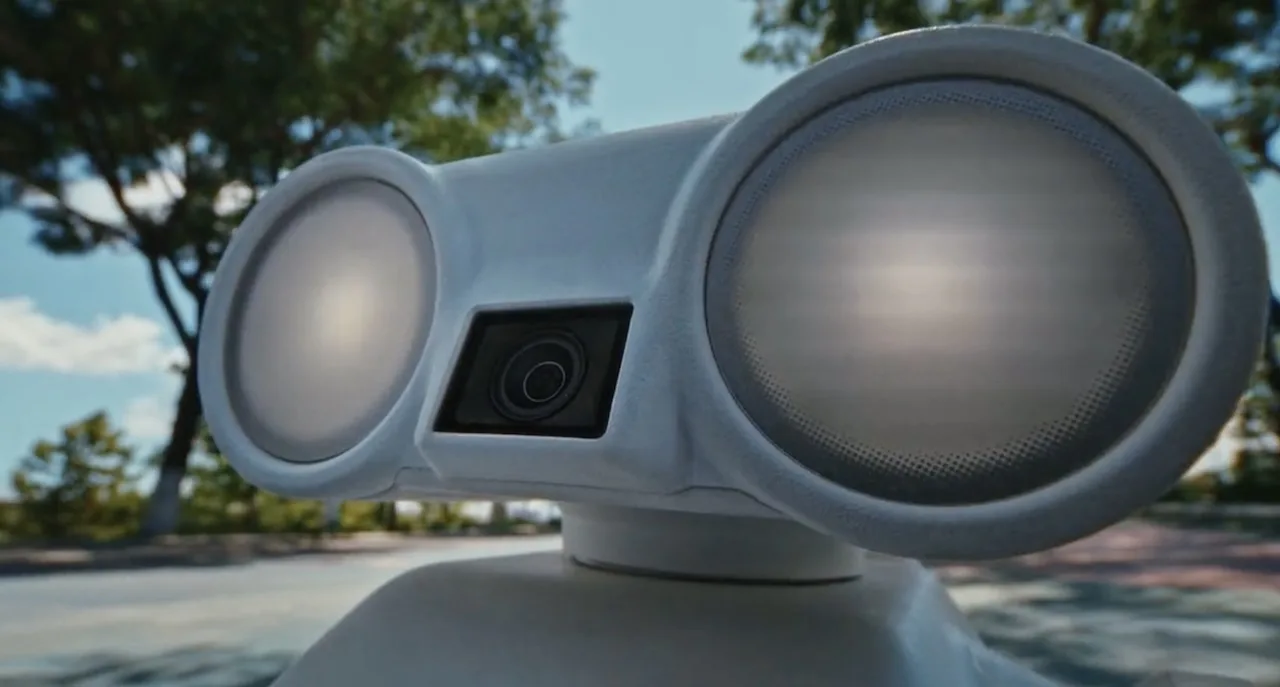
Image Source: MiaoDong Technology
Photography imposes strict requirements: the robot must sense its environment, identify shooting subjects, plan movement paths and adjust its actions on the fly. Crucially, it does not need to physically manipulate or alter other objects. Compared with complex household tasks like tidying rooms or laundry, photography bypasses major unsolved technical hurdles around dexterous grippers and object manipulation — while still pushing robots to operate in dynamic, messy real-world environments.
This does not mean Yang is bearish on humanoid robots. Quite the opposite. He wrote in his personal column that Movel AI set out with two product lines from day one: a long-term humanoid robot project, and smaller, safer compact robots that can reach real households sooner.
Humanoid robots shine thanks to their general-purpose capability. Human living spaces, tools and infrastructure are all built around the human body. If a robot must operate these tools and handle diverse chores, a humanoid structure makes sense.
But the calculus shifts when only one single task is required. A robot following you to film does not need two legs or two hands, nor does it need to learn folding laundry first.
The key advantages are its smaller size, safety profile and faster path to real adoption. From the perspectives of technical maturity, pricing, practicality and user interaction, a form like Beni is likely to reach mainstream consumers far earlier than humanoids.
Over the past decade, smartphones, cameras and drones have steadily lowered barriers to creation. Autofocus, computational photography, intelligent framing, auto-tracking and now AI editing have taken workflows once handled manually and handed them over to devices.
The next logical leap along this roadmap is letting hardware decide how and when to shoot.
In Liu Jingkang’s vision, the heart of Cameraman is a Camera Agent that understands user intent, independently picks lenses, shooting spots and compositions, and delivers satisfying footage. In other words, advancing photography robots is not just about adding mobility — it is about teaching machines to understand photography itself.
The alternative route starts from robotics.
Beyond cost barriers, the biggest roadblock keeping robots out of homes is a simple question: what can they do? Robots that perform martial arts shows, serve ice cream, coffee or pancakes, restock shelves or assist retail staff are mostly deployed for businesses. Photography, by contrast, is deeply personal — a demand already validated by consumer drones, handheld gimbals and action cameras.
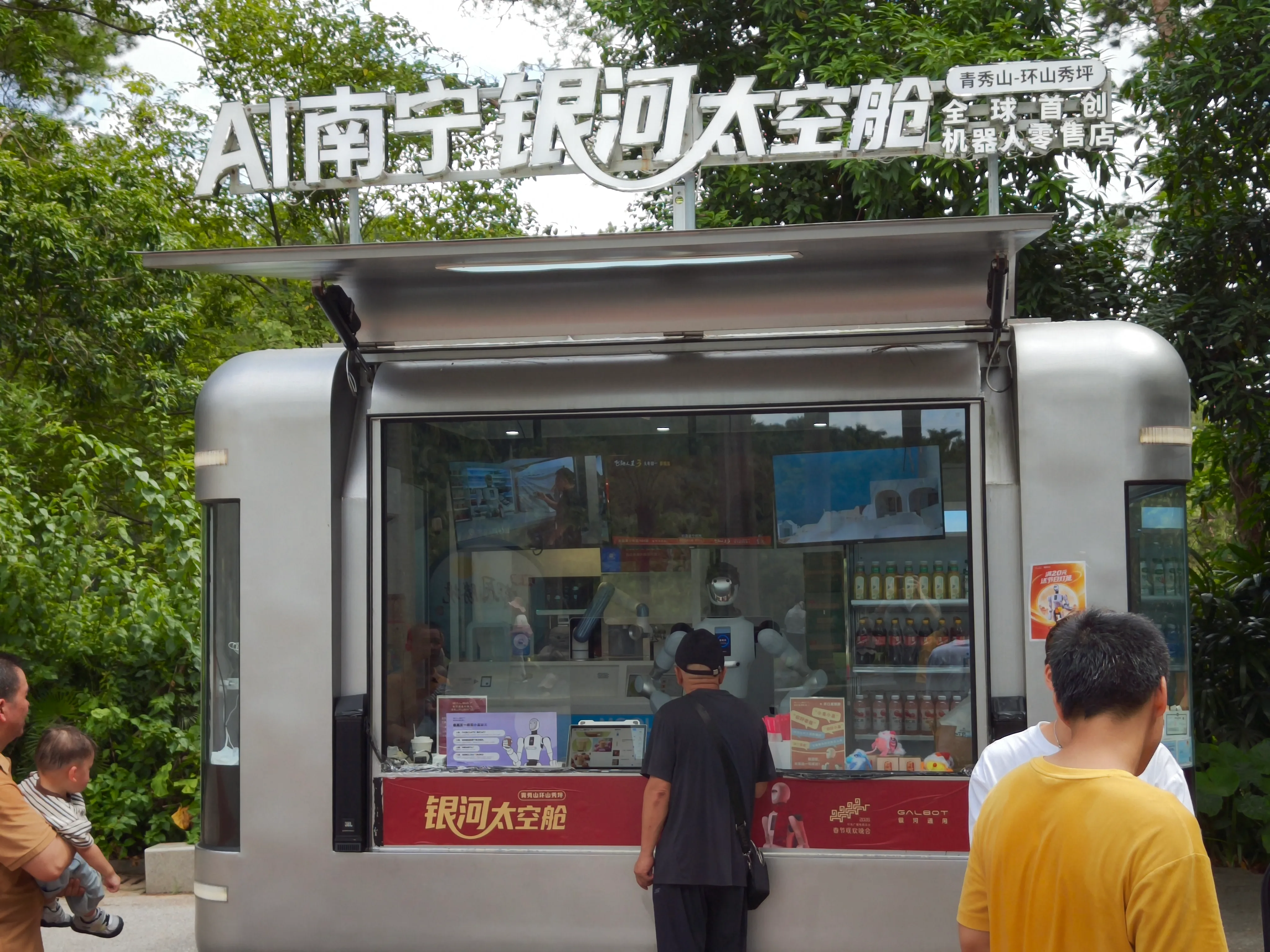
Image Source: LeiTech
Photography can be the core function of a robot, or just one of many skills. A robot may be purpose-built for filming, or combine tracking, companionship, payload transport and other domestic services.
These two approaches are not mutually exclusive. They start from different foundations yet converge around photography. This reminds us that embodied intelligence does not have to wait for a single universal robot that can do everything.
Still, auto-follow and obstacle avoidance are not enough. To approach the competence of a human cameraperson, photography robots need to read shooting moments, adapt to scene changes and even learn a user’s aesthetic preferences.
That is why the Qiyuan T1 and Vbot quadruped robots adopt a modular camera mount design. They rely on brands such as Insta360 and DJI to deliver imaging performance, while selling users on extra perks like follow mode, companionship and cargo carrying.
These explorations bring consumer-grade embodied intelligence one step closer to reality. Whether the final product is a drone, a wheeled-legged robot, or an evolved gimbal camera or smartphone is secondary. What truly matters is whether robots can take work off our plate without adding new hassle, accomplishing things we used to handle ourselves — or even things we could not pull off alone.
This leads us to a more pragmatic question. While the demand for better capture exists, phones, panoramic cameras, drones and smart gimbals already cover most shooting scenarios. Do we really need a dedicated photography robot?
I do not have a clear answer yet, until these products ship and land in users’ hands.