
 雷科技






If you think about it, young consumers who were fans of Huawei in past years had a pretty tough time.
Especially during the darkest days for the Kirin chips. Flagship models like the Mate and P series still offered somewhat reliable performance and user experience. But Huawei’s entry-level phones priced in the thousand-yuan segment could only really be described as “good enough for daily student use.”
That’s why, after Huawei secured its foothold in the high-end market, everyone kept waiting for an answer: When will Huawei release a truly cost-effective phone that lets young users easily get their hands on Kirin chips and HarmonyOS?
And surprise, that day has finally come.
On October 17, renowned tech blogger @DigitalChatStation posted leaks saying Huawei’s brand-new phone brand “Starburst” has multiple new products in the pipeline. Targeting the online market, it will focus on value-for-money offerings. There will even be models equipped with active cooling fans.
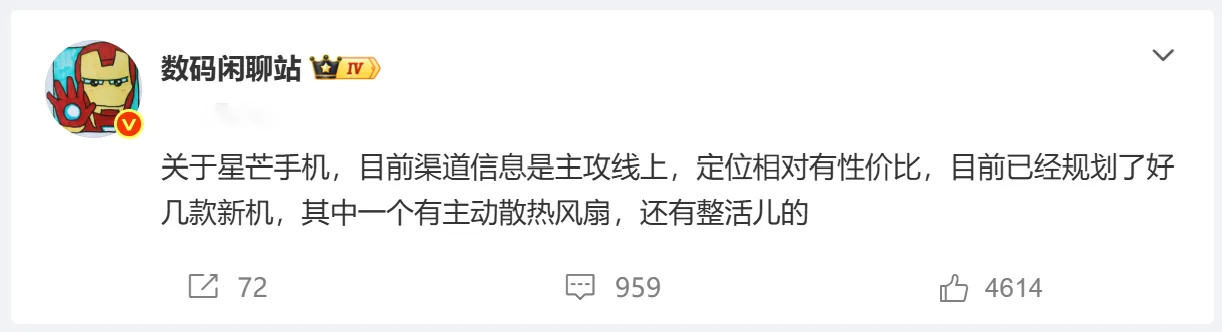
(Photograph source: Sina Weibo)
Another tech blogger @FocusDigital revealed that the new brand’s first model is expected to debut at the end of October, with two more new products slated for release in November.
Wow, is Huawei trying to recreate another Honor?
Starburst arrives — Is Huawei building another Honor?
For Huawei, launching a sub-brand is clearly no impulsive move.
According to information I’ve found, Huawei filed an application for the "Huawei Starburst" trademark with the China National Intellectual Property Administration back in February 2023. It covered categories including scientific instruments, jewelry and watches, advertising and sales, and website services, and the trademark was granted registration on September 14, 2023.
Then in July this year, Huawei submitted another trademark application for "Starburst". This time it covers multiple product categories such as smartphones, chips and smart wearables, and the application is currently pending review.
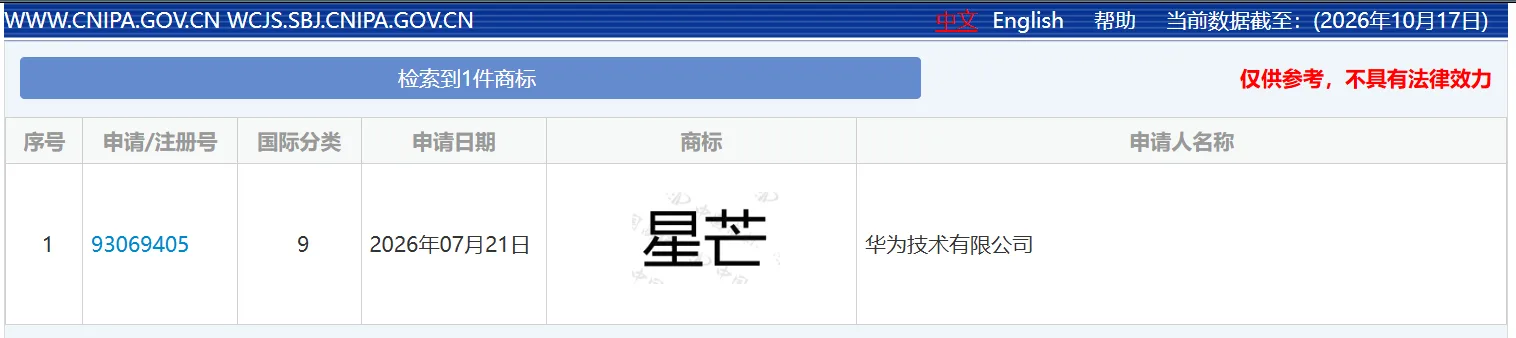
(Photograph source: CNIPA)
Of course, Huawei has yet to make an official announcement, and insiders only commented that “please refer to official information”. Still, with leaks spreading this widely, we may combine existing rumors to figure out Huawei’s strategy.
In fact, upon seeing the two keywords — value-for-money and online-focused — you can easily tell where Starburst is positioned.
According to current reports, Starburst will mainly sell its products online and deliver relative value for money (note the word “relative”). It is expected that there won’t be large-scale stock supply to Huawei authorized stores in the early stage. Instead, offline channels will be gradually expanded after sales hit a certain volume.
Many long-time Huawei fans will find this sales model quite familiar.
That’s right. It is exactly the internet phone strategy that Honor excelled at in its early days.
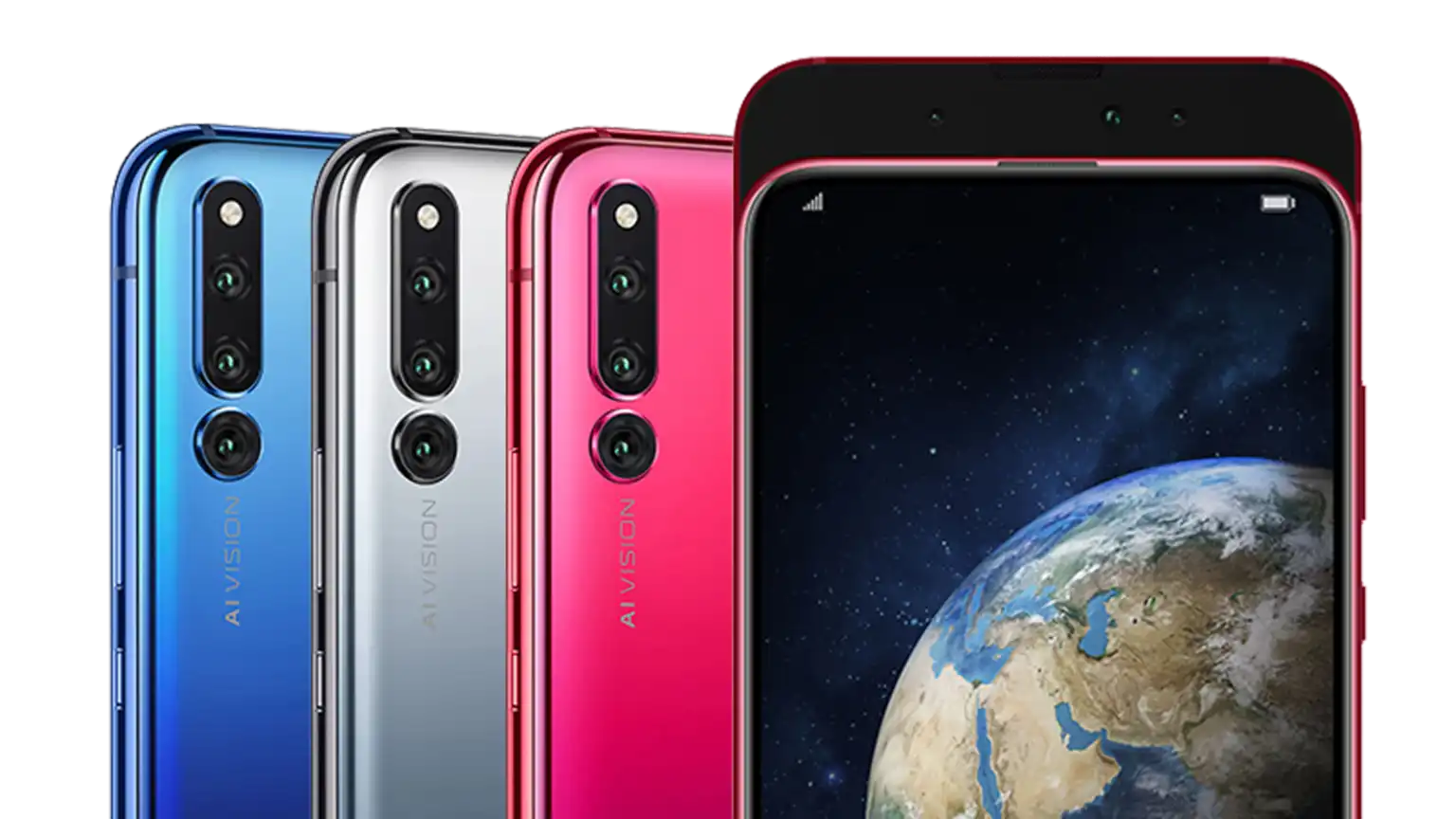
(Photograph source: Honor Magic)
Some readers may ask: If value for money is the goal, doesn’t Huawei already have the Enjoy series? What’s the point of launching Starburst?
Well, in my opinion, Starburst will likely sit one tier above the Enjoy series, around the same level as the nova lineup, yet with a completely different focus. It will most likely prioritize gaming performance, with merely competent photography.
Why do I think so?
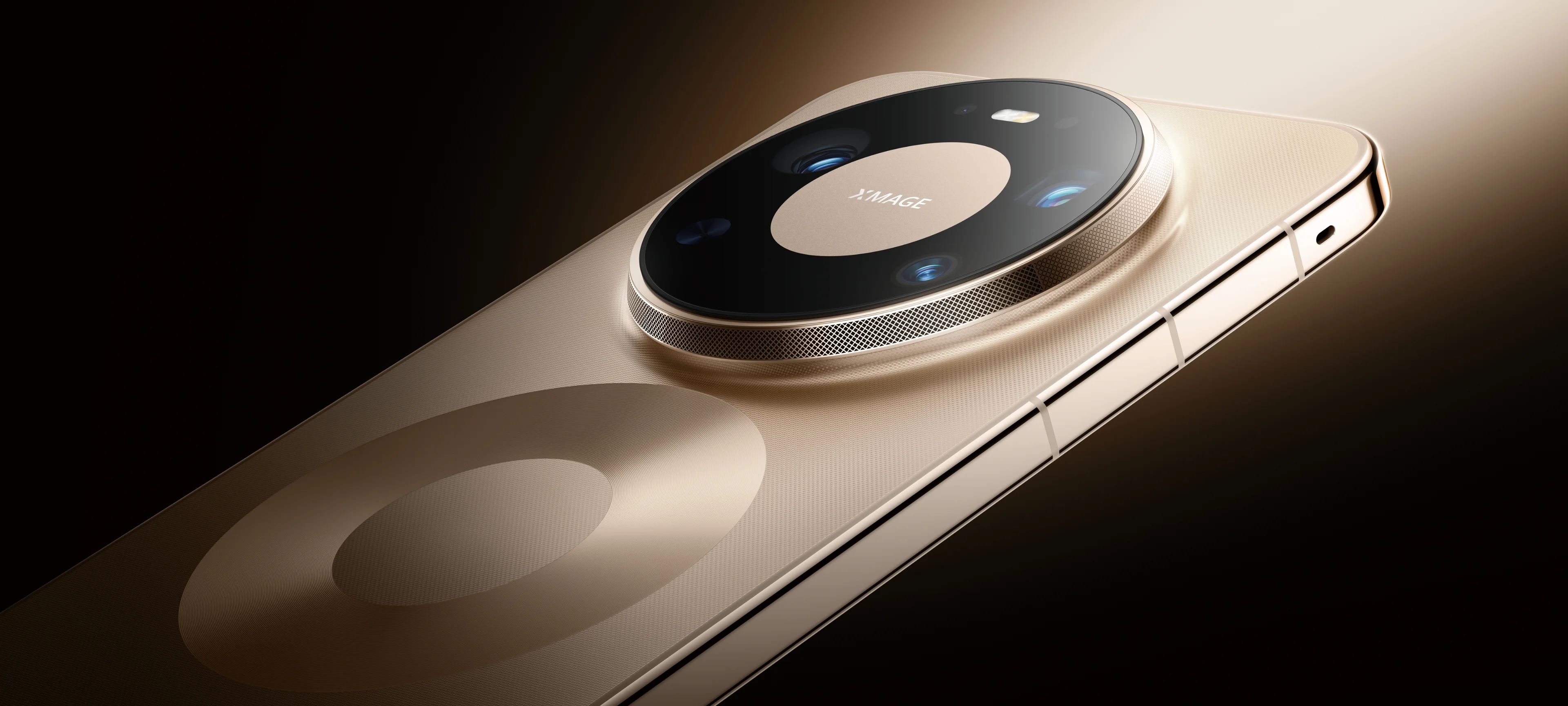
Because bloggers have leaked that Huawei has several Starburst new models in the pipeline. One variant comes with an active cooling fan, somewhat similar to the previous Mate 80 Pro Max Wind Edition. There are even some creative, gimmicky product designs in the works.
Bear in mind that active cooling fans used to be a signature feature of gaming phones like RedMagic. This year, more and more performance-focused phones have adopted this design.
If Starburst really plans to adopt active cooling, Huawei will likely release performance models tailored for mobile gamers, going head-to-head against products such as the REDMI Turbo and iQOO Neo series.
(Photograph source: Huawei)
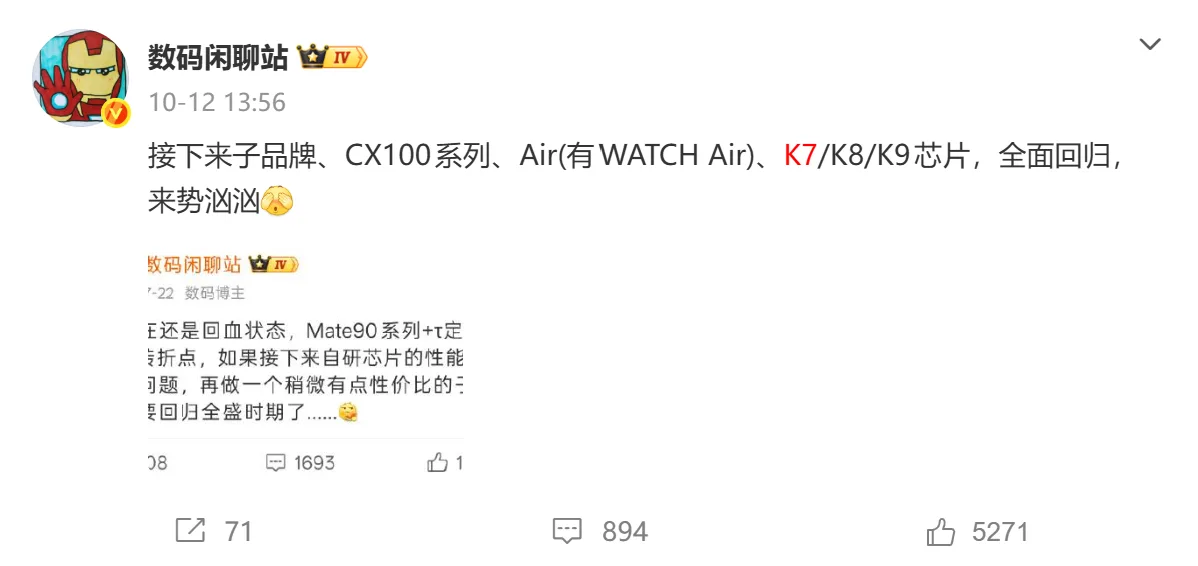
On the processor front, earlier reports suggested Starburst would use Kirin 8-series chips. More recent leaks say the Kirin 7, 8 and 9-series product lines will be expanded one after another.
Considering Starburst’s market positioning, I personally believe Huawei will roll out a brand-new mid-range Kirin chip.
After all, the performance of the Kirin 9050 series speaks for itself. If Huawei can bring the “Tao’s Law” to mid-range chips, we might see a mid-range Kirin that can go toe-to-toe with the Snapdragon 7-series and Dimensity 8-series. It could even surprise us further in terms of energy efficiency.
Another major ace up Starburst’s sleeve is HarmonyOS.
HarmonyOS is well optimized for smooth performance on mid-range and low-end chips. If Huawei can bring Kirin chips, HarmonyOS and some flagship technologies down to devices priced around the 2,000-yuan mark, it will be genuinely appealing to young users who want to try HarmonyOS but are on a tighter budget.
That said, HarmonyOS still faces an objective limitation: game compatibility. While major titles from Tencent, NetEase and miHoYo are mostly available on HarmonyOS, games with channel-specific servers such as Wuthering Waves require players to start over on HarmonyOS. Many lesser-known games also have to wait for developers to roll out subsequent adaptations.
As for Uma Musume and various emulators, users will probably have to rely on Zhuoyitong and Chujingyi.
Sub-brand playbook well mastered — Huawei ramps up volume shipments
To be fair, Huawei knows exactly how to run a sub-brand, so none of this should come as a big surprise.
Back when Honor was still part of Huawei, it waged fierce battles against rival brands.
Particularly in 2018 and 2019, the Honor 8X, 9X and Redmi Note series fought in close quarters. They compared pricing, performance and camera specs at launch events, and there was plenty of online sparring on Weibo. Lu Weibing pitted the Redmi Note 7 against the Honor 8X, while Honor executives personally fired back. The two sides argued over hardware specs all the way to brand marketing strategies.
Every 618 and Double 11 shopping festival, Honor and Xiaomi would clash constantly over sales rankings. Those were quite the spectacle.
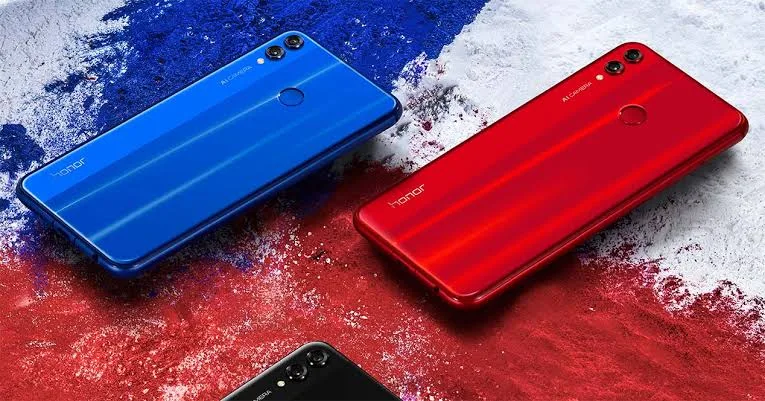
(Photograph source: Honor 8X)
For all the fierce competition, Honor delivered impressive results. According to Huawei’s official data, before its spin-off, Honor had grown into a smartphone brand with annual shipments exceeding 70 million units. During the 618 shopping festival in 2020, it claimed the top spot for both single-day and cumulative smartphone sales across all platforms.
Backed by Huawei’s Kirin chips, imaging technology and supply chain, paired with online channels and fairly reasonable pricing, Honor truly had what it took to compete head-on with Redmi.
Sadly, in November 2020, hit by supply chain disruptions, Huawei ultimately decided to sell Honor.
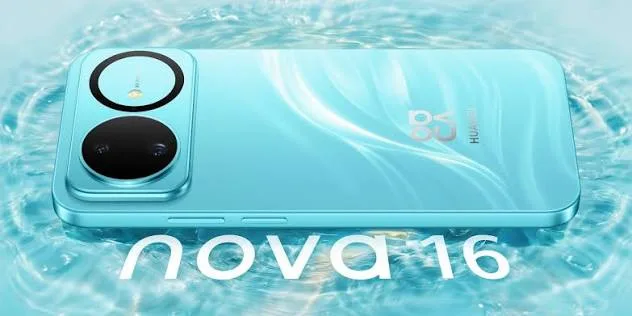
After Honor became independent, Huawei still had the nova and Enjoy series in its lineup. Yet it never had another brand like the old Honor — one targeted squarely at young people, bold enough to compete with rivals on specs and price.
What? You’re looking for a Huawei phone around the 2,000-yuan mark built for performance and gaming?
(Photograph source: Huawei)
That was simply impossible. For a long stretch of time, the online market segment focused on packing generous hardware specs was basically off Huawei’s radar; the brand barely paid it any attention. Now the arrival of Starburst may be meant to fill that gap.
Of course, I believe there is another key factor: Kirin chips.
Over the past few years, constrained by production capacity and supply chains, Huawei had to prioritize its high-end products. The Kirin 9-series catered to flagship demands, while the Kirin 8-series powered mid-range models such as the nova lineup.
This year, however, things are different. Multiple sources indicate Huawei’s chip supply capacity is steadily recovering. New Kirin 7-series processors built around Tao’s Law are in the pipeline, and we can look forward to potential surprises in both performance and architecture.
(Photograph source: Sina Weibo)
For the chip business, high-volume products help amortize R&D costs and sustain steady order demand. Compared with relying solely on a handful of premium flagships, a product lineup covering more price tiers clearly helps expand shipment volume.
In addition, the entire mobile phone industry faces widespread price hikes this year, which opens up market opportunities for Starburst.
Take the Redmi K series, iQOO Neo series and OnePlus Ace series, which once occupied the 2,000-yuan bracket as an example. New releases from these three sub-brands are expected to be priced between 3,000 and 4,000 yuan. What remains for the thousand-yuan segment is only entry-level product lines reusing chips like the Snapdragon 778 or Dimensity 7300.
As performance gaps keep shrinking, Huawei Starburst may well deliver more competitive products at the same price point, leveraging Kirin chips, HarmonyOS and Huawei’s existing supply chain.
The market and consumers both need new smartphone brands
Personally, I’m quite excited about Huawei launching a new sub-brand.
We all remember how aggressively Honor packed hardware back in the day. The thousand-yuan Honor 9X and Honor X10 were equipped with Kirin 810 and Kirin 820, chips with performance close to flagship silicon. The Honor V20, which debuted the Kirin 980, even retailed below 3,000 yuan, putting many rival brands to shame.
Since Starburst is stepping into the role once held by Honor, is it too much to hope for a Kirin 9-series chip under 3,000 yuan?
After all, dreaming costs nothing.

(Photograph source: LeiTech)
What’s more, sub-brands such as REDMI, iQOO and OnePlus have already turned the market into an intensely competitive space. What harm could an additional competitor like Huawei Starburst bring to ordinary consumers?
It is also good news for HarmonyOS users.
After all, for an operating system to truly thrive, it needs a large base of everyday users sticking with it long-term. Affordable, high-volume mid-range and entry-level phones are the perfect way to rapidly expand its user base. The more people using HarmonyOS, the stronger the incentive for developers to optimize app compatibility, which in turn delivers a more polished system experience for users.
All in all, I sincerely hope Huawei can launch a phone this time that young people can afford and are willing to buy.
Honor brought us so many surprises back then. So why shouldn’t we hold high expectations for Huawei Starburst now?