
 雷科技





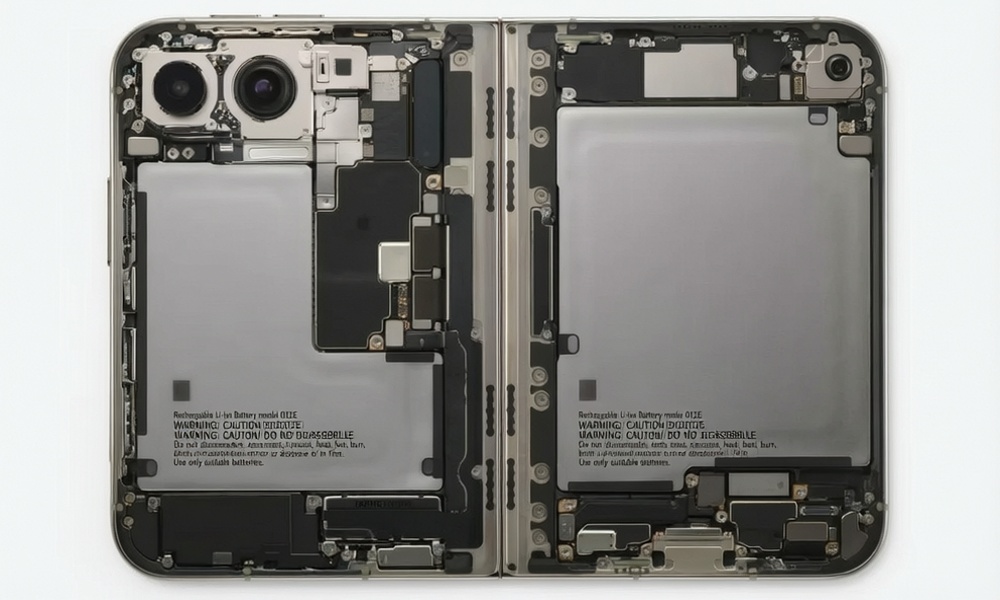

October 20 news: Apple has officially confirmed the iPhone Duo will carry a 4,883mAh battery.
I’m sure most people share my first thought: That’s it? For such a large foldable body, the battery is even smaller than many regular Android bar phones. Can this battery really hold up for a full day?
But then again, this is an iPhone we’re talking about.
When judging iPhone battery life, raw capacity never tells the whole story.
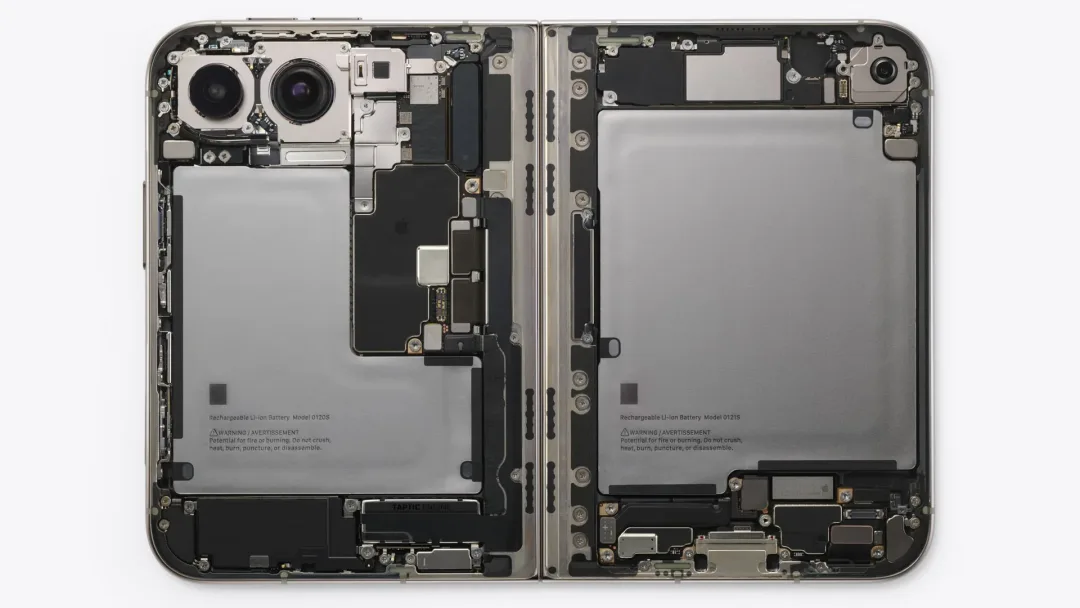
(Image source: Weibo)
Take the previous Pro Max models as an example. Their batteries only clocked in at around 4,400mAh, yet they easily outlasted most Android flagships with 5,000mAh-plus batteries in real-world use.
A smaller battery does not automatically mean terrible endurance.
What matters even more is that this is a foldable phone. From my own experience and what I’ve seen from friends who use foldables long-term, we rely on the outer screen for roughly 90% of daily tasks.
Texting, scrolling social media, mobile payments, watching short videos on the commute — the outer screen handles all these perfectly fine. The inner display only gets unfolded for streaming shows, editing documents or gaming. It’s a premium feature we enjoy, yet use far less frequently.
Based on this usage pattern, the iPhone Duo’s real-world battery life will likely sit somewhere between the standard iPhone Pro and the Pro Max. The outer screen consumes far less power, and paired with Apple’s industry-leading power optimization, it should easily get you through a typical workday with light to moderate use.
That said, every foldable phone comes with unavoidable trade-offs.
If you want a slim, lightweight design with a premium feel, battery capacity has to give way. Battery life and sleekness are two sides of a balance scale for foldables; gain on one side, and you lose a little on the other.
With today’s manufacturing technology, it’s nearly impossible to fit a huge battery inside while keeping the folded thickness and weight under control.
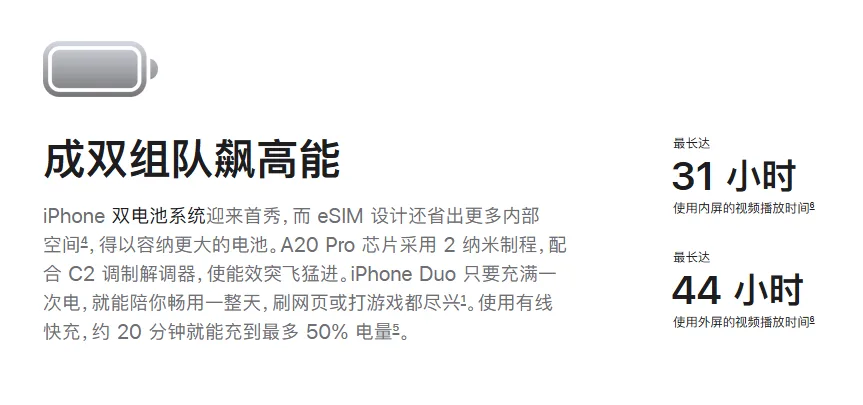
(Image source: Apple’s official website)
So in my opinion, the 4,883mAh rating is entirely predictable. Apple never chases raw specs blindly. Instead, it excels at striking a balance between sufficient battery life and the overall user experience.
Of course, this is all just theoretical analysis. If you use the phone heavily — streaming videos and gaming nonstop, while constantly flipping open the inner screen — power consumption will surge. It’s still unclear whether it can survive a full day without recharging. Chances are you’ll still need to carry a power bank everywhere you go.
Now let’s move on to another intriguing topic. Mark Gurman, the renowned Apple analyst, recently said that opening iPhone Duo pre-orders across the globe was a major misstep.
On the surface, he’s right. Production capacity is tight and yield rates are low, yet Apple still rolled out pre-orders across more than 70 countries and regions.
But if we look at Apple’s long-standing launch playbook, this pre-order strategy is actually brilliantly calculated.
Have you noticed that Apple’s new-product release system works nothing like most other brands?
When most companies run out of stock during a launch, they simply mark the item as sold out. Users immediately cry foul, accusing the brand of fake scarcity and limited stock just to create hype.
Apple does things differently. Its supply chain order system shows an estimated delivery window the moment you place an order — one week, three to four weeks, or even longer. You can always submit an order; the product never shows as out of stock. You just have to wait your turn.
This design is pure genius, and here’s why: it perfectly manipulates consumer psychology.
If you fail to get the first batch with other brands, you blame the company for poor inventory and hunger marketing.
With Apple, you automatically blame yourself. You tell yourself you were too slow, that you fell behind other buyers, so you have to wait longer.
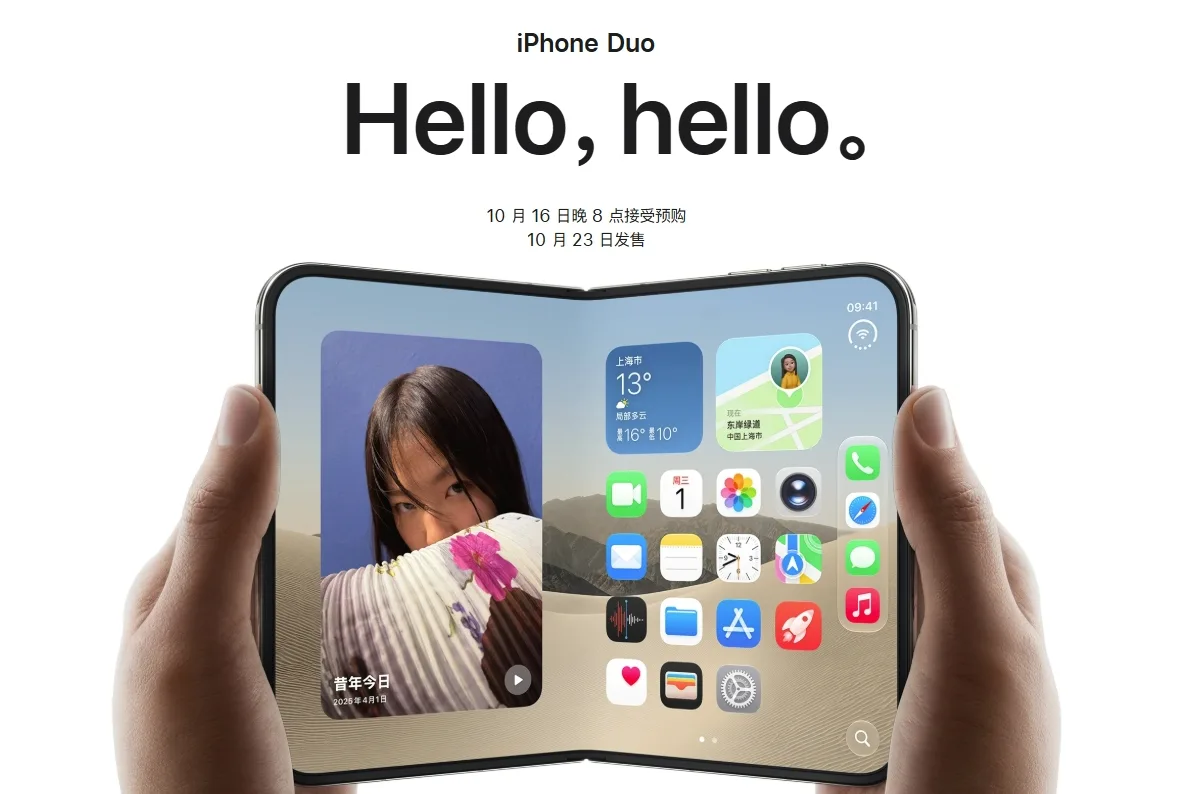
(Image source: Apple’s official website)
That tiny difference in how information is displayed shifts blame entirely from the brand to competition among buyers. Consumers end up viewing the queue as fair first-come-first-served, and those who miss the first batch only blame their own slow reflexes.
Digging deeper, this is a masterful psychological nudge and long-term user conditioning.
Over time, people accept it as normal: Apple launches always sell out fast, and waiting is inevitable. Hardly anyone complains about insufficient stock; they only regret not being quick enough to place their order sooner.
To be fair, this tactic cannot be copied by every brand.
It only works with an extremely powerful brand reputation. Only Apple can make customers happily wait a month or more for their new device. If another brand showed a one-month delivery window on launch day, most shoppers would immediately switch to competitors.
What’s more, audiences tend to view long waiting lists as fair queueing when they come from foreign brands. If a Chinese domestic brand tried the same tactic, it would almost certainly get dragged online and labelled a hunger-marketing stunt.
I’m genuinely curious to see how Apple’s first foldable iPhone performs in real-world testing.
Now I’d like to hear from you: Do you think the 4,883mAh iPhone Duo delivers enough battery life for daily use? Drop your thoughts in the comments below.