
 雷科技





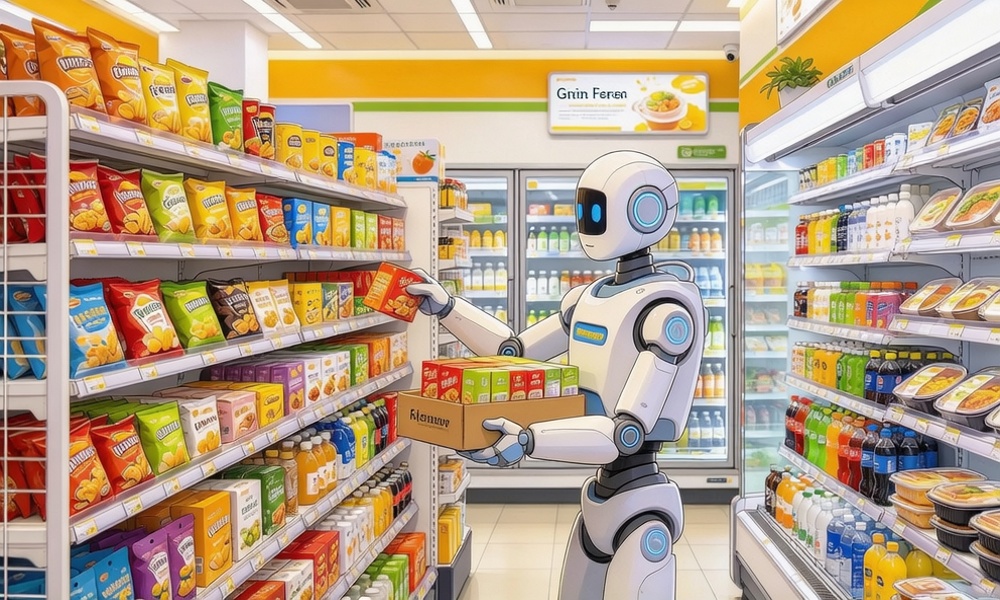

At the 22nd Asia-Pacific Retailers Convention & Exhibition held in early October, Zhengxing Innovation launched the world’s first Physical AI service solution tailored for human-robot collaboration in open retail environments.
At the event, Zhengxing Innovation showcased two robots, the H1 and C1. The H1 is a general-purpose bipedal humanoid robot tasked with in-store patrols and long-distance material handling. The C1 is a wheeled-arm handling and stocktaking robot built for confined spaces, capable of inventory checks and restocking. Commercial services for the C1 are scheduled to roll out in 2027. Moving forward, Zhengxing Innovation will also release the A1 robot for precision operations, which will handle convenience store tasks such as checkout and bagging.
The three robots are orchestrated by Zhengxing Innovation’s self-developed M1 multi-robot management platform. Underpinning the system are the SLM-0.5 World Action Model dubbed the “Embodied Brain”, the STEAM reinforcement learning post-training framework, and the Rpent embodied agent. Most importantly, convenience stores can deploy the system rapidly without modifying existing shelves or store traffic layouts.
The Embodied Intelligence Team of Leitech (ID: leitech) has found that Zhengxing Innovation is far from the only robotics firm targeting the retail sector. Galaxy General Robotics’ Galaxy Space Capsule, featuring the “robot clerk + mini store” model, has launched roughly 200 sites across 50 cities in China. SenseTime’s SenseMartGo robotic convenience store, Shaomai Go, has opened multiple outlets in Shanghai and plans to accelerate expansion across major cities by the end of 2026.
It appears retail has become the top candidate for large-scale robot deployment beyond industrial settings.
From factory floors to convenience stores: robots take a pivotal step toward scenario-based rollout
Over the past two years, embodied intelligence has mainly been deployed in automobile assembly lines, 3C battery workshops, logistics warehouses and similar environments. These settings feature simple layouts and fixed movement routes, and enterprises can absorb high costs, making them well-suited for robots.
Nevertheless, if companies only focused on industrial use cases, there would be little need to develop humanoid robots. Wheeled, legged or tracked robots fitted with robotic arms, grippers and suction cups would most likely deliver higher productivity at lower costs. Companies including Unitree, UBTECH, XPeng, Tesla and Li Auto are prioritizing humanoid robots for their strong generalization capability brought by the human-like form factor.
The vision is for robots to perform nearly any task humans can do. Before that, however, robotics firms need to gather sufficient data to train large models.
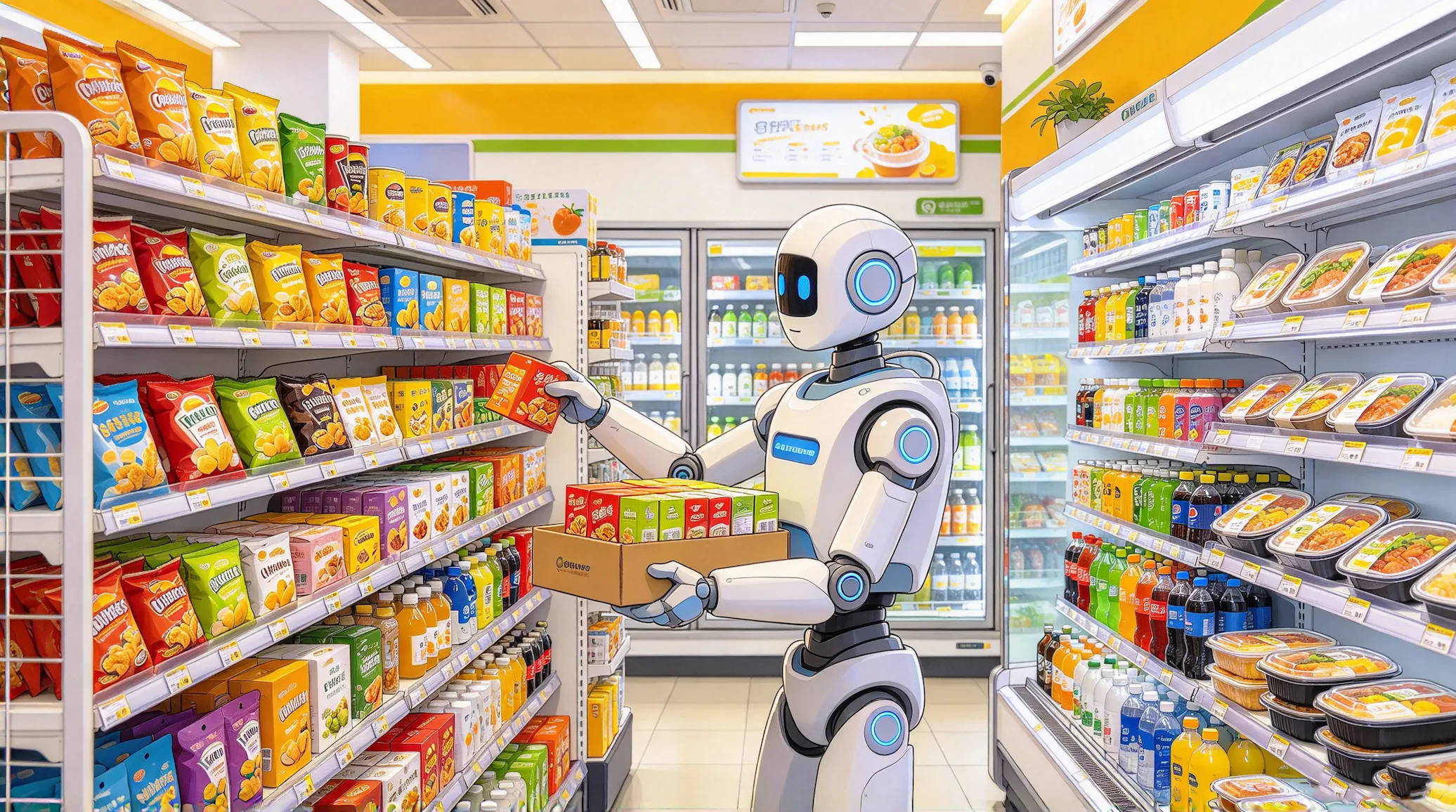
Industrial workflows tend to be repetitive with few unexpected events. By contrast, retail-facing robots must interact with hundreds of unique customers each day, handle hundreds of different product types, and adapt to dozens of varying shelf arrangements. Operations such as grabbing packages of diverse shapes, identifying misplaced goods, dynamic obstacle avoidance and handling damaged merchandise generate data from every success and failure. This real-world robot data can be fed back to developers to build massive datasets for large model training.
(Image source: Doubao AI generation)
What’s more, retail work consists of repetitive manual labor that eats up countless working hours, and night-shift staff are hard to recruit. Robots do not get bored or fatigued and can operate nonstop around the clock.
In the early phase, robots can work overnight when foot traffic is low, avoiding busy daytime hours filled with unexpected incidents. Later, as large model capabilities improve, they will be able to handle complex tasks smoothly even during the day.
Retail environments are more complex than industrial sites yet relatively simpler than home settings. By deploying robots in retail now, companies are essentially building a strategic pathway that enables simultaneous commercialization and technical iteration for embodied intelligence.
While industrial scenarios are easier to launch, they only refine specialized skills and cannot validate generalization performance in open environments. As a medium-difficulty use case, retail can generate cash flow to sustain continuous R&D investment. It also allows constant collection of physical interaction data from open spaces, filling the shortage of real-world samples most needed by large models.
The capabilities built up in stores — perception, object grasping and dynamic obstacle avoidance — can later be transferred to more service scenarios and even pave the way for household robots. Still, the top priority for Zhengxing Innovation and Galaxy General Robotics is figuring out how to popularize robots rapidly across retail.
Retail: the first exam paper for humanoid robots
Product launches and demo stores are inherently different from real open retail environments. The primary hurdle to widespread robot adoption in retail lies in capability.
Take snack shops for example. A single outlet carries at least hundreds of snack and beverage items in bottles, boxes and bags. Packages may deform after being touched by customers. Robots must repeatedly test and learn how much force to apply and at what angle to grab each snack.
Galaxy General Robotics claims a 100% picking accuracy rate for its smart pharmacy solution, because pharmaceutical SKUs come in relatively uniform shapes with simple grasping motions. No vendor has yet published comparable long-term performance data when deploying the same robots in full-service convenience stores.
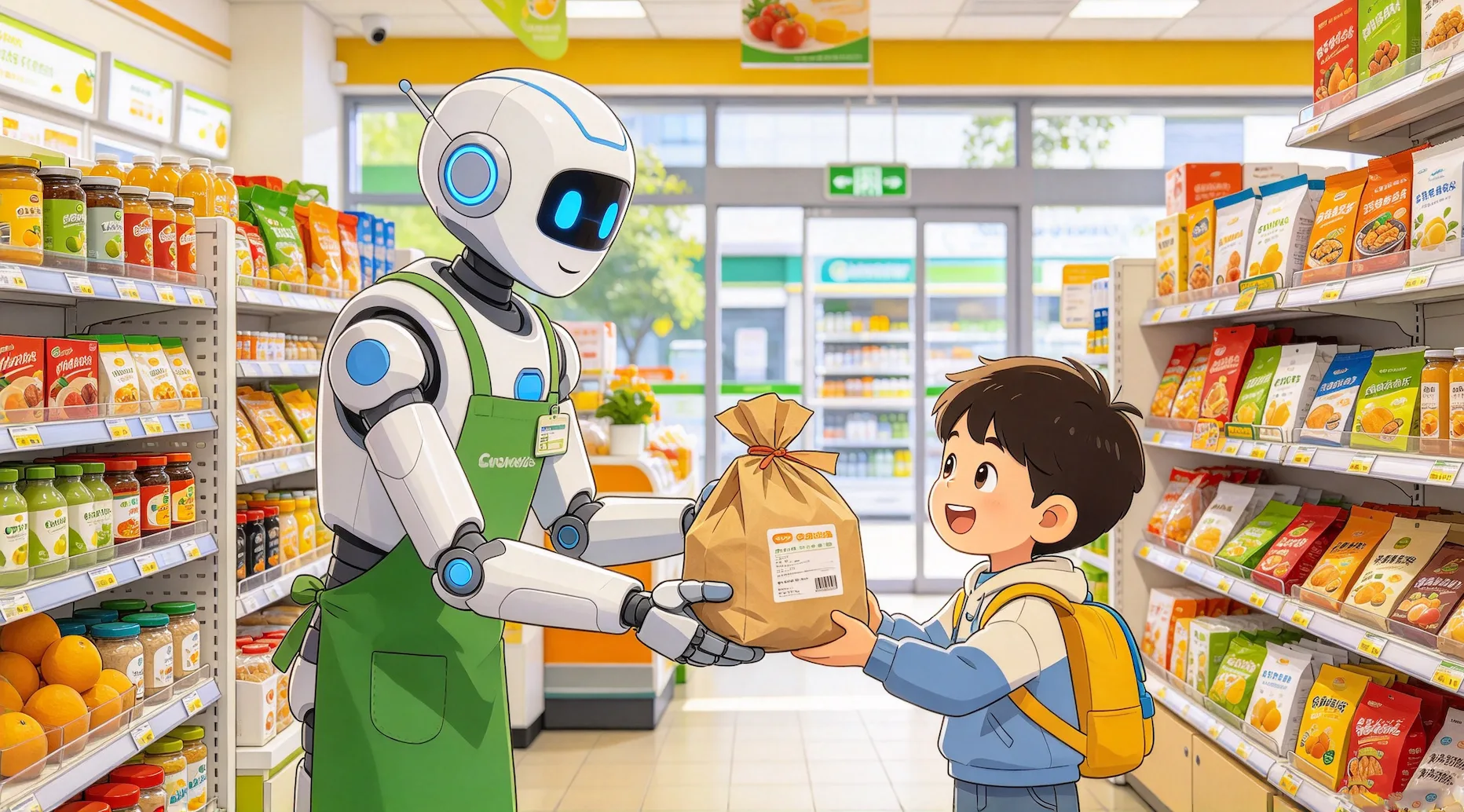
Safety is another major challenge facing robotics firms. Leitech (ID: Leitech) has noticed many online users complaining that hotel delivery robots fail to yield to pedestrians or stubbornly stand in the middle of elevators. Retail settings are even more complicated: shoppers picking goods, active children and narrow aisles raise the bar for robot obstacle avoidance. In the event of an accident, compensation claims could potentially bankrupt small convenience stores.
(Image source: Doubao AI generation)
That said, the biggest barrier standing in the way of widespread robot adoption in retail is the economics. A humanoid robot meeting retail requirements costs at least several hundred thousand yuan and can go up to over a million yuan. Wheeled-arm restocking robots are relatively cheaper, yet they still range from 100,000 to several hundred thousand yuan. Mass production in the future is expected to bring prices down to between 100,000 and 150,000 yuan.
It should be noted that robots also incur operation and maintenance costs. The retail sector itself operates on thin profit margins, so most store owners are unlikely to invest millions in a robot system with an uncertain payback period.
To address this, Zhengxing Innovation has proposed a RaaS (Robotics-as-a-Service) subscription model covering hardware, software, maintenance and subsequent OTA updates. The company has not yet disclosed specific pricing for the service.
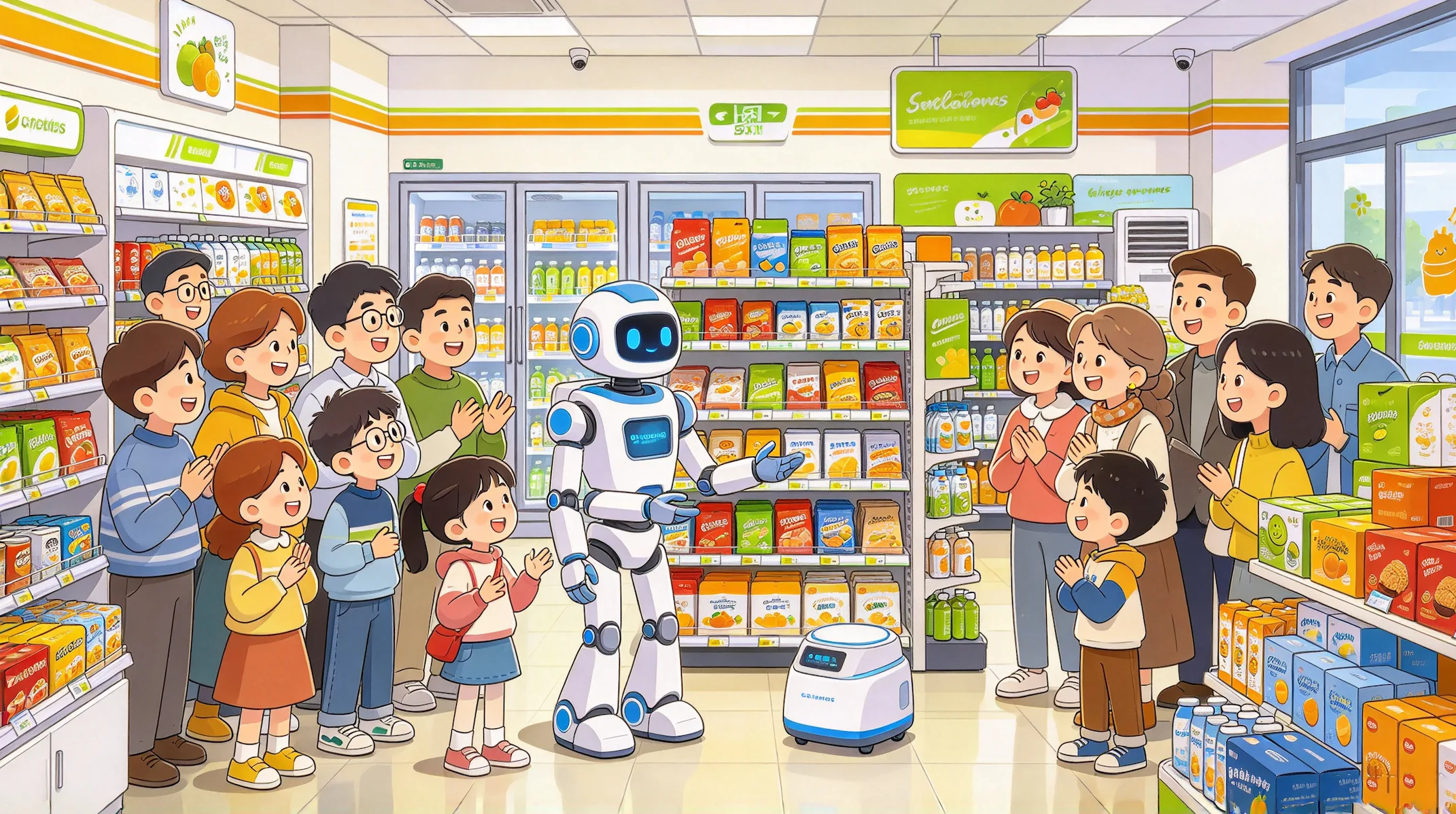
If the average monthly subscription cost for robots falls below human staff salaries, many retail outlets would likely be willing to sign up. Beyond labor replacement, robot-assisted customer service itself can serve as an attraction to draw shoppers.
(Image source: Doubao AI generation)
Considering robotics companies also need to recoup their investments, RaaS subscription fees will most likely not drop below labor costs in the short run. Some larger retail stores and supermarkets may be the first to deploy a handful of robots. Mass adoption will only become feasible once overall robot costs decline in the future.
What works in retail today is essentially a “simplified version of retail”. These include Space Capsule setups with limited product ranges and predefined workflows, or pharmacies where operational movements are relatively fixed. It will take extensive upgrades and iterations before robots can fully take over all duties of retail staff.
Retail is just the beginning; the trillion-yuan humanoid robot market is on its way
In an interview with CCTV Finance, Tesla CEO Elon Musk predicted that there will be at least one billion humanoid robots within the next decade. If volumes roughly double each year, they will grow tenfold every three or four years, reaching 10 billion units in 15 years and potentially 100 billion in 20 years.
From Leitech’s perspective, Musk’s forecast is overly optimistic. Limited by the capabilities of VLA large models at this stage, humanoid robots cannot yet handle complex tasks. Zhengxing Innovation’s plan to launch commercial retail services in 2027 merely marks the first small step toward practical value. Coupled with the hardware cost constraints of humanoid robots, deploying 100 billion units within 20 years is unrealistic.
In March this year, Huang Hongsheng, founder of Skyworth Group, stated frankly that none of the hundreds of robotics firms on the market have turned a profit. Expecting robots to serve as elderly companions, housekeepers or intimate partners is unrealistic. That is why Skyworth has stayed out of humanoid robots and focused on industrial robots instead.
Indeed, the top priority for robotics companies today is simply “staying alive”. Leitech forecasts that after humanoid robots enter retail scenarios, the industry will hit its first inflection point around 2028. Weaker players will be phased out one after another, while leading companies such as Unitree, UBTECH and Agibot are expected to cross the break-even threshold through multi-sector deployments covering industry and retail.
Once robotics firms complete their rollout in retail, they can feed physical interaction data back into general embodied intelligence to continuously raise the performance ceiling of robots. Household general-purpose robots remain a long-term goal, yet home environments are far more complex than convenience stores, with no visible conditions for mass popularization in the near term.