
 雷科技






This Week's Tech Gossip Kept Dropping, and Xiao Lei Could Barely Keep Up
First, Cook suddenly showed up at iQiyi's headquarters, with CEO Gong Yu hosting him the whole way around. As soon as the group photo surfaced, the whole internet blew up.
Cook was out there making appearances, and before long, an even bigger bombshell could no longer be hidden.
Per the latest public notice from the Ministry of Industry and Information Technology (MIIT), multiple China-market iPhones have completed their network access license renewal, with the core goal of paving the way for the domestic version of Apple Intelligence.
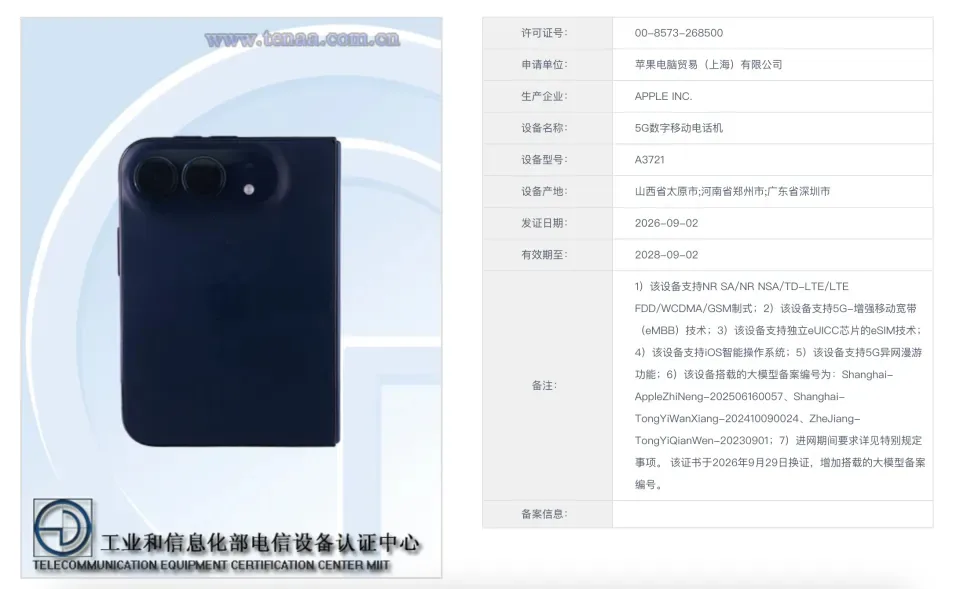
Image source: Weibo
Even more explosive: this domestic Apple Intelligence will not use Apple's overseas native cloud service. Instead, it will directly integrate Alibaba's Tongyi Qianwen (Qwen) large language model.
After waiting for over half a year, is Apple Intelligence for China-market iPhones finally about to actually land?
Image source: Baidu
Xiao Lei had a hunch something was off at the time: Cook's personal trip to China was definitely about more than just a video content partnership.
Let me first explain this network access license. Every phone officially sold in China must hold a network access license issued by the MIIT — it's essentially the phone's "entry ID card" for the network.
Without it, the device cannot be legally sold or connect to carriers' cellular networks.
Put simply, Apple Intelligence involves cloud-based information services and cross-network data exchange, which counts as a major functional change. It must go through regulatory review again and update the filed information on the network access license before it can officially launch in China.
Some may think: it's just a license renewal, what's the big deal?
Those in the know understand: this license is the admission ticket for Apple Intelligence in the Chinese market.
When iOS 18.1 was rolled out overseas earlier, the China-market version simply stripped out all of Apple Intelligence, mainly because compliance issues weren't sorted out.
Image source: Baidu
Completing the renewal means regulators have already approved Apple Intelligence's localization plan, and all that stands between users and the official rollout is a system version update.
Xiao Lei always said Apple wouldn't give up on Chinese users. After all, with hundreds of millions of active iPhone users here — such a huge market — no one is more anxious about it than Cook.
That said, Xiao Lei has to pour a little cold water: not every iPhone will get Apple Intelligence. The hardware threshold is strict, carefully filtering who gets to upgrade.
Per the latest MIIT public notice, the iPhone models that completed the renewal cover the iPhone 16/17/18 series, iPhone Air, and the foldable iPhone Duo. Older models are completely out of the running.
Many will probably read this and accuse Apple of nickel-and-diming users, deliberately dropping support for old devices to force upgrades.
Xiao Lei has to be fair here: on-device AI is a real hardware hog. AI features process large amounts of data in real time, placing extremely high demands on NPU computing power and memory bandwidth.
Older chips simply don't have the horsepower — they'd lag, drain battery, overheat, and deliver a terrible experience. That's probably why Apple would rather cut old-model support than tarnish its own brand.
Rumor has it the earliest launch could be this December, meaning users could basically get it before year's end.
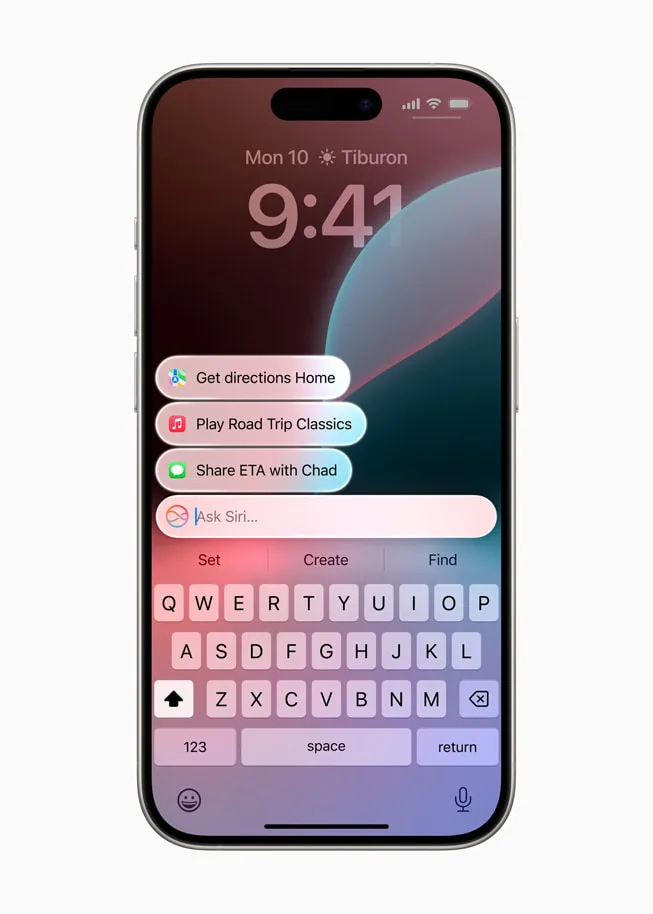
Image source: Apple官网
This wave of features includes the long-awaited new Siri AI assistant, Genmoji custom emoji, notification summaries, writing tools, and the Clean Up feature for photos.
From now on, Apple users won't need to download extra apps — the domestic LLM will be built right into the system, making it far more convenient to use.
From Xiao Lei Bibibi (ID: xiaoleibbb)'s perspective, the landing of domestic Apple Intelligence is absolutely a landmark event for this year's smartphone industry.
Over the past year or more, domestic phone makers have been fiercely competing on AI, and many said Apple had fallen behind, unable to keep up in the AI era.
But now it seems Apple isn't incapable of doing AI — it just moves at a steadier pace: either don't do it, or do it as a deeply integrated, system-wide experience.
The key point: Apple's choice to partner with a domestic vendor shows that even the biggest tech giants must abide by the rules of the Chinese market. Localized cooperation is the sustainable way to capture the market.
Whether Apple Intelligence is any good, we don't know yet. But one thing's certain: once Apple enters the ring, domestic makers will only compete harder.
To wrap up:
Is your iPhone on the supported list? Which Apple Intelligence feature are you most looking forward to? Let's chat in the comments.