
 雷科技





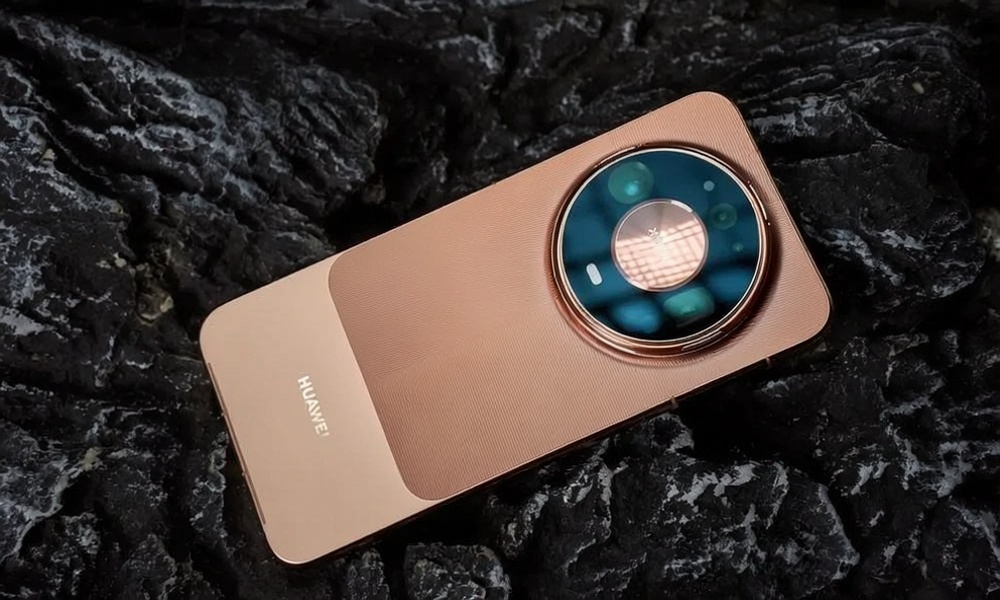

As Huawei's true "annual flagship" this year, the Mate 90 Pro Max clearly pulls no punches: a brand-new Kirin processor, a brighter and more vivid display, a simpler and better camera experience, and a shot from the hip in the form of the Ruiying Z10 modular camera, with 10x zoom.
It also starts at 9,499 yuan. A near-10,000-yuan starting price set the bar high for us at Lei Tech, since this phone is positioned as the top flagship on the market. So the real question is: does the Mate 90 Pro Max truly live up to that "Pro Max" badge? Here's our full review.
Design: Familiar at Heart, with New Details
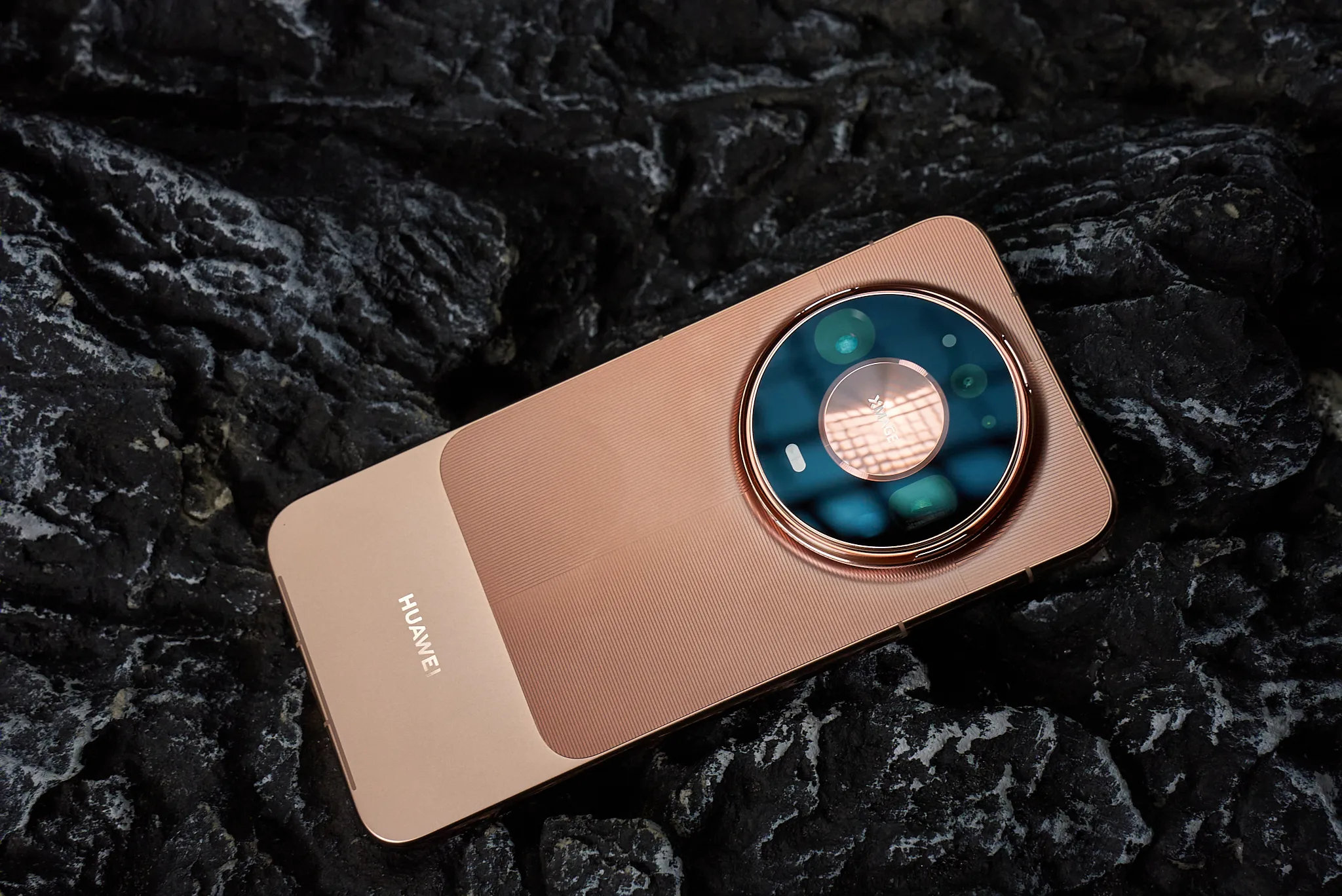
Huawei is pretty much the only Chinese phone maker that has "stayed true to its design." That circular, Oreo-like camera island has carried over from the Mate 40 series, so when you first see the Mate 90 Pro Max, you know it's a Huawei Mate before you even spot the logo. Some readers may call it lazy design, but for a top-tier flagship, recognizability matters more.
(Image: Lei Tech)
The camera island is noticeably bigger, yet the phone's balance is decent. The large lens module doesn't feel especially top-heavy, and the smoothly rounded edges make it comfortable to hold — it doesn't feel as intimidating as its 234 g weight suggests.
That said, as a camera flagship, the lens protrusion is still significant: place it on a desk and it rocks like a seesaw. That's a matter of personal preference.
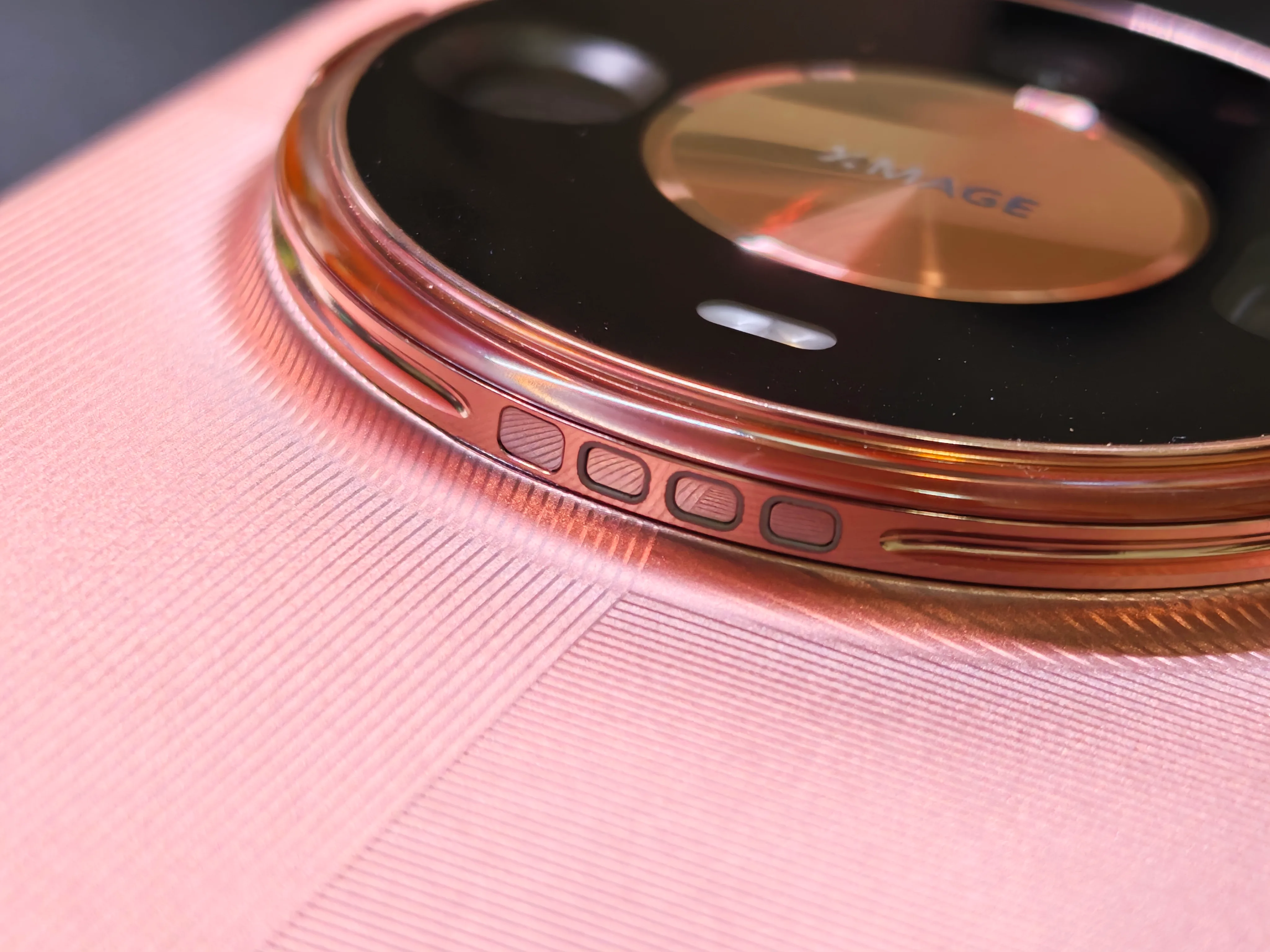
Interestingly, the unit we received was the Ultimate Design edition, which has dedicated external contacts beneath the camera module for attaching the Ruiying Z10 modular camera.
(Image: Lei Tech)
When I first saw "modular camera," I assumed it was just another external teleconverter lens like those popular on Chinese imaging flagships lately. It's actually something very different. A traditional teleconverter still relies on the phone's own main sensor, just adding more glass in front. The Z10, by contrast, packs its own sensor, lens, and powered zoom mechanism, covering 24–240mm with 10x continuous optical zoom and an F2.0–F4.5 aperture. Slapped on the back of the Mate 90 Pro Max Ultimate Design, it feels more like attaching a complete zoom camera to your phone.
Unfortunately, we didn't get our hands on the Z10. If you're interested, we can track one down and test it separately.
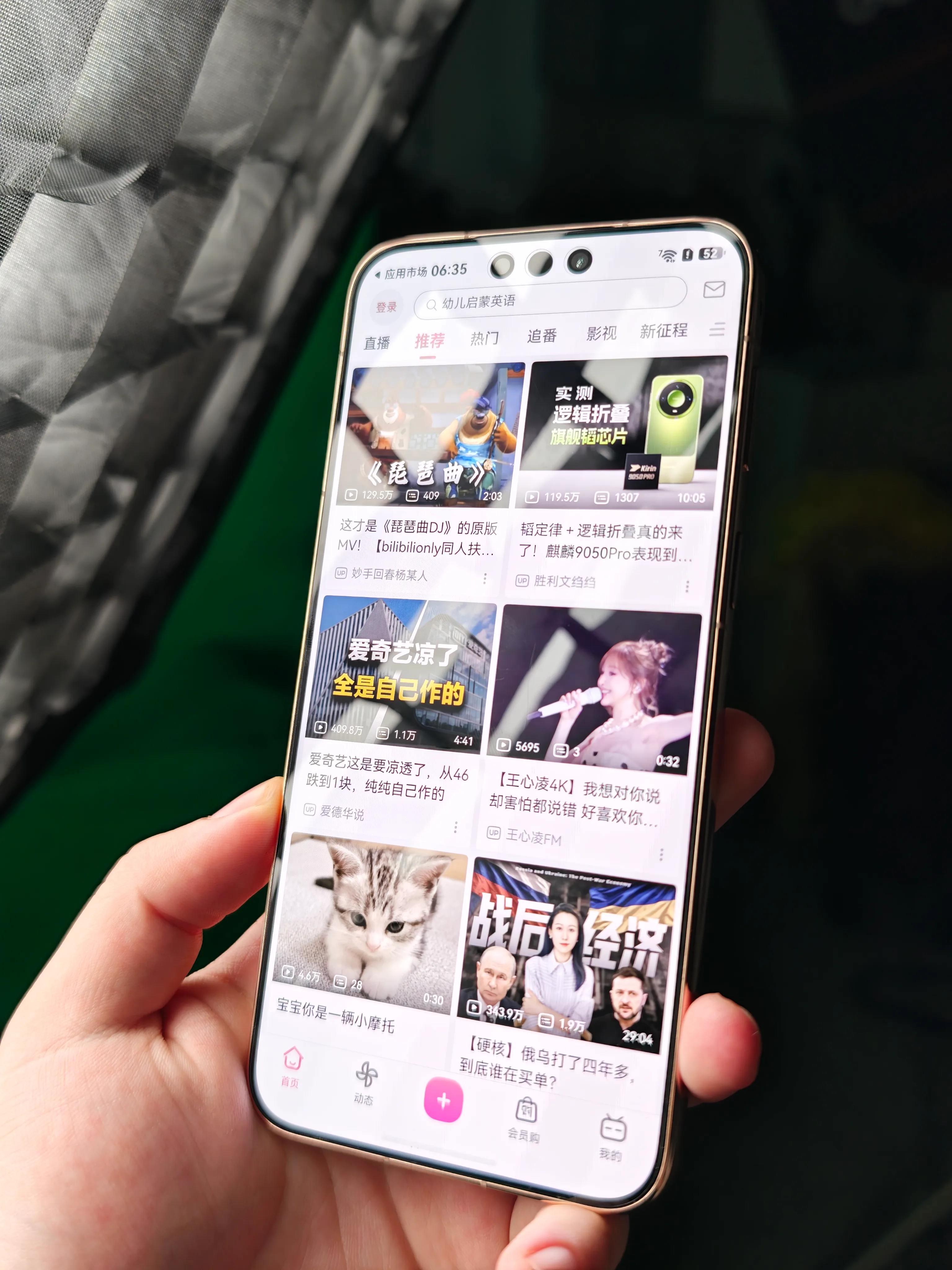
Now the front: the Mate 90 Pro Max has a 6.9-inch second-generation Linglong display with a dual-layer OLED panel, 1–120Hz LTPO adaptive refresh rate, 1.07 billion colors, and BT.2020 wide color gamut, with a local peak brightness of 12,000 nits.
(Image: Lei Tech)
(Image: Illustration by Lei Tech)
As for system smoothness, there's little to worry about. It's one of the few self-developed operating systems out there, and everyday scrolling, app switching, and multitasking all feel responsive. At this point, it's hard to find real flaws in a 10,000-yuan flagship screen — the Mate 90 Pro Max's standout advantage is outdoor visibility. In bright sunlight, maps, WeChat, and the camera viewfinder all remain clearly readable without ducking into the shade.
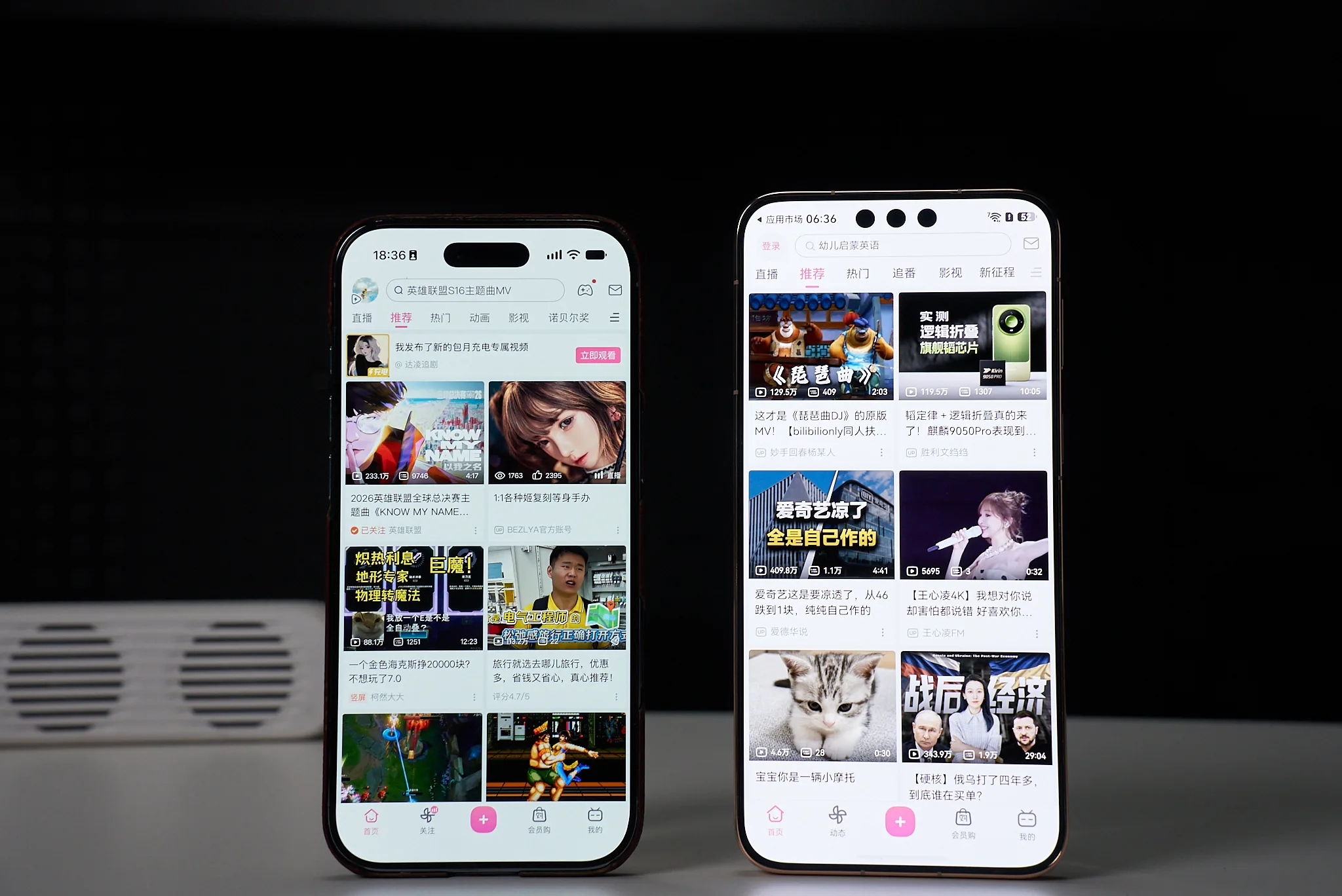
(Image: Lei Tech)
I also compared it side-by-side with an iPhone Air: at the same indoor brightness, both manually set to max, the Huawei was clearly a full stop brighter.
Overall, the design changes are in the details — especially the floating star ring and modular attachment structure on the Ultimate Design edition, which gives the familiar circular island a new purpose. It doesn't chase thinness for its own sake, and it doesn't overhaul the Mate's look just for novelty. It's still the business flagship you know; it's just that imaging-wise, it's starting to explore new territory.
200-Megapixel Telephoto: The Mate's Imaging Has Its Own Ideas
Imaging is one of the Mate 90 Pro Max's biggest upgrades, and Huawei clearly put serious effort into it. For a long time, the P series had a slight imaging edge over the Mate — this time, the Mate 90 Pro Max gets the full stack.
Here's the setup: a 50 MP RYYB main sensor at 24mm equivalent, with an F1.4–F4.0 variable aperture and OIS; Huawei claims 18 EV of dynamic range. The ultrawide is a 40 MP RYYB sensor at 13mm equivalent, F2.2. The telephoto jumps to a 200 MP RYYB periscope lens at 89mm equivalent, F2.6, also with OIS. There's also a third-generation Red Maple true-color camera for better color under complex lighting.
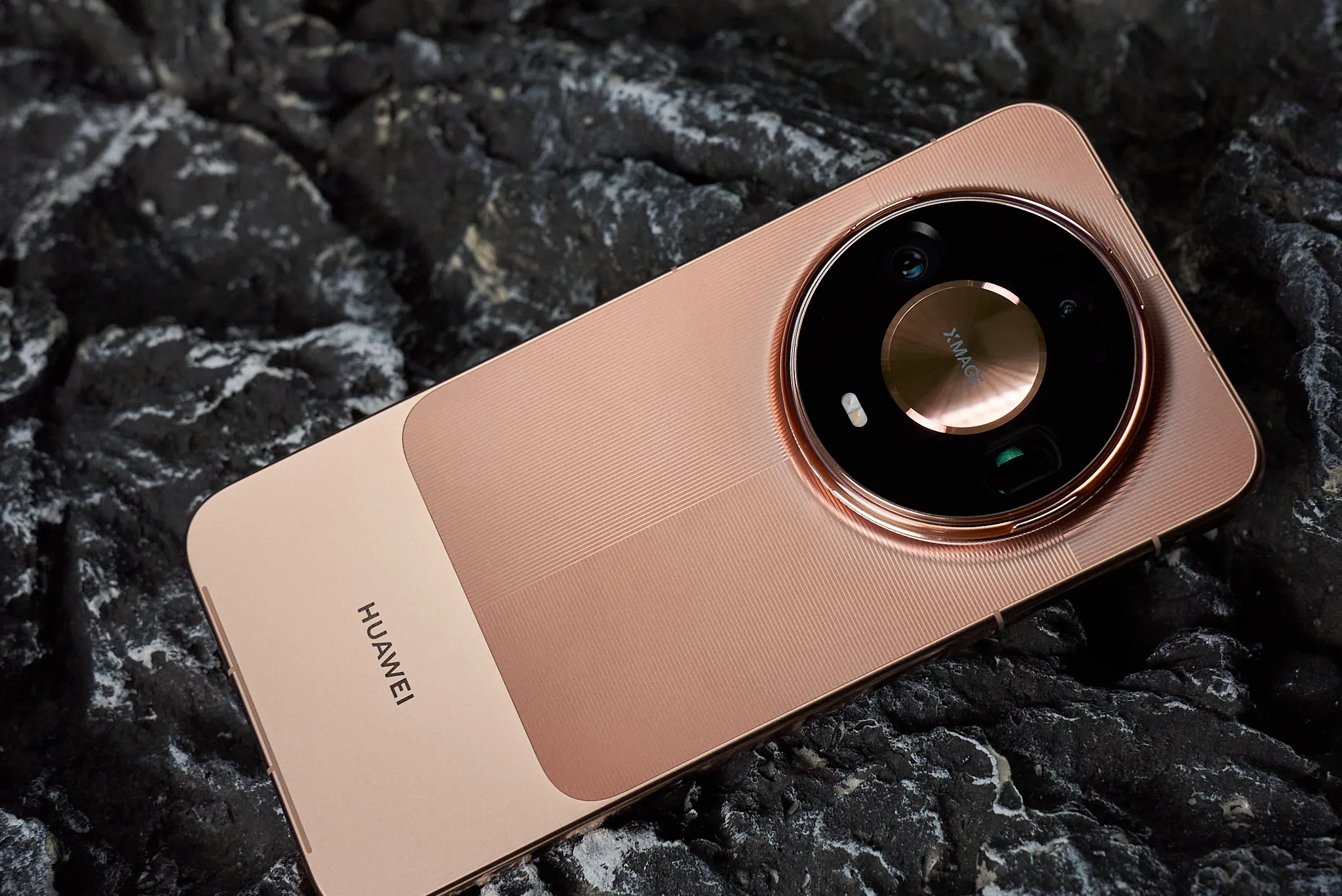
(Image: Lei Tech)
After reviewing so many imaging flagships over the years, we all know specs set the floor — how a phone actually looks comes down to tuning. Every Chinese flagship now chases large sensors, high-megapixel telephotos, and computational photography; keynotes boast of a dozen-plus EV of dynamic range and hundreds of millions of pixels, yet the resulting photos don't always differ that much.

(Image: Lei Tech)
In good daylight, nearly every flagship takes a sharp, pleasing photo. What really separates makers is tricky lighting, indoor low light, and performance across focal lengths. So I didn't seek out extreme test scenes — I just shot everyday situations with the Mate 90 Pro Max.
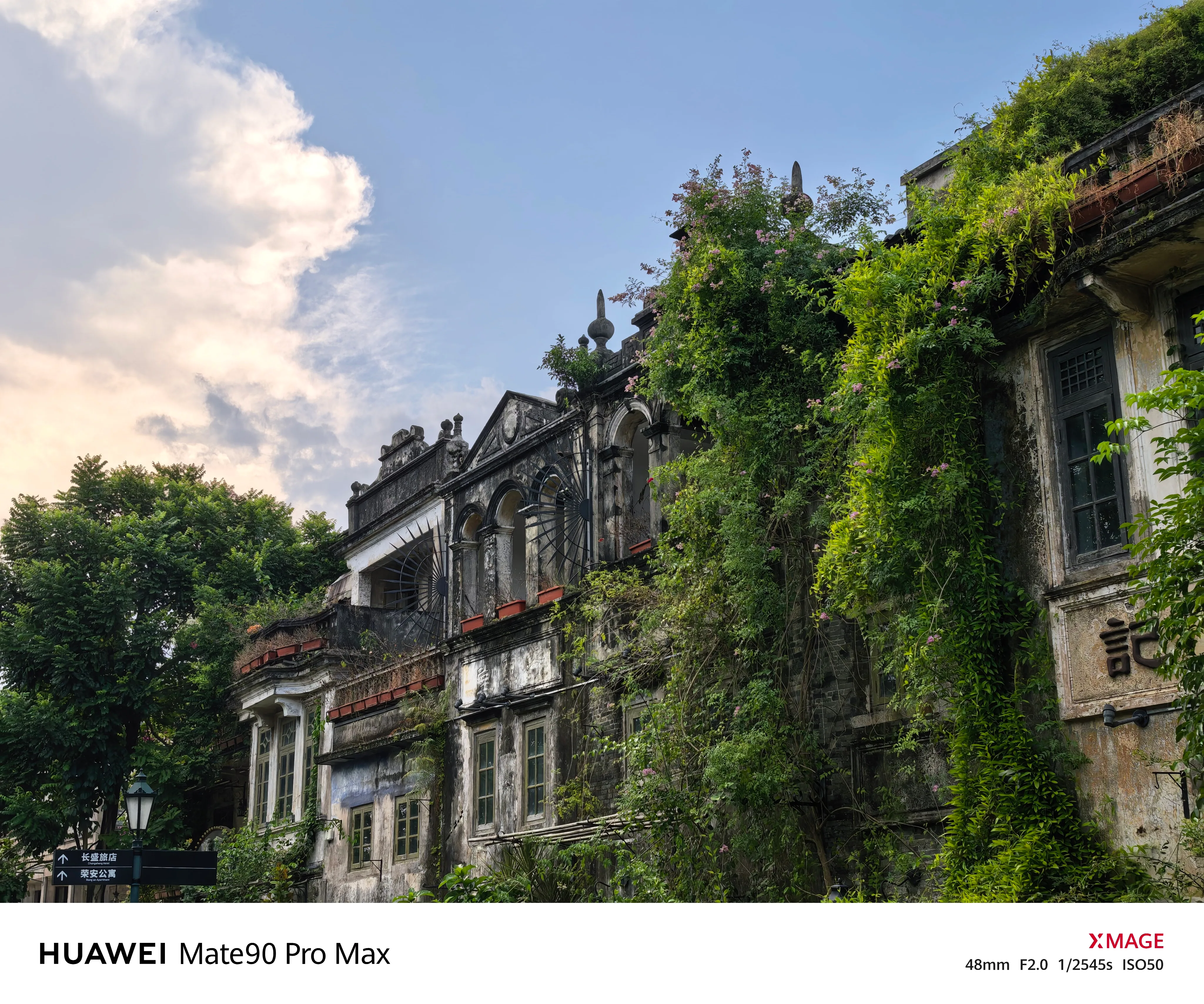 (Image: Lei Tech)
Take this architectural set. The lighting was genuinely tricky: bright sky and clouds on the left, shadowed old buildings and foliage on the right, with strong contrast. Without enough dynamic range, the sky would blow out and shadow detail would vanish.
The Mate 90 Pro Max delivered in typical Huawei fashion: no blown-out sky, cloud texture preserved, and the building's weathered surfaces, window frames, and foliage all intact. The green plants in shadow on the right still show layered leaves — a sign that Huawei's HDR in high-contrast scenes is mature.
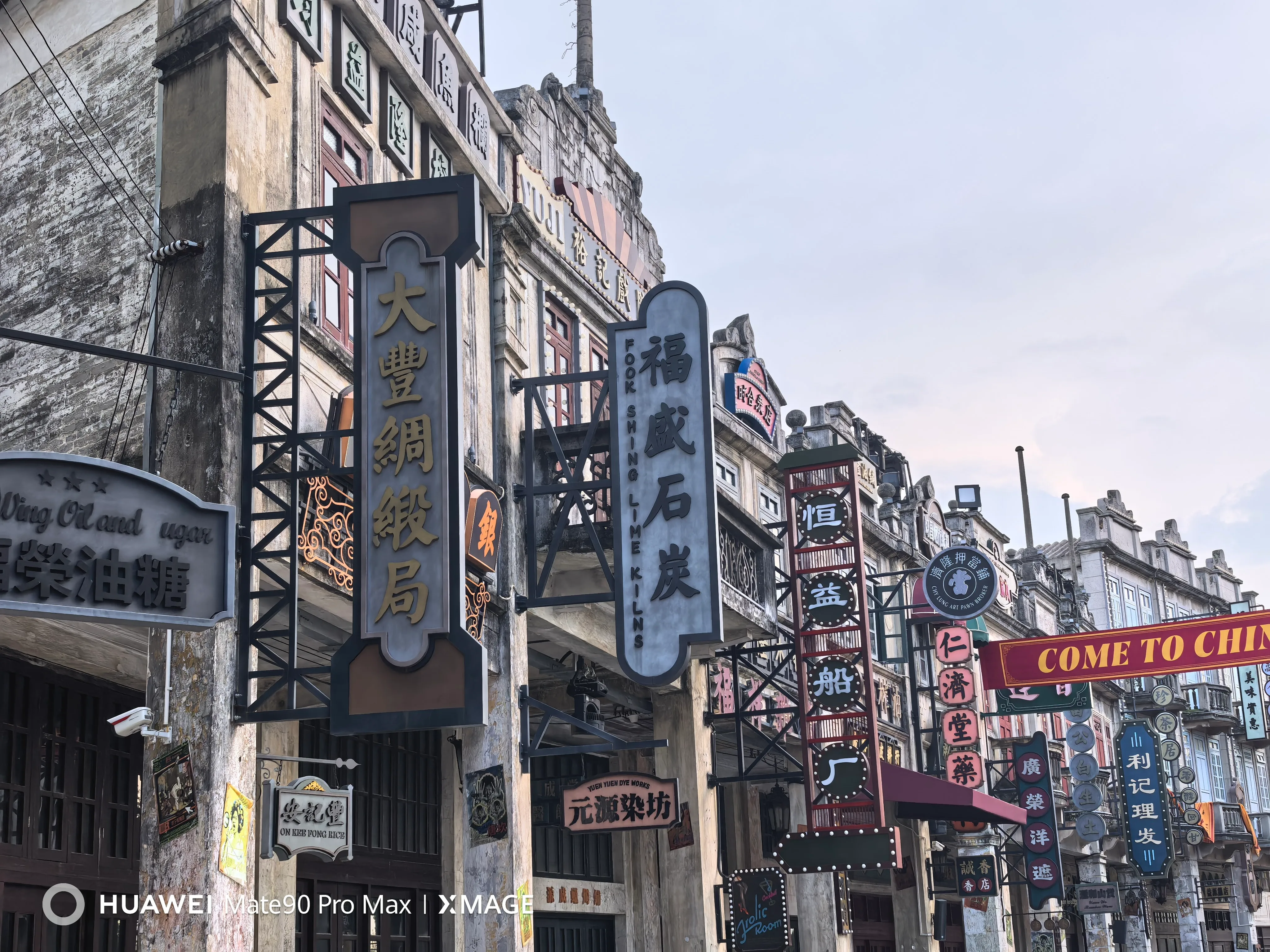
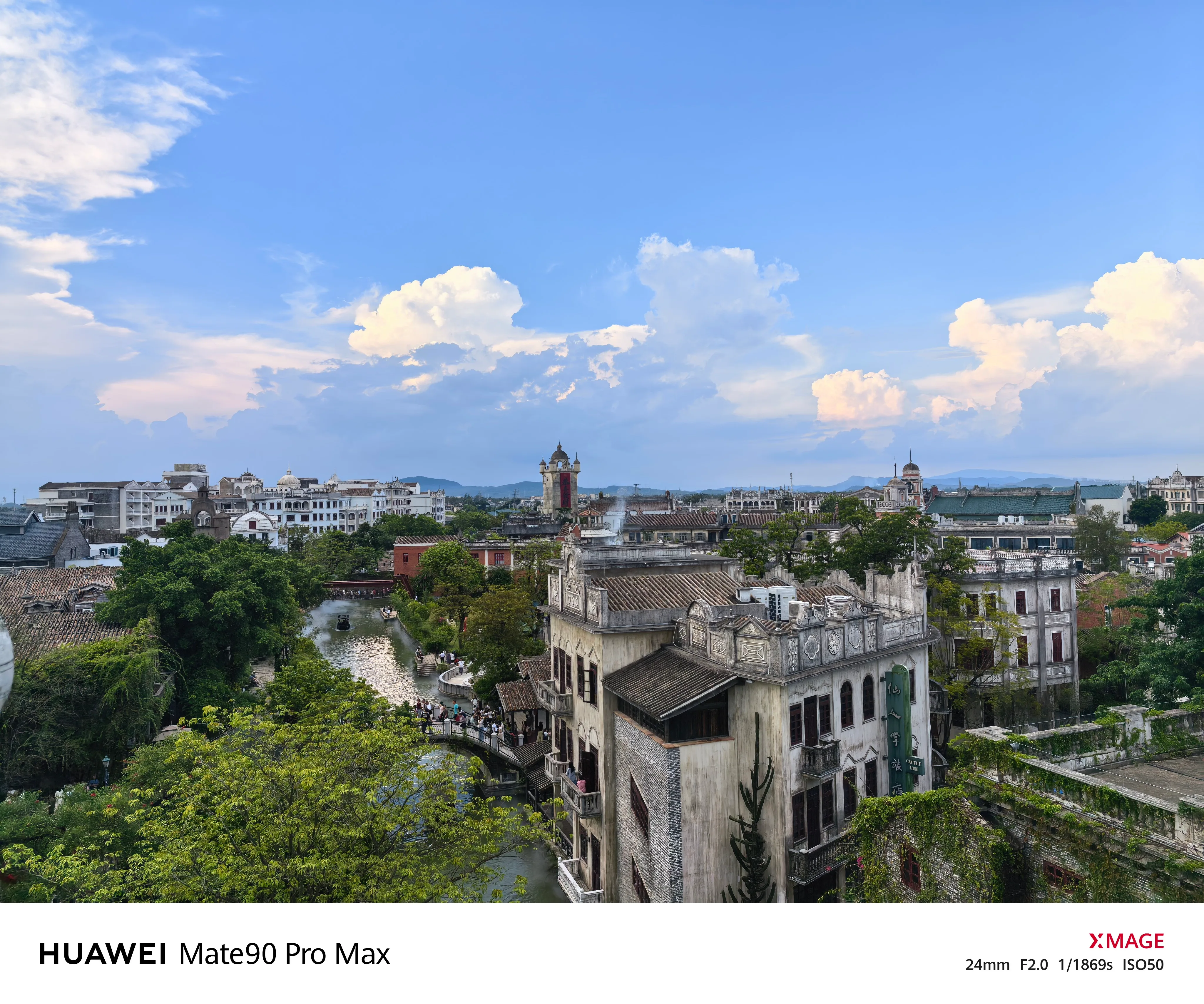
(Image: Lei Tech)
I actually prefer shooting architecture and everyday moments around 50mm equivalent rather than the main camera's wide angle — the perspective feels more natural and the subject stands out. At that focal length, the Mate 90 Pro Max still holds plenty of detail; building textures don't fall apart after cropping. Look closely, though, and Huawei's color processing is still assertive: punchy and impactful, but a step away from what the eye actually sees.
That color tendency is even more obvious with food. I shot a batch of hairy crabs — the raw ones were a challenge: water droplets on the shells, a stainless steel steamer beneath, strong side lighting, and reflections everywhere. Phones tend to over-darken the whole frame to kill reflections, or over-sharpen until the shell texture looks artificial.
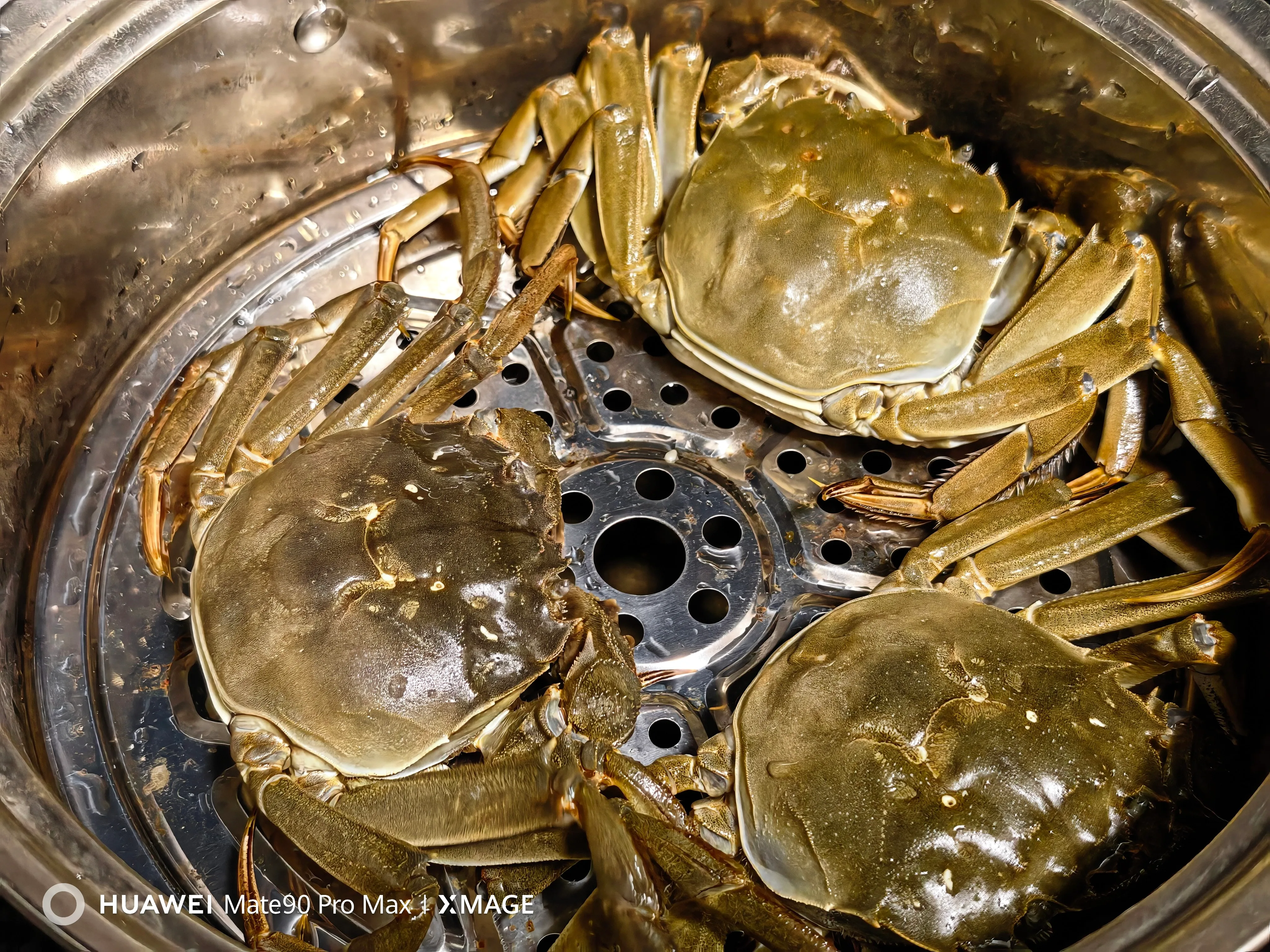
The Mate 90 Pro Max handled it well: shell granules, droplets, and edge detail are intact, and the steamer's texture isn't wiped out. Huawei didn't crush every highlight — you can still see bright reflections on the shell and metal, which feels more natural. Real-world reflections can't be fully preserved, and chasing "ultra-high dynamic range" by darkening every highlight would kill the sense of light.
At least in this set, the Mate 90 Pro Max keeps clear tonal separation: the subject reads, and the photo doesn't look flat.

(Image: Lei Tech)
Once the crabs were cooked, Huawei's color style was even more obvious — the oranges, reds, and yellows are vivid, especially the glossy red of the shells.
But in terms of color accuracy, Huawei is still pushing a bit hard. Some reds and yellows are oversaturated, a step from what the eye sees. The third-generation Red Maple camera doesn't mean Huawei has abandoned its color style — at least from these shots, the Mate 90 Pro Max still aims for a photo that looks good.
Far, Sharp, and Ready for Concerts and Landscapes
More interesting than the main camera is the 200 MP RYYB periscope telephoto. Over the past few years, Chinese flagships have shifted from chasing sensor size to boosting telephoto resolution and range — especially as 200 MP telephotos spread, letting phones crop across more focal lengths and become pocket "photography tools."
My shooting scenes were varied: outdoor fish lanterns, indoor stage performances, and boats on the river, with different distances and light. Pleasingly, image quality stayed consistent across them; in good light, the telephoto's resolution advantage is clear.
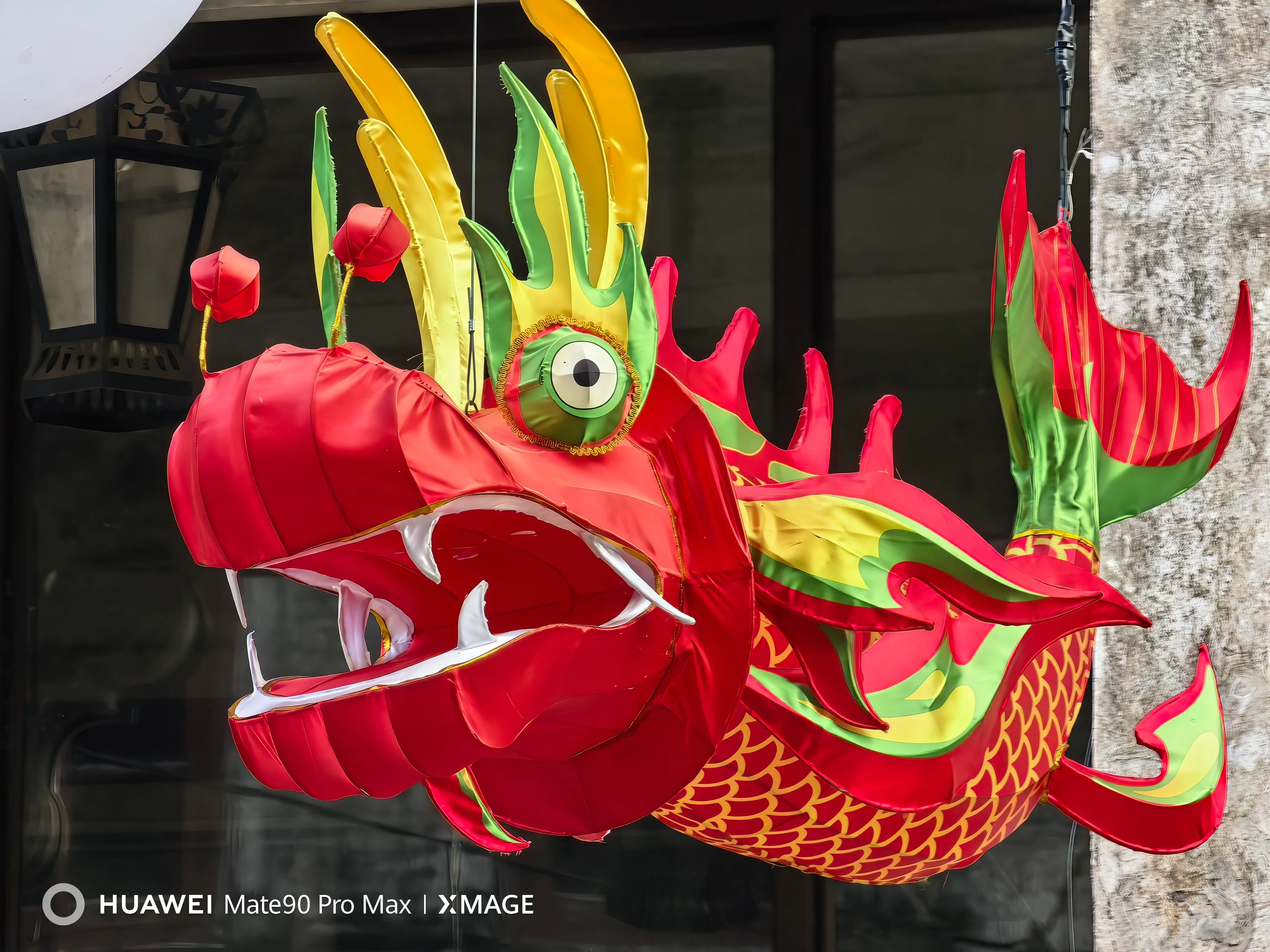
(Image: Lei Tech)
On the fish lantern — covered in scales, stitching, and fabric folds — even at 240mm, the patterns and fin edges stay sharp, not mushy after heavy cropping. Best of all, there's no exaggerated sharpening halo.
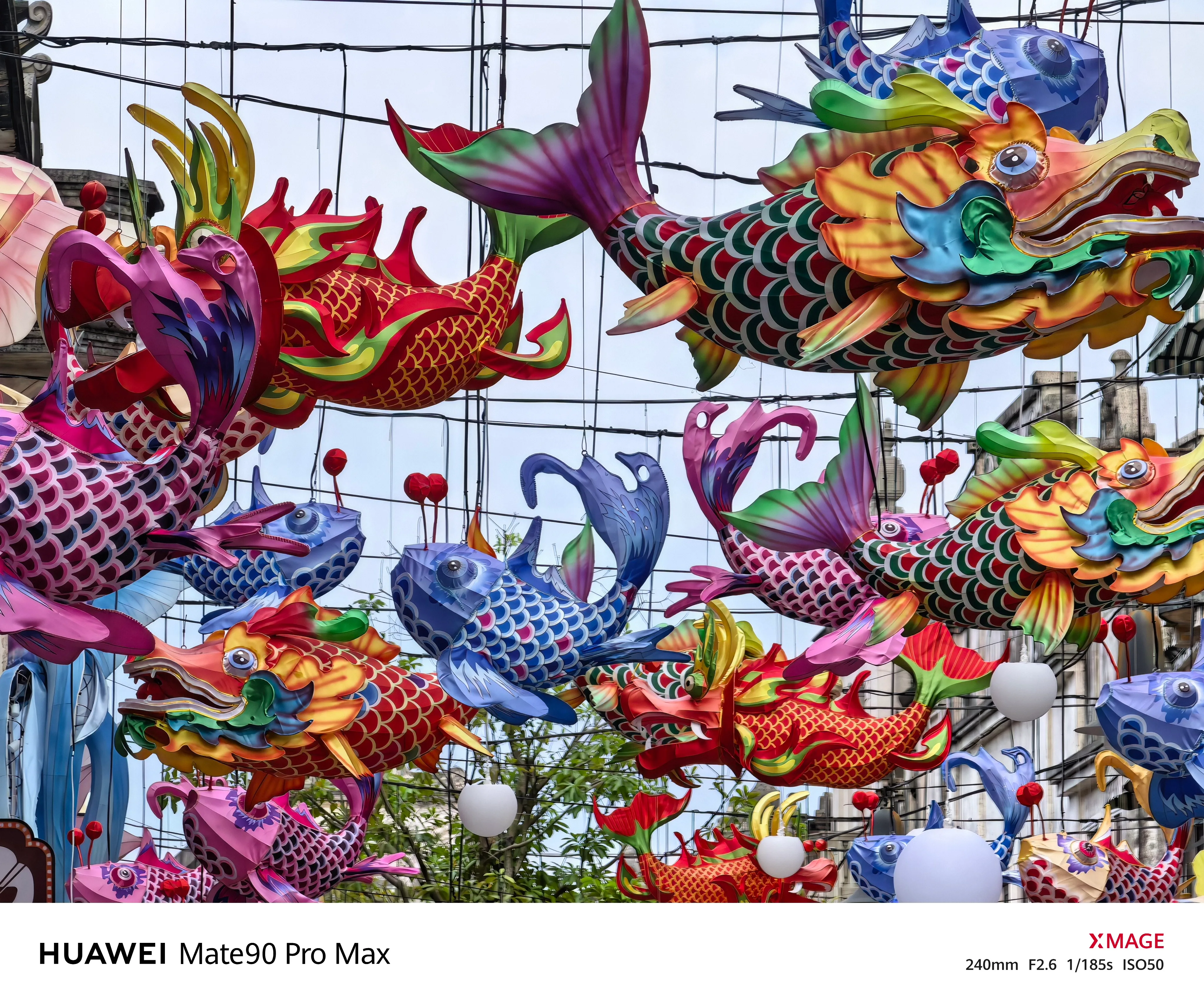
(Image: Lei Tech)
Huawei's color style is still unmistakable. The lantern already uses lots of red, green, and yellow; the Mate 90 Pro Max makes them pop, especially the red, which grabs your eye immediately. But some reds are almost too rich, compressing highlight detail. If you prefer colors close to the naked eye, this "true color" approach may not be for you.
The other advantage of a telephoto is composition without moving your feet. At a stage show, sitting far back, the main camera captures the whole stage with the performer tiny in frame — cropping later kills detail.
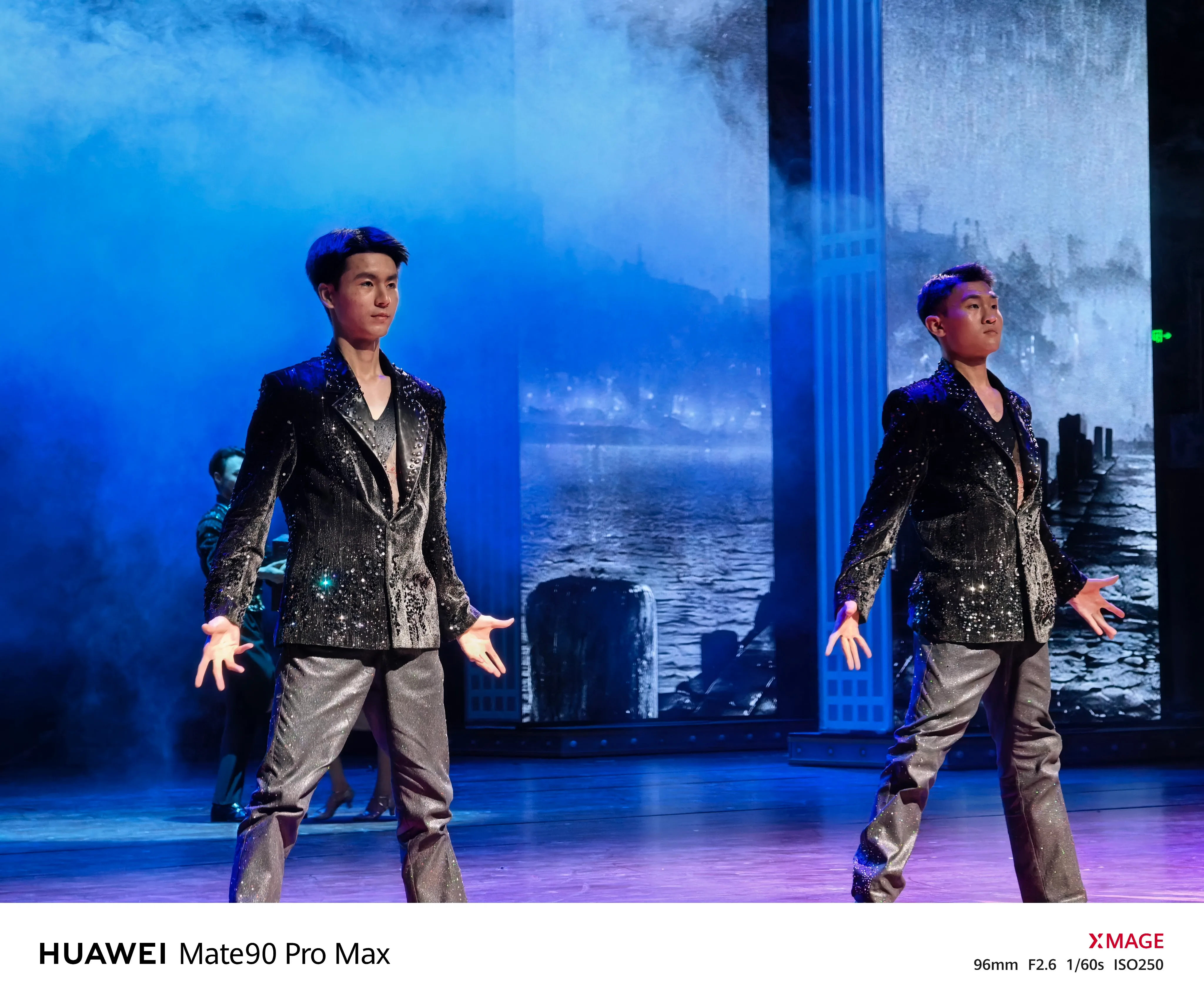
(Image: Lei Tech)
With the telephoto, the performer fills the frame, even the sequins on the black suit and reflective texture of the trousers survive. Given the blue-purple stage lighting and dim faces, that's a solid result — no plastic-smooth faces, no featureless black blobs for clothing.
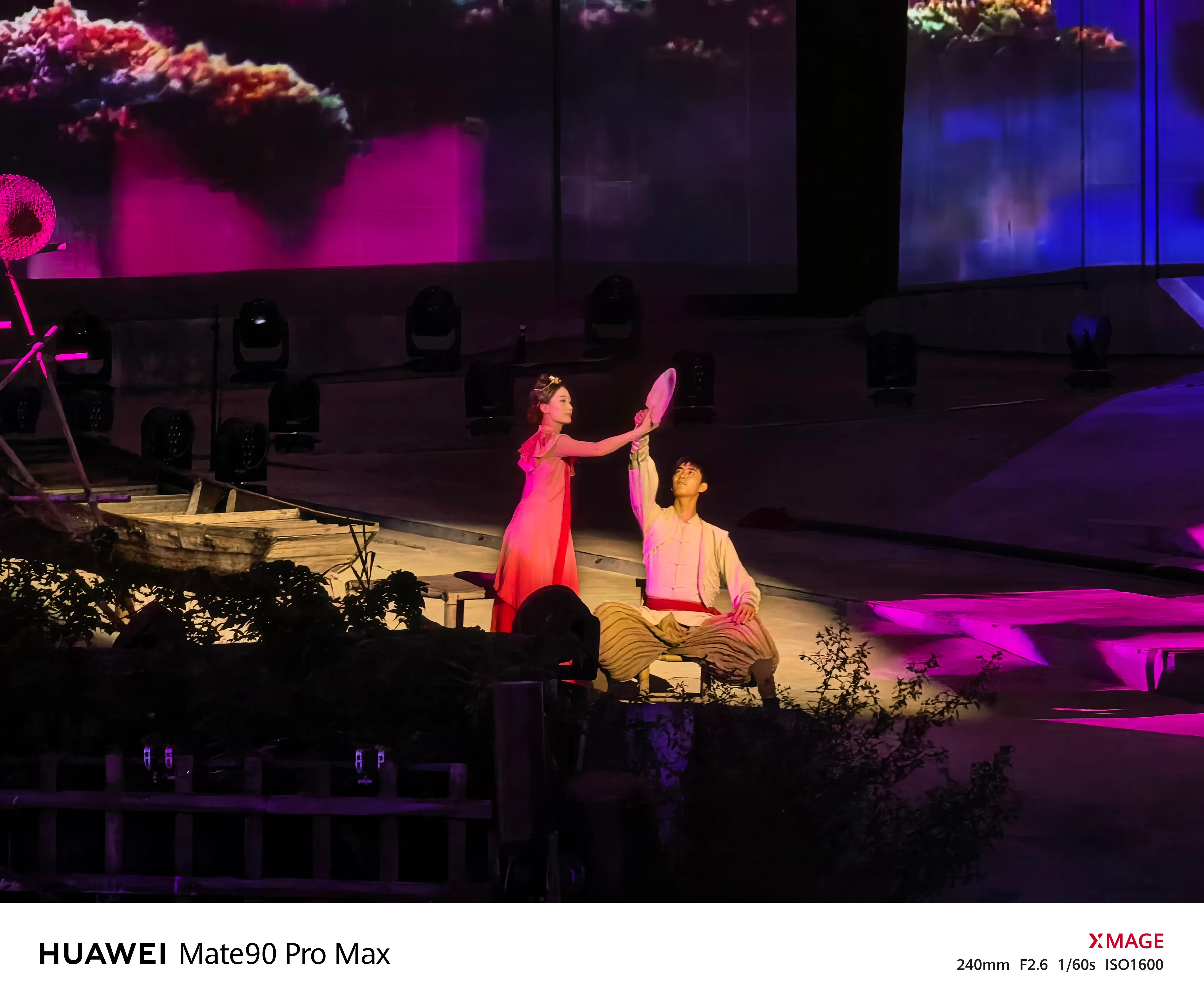
(Image: Lei Tech)
That said, the stage exposed a small telephoto weakness: close attention shows slight motion blur on the hands. At 1/60s, freezing a moving performer was always going to be tough. OIS steadies your hands, but it can't make the performer stand still — for high-energy acts, you need a faster shutter. Then again, the slower shutter buys brightness; you can't have everything.
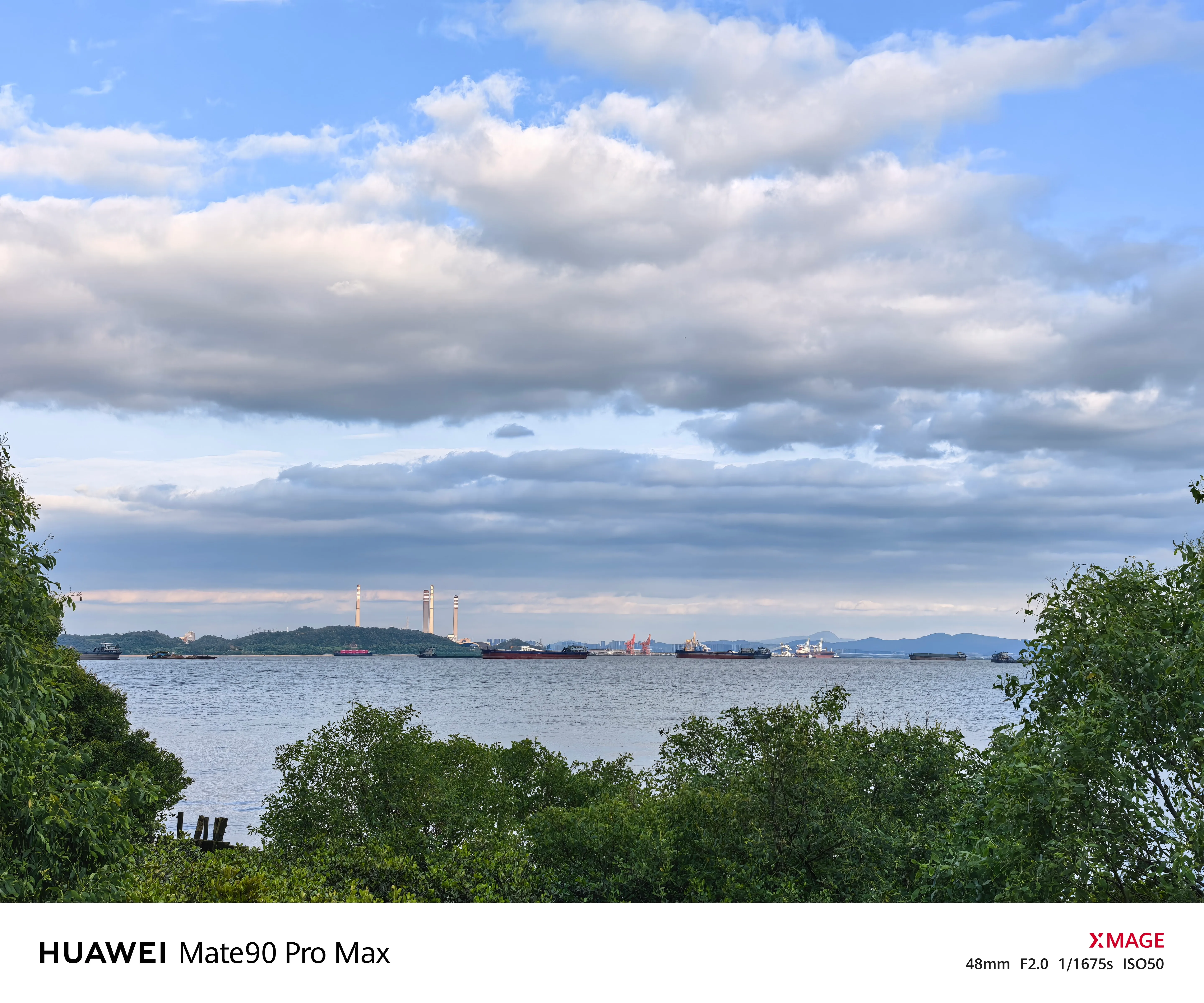
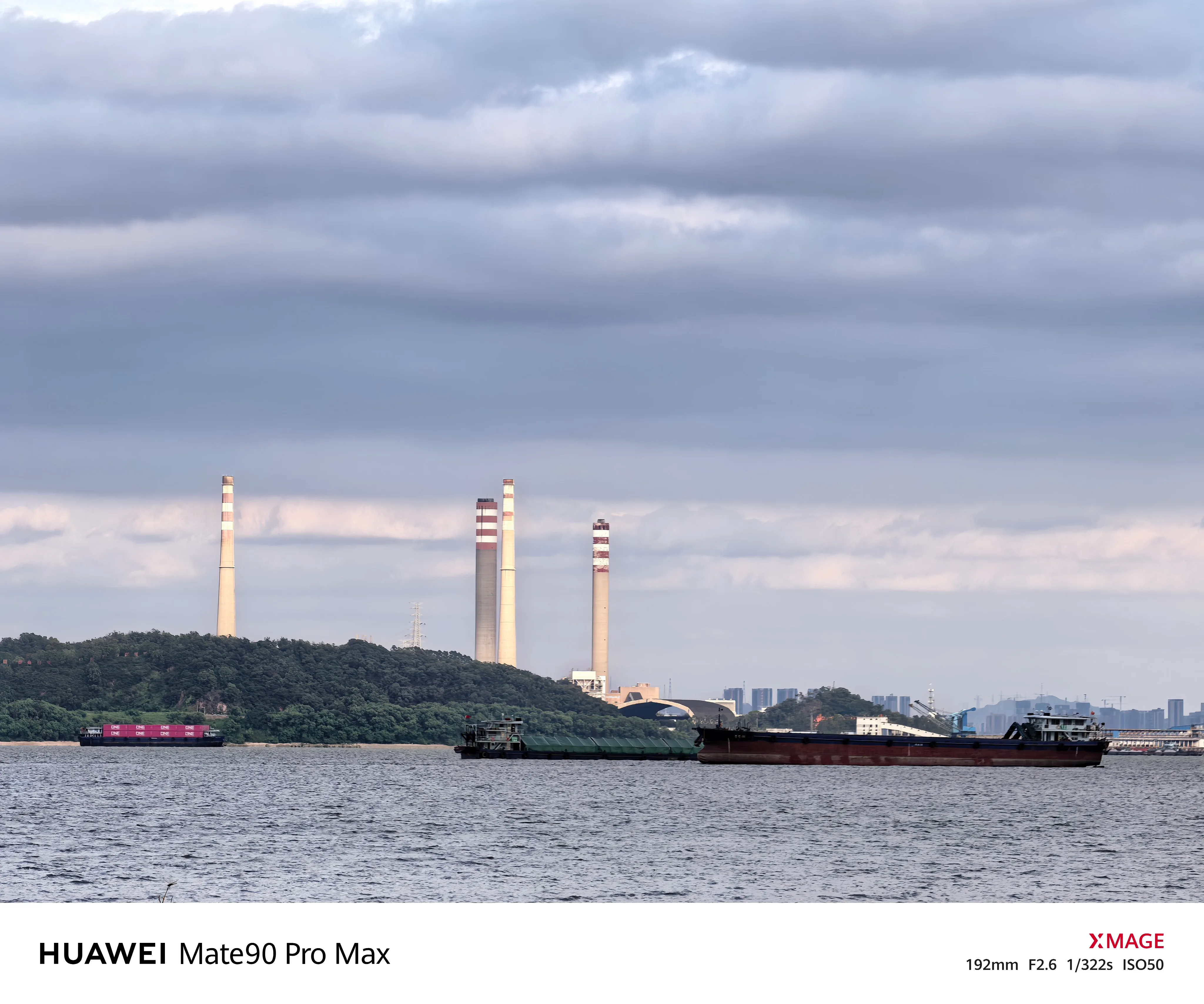
(Image: Lei Tech)
Distant buildings and the river performed well too. Even at 192mm, the chimney's red-and-white stripes, riverboats, and shoreline buildings stay clear, with detail surviving magnification.
At around 8x zoom, some building edges show sharpening halos and less native detail. Comparing with the 48mm shot, colors diverge a bit — the telephoto sky is grayer and cooler, and warm cloud tones flatten out. White balance consistency has room to improve. That said, it's mainly a color-tendency difference; sharpness and detail are unaffected, and the overall look holds up.
After all these shots, I'm satisfied with the telephoto. The 200 MP sensor delivers usable 8x and even 10x zoom, great for shows, architecture, and distant scenery. It's not flawless — some oversaturation, occasional white-balance drift across focal lengths, more obvious in flat, overcast light.
But overall, none of that changes the verdict. The point of a phone camera is to capture the moment, clearly — and the Mate 90 Pro Max does that well.
HarmonyOS 7: A More Mature Ecosystem
Beyond imaging, let's talk HarmonyOS 7.
HarmonyOS has come a long way. Since HarmonyOS NEXT, Huawei has built an independent app ecosystem; after several iterations, mainstream apps like WeChat, Alipay, Douyin, and Taobao run fine day to day.
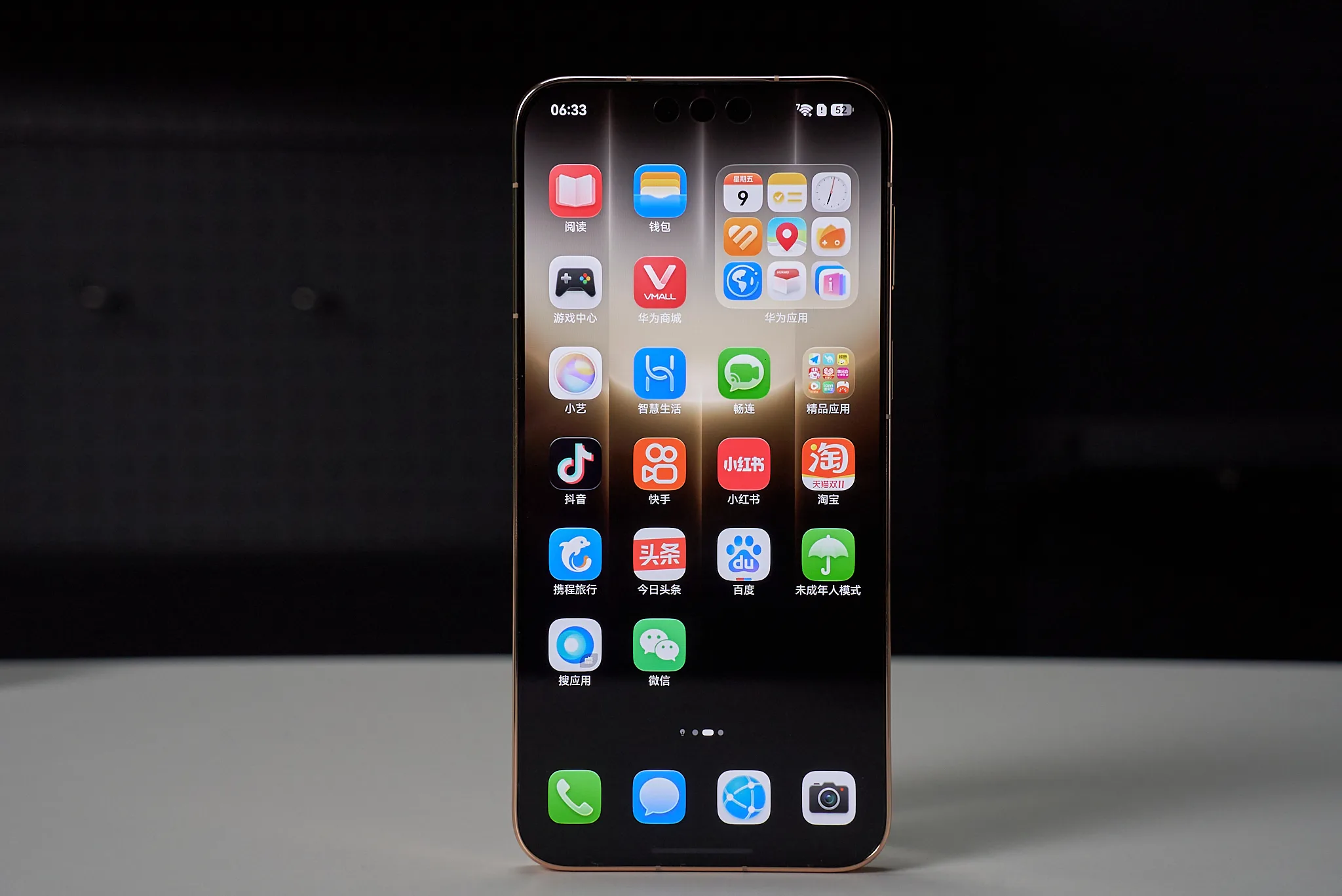
(Image: Lei Tech)
cosystem gaps remain. Domestic mainstream apps are well-optimized, but less-common apps, overseas services, and some professional tools may be incomplete or uninstallable. If you stick to domestic staples, HarmonyOS 7 handles it; if you rely on overseas apps or niche work tools, double-check compatibility before switching.

System smoothness is first-tier: the Kirin 9050 Pro is a big step up from previous generations, and combined with HarmonyOS' optimization, scrolling, animation, and multitasking feel responsive.
AI remains a big focus, especially Xiaoyi. It can now understand on-screen content, look things up, organize documents, and even chain actions across apps. Long article? Ask it to summarize. Messy info? No more copy-pasting — hand it to Xiaoyi.
The more tasks it can handle, the more everyday chores become voice commands, which grows on you.

(Image: Illustration by Lei Tech)
Day to day, HarmonyOS 7 is a mature mobile OS — mainstream app support and smoothness are non-issues.
Verdict: Worth the Price
By our usual convention, the pros and cons:
Pros:
1. Instantly recognizable as a Huawei Mate;
2. Consistent, pleasing camera output;
3. First-tier system smoothness;
4.Build quality and feel are impeccable.
Cons:
1. App ecosystem still incomplete;
2.Struggles in some heavy-load scenarios;
3. Battery life is middling.
At 9,499 yuan and up, the Mate 90 Pro Max isn't for everyone. But after this experience, we think Huawei delivered a genuinely competitive product, especially in imaging and screen. Weight, color tuning, and extreme performance still have room to improve.
Whether it's worth it comes down to your needs. If you're already in the Huawei ecosystem and value cameras and HarmonyOS, it's worth a look. If gaming performance or frequent overseas apps matter more, there are other options at this price.
At 10,000 yuan, buyers don't want a phone that does everything — they want one that's excellent where it matters most, and pleasant to use every day.