
 雷科技






Integrating AI into games is hardly a new topic.
Back in 2005’s F.E.A.R., Monolith Productions incorporated AI technology to give in-game enemies a degree of reasoning capability. They could not only communicate with one another via simple commands, but also assess threats based on the player’s actions, and even execute tactical maneuvers such as flanking by leveraging the map and weapons.
But have you ever wondered if one day we might not even need a game engine, and could automatically generate games solely using large AI models?
Wonder no more — this is already a reality.
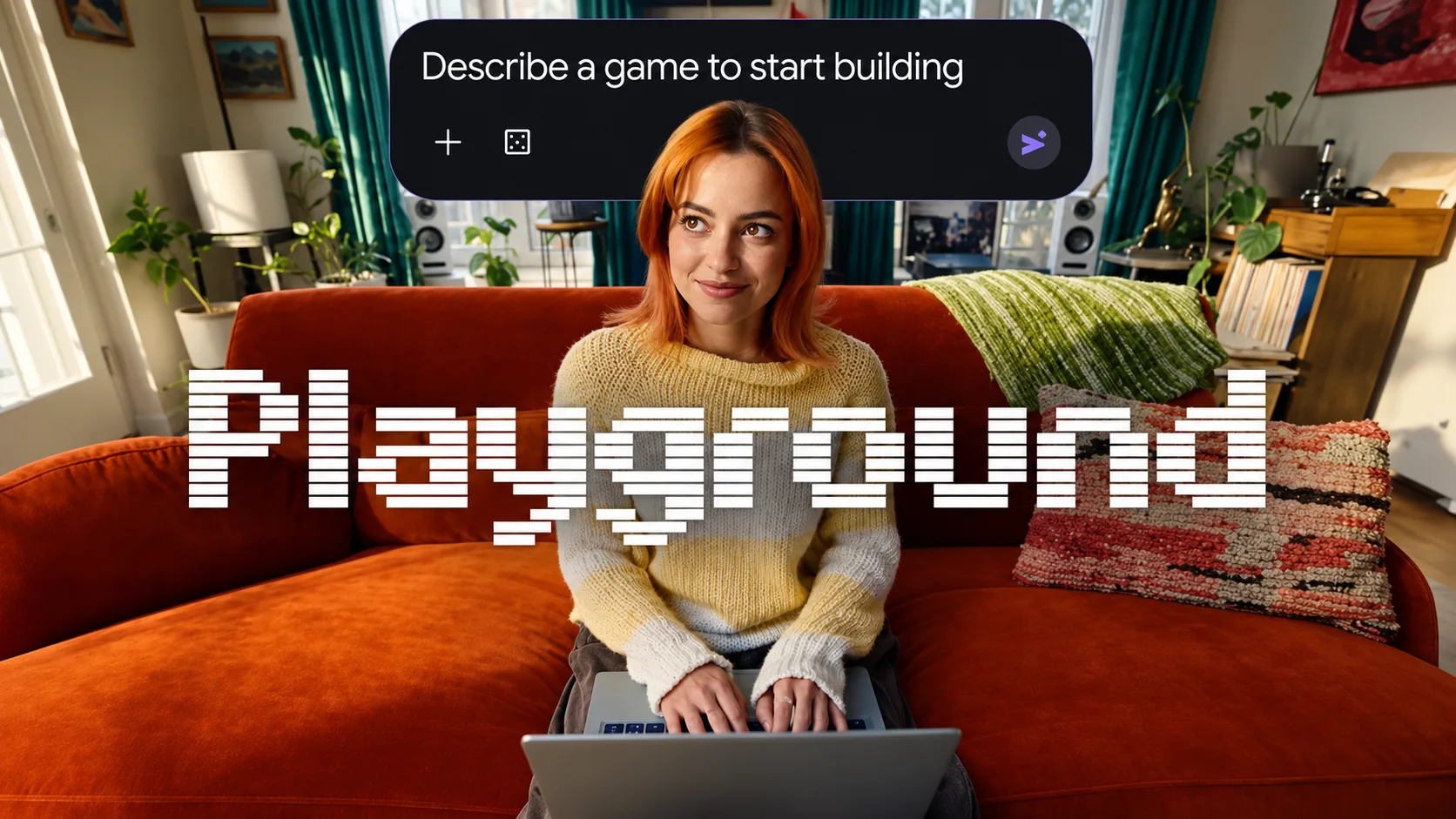
(Image source: Google)
In the early hours of today, Google officially announced a partnership with Unity, the renowned game engine developer, to launch Playground, an experimental AI gaming platform. Users can not only play games created by others on the platform but also build their own games with simple prompts, drastically lowering the barrier to game development.
Could humanity’s understanding of games be about to be completely upended by AI? Lei Tech got hands-on with it right away.
Google’s take on a “4399 mini-game site”
Trying out Playground is fairly straightforward.
According to information released by Google, the platform is available to users aged 18 and above in the United States. If you have a US Google account, simply open playground.google in your browser.
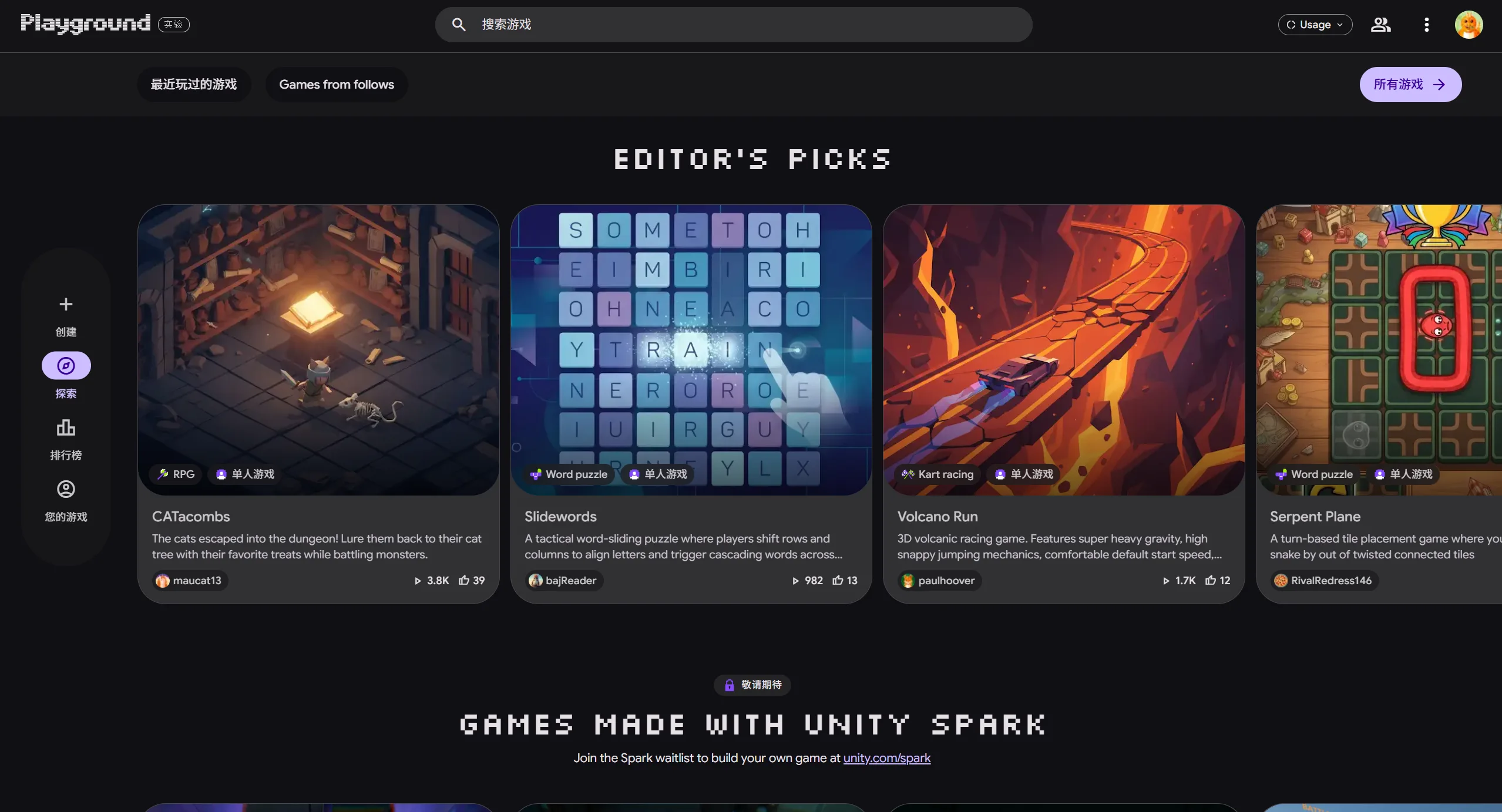
Once you load the webpage, you’ll see an interface like the one described below.
Sharp-eyed readers may have already noticed: yes, this web app is essentially designed with mobile devices in mind. It looks rather odd when opened on a desktop computer. The on-screen elements are oversized, and the overall page feels somewhat sparse.
(Image source: LeiTech)
Of course, nearly all of these games are made by overseas creators, and all descriptions are in English. Still, it’s generally easy to grasp what they’re about.
At the top of the page, you’ll find a selection of standout creations curated by Google’s web editors.
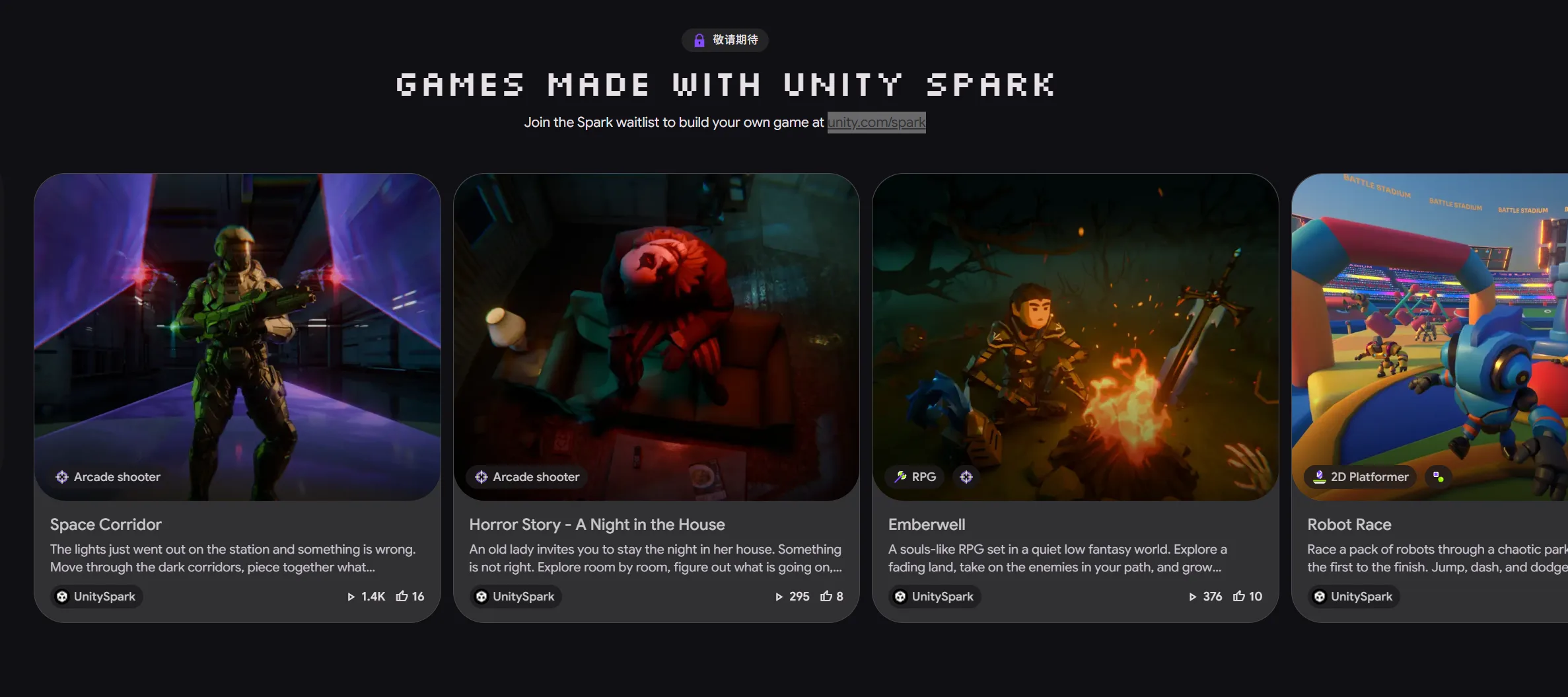
The middle section features titles built with Unity Spark integrated by Google. These entries leverage the Unity engine to deliver more complex gameplay and high-fidelity 3D visuals. Some of them even bear hints of commercial games.
(Image source: LeiTech)
As for more traditional game categories, Playground has those too.
Now, let’s cut to the chase. We’ll jump straight to the trending tab and test out the three most popular games currently available on the Playground website.
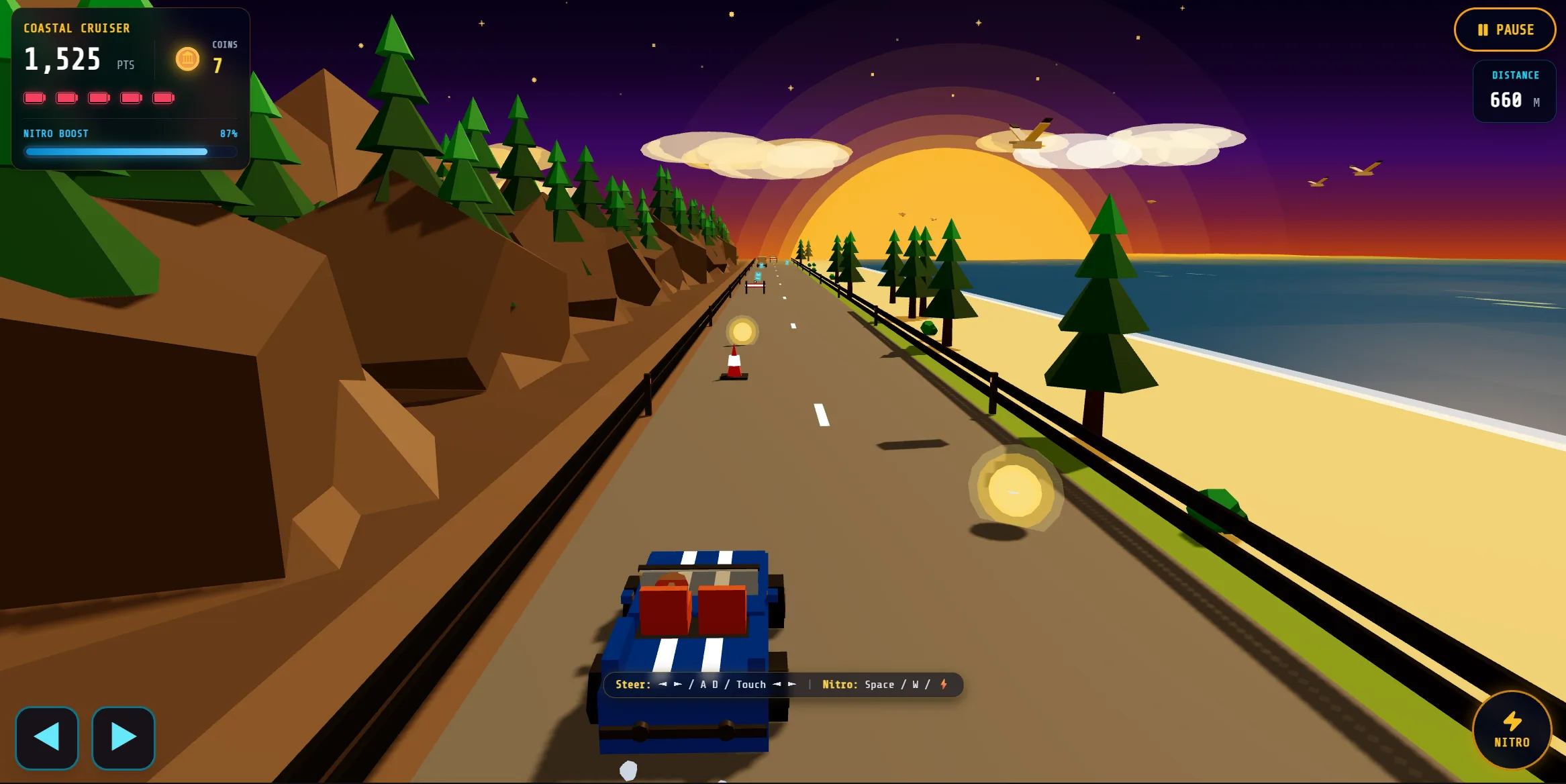
The first game is Coastal Cruiser, described as an endless racing title.
(Image source: LeiTech)
Visually, the game adopts a simple low-poly art style. A coastal highway winds through sunsets, shorelines, mountains and pine forests. While the scene modelling is rather rough, the colour palette is pleasant. At first glance, it genuinely feels like an indie mini-game.
The gameplay is pretty straightforward. Players drive a blue convertible along an endlessly stretching highway, dodging obstacles while collecting yellow coins and blue nitrous boosts scattered along the way. Coins raise your score, and nitrous gives you a speed burst. The ultimate goal is to travel as far as possible and chase a higher score.
After hands-on testing, I think the game’s handling is just mediocre.
The car’s steering feels noticeably floaty. When you press the directional keys, the vehicle’s sideways movement is hard to control. You need to adjust your position well in advance if you want to pick up coins or avoid obstacles. Coupled with the fact that the road stays perfectly straight, the experience can get monotonous after just a few minutes of play.
(Image source: LeiTech)
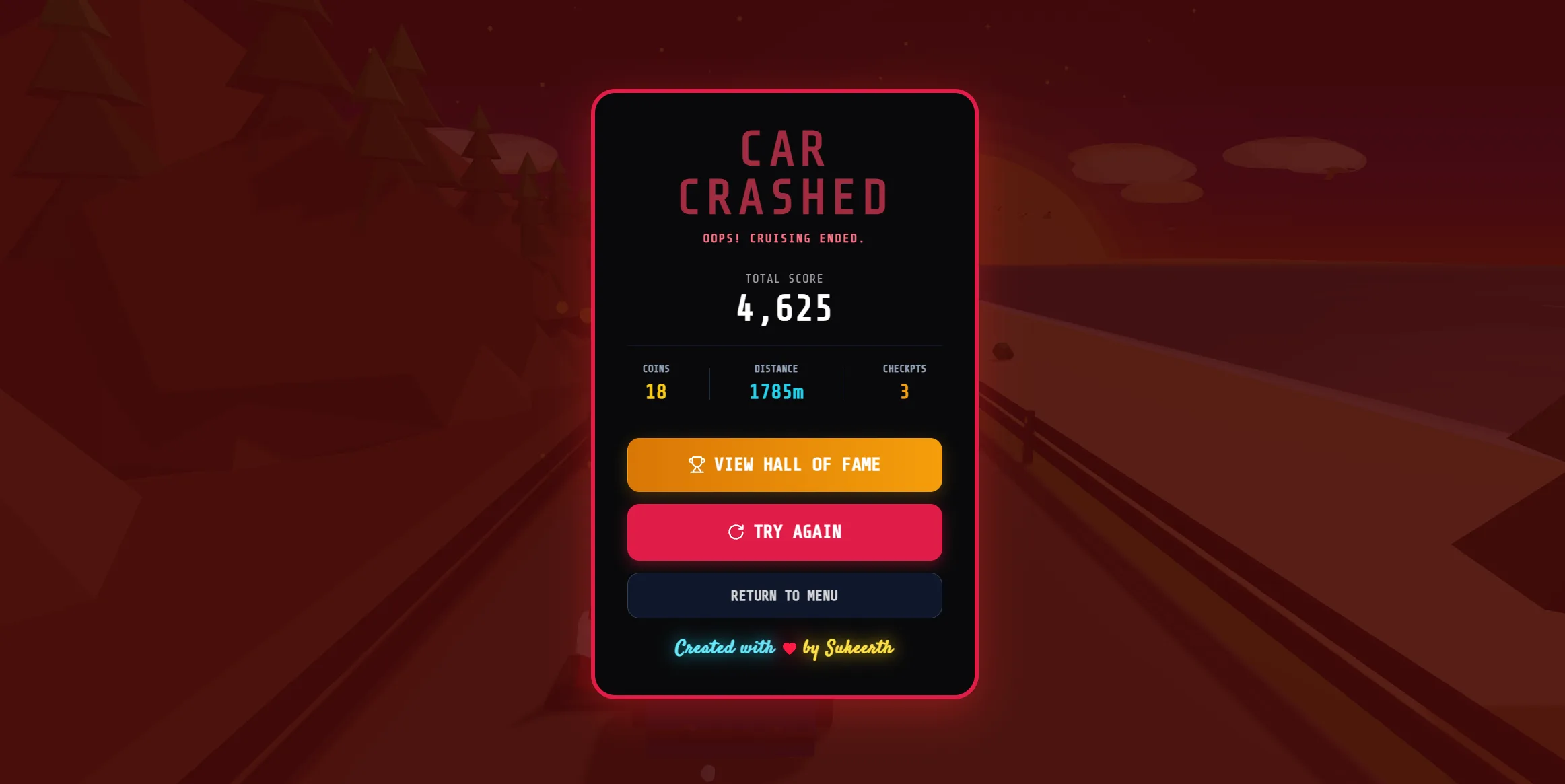
Still, considering this is an AI-generated mini-game, it boasts a complete set of visuals, controls, scoring and item systems — at the very least, it’s fully playable.
Now let’s try another title: The Associates: Nexus Breach, a 45° top-down shooter.
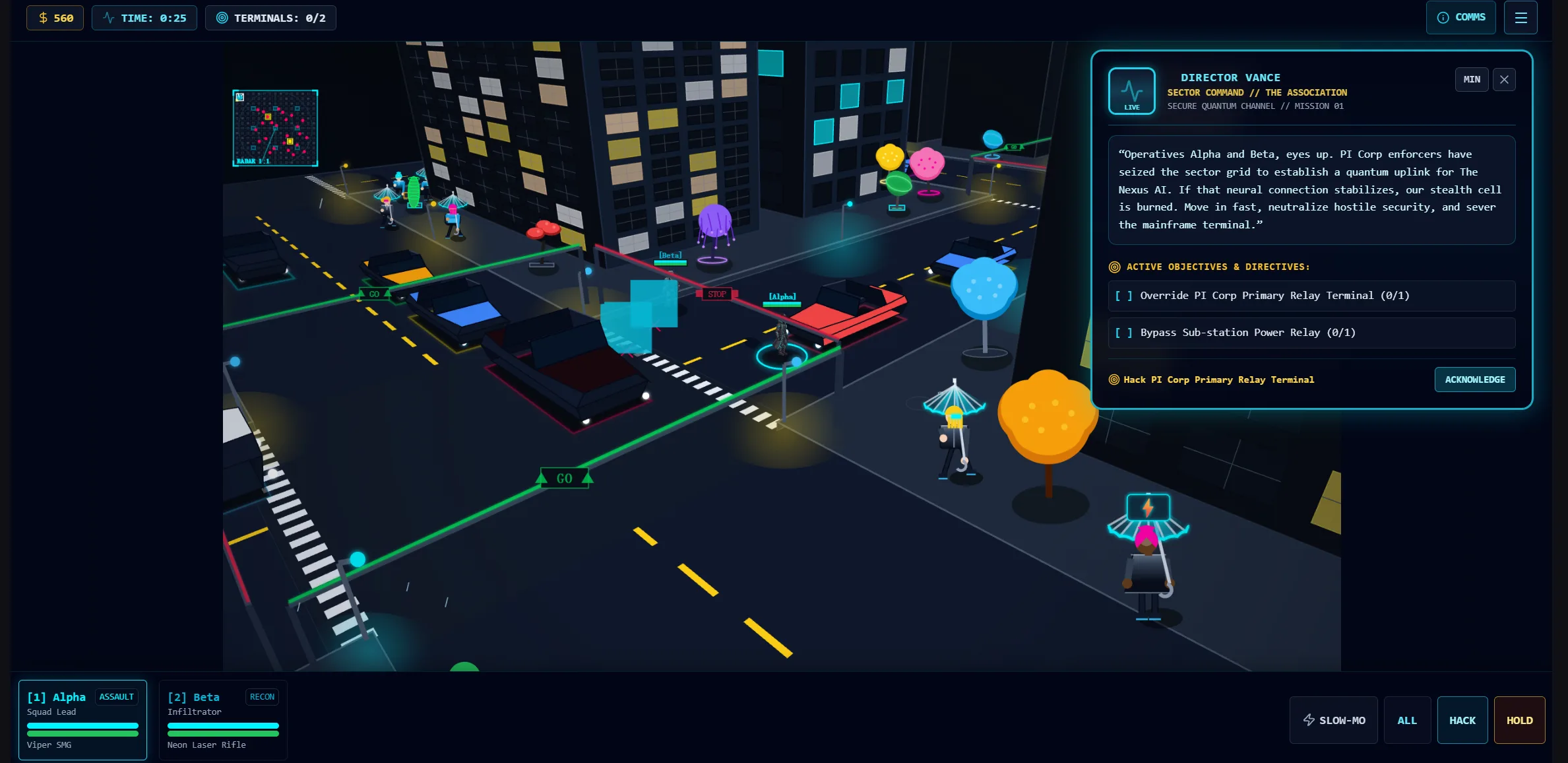
Surprisingly, this turns out to be a tactical shooter where you control a multi-person squad, with fairly complex mission mechanics. The catch is that the AI-generated compass is basically useless for navigation. The characters are tiny and get covered by the cursor, making gameplay a chore after more than five minutes.
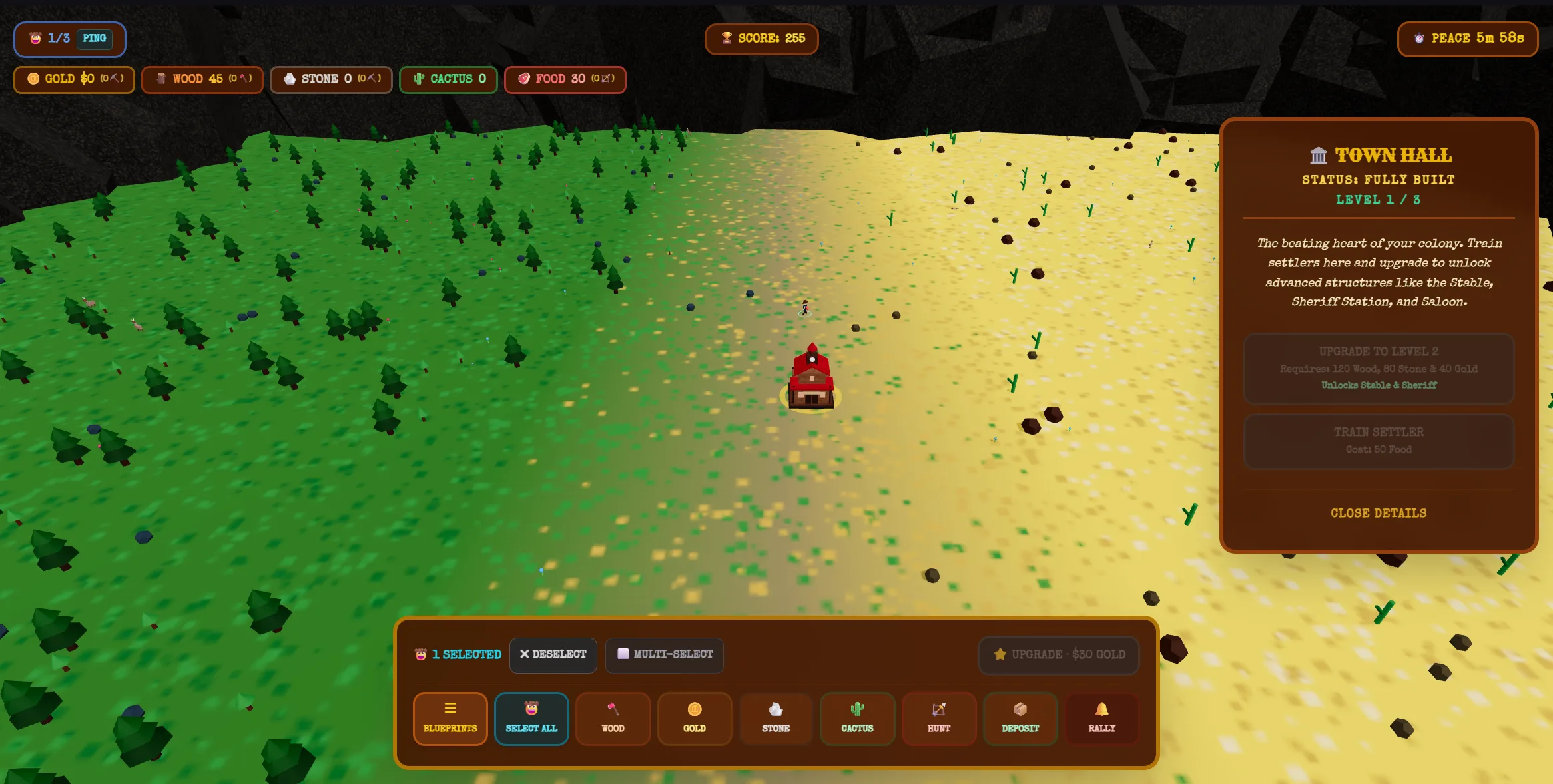
Last up is a simulation management game, Westbound Frontier.
This is probably the weakest of the three. The entire playthrough is capped at ten minutes. Players aim to gather resources with villagers and construct buildings as quickly as possible to rack up a high score. However, the controls are clunky. I kept reselecting my units to start and cancel their actions over and over again.
As you can see, half the time had already passed, and I still hadn’t managed to build a second structure.
(Image source: LeiTech)
It seems that games with more complex mechanics are harder to build using Google Playground, which is one of the limitations of large models at this stage.
Want to make a game? It’s easy enough for anyone!
At this point, you might share the same question I had.
Given that these games have fairly simple logic and don’t seem hard to create, could someone like me with zero game development experience interact with Playground to build a playable web game?
No need to wonder — let’s just dive straight in.
Playground imposes no restrictions on gameplay, but there are certain limits for game creation. Free users need to join a waitlist to get creator access in batches. However, as a Google One AI Premium subscriber, I got creator access unlocked immediately.
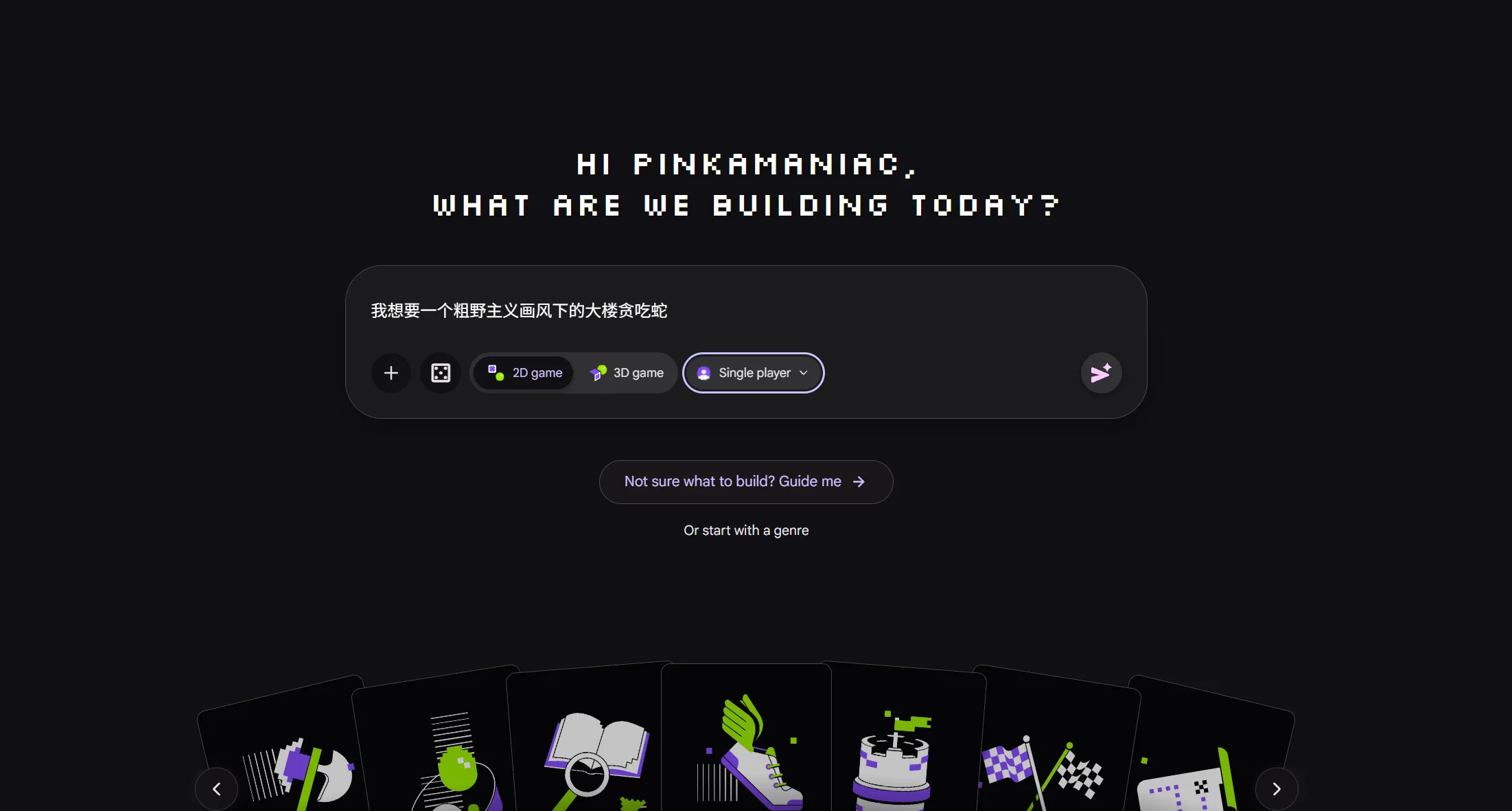
Let’s start with something simple. For example, I want a Snake game set in a brutalist skyscraper aesthetic.
I can simply type my vague requirements in the creation panel, choose whether the game is 2D or 3D, single-player or multiplayer, and then Playground will generate the game automatically.
(Image source: LeiTech)
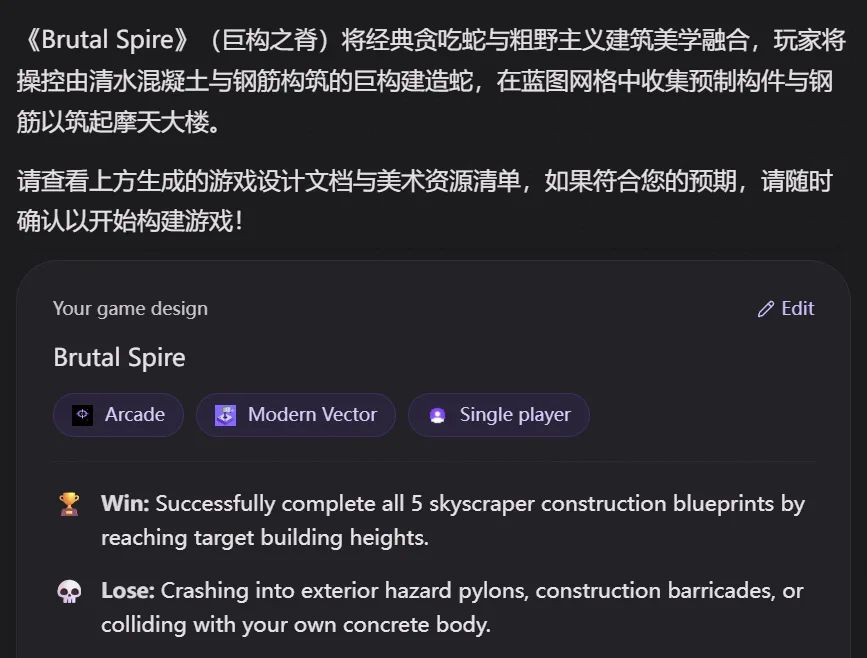
Judging from the generated design proposal, I’d say Playground demonstrates decent comprehension capabilities.
(Image source: LeiTech)
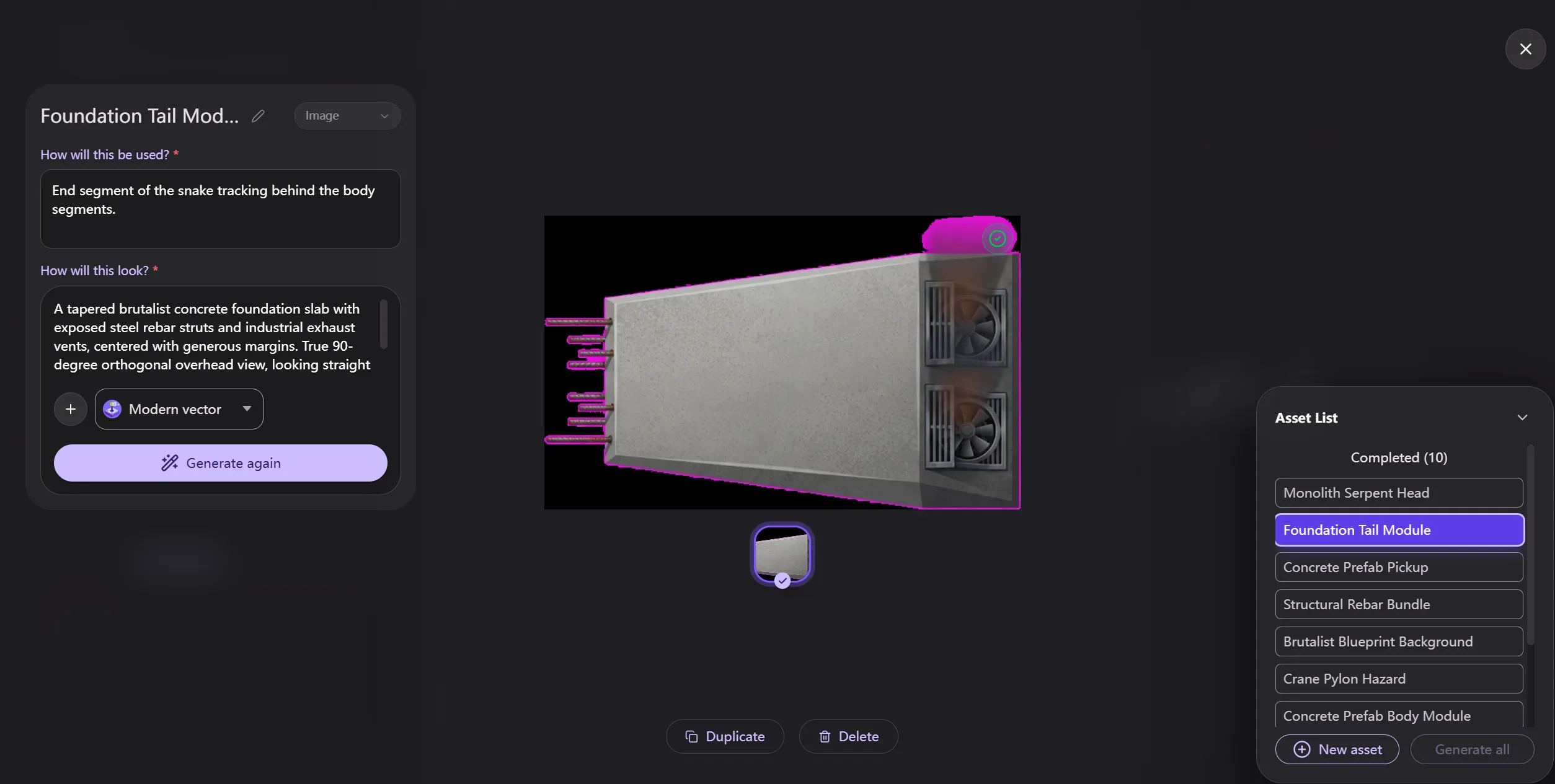
Next, you can choose to have it output the game directly, or generate the corresponding art assets first so you can tweak them to your liking.
(Image source: LeiTech)
I thought these 2D assets fit the theme pretty well, so I proceeded with the generation.
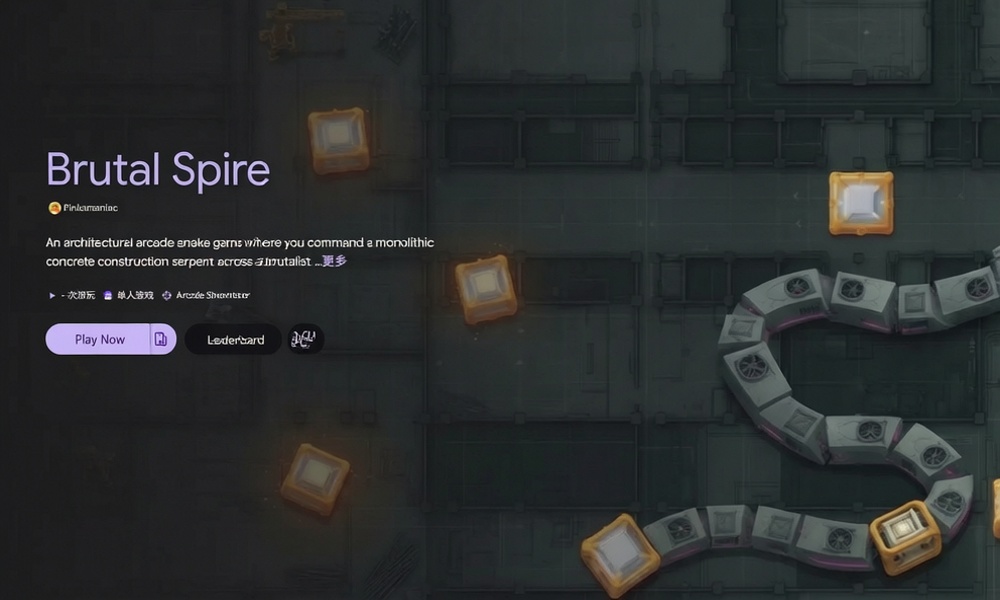
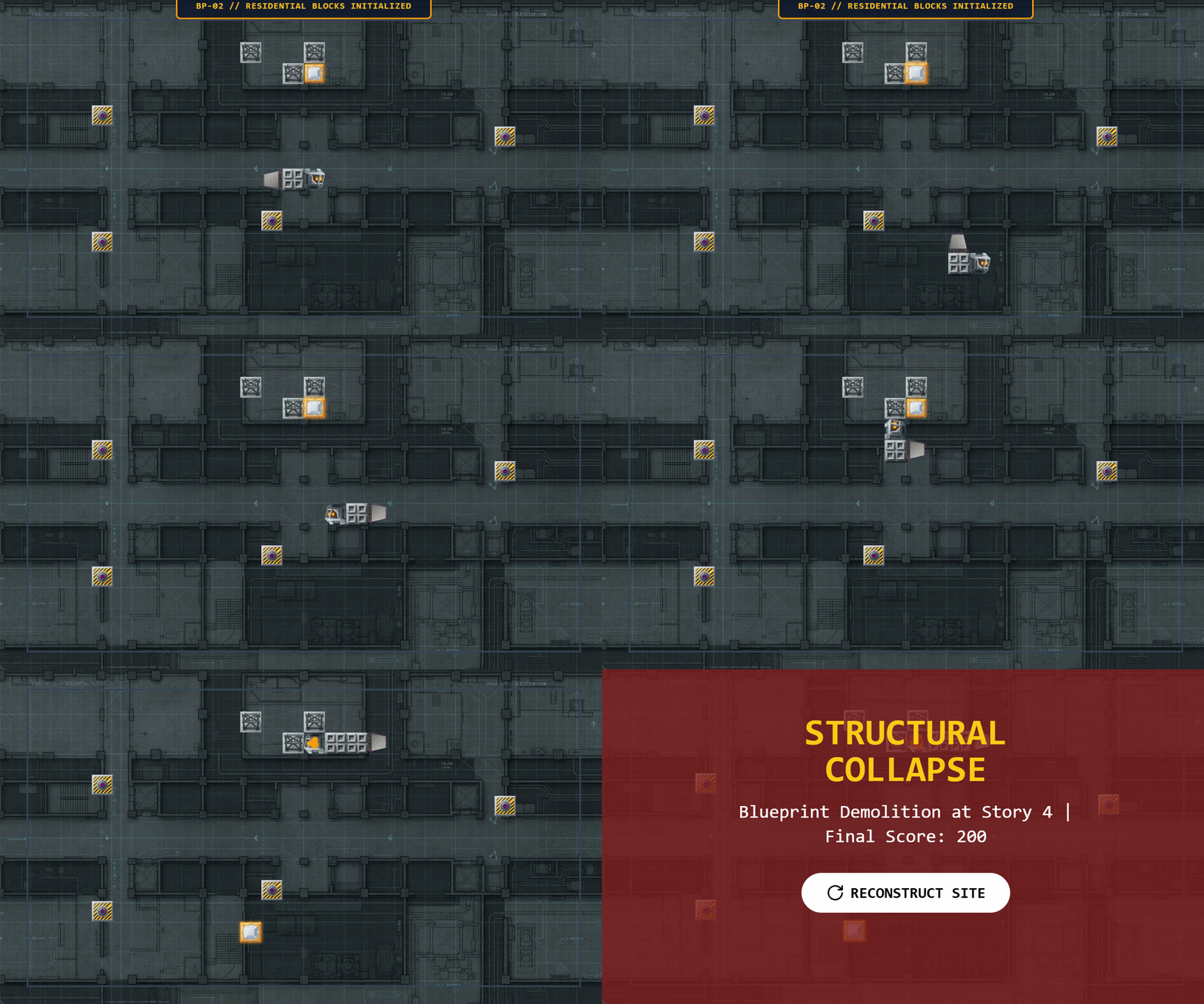
Here’s the final result: a Snake game that barely nails the brutalist art style. It uses the familiar core mechanic where the snake grows longer after eating pellets. Random obstacles and power-ups are added to boost gameplay. For my first AI-generated game, it’s not bad at all.
(Image source: LeiTech)
If you want to try out the game, you can visit this link: https://playground.google/g/gv8ev7.
Oh, and here’s another gripe. Google lets Nano Banana 2 auto-generate game thumbnails. These thumbnails look far more impressive than the actual in-game visuals — it’s basically false advertising.
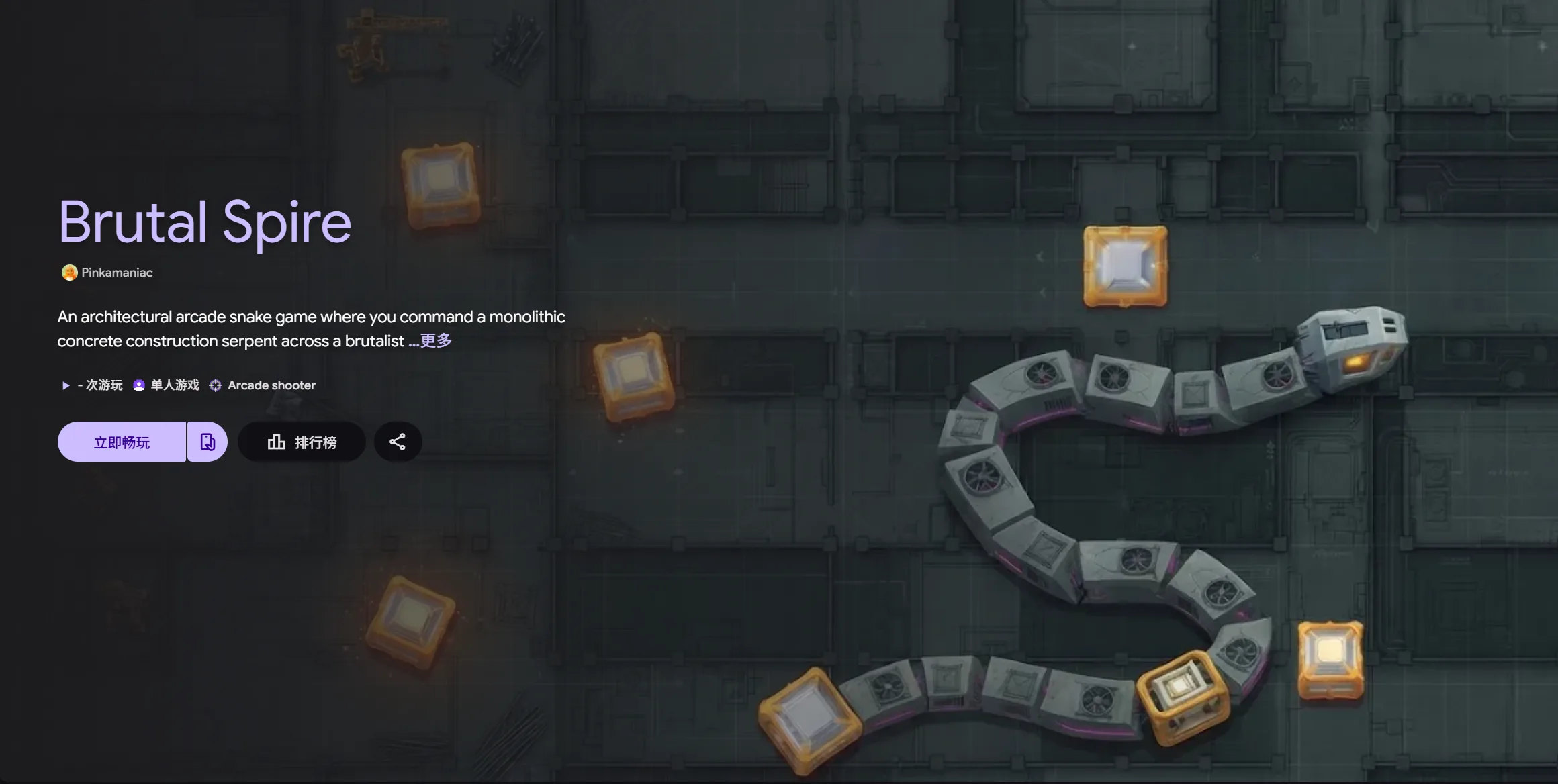
(Image source: LeiTech)
So simple prompts work fine, but what happens when we throw in a relatively complex one?
I’ve long wanted to create a roguelike action game. I’ve brainstormed plenty of ideas, yet they never moved past the concept stage. This seems like the perfect chance. I’ll ask ChatGPT to polish my prompt, then feed it into Playground and see what comes out.
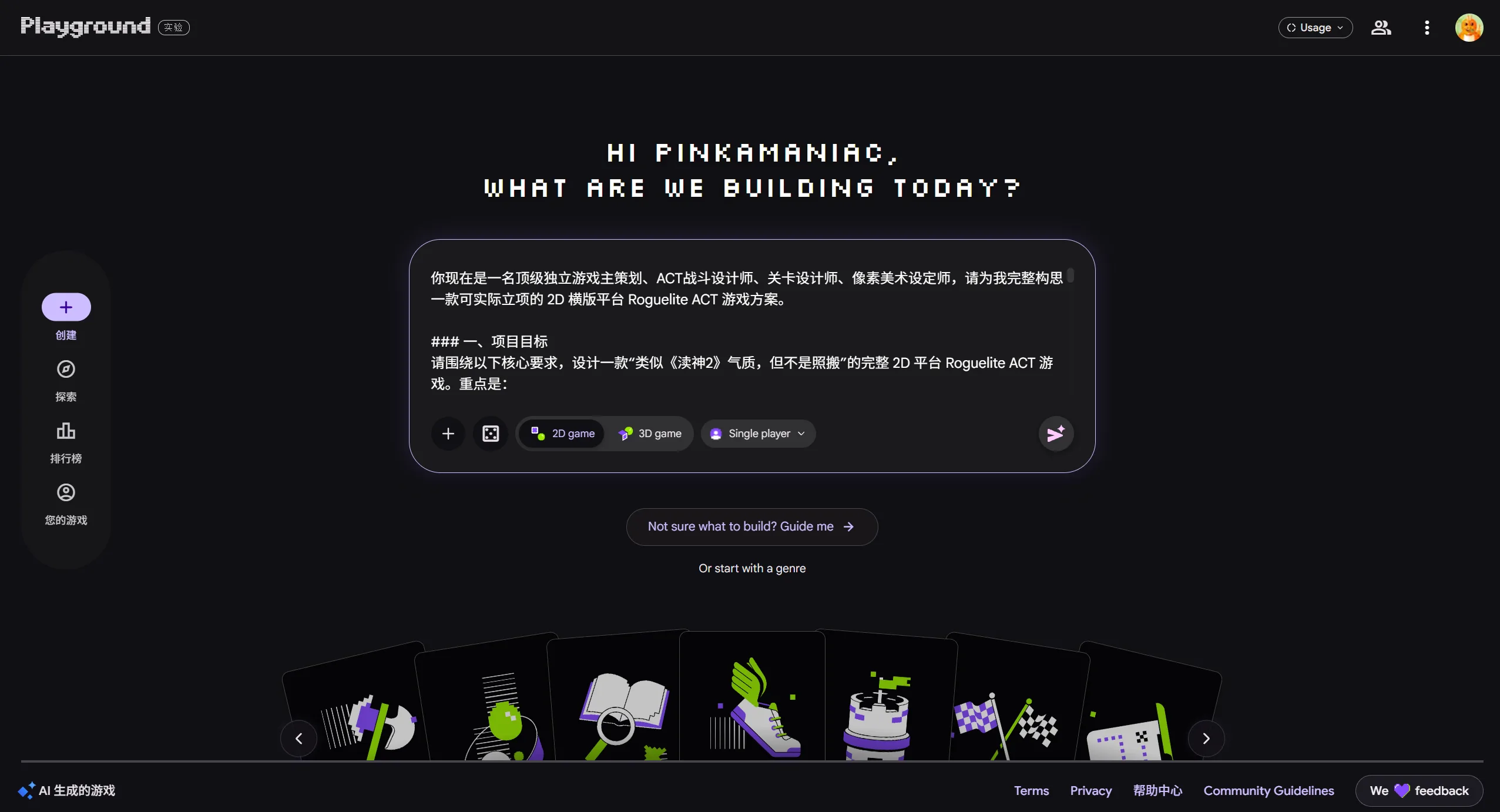
Version 1: Enemies had no concept of platforms and would simply float around. The player character had no attack animations.
Version 2: Animations were added this time, yet enemies still lacked proper logic. It was far from being a playable demo.
I kept tweaking the prompt through five more iterations over two hours, and finally got something presentable.
Now the protagonist has three weapons, including a transforming axe that switches between a sword form with moderate attack speed and an axe form with slow attack speed. Perfect blocks are also available.
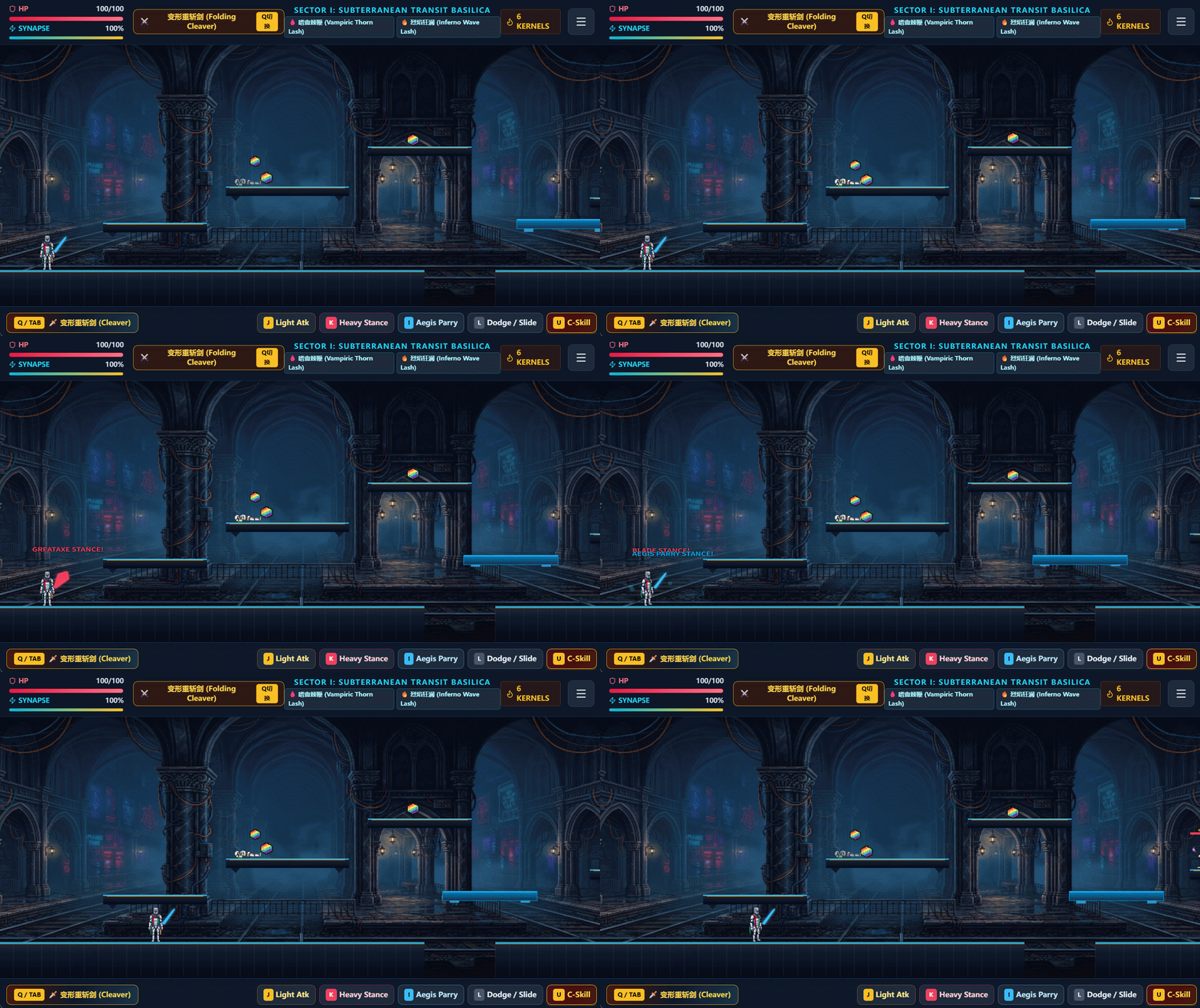
(Image source: LeiTech)
The second weapon is a holy silver whip that is absolutely not inspired by the whip from Castlevania. It can even swing 360 degrees. Watch out, Belmont clan.
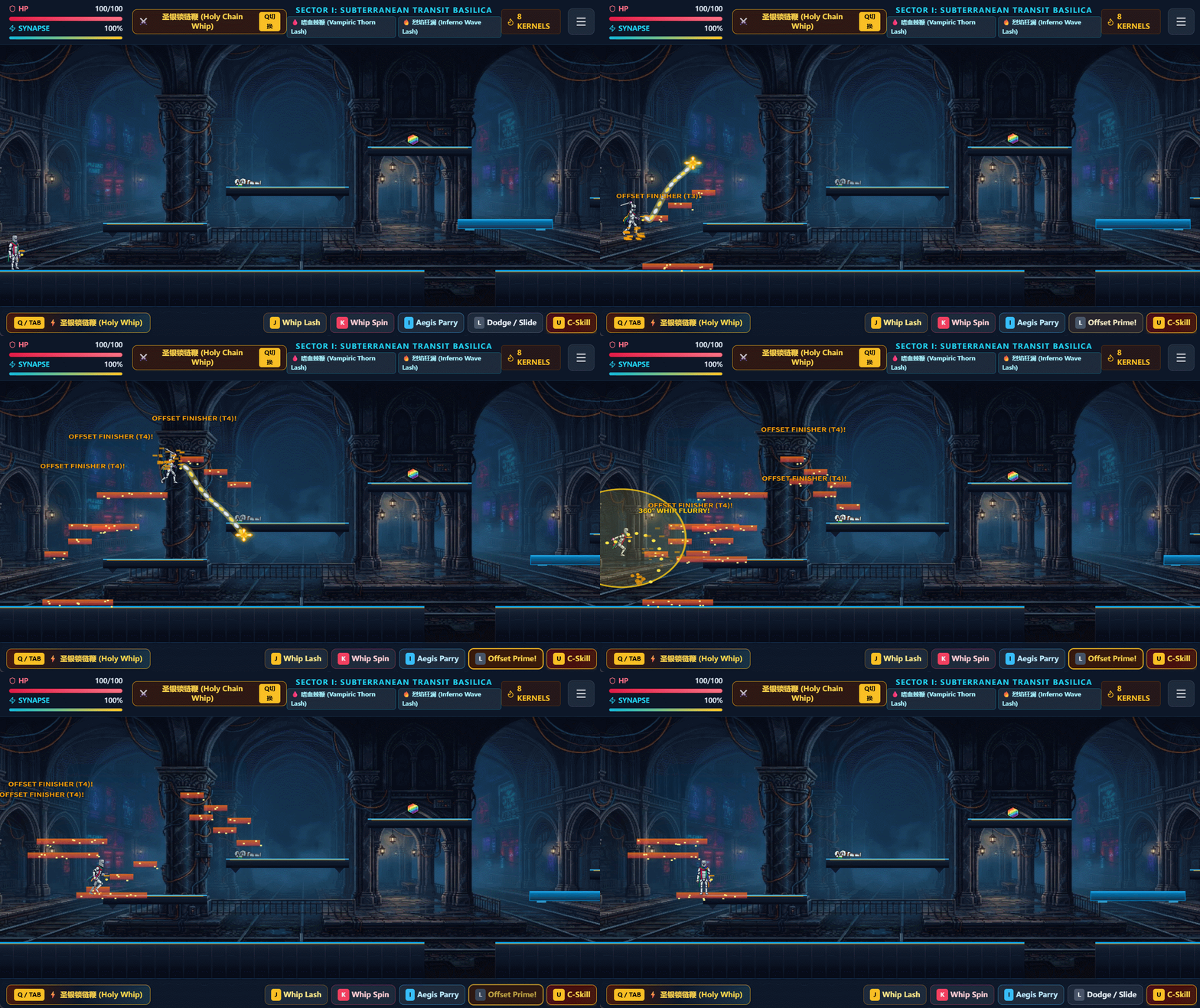
(Image source: LeiTech)
As for the fire trail effect that comes with the whip strikes, that was a random roll.
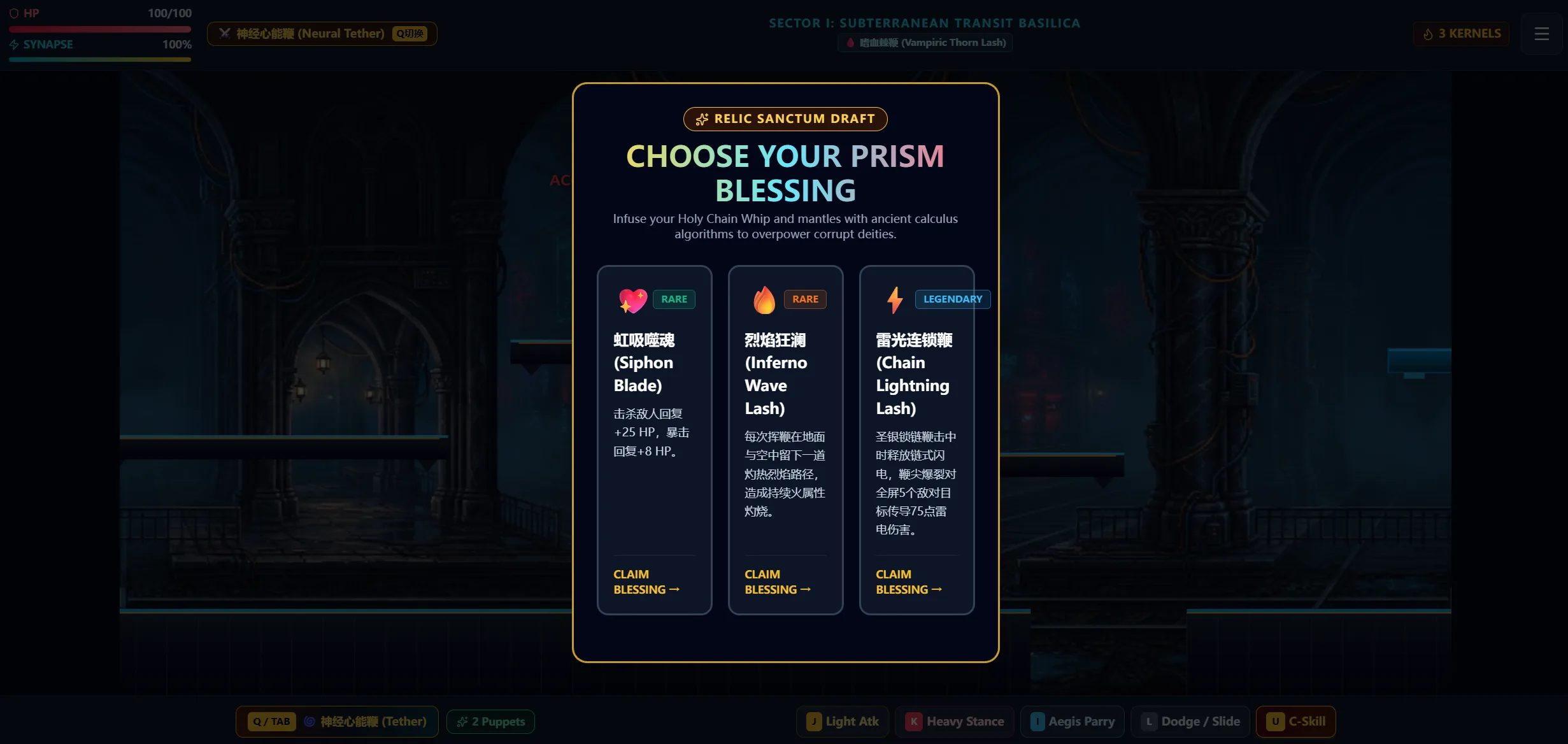
(Image source: LeiTech)
The final weapon draws inspiration from Ace’s card magic in Final Fantasy Type-0. The original plan was to have heavy attacks draw cards and light attacks cast spells, but the implementation is still rough around the edges and needs further refinement.
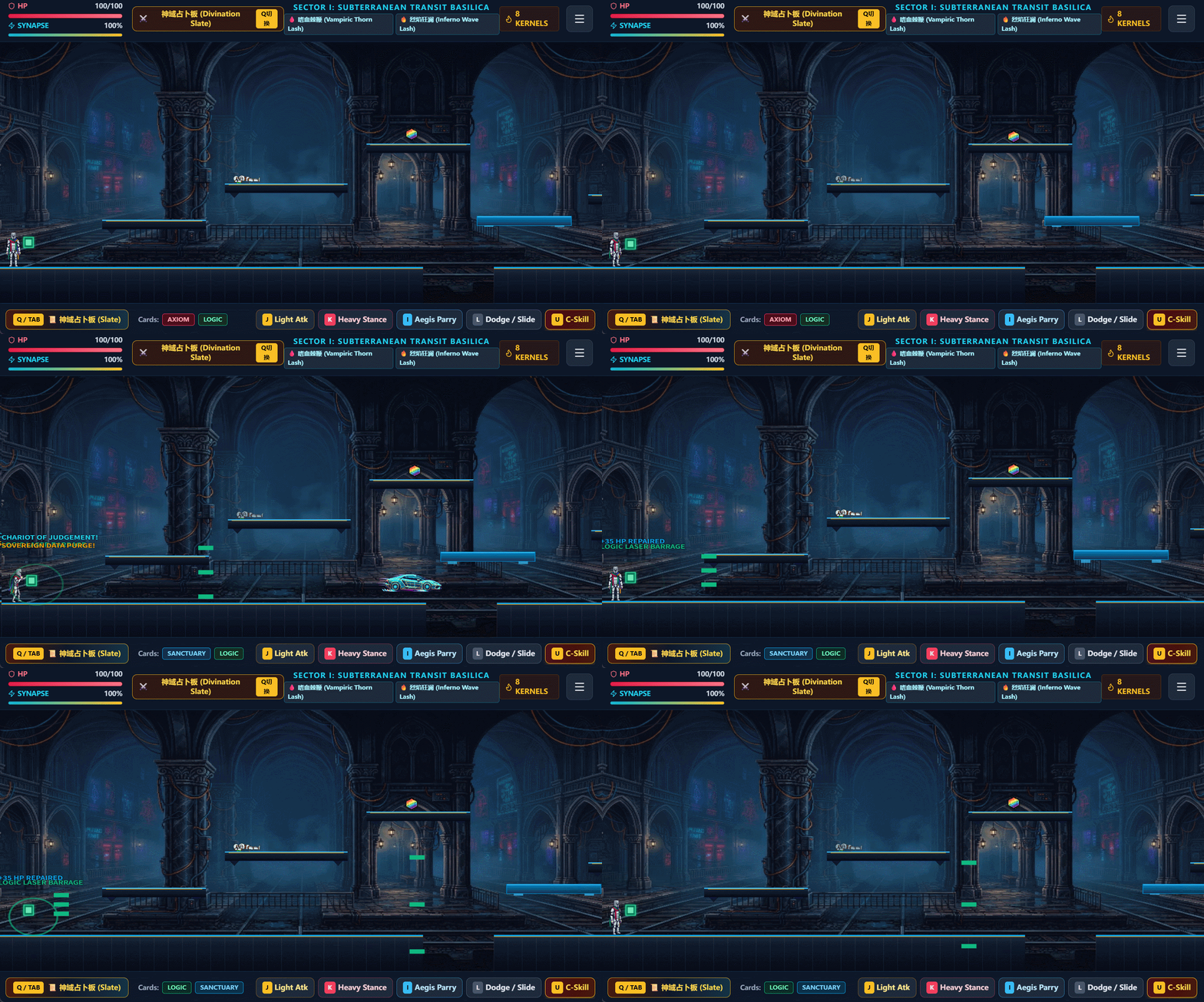
(Image source: LeiTech)
Yet even with this demo, only the character animations are properly implemented. There is no level design whatsoever, and enemies pose little threat to the player. The roguelike abilities trigger far too often, making it easy for players to become invincible. The scene is also full of bugs; a simple slide can clip straight through the ground.
Still, all things considered, pulling this off feels like half a miracle.
Anyone can make games — but then what?
At this point, I think readers have noticed that more and more companies are setting their sights on AI game creation.
Besides Google, Meta launched its Pocket app this year, which lets users build games on mobile phones using simple text prompts. Douyin, familiar to Chinese audiences, added its Interactive Space Plaza back in September. Creators can generate interactive content via text descriptions, and the resulting interest cards can land in Douyin’s homepage recommendation feed.

(Image source: LeiTech)
So here comes the question: why have these tech giants suddenly become so interested in AI game creation?
I think the reason is straightforward. In the past, anyone wanting to make a game had to learn game engines, programming, art and other related skills. Even recreating something as simple as Snake would take a lot of time for someone with zero development background.
Now with AI, you don’t need to know any programming at all. As long as you can clearly describe your idea, you stand a chance of building a playable game.
More importantly, once finished, you can share your game directly with others.
Just imagine: if Playground hosts thousands of mini-games in the future, with users creating new content every day and inviting friends to play together, what a massive content-sharing community this would become.
Of course, AI game generation still has a long way to go.
From the mini-games I tested, while simple gameplay loops are achievable, there is still plenty of room for improvement when it comes to sophisticated level design, control feel and game balance. Most of these creations do not even meet the standard for casual games, let alone replace professional game production pipelines.
But at the very least, we can now turn those weird, wild ideas in our heads into reality.