
 雷科技





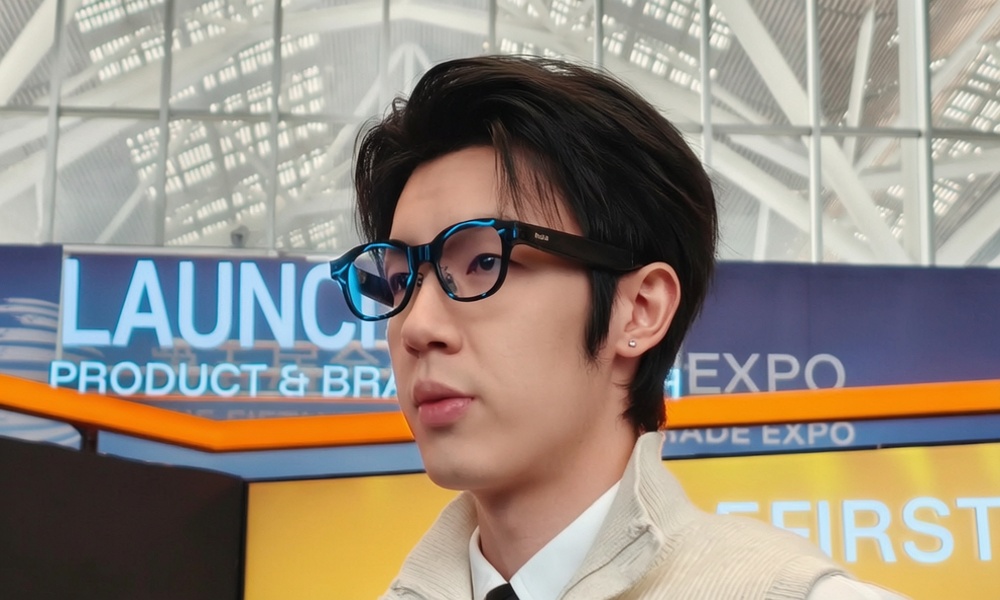

On September 24, at the 5th Global Digital Trade Expo, the next-generation Rokid Max AI glasses made their world debut. According to Rokid, the second-generation Rokid Max AI glasses retain their positioning as display-equipped AI glasses—and build upon the core capabilities of the first generation with comprehensive enhancements across specific use cases:
Higher performance, longer battery life—but lighter weight and improved wearing comfort.
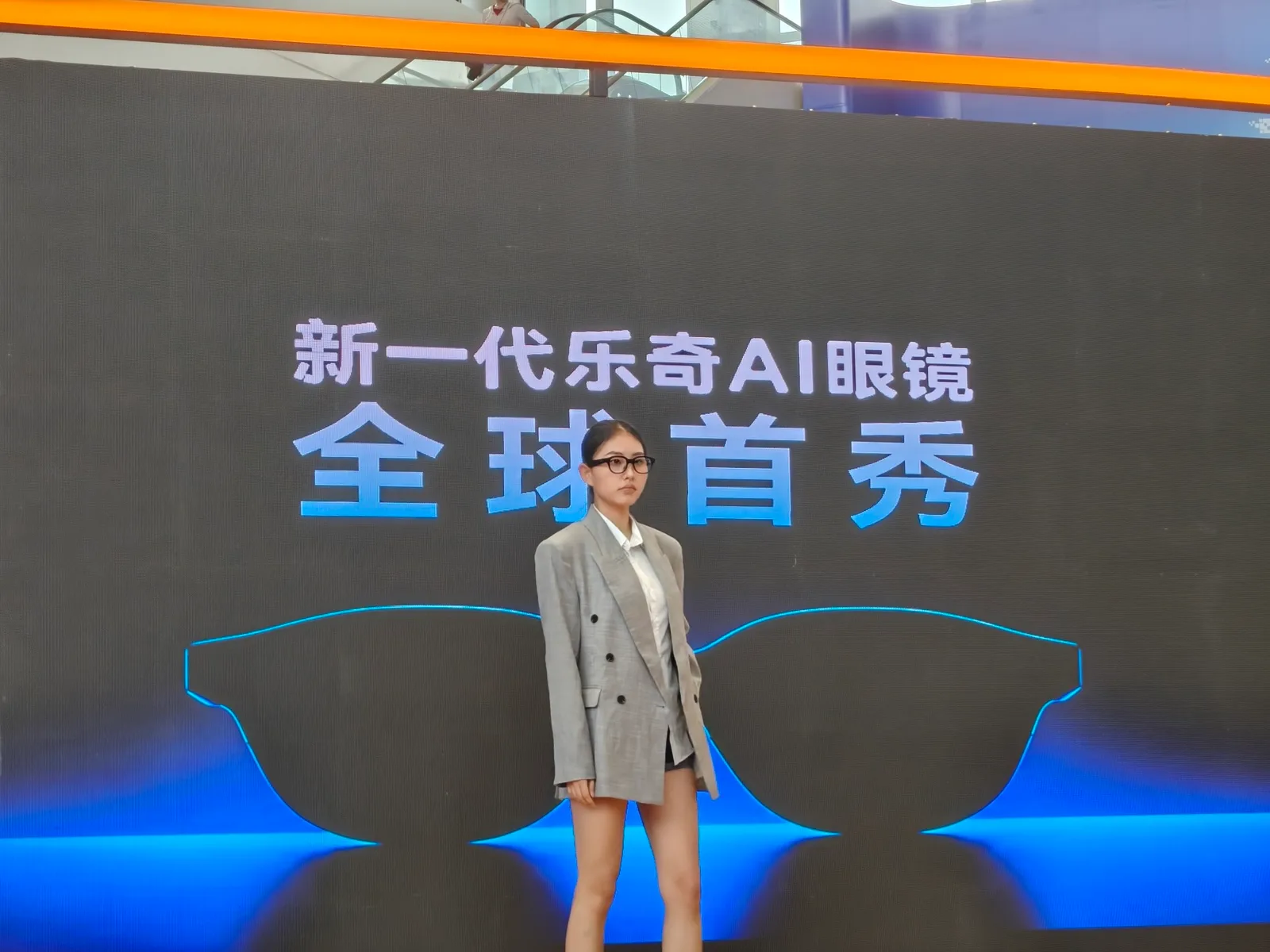
Image source: LeiTech
This marks the first public appearance of these glasses. However, prior to this official launch, LeiTech (ID: leitech) was granted exclusive early access to a closed-door briefing hosted by Rokid, where we got our first hands-on experience with the new product—and heard insights directly from Misa (Rokid’s Founder & CEO) and the Rokid team about their vision for the new release.
Due to confidentiality requirements, we cannot yet disclose all the changes. But even based solely on appearance and wearability, the improvements in the second-generation Rokid Max AI glasses are already noteworthy.
At first glance, the second generation does not completely overhaul the design language of its predecessor—but closer inspection reveals numerous meaningful refinements.

Image source: LeiTech
The most noticeable change is in the frame. Compared to the relatively straight upper edge of the first-generation Rokid Max AI glasses, the second generation features a more pronounced curvature along the top rim—giving the overall frame a less rigid, less formal appearance. Additionally, the temples have been slimmed down uniformly, lending the glasses a younger, more fashion-forward aesthetic.
Viewed head-on, the optical engine module located centrally within the frame has also been reduced in size—making its visual presence significantly less prominent than in the first generation. As for the grating region on the lenses, it remains faintly visible up close at certain angles—but has been markedly improved over the previous version.
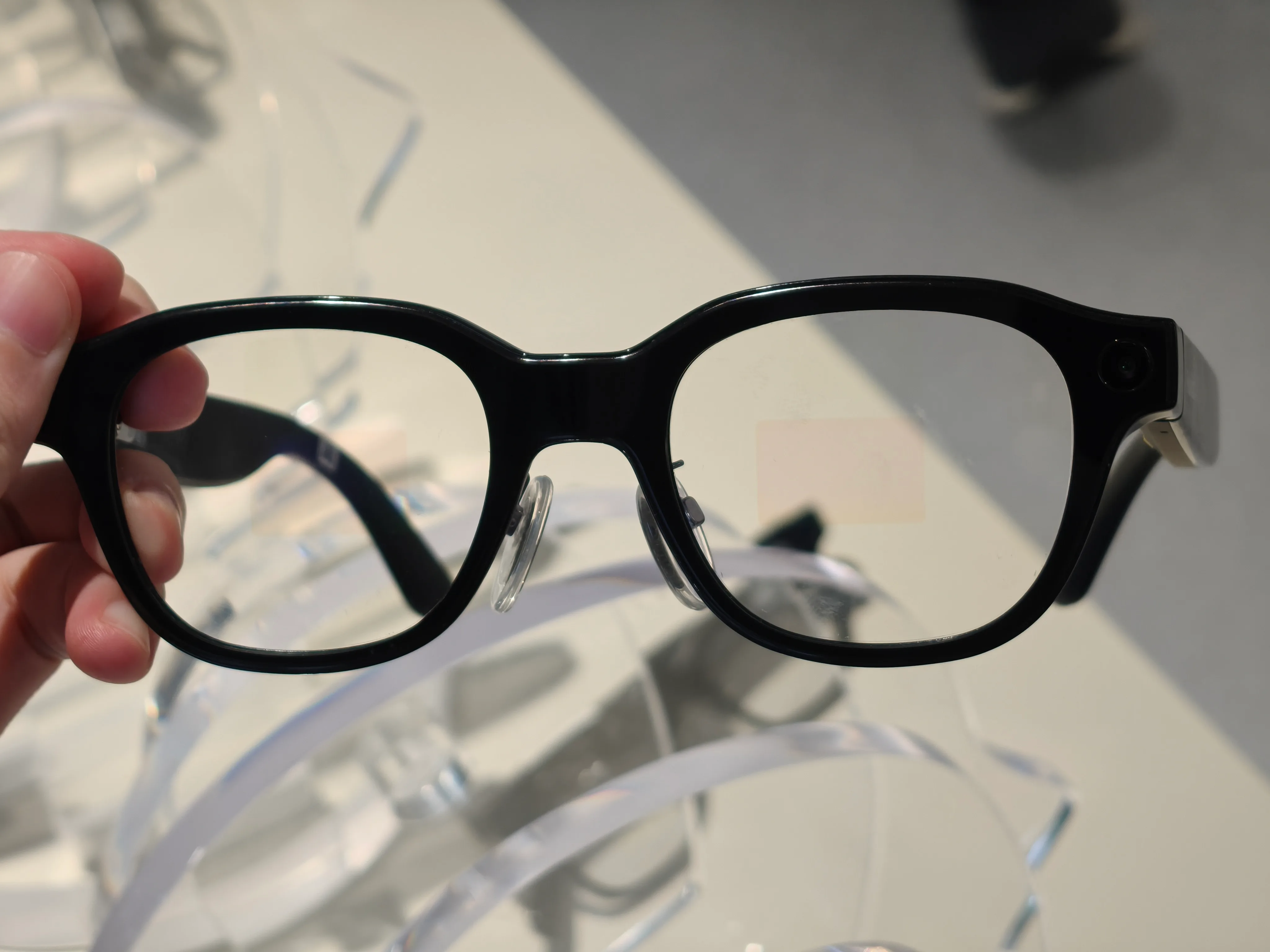
Image source: LeiTech
The nose pads have also undergone substantial redesign: Rokid replaced the first-generation’s air-ventilated nose pads with larger-area, flexible silicone nose pads—reducing pressure on the bridge of the nose.
Most notably, wearing comfort—especially around the temples—has seen significant improvement. Attendees with larger head circumferences specifically noted that the second-generation glasses exert far less pressure on the sides of the head. We also observed that Rokid adopted a flexible—or elastic—material at the temple tips, enabling the glasses to better “hug” the head and, in theory, distribute pressure more evenly across the temples and even the nasal bridge.
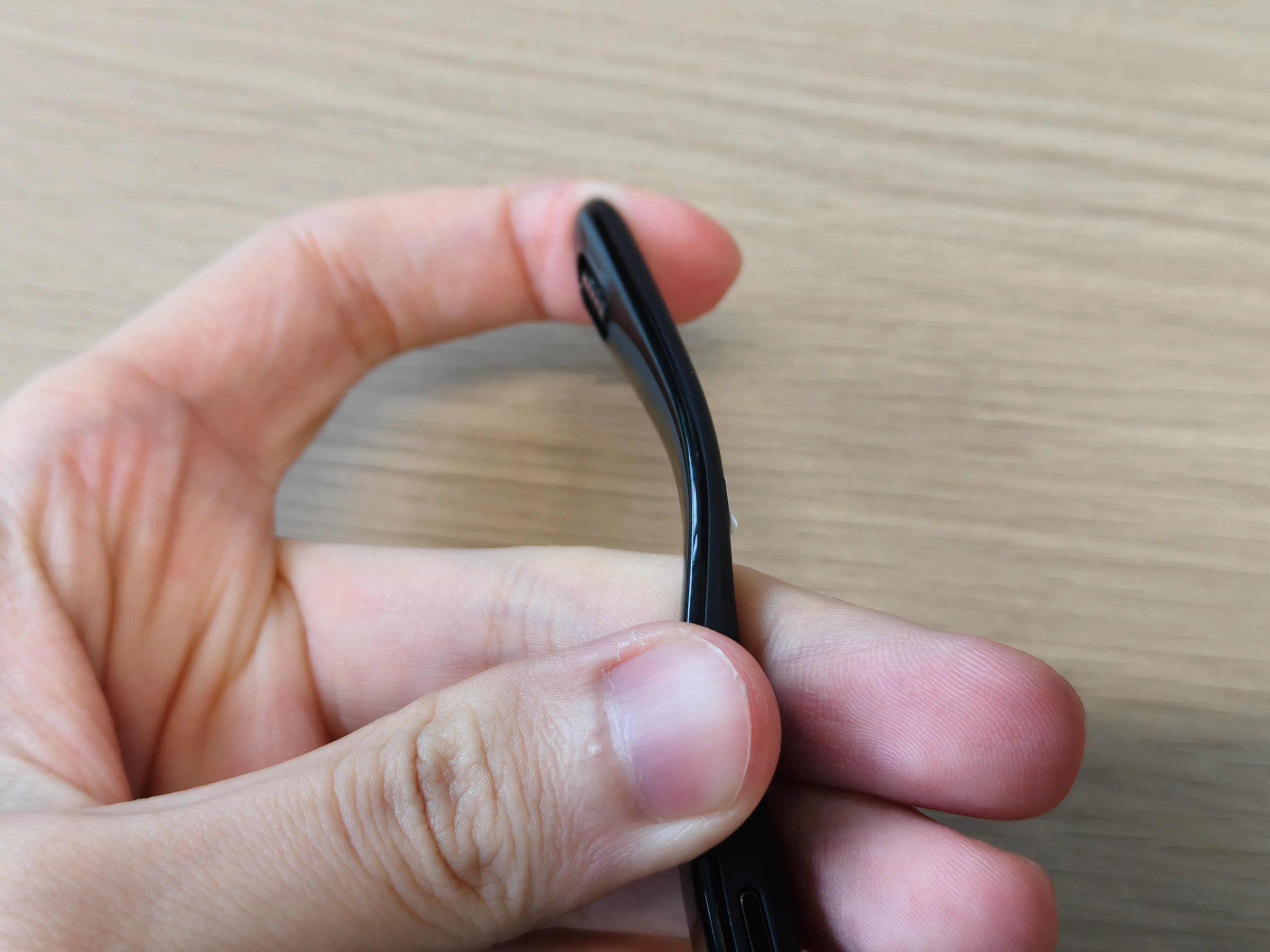
Image source: LeiTech
Crucially, despite these ergonomic upgrades, the temples maintain strong structural integrity—the seamless integration remains visually undetectable.
Naturally, Rokid has also refined material treatments. The outer surface of the temples retains the piano-black lacquer finish of the previous generation, while the skin-facing side now features a soft-touch, skin-friendly material and manufacturing process. For a device designed to be worn on the face for extended periods, temple width, tip flexibility, and contact-surface material all converge on one critical factor: how comfortable the glasses feel when worn.
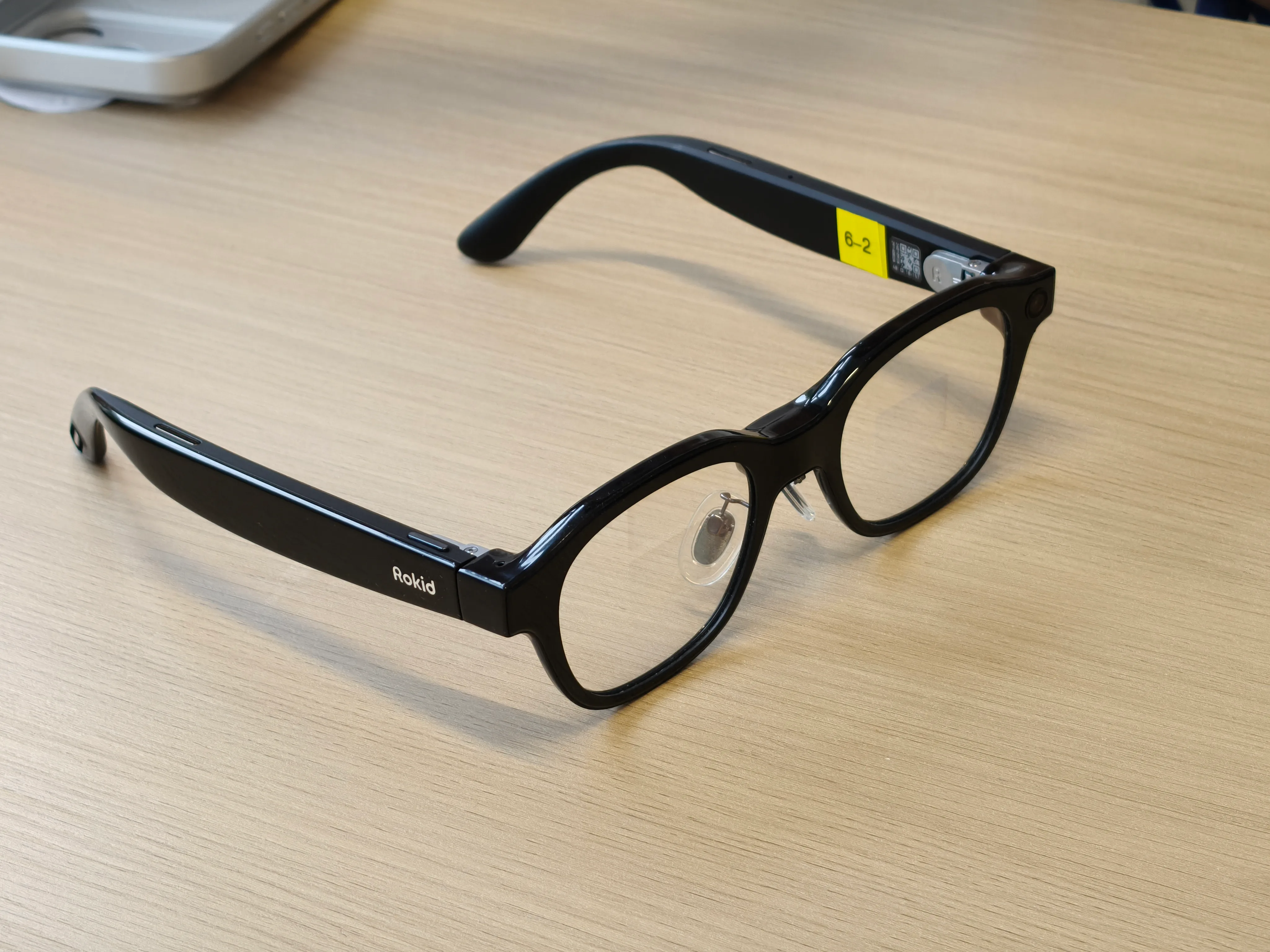
Image source: LeiTech
For Xiao Lei—a first-generation Rokid Max AI glasses user—the most immediate impression of the second-generation model is precisely this: lighter weight and greater wearing comfort.
The first-generation Rokid Max AI glasses weigh just 49 g—a remarkable achievement considering they integrate dual-eye Micro LED + diffractive waveguide displays, cameras, speakers, and microphones—all optimized for minimal weight. Yet for AI glasses to truly enter everyday life, mere lightness isn’t enough. Frame geometry, center of gravity, temple pressure distribution, and skin-contact ergonomics all play equally vital roles.
Rokid clearly recognizes this—and these enhancements represent only part of the story. Improvements to the speakers, cameras, and display system were all perceptible during hands-on testing, and several new features hold exceptional promise.
Moreover, during the closed-door briefing, we observed additional noteworthy upgrades—though these remain under strict confidentiality for now, with full details slated for unveiling at the official product launch on October 27.

Image source: LeiTech
We can reveal one more hint: In addition to the second-generation Rokid Max AI glasses, Rokid is also preparing a mysterious new product that may make its debut at the same event.
It’s quite challenging to guess what it might be—but regardless, we’re confident Misa will deliver some exciting surprises at that launch.