
 雷科技





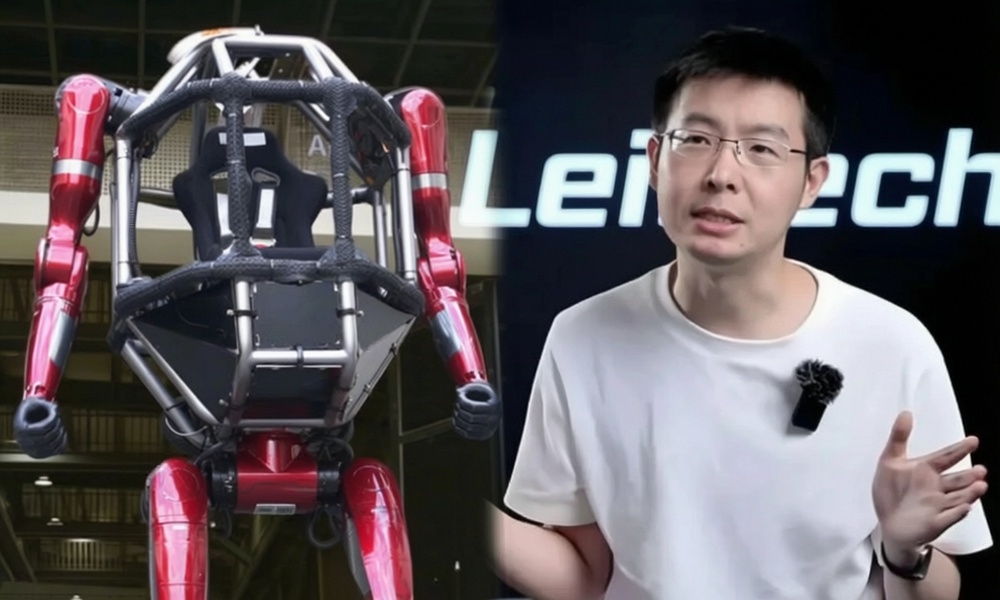

News from September 27: At the recent Hangzhou Digital Trade Fair, Unitree Technology’s 3.9 million-yuan manned mech GD01 has gone viral once again.
Crowds packed tightly around it. Many asked about the price, yet not a single unit has been sold so far.
Faced with doubts from the public that it is too expensive and impractical, Wang Xingxing, the founder, spoke frankly in a recent speech: Large-scale robots represent an unstoppable industry trend. Even if Unitree does not develop them, other companies will launch similar products in the coming years.
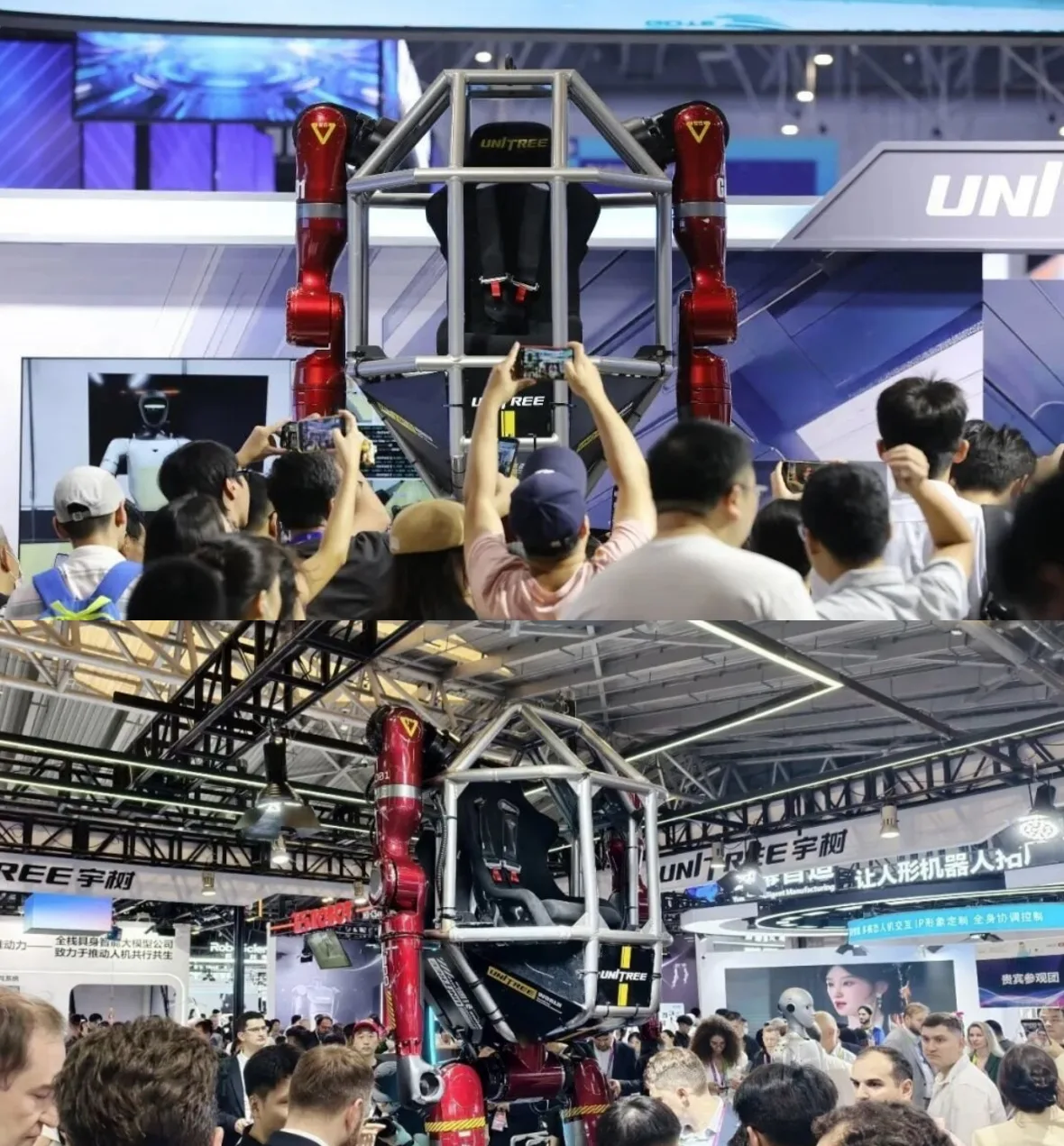
Image source: Weibo
The GD01 was unveiled in May this year. Billed as the world’s first mass-produced manned transformable mech, it stands nearly 2.7 meters tall.
With a total weight of around 500 kg after boarding a pilot, it can freely switch between bipedal upright walking and quadrupedal locomotion. It packs enough punch to knock down a brick wall. Officially positioned as a civilian transport vehicle, it starts at 3.9 million yuan.
Many people’s first thought is: Spend 3.9 million on this? Are you kidding? Can it drive on public roads? What’s it even good for?
Wang Xingxing explains that it is not designed to travel in cities. It is essentially an off-roader among robots, built for rough outdoor terrain with strong traversability to perform work in wild environments.
For scenarios such as mountain land reclamation, disaster rescue and special operations, regular vehicles cannot get through and drones lack sufficient payload capacity. This is where large mechs show their value.
From my perspective, debating whether it is worth 3.9 million yuan misses the point. Unitree never intended this product to sell in large volumes for profit from the very beginning.
The title of the world’s first mass-produced manned, transformable mech pays for itself.
It swept across the internet on launch day. Even Elon Musk commented that it looked cool. Later, it featured on the cover of TIME magazine.
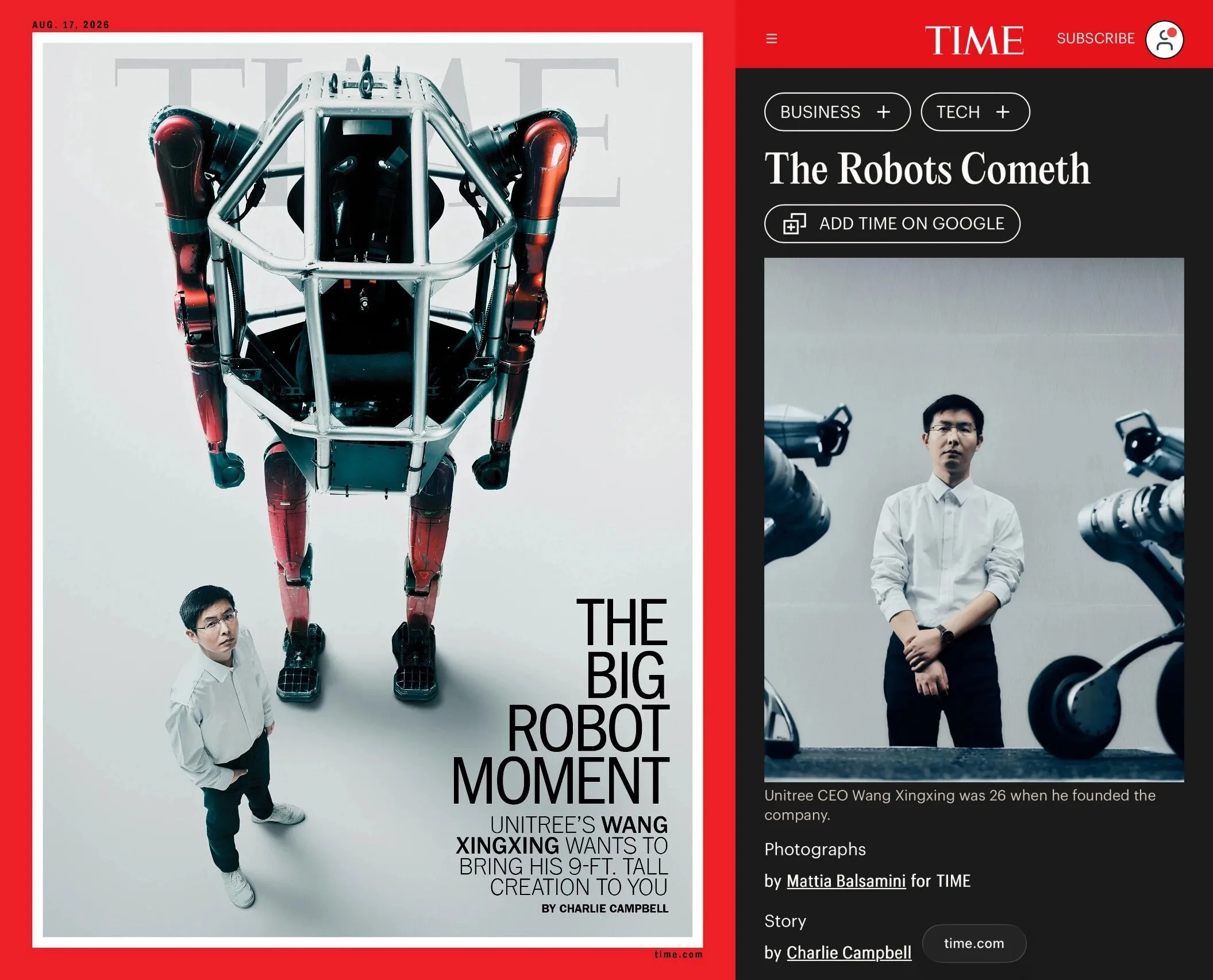
Image source: Unitree’s official WeChat account
This level of brand exposure is something you might not get even with a 39-million-yuan advertising budget. The GD01 serves as Unitree’s technical calling card, telling the whole world: we are No.1 globally in small quadruped robots, and we can also be the first to build large manned mechs.
Why did Wang Xingxing say that if Unitree doesn’t build it, someone else will?
In the view of Xiaolei Bibi (ID: xiaoleibbb), robots share the same underlying principles. If you can build stable, agile small robots weighing dozens of kilograms, scaling them up to several meters tall essentially means scaling up motors, structures and algorithms in tandem.
As Wang Xingxing put it: Since we can build robots a couple of meters high, we can certainly make ones that stand seven meters, or even more than ten meters tall.
Over the past few years, Unitree has made its mark with quadruped robot dogs Go1 and Go2, mastering all core technologies.
This accumulated expertise is not limited to robot dogs. It can be transferred to robots of all forms. Scaling from small to large sizes and from consumer-grade to industrial-grade units is a natural path of technological development.

Image source: LeiTech screenshot
Large AI models have now given robots a brain. What comes next is fitting this brain with bodies of varying sizes.
Small service robots for households, industrial robotic arms for factories, and large manned mechs for wild environments. Different scenarios call for different forms, yet they share the same core intelligence and motion control technology.
It is much like the automotive industry: if you can build family sedans, you can naturally expand into SUVs, trucks and engineering vehicles. The robotics industry works the same way. Once foundational technologies mature, scaling up to larger sizes becomes an inevitable future trend.
We are still in the early days. Priced at 3.9 million yuan, this machine is destined to remain a plaything for a handful of people or a tool for niche industries. Just like the earliest computers, bulky, costly and seemingly impractical, yet no one can deny its historical significance.
I believe we will see more companies flood into the large robot sector in the coming years.
Prices will gradually drop with mass production and technological improvements. Use cases will also expand from current cultural exhibitions and special operations into more civilian fields.
As for whether it is worth 3.9 million yuan, I think that hardly matters. What counts is that someone is willing to take on this challenge first.
When science fiction turns into reality, somebody has to take the very first step.
Now a question for you: As robots keep evolving in the future, would you consider buying one? Feel free to share your thoughts in the comments.