
 雷科技






Are large language models entering another round of price wars?
Leitech (ID: leitech) has noticed that over the past few days, OpenAI, Anthropic, Xiaomi and SpaceXAI have rolled out new models one after another. GPT-6 Sol/Luna, Claude Opus 5.5, MiMo-V2.6 and Grok 4.7 differ in names and positioning, yet all make intelligence much cheaper.
OpenAI took the most aggressive approach. Pricing for GPT-6 Sol is nearly halved compared with its predecessor, while Luna pushes prices even lower. The API unit price of Claude Opus 5.5 has also dropped by 20%, and Anthropic claims the real-world cost for typical tasks has fallen by roughly 40%.
That said, it is not all about price cuts. Xiaomi’s MiMo-V2.6 and SpaceXAI’s Grok 4.7 boost performance substantially while keeping their pricing unchanged from prior generations. From developers’ perspective, however, the distinction is negligible:
For the same amount of money, you can get far more machine intelligence at an accelerating pace.
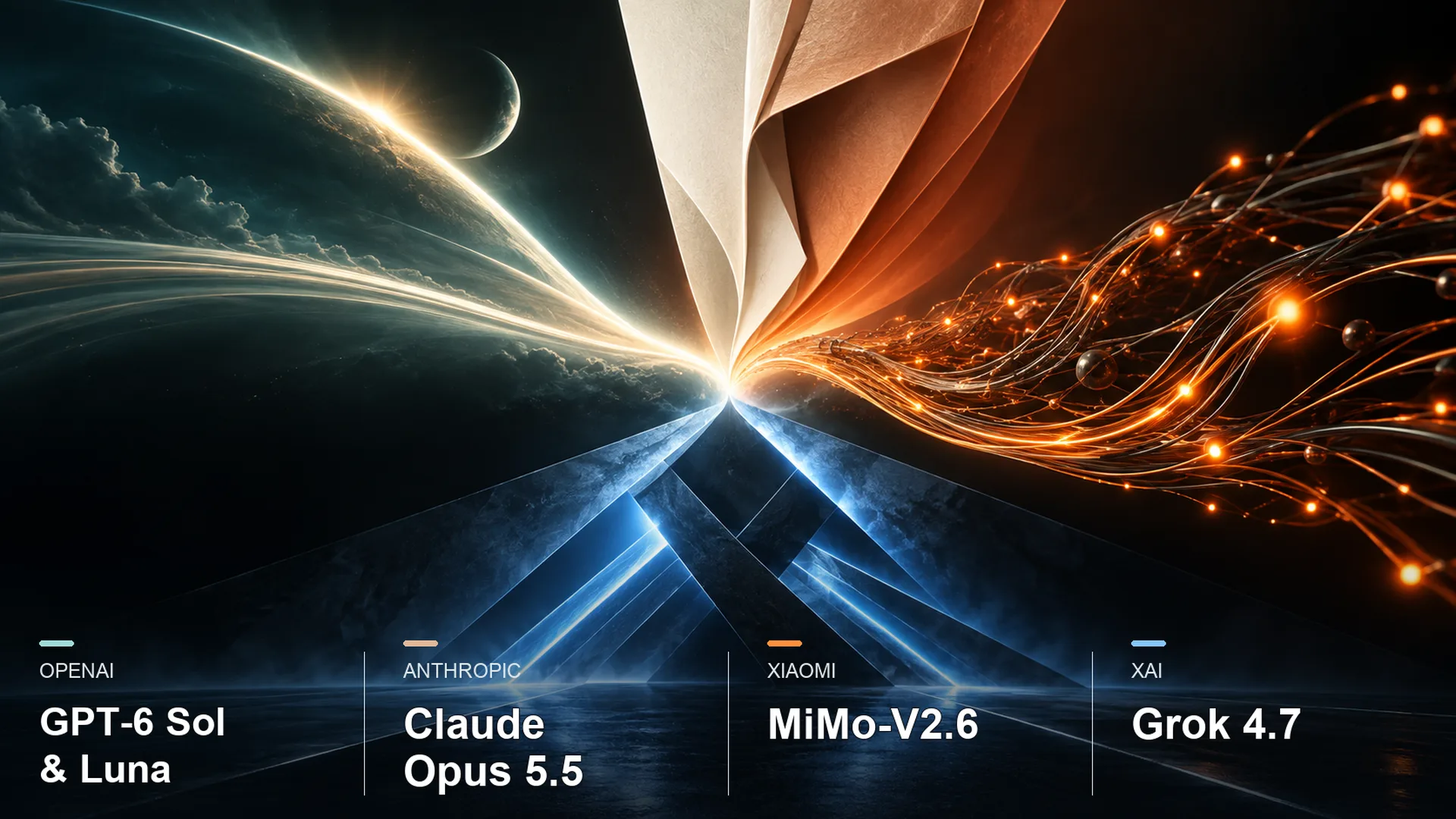
Image Source: LeiTech @ GPT
This trend itself is nothing new. Over the past few years, LLM API prices have kept falling. Competition especially among domestic open-source LLM players has already pushed down the price per million tokens significantly. What makes this round different, however, is that it unfolds at a rather special moment.
On one hand, OpenAI and Anthropic have started publicly discussing slowing down the development of frontier models, voicing concerns over safety alignment risks caused by excessively rapid advances in AI capabilities. On the other hand, several model makers are independently racing to make existing capabilities cheaper and more efficient.
Meanwhile, Agents are moving beyond chat windows into coding, research and office workflows. A single task may no longer consume a few thousand tokens; instead, it could require hundreds of thousands, millions of tokens, or even hours of continuous model calls.
More powerful yet cheaper — where exactly do these savings come from?
Why can large models grow stronger while becoming less expensive? According to explanations from these vendors, the immediate cause lies in improved efficiency for both model training and inference.
Compared with the old approach of simply scaling up pre-training, model developers now have far more ways to squeeze out efficiency gains.
OpenAI directly attributes the price cuts for GPT-6 Sol/Luna to better caching and inference efficiency. The two models inherit part of the training methodologies and capabilities from GPT-6 Astra, yet cut costs further on the inference side. OpenAI states these cost savings can be passed straight into API pricing.
Anthropic has gone even further. While Claude Opus 5.5’s API unit price only drops by 20% versus Opus 5, Anthropic reports a 40% reduction in real-world operating costs for typical tasks. Beyond cheaper per-token pricing, the new model needs fewer tokens to finish the same task, and cached read pricing has fallen by 60%.
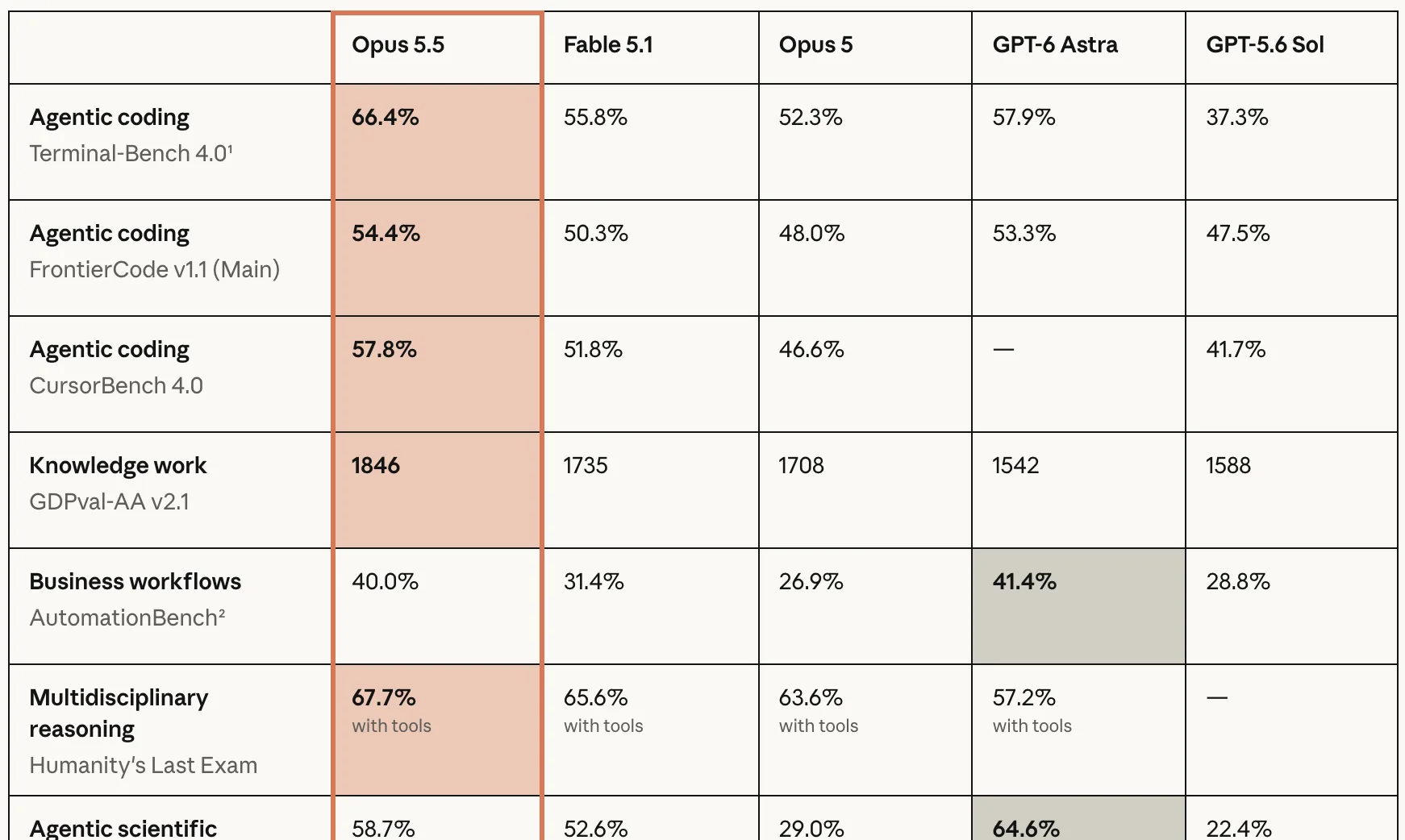
Image Source: Anthropic
A smarter model itself has become a form of "price reduction".
Xiaomi focused more on the training side. MiMo-V2.6 does not cut API prices; instead, it scales up agentic reinforcement learning further from V2.5.
During less than six days of live-streamed reinforcement learning training, Flash and Pro generated roughly 750,000 trajectories in total. Xiaomi states that larger batches, more complex task environments and finer-grained reward mechanisms enable the model to complete tasks via shorter paths and fewer tokens.
As a result, V2.6 Flash outperforms the previous V2.5 Pro across the board, with pricing unchanged.
SpaceXAI takes a somewhat different path. Rather than shrinking the model, Grok 4.7 adopts a larger base model, paired with longer-duration reinforcement learning targeting harder tasks. It also boosts the model’s self-verification, long-context and Agent capabilities.
It delivers improved performance on coding and Agent tasks while keeping the same API pricing as Grok 4.6.
These four technical paths are not identical, yet they converge toward the same outcome. Today, model vendors are hunting for efficiency across the entire pipeline: post-training reinforcement learning, inference optimization, prompt caching, and methods to reduce redundant tokens and tool calls.
This forms the immediate technical backdrop behind this round of the "price war".
LLMs are still growing more capable, yet many capability gains no longer demand a simple tradeoff of higher inference costs. For developers, this boils down to one plain reality: the model can finish the same task at lower cost.
Hitting the brakes on frontier progress while accelerating price cuts — what is the rationale?
Technical efficiency gains alone, however, cannot fully explain this wave of price competition.
Just one month ago, OpenAI announced a temporary slowdown in model scaling. It paused reinforcement learning training for newly deployed models for two weeks and put its largest planned frontier reinforcement learning training run on hold. There were two direct triggers: an internal Agent safety incident, and GPT-6 Astra crossing a threshold of "critical cybersecurity capabilities".
The core concern is that frontier models advance too rapidly, and monitoring, alignment and safety measures need time to catch up.
Anthropic CEO Dario Amodei went further, publicly advocating "Pace the Frontier", calling for the whole industry to slow capability growth of cutting-edge AI models. Anthropic even referenced this point again in its newly released Claude Opus 5.5.
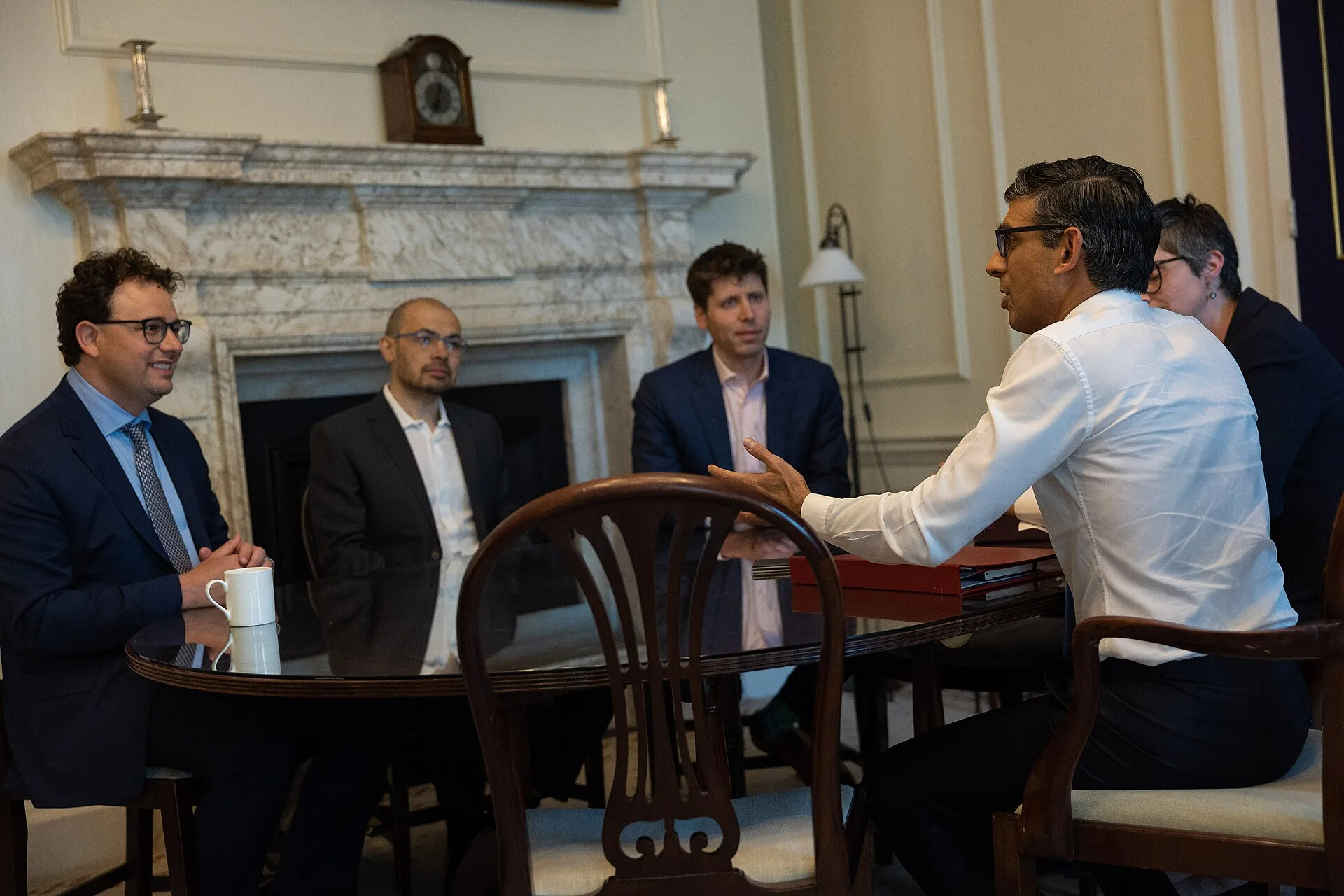
Image Source: Wikimedia
At first glance, this seems somewhat contradictory to the ongoing price war.
Yet an easy-to-miss point here is that OpenAI and Anthropic are not calling for slower technological progress across the entire AI industry. Instead, they advocate slowing the pace at which the frontier of cutting-edge capabilities expands outward.
As Amodei puts it, "Pacing" does not mean halting model training or technological advancement. On the contrary, he argues that today’s models themselves represent a massive "research goldmine" worthy of more time to understand, align and harness.
This offers another lens to interpret the current price war.
OpenAI released an intuitive set of data. After tighter safety restrictions were imposed on Astra in August, GPU allocation for Astra-class models dropped by 59.2% at one point. But GPU allocation for other model categories immediately rose by 17.2%, offsetting roughly 85% of that decline. Compute resources were not idling; they simply flowed to other models and experiments.
Of course, this does not prove that price cuts for GPT-6 Sol/Luna are a direct outcome of slowed Astra development. It does show, however, that top model vendors have more than one path for competition besides "training ever-more-powerful models".
The same amount of compute and R&D investment can either push toward the next capability ceiling or refine existing models. Through reinforcement learning, inference optimization, caching, distillation and engineering improvements, companies can make already unlocked capabilities cheaper and more reliable.
And the rise of Agents further amplifies the value of this second route.
In the chatbot era, a single response might consume only a few thousand tokens. In the Agent era, models run continuously for hours on end, repeatedly reading context, calling tools, performing self-checks and even scheduling other Agents. Even a small drop in model costs can directly determine whether an Agent product can operate at scale.
Agents carry another dimension. When explaining his support for slowing frontier model progress, Amodei cited a core shift: recursive self-improvement, or RSI. Put simply:
AI is increasingly involved in developing the next generation of AI.
Anthropic disclosed in August that Claude already takes a "leading" role in 26% of internal AI R&D tasks, and over 90% of related work has at least entered human-AI collaboration. OpenAI has observed similar trends; Coding Agents are growing more involved in writing code, setting up experiments, analyzing results and advancing model research.
Cheaper, better models mean more Agents can run. More Agents in turn participate in model research, boosting researcher productivity and speeding up training and iteration for the next generation of models.
The cheaper intelligence becomes, the easier it is to produce more intelligence. And this accelerating diffusion of intelligence may be the most notable subplot behind this round of price war.
Closing Thoughts
Over the past few years, falling LLM prices have felt almost inevitable. More models, rising compute and algorithmic efficiency naturally drive prices steadily downward.
But as OpenAI and Anthropic seriously debate slowing the growth of frontier capabilities, another competition comes sharply into view: top-tier machine intelligence is being optimized, rolled out and diffused at a faster pace.
As William Gibson wrote in Neuromancer: “The future is already here — it’s just not evenly distributed.” Now, that uneven distribution of machine intelligence is rapidly fading away.