
 雷科技





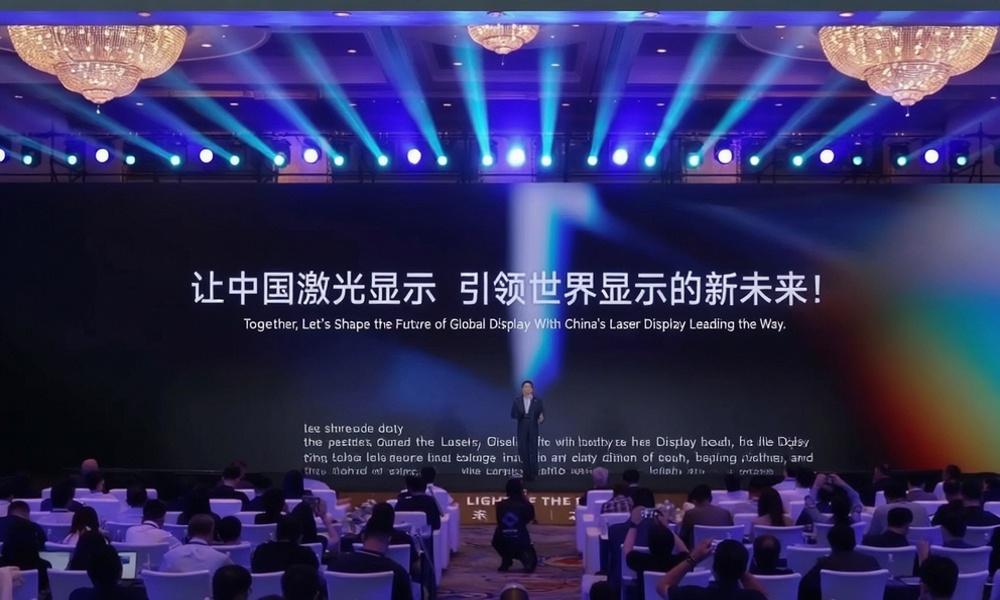

The 7th Laser Display Technology and Industry Development Conference, themed “Boundless Potential”, was held in Beijing on September 20, with Leikeji invited to attend the event. As a supporting organization of the conference, Hisense put forward the proposition “Beyond 100 inches, only laser delivers premium viewing experience”, alongside three forecasts for the laser display industry over the next five years.
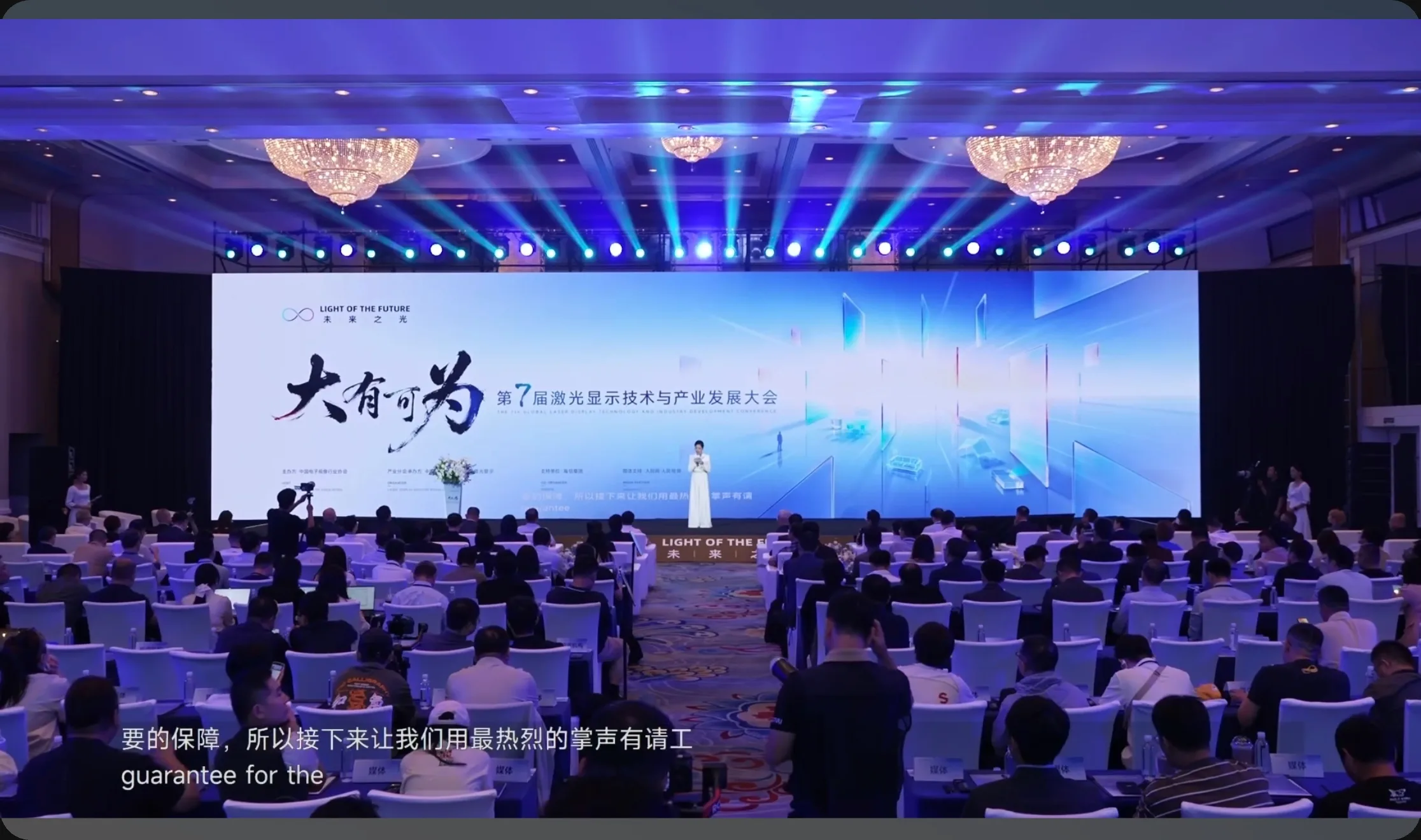
Image Source: LeiTech
Representatives from the Electronic Information Department of the Ministry of Industry and Information Technology and the China Video Industry Association delivered speeches at the conference in sequence. Multiple flagship laser TV products from Hisense were showcased on-site. Ouyang Zhongcan, Member of the Chinese Academy of Sciences, stated:
For home displays in the above-100-inch large-size segment, tri-color laser represents the optimal solution.
Li Wei, Vice President of Hisense Group and President of Hisense Visual Technology, also pointed out that 120-inch laser TVs will become the industry mainstream within the next five years.
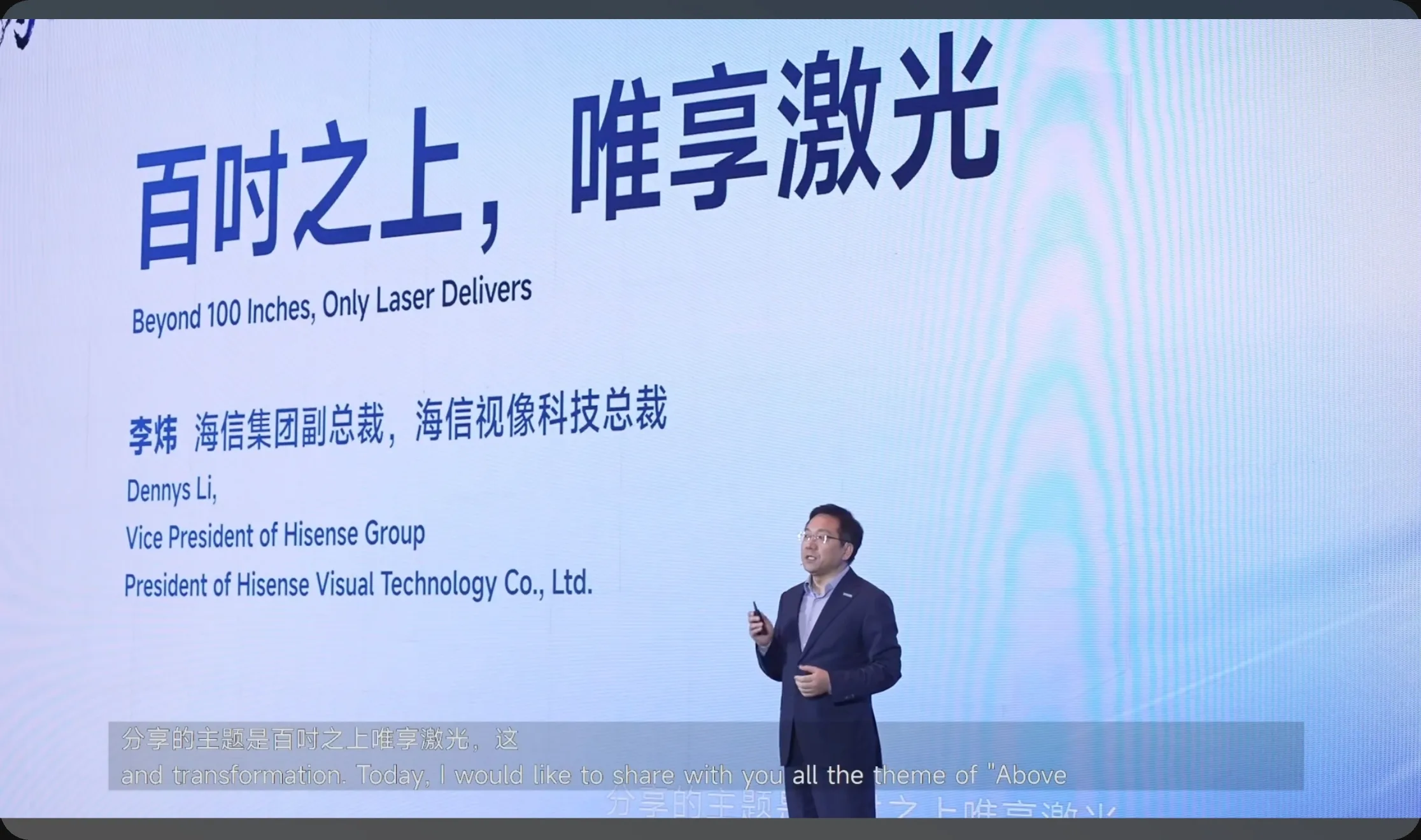
Image Source: LeiTech
At this point, some readers may wonder: technically speaking, laser TV is not a new product category that emerged only in recent years. Why is laser TV set to prove its value in the 2026–2030 window after a period of lull? From Leikeji’s perspective, laser TV’s return to the public spotlight stems from the combined effect of shifting consumer demand and the inherent technical strengths of laser displays.
Looking at demand first: in the first half of this year, new homes of 120 square meters or larger accounted for 48% of total property transactions across 30 key cities nationwide. Meanwhile, sales of 100-inch TVs have surged by 892% over the past four years. It is clear that as living rooms grow bigger, consumers’ demand and expectations for larger display screens are rising in tandem. Simply put, larger homes naturally call for bigger displays.
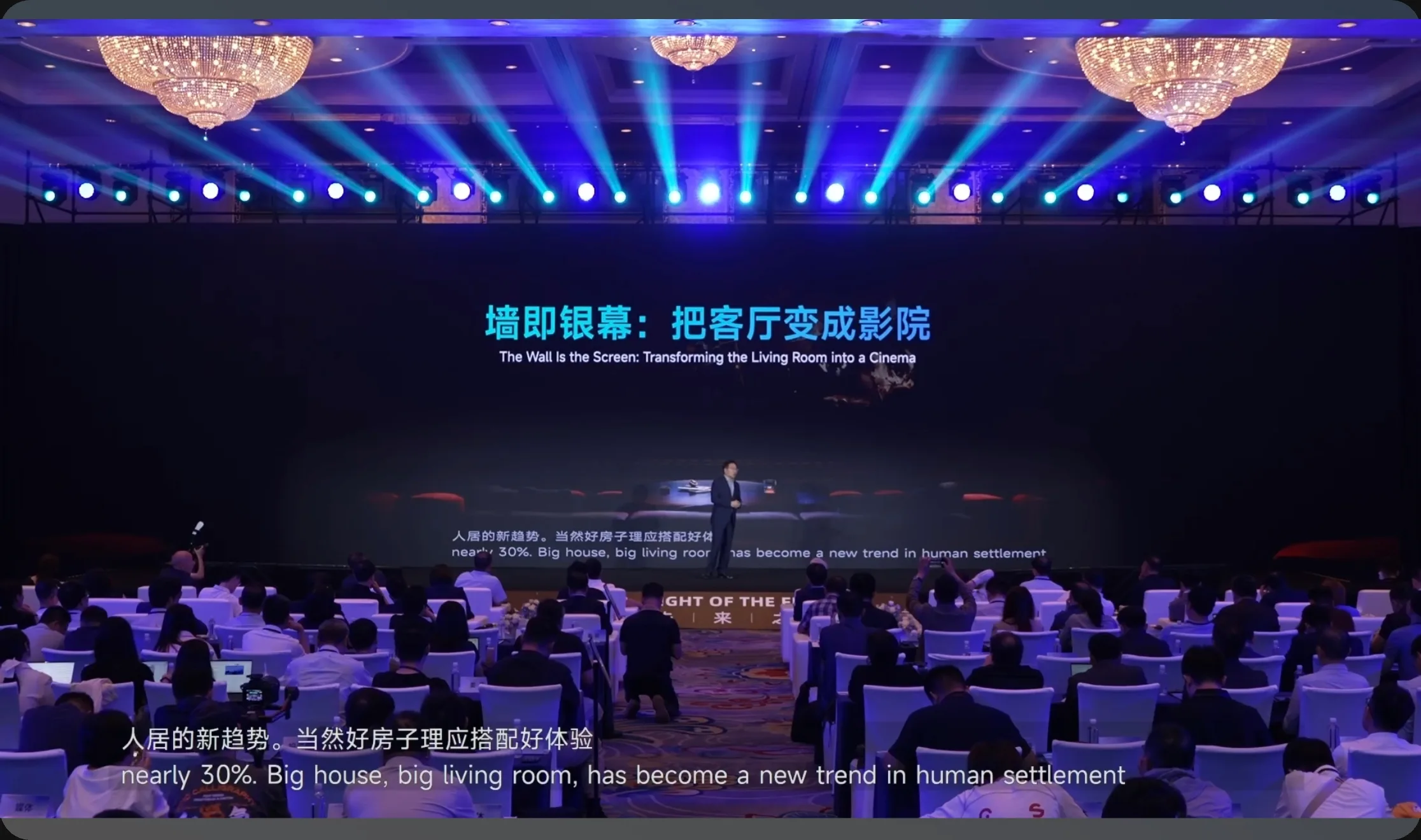
Image Source: LeiTech
From a technical standpoint, the large-screen display sector has three competing paths: RGB-Mini LED, MicroLED and laser display, each serving distinct market needs. RGB-Mini LED targets high-end demand for mainstream screen sizes; MicroLED is geared toward ultra-premium and commercial engineering markets. The advantages of laser display, by contrast, truly shine when screen sizes scale up.
For conventional display solutions such as RGB-Mini LED and MicroLED, once the screen exceeds 100 inches, manufacturers face unavoidable hurdles including steep panel costs, complicated logistics and installation, and high energy consumption. In some residential compounds with compact elevator dimensions, delivering an over-100-inch TV to upper floors may even require dismantling balcony structures or renting cranes.
Laser display adopts reflective imaging. The display size is determined by the optical engine and lens, making it simpler and more mature to produce 120-inch or even 150-inch screens. The same logic applies to pricing: the cost of traditional TVs rises exponentially beyond the 100-inch mark, while laser TVs maintain more manageable price tags.
Compared with products built on conventional display technologies, laser TVs offer consumers the best way to experience ultra-large-screen viewing.
You may notice the event is named the “Laser Display Technology” conference rather than a “Laser TV” summit. Boasting massive screen size and controllable costs, laser display can be applied to new scenarios beyond the consumer market. In fact, laser display technology has already gained widespread adoption in cinemas, cultural tourism, education and other sectors.
According to data shared by Li Wei, 58% of newly installed cinema projectors worldwide are laser-powered. Among commercial projection equipment, laser light source models account for 47% of shipments, while penetration of laser projectors has hit 52% in the global education projection market.
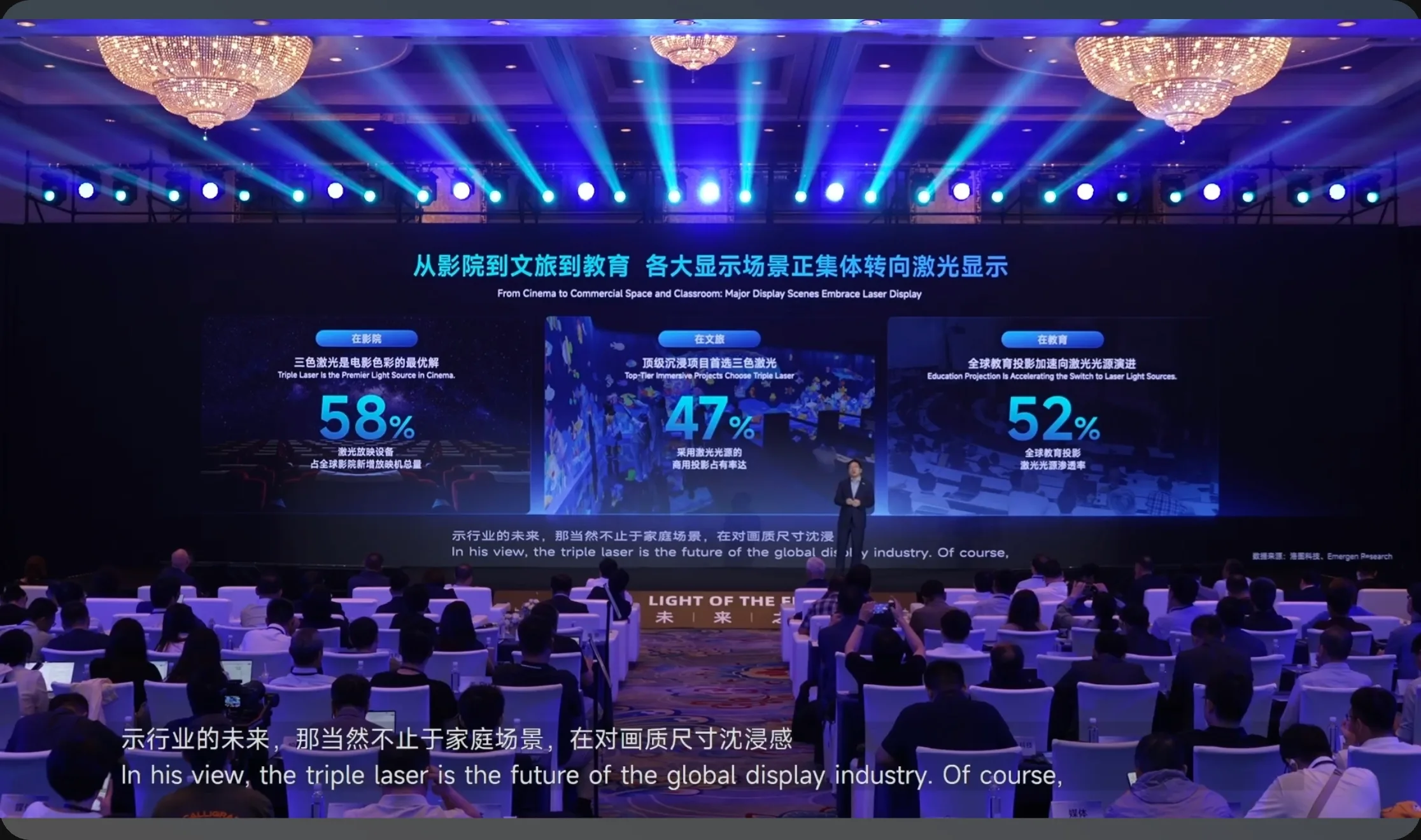
Image Source: LeiTech
Laser display technology has become the preferred technical route adopted by various industries when evaluating ultra-large-screen solutions.
During the industry conference, Li Wei put forward two further outlooks for the laser TV sector. Native tri-color light sources are becoming the common choice across the whole industry, and laser technology will take the lead in ushering in the multi-primary-color era. Laser imaging is also poised to become the “primary display technology” for the future digital world.
As Leikeji observes, AIoT product forms in the Agent era evolve at a rapid pace. Laser display’s capability to adapt flexibly to changing scenarios fits the diverse product forms of the AIoT industry. Admittedly, before breakthroughs miniaturize laser optical engines, conventional display technologies will retain their dominant position in wearable smart devices.
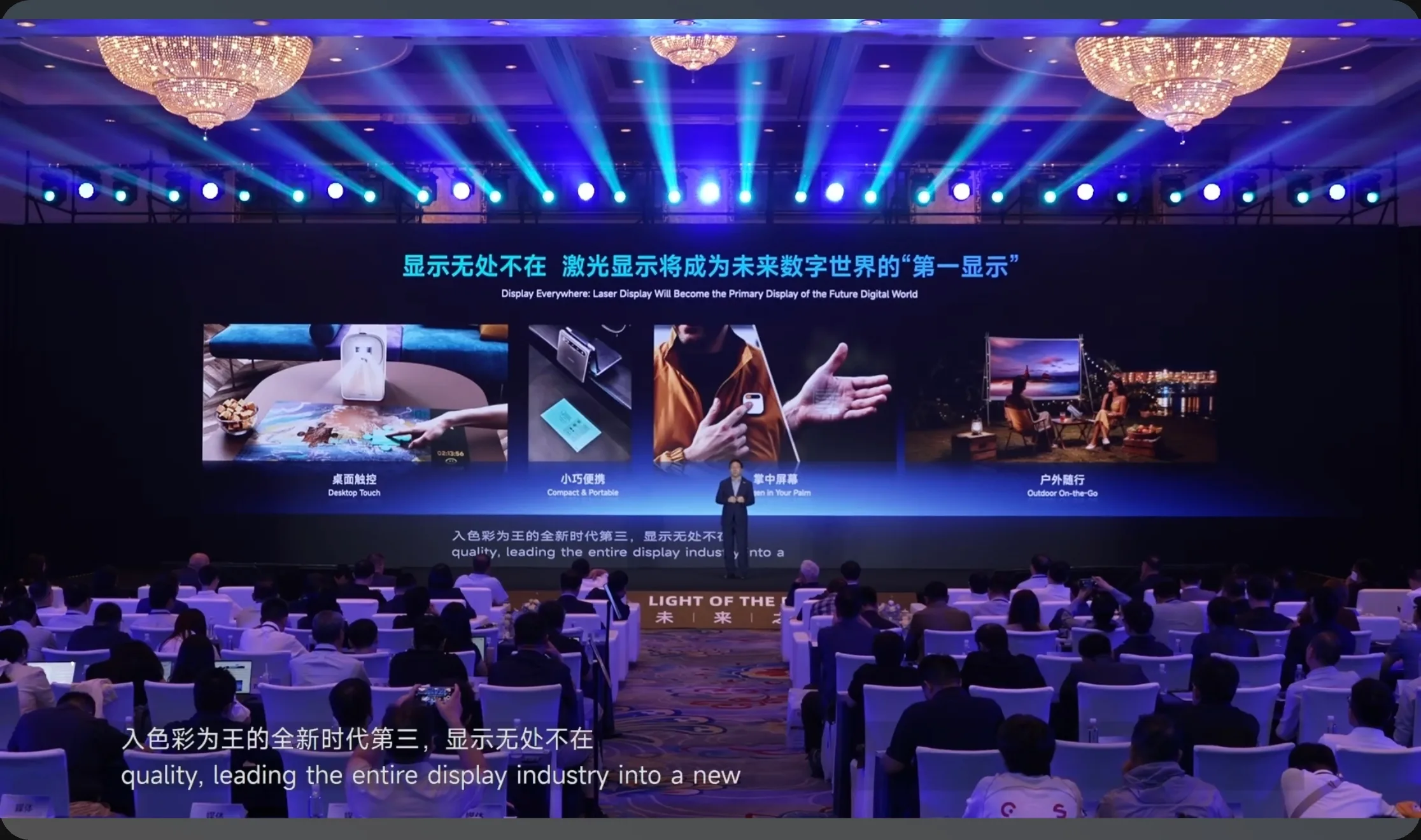
Image Source: LeiTech
Still, one thing is certain: as a complement to traditional display technologies, advances in laser display will inevitably accelerate innovation in product forms for smart hardware. This is good news for both the smart hardware industry and consumers.