
 雷科技
雷科技




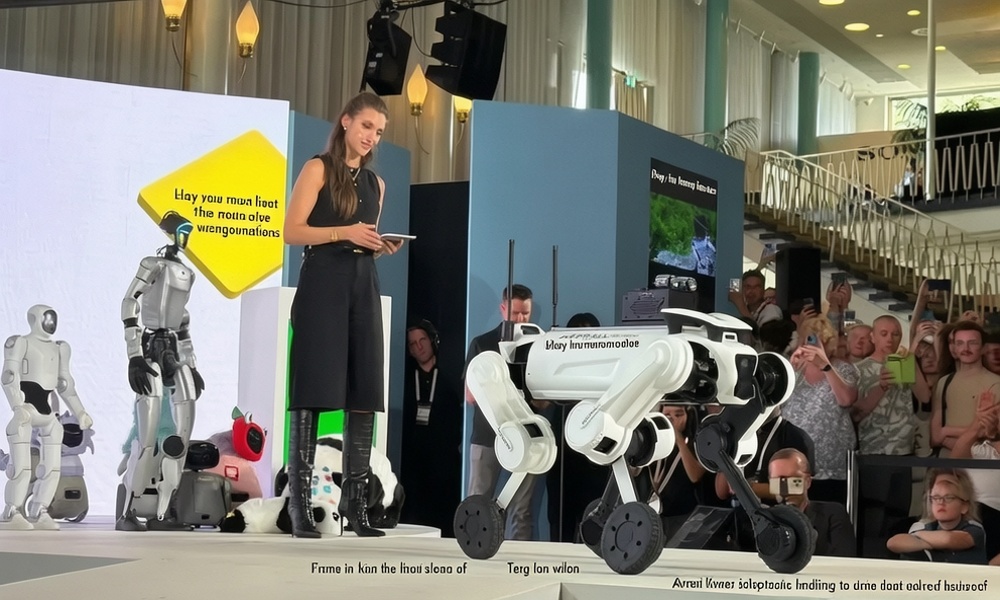


At this year’s IFA, robots have a stronger presence than ever before.
The IFA Next innovation zone is promoting “the largest robot showcase in its history”, and robotic exhibits have become crowd favourites with long queues of visitors. Walking through the halls, you will see robots capable of walking, running and serving drinks nearly everywhere. Almost every sizable booth is talking about robotics.
Beneath all the buzz, two key themes emerge: Physical AI and global market expansion.
Physical AI is a core term repeatedly referenced at this IFA. Now that AI has a physical form, how will it reshape our lives? Nearly all exhibitors are attempting to answer this question.
Second, out of the total 1,900 exhibitors at the show, more than 900 are Chinese brands, accounting for nearly half of all participants — a collective overseas push. While global expansion itself is nothing new, the approach this year is distinctly different. It is clear on-site that the overseas strategy of some Chinese brands has evolved. Previously it was simply product export; this time, Chinese companies are bringing far more sophisticated technology, spanning chips, motors, algorithms and complete machine solutions.
Few brands embody both themes simultaneously. Astrall Dynamics, making its IFA debut, is one such example. This Chinese embodied AI robotics firm emerged as a dark horse and claimed the IFA 2026 Innovation Award in the “Best in IFA Next & Emerging Technologies” category. Let’s break down why it earned this honour.

Physical AI’s True Test: Demonstrating Capabilities in Real-World Scenarios
To understand why it won the award, we need to look beyond the IFA exhibition hall. When talking about robots, many people first picture demo units dancing or serving coffee at expos. However, the true test for robots lies not in exhibition booths. A robot’s competence must ultimately be validated in real-world field operations.
The harshest and most hazardous environments are the real litmus test.
Astrall Dynamics’ quadruped robots are deployed mainly in practical use cases, including emergency fire response, power & energy inspection, and smart campuses. These scenarios share one common trait: they demand extremely high reliability and continuous operation capability from robots, leaving no room for gimmicks.
Take the power and energy sector as an example. At a substation project owned by a leading power grid client, Astrall Dynamics’ Hypertron series operates across multiple floors and zones, autonomously inspecting dozens of checkpoints every day with fully unattended operation. In addition, it can perform delicate manipulation tasks such as opening and closing cabinet doors and turning knobs. Inspection data integrates seamlessly with the client’s existing operation and maintenance system, fully complying with power industry access standards and requiring no extra system construction.
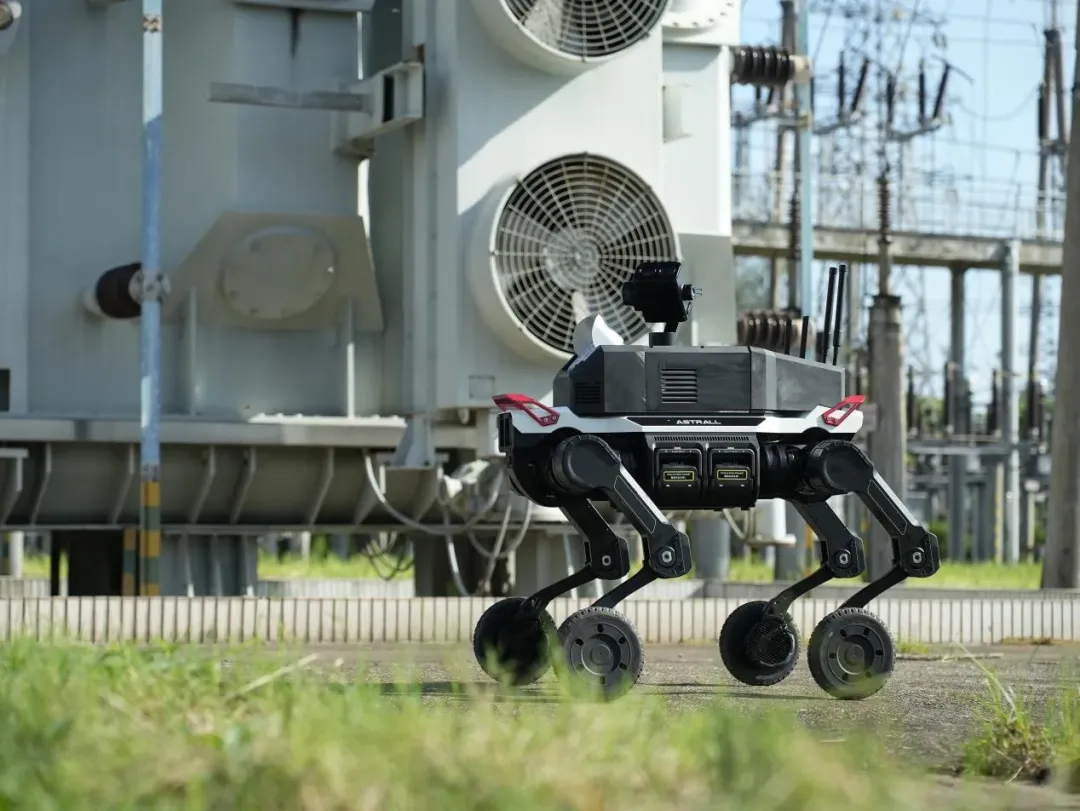
The ability of a robot to run continuously and stably inside a substation is in itself powerful proof of product reliability. Substations feature complex environments with strong electromagnetic interference, imposing stringent requirements on equipment stability and safety. Operating day in and day out in such surroundings carries more weight than a hundred demo performances on the exhibition floor.
For emergency fire response scenarios, firefighters face unknown risks with every step forward. Quadruped robots can enter hazardous areas first and stream real-time situational data back to support critical rescue decision-making. Within smart campus environments, quadruped robots handle routine inspection and security tasks, patrolling nonstop 24/7 and alerting operators promptly when anomalies are detected.
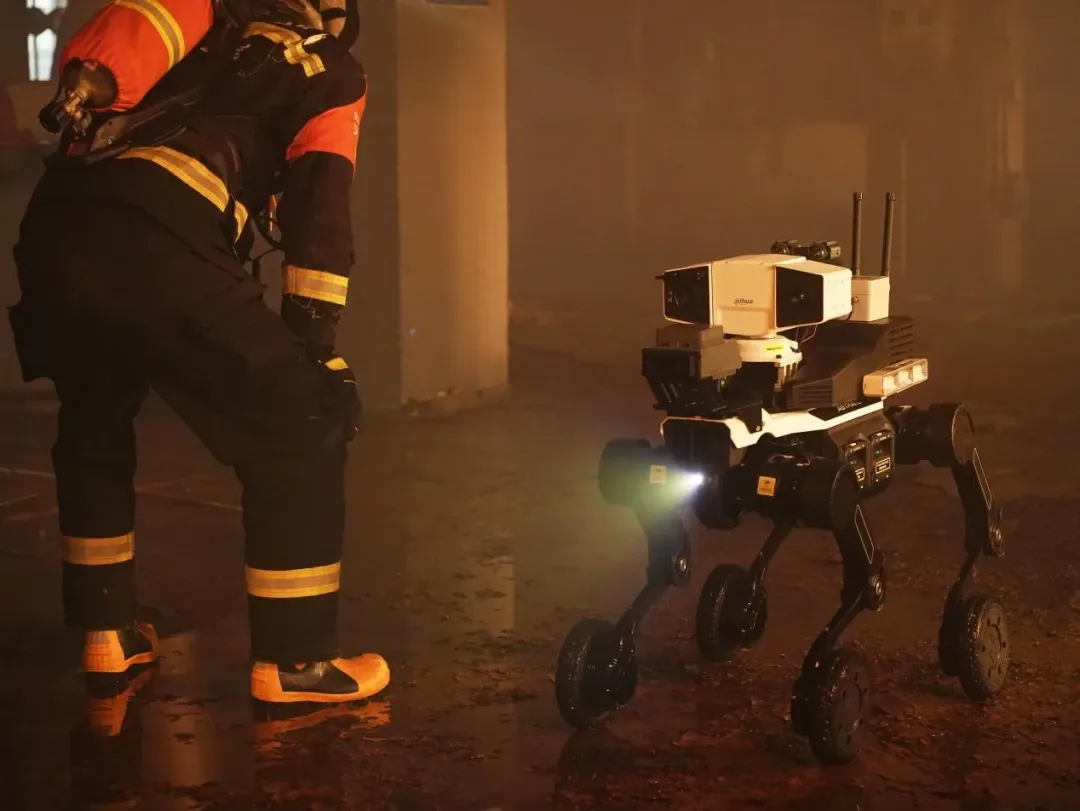
Astrall Dynamics’ Hypertron series quadruped robots have achieved regular operation in the above scenarios and passed long-term tests of continuous, stable unattended operation. This leap marks a fundamentally different milestone.
The true value of robots lies in letting us safely delegate the most dangerous tasks to machines. In locations where humans ought not to enter yet presence is mandatory, quadruped robots protect frontline workers by taking on those missions.
Though “protection” sounds simple, it demands extreme reliability. Whether navigating rugged terrain or harsh environments, consistent trouble-free operation is the real capability. Whoever deploys and validates their technology in real-world settings first earns the right to help define the implementation benchmark for Physical AI.
The question arises: what enables these robots to run reliably day after day without failure in such demanding scenarios?
The answer lies deep within the robot’s underlying core technology.
A "Chinese Core": The Tech Confidence Behind In-House R&D
Whether a quadruped robot can carry heavy loads and maintain stable, long-duration continuous operation over complex terrain hinges largely on its “heart”: the motors.
And Astrall Dynamics’ competitive edge lies precisely within this very “heart”.
Astrall Dynamics has independently developed axial flux motors with a peak torque of 600 N·m and a torque density of 240 N·m/kg. Simply put, the smaller, lighter motor delivers greater power output. It serves as the core power foundation enabling the quadruped robot’s heavy-load capacity, and is critical for the Hypertron-T01 to carry multiple inspection devices and complete complex tasks in environments such as substations.
More importantly, Astrall Dynamics has achieved full autonomy from motor design and joint modules all the way through to complete machine assembly. Over 90 percent of its core components are developed in-house, a figure rarely seen across the industry.
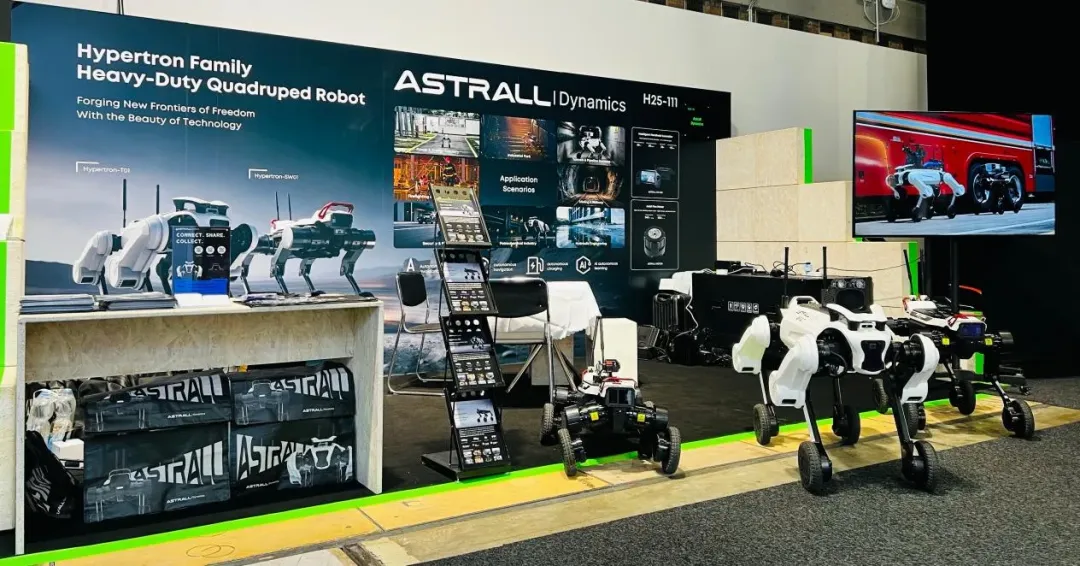
Previously, a common trend prevailed in the quadruped robot industry: most manufacturers sourced core power components externally. They purchased motors, joint modules, reducers and other parts from third-party suppliers, then assembled complete robots combining their own structural design and algorithms.
This approach delivers shorter R&D cycles, eliminating the need to tackle hardware development from scratch. Functional prototypes capable of walking and running can roll out within months. This strategy makes sense during market entry, yet it carries obvious limitations. The ceiling of product performance is often capped by what suppliers can provide.
Astrall Dynamics has taken a tougher route: in-house development. While full-machine integration capabilities can be built in a relatively short time, independent R&D of core components requires long-term technological accumulation and engineering experience. Therefore, Astrall Dynamics started with low-level motor development and built upwards step by step, all the way to finished robots and complete solutions. This full-stack in-house R&D path is certainly slower and more difficult than off-the-shelf component sourcing. But once proven viable, it creates a far deeper moat.
This technical strength quickly earned recognition at the IFA show.
On September 4 local time, the IFA 2026 Innovation Awards were announced in Berlin. Astrall Dynamics’ Hypertron-T01 heavy-duty quadruped robot won the IFA 2026 Innovation Award under the category “Best in IFA Next & Emerging Technologies”.

Built for complex operational scenarios such as emergency fire response, the Hypertron-T01 centres around its self-developed axial-flux power system. It integrates heavy-load capacity and expandable payload mounting capability, pushing quadruped robots beyond exhibition halls and into real-world deployments.
In our view, this award recognises more than just the Hypertron-T01 as a single product. It also validates Astrall Dynamics’ consistent technical roadmap: in-house development of core components, product refinement under real working conditions, and scaled commercial rollout. It proves that the robust technical strength of Chinese robotics enterprises has gained global recognition.
In short, through independent research and development, Astrall Dynamics has achieved breakthroughs and attained industry-leading performance on key metrics including torque density. While an axial-flux motor may seem like just a small component, it represents a broader leap for China’s robotics industry in core hardware. Astrall Dynamics is both a participant and witness to this progress. This “Chinese Core” also symbolises an overall shift in how Chinese brands go global: Made in China now stands on solid technological foundations.
As more Chinese companies like Astrall Dynamics master hardcore technologies, the confidence behind Chinese robot exports is fundamentally transformed. Yet with solid tech capabilities in hand, how should brands navigate overseas markets? Astrall Dynamics offers an answer that differs from many expectations.
Chinese Solutions Go Global: Robot Exports Enter a New Phase
At IFA 2026, Chinese enterprises accounted for nearly half of all exhibitors. A host of robotics brands showcased their products together, offering a concentrated display of the overall strength of China’s robotics industrial chain in Berlin.
Yet amid this wave of collective global expansion by Chinese companies, Astrall Dynamics has forged a new path for overseas market entry.
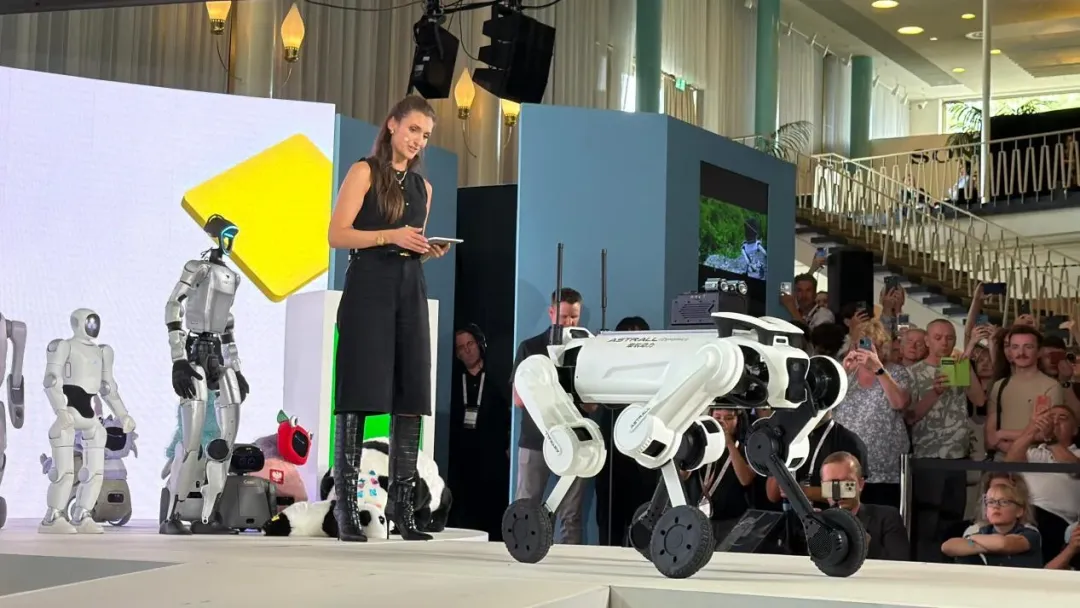
Many robotics companies going global mainly sell hardware products, shipping individual robot units overseas and leaving customers to figure out usage on their own. Astrall Dynamics adopts a different model: it exports full-stack in-house R&D technology plus fully validated industry-specific solutions. Beyond hardware products, it also brings an open platform and an ecosystem co-creation framework to international markets.
Specifically, Astrall Dynamics opens its core SDK, covering key functional modules including motion control, sensor data and device management, accompanied by comprehensive documentation and end-to-end technical support.
European system integrators and solution providers can build regionally tailored use cases on Astrall Dynamics’ platform, ranging from power inspection and emergency rescue to campus security and special operations.
This strategy carries longer-term potential than merely selling products. Astrall Dynamics supplies validated underlying technology platforms and hardware capabilities, while European partners leverage their local market and industry expertise. Together, both sides deploy robots into more real-world scenarios.
This open and collaborative mindset is especially vital for entering the European market. Clients across regions tend to work with integrators familiar with local requirements. Through its open platform and technology enablement, Astrall Dynamics complements local European integrators and solution vendors to jointly expand the market. To some extent, this approach transcends the role of a simple product supplier and positions the brand as a partner for joint definition and co-development.
Evolving from product sales to ecosystem enablement defines Astrall Dynamics’ long-term positioning in Europe. Chinese robotics firms are transforming from product exporters into technology enablers, helping local European industries build their own capabilities for robotic applications.
Closing Remarks
The real-world deployment of Physical AI must ultimately be validated through practical scenarios. Those who achieve successful operation in frontline environments are the ones that truly set the implementation benchmarks for Physical AI.
Chinese robotics companies have moved beyond the outdated model of merely exporting finished products. Their global expansion is shifting toward exporting proprietary technology and complete solutions. From independent R&D of core components and rigorous real-world industry validation, to ecosystem enablement through open platforms, Chinese robotics firms have quietly transformed their role on the global market.
All these technologies and solutions serve one ultimate goal: protecting the safety of frontline operators. The riskiest jobs can be assigned to the most dependable robots, so field workers return home safely. This core value transcends technology and commercial interests and remains consistent across all countries and markets.
The rollout of Physical AI has only just begun. From the exhibition halls in Berlin to frontline work sites around the world, Astrall Dynamics’ appearance at IFA is merely a starting point. The era of Physical AI will truly arrive when robots step out of exhibition booths and enter the places where they are needed most.
From September 4–8, the world’s largest consumer electronics and home appliance trade show—IFA 2026—took place in Berlin.
As the “most influential new media outlet covering IFA” globally—widely recognized for its authoritative AI-focused reporting—LeiTech dispatched its largest and highest-caliber exhibition team to Berlin this year. Adopting a “2+N” model (two live hosts + multiple on-site editors + multiple backend editors), LeiTech delivered immersive, multi-dimensional, real-time coverage of IFA 2026—with special emphasis on AI Agents converging with appliances and hardware, robotics technology integrating into home environments, emerging digital lifestyle trends across human-vehicle-home ecosystems, and the global stage presence of Chinese brands.
With the IFA exhibition concluded, the LeiTech IFA 2026 reporting team is currently conducting intensive on-site debriefs and summaries in Berlin. Stay tuned!