
 雷科技
雷科技






September 8 marked the final day of IFA 2026 in Berlin, Germany. As one of the world’s top three consumer electronics trade shows, this year’s IFA—open since September 4—has drawn over 1,900 exhibitors from 49 countries and regions, with an estimated attendance of more than 220,000 visitors worldwide. LeiTech (ID: LeiTech) deployed its “LeiTech IFA26 Reporting Team” to Berlin for on-the-ground, comprehensive, and first-hand coverage of IFA 2026.
The core category at IFA is home appliances—and within that, televisions are central. Consequently, home appliances have always been a highlight of IFA. Many television innovations—including color TV, HD live broadcasting, flat-panel TVs, OLED TVs, and RGB-Mini LED displays—have debuted or entered mass production at IFA.
This year’s IFA reveals several prominent trends in the TV industry:
1. Chinese manufacturers now lead the conversation: Hisense, TCL, Changhong, and Skyworth (METZ) command strong visibility; meanwhile, Samsung and Sony adopt low-key exhibition strategies, hosting activities only in designated zones open exclusively to select attendees. Many former industry-leading TV brands have vanished entirely.
2. Display technologies continue to evolve rapidly: RGB-Mini LED has become the common choice among industry leaders; MicroLED displays appear across virtually every booth; and emerging display technologies—including MicroLED 3D, Constant-Order Display, Deep 4K, end-to-end AI-powered display, and printed OLED—are showcased, opening new avenues for innovation.
3. TV-AI integration is accelerating: Operating systems are upgrading to Agent OS, positioning TVs as the home’s AI hub. Manufacturers are also leveraging AI to comprehensively reimagine every aspect of the TV experience—including core elements such as display and audio.
A notable trend this year is that manufacturers have expanded their narrative beyond traditional visual attributes to place greater emphasis on audio performance. Audio demonstrations are significantly more prominent across exhibition spaces—indicating markedly increased investment in audio technologies, whether integrated into TV bundles or developed as standalone product lines.
Hisense: Seamless Audio-Visual Integration, Emphasizing Synchronized Immersion
Hisense’s audio products on display are predominantly paired with its televisions, underscoring synchronized audio-visual immersion. Presentations are tailored to diverse home environments, prioritizing holistic user experience over individual product specifications.
Hisense’s official theme at this year’s IFA centers on “True Color, Eye Comfort, and Immersive Entertainment”—with audio serving as an indispensable pillar of immersive entertainment. The company unveiled a new Dolby Atmos soundbar system, seemingly designed to compete directly with Samsung’s flagship soundbars.
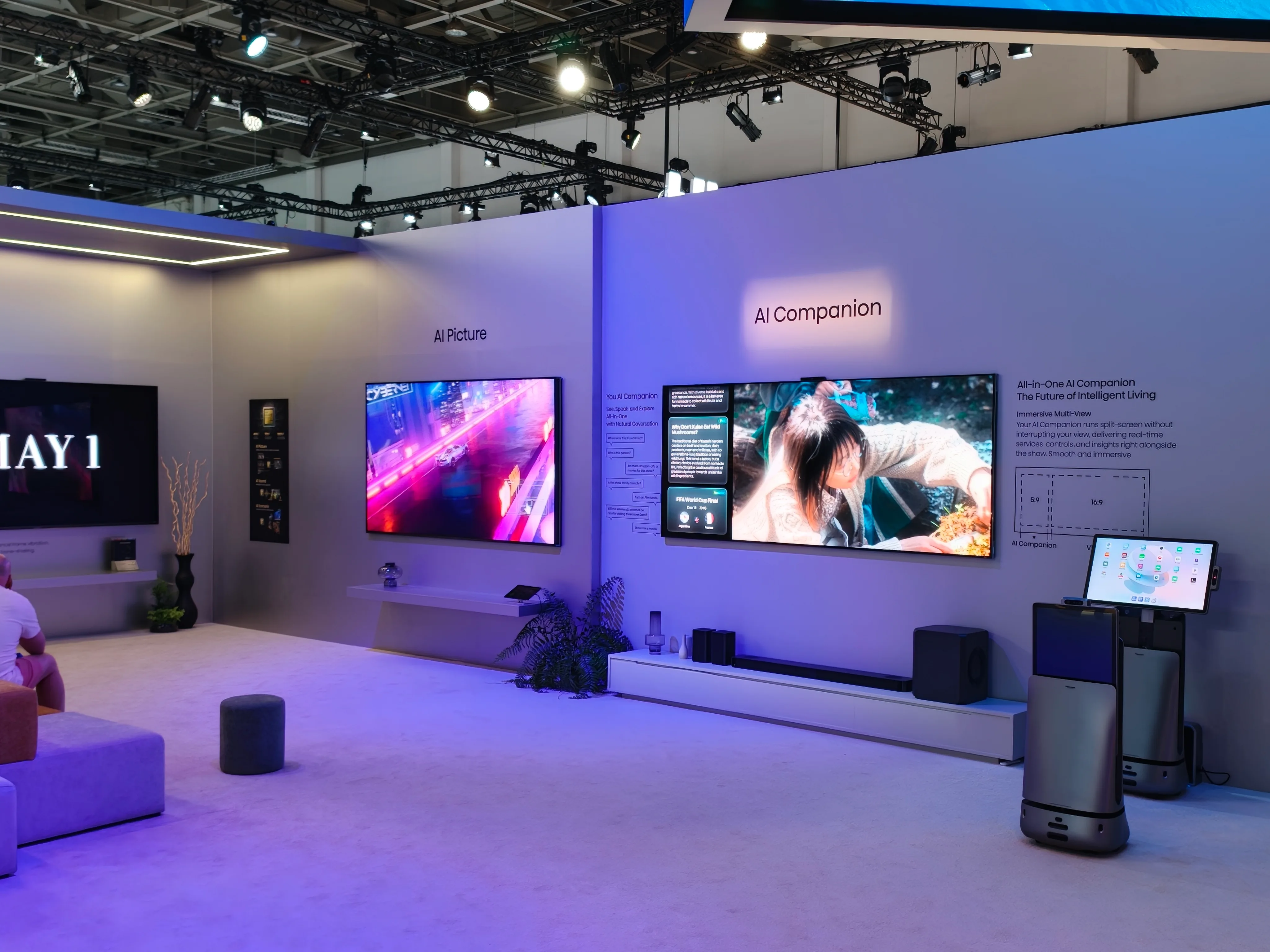
(Photograph source: LeiTech IFA Reporting Team)
In contrast to some TV brands treating audio as a separate product line, Hisense treats it as an integral component of the overall TV experience—refining and elevating it accordingly.
TCL: Strategic Partnership with B&O, Elevating Soundbars to a Standalone Product Line
TCL has evolved its audio offerings into a fully developed product line. This year, TCL’s audio demonstration zone occupies floor space equal to its TV展区, featuring numerous speaker models.
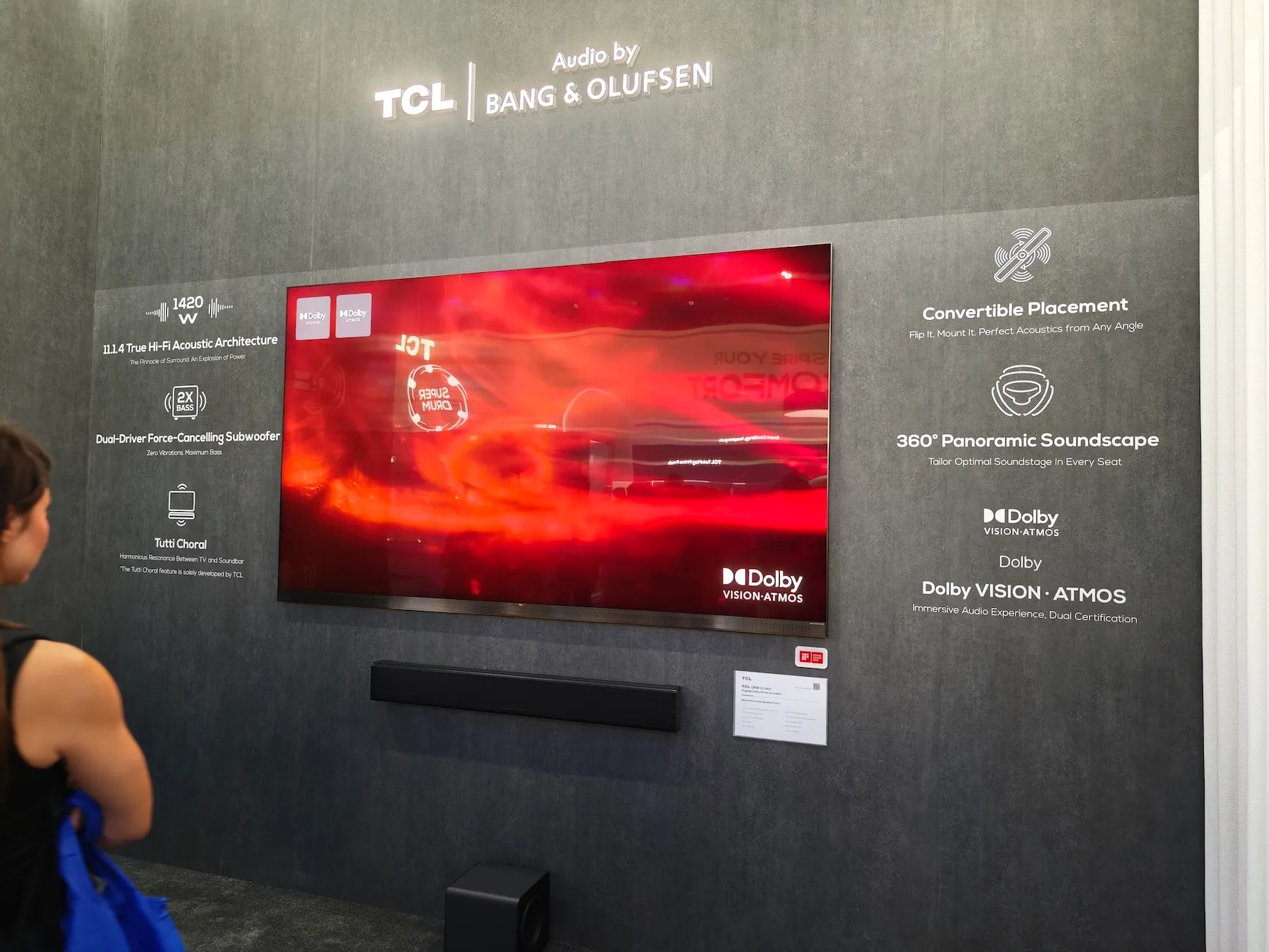
The flagship Q95K soundbar is co-developed with renowned Danish audio brand Bang & Olufsen, delivering 11.1.4-channel audio and 1420W output power. It also incorporates a dual-driver force-cancelling subwoofer: two opposing low-frequency drivers cancel out mutual vibrations, enabling deep, powerful bass while minimizing cabinet resonance. Our on-site impression: it may well be the most powerful soundbar yet produced by any TV manufacturer.
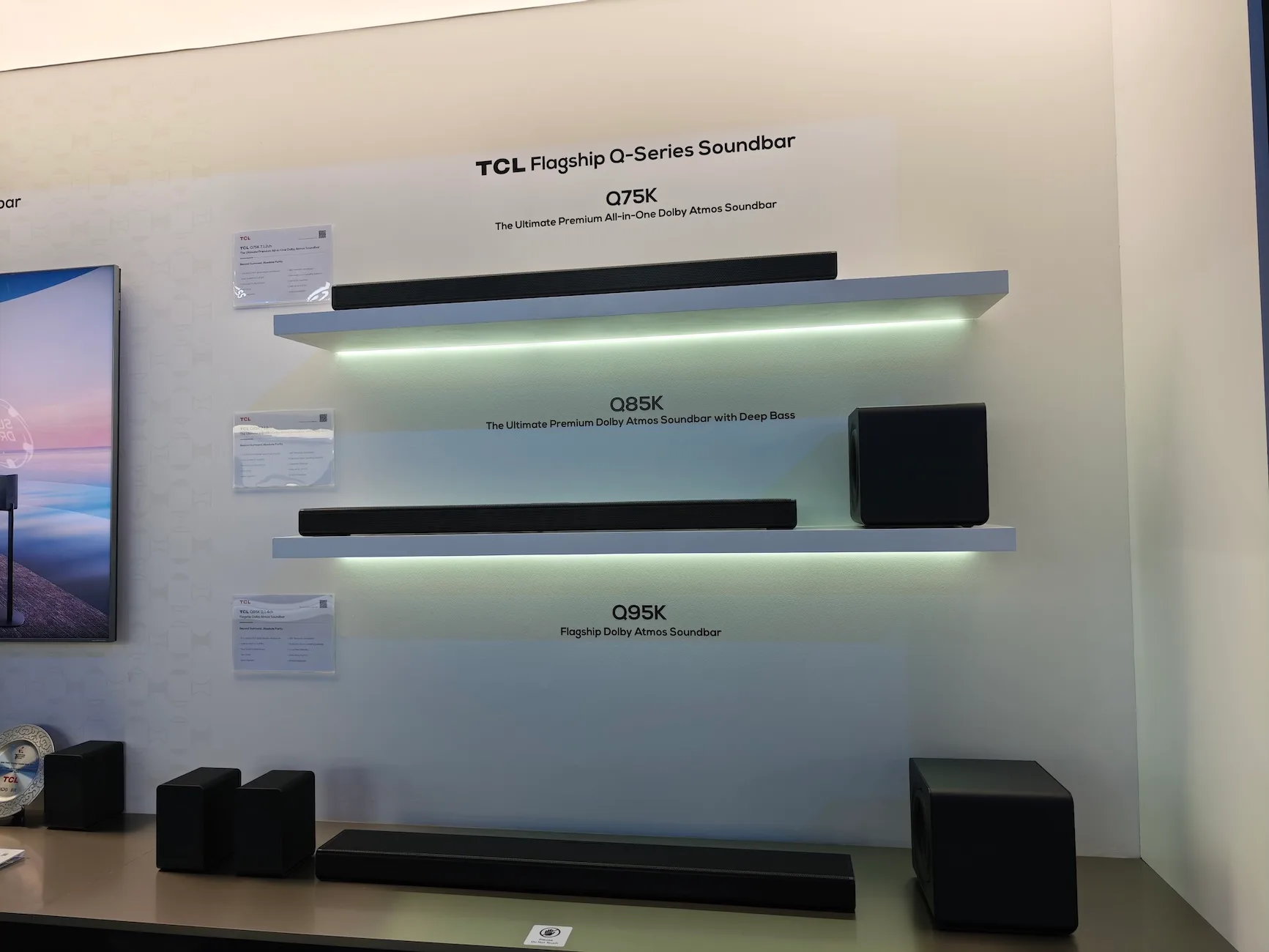
(Photograph source: LeiTech IFA Reporting Team)
In fact, the Q95K isn’t alone: many of TCL’s high-end TVs this year feature audio systems co-tuned with Bang & Olufsen, ensuring consistent sonic philosophy between TVs and soundbars. TCL’s heightened focus on audio stems from a strategic move earlier this year: TCL Electronics acquired Sony’s Home Entertainment business for HK$3.78 billion, establishing a joint venture to operate the BRAVIA TV and audio product lines. Sony TVs have long championed “audio-visual synchronization,” backed by deep expertise in screen-based audio technologies and acoustic tuning.
Following this acquisition, TCL’s product strategy has clearly shifted—not only emphasizing picture quality but also placing audio quality on equal footing, simultaneously acquiring acoustics-related technologies and patent portfolios. On-site observations confirm this approach is already bearing fruit: TCL TVs increasingly emphasize audio performance, while its flagship soundbars directly target legacy audio brands—not merely competing against fellow TV makers.
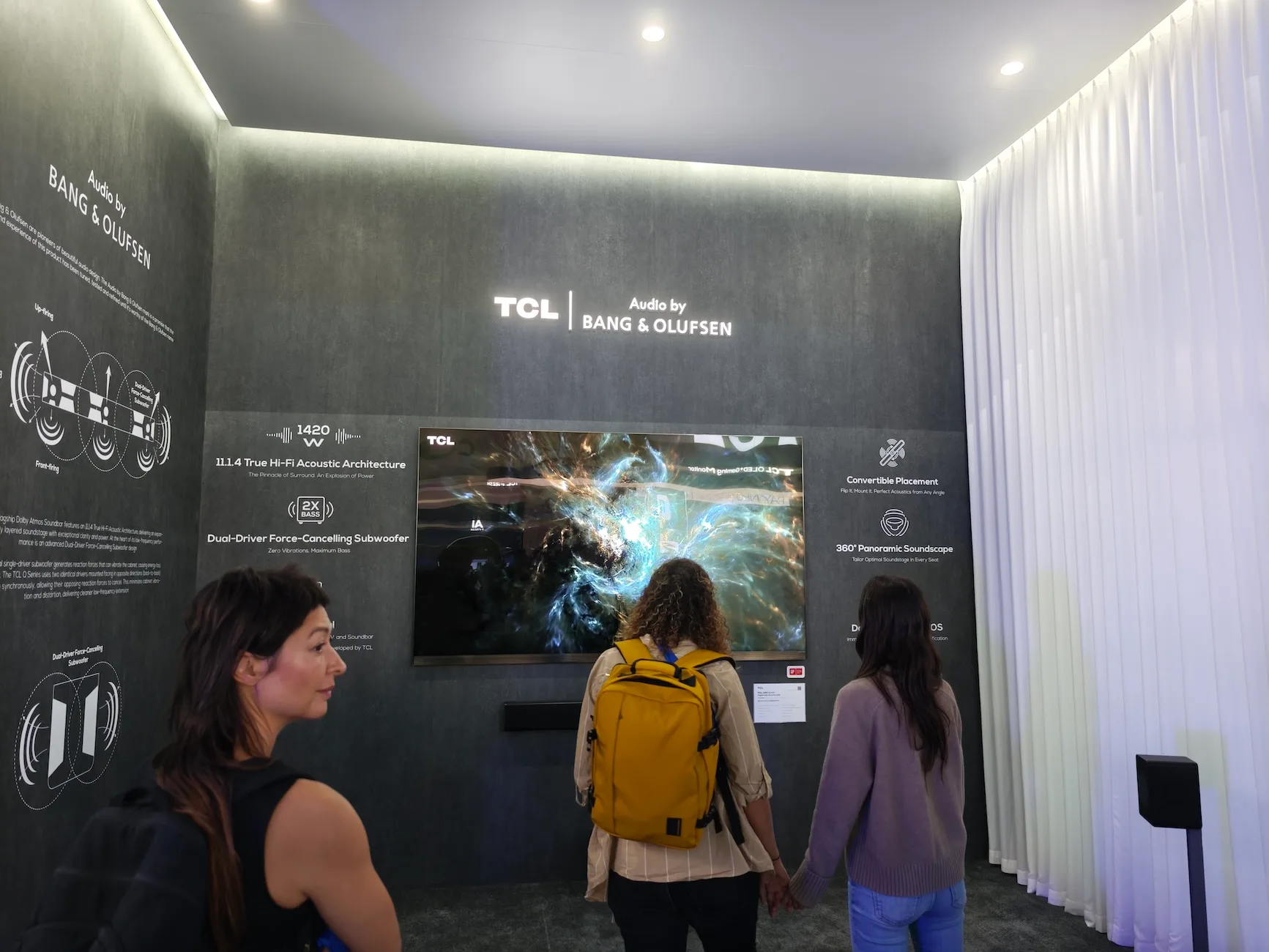
(Photograph source: LeiTech IFA Reporting Team)
LG: Modular Surround Speakers—Place Them Anywhere You Like
LG’s on-site audio showcase focuses primarily on its new SoundSuite series soundbars—including the M7, M5, and H7 models. SoundSuite represents LG’s flagship soundbar lineup for 2026. LG Sound Suite AI’s key selling point is its AI Smart Matrix: up to four speakers can be freely positioned and combined; AI automatically optimizes channel configuration to generate immersive surround sound. Rear surround speakers need not be placed in fixed positions—they can be situated beside your sofa or in room corners, with the system performing automatic sound-field calibration.
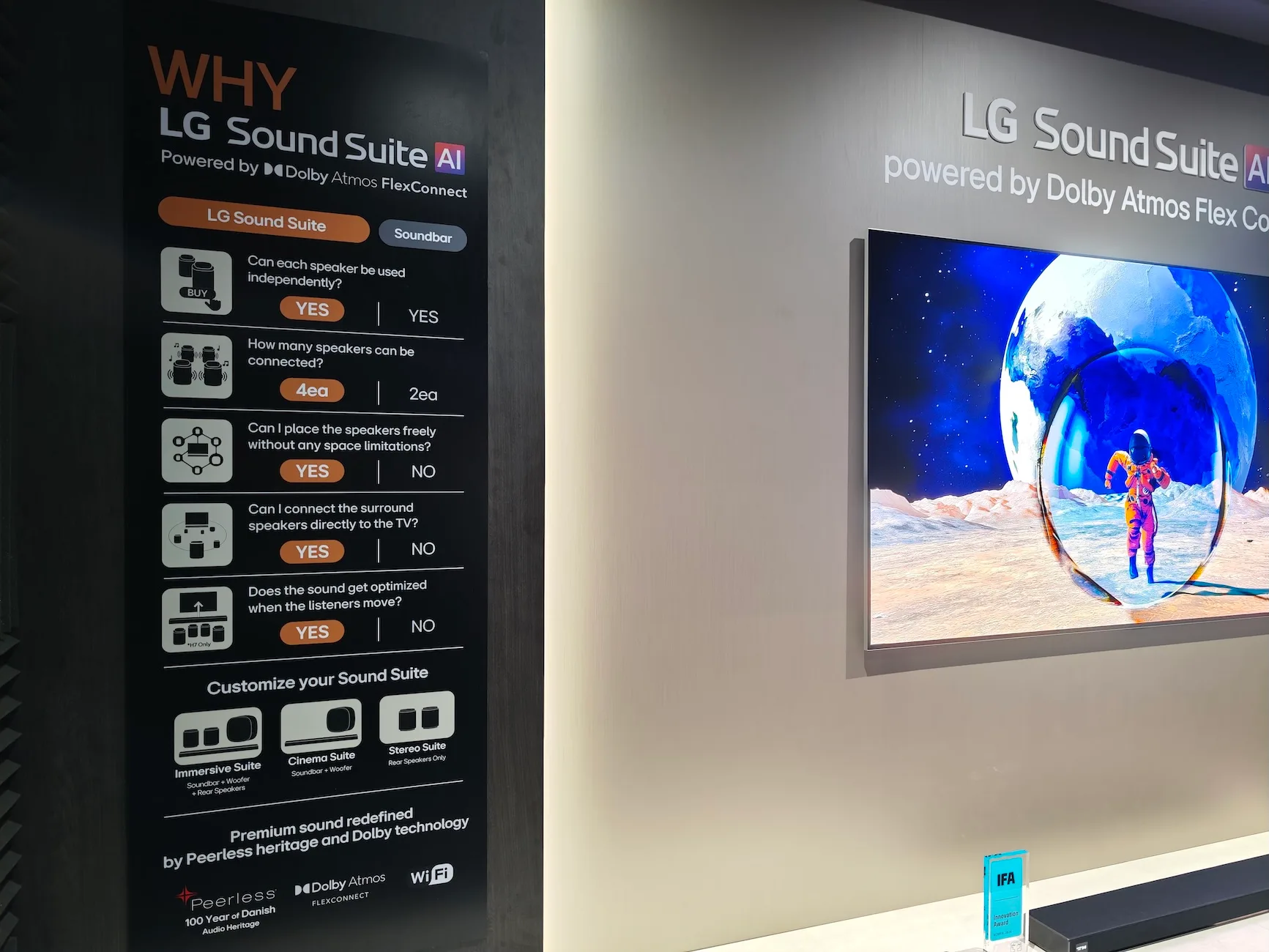
(Photograph source: LeiTech IFA Reporting Team)
This design proves highly practical for typical living rooms—most households lack the dedicated wiring and precise speaker placement possible in professional home theaters. LG also won the IFA 2026 Best Brand Award, with both its OLED evo W6 TV and SoundSuite soundbar recognized. Their joint award underscores how significantly audio has grown in strategic importance within LG’s product ecosystem.
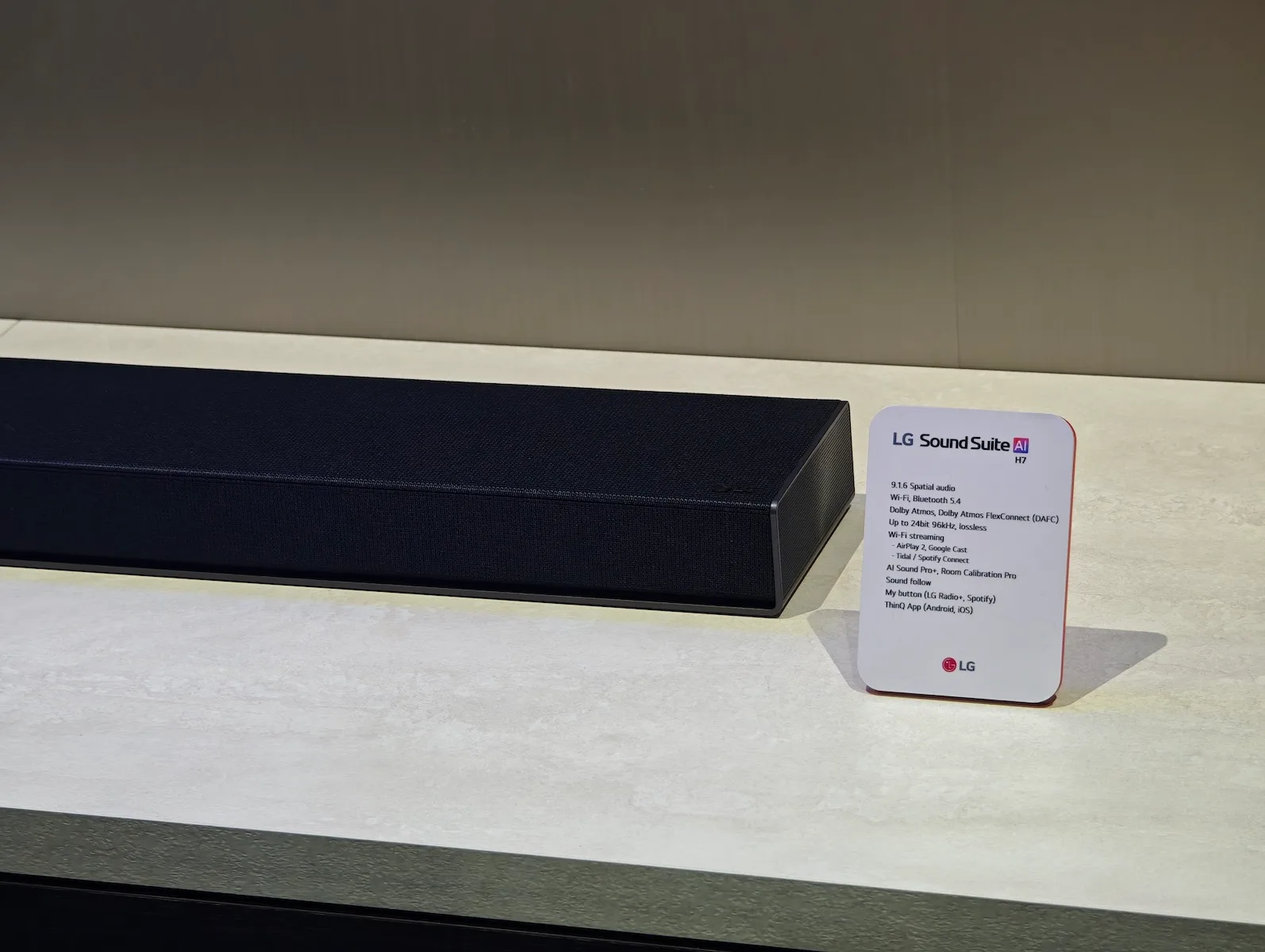
(Photograph source: LeiTech IFA Reporting Team)
CANVAS: Hi-Fi Audio Designed as the Ultimate TV Companion
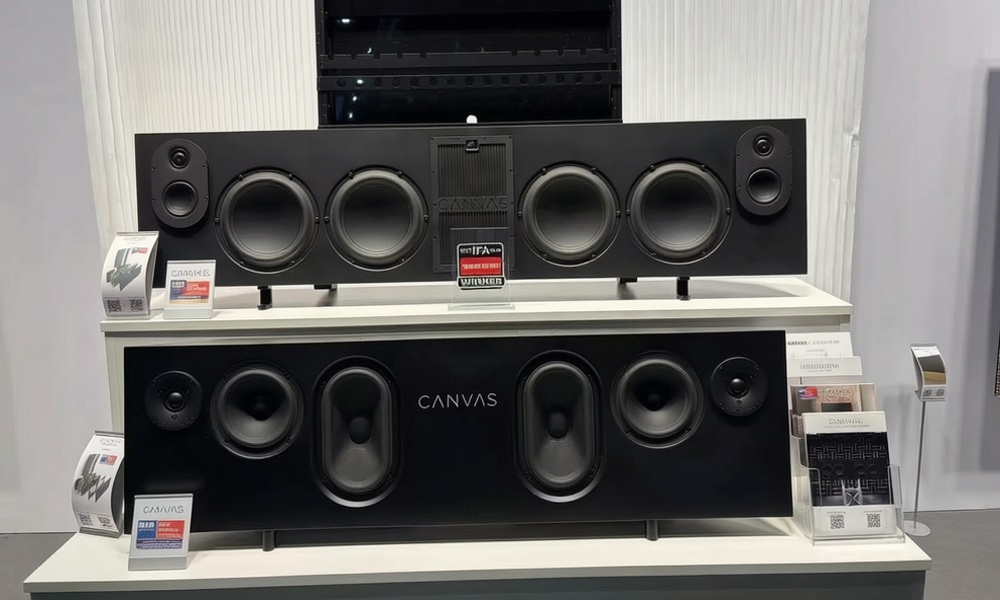
The CANVAS L is not manufactured by a TV brand—it originates from independent Hi-Fi audio specialist Canvas HiFi. Officially billed as the world’s first audiophile-grade soundbar, it diverges radically from conventional soundbars: it integrates two 8-inch Scan-Speak woofers, plus a 4-inch midrange driver and ring-radiator tweeter, delivers 1500W output, and boasts a frequency response spanning 25Hz–40kHz. Its price tag sits at the $7,000 level.
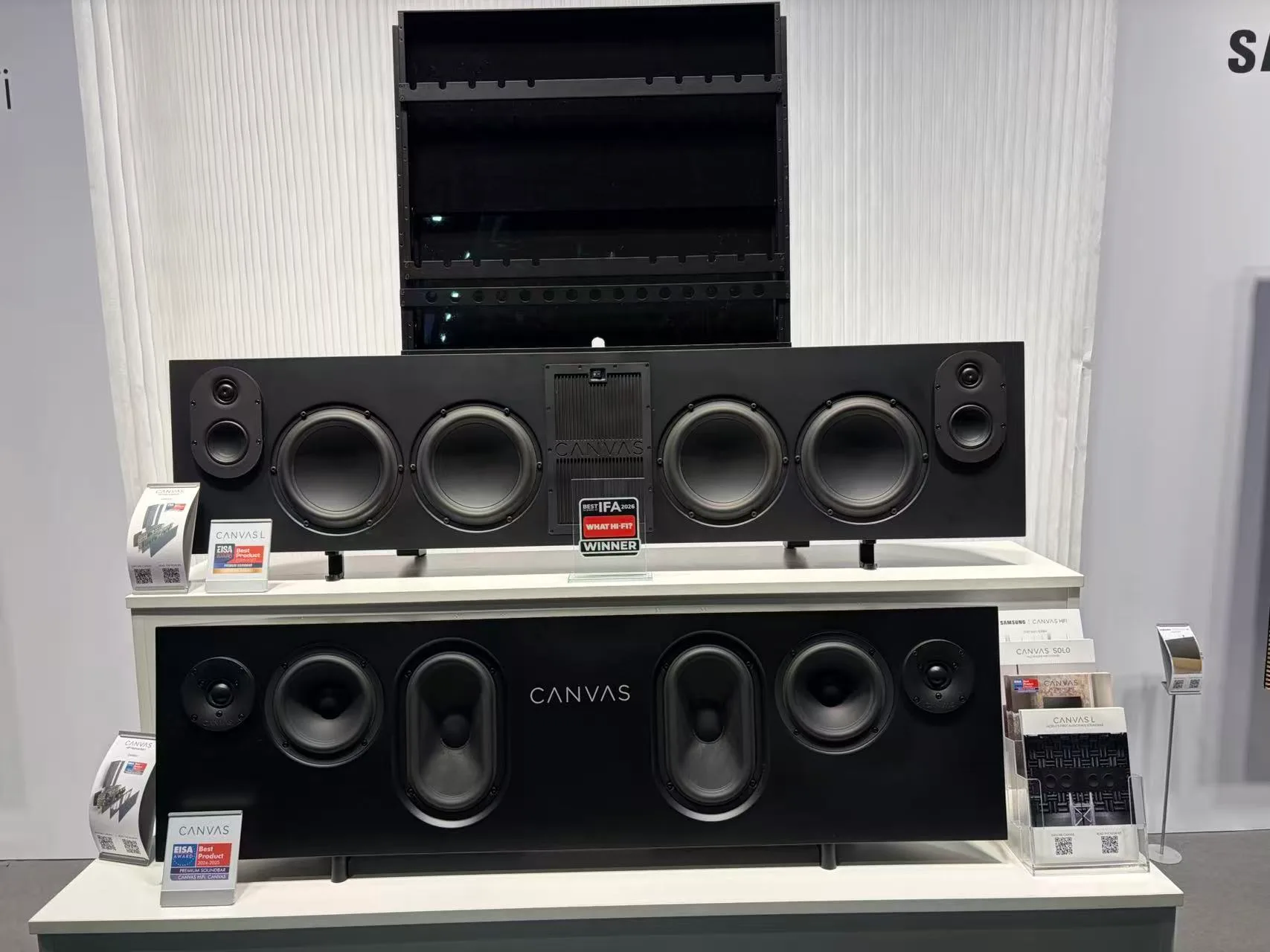
(Photograph source: LeiTech IFA Reporting Team)
Note that standard soundbars typically use woofers just a few inches in diameter; integrating 8-inch woofers effectively embeds a pair of floor-standing speakers into the slim bar beneath your TV. At this price point, you could purchase multiple premium-tier TVs—making clear that the CANVAS L targets not mainstream consumers, but discerning audiophiles willing to invest heavily in exceptional sound quality.
In essence, the CANVAS L functions as an external upgrade module—compatible with any TV to create a full-fledged Hi-Fi TV system. Its width can even be custom-fitted to match your TV. It collaborates closely with Samsung: the new flagship S99H OLED TV is bundled with the CANVAS L for sale.
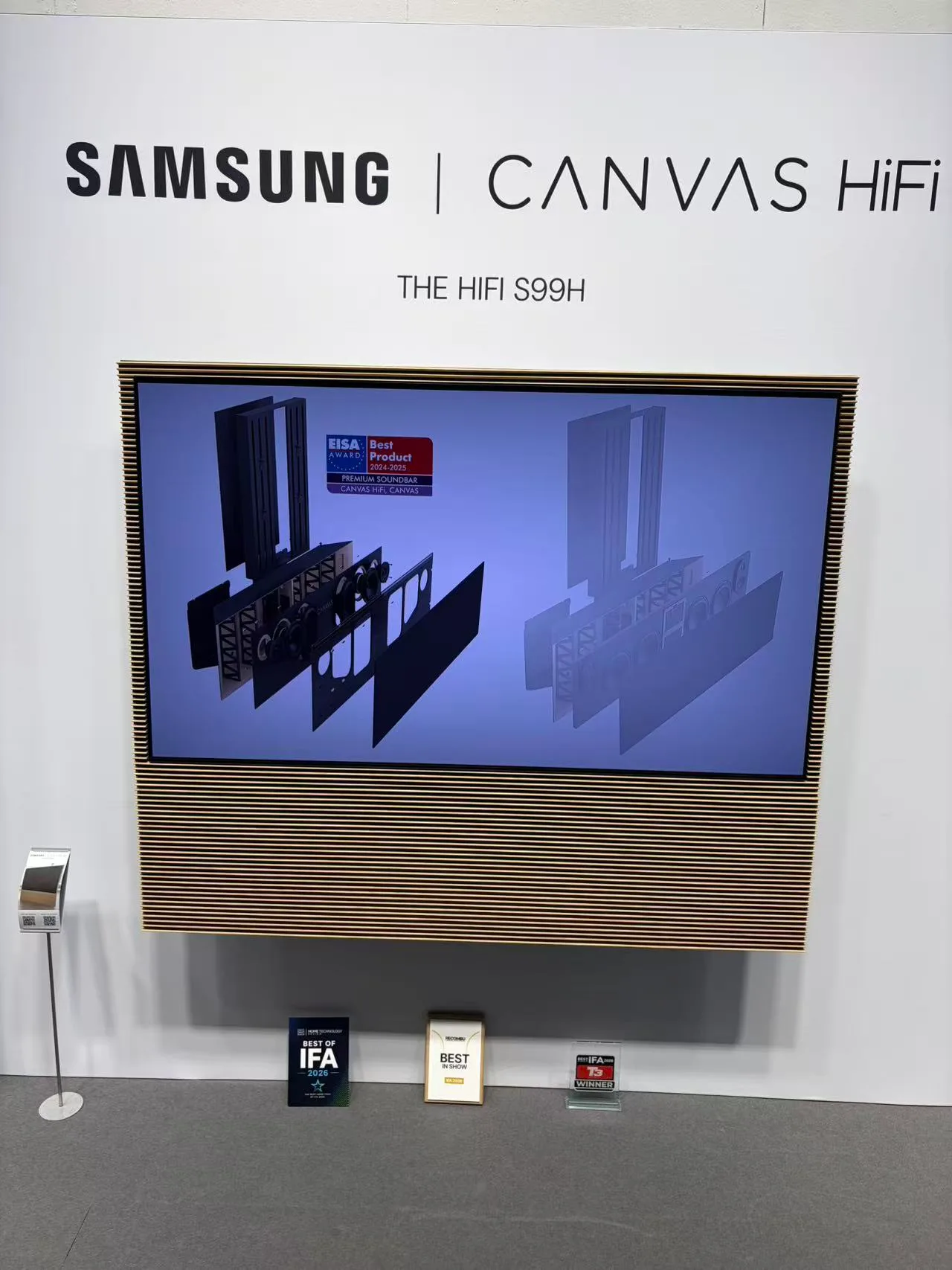
(Photograph source: LeiTech IFA Reporting Team)
Are TV Manufacturers’ Audio Pushes Powered by AI Innovation?
LeiTech believes multiple factors drive TV manufacturers’ intensified focus on audio.
First, premiumization is pushing them forward. After display technologies like Mini LED and OLED elevated picture quality to a certain plateau, diminishing returns have become increasingly apparent—making audio a compelling new avenue for differentiation. Sony’s longstanding “audio-visual synchronization” branding—long associated with premium perception—is now a blueprint many TV brands seek to replicate. Moreover, TV manufacturers possess inherent advantages in audio implementation: seamless integration between soundbars and their own TVs fosters stronger brand identity and user loyalty.
(Photograph source: LeiTech IFA Reporting Team)
Second, new opportunities for innovation have emerged. TCL’s acquisition of Sony’s home entertainment business and its deep collaboration with Bang & Olufsen unlock fresh possibilities for audio innovation. The soundbar category itself is bifurcating: one path—exemplified by TCL and LG—maximizes channel count and power output while leveraging wireless surround and auto-calibration to lower usage barriers; the other—epitomized by the CANVAS L—imports full Hi-Fi speaker engineering into the TV context, matching traditional audio brands in driver quality, power, and pricing.
Finally, AI is revitalizing innovation in mature categories. Both TVs and audio devices—including speakers, soundbars, and headphones—had reached developmental plateaus after years of incremental progress. However, accelerated AI-hardware convergence over the past two years has opened new frontiers: AI-driven spatial audio is gaining rapid traction; LG’s AI automatically configures surround sound channels; and future implementations could even enable “sound-follows-person” functionality via AI vision.
From September 4–8, the world’s largest home appliance and consumer electronics exhibition—IFA 2026—took place in Berlin.
As the “Most Influential New Media Outlet Covering IFA” globally acclaimed for its AI-focused reporting, LeiTech dispatched its largest and highest-specification exhibition team ever to Berlin. Deploying a “2+N” model (two on-site hosts + multiple field editors + multiple backend editors), LeiTech delivered real-time, multidimensional, and first-hand coverage of IFA 2026—with special emphasis on AI Agent integration with home appliances and hardware, robotics applications in domestic settings, emerging digital lifestyle trends across human-vehicle-home ecosystems, and the global stage presence of Chinese brands.
The LeiTech IFA 2026 Reporting Team is actively covering events live from Berlin—stay tuned!