
 雷科技
雷科技






September 8 marks the final day of IFA 2026, the world-renowned consumer electronics exhibition held in Berlin, Germany. As one of the globe’s top three consumer electronics trade fairs, this year’s IFA—open since September 4—has drawn over 1,900 exhibitors from 49 countries and regions, with an estimated attendance of more than 220,000 visitors worldwide. LeiTech (ID: LeiTech) has deployed its “LeiTech IFA 26 Reporting Team” to Berlin for on-the-ground, multi-dimensional, and first-hand coverage of IFA 2026.
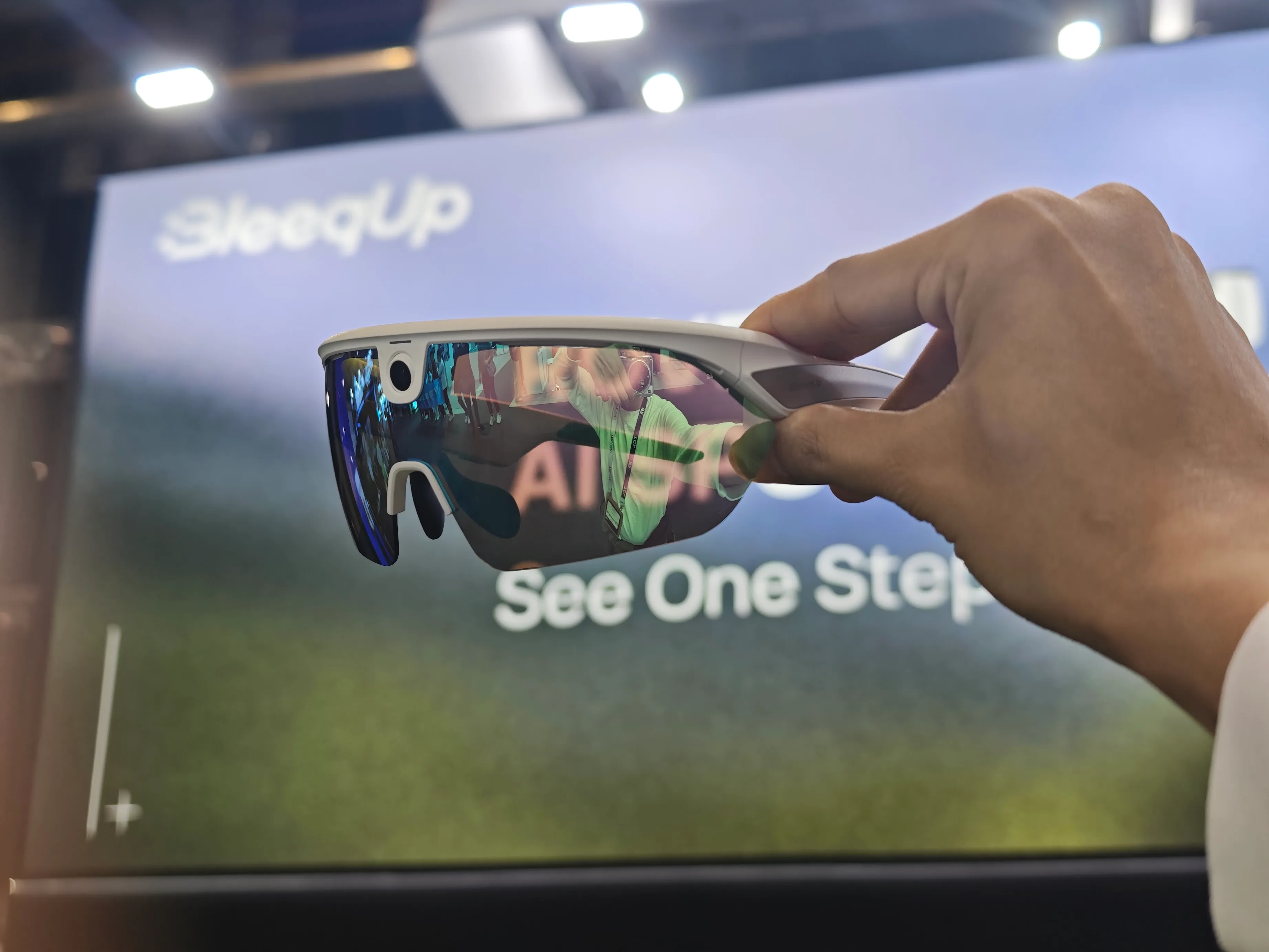
Image Source: LeiTech IFA Reporting Team
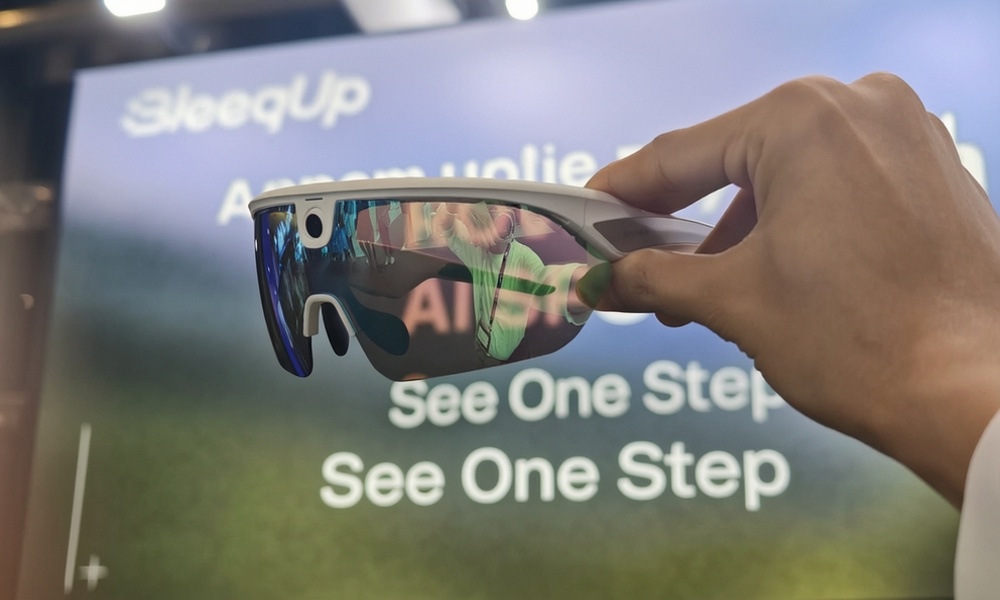
This year, BleeqUp unveiled its next-generation AI-powered sports glasses—the Rover—at IFA 2026. Retaining the classic sports goggle form factor, the Rover integrates a full suite of hardware—including cameras, speakers, microphones, and batteries—into its frame. Its design inevitably evokes memories of last year’s Ranger model.
Last year, BleeqUp already packed four distinct devices—sports goggles, action cameras, open-ear headphones, and real-time intercoms—into a single pair of glasses. This year, BleeqUp clearly has even more ambitious ideas.
Based on hands-on experience at IFA 2026’s exhibition booth, the most intriguing aspects of the Rover lie in several specific, practical refinements—such as the integrated microphone-and-speaker design.
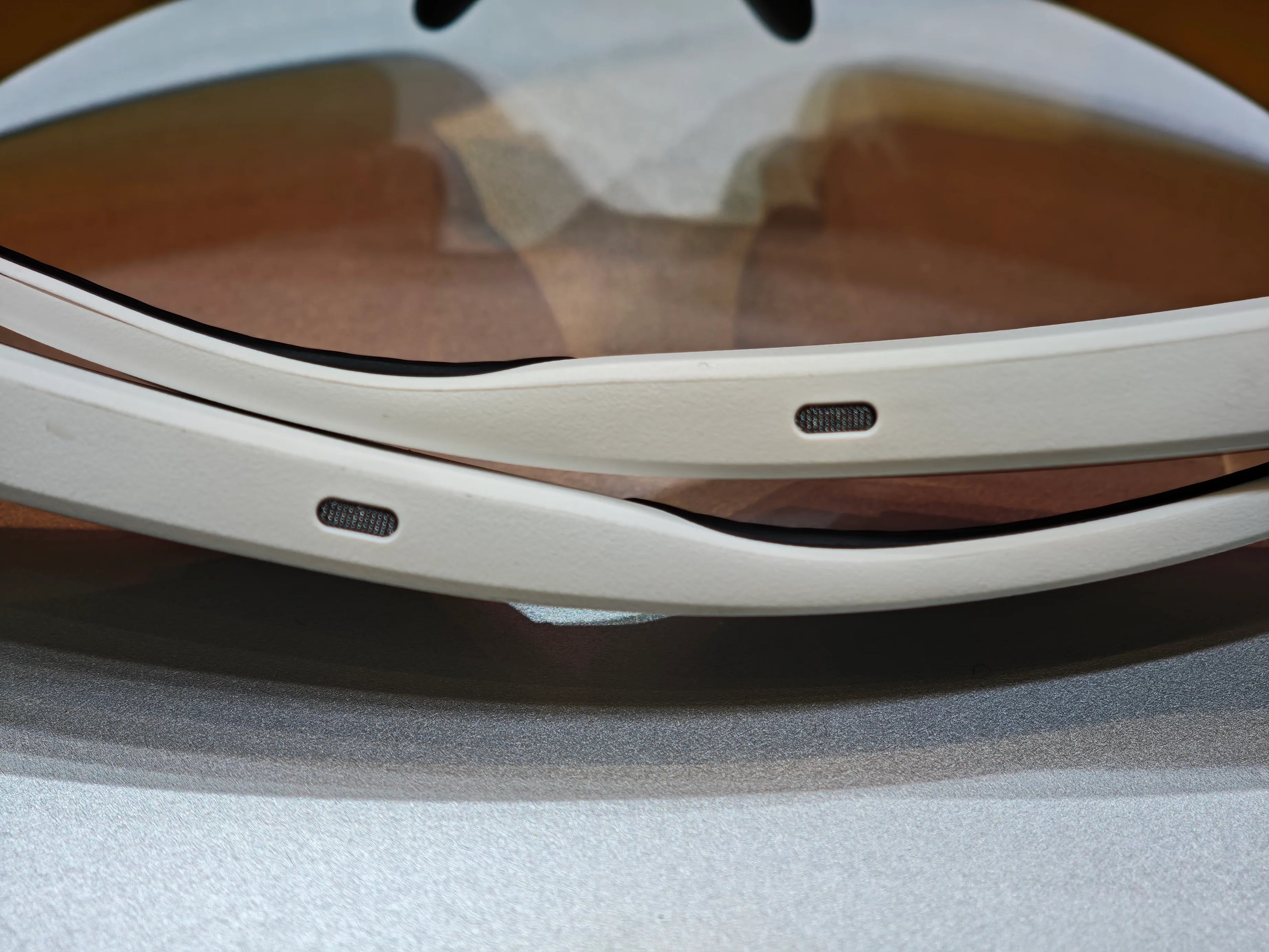
Image Source: LeiTech IFA Reporting Team
Another notable upgrade is the newly adjustable camera angle. The Rover’s front-facing 16-megapixel camera offers three tilt-angle presets: –10°, 0°, and +15°. It supports up to 3K@60fps HDR video recording, plus night mode and electronic image stabilization (EIS).
The “three-angle adjustment” feature proves highly practical for sports eyewear. Cyclists’ head positions constantly shift—whether riding upright, adopting an aerodynamic tuck on road bikes, or lifting their heads to scan the road ahead. Their line of sight doesn’t always align perfectly with the fixed camera position mounted on the frame; without adjustability, footage often captures mostly sky—or exhibits noticeable misalignment between the camera’s center and the user’s actual field of view.
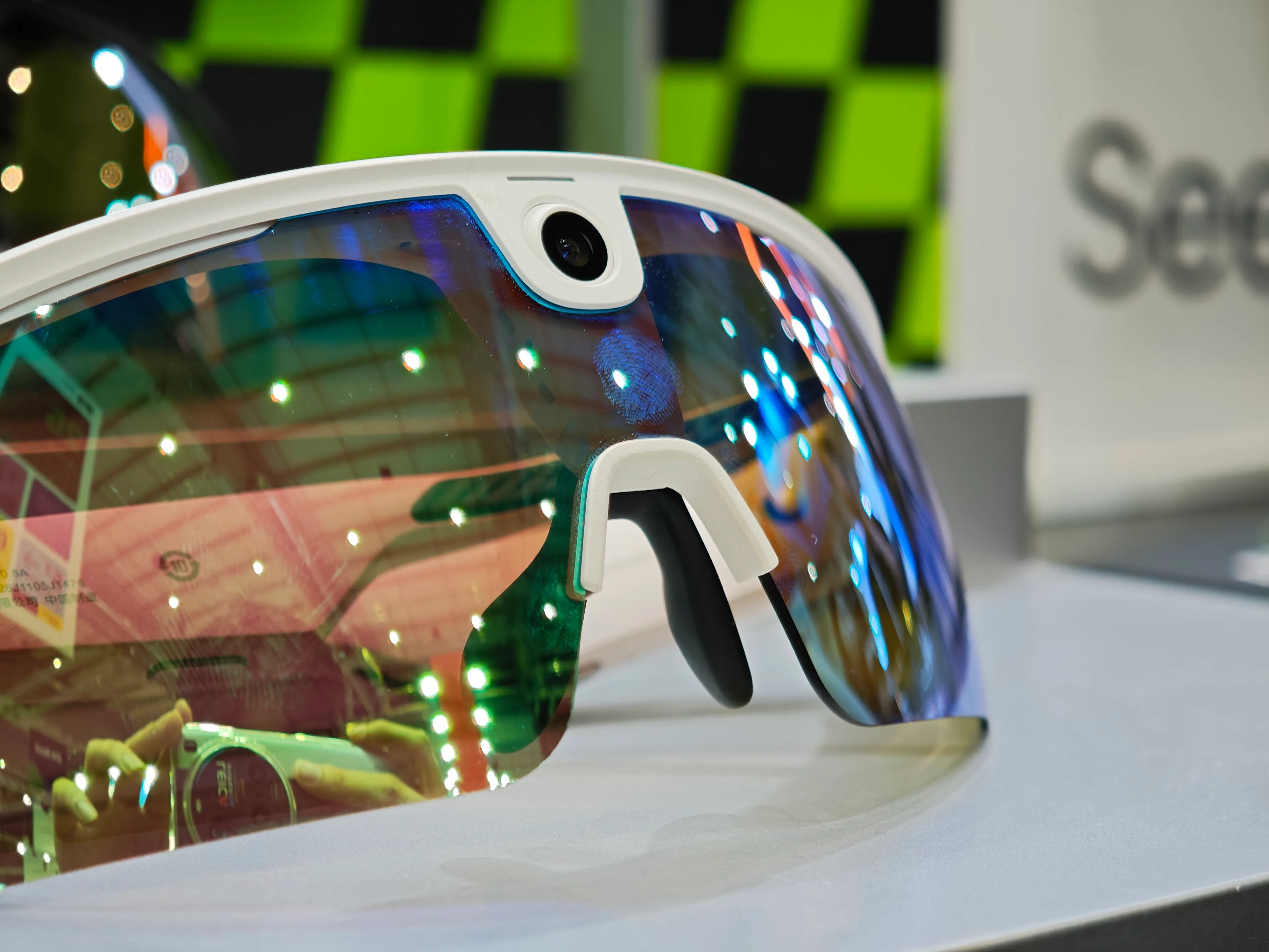
Image Source: LeiTech IFA Reporting Team
That said, the Rover is slightly heavier than the Ranger.
The device weighs 53 grams overall, features TR90 frames, achieves IP65 ingress protection, and includes 64 GB of onboard storage. While 53 grams would be considered heavy for ordinary eyewear, it remains within an acceptable range for a sports-oriented smart goggle integrating a camera, open-ear audio system, and battery.
Battery life remains another critical consideration. The Rover delivers approximately one hour of continuous video recording and up to eight hours of music playback. For longer cycling sessions, users can attach BleeqUp’s Power Plus external battery pack—extending continuous recording time to roughly five hours.
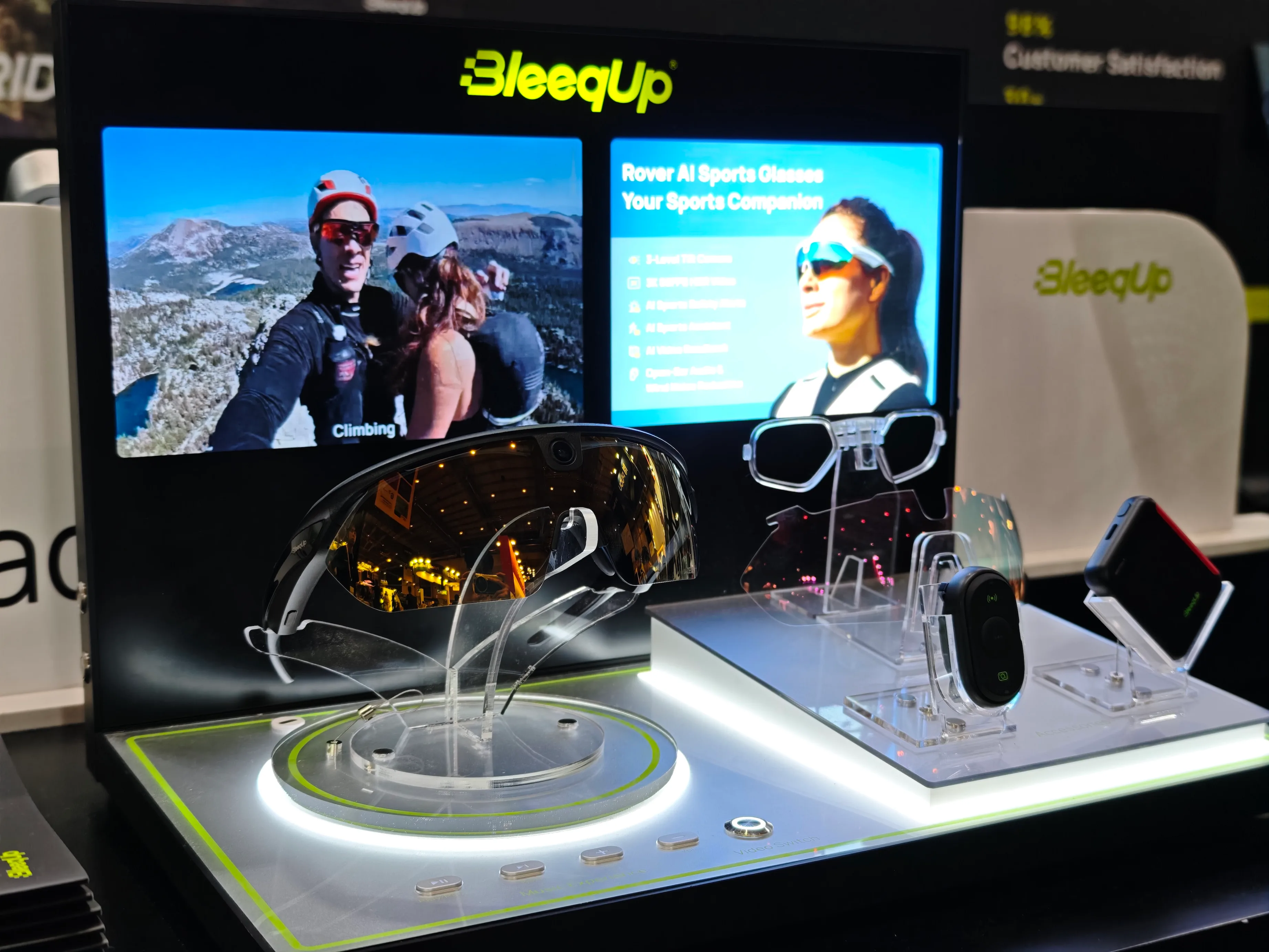
Image Source: LeiTech IFA Reporting Team
Incidentally, while the accessory is rated to add four hours of runtime, it does impact usability to some degree: the external battery mounts behind the helmet and connects to the glasses via a cable. For short rides, carrying it may be unnecessary; for extended endurance rides, however, it becomes nearly indispensable.
Compared to these hardware upgrades, the Rover’s more significant evolution lies in its AI capabilities. Last year’s Ranger already leveraged its forward-facing camera to capture motion footage and used AI to automatically identify highlights and assist editing. This year, the Rover takes things further—using that ever-forward-looking camera to embed AI directly into the cycling experience itself.
A representative new feature is hazard detection.
According to BleeqUp, the Rover analyzes real-world cycling data to recognize anomalies such as emergency braking or collisions—and proactively issues safety alerts. In the event of certain hazardous incidents, the glasses can automatically preserve video footage before and after the event, effectively providing cyclists with an integrated, wearable dashcam system.
The Rover also introduces a new breathing-monitoring function, tracking users’ respiration patterns during physical activity and issuing voice alerts if abnormal breathing patterns are detected.
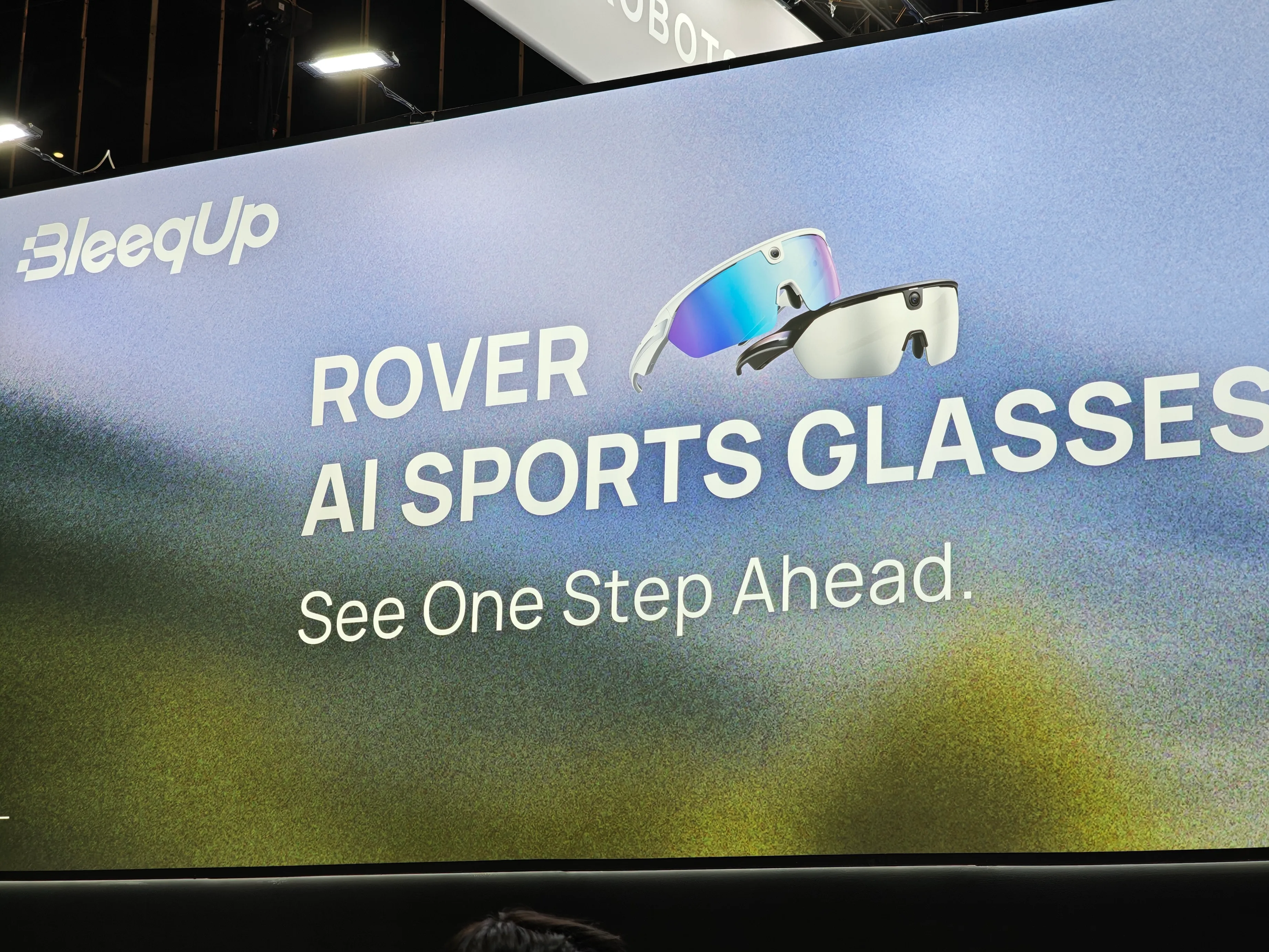
Image Source: LeiTech IFA Reporting Team
Additionally, at the IFA venue, I noticed another AI-powered feature—AI-generated video route guides.
After a ride concludes, AI automatically selects noteworthy clips from the recorded footage and stitches them together with the corresponding route data to generate a ready-to-watch “video route guide.” It also offers generative-AI features like AI Master Motion, which can synthesize cinematic shots—including follow-cam perspectives, low-angle views, and wheel-level POV shots—based on existing photos and first-person footage, eliminating the need for a second human operator.
This functionality may carry a slight “AI effect” aesthetic—its realism being subjective—but it could certainly appeal to cyclists who enjoy sharing their rides on social media and short-video platforms.
Overall, the Rover leaves a strong impression of clear, purpose-driven thinking. Merely increasing camera resolution or adding more sensors to AI sports glasses no longer yields meaningful gains. The key lies in returning to authentic sports scenarios and identifying concrete user needs.
Sports glasses sit naturally on the face, offering an inherent first-person perspective and accompanying users throughout every moment of their activity. With cameras, microphones, and speakers already embedded, enabling AI to understand what unfolds along the route represents a logical and intuitive next step.
From September 4–8, the world’s largest home appliance and consumer electronics exhibition—IFA 2026—took place in Berlin.
As the “most influential new media outlet covering IFA” globally—with AI technologies earning widespread acclaim across the industry—LeiTech dispatched its largest and highest-caliber reporting team to date to Berlin. Deploying a “2+N” model (two live hosts + multiple on-site editors + multiple backend editors), LeiTech delivered comprehensive, immersive, and first-hand coverage of IFA 2026—focusing on AI agents integrated with home appliances and hardware, robotics technology converging with domestic environments, emerging trends in digital life across mobility, home, and personal domains, and Chinese brands’ global stage presence.
The LeiTech IFA 2026 Reporting Team is currently conducting intensive on-the-ground coverage in Berlin—stay tuned!