
 雷科技
雷科技




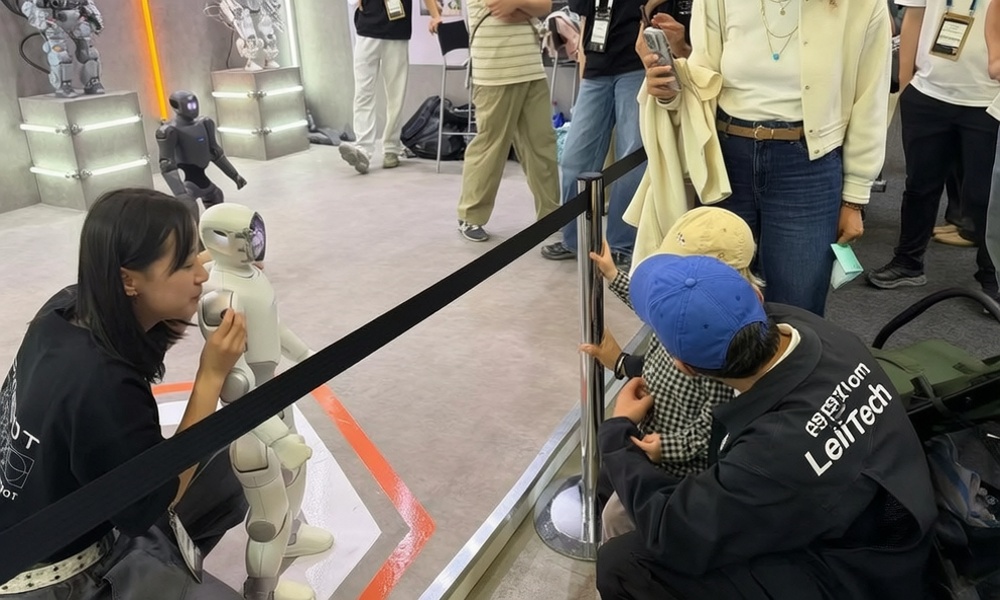


September 8 marked the final day of IFA 2026 in Berlin, Germany. As one of the world’s three premier consumer electronics trade shows, this year’s IFA—open since September 4—has drawn over 1,900 exhibitors from 49 countries and regions, with an estimated 220,000+ visitors expected to attend globally. LeiTech (ID: LeiTech) deployed its “LeiTech IFA26 Reporting Team” to Berlin for on-the-ground, multi-dimensional, and first-hand coverage of the event.
At the pre-show press conference, Leif Lindner, CEO of the organizing body, stated that artificial intelligence (AI) is no longer confined to content generation and complex task processing—it is increasingly operating in the physical world. “Physical AI” emerged as a central theme at this year’s IFA. The organizers even launched a dedicated event titled “Robots on the Runway,” featuring a literal robot catwalk. This shift underscores a clear trend: home appliances are rapidly evolving into AI agents, and their integration with embodied intelligence technologies is growing ever tighter.
Moreover, robots designed for home environments are multiplying—and they’re shifting away from novelty gadgets toward functional “home assistants.”
At March’s AWE in Shanghai, LeiTech summarized this evolution as follows:
Haier introduced the concept of “hands-off housekeeping”; Hisense proposed the “household without chores”; LG promoted the “zero-labor home.” While brands use slightly different terminology, their underlying philosophy is unified: maximizing human liberation from domestic tasks by delegating the vast majority of household chores to appliances and whole-home smart systems.
LeiTech believes the emergence of “zero-chores” at this year’s AWE was no coincidence—it reflects the maturation of AI and robotics technologies and their accelerating convergence with the home appliance industry.
This trend continues at IFA. The “zero-labor” or “hands-off housekeeping” vision championed by home appliance brands, together with the push by embodied intelligence companies to bring robots into homes, is jointly shaping a new family living environment—one deeply infused with AI and designed to reduce user effort and cognitive load.
The “Zero-Chores” Wave Reaches IFA
This year, major home appliance manufacturers have brought their AWE “zero-chores” narratives to IFA. LG branded its vision the “Zero Labor Home,” showcasing 150 products across a 3,745-square-meter exhibition space. Haier’s booth continued promoting “AI-Powered Living,” emphasizing AI-driven lifestyle transformation. Hisense held a press conference on September 3, unveiling its V AIOS operating system and a suite of AI companion solutions.
Though brands use varying terminology in their marketing, they all point to the same objective: enabling appliances to perform tasks autonomously—minimizing human intervention.
This isn’t a novel concept. At March’s AWE, Haier proclaimed “hands-off housekeeping,” Hisense introduced the “household without chores,” and LG touted the “zero-labor home.” Six months later, IFA in Berlin has deepened and refined this narrative.
Tracing the evolution of appliance intelligence reveals three broad stages: First, appliances gained basic connectivity—remote control via smartphone apps, where users set parameters and machines execute commands. Second, appliances acquired sensing capabilities—for instance, washing machines automatically adjusting water volume based on laundry weight, or air conditioners modulating power output according to ambient temperature—enabling autonomous operational adjustments. Now we’re entering the third stage: AI and agent-based intelligence are empowering appliances to understand voice commands, recognize ingredients, and even proactively decompose and execute complex tasks.
Walking the show floor, we observed genuine progress in appliance intelligence. LG’s offerings demonstrate notably finer-grained execution: its AI-powered dishwasher automatically selects cleaning modes based on dish count and grease level.
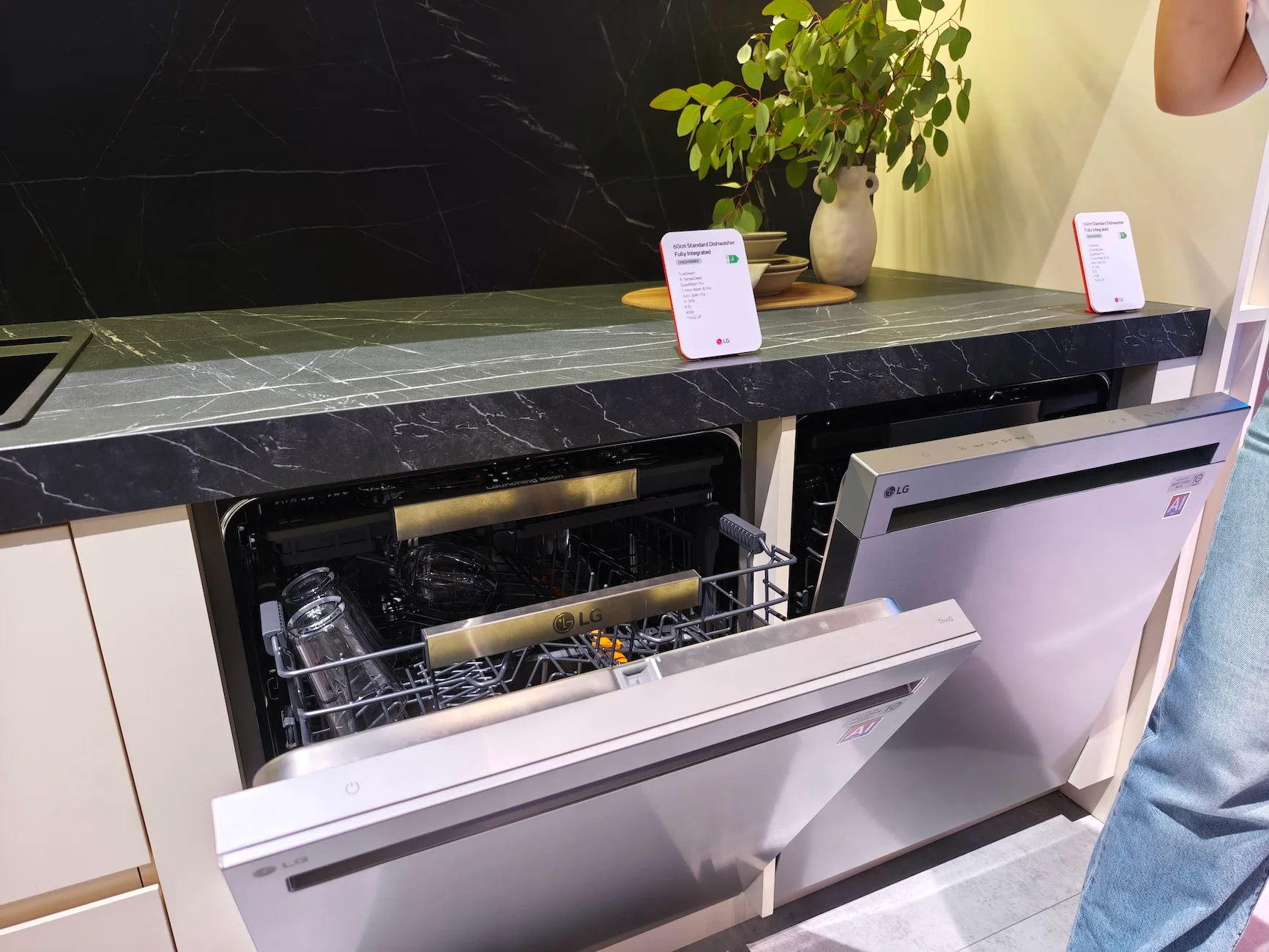
(Photograph source: LeiTech IFA Reporting Team)
Cross-appliance coordination is also becoming more pronounced. LG has integrated Athom—the Dutch smart home platform it acquired in recent years—into its ecosystem, enabling connectivity with tens of thousands of IoT devices. This infrastructure now powers whole-home energy management, unifying solar generation, battery storage, HVAC, and appliance consumption onto a single dashboard.
Similarly, Haier and other brands emphasize interoperability: data sharing between devices enables scenario-based automation—such as triggering dishwasher pre-heating upon completion of cooking, or activating air purifiers after robotic vacuuming. Individually, these capabilities represent a clear leap forward in automation sophistication.
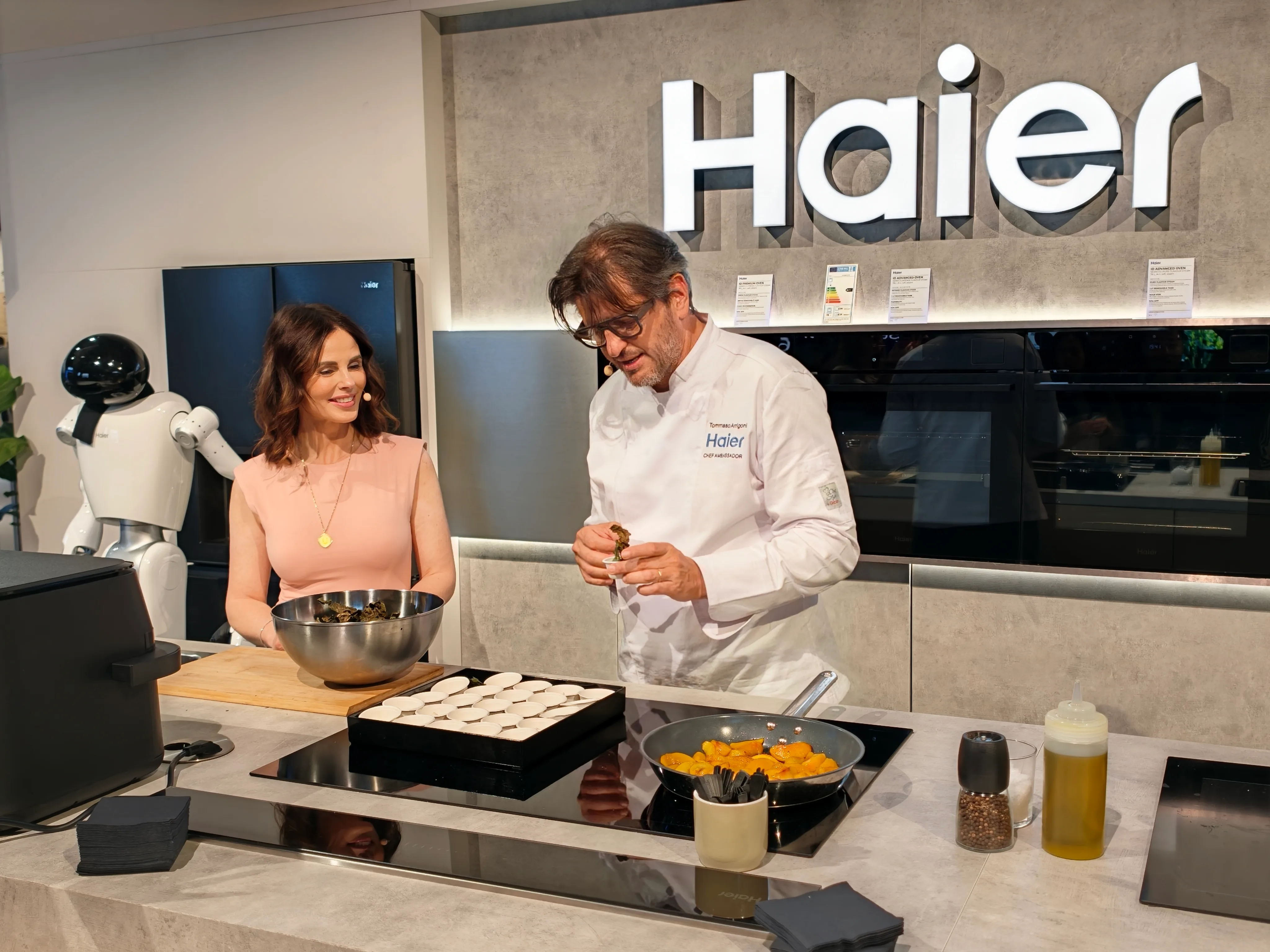
(Photograph source: LeiTech IFA Reporting Team)
Yet, we still observe that much of today’s appliance intelligence remains constrained to individual devices. Even the most advanced washing machine requires humans to retrieve dirty clothes from wardrobes, load them, and then remove, dry, and fold clean garments. Similarly, dishwashers can detect grease and auto-select programs—but dishes won’t walk themselves to the sink. Refrigerators may identify perishables and send expiry alerts to smartphones—but users still reach for ingredients, wash them, and chop them. That “last-mile” transition—from dining table to dishwasher, or from wardrobe to washing machine—remains firmly in human hands.
In fact, many brands acknowledge this limitation. LG demonstrated ThinQ ON, a home control hub embedding task-executing AI agents: when a user messages “I’m almost home” remotely, the system calculates travel time and proactively asks whether to pre-cool the AC or activate the air purifier.
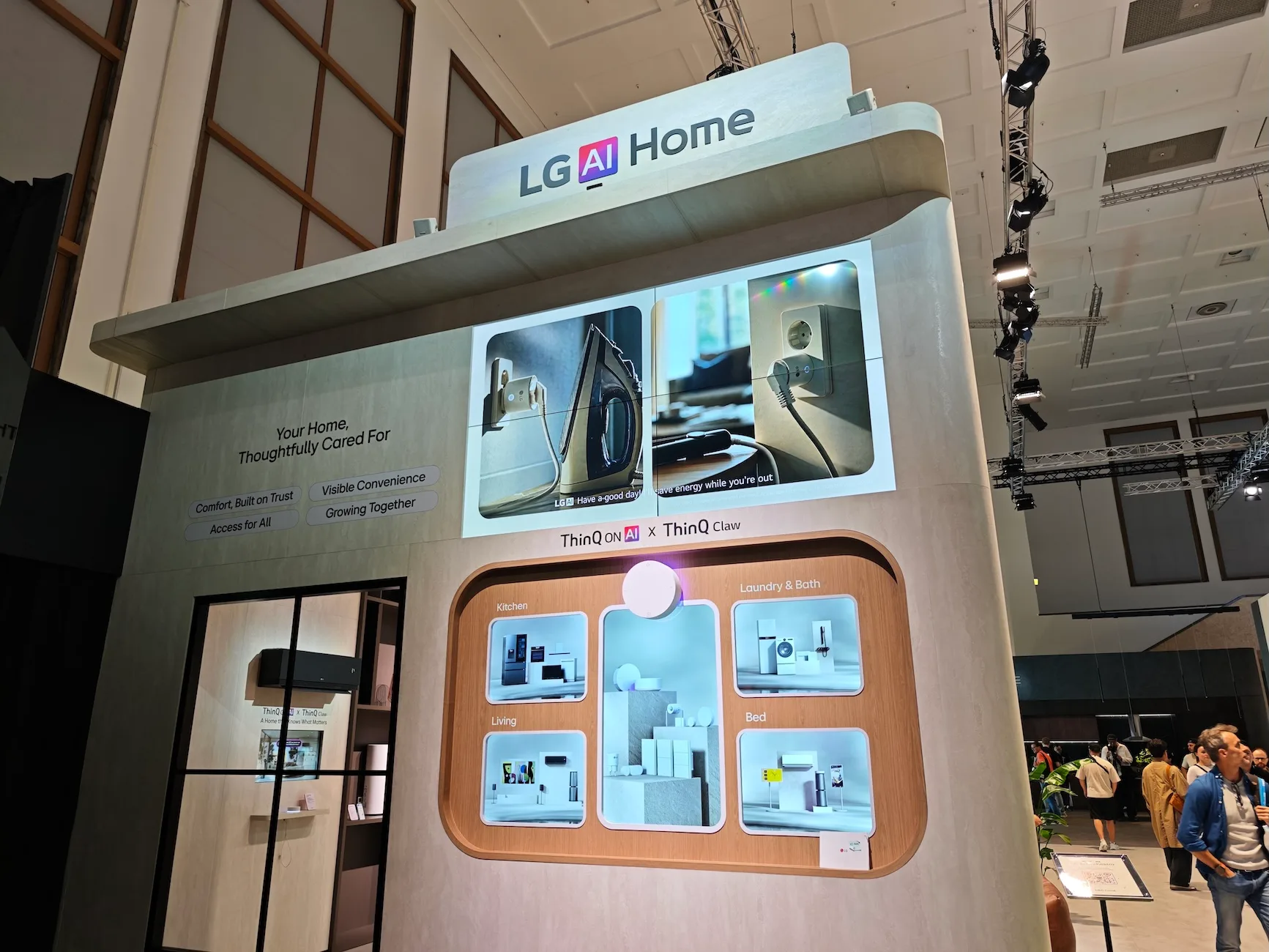
(Photograph source: LeiTech IFA Reporting Team)
Full Automation Leads with Cleaning Appliances
For many consumers, cleaning robots represent their first exposure to robotics—especially robotic vacuum cleaners, a highly representative category. These devices have undergone continuous iteration and long-term refinement within home environments. When discussing “robots entering homes,” they remain indispensable. This year’s IFA hosted numerous household robotics brands.
1. Roborock: Vacuuming and stair-climbing—smart cleaning enters the 3D era.
At Roborock’s booth, we saw the global debut of RockAqua P1, its new pool-cleaning robot capable of climbing from pool floors up pool walls—even cleaning shallow platforms just 15 cm deep.
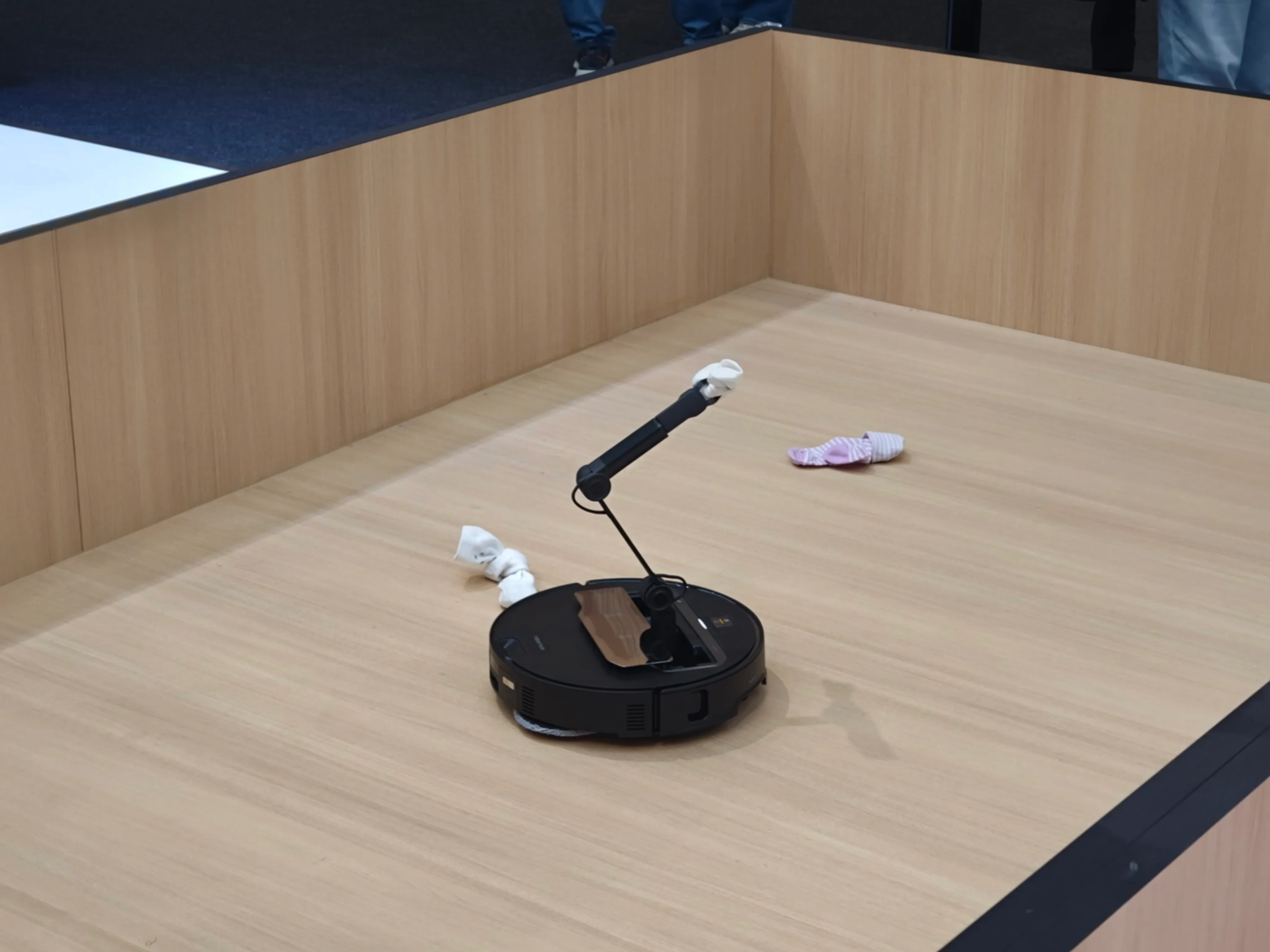
Beside it stood G-Rover, a wheeled-and-legged robot vacuum able to clean stairs, and the G30 Space Explorer Edition, equipped with a five-axis folding biomimetic robotic arm. This arm can grasp and reposition scattered small objects—a demonstration Roborock positioned as heralding the arrival of 3D-space cleaning and embodied intelligence.
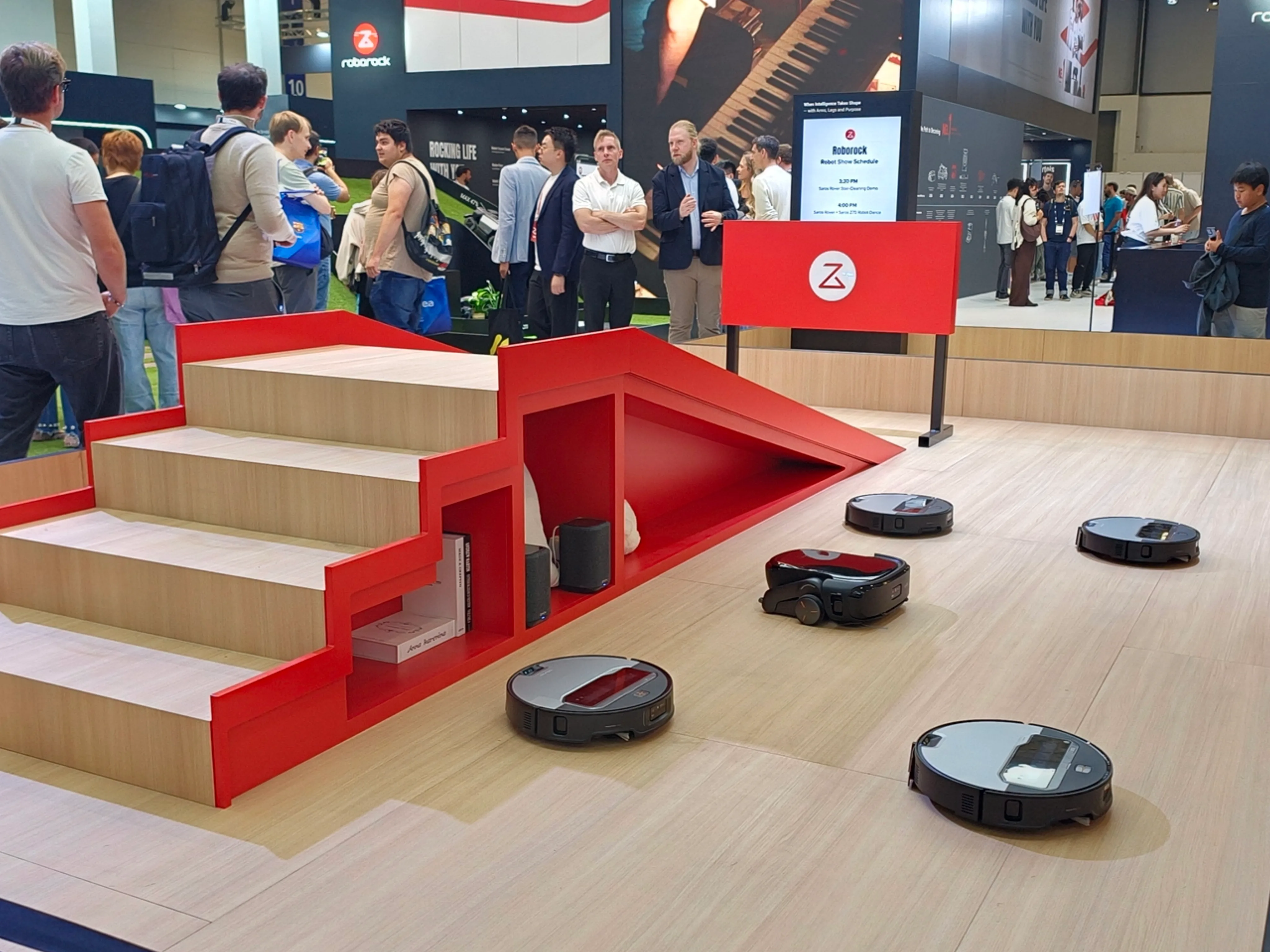
(Photograph source: LeiTech IFA Reporting Team)
2. Ecovacs: Full-family lineup—comprehensive coverage across all scenarios and surfaces.
Ecovacs expanded its scope significantly, anchoring its IFA presence around the theme “Whole-Scenario Home Service Robots”: floor cleaning via Deebot; vertical-surface cleaning via Winbot; outdoor mowing and pool cleaning via GOAT and its pool robot; and indoor companionship via MaoTuan’er. Its pool robot left a strong impression at IFA—equipped with a floating relay station to overcome WiFi and Bluetooth signal loss underwater. Notably, this relay station runs on solar power, eliminating charging needs and enhancing practicality in outdoor settings.
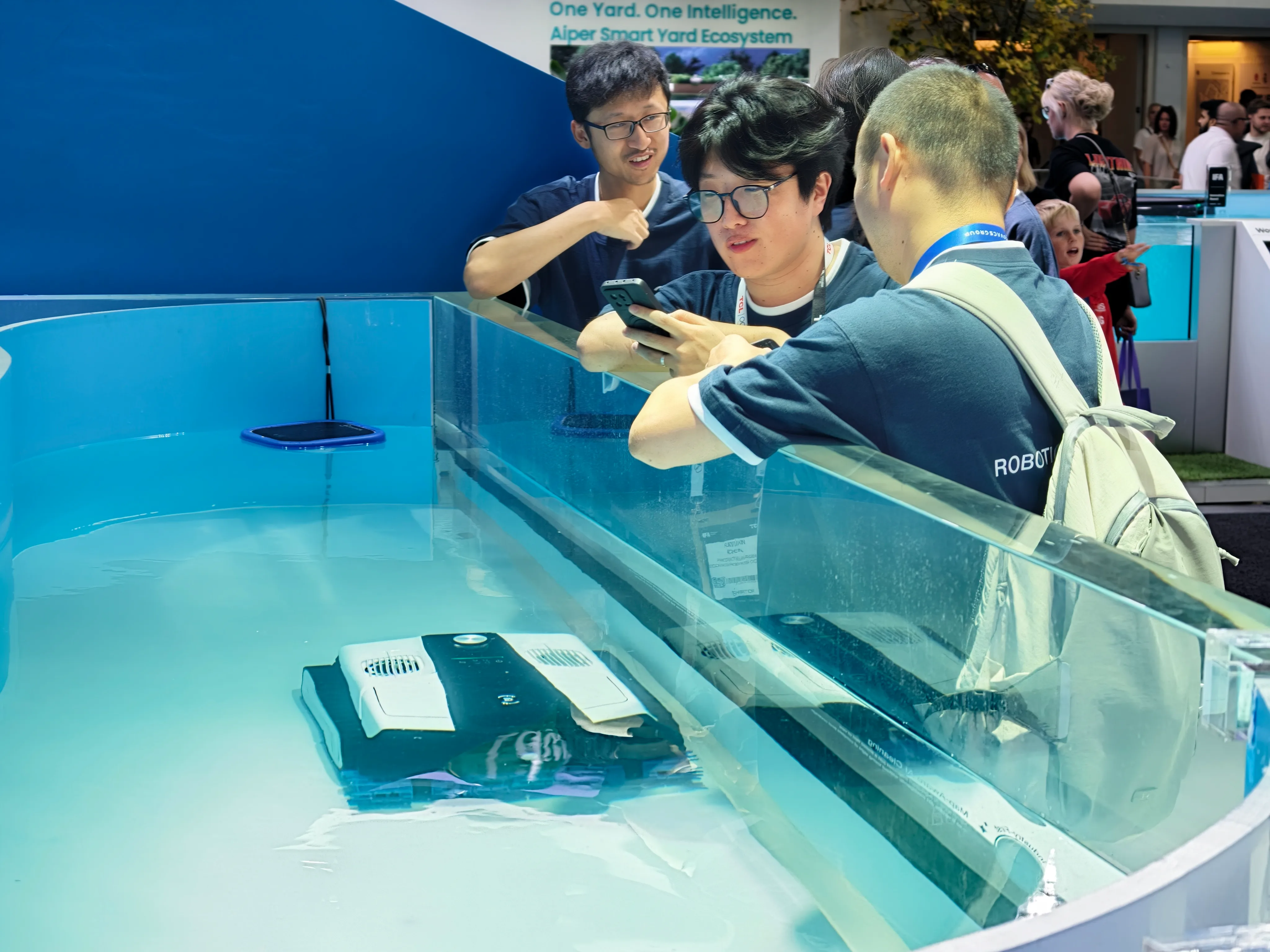
(Photograph source: LeiTech IFA Reporting Team)
Recently, Forbes officially certified Ecovacs as the world’s No. 1 home robotics brand. Its Winbot window-cleaning robot has maintained the top global shipment volume for 13 consecutive years. From simply cleaning floors to comprehensively tidying every corner of the home—up, down, and across—Ecovacs has progressively expanded its cleaning portfolio to achieve full coverage of domestic cleaning needs. In this domain alone, Ecovacs is already remarkably close to realizing “zero-chores.”
3. Dreame MOVA: Focused on the garden segment—enhancing lawn care.
NexLawn, a leading intelligent outdoor and garden technology company, showcased its entire refreshed residential garden product portfolio—including DREAME, MOVA, and NexLawn lines—as well as its self-developed third-generation digital LiDAR and flagship commercial-grade products.
Among several high-profile launches, DREAME A4 AWD PRO captured LeiTech’s attention. Equipped with OmniSense 4.0—the fourth-generation fused AI perception system—it integrates 360° 3D LiDAR, AI stereo vision, and Omni RTK centimeter-level positioning, covering contiguous lawns up to 5,000 m².
For many overseas users, gardens—particularly lawns—are integral components of home life. Traditional lawn mowers are time-consuming, labor-intensive, and difficult to operate. Lawn-mowing robots directly address these real-world pain points. Clearly, if NexLawn aims to build a comprehensive “robots-in-the-home” product series, robotic mowers are an essential pillar.
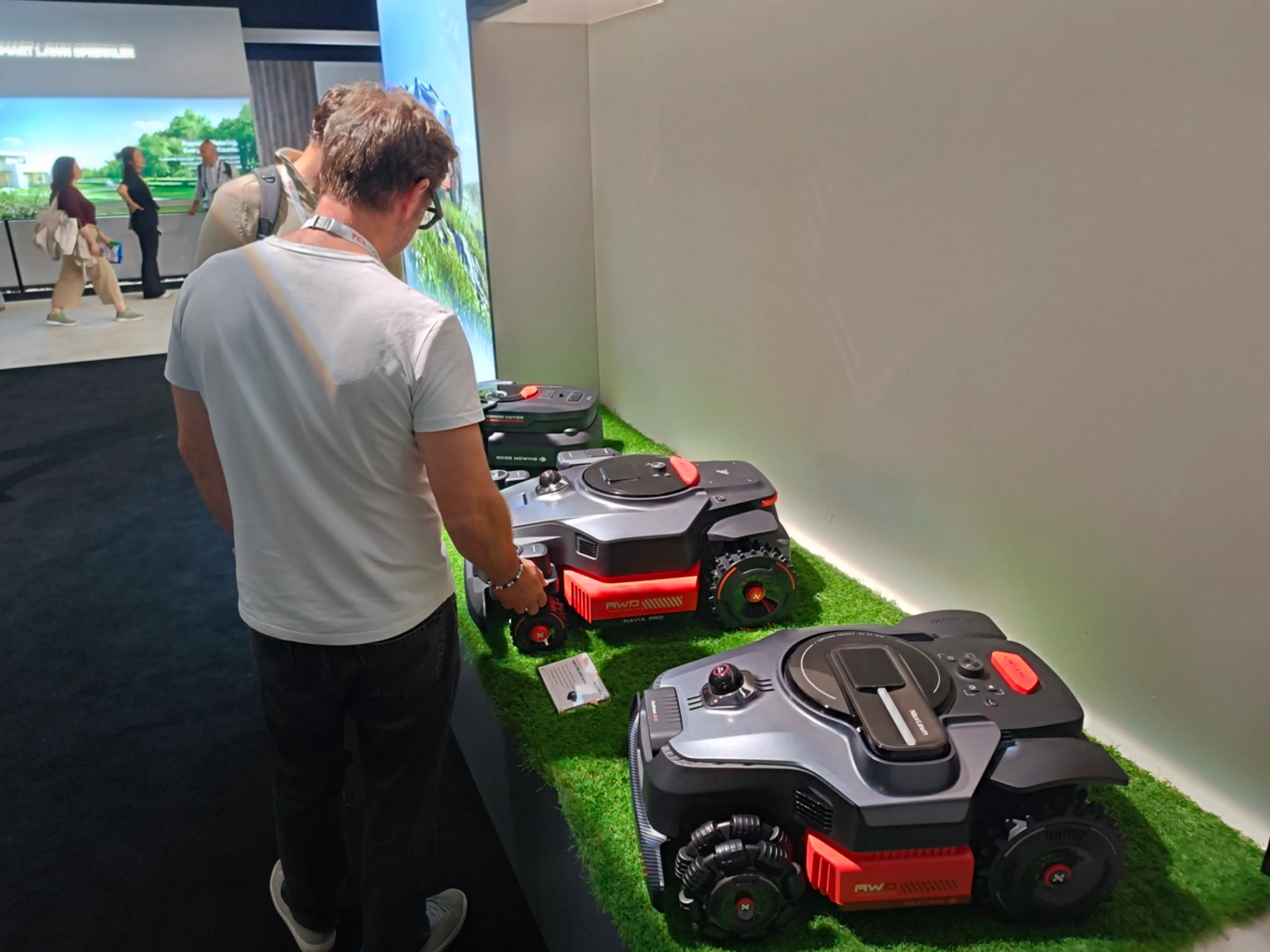
(Photograph source: LeiTech IFA Reporting Team)
4. Dreame: From 2D vacuuming to 3D operation—expanding cleaning coverage.
Dreame’s booth featured numerous products, with Cyber X—the stair-climbing vacuum—drawing especially high interest. Its six-legged, three-segmented track system climbs inclines up to 42°. In fact, it debuted last year at IFA as a concept model—and Dreame now plans mass production, with European launch scheduled for September at €1,199.
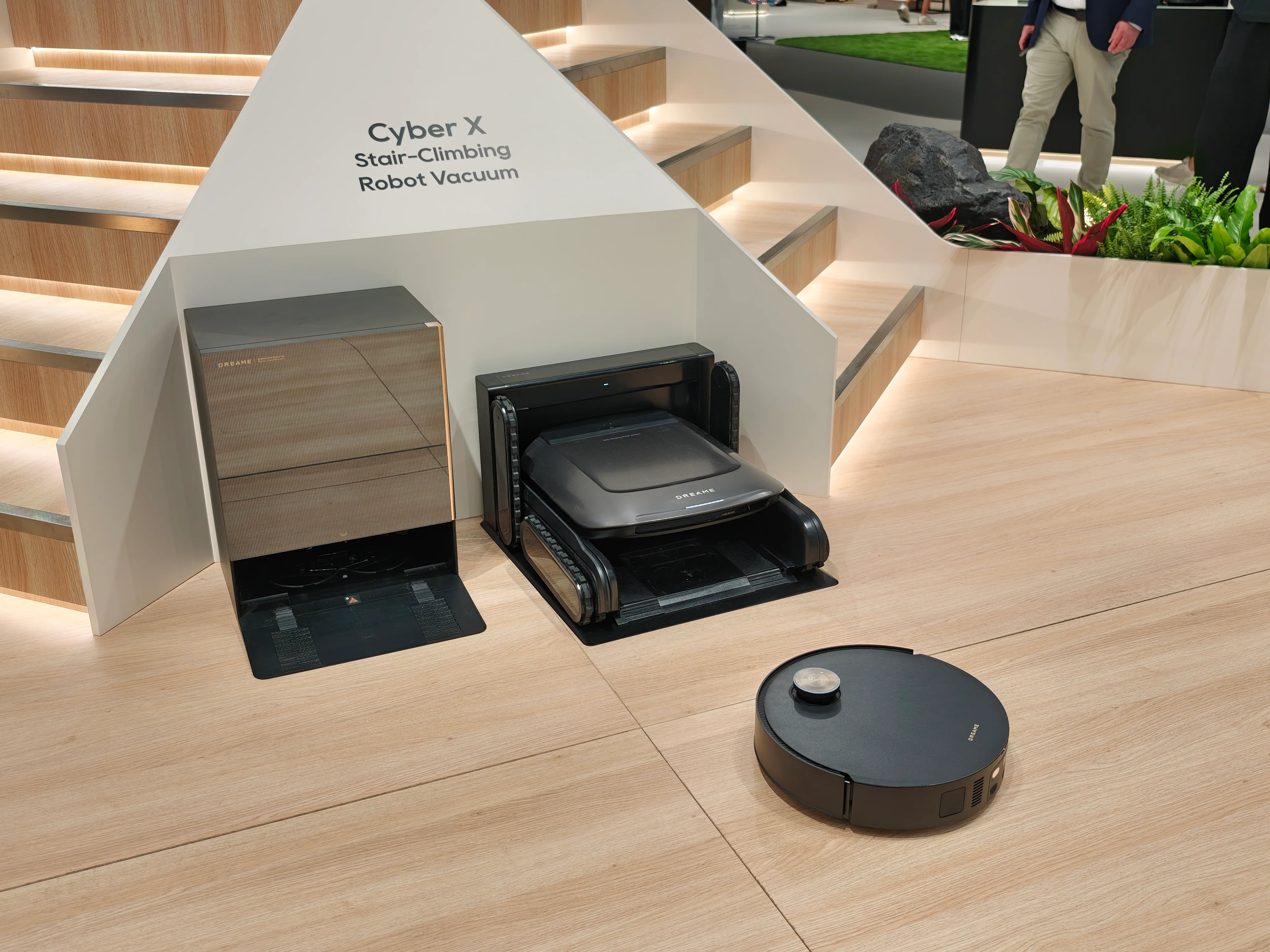
(Photograph source: LeiTech IFA Reporting Team)
Equipping vacuum cleaners with stair-climbing capability leverages embodied intelligence to make them function more like true robots. Climbing stairs dramatically reduces manual intervention during operation—raising automation levels and better fulfilling user expectations for home-cleaning robots.
5. NARWAL: Upgraded full-scenario perception—understanding the environment matters.
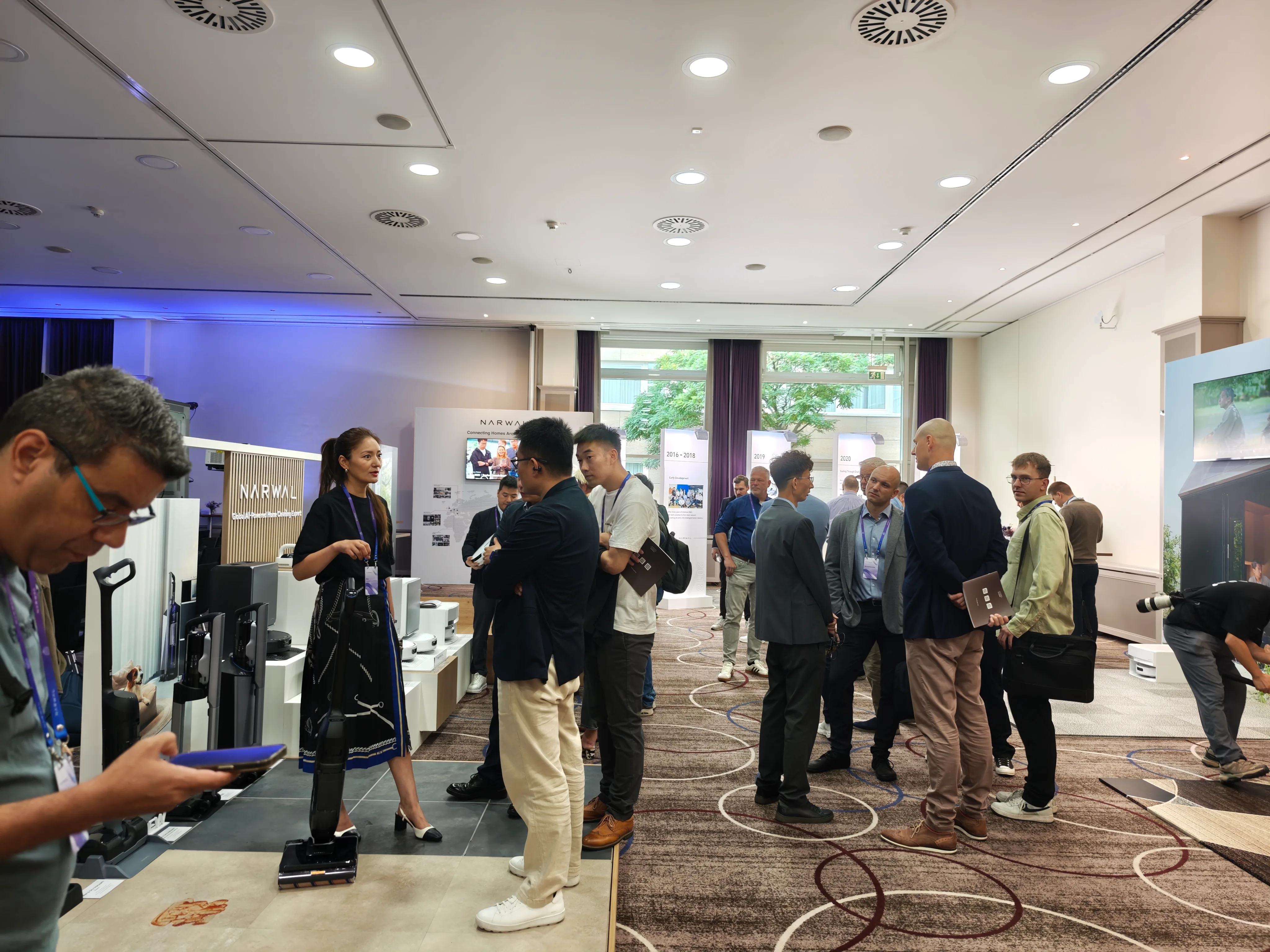
A longtime partner, NARWAL did not maintain a booth inside the IFA exhibition hall. Instead, it held a standalone press conference in Berlin the day before the show opened (September 3), highlighting two new robotic vacuums—the Xiaoyao 003 Series and the 10th Anniversary Limited Edition JX—both powered by NarMind™ Full-Intelligence Scenario Perception System 2.0, developed in-house.
(Photograph source: LeiTech IFA Reporting Team)
Put simply, NARWAL aims to evolve robots from merely “seeing an object” to truly “understanding a scene”: avoiding pet messes, lowering noise automatically in children’s areas, and selecting optimal cleaning strategies for different stains.
Traditional household robots typically use wheeled locomotion. Stair-climbing capability means robots can bridge height differences across home spaces—ascending from ground floor to second floor, or moving seamlessly between rooms. Often, despite using robots or smart appliances, users still fall short of “zero-chores”—because manual device relocation, replacement, or post-cleaning tasks remain necessary.
The logic behind cleaning appliance makers adding robotic arms is straightforward. Robotic vacuums were the first household robots to achieve million-unit sales volumes, giving manufacturers access to massive datasets on home environments and mature navigation/obstacle-avoidance algorithms. Adding a robotic arm is simply equipping this proven system with an extra “hand.” Conversely, cleaning appliances evolving from “cleaning” to “tidying up” represents the lowest-cost pathway to bringing robots into homes: users needn’t change habits, and the hardware remains familiar—only its skillset expands.
Appliances Grow Arms—Is the “Zero-Chores Home” Within Reach?
Beyond “appliance robotization,” another key IFA 2026 trend is robots entering homes—including humanoid and quadrupedal embodied robots exploring roles such as child companions, pets, or household helpers. Due to space constraints, LeiTech’s IFA Reporting Team covered this trend separately in another feature—you can reply “IFA” to LeiTech for the full专题 report.
Viewing the “appliance camp” and “robotics camp” side-by-side reveals an intriguing phenomenon: home appliance giants are endowing machines with “brains,” while robotics firms are equipping machines with “limbs”—yet both are converging on the same destination.
Roborock’s G30 Space features a five-axis robotic arm that, after vacuuming, picks up and neatly places scattered slippers and socks—something traditional vacuums could never accomplish. Neither resembles humans—but both act on our behalf. Meanwhile, appliance giants are quietly growing limbs too. LG’s CLOi robot, demonstrated earlier this year at CES, showed actions including retrieving milk from the fridge, placing bread in the oven, and folding laundry post-wash.
(Roborock G30 Space; Photograph source: LeiTech IFA Reporting Team)
However, these remain future visions—not yet fully realized. Given current product development timelines, further evolution is needed. Today’s frontier is deep autonomy for specialized cleaning robots: vacuums self-washing mops and emptying dustbins, plus adding a robotic arm to pick up small items—capabilities already accessible to mainstream consumers.
As for low-cost, general-purpose humanoid robots, widespread adoption awaits technological maturity and price affordability—in essence, robot hardware costs must align with typical household budgets.
That said, the biggest highlight of IFA 2026 wasn’t any single product. “Zero-chores” has shifted from being a slogan among appliance makers to a tangible trajectory toward reality. For average consumers, this doesn’t necessarily mean rushing to buy a humanoid robot.
What’s heartening is that robotic vacuums are now climbing stairs, pool leaves no longer require manual skimming, and the final step of laundry—folding and sorting—may soon be handled by a robot. Chores won’t vanish overnight—but they’re being incrementally assumed, one task at a time. That’s what makes this year’s IFA genuinely uplifting.
From September 4–8, the world’s largest home appliance and consumer electronics exhibition—IFA 2026—took place in Berlin.
As the “most influential new media outlet for IFA reporting,” widely recognized by the global AI community, LeiTech dispatched its largest and highest-caliber exhibition team to date to Berlin. Employing a “2+N” model—two live hosts, multiple on-site editors, and multiple backend editors—LeiTech delivered real-time, multidimensional, and first-hand coverage of IFA 2026, focusing on AI Agent integration with appliances and hardware, robotics technology’s convergence with home scenarios, emerging trends in vehicle-home-digital life ecosystems, and Chinese brands’ global-stage presentations.
LeiTech’s IFA 2026 Reporting Team is actively covering the event in Berlin—stay tuned!