
 雷科技
雷科技






On September 4, IFA 2026 officially opened in Berlin, Germany. As one of the world’s top three consumer electronics trade shows, this year’s IFA attracted over 1,900 exhibitors from 49 countries and regions, under the theme “The Future is Now.” The LeiTech IFA26 reporting team (ID: LeiTech) is on-site in Berlin, delivering comprehensive, immersive, and first-hand coverage of IFA 2026.
This year, embodied AI emerged as a major highlight at IFA, with numerous humanoid robot companies exhibiting. However, due to cost, functionality, and technological maturity constraints, humanoid robots remain distant from mainstream consumer adoption. In contrast, exoskeletons show greater near-term potential for mass-market appeal. At IFA, prominent exoskeleton manufacturers—including Hangmo IRMO, JiKe Hypershell, and Dongsi DNSYS—unveiled new consumer-grade exoskeletons. Trifo’s Tantu NAVEE and lightweight exoskeleton Kengqing VIGX were also actively engaging visitors.

(Photograph source: LeiTech IFA Reporting Team)
Hangmo IRMO: The World’s First Consumer-Grade Vision-Sensing AI Exoskeleton
Let’s begin with Hangmo IRMO.
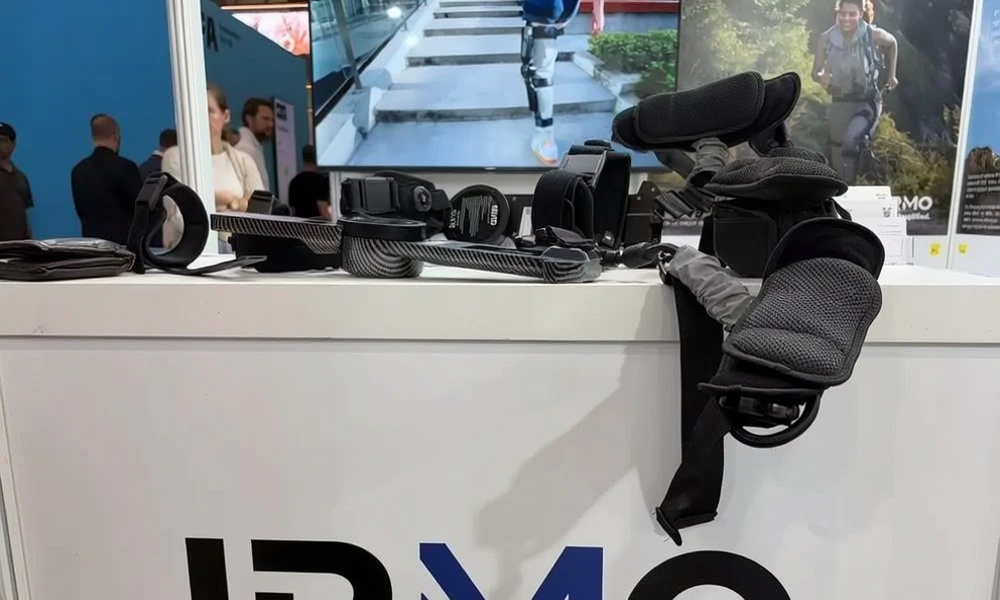
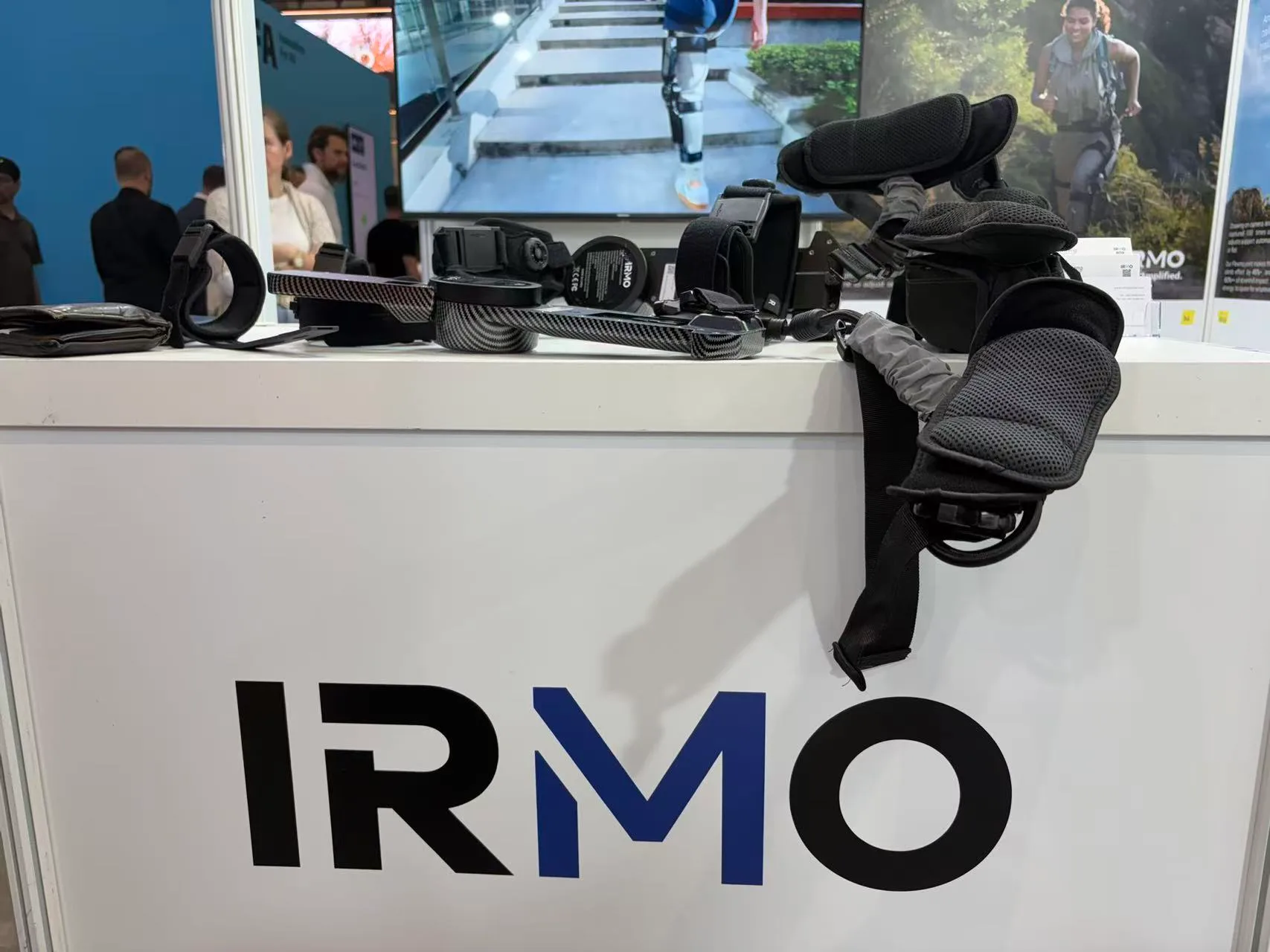
This year, Hangmo brought to IFA its IRMO M1 series—winner of the 2026 German Red Dot Design Award—available in three variants: Pure, Pro, and Ultra. Among them, the Ultra edition stood out most to the LeiTech reporting team.
(Photograph source: LeiTech IFA Reporting Team)
In many people’s minds, exoskeleton devices are often perceived as rigid and heavy. Indeed, early-generation products frequently employed rigid frames and large motors, primarily targeting medical rehabilitation and industrial material handling applications.
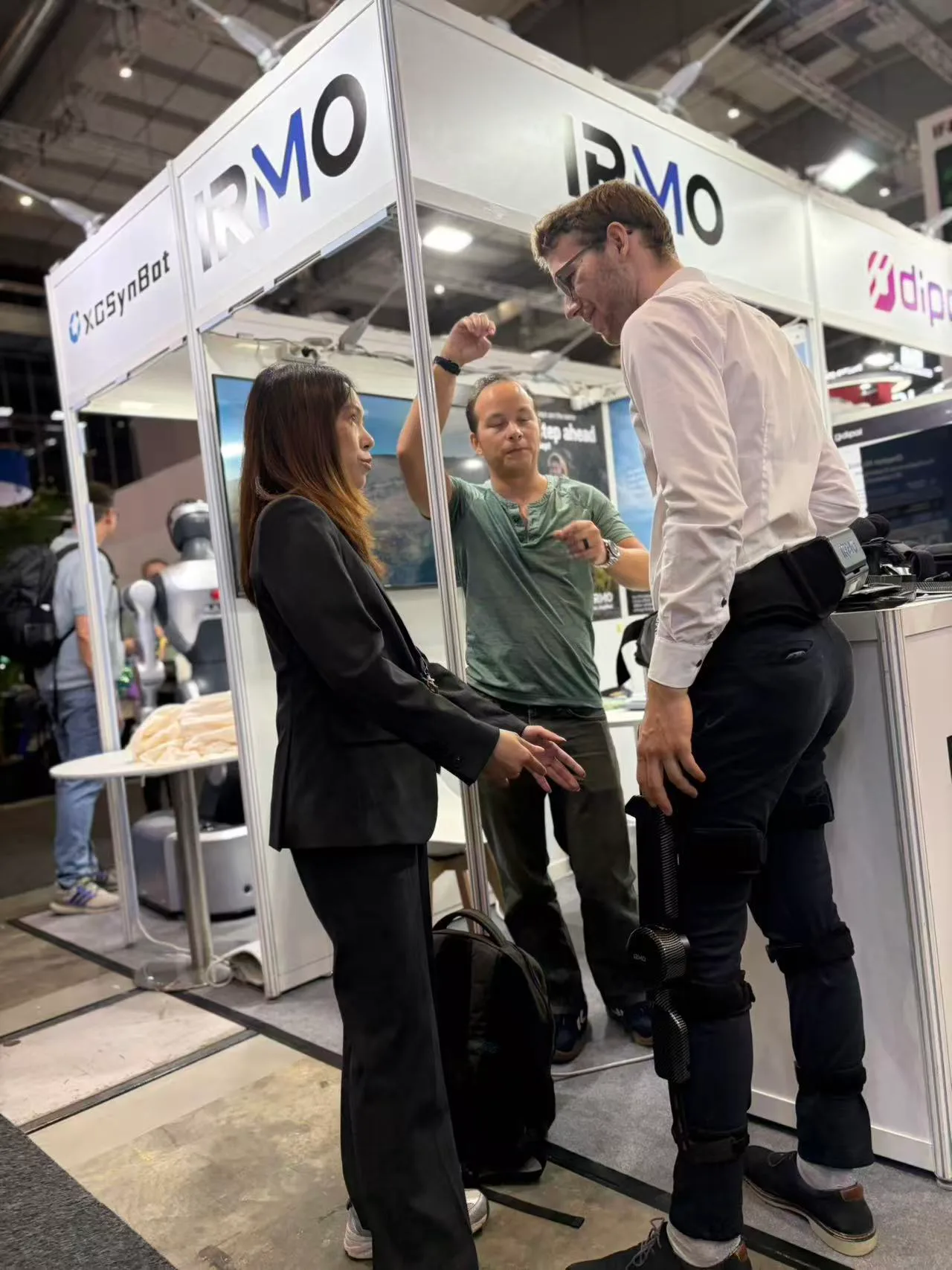
IRMO M1 Ultra breaks this mold: it uses high-strength carbon-fiber composite materials, with a total weight of approximately 2.2 kg. When worn, it produces virtually no downward pull sensation and integrates seamlessly with the user’s body.
Achieving this weight for an exoskeleton is truly impressive.
But that’s not all—the most intriguing feature of this product is its integrated camera and LiDAR system. IRMO M1 Ultra continuously scans the terrain ahead—identifying flat ground, inclines, stairs, etc.—and, combined with its EPA embodied intelligence algorithm, performs millisecond-level analysis of terrain and gait to autonomously adjust power output.
(Photograph source: LeiTech IFA Reporting Team)
This design is genuinely important. Earlier this year, while covering AWE, I tested similar products and immediately noticed a critical issue: “It’s easy for machines to assist you—but hard for them not to hinder you.” Some products create noticeable drag; others even force users to adapt their natural rhythm to the machine—a complete inversion of what assistance should be.
Hangmo takes the opposite approach: enabling the machine to adapt to the user—and to the terrain. That’s exactly how it should be!
According to official information, Hangmo’s self-developed Flexmo intelligent bionic joint dynamically adjusts joint stiffness based on real-time load conditions—providing active assistance when needed and automatic shock absorption upon impact.
This allows the IRMO M1 series to deliver up to 45% assistance to the knee joint during uphill walking, downhill descent, load-bearing, or long-distance travel, reducing motion impact by up to 60%. Its M1 Ultra powertrain delivers up to 1,000 W—sufficient for diverse terrains—and offers 6–8 hours of battery life, meeting full-day usage needs.
In terms of market performance, IRMO M1 has already raised over $1.1 million USD on Kickstarter—far exceeding Hangmo’s original target. Clearly, IRMO M1 has garnered recognition among consumers in Europe and North America, where hiking, trekking, and other outdoor activities enjoy broad popularity.
(Photograph source: Hangmo)
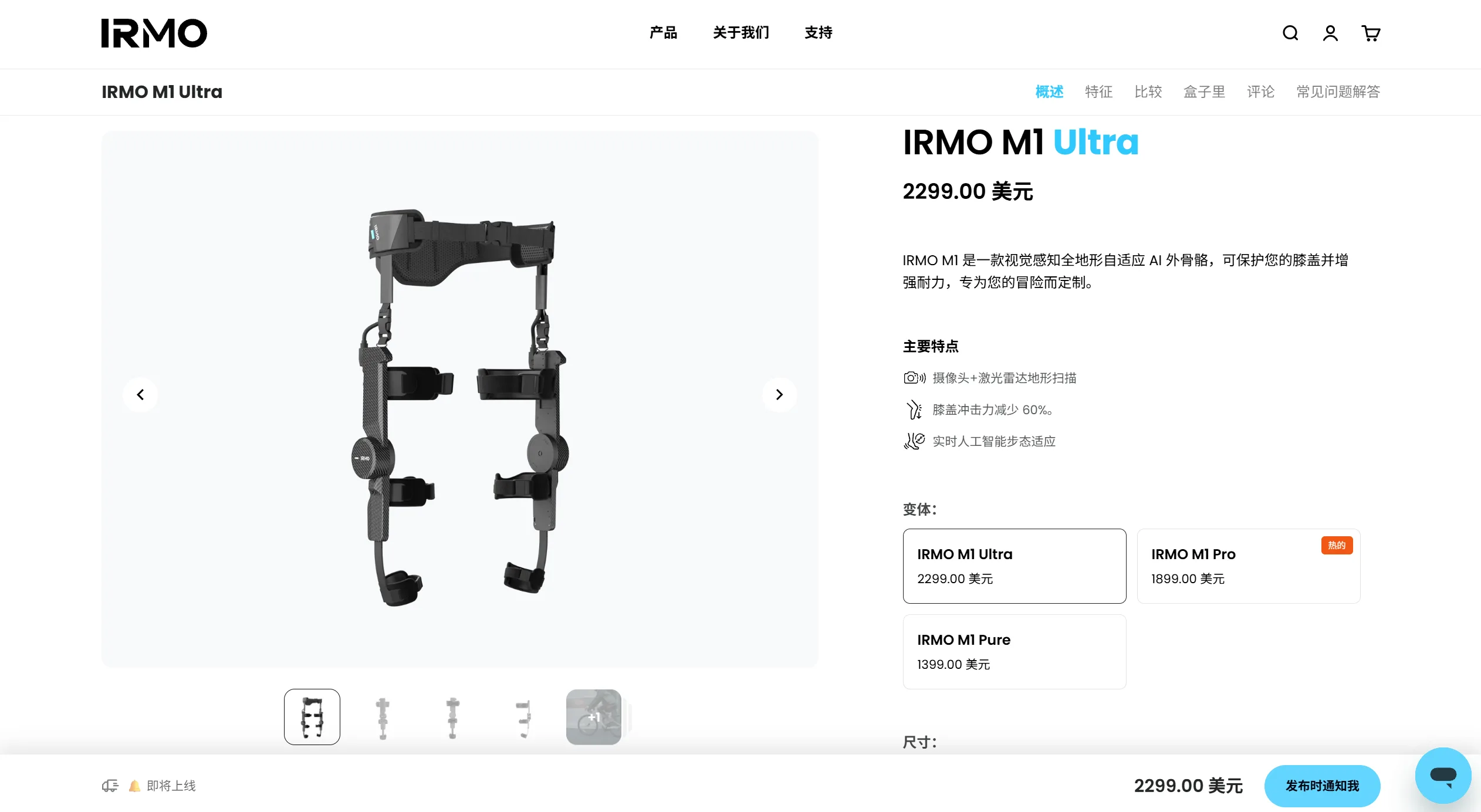
Pricing: M1 Pure retails overseas at $1,399, Pro at $1,899, and Ultra at $2,299.
In my view, Hangmo IRMO M1 successfully departs from traditional exoskeletons’ bulkiness—using lightweight carbon-fiber construction to minimize wearability burden, and combining flexible joints with terrain-sensing algorithms to enable proactive assistance and shock buffering. This unconventional yet well-executed approach is highly commendable.
Perhaps the commercialization of embodied intelligence need not be confined solely to humanoid robots.
JiKe Hypershell: Four Active Joints, Doubled Power Output
If two-joint assistance works well, what if we double the number of joints?
Well, indeed—at IFA 2026, JiKe Technology unveiled precisely such a product: the JiKe Halo Full-Lower-Body Exoskeleton.
For context, most consumer-grade exoskeletons currently available on the market provide only hip assistance—i.e., motorized joints mounted bilaterally on the upper thighs to help lift legs and reduce walking effort.
The JiKe Halo differs fundamentally: it extends assistance across the entire lower limb. Leveraging the Hypershell Unified integrated architecture, its four active joints—two at the hips and two at the knees—operate synchronously within a unified kinematic logic, enabling continuous force transmission along the path of “hip → thigh → knee → calf.”
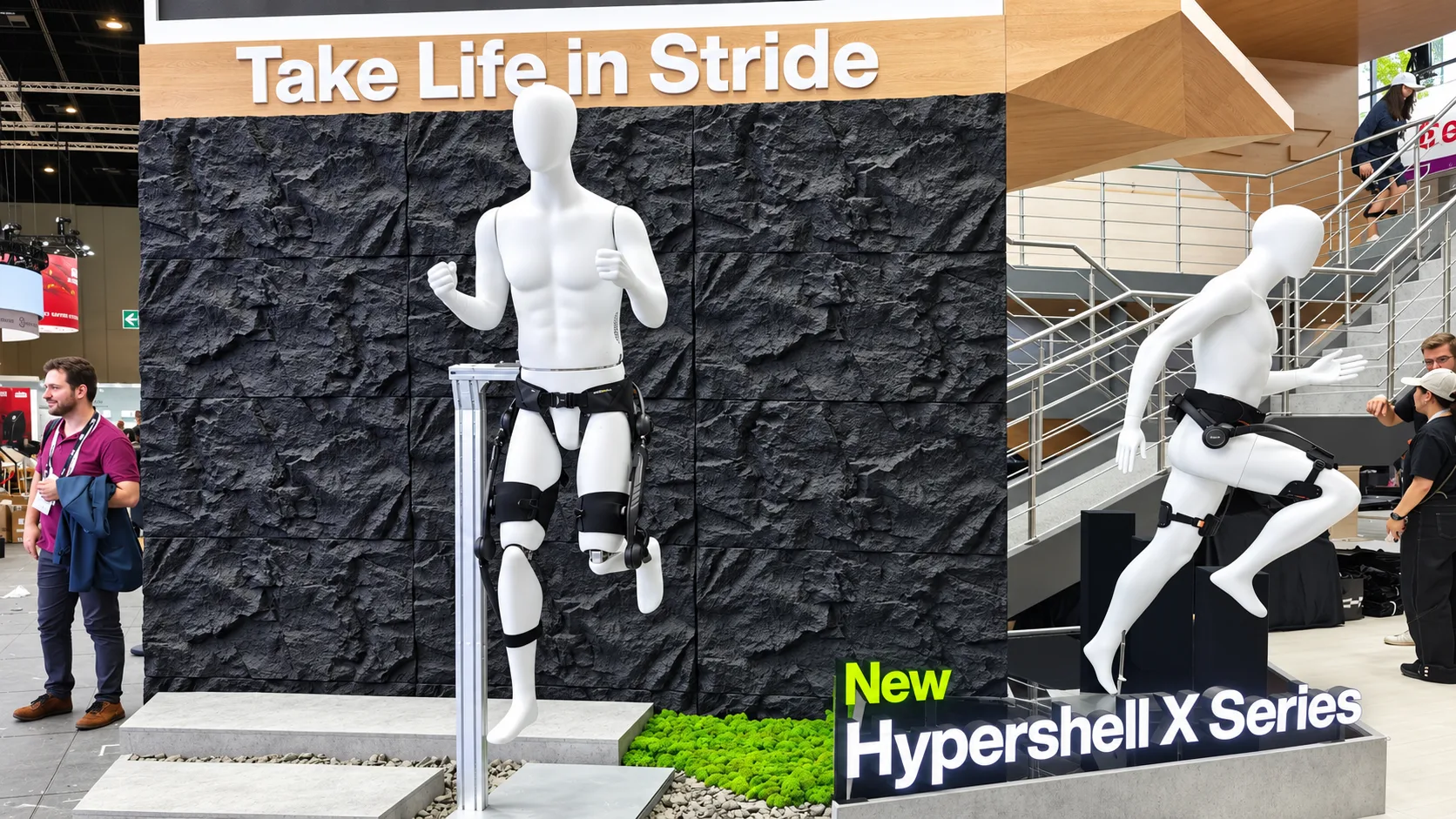
(Photograph source: LeiTech IFA Reporting Team)
You might wonder: What distinguishes hip from knee assistance?
From a quick review: Hip assistance lifts the outer thigh near the gluteus maximus, mainly aiding leg-lifting motion. Knee assistance supports knee extension and landing impact absorption; official test data shows it reduces peripatellar muscle fatigue by up to 40% during squatting and standing.
For instance, when climbing hills, it pushes upward as you lift your leg; when descending, its knee motors cushion landing impact—so your knees won’t start protesting halfway up the mountain.
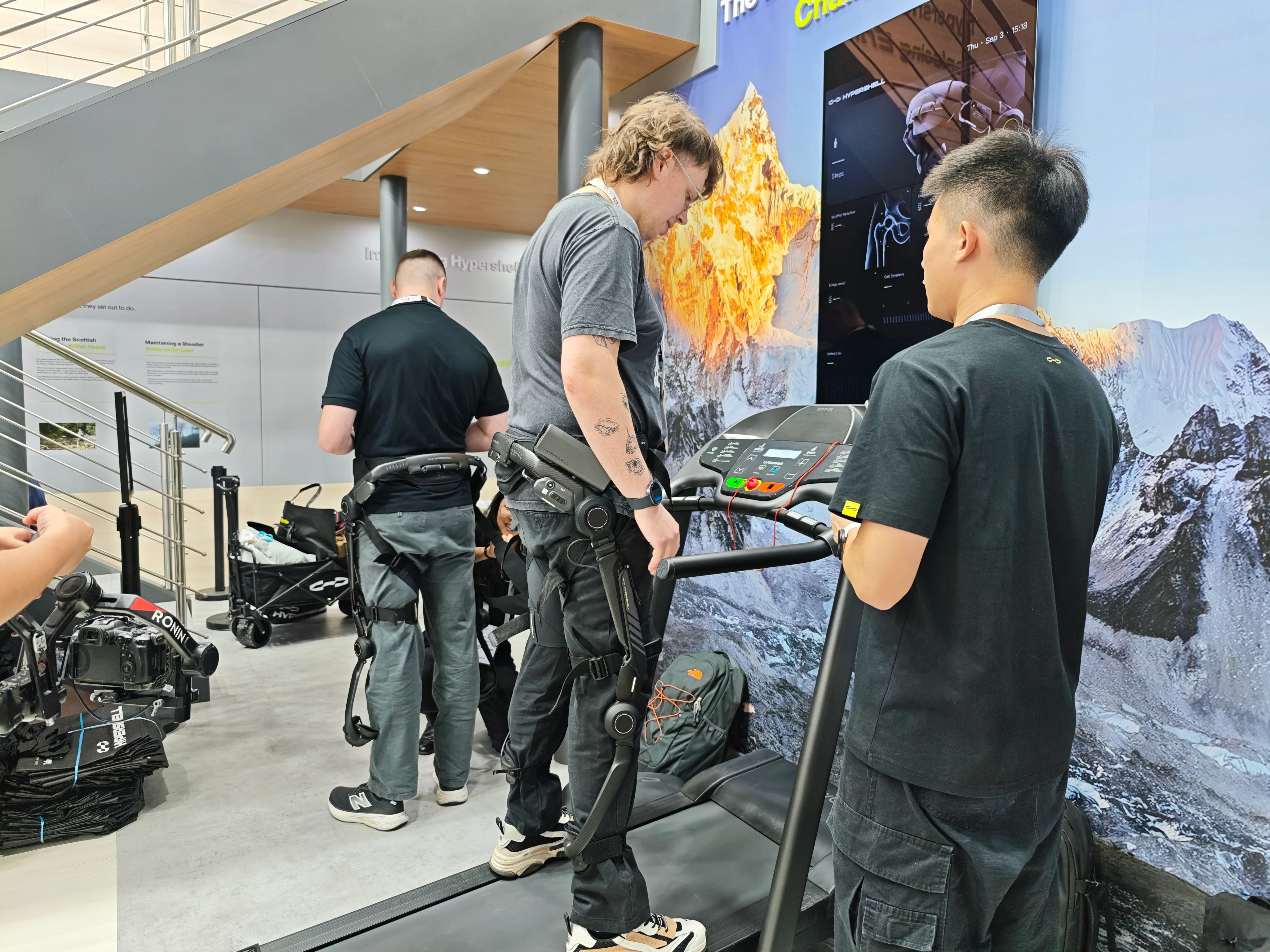
(Photograph source: LeiTech IFA Reporting Team)
And this features four motors! The Halo’s HyperDrive Pro quad-motor system achieves a peak output power of 1,490 W, supported by over 30 sensors and the HyperCore Pro AI chip—anticipating user intent ~0.2 seconds in advance and adjusting assistance up to 2,500 times per second.
The official firmware also includes an AI agent named “Shelly,” which responds to voice commands for assistance adjustment and route planning—and even guides first-time users through setup and operation.
Imagine going hiking with friends on the weekend: Others are already clutching their knees and gasping halfway up the trail—while you stride confidently onward wearing Halo. It’s almost like “mortal flesh rivaling divine strength.”
Yet weight remains a challenge: Though Halo uses carbon fiber and aluminum alloys to achieve a total weight of just 2.6 kg—and folds down to ~8 liters, with donning/doffing taking as little as 20 seconds—adding several kilograms to your legs inevitably compromises comfort compared to regular trousers. Its included battery supports up to ~20 km of flat-ground walking; extended outdoor use still requires careful monitoring of remaining charge.
Then there’s the domestic early-bird price of ¥15,999…
Yes—becoming Iron Man still entails a significant economic threshold.
Dongsi DNSYS: Dual Hip-and-Knee Assistance—Pursuing a Professional Path?
Dongsi DNSYS introduced two models this year: the hip-assist X1 and the knee-assist Z1.
Per on-site staff, X1 is optimized for long-distance trekking, whereas Z1 targets climbing-intensive scenarios such as hill ascents and stair climbing.
First, the X1: a conventional hip-exoskeleton. Its Carbon version weighs just 1.6 kg for mechanical components alone, with a peak power output of 900 W. Officially, it claims to boost thigh strength by up to 45%.
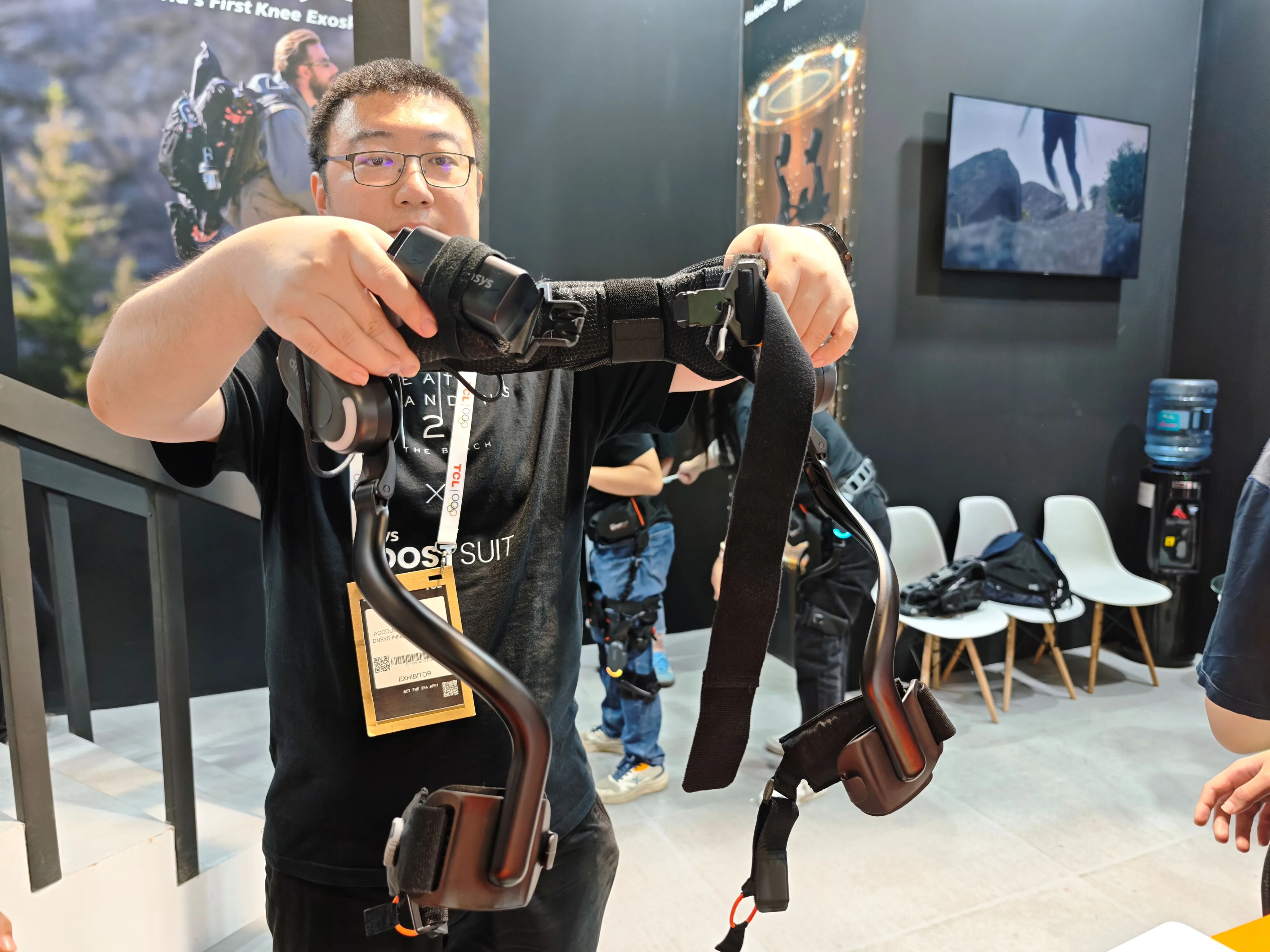
(Photograph source: LeiTech IFA Reporting Team)
Here’s the key detail: X1 adopts a simple, external battery design—enabling ultra-fast battery swaps. The manufacturer claims a full replacement can be completed in just three seconds. Each battery weighs only 240 g and supports up to 15 km of assisted travel, featuring regenerative braking capability on descents.
If 15 km of range seems insufficient, you can opt for the Carbon Pro version—which comes standard with two swappable batteries.
Here lies a point of contention: Despite being branded “Pro,” this model cannot simultaneously draw power from both batteries. Why does this warrant criticism? You’ll see why shortly.
Now, the Z1: a dedicated knee-assist exoskeleton employing a three-point support structure to transmit motor torque to the posterior thigh and calf. Both Standard and Pro versions deliver a peak power of 900 W, offering up to 50% assistance to thigh and calf muscles and counteracting loads of up to 35 kg.
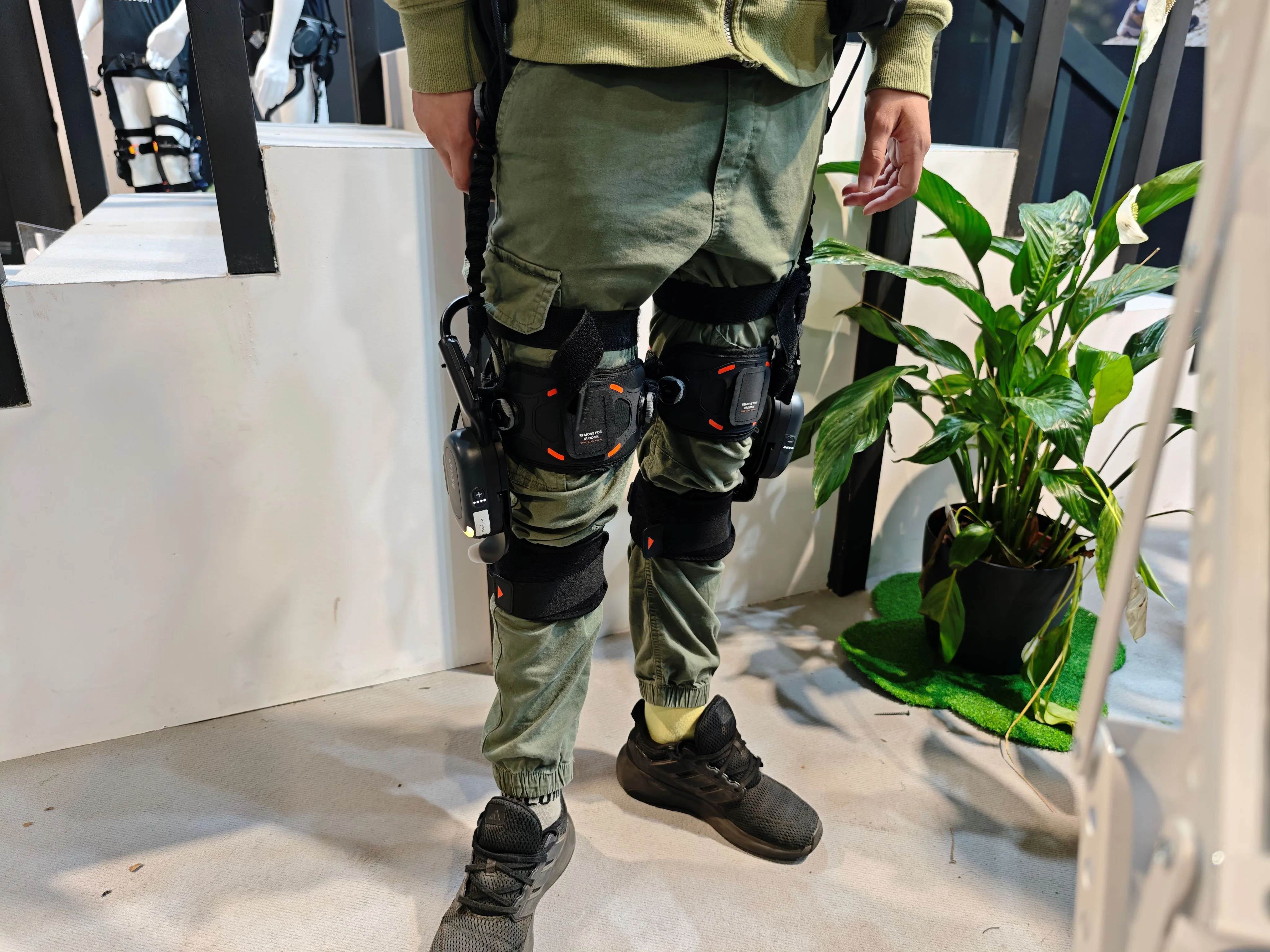
(Photograph source: LeiTech IFA Reporting Team)
Though advertised as weighing only 680 g per side, the Z1 still requires mounting a separate battery pack on your waist.
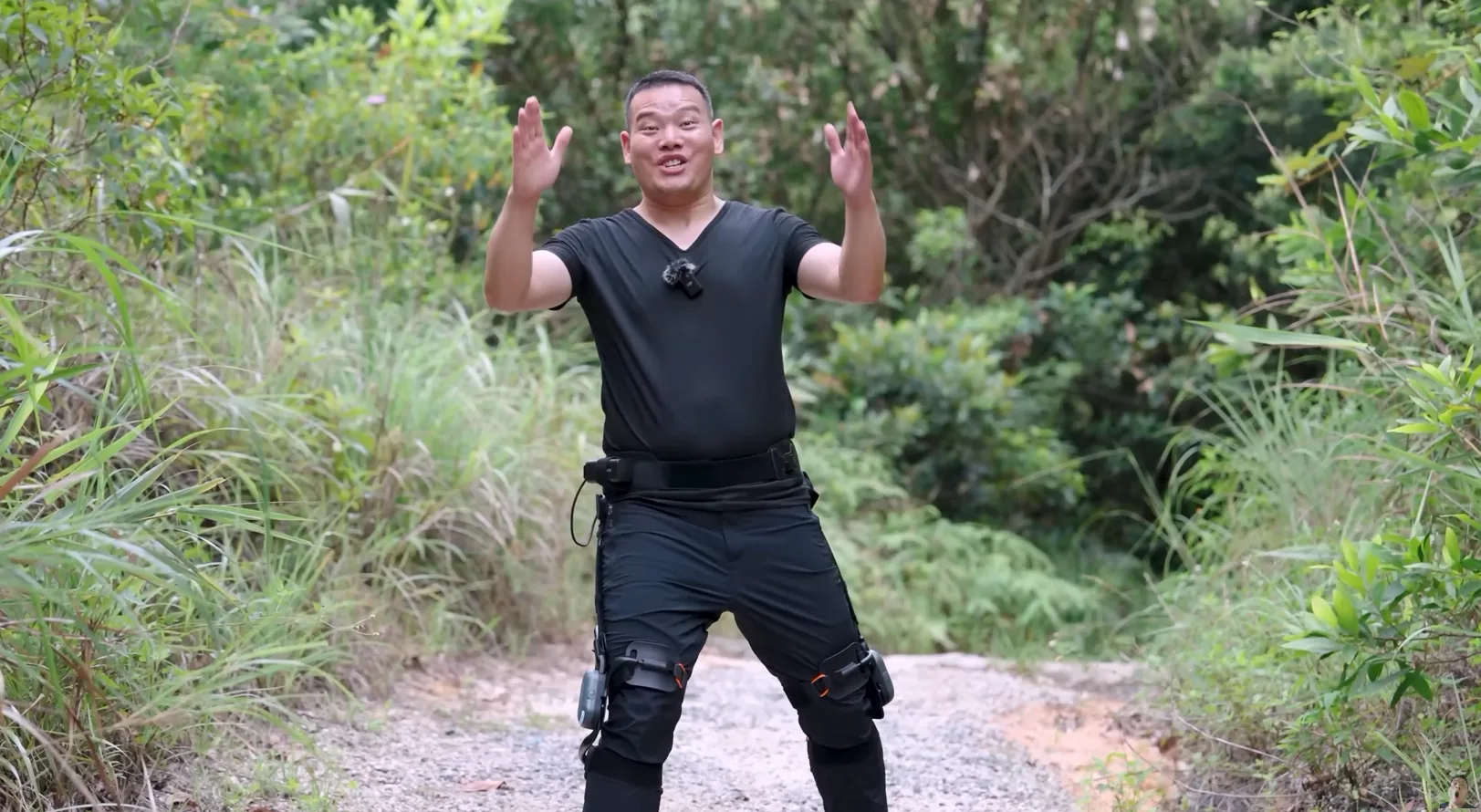
(Photograph source: YouTube)
You might think things look reasonable so far—but here’s the kicker: X1 and Z1 can be used together directly!
DNSYS officially supports X1+Z1 interoperability, enabling synchronized hip-knee coordination and real-time calibration. With X1 handling hip assistance and Z1 managing knee assistance, wearing both units effectively unifies previously discrete assistance into a single, full-leg system—achieving results comparable to JiKe’s Halo via a modular “two-in-one” approach.
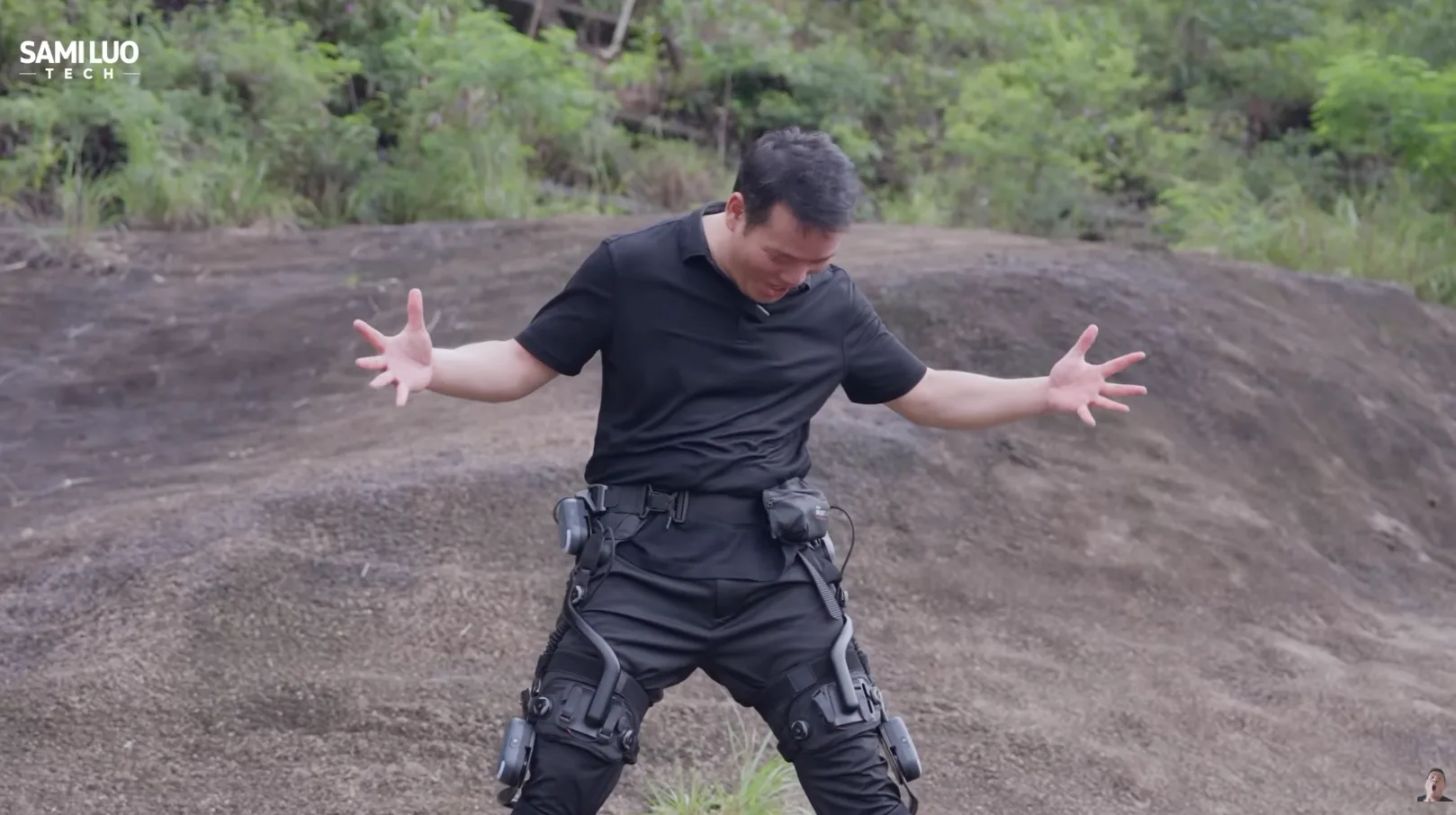
(Photograph source: YouTube)
Sounds great, right? But here’s the catch: Their batteries aren’t interchangeable. Even when operating as a unified full-leg system, X1 and Z1 each require their own independent battery—meaning users must carry two separate batteries simultaneously.
If you find 15 km insufficient, adding spares brings you to a minimum of four batteries...
Pricing: X1 Lite starts at $689, Z1 at $1,099; Pro versions command higher prices.
Notably, DNSYS has collaborated with the acclaimed video game *Death Stranding*, contributing significantly to its international visibility. Many foreign attendees visited specifically to try the devices—some arriving in wheelchairs, viewing this technology as hope for future mobility restoration.
That said, DNSYS’s official website states clearly that both X1 and Z1 are classified as mobility aids—not medical or rehabilitation devices. Their intended users must possess independent ambulation ability, normal leg-lifting capacity, and stable balance. For these users, realizing such aspirational hopes likely awaits further technological advancement.
Tantu NAVEE EXO S Pro: Supports 10 Sports Modes, Available for Immediate Purchase
Seeing Tantu NAVEE appear on the exoskeleton list was my first reaction:
Wait—aren’t they known for electric scooters?
Indeed, they entered the exoskeleton market this year, officially launching their first consumer-grade AI exoskeleton: the EXO S Pro.
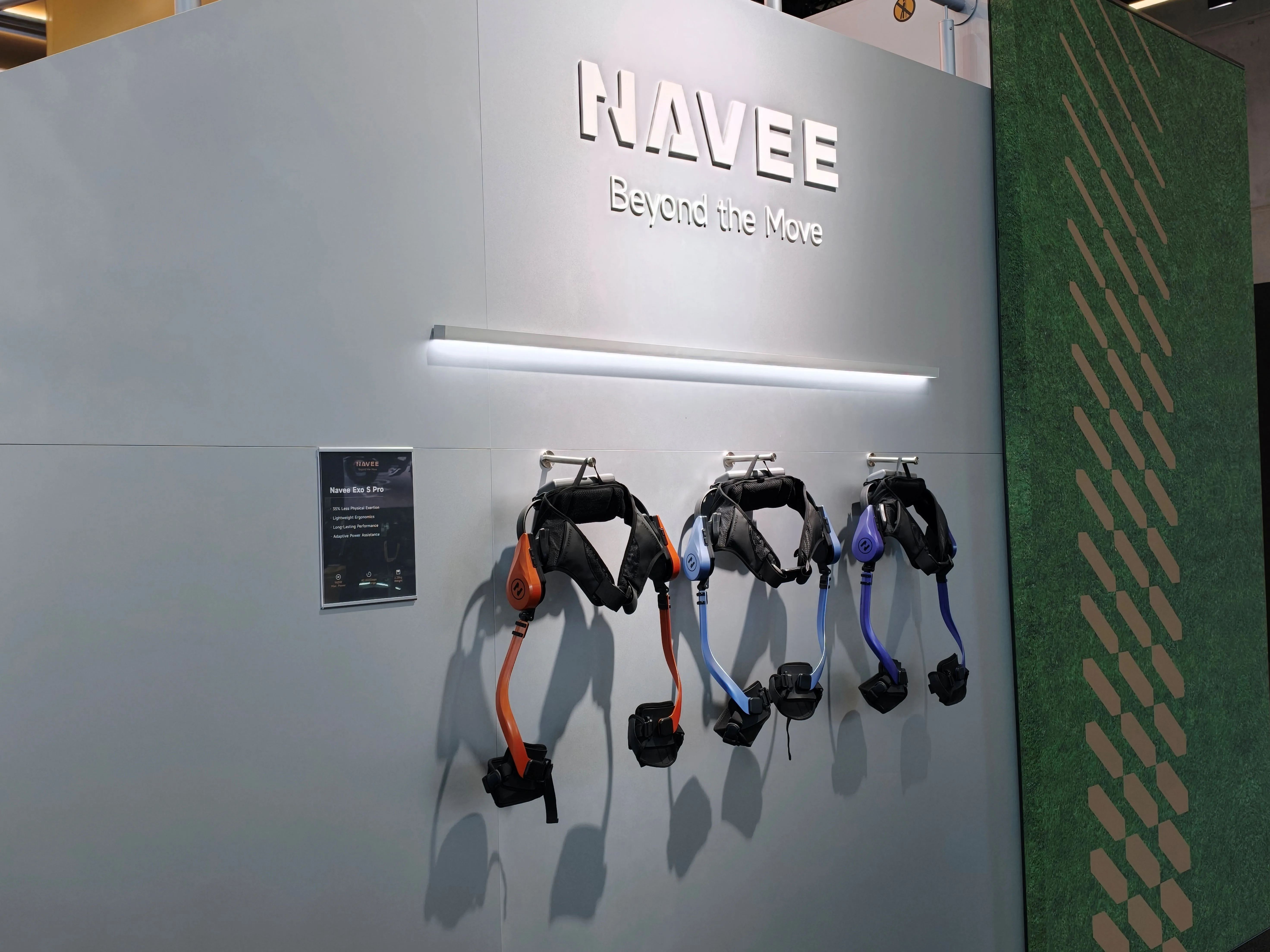
(Photograph source: LeiTech IFA Reporting Team)
The EXO S Pro employs hip-assist architecture. Its bare frame weighs 1.8 kg; including battery and straps, total weight reaches ~2.2 kg. Its frame combines carbon fiber and aerospace-grade aluminum, folding to dimensions of 460 × 290 × 140 mm. Its powertrain delivers a peak power of 960 W and maximum torque of 32 N·m—specifications that are anything but modest.
It uses a 5,000 mAh detachable battery, rated for up to 40,000 steps or 25 km of assisted travel. It supports up to 65 W fast charging—fully recharging in roughly 1.5 hours.
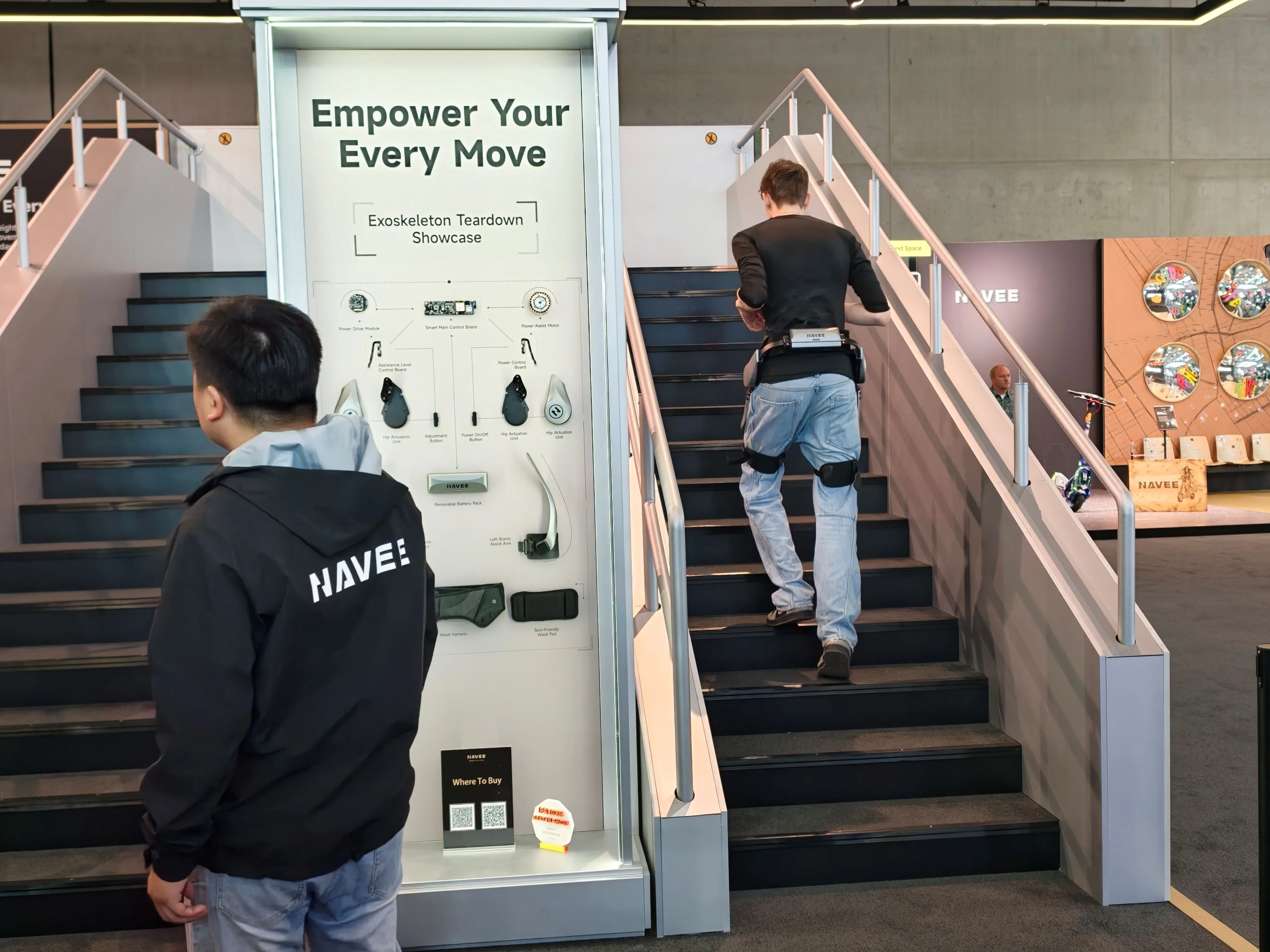
(Photograph source: LeiTech IFA Reporting Team)
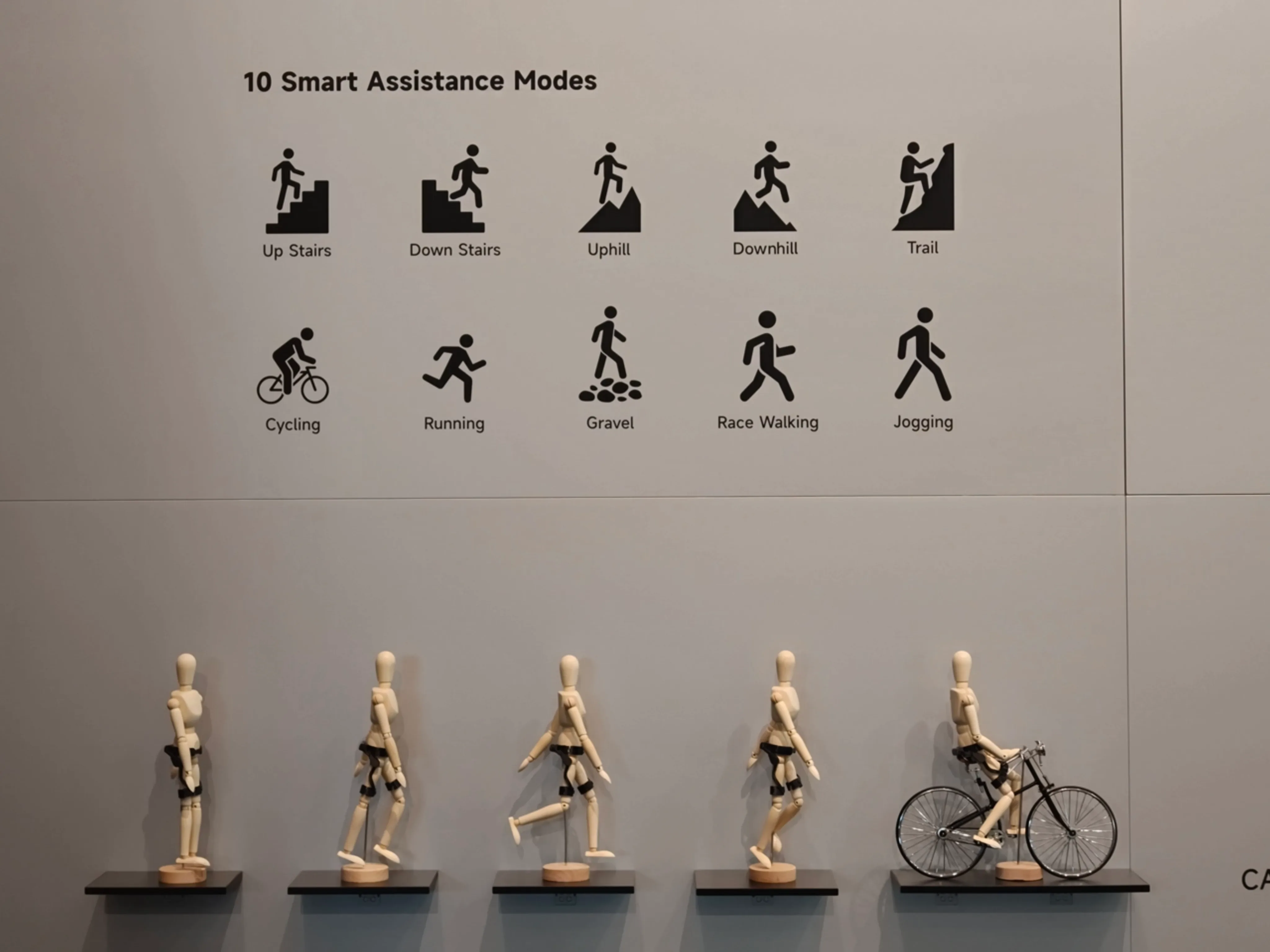
Its main selling point lies in its 10 pre-programmed activity modes: ascending stairs, descending stairs, ascending slopes, descending slopes, off-road, cycling, running, gravel paths, race walking, and jogging. Using multimodal sensors, the device detects speed, posture, and terrain in real time to dynamically adjust assistance—with official response latency now reaching the millisecond level.
Frankly, I paused when I saw “Cycling Mode.” After all, riding a bicycle while wearing an exoskeleton isn’t an intuitive scenario for most people.
(Photograph source: LeiTech IFA Reporting Team)
So I investigated further—and discovered that cycling has, in fact, drawn increasing attention from consumer exoskeleton makers in recent years. Beyond NAVEE, brands like JiKe and DNSYS are likewise tailoring systems for hiking, cycling, and other outdoor pursuits—claiming their software recognizes pedaling motion and coordinates hip motors to augment leg power.
Upon reflection, this makes perfect sense. I occasionally cycle to work—and in Guangzhou’s hilly Baiyun District, the terrain is relentlessly undulating. Especially during consecutive climbs or headwinds, every pedal stroke feels like repaying a debt. This device could meaningfully conserve energy: I’d pedal manually when feeling fresh for exercise—and switch to exoskeleton assistance when fatigued—ensuring I never miss the joy of “chasing the wind” and connecting with nature.
Additionally, the device supports 20 W reverse fast charging.
While not pioneered by NAVEE, most competing consumer exoskeletons offer only emergency or dock-based reverse charging. NAVEE explicitly enables 20 W bidirectional power transfer. Should your smartphone run low mid-hike, you really can draw power directly from your mechanical leg—though returning home with a depleted exoskeleton would be rather unpleasant.
Pricing: The EXO S Pro is currently listed at €1,099 on NAVEE’s European website, with immediate ordering available.
Kengqing VIGX: Foldable Exoskeleton, Portable as a Water Bottle
VIGX—Kengqing Technology—introduced its next-generation π6 X at IFA.
You may have heard of Kengqing before: its exoskeleton rental services are now deployed across popular Chinese scenic areas—including Mount Tai, Zhangjiajie, Mount Heng, and Mount Hua. Interested visitors can scan QR codes onsite and take an exoskeleton for a hike.
A colleague previously rented a similar unit at Baiyun Mountain. According to him, it’s affordable, interactive, and essentially the “painless” hiking essential.
In his view, exoskeletons will persistently serve as rental equipment in scenic zones—akin to bicycle rentals in parks. Providing temporary exoskeleton access to tourists represents the primary service model, with shared usage proving especially suitable for this category.
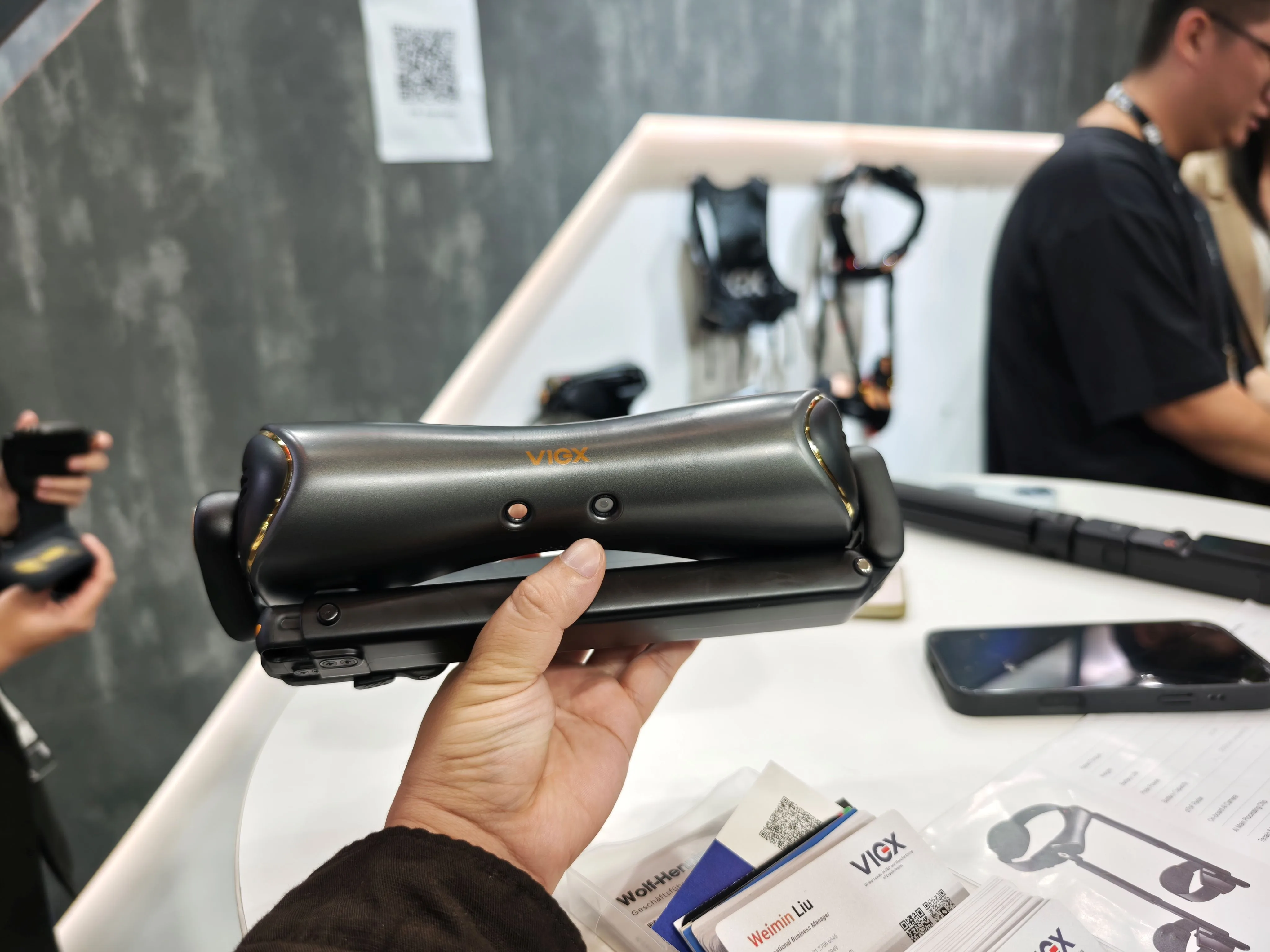
Alright—back to the product. π6’s most direct selling point is summed up in one word: Small!
(Photograph source: LeiTech IFA Reporting Team)
The VIGX π6 X’s core unit weighs only 980 g. Fully foldable, its compact size approximates a 700 ml water bottle—with official dimensions of ~27 × 9 × 9 cm. Packing it for travel is as simple as tossing it into your bag.
Why call it the “core unit”? Because this weight excludes the battery.
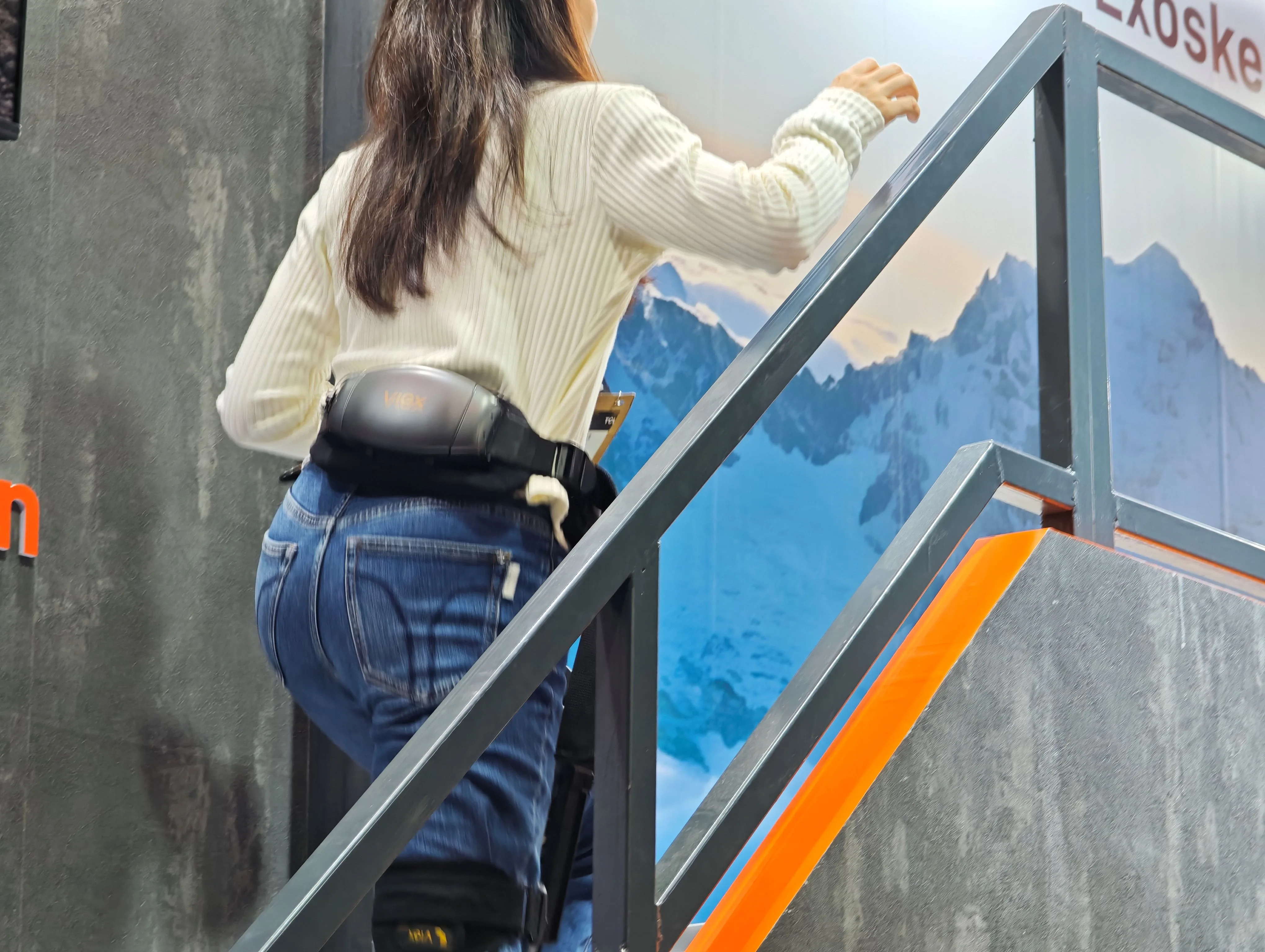
As demonstrated during on-site trials, you must mount a sizable battery pack on your lower back. While this integrated design is more cohesive than DNSYS’s dual-battery approach, it adds substantial weight—bringing the total operational weight to ~1.9 kg.
(Photograph source: LeiTech IFA Reporting Team)
Crucially, achieving this foldable form factor necessitated significant performance trade-offs: the standard version delivers only 300 W peak power; even the top-tier variant maxes out at 500 W—still markedly below competitors’ specifications.
Moreover, VIGX’s Ergo Drive MD² bionic power architecture diverges notably from industry norms: it positions the core drive unit at the front of the body. During stair climbing, squatting, or bending, hip flexion narrows the space between abdomen and thigh.
I’m a bit overweight—and I can already predict this will press uncomfortably against my belly.
By the way, the high-end VIGX π6 X Pro includes a VMFS Visual-Motion Fusion Sensing System, using cameras, dTOF sensors, and motion sensors to jointly assess terrain and body state—automatically switching to appropriate assistance modes.
With multimodal large models advancing rapidly, similar sensing capabilities are expected to become widespread across exoskeleton platforms soon.
The π6 X series is now open for pre-order, starting at $599—though it is not yet available in mainland China.
Lightweight Design Meets AI Integration: Exoskeletons Accelerate Toward Everyday Life
As motors, batteries, and AI-powered motion recognition mature, exoskeletons are gradually transitioning beyond specialized domains—such as medical rehabilitation and industrial logistics—toward everyday outdoor recreation and personal mobility.
Indeed, earlier this year at various trade shows, I had already encountered numerous consumer-grade exoskeletons: exoskeleton rentals appeared at ChinaJoy, and a dedicated Haier exoskeleton store recently opened near our office. These developments collectively signal that exoskeletons are genuinely entering our daily lives.

(Photograph source: LeiTech)
At IFA, the lineup became even more impressive. Hangmo IRMO debuted the world’s first consumer-grade vision-sensing AI exoskeleton; JiKe Hypershell launched its hip-and-knee-integrated full-lower-body exoskeleton; DNSYS’s modular “two-in-one” concept and VIGX’s foldable design are equally compelling.
The most striking impression after touring the exhibition floor is that consumer exoskeletons are aggressively pursuing miniaturization and weight reduction.
Last year at CES, I tested overseas hip-assist exoskeletons whose total weight reached a staggering 3.2 kg—feeling like wearing sandbags around the waist before activation.
Today, NAVEE EXO S Pro—offering identical hip assistance—weighs just 1.8 kg for its main unit. Even JiKe Halo, with its powerful four-joint (hip + knee) configuration, tips the scales at only 2.6 kg. VIGX π6 X folds down to the size of a water bottle. Exoskeletons are evolving into gear you can stow in your car trunk—or even hang from your backpack.
Another notable trend is intensified investment in perception capabilities.
Hangmo IRMO pioneered integration of cameras and LiDAR into its exoskeletons; VIGX followed suit with its Visual-Motion Fusion Sensing System—aiming to mitigate long-standing latency issues in assistance delivery, ensuring the device doesn’t stubbornly push forward while the user prepares to descend.
However, several persistent challenges remain unresolved—particularly wearer comfort (affected by material choices, structural design, and individual body morphology), and the inherent tension between light weight and extended battery life. Neither has yet yielded a robust solution.
In summary, consumer-grade exoskeletons remain in the industry’s early development stage. While current products represent significant progress, they still fall short of user expectations and market readiness. This increasingly competitive sector demands breakthroughs across product design, underlying technologies, and holistic user experience.
From September 4–8, the world’s largest home appliance and consumer electronics exhibition—IFA 2026—is held in Berlin.
As the “most influential new media outlet covering IFA globally”—recognized worldwide for its authoritative AI-focused reporting—LeiTech dispatched its largest and highest-spec reporting team ever to Berlin. Adopting a “2+N” model (two live hosts plus multiple on-site editors and remote editors), LeiTech delivers immersive, multidimensional, and first-hand coverage of IFA 2026—highlighting AI agents integrated with home appliances and hardware; robotics technologies converging with domestic living environments; emerging digital lifestyle trends spanning person-car-home ecosystems; and Chinese brands’ global presence.
The LeiTech IFA 2026 reporting team is actively delivering breaking coverage from Berlin—stay tuned!