
 雷科技
雷科技






IFA 2026 officially opened in Berlin, Germany, on September 4. One of the world’s three major consumer‑electronics trade shows, this year’s IFA drew over 1,900 exhibitors from 49 countries and regions under the theme “The Future is Now”. The Leitech reporting team for IFA26 is on‑site in Berlin working around the clock to deliver on‑location, comprehensive and first‑hand coverage of the event.
In previous years, home appliances and consumer electronics typically took center stage at IFA. This year, however, ergonomic chairs have emerged as an unexpected breakout category. A wildly popular office product in China in recent years, ergonomic chairs are practically standard equipment for every member of the Leitech editorial team. Many of the ergonomic‑chair brands exhibiting at this edition of IFA are Chinese, with a large number hailing from Shenzhen. Having outperformed older‑generation office chairs in the domestic Chinese market, these brands are accelerating their global expansion by showcasing at IFA in Europe.
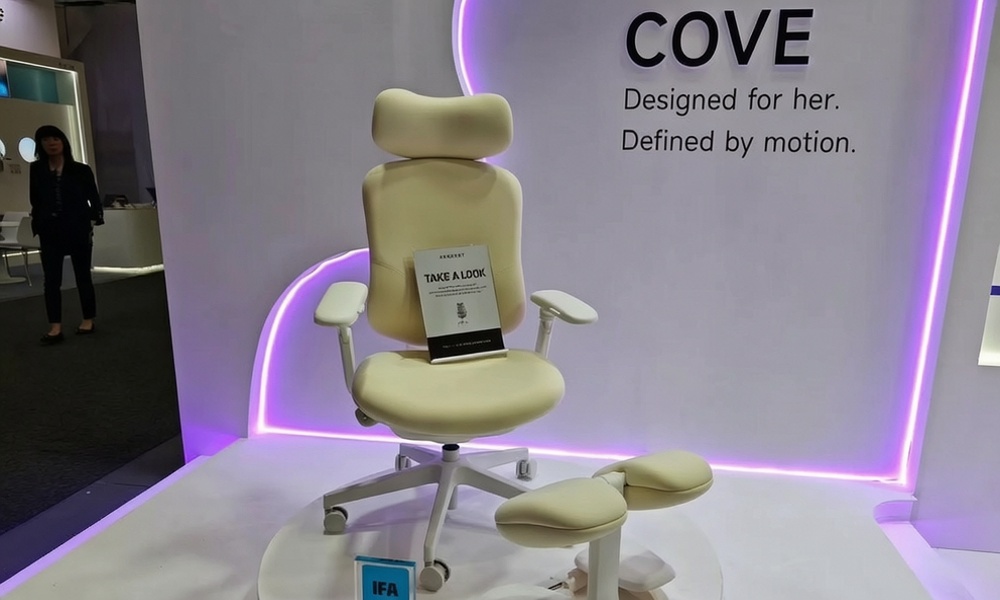
Walking the exhibition floors at this year’s IFA, we came across an intriguing new player: ARBREST.
ARBREST is a smart‑lifestyle tech brand under Shanghai Yingta Technology. This marks its debut appearance at IFA, and COVE is the brand’s very first product. Remarkably, the company took home an IFA 2026 Innovation Award on its first showing — an impressively strong start.
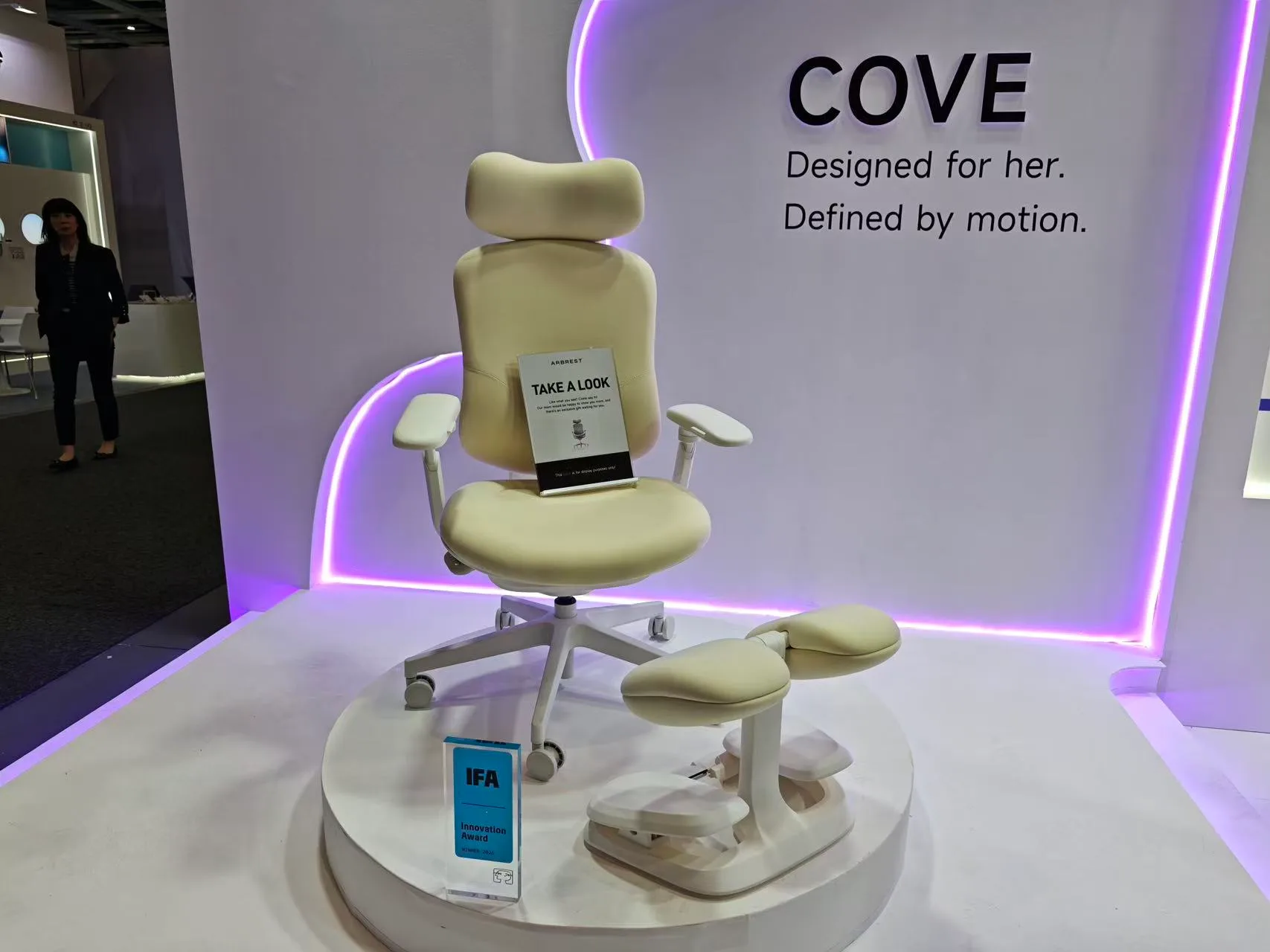
(Photograph source: LeiTech IFA Reporting Team, on-site)
To give a brief overview, ARBREST positions COVE as “an ergonomic chair engineered for active sitting”.
So what exactly does “active sitting” mean? Simply put, instead of locking users into a so‑called standard sitting posture, the chair is designed to move along with the human body.
For this reason, the COVE boasts extensive customizability. Seat height, seat depth, lumbar support, armrests, headrest and footrest are all adjustable. Its backrest also features 16° forward‑tilt capability, which aligns with the brand’s core belief that “one size does not fit all”.
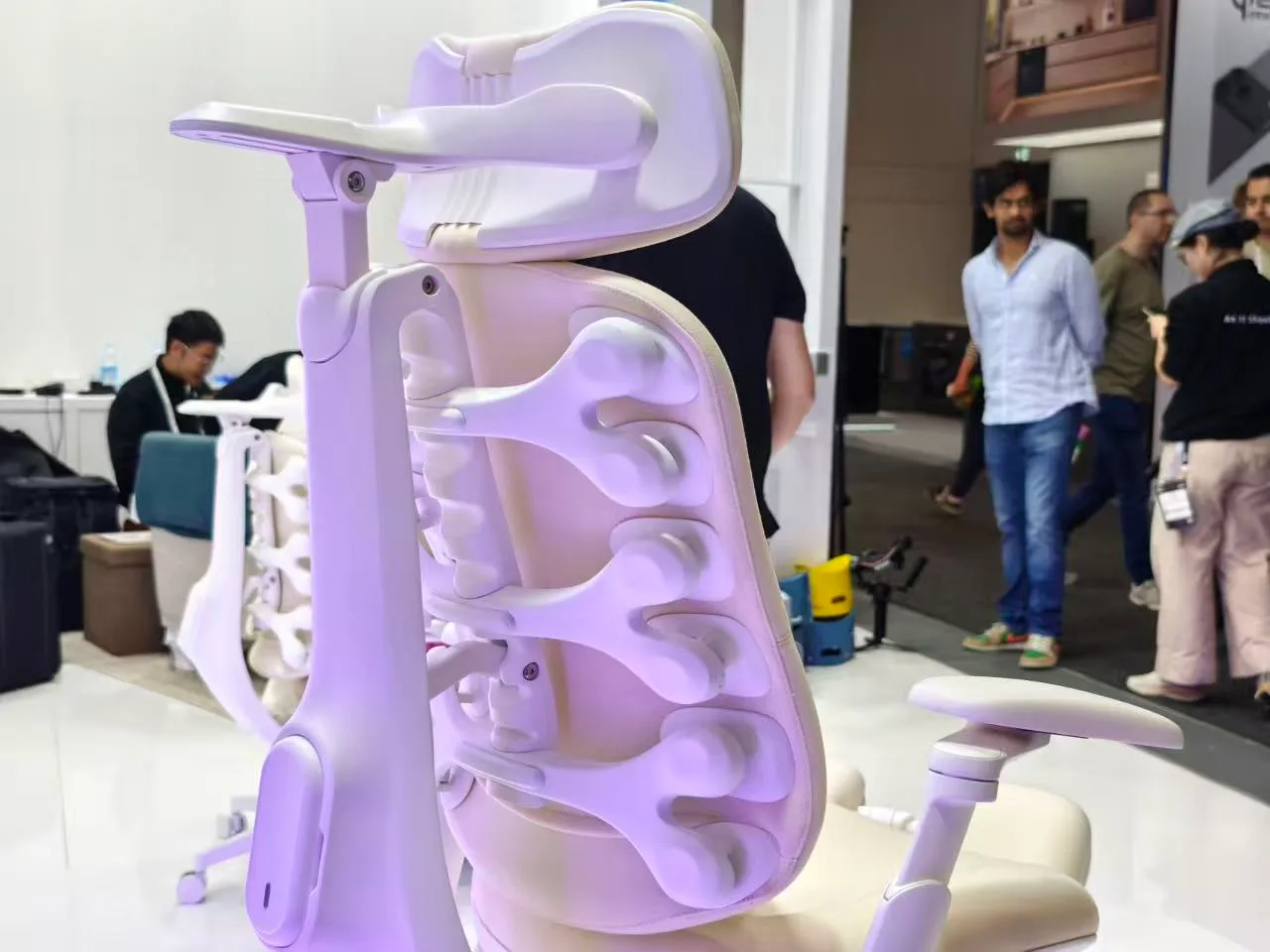
Looking at its rear design, it abandons the conventional single‑piece mesh or large‑surface backrest. Instead, it adopts a structure modelled after the human spine, incorporating 12 independently mobile support zones. As users twist side‑to‑side or shift their posture while seated, these zones adjust dynamically to maintain consistent support.
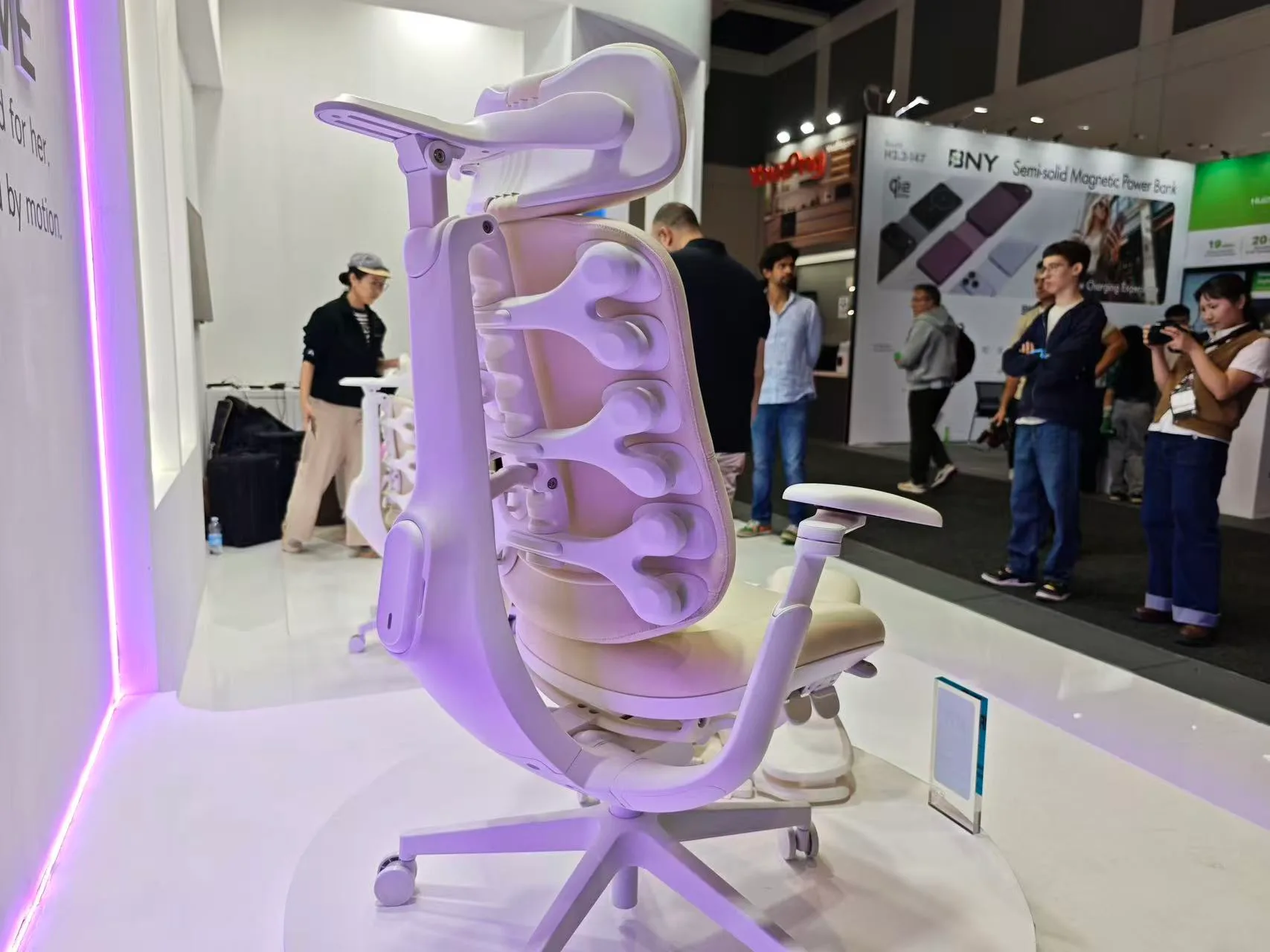
(Photograph source: LeiTech IFA Reporting Team, on-site)
Even more noteworthy is its electric lumbar support.
On‑site staff gave us a demonstration: the lumbar support can be actively adjusted. Combined with the backrest and the dual‑layer footrest at the front, users can fully recline to stretch out their bodies.
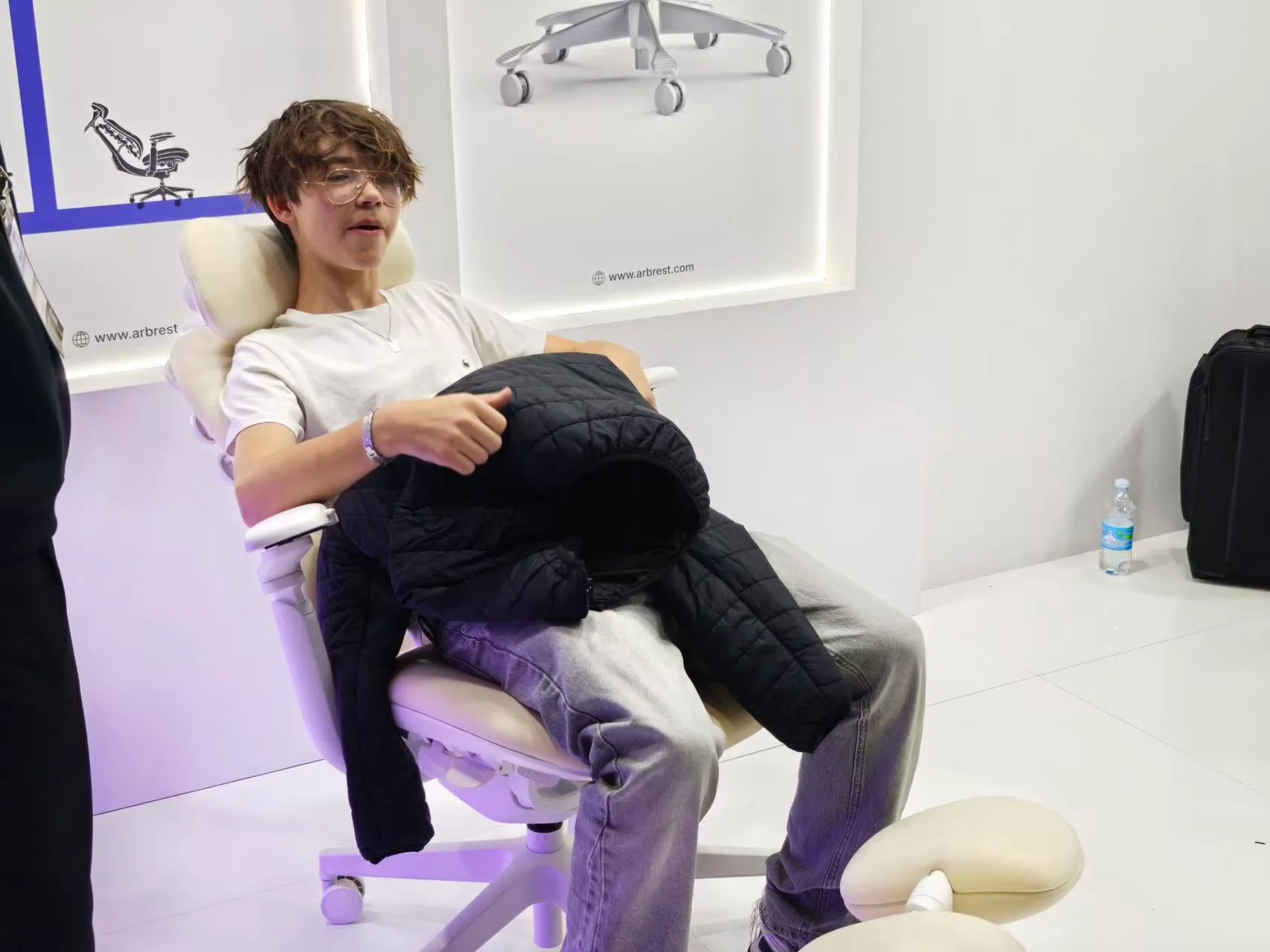
(Photograph source: LeiTech IFA Reporting Team, on-site)
Yet COVE’s most distinctive feature lies in a slogan the brand repeatedly emphasized at the show: Designed for her.
ARBREST points out that traditional ergonomic chairs are often designed around male body proportions. For women or users with smaller statures, the lumbar support, seat depth and even headrest may not fit properly. They may have to resort to cushions, awkward seating positions or constant seat adjustments to ease discomfort.
Accordingly, the COVE was engineered from the ground up to accommodate women’s body proportions. Even the headrest takes hairstyles such as ponytails into account. Its slightly recessed centre prevents hair from getting pinched between the user’s head and the headrest when leaning back.
(Photograph source: LeiTech IFA Reporting Team, on-site)
You might ask: does this really call for dedicated design?
I believe it does — in fact, it is highly necessary. For all the years ergonomic chairs have been evolving, discussions mostly revolve around how many adjustment levels the lumbar support has or whether ventilation is available. Yet manufacturers still expect the same mould to suit users ranging from around 1.5 m to over 1.8 m in height.
At this trade show, besides ergonomic chairs tailored for women, you can also spot models built for larger‑bodied users. This user‑specific design philosophy will very likely become the industry’s next major trend.
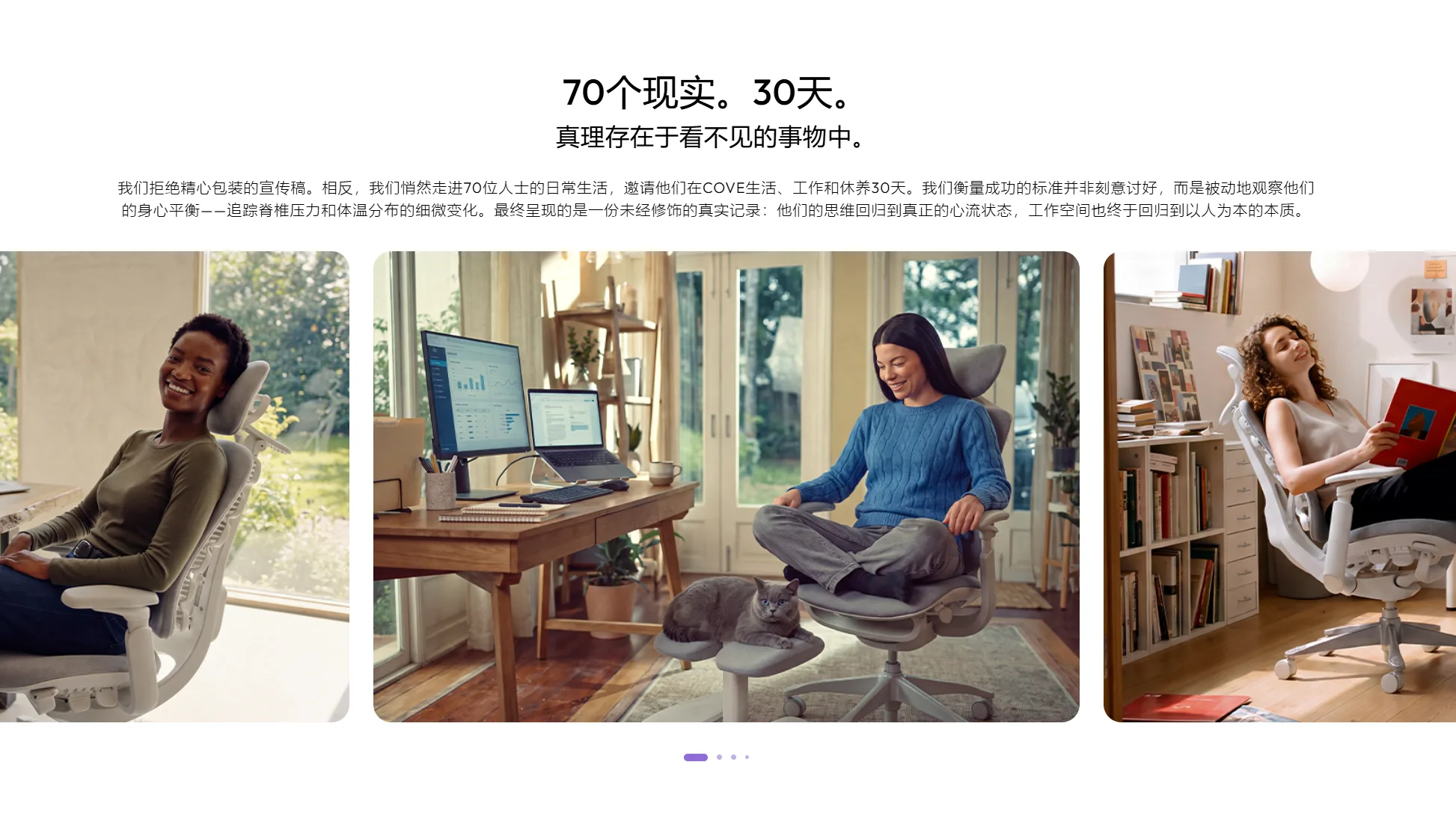
Interestingly, before officially launching the COVE, ARBREST recruited 70 test subjects for a 30‑day real‑world usage trial and further refined the product based on the data collected.
(Photograph source: ARBREST)
The COVE has not yet had a full‑scale commercial launch. The brand will next launch a Kickstarter crowdfunding campaign, with plans to offer free shipping within the United States, a 5‑year warranty for the frame and a 2‑year warranty for electronic components.
From making its IFA debut to winning an Innovation Award with its very first product, ARBREST has successfully made its mark in the ergonomic‑chair exhibition area. Whether “ergonomic chairs designed for women” represents a sizable market remains to be seen once the COVE goes on sale.
From September 4–8, the world’s largest home appliance and consumer electronics exhibition—IFA 2026—is taking place in Berlin.
As the “most authoritative new media outlet covering IFA,” widely recognized globally for its AI-focused insights, LeiTech has dispatched its largest and highest-caliber reporting team to Berlin this year. Adopting a “2+N” model—two live hosts plus multiple on-site editors and backend editors—the team delivers real-time, multidimensional, and first-hand coverage of IFA 2026. Key focus areas include the integration of AI Agents with home appliances and hardware, the convergence of robotics technologies with domestic living scenarios, emerging trends in digital life across people, vehicles, and homes, and the global stage presence of Chinese brands.
The LeiTech IFA 2026 Reporting Team is currently working intensively on-site in Berlin—stay tuned!