 雷科技
雷科技





On September 4, IFA 2026 officially opened in Berlin, Germany. As one of the world’s three premier consumer electronics exhibitions, this year’s IFA attracted over 1,900 exhibitors from 49 countries and regions, under the theme “The Future is Now.” LeiTech (ID: LeiTech) deployed its “LeiTech IFA26 Reporting Team” to Berlin for on-the-ground, multi-dimensional, and first-hand coverage of IFA 2026.
According to the “2025 China Sleep Health Survey Report,” 48.5% of domestic respondents aged 18 and above report sleep difficulties. In reality, however, sleep issues are not unique to Chinese users. At IFA 2026, “smart sleep solutions designed to help people sleep better” emerged as a major hotspot category, with numerous sleep-related smart products unveiled by both domestic and international companies—including Anker, TCL, Pulsetto, and RingConn.
Smart Beds/Mattresses Are Rare; Wearables Take Center Stage
To LeiTech’s surprise, smart beds and smart mattresses—the core smart sleep products in China—were notably scarce at IFA 2026. Leading domestic smart bed/mattress manufacturers such as Kuka Home, SLEEEP, Qisheng Technology, and Mlily focused their exhibition efforts on CES, AWE, and the China International Furniture Expo instead of participating in IFA 2026. Similarly absent was Eight Sleep—the U.S.-based leader in the smart sleep sector, famed for winning over Elon Musk and Mark Zuckerberg and valued at over $1.5 billion.
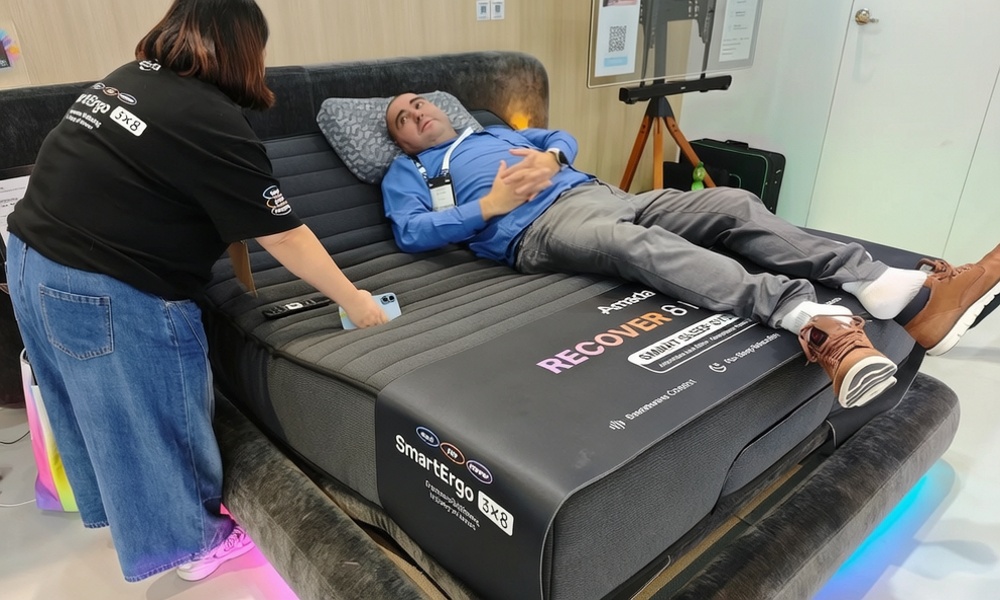
BetsQi (China) showcased its AMADA Smart Adaptive Sleep System—the rare smart bed solution at this year’s IFA. According to BetsQi, the system integrates a smart adaptive four-motor bed frame with the Soundwave smart mattress, enabling independent adjustment of head, lumbar, and leg positions. It also features three operating modes and five levels of massage intensity to help users relax and unwind.
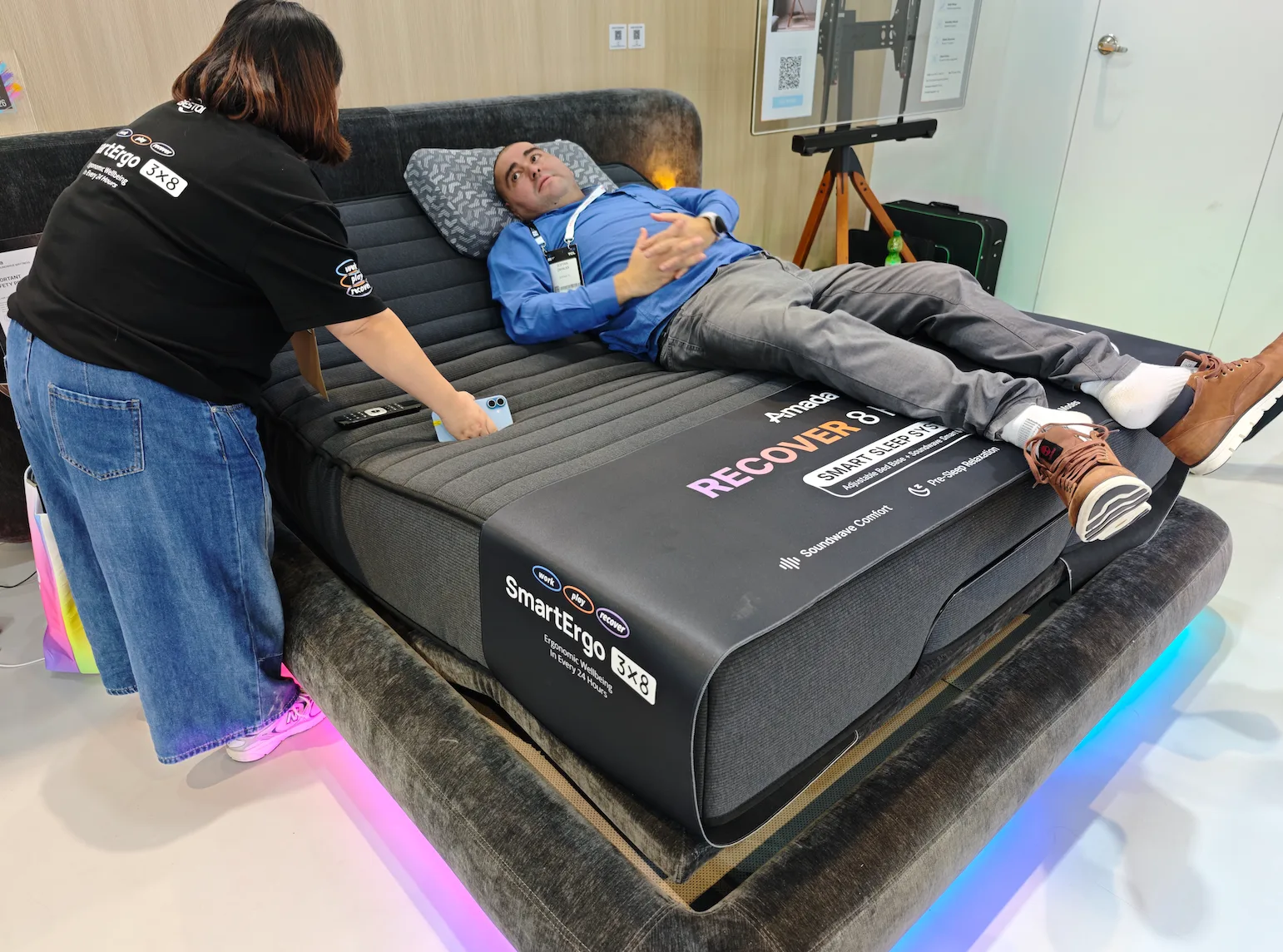
(Photograph source: LeiTech IFA Reporting Team, on-site)
Given that IFA serves as the world’s leading platform for showcasing AI-powered home appliances and smart-living technologies—and wields substantial influence across Europe, especially among local distributors—LeiTech recommends that domestic smart bed and smart mattress brands targeting overseas markets consider prioritizing participation in future IFA editions.
In contrast to the scarcity of smart beds/mattresses, smart wearable devices for sleep monitoring were abundant. German company Hama, Spanish company KSIX, and Chinese company RingConn all exhibited smart rings supporting sleep tracking. These rings offer largely similar functionalities: monitoring users’ sleep duration, blood oxygen saturation (SpO₂), heart rate, and delivering analytical insights.
Notably, KSIX and Chinese company HiFuture debuted Motion Pay and LYRA screenless wristbands, respectively, at IFA 2026. While their physiological monitoring capabilities match those of conventional wristbands, these models feature no built-in display—requiring users to view and interpret all data exclusively via companion mobile apps.
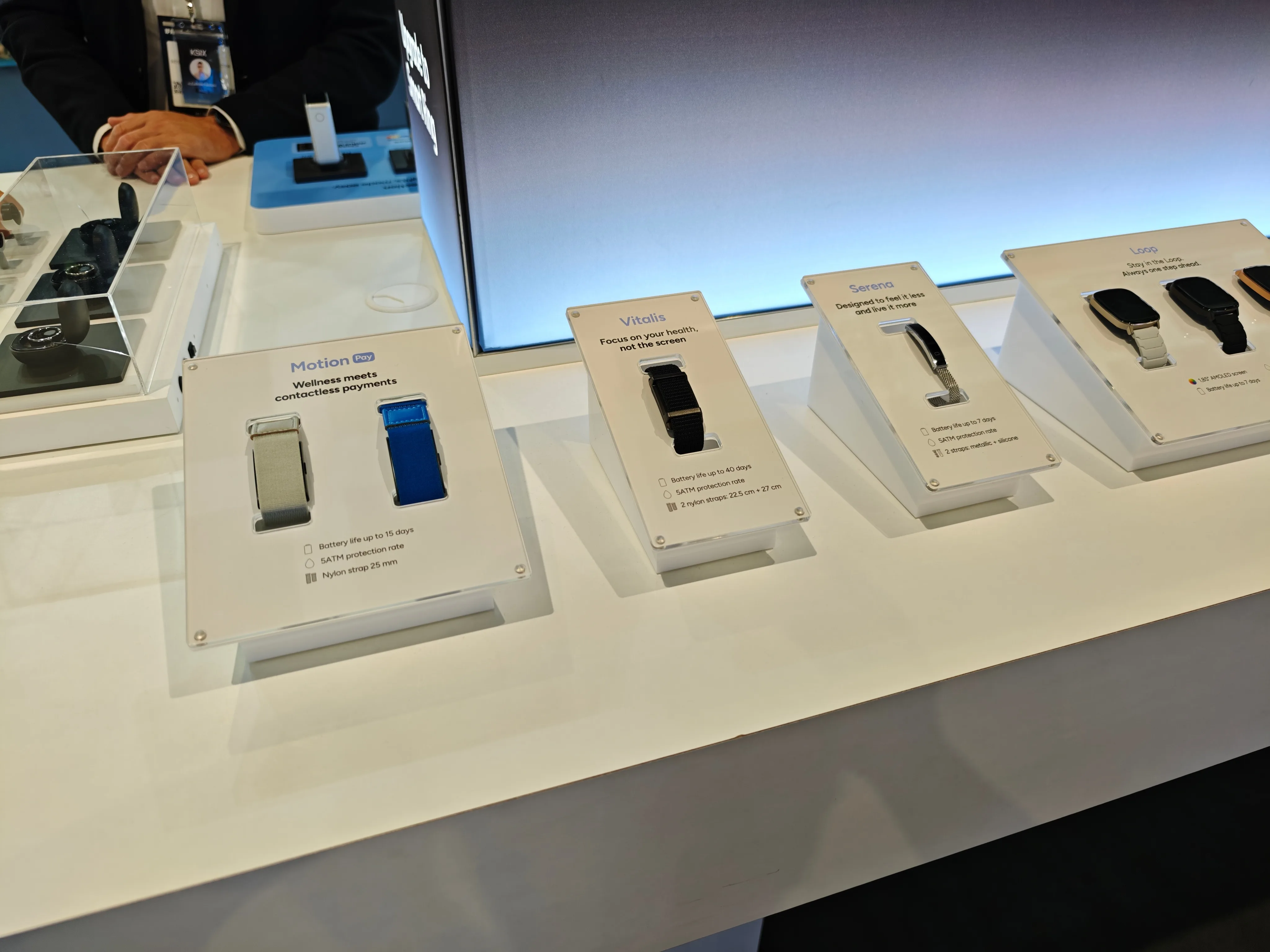
(Photograph source: LeiTech IFA Reporting Team, on-site)
LeiTech believes that eliminating the display reduces manufacturing costs and extends battery life, while effectively minimizing information overload—allowing the wristband to silently monitor users’ physical conditions and shifting interaction entirely to smartphones.
This pragmatic, non-all-encompassing design philosophy aligns with Europe’s current trend toward digital minimalism and intentional technology.
Among the wide array of sleep-related wearables, LeiTech found Anker’s newly launched Sleep A40 Pro sleep headphones particularly compelling. Building upon its predecessor’s triple-layer noise cancellation and PPG-based sleep monitoring, the A40 Pro introduces the “Personalized Audio for Every Individual” feature—dynamically adjusting soothing audio content and structure in real time based on users’ neural relaxation levels, helping them fall asleep faster.
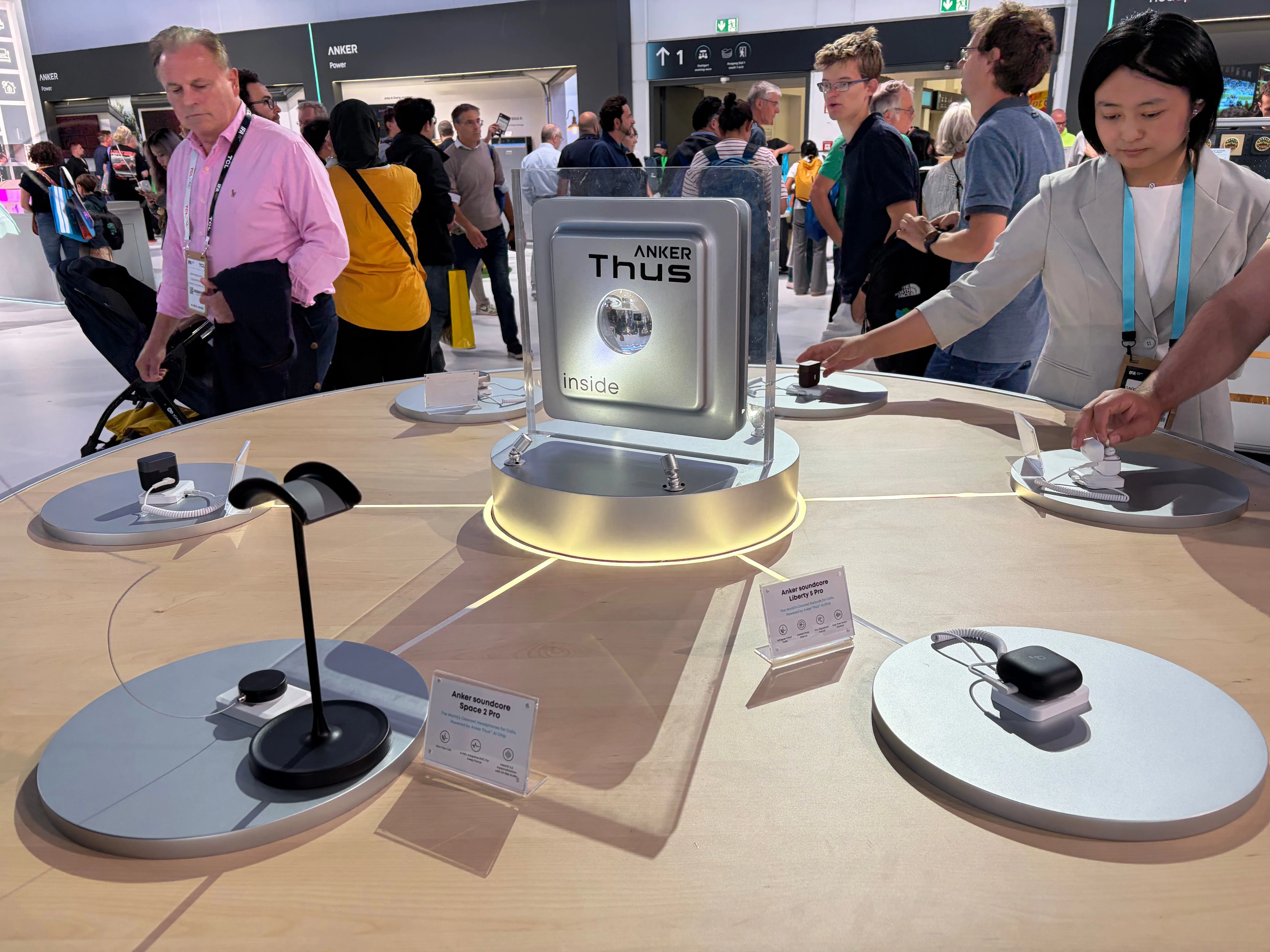
(Photograph source: LeiTech IFA Reporting Team, on-site)
The Sleep A40 Pro—integrating sleep-state detection, noise cancellation, and sleep assistance—meets the needs of white-collar workers in Tier-1 and Tier-2 Chinese cities. For individuals like myself—who are highly sensitive to ambient noise and suffer from poor sleep quality—it offers practical benefits: blocking out noise from urban villages while playing soothing audio.
The collective absence of traditional smart beds/mattresses, coupled with the dominance of wearables and sleep headphones, reflects two key factors: constraints on exhibition budgets and an evolving product philosophy. The rise of intentional technology encourages hardware restraint—low-barrier, low-maintenance peripheral solutions better suit European market realities than high-priced, complex smart bedding systems.
Saying Goodbye to Foreign-Body Sensation: Could Radar-Based Sleep Monitoring Be the Next Big Thing?
Some users highly sensitive to foreign-body sensation experience discomfort when wearing rings or wristbands. To address this, certain manufacturers have replaced contact-based sensors with radar technology—enabling truly touch-free sleep monitoring.
Anker’s bedside sleep system, SleepLab Pro—exhibited at IFA 2026—features a 60-GHz millimeter-wave radar capable of detecting users’ sleep status without requiring any wearable device—even under blankets.
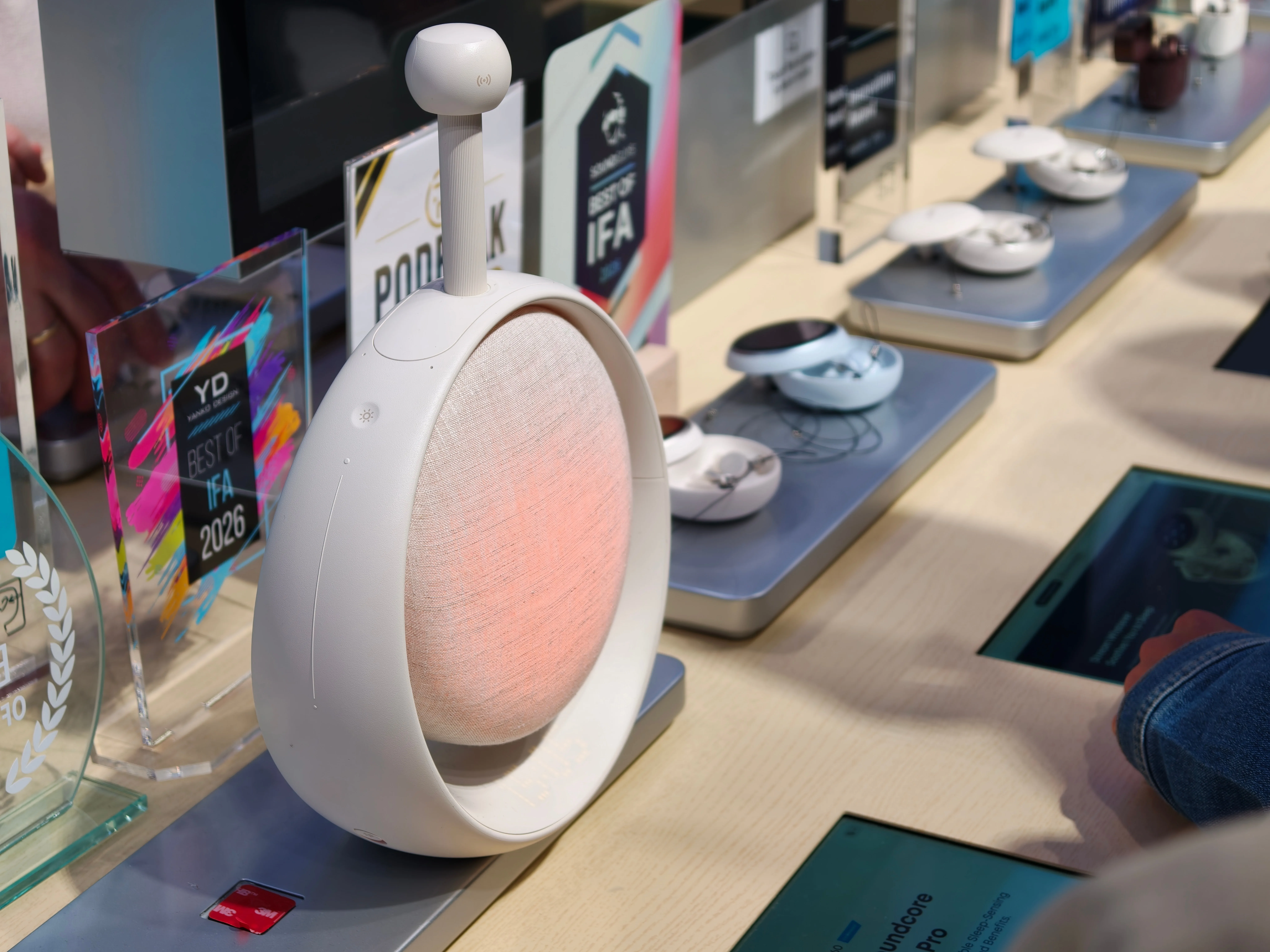
(Photograph source: LeiTech IFA Reporting Team, on-site)
SleepLab Pro also delivers 180 types of soothing white noise and over a dozen calming light effects. It tailors acoustic and optical experiences—including rhythmic soundscapes and guided breathing exercises—based on users’ real-time sleep patterns.
As a home appliance giant, TCL integrated millimeter-wave radar into its air conditioner to create the Xiao Lan Yi P7 Ultra. This unit monitors users’ sleep states via radar. During different sleep stages, organ and cellular activity vary, altering individual thermal comfort preferences—e.g., a temperature and airflow setting comfortable during initial sleep may become uncomfortable during deep sleep.
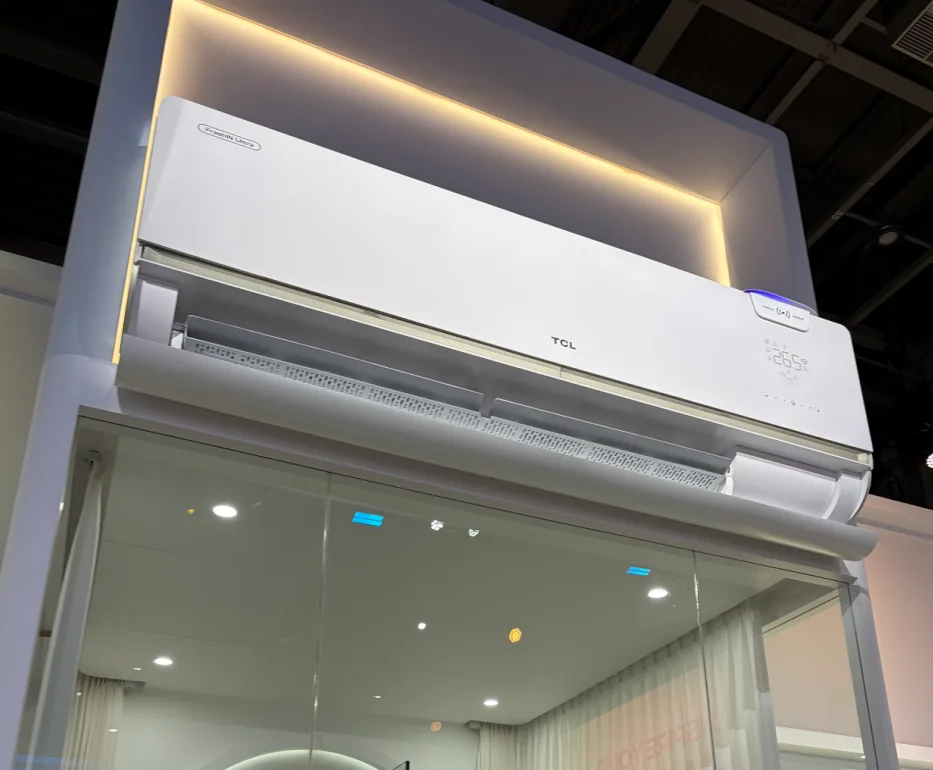
(Photograph source: LeiTech IFA Reporting Team, on-site)
The Xiao Lan Yi P7 Ultra continuously monitors users’ physiological states, learns personal sleep habits, and intelligently determines optimal temperature and airflow settings for each sleep stage—automatically adjusting to minimize disruption to sleep quality.
Beyond radar, another category of cutting-edge sleep technology is rapidly gaining traction: non-invasive vagus nerve stimulation (VNS) devices. Companies including ZenoWell and Pulsetto launched such VNS-based sleep aids at IFA 2026.
Taking the Pulsetto FIT as an example, it rapidly calms sympathetic nervous system hyperactivity, inducing whole-body relaxation. Using it before bedtime helps soothe the nervous system and shortens sleep onset latency.
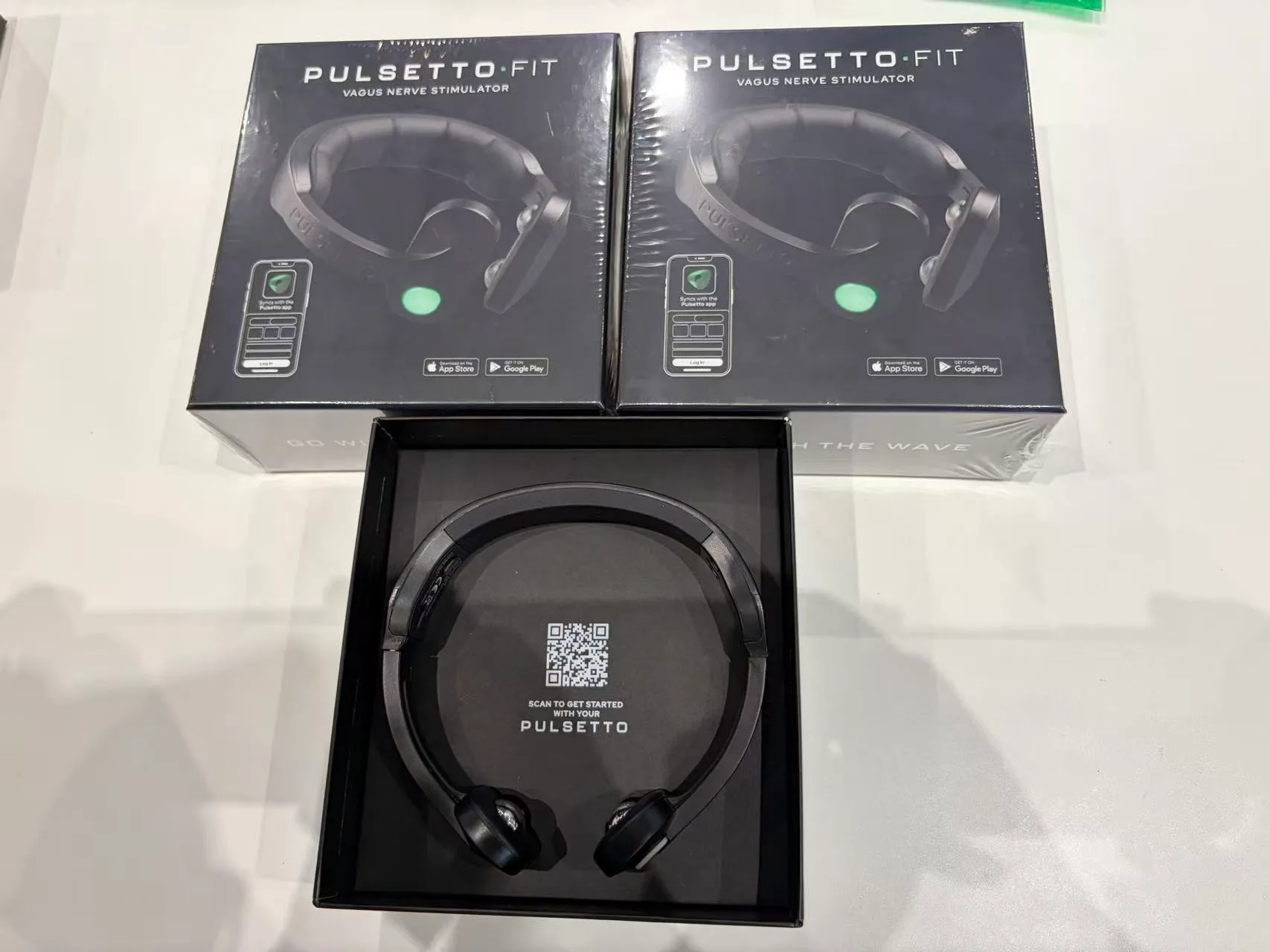
(Photograph source: LeiTech IFA Reporting Team, on-site)
According to official Pulsetto data from 2025 clinical testing, 40 participants used the Pulsetto device twice daily for four weeks—resulting in a 56% reduction in perceived stress and a 41% improvement in overall sleep quality.
In LeiTech’s view, the Pulsetto FIT exemplifies the convergence of consumer electronics with neuroscience and digital health. During conversations with Pulsetto representatives, LeiTech learned the company emphasizes “stress adaptability training” rather than merely using the device for post-stress relaxation. In daily life, frequent use of Pulsetto can enhance users’ resilience and recovery capacity in response to stress.
Note, however, that such VNS sleep aids typically deliver strong results for stress-, anxiety-, or autonomic dysfunction-related insomnia—but show limited efficacy against organic sleep disorders such as obstructive sleep apnea, restless legs syndrome, or severe depression-associated insomnia. Moreover, due to significant inter-individual physiological variation, effectiveness varies widely among users.
LeiTech believes non-contact sleep monitoring devices hold tremendous growth potential—not as standalone units, but increasingly embedded within household appliances, much like TCL’s Xiao Lan Yi P7 Ultra. These devices will monitor users’ sleep status while automatically adjusting connected home appliances.
For instance, a smart lamp equipped with sleep-monitoring capability could proactively dim its brightness upon detecting user drowsiness—creating a sleep-conducive environment—and automatically power off once it confirms the user has fallen asleep.
Vagus nerve stimulation sleep aids have existed in the market for years, yet inconsistent user experiences caused by physiological differences—and the persistent foreign-body sensation during wear—have hindered broader adoption, keeping them in a niche, lukewarm position. Given the human brain’s extraordinary complexity, further rigorous validation of such devices’ efficacy remains essential.
More Than Just Lightweight: Four Key Trends in Smart Sleep Are Now Clear
Smart sleep products unveiled globally at IFA 2026 reveal four dominant trends centered on lightweight design, imperceptibility, contextual integration, and precision.
Millimeter-wave radar technology—liberating users from wearable constraints—has evolved from simple sleep-data collection into a full-home intelligent closed loop: “monitor → analyze → actively adjust.” Anker’s bedside sleep system and TCL’s sleep-optimized air conditioner demonstrate that future sleep monitoring will rely less on dedicated hardware and more on deep integration into everyday home appliances—enabling adaptive regulation of the entire sleep environment.
Although vagus nerve stimulation devices are becoming increasingly widespread—ushering sleep technology from “environmental optimization” toward “neural modulation”—this segment remains constrained by individual physiological variability and narrow application scenarios, limiting near-term mass-market appeal. It will likely remain a specialized functional category for the foreseeable future.
Naturally, companies haven’t overlooked emerging markets: low-cost sleep-monitoring devices—including screenless wristbands and compact smart rings—continue fulfilling vital roles in cost-sensitive segments.
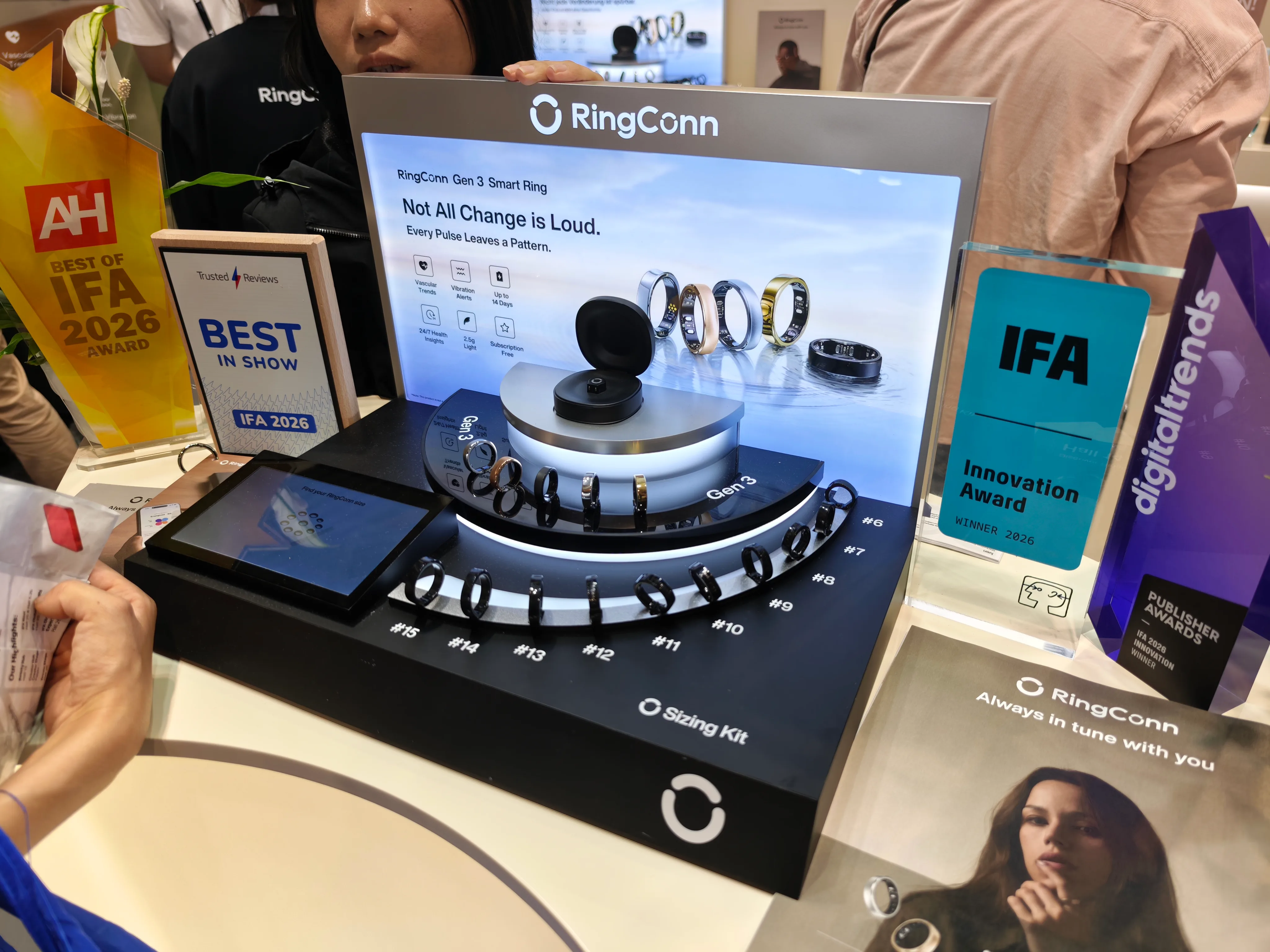
(Photograph source: LeiTech IFA Reporting Team, on-site)
Finally, regarding the absent smart bed/mattress manufacturers: the industry mainstream continues pursuing real-time posture sensing, dynamic pressure mapping, and AI-driven zonal firmness adjustment—achieving “bed-to-person adaptation” rather than forcing users to adapt to the bed. Core technologies include flexible piezoelectric sensors, pneumatic actuator arrays, and advanced AI algorithms. Products featuring these capabilities are expected to debut en masse at next year’s AWE and CES.
Looking ahead, the entire smart sleep ecosystem will focus on three pillars: AI algorithms enabling truly personalized, “one-size-fits-one” adaptation; enhanced accuracy of imperceptible monitoring; and cross-category ecosystem interoperability across home appliances.
From September 4–8, the world’s largest home appliance and consumer electronics exhibition—IFA 2026—is taking place in Berlin.
As the “most authoritative new media outlet covering IFA” globally—recognized for its comprehensive AI-focused reporting—LeiTech has dispatched its largest and most elite reporting team to Berlin this year. Adopting a “2+N” model (two live hosts + multiple on-site editors + multiple backend editors), the team delivers immersive, multi-angle, first-hand coverage of IFA 2026—with special emphasis on AI agents integrated with home appliances and hardware; robotics applied to home environments; emerging digital lifestyle trends across people, vehicles, and homes; and Chinese brands’ global presence.
The LeiTech IFA26 Reporting Team is currently conducting intensive on-site coverage in Berlin—stay tuned!