
 雷科技
雷科技





On September 4, IFA 2026 officially opened in Berlin, Germany. As one of the world’s three premier consumer electronics trade shows, this year’s IFA attracted over 1,900 exhibitors from 49 countries and regions, with the theme “The Future is Now”—the future is already here.
LeiTech (ID: LeiTech) dispatched its “LeiTech IFA26 Reporting Team” to Berlin for on-the-ground, comprehensive, and first-hand coverage of IFA 2026.
This year’s IFA featured an unusually large number of robots—from bipedal robots capable of walking and dancing, to cleaning and inspection robots. Robots of all shapes and sizes nearly filled the IFA Next exhibition area. Chinese robotics manufacturers were especially active: familiar names such as Unitree, Zhongqing, UFactory, and Agibot all brought their latest robots to Berlin.
This time, Agibot’s lineup was particularly comprehensive—featuring the Expedition A3, Lingxi X2, Sprite G2, OmniHand dexterous manipulator, cleaning robot C5, and quadruped robot D-series.Essentially, Agibot showcased its entire current portfolio across multiple core product lines at IFA.
The star of the show was undoubtedly the Expedition A3. Launched by Agibot in April this year, the A3 is a new-generation full-size humanoid robot standing approximately 1.73 meters tall and weighing 55 kg—its dimensions closely resembling those of an average adult. In addition to demonstrating dynamic motion and multimodal interaction, A3 drew crowds with a live calligraphy-writing demonstration.
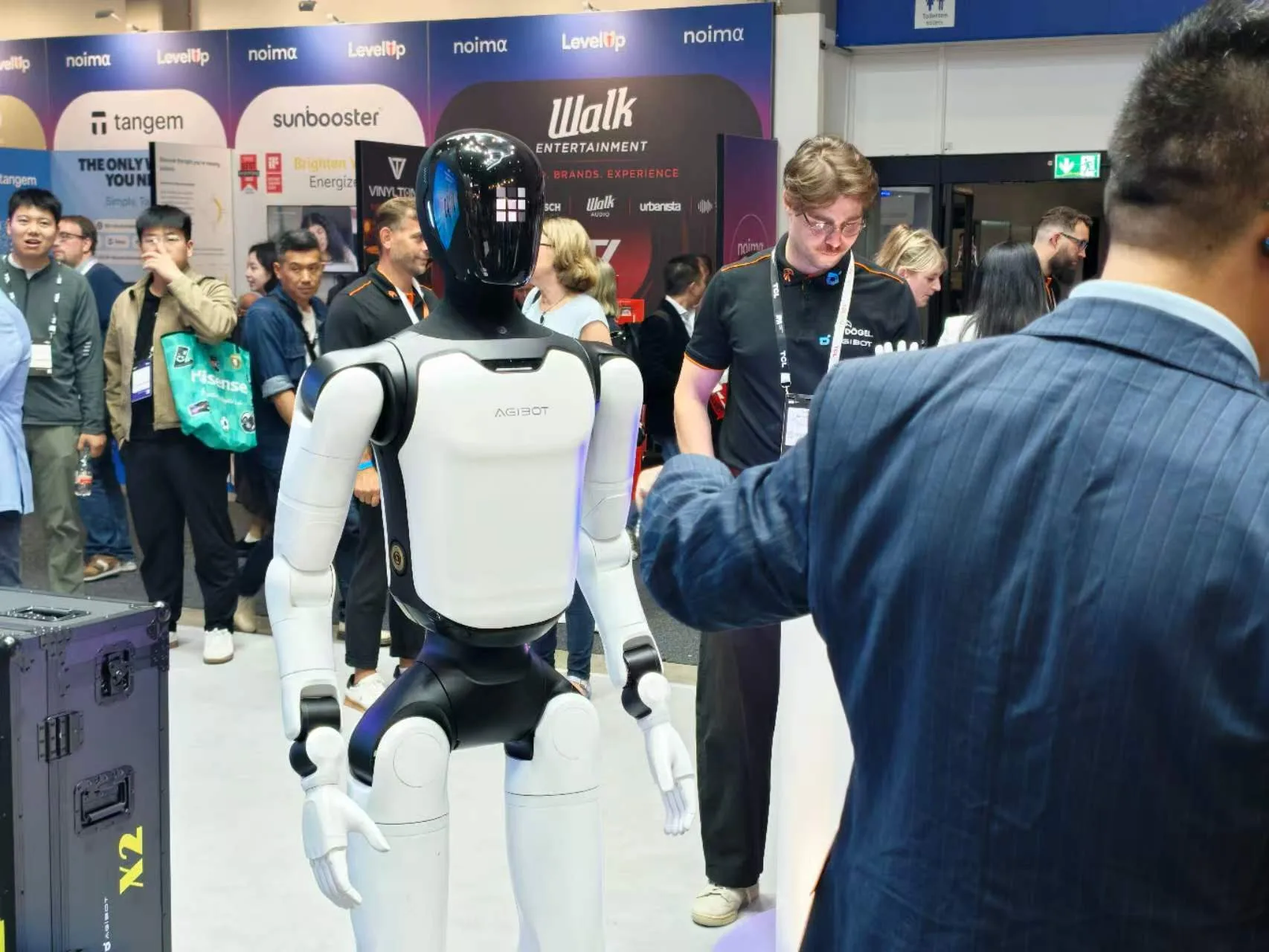
Image Credit: LeiTech IFA Reporting Team
Having a robot write Chinese calligraphy with a brush may no longer seem like science fiction—but the brush itself is an exceptionally demanding tool requiring precise control: stroke pressure, brush tip angle, and movement speed all critically affect final results. The A3 is equipped with the OmniHand 3 Ultra-M dexterous manipulator, which features a fully direct-drive architecture with 20 active degrees of freedom—and integrates vision-tactile sensing at both fingertips and palm.
In other words, Agibot isn’t merely showcasing robotic arms following pre-programmed trajectories; it’s demonstrating capabilities including contact perception, force control, and other relatively fine-grained manipulation tasks.
Compared with the now-familiar robot parkour and backflips seen repeatedly over the past two years, demonstrations like calligraphy are actually more compelling to watch.After all, when robots eventually enter factories, stores, or even homes, they’ll rarely need to perform backflips—they’ll need to reliably grasp objects, precisely modulate force, and reliably complete real-world tasks.
The Lingxi X2 clearly follows a different design philosophy. Significantly smaller than human scale, the X2 emphasizes approachability and human-robot interaction—evidenced by numerous children engaging with it onsite.
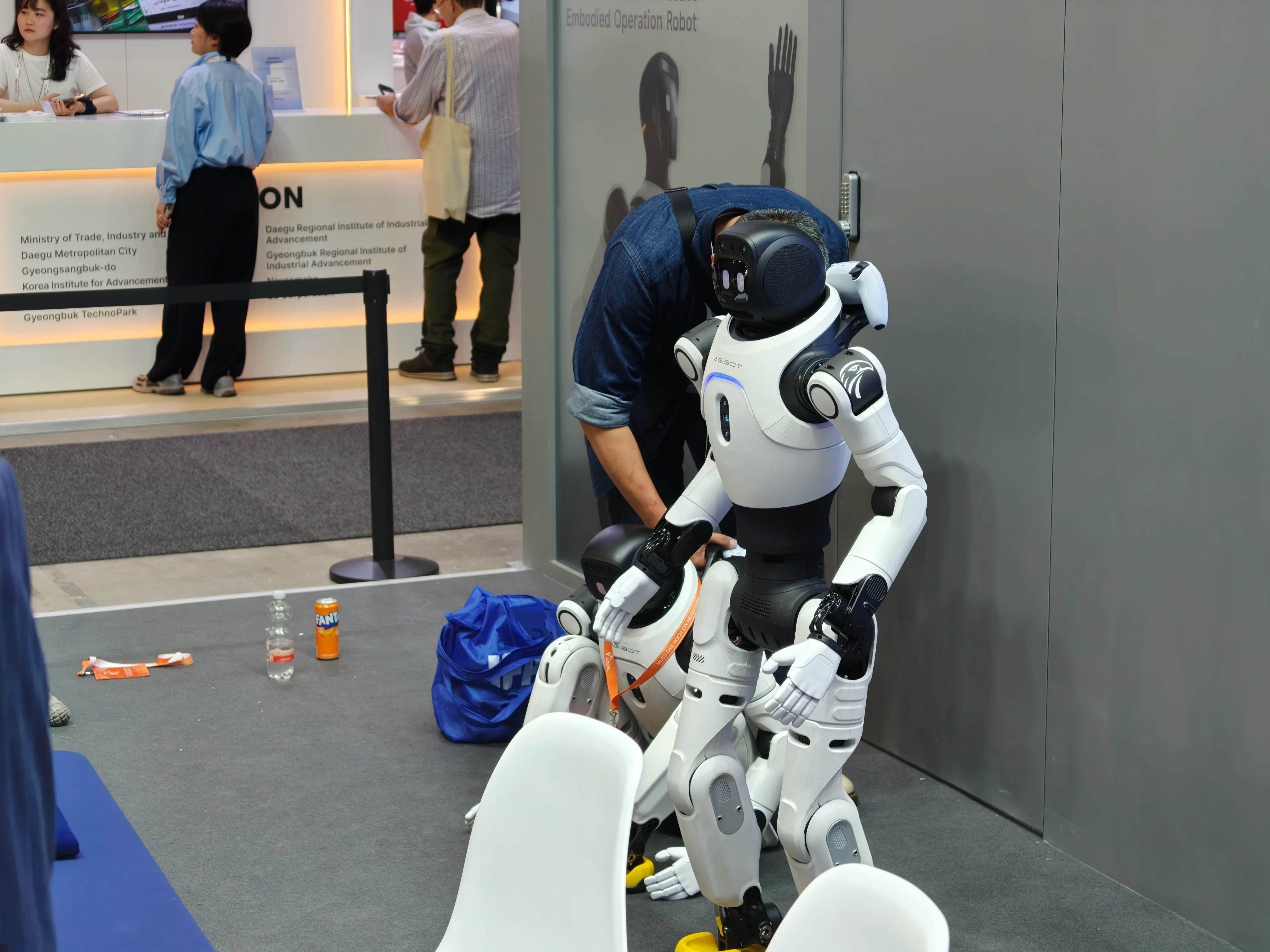
Image Credit: LeiTech IFA Reporting Team
Its advantages quickly become apparent on-site:its compact size reduces visual intimidation, making it feel more natural in human-facing environments such as exhibition halls, shopping malls, and hotels.
At IFA, the X2 primarily demonstrated reception, conversational interaction, and retail assistance—and even made an appearance on IFA’s “Robots on the Runway” robot fashion show.
Agibot also unveiled several product lines targeting industrial and commercial applications: the G2 emphasized object recognition, grasping, transport, and finer manipulation capabilities; the cleaning robot C5 is designed for commercial cleaning; and the quadruped D-series targets inspection, security, and operation in complex terrain.
Notably, these robots do not adopt a humanoid form factor—because cleaning prioritizes coverage efficiency and battery life, while inspection demands terrain adaptability and stability. Many practical applications simply don’t require two legs and two arms.
Moreover, Agibot came to Berlin with a clear strategic objective: expanding into the European market.
Beyond the robots themselves, Agibot emphasized European-market certifications and local partnerships. The A3 Ultra has already obtained certification from TÜV Rheinland and other authoritative bodies; products including the A2, X2, G2, D1 Max Pro, and C5 have likewise undergone relevant testing and certification processes.
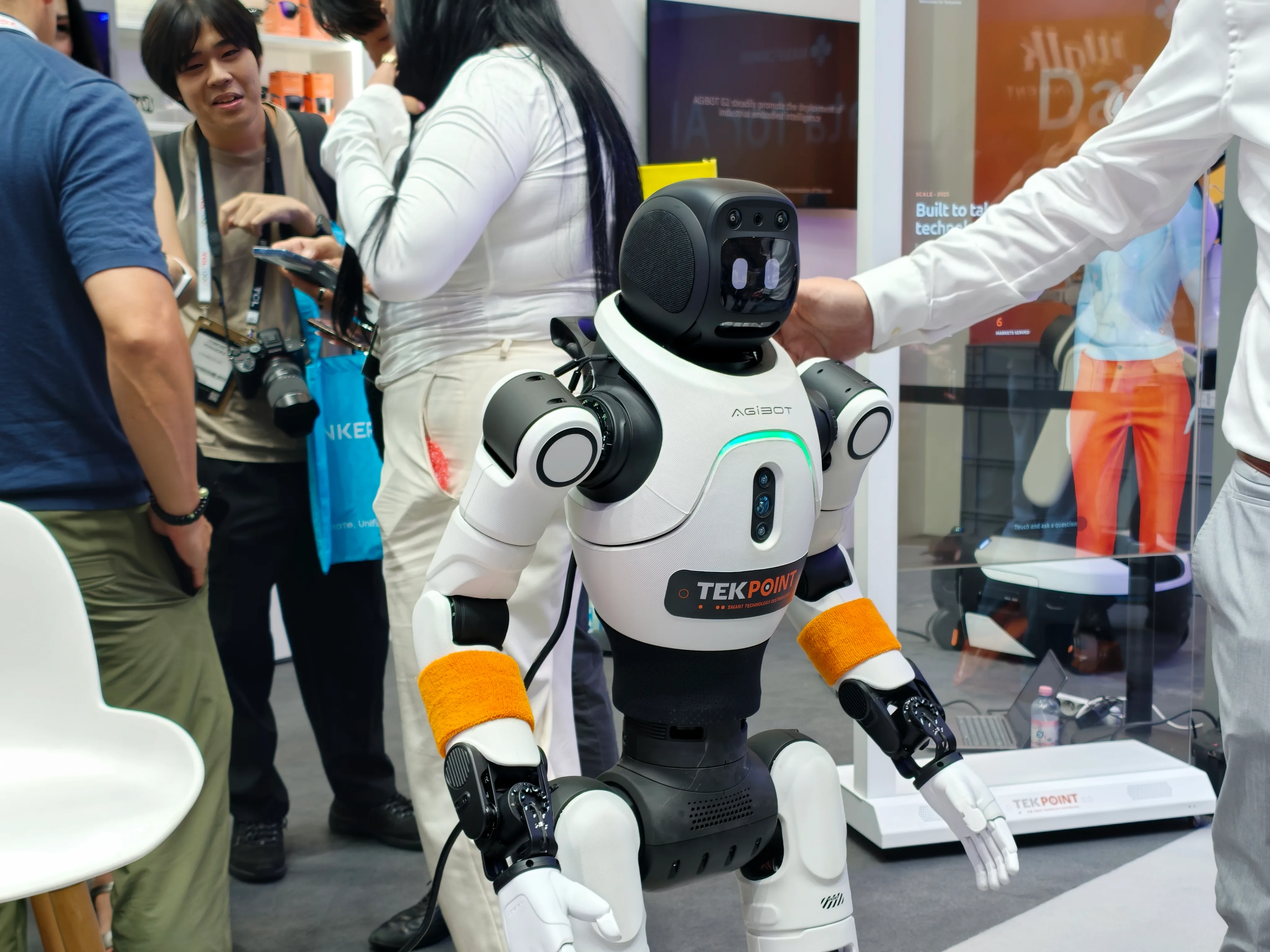
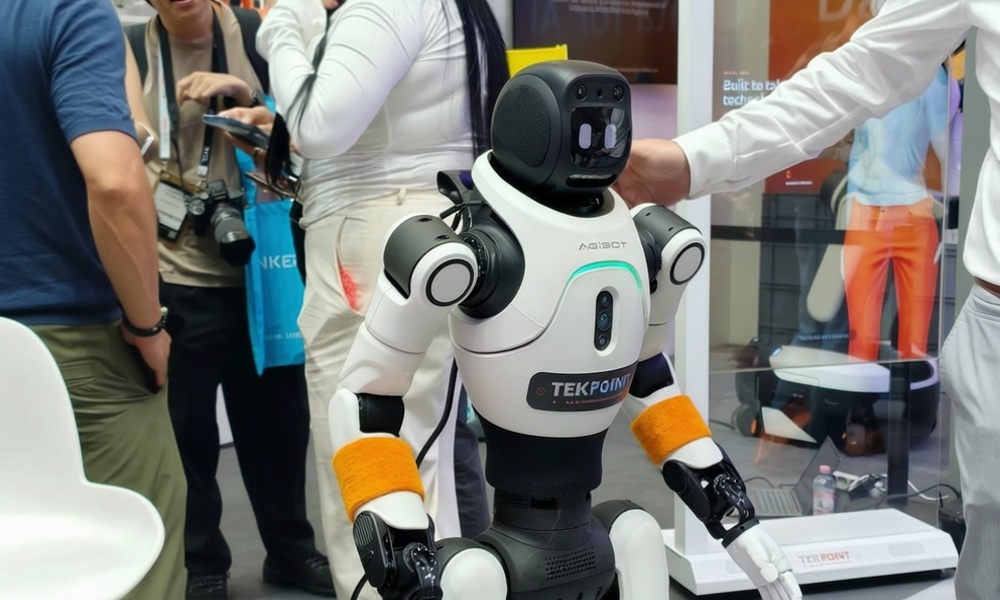
Image Credit: LeiTech IFA Reporting Team
Additionally, Agibot jointly exhibited with European partner Tekpoint to further advance adoption of retail and service robots across Europe.
For a Chinese robotics company, shipping robots to Berlin for a one-time demonstration is relatively straightforward. But successfully selling them in Europe requires navigating a long list of challenges—including certification, distribution channels, delivery logistics, after-sales support, and localized service infrastructure.
Agibot has even begun piloting Robot-as-a-Service (RaaS), transforming high-upfront-cost robots into flexible, on-demand rental services. For use cases such as exhibitions, events, or retail stores, renting a robot for a few days represents a far lower-risk entry point.
Ultimately, robots must deliver tangible value through real work—and in this respect, Agibot is truly leading by example.
From September 4–8, the world’s largest home appliance and consumer electronics exhibition—IFA 2026—took place in Berlin.
As the “most influential new media outlet covering IFA,” widely recognized by the global AI community, LeiTech deployed its largest and highest-caliber reporting team to date to Berlin, adopting a “2+N” model (two on-air hosts + multiple on-site editors + multiple backend editors) to deliver comprehensive, immersive, and first-hand coverage of IFA 2026. Key coverage areas include AI agents integrated with home appliances and hardware; robotics technologies converging with home-use scenarios; emerging trends in digital life across people, vehicles, and homes; and how Chinese brands are showcasing innovation on the world stage.
The LeiTech IFA2026 Reporting Team is currently conducting intensive on-site reporting in Berlin—stay tuned!