 雷科技
雷科技






IFA 2026 officially opened on September 4 in Berlin, Germany. One of the world’s three major consumer‑electronics trade fairs, this year’s edition drew over 1,900 exhibitors from 49 countries and regions under the theme “The Future is Now.” Leitech (Leitech ID: Leitech) has dispatched its on‑site reporting team to Berlin to deliver firsthand, multi‑faceted coverage of IFA 2026.
Walking the show floor, Leitech has identified a new trend: AI Agent capability, once a bonus or optional add‑on, has become an industry‑wide basic requirement at this IFA. This makes perfect sense, as Agent‑enablement represents a broad consensus across the whole‑home‑smart sector. In capability terms, whole‑home AI Agentization also constitutes the core technical foundation for the coming “chore‑free household” era — an age where home appliances perceive, decide and act autonomously.
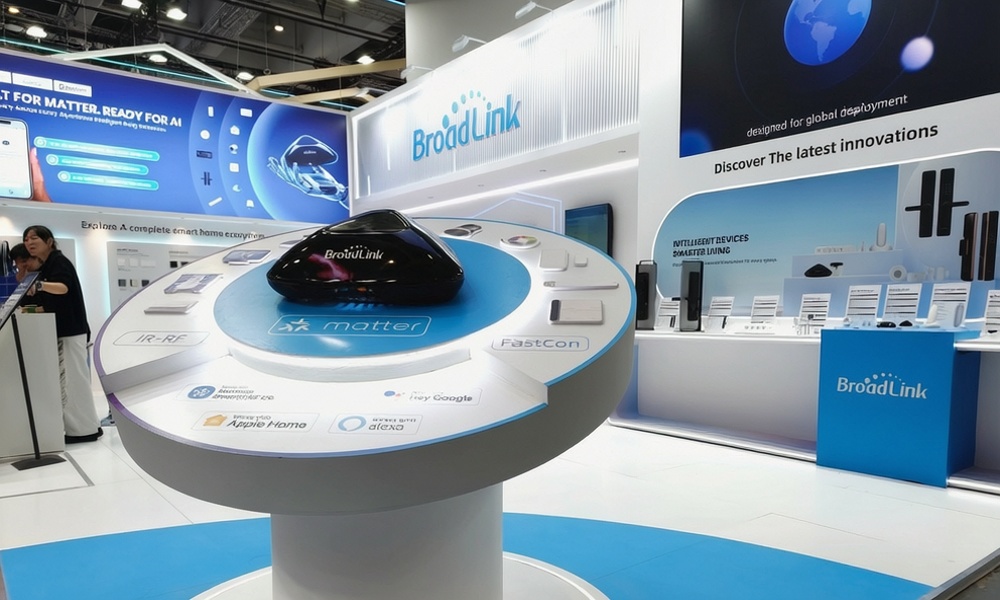
Yet there remains a large gap between mentioning Agentization in press‑release rhetoric and actually implementing it inside people’s homes. Most booths simply hook general‑purpose large language models to hardware devices, feeding voice input into the model and returning translated commands. At the booth of one Chinese exhibitor, however, we saw a new industry‑specific solution from a well‑known smart‑home player: BroadLink.
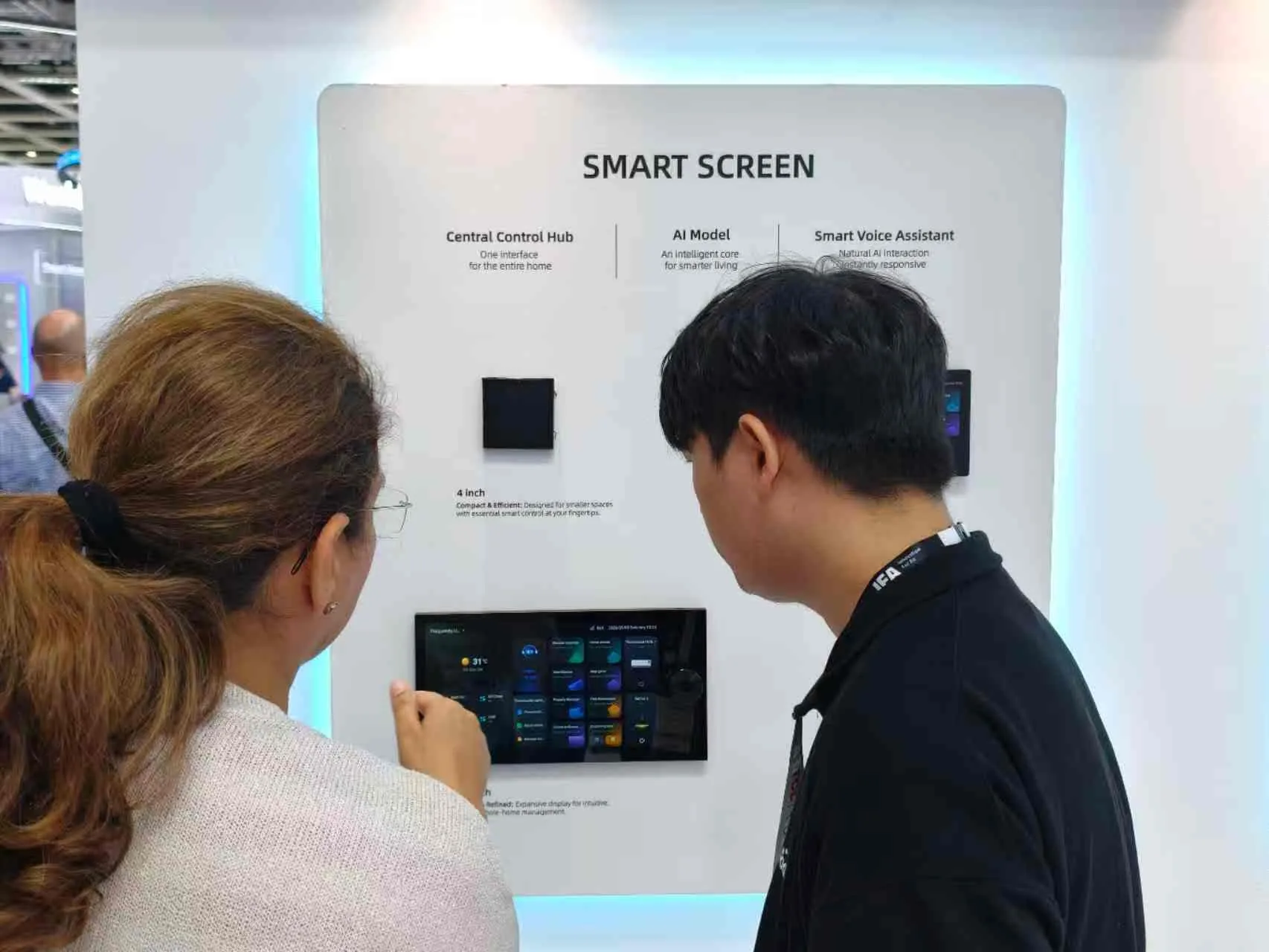
BroadLink set up an AI interactive zone at its booth. Through natural‑language conversations with the AI assistant in its mobile app, on‑site smart hardware responded instantly and accurately. This went far beyond simple control, covering the full workflow: user‑intent interpretation, autonomous AI decision‑making and device execution. The English‑language interaction ran exceptionally smoothly and won praise from international visitors testing the system.
The Huansi AI Hub: Building the “Capability Foundation” for the Agent Era
The AI capabilities demonstrated at BroadLink’s booth stem from its self‑developed Huansi AI Hub. Like conventional smart‑home systems, Huansi AI Hub enables user interaction via an in‑app AI assistant. Unlike other AI hubs built atop general‑purpose large models, Huansi AI Hub is a purpose‑built domain‑specific model for the industry.
This domain‑specialized approach grants Huansi AI Hub competitive advantages hard for comparable services to match:
First, BroadLink’s Huansi AI delivers substantially snappier response times than general‑purpose large models. Even under the constrained network conditions of the IFA exhibition floor, the AI assistant in the BroadLink MagicHome app completed the full “interpret‑decide‑respond” workflow within one to two seconds.
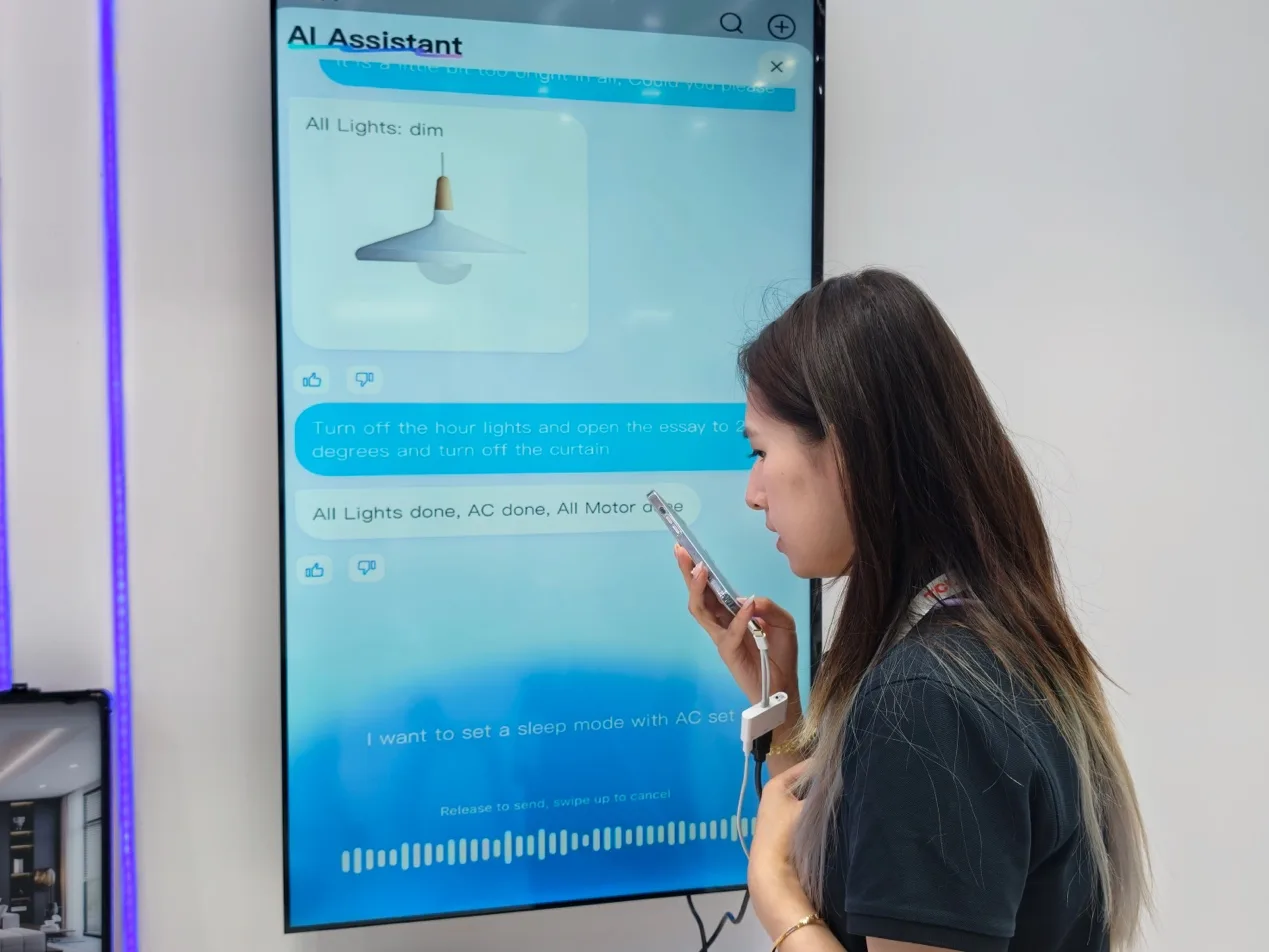
For example, when I told the AI assistant, “I feel a bit cold in the room,” the air‑conditioner switched to heating mode and set the temperature to 22 °C in just over one second after I finished speaking.
Another notable feature is that users need not issue explicit appliance‑control instructions. Drawing on the fuzzy‑understanding strengths of its domain‑specific large model, Huansi AI Hub actively infers and unpacks the requirements behind voice commands, then assigns tasks automatically to the appropriate home appliances for execution.
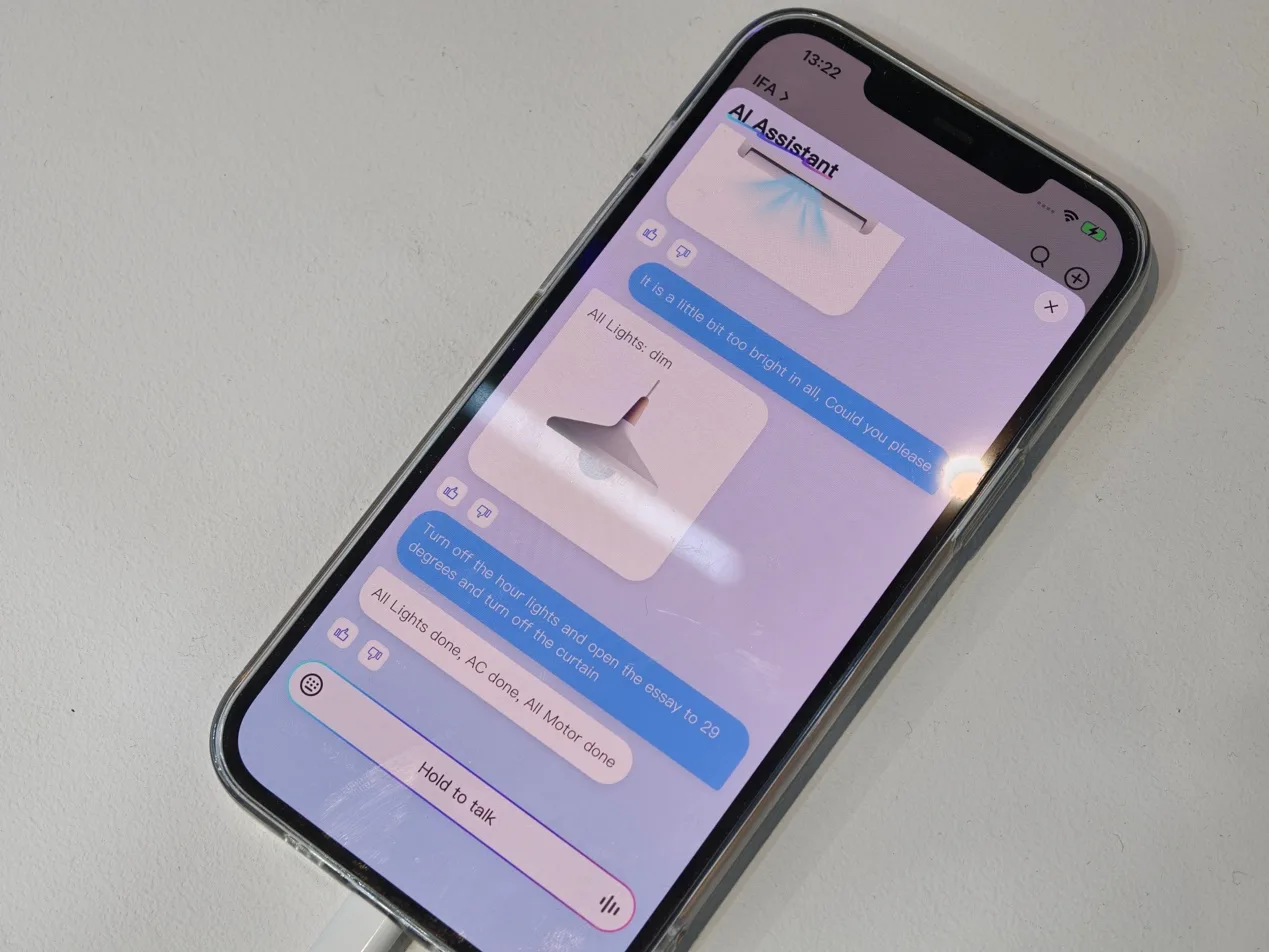
If I say, “It’s too bright outside the window,” Huansi AI Hub understands I want the curtains closed, not indoor lights dimmed.
More importantly, beyond accepting vague user prompts, the AI assistant can also generate scene modes from multiple instructions on users’ behalf.
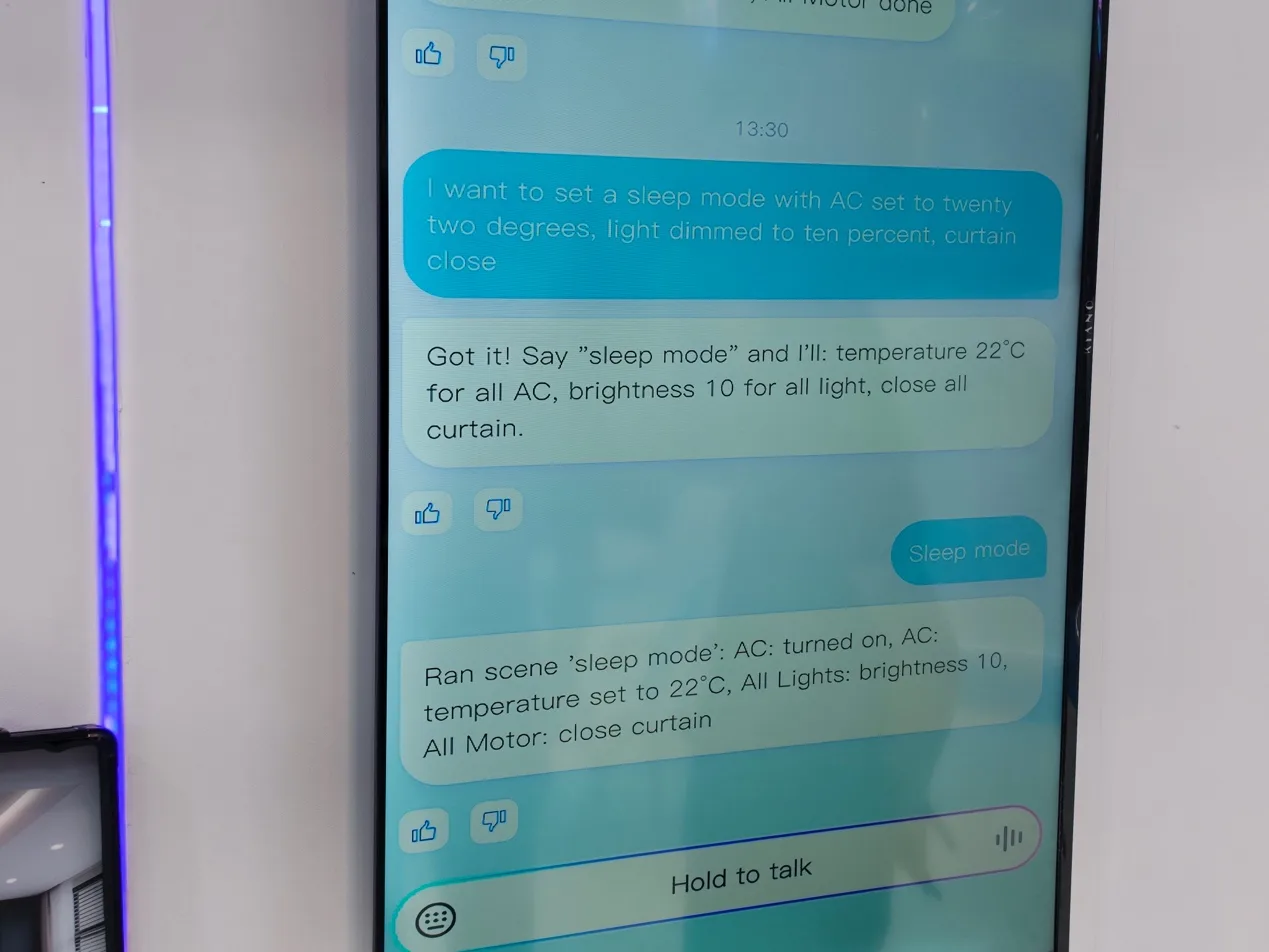
Anyone who has configured smart‑home scenes knows how cumbersome the process normally is: select devices one‑by‑one, define each device’s state, and finally set trigger rules. With the Huansi AI assistant, users accomplish all of this automatically with a single spoken sentence.
Why BroadLink Excels at Integrating Hardware into Agent Capabilities
Many vendors at IFA are striving to build Agent‑enabled smart platforms, and numerous open‑source AI‑Agent projects online implement partial comparable features. So why has BroadLink succeeded in integrating hardware across so many product categories, usage scenarios and ecosystems into Agent‑ready capabilities? Some of the appliances demonstrated on‑site relied on legacy infrared‑remote communication, not even qualifying as IoT‑connected products.
From Leitech’s perspective, this cross‑category, cross‑scenario and cross‑ecosystem integration draws directly on BroadLink’s more than ten years of IoT experience.
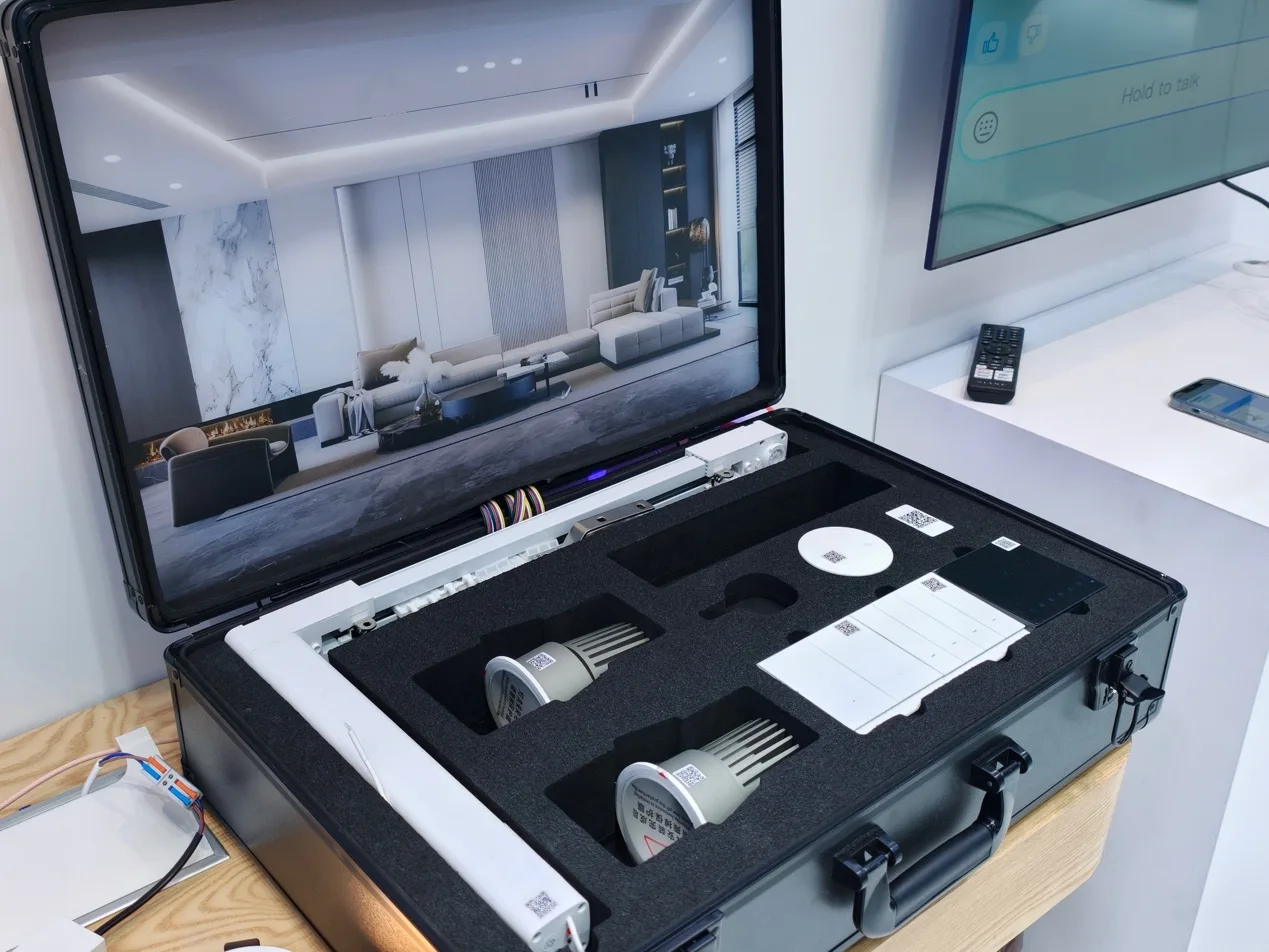
BroadLink is a veteran player in the IoT and AIoT sectors, having entered the IoT space as early as 2013. By contrast, the IoT concept only emerged in China between 2014 and 2016. Thirteen years of experience means BroadLink possesses deep, nuanced insights into users’ needs, habits, and scenario preferences—clearly understanding what users truly want. LeiTech believes the HuanSi AI Assistant’s “scene creation via voice” capability is rooted precisely in BroadLink’s long-term observation and analysis of real-world user scenarios.
In the AI era, BroadLink’s accumulated user insights—gleaned over 13 years—enable it to train an industry-specific large model that genuinely understands user needs and pain points. In essence, the industry-specific large model powering the HuanSi AI Core delivers both the differentiated AI capabilities that set BroadLink apart in the Agent era—and the foundational technology for its future “proactive intelligence” initiatives, allowing BroadLink to respond faster and more effectively to tomorrow’s challenges.
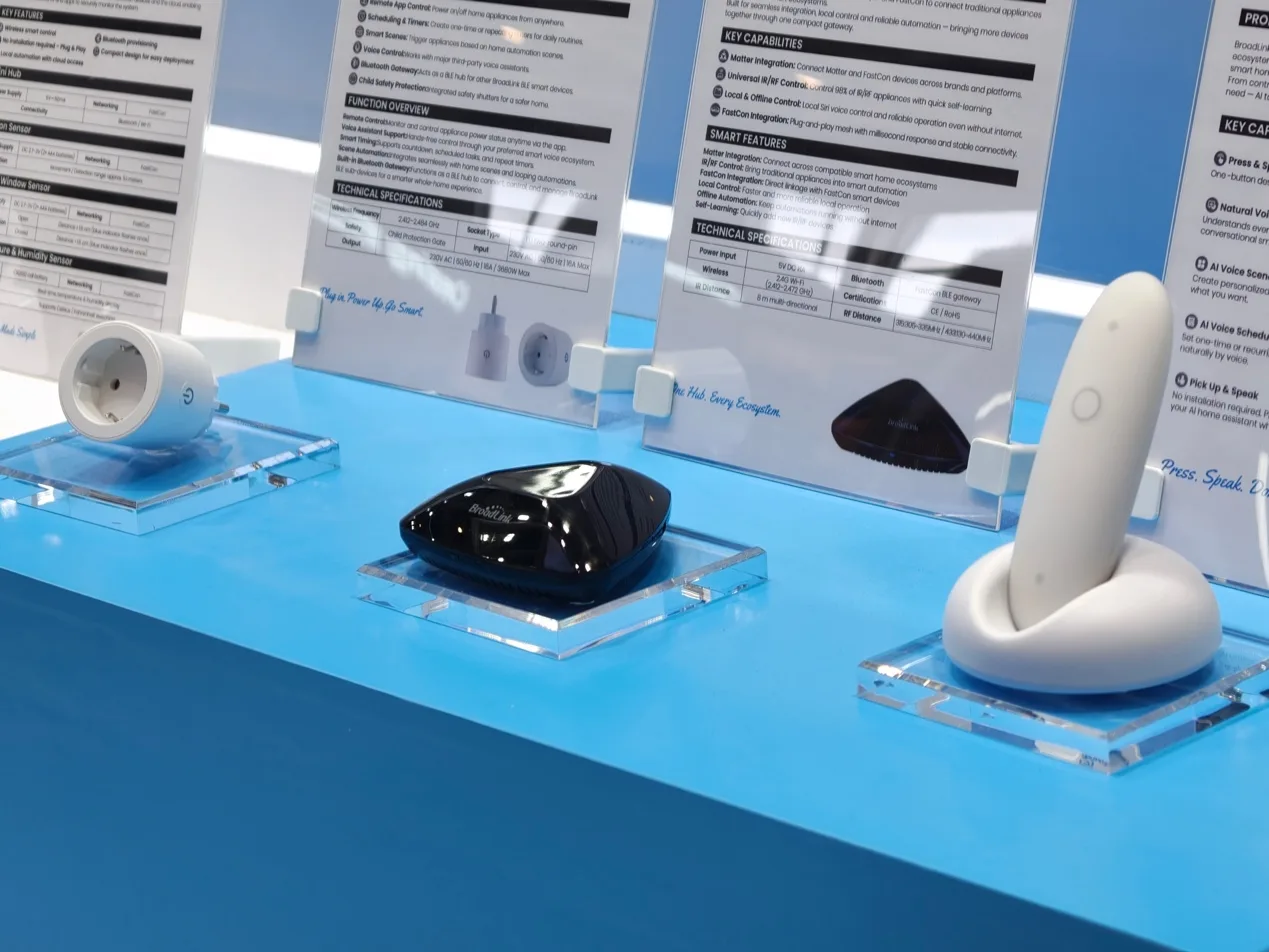
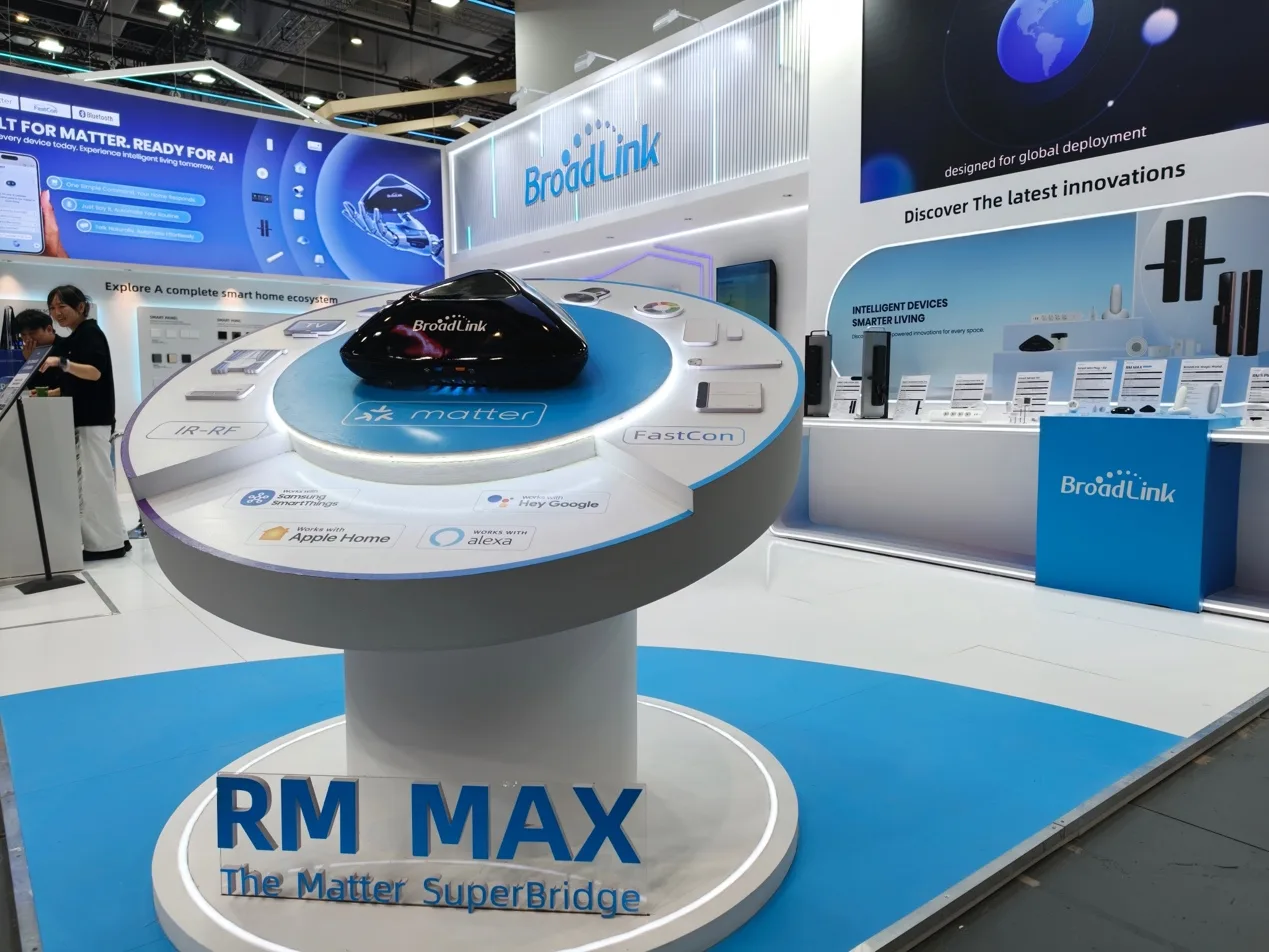
Beyond the HuanSi AI Core, LeiTech notes another key enabler behind BroadLink’s seamless, whole-scenario intelligent control: the BroadLink RM MAX. Serving as the “middleware layer,” the HuanSi AI Core must bridge users and hardware. Naturally, AIoT and IoT devices can be rapidly integrated into the HuanSi AI Core.
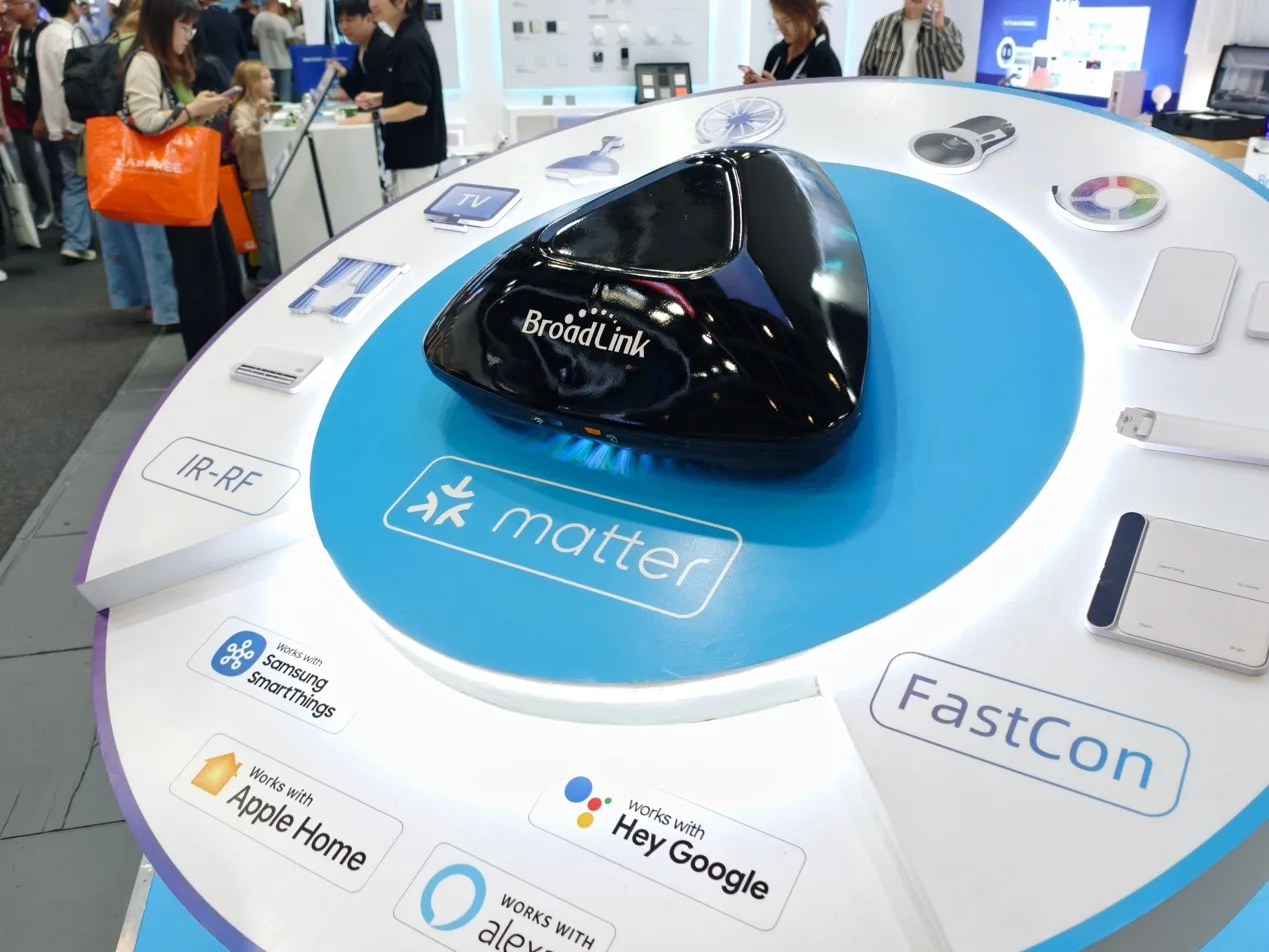
However, a significant number of non-smart, legacy home devices remain in widespread use—devices that neither interoperate with existing IoT platforms nor face imminent obsolescence. These devices remain highly relevant in everyday home scenarios. As a smart bridge, BroadLink’s RM MAX supports 99% of commercial infrared and radio-frequency devices, effectively activating the vast installed base of legacy appliances and expanding the hardware footprint of the HuanSi AI Core. By doing so, the RM MAX empowers the HuanSi AI Core—acting as the “middleware layer”—to complete the AIoT-era closed loop of “user demand → hardware response → hardware perception.”
BroadLink Is Also Driving Industry-Wide Progress—Beyond End Consumers
From the end-user perspective, BroadLink’s Agent capability system, built around the HuanSi AI Core, is already remarkably comprehensive. Yet based on LeiTech’s observations at IFA, if achieving fully AI Agent-enabled proactive services is our ultimate goal, BroadLink’s smart hardware alone is still far from sufficient.
In a sense, home appliances function as “Skills” for an Agent platform. To expand the platform’s capabilities, we ultimately need more AIoT products.
For appliance manufacturers, however, boarding the AI-intelligence train isn’t easy. Redesigning hardware entails enormous costs—in time, money, and manpower. Integrating with external AI platforms means paying per API call; the more units sold, the higher the AI cost—and any changes to platform rules force passive adaptation, while data ownership and user experience remain outside the brand’s control. Building an in-house AIoT platform from scratch incurs astronomical design, development, manufacturing, and operational expenses.
Faced with these imperfect options, BroadLink offers a third path: Smart products require no hardware modifications—a single OTA update transforms legacy devices into AI-capable ones; and the associated AI service fee is “industry-lowest”: just $0.14 (RMB 1) per device per year. For brands wishing to develop new intelligent agents, BroadLink’s Agent Development Platform enables self-service development using simple natural-language inputs.
With BroadLink’s support, appliance manufacturers avoid reinventing the AI wheel—and need not maintain dedicated AI teams. For BroadLink, offering low-barrier AI enablement to brands means more brands and product categories will join the HuanSi AI Core ecosystem. LeiTech believes this “long-term investment” in the entire industry carries far greater strategic significance than selling a few extra hardware units.
Products That Cannot Run Intelligent Agents Will Be Phased Out
At the Guangzhou China Building Decoration & Materials Expo in July, BroadLink’s Chairman Liu Zongru stated a bold view:
Products lacking voice interaction capability—and unable to run intelligent agents—will inevitably be phased out.
Two months later at IFA, this seemingly radical statement has already become reality. Across the show floor, integrating large models, adding sensing capabilities, and incorporating robotic arms—entire industries are sprinting toward Agentification. Yet LeiTech believes market filtering won’t stop once non-Agent-capable products disappear:
Today, the market eliminates products that lack Agent support. Once every product on the market achieves Agentification, the market will impose stricter selection criteria. Those products relying on generic large models—but delivering subpar capabilities and user experiences—will inevitably become the next generation of casualties.
It is precisely for this reason that BroadLink’s HuanSi AI Core stands out as critically important. For manufacturers, the HuanSi AI Core is more than just an AI platform—it represents a low-barrier entry point into the AgentIoT era.
Whether the HuanSi AI Core will ultimately achieve substantial ecosystem influence in the AI Agent era remains to be seen—but the market will likely deliver its verdict well before next year’s IFA.
From September 4–8, the world’s largest home appliance and consumer electronics exhibition—IFA 2026—is being held in Berlin.
As the “most authoritative new media outlet covering IFA” globally recognized for its collective AI expertise, LeiTech has dispatched its largest and highest-caliber reporting team to Berlin this year. Deploying a “2+N” model (two live hosts + multiple on-site editors + multiple backend editors), LeiTech is delivering real-time, multidimensional, and first-hand coverage of IFA 2026—with special focus on the convergence of AI Agents with home appliances and hardware, the integration of robotics technologies into domestic living, emerging trends in human–vehicle–home digital lifestyles, and the global stage presence of Chinese brands.
The LeiTech IFA2026 Reporting Team is actively covering events live from Berlin—stay tuned!