
 雷科技
雷科技






On September 4, IFA 2026 officially opened in Berlin, Germany. As one of the world’s top three consumer electronics trade shows, this year’s IFA attracted over 1,900 exhibitors from 49 countries and regions, under the theme “The Future is Now.” LeiTech (ID: LeiTech) deployed its largest-ever IFA 2026 reporting team to Berlin, delivering live, multidimensional, and first-hand coverage of the event.
In previous years, IFA centered primarily on home appliances; recently, however, its consumer electronics character has grown increasingly pronounced. This year marks a notable departure: numerous PC manufacturers—including Lenovo, Acer, and ASUS—participated in IFA or launched major new products during the event. Moreover, AMD made a highly anticipated return to IFA after several years and delivered the keynote address on September 4—significantly elevating the visibility of the PC exhibition zone.
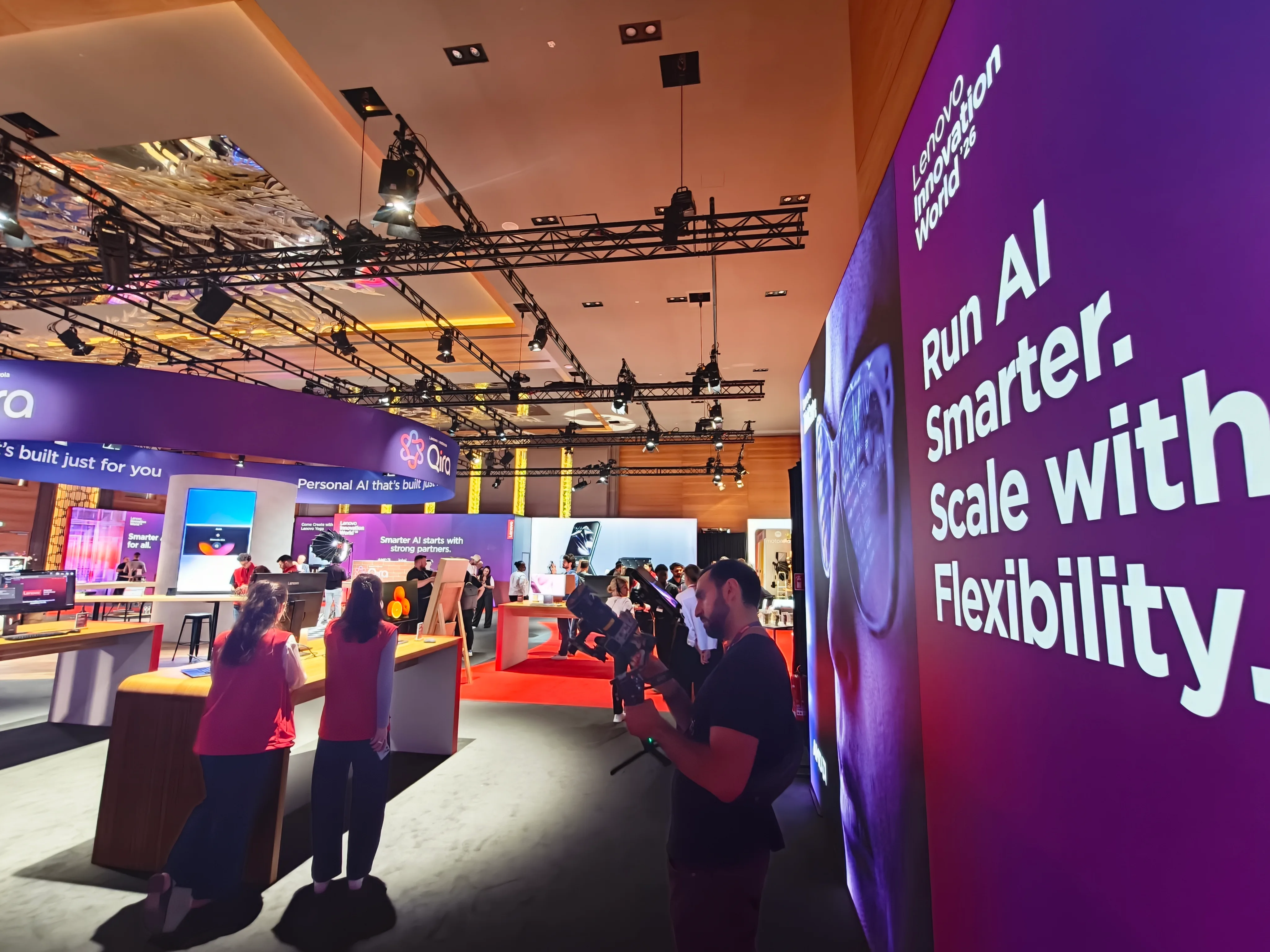
(Image source: LeiTech IFA Reporting Team)
Seizing this opportunity, let’s take a quick look back—with Xiao Lei as your guide—at the most unmissable PC launches unveiled at IFA 2026 over the past few days.
Lenovo: Evolving the PC into an “Agent Computer”
Although PC vendors have been promoting the concept of “AI PCs” for several years, consumers remain largely unconvinced.
There are multiple reasons for this skepticism: First, most so-called AI PCs lack true on-device AI inference capabilities—their “AI features” rely heavily on cloud-based large language models (LLMs), making them functionally no different from simply downloading an app like Doubao or Qwen on your PC. Second, vendors’ frequent boasts about NPU compute performance remain nebulous: To date, no one has clearly explained which applications can actually leverage that hardware.
In response, Lenovo executives declared during their keynote speech that the next evolution of AI PCs lies in the full transition to the Agent era.
They envision future computers not as simple chatbots responding to individual queries, but as proactive personal digital assistants capable of autonomously interpreting user intent and executing multi-step tasks end-to-end.
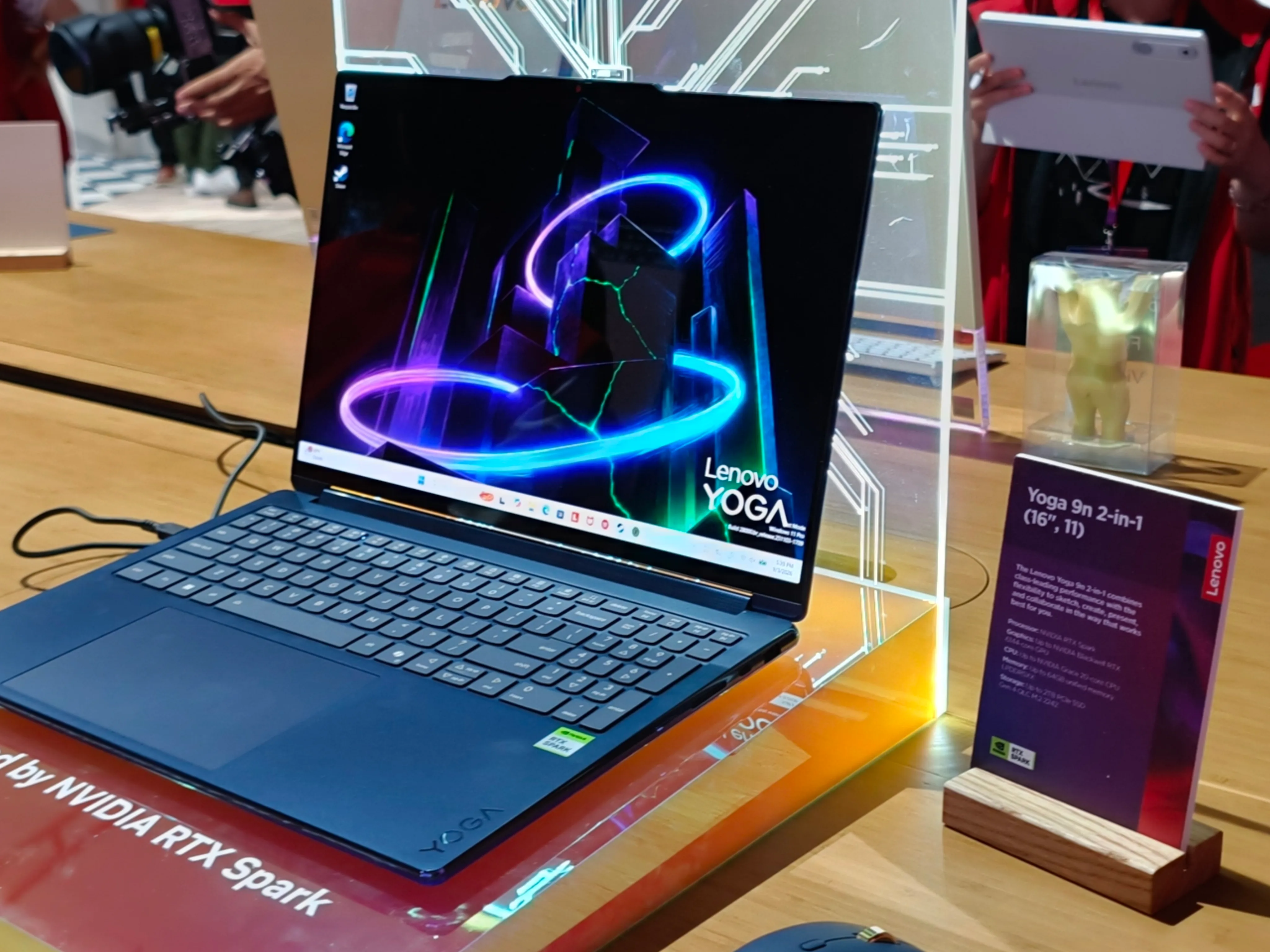
At its Lenovo Innovation World 2026 event held on September 3, Lenovo unveiled an entire lineup of new devices—including the Yoga, ThinkBook, and ThinkCentre series. Among these, the most eye-catching were two new Yoga laptops powered by NVIDIA RTX Spark.
(Image source: LeiTech IFA Reporting Team)
The all-new Yoga Pro 9n supports up to 128GB of unified memory and features a 15.3-inch 2.5K OLED display with a peak refresh rate of 165Hz; meanwhile, the Yoga 9n 2-in-1 sports a 16-inch 2.8K 120Hz OLED screen and up to 64GB of unified memory—while retaining Yoga’s signature 360-degree hinge design.
Naturally, the biggest upgrade lies inside: the RTX Spark chip.
RTX Spark integrates NVIDIA’s Grace CPU, Blackwell RTX GPU, and a unified memory architecture into a single PC platform. With it, the Yoga Pro 9n can run AI models, ComfyUI, 3D rendering engines, and multiple autonomous Agents entirely locally—moving far beyond superficial “AI features” such as AI-powered background blur in video calls or basic AI cutouts in CapCut.
This push toward the Agent era extends beyond laptops—to Mini PCs as well.
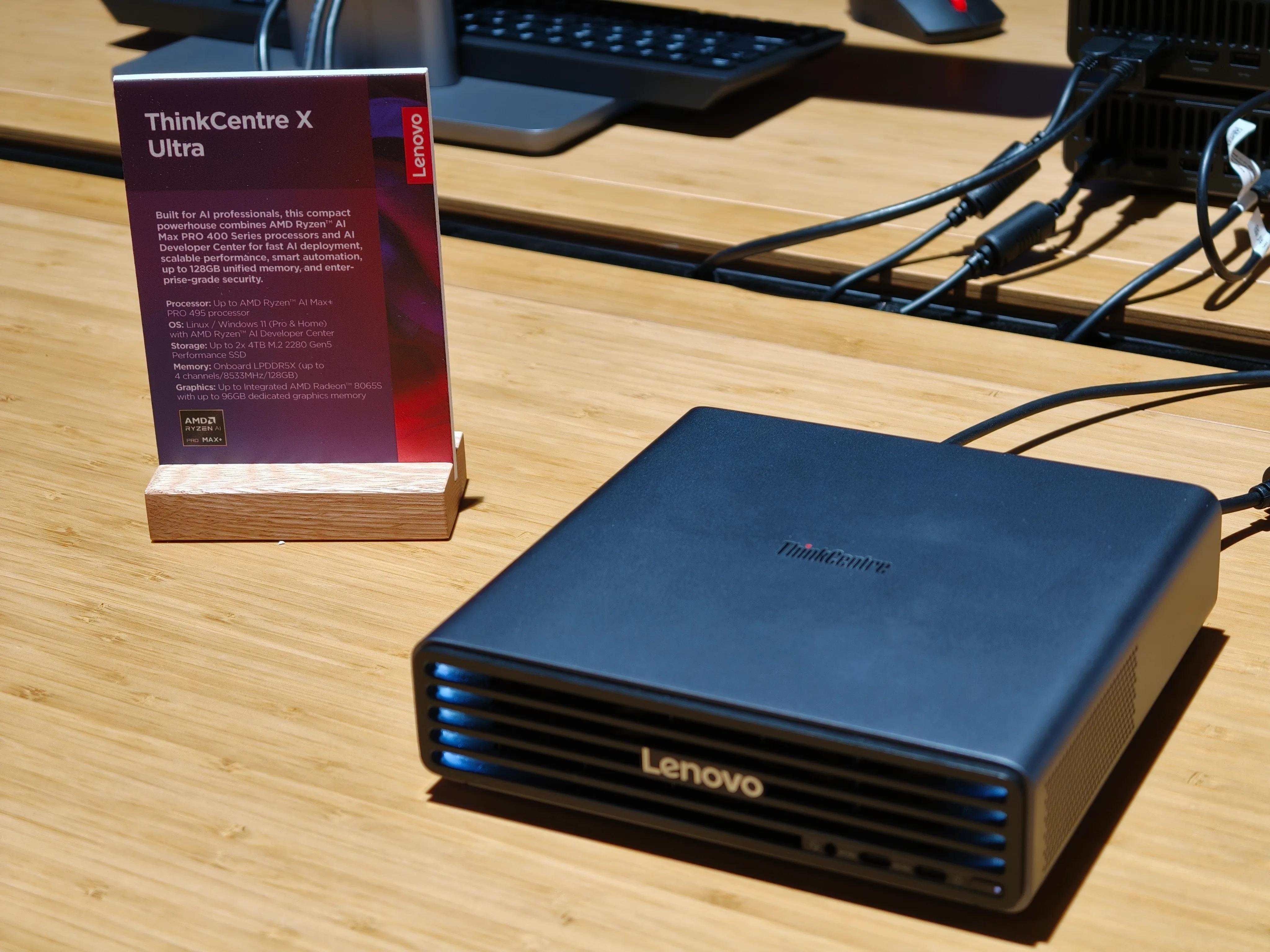
At the same event, Lenovo also showcased the new ThinkCentre X Ultra: a compact 1.6L Mini PC supporting up to AMD Ryzen AI Max+ PRO 495 and 128GB of unified memory. Crucially, up to four units can be clustered together to jointly process larger local AI models, complex multi-Agent workflows, and extended context windows.
(Image source: LeiTech IFA Reporting Team)
Wow… running massive local models on a single machine is already impressive—but linking four together? You’re clearly aiming to fully utilize Qwen’s full-scale LLM capabilities.
This device no longer resembles the traditional office Mini PC we once knew. Instead, it functions more like a compact AI workstation sitting on your desk. And this flexible, modular clustering approach—scaling compute resources on demand—could significantly reduce upfront investment costs for SMEs.
That said, beyond serious productivity use cases, Lenovo also introduced two experimental concepts.
The first is Project AeroBlade: a 14-inch concept laptop measuring under 10mm thick and weighing less than 830g. Even more remarkably, it dispenses with conventional fans altogether—instead leveraging solid-state AirJet active cooling technology developed in collaboration with Frore Systems to sustain consistent performance within an ultra-slim chassis.
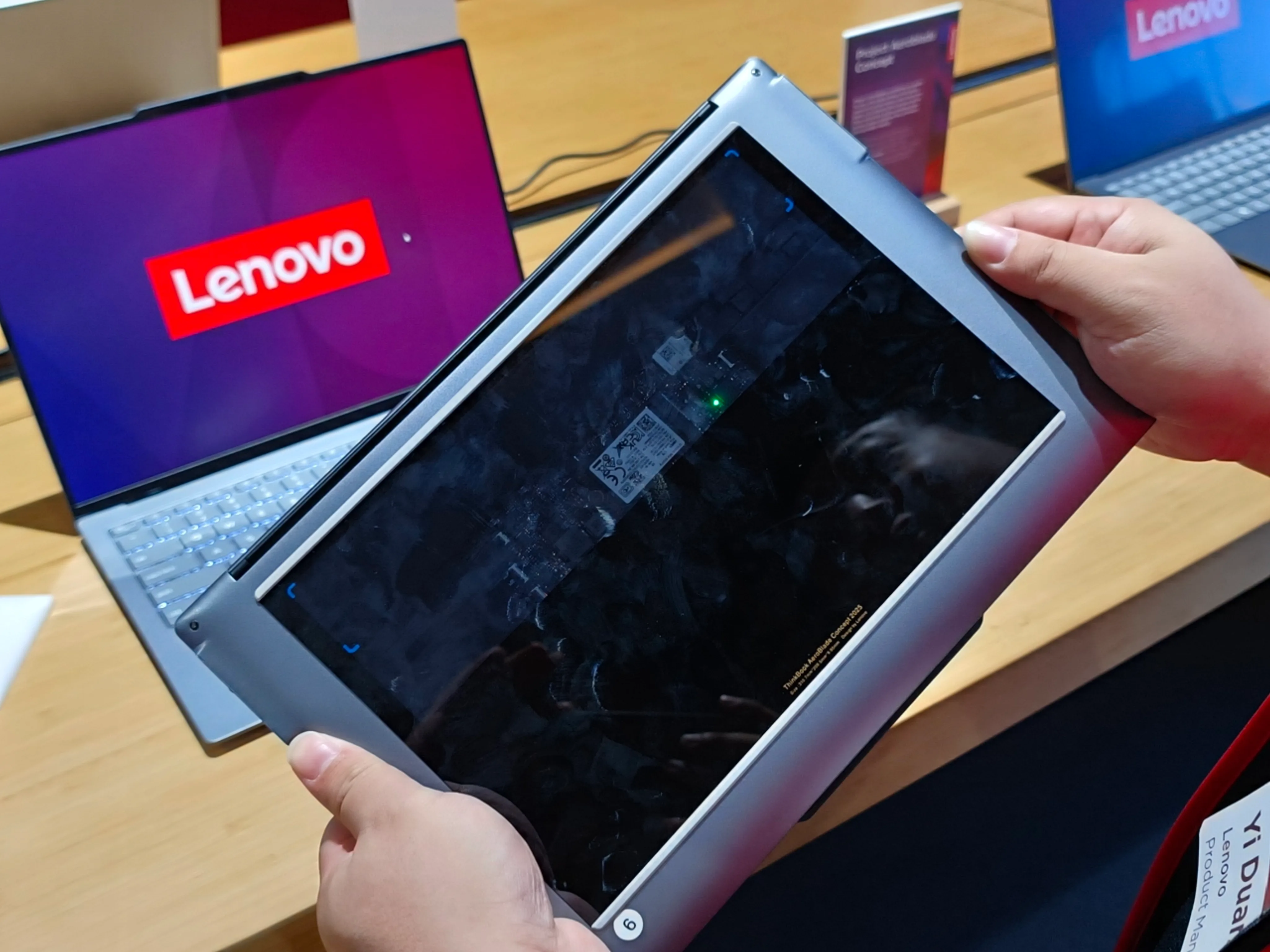
(Image source: LeiTech IFA Reporting Team)
The second is Project Swan, a more direct proposition: a standard 14-inch laptop whose flexible display expands outward from both sides when needed—transforming into a 17-inch 16:9 screen. At just 17.9mm thick and ~1.6kg, it maintains strong portability despite the dynamic screen size.
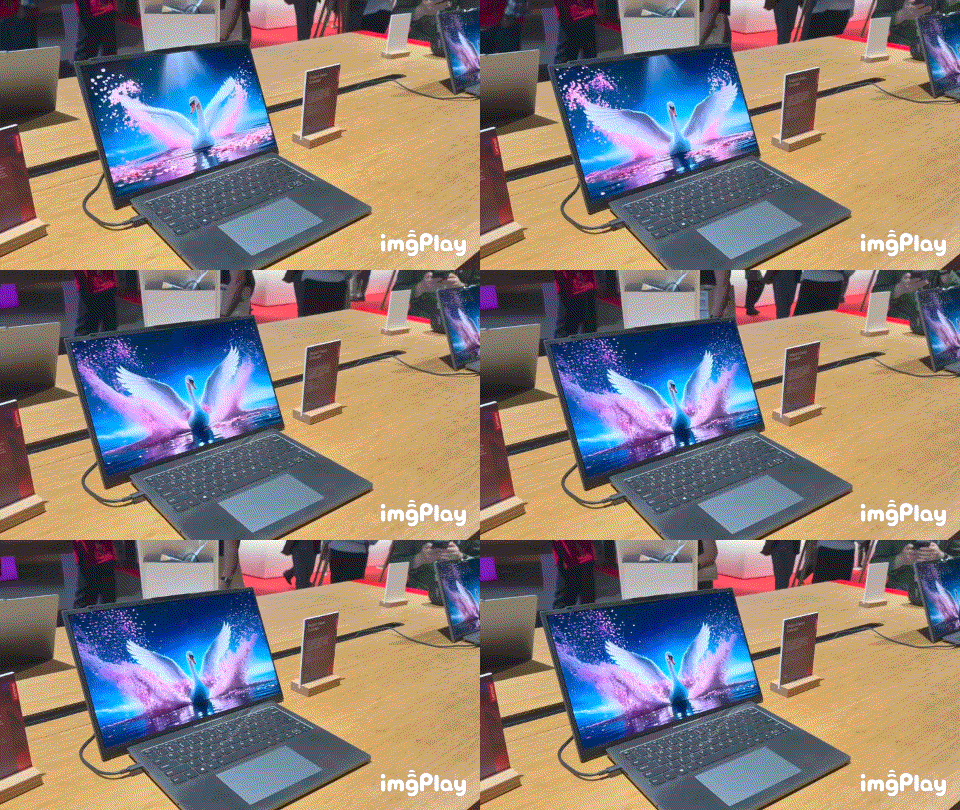
(Image source: LeiTech IFA Reporting Team)
Practicality? Neither model is yet commercially available. The cooling tech behind Project AeroBlade has been demonstrated repeatedly but never shipped; similarly, Project Swan reflects a long-standing R&D direction at Lenovo—where cost remains a key barrier.
But fun factor? These two score a perfect 100/100.
ASUS: Building the Hardware Foundation for Next-Gen AI Workflows
Naturally, ASUS is fast-tracking adoption of cutting-edge platforms like RTX Spark.
This year at IFA, ASUS unveiled three RTX Spark–powered PCs: the ProArt P16, ProArt P14, and GR1X—all explicitly targeted at creators and users running AI workloads locally.
The ProArt P16 measures only 12.9mm thick and weighs approximately 1.77kg, equipped with a 99Wh battery; the ProArt P14 shrinks further to 13.9mm and 1.48kg, with a 90Wh battery.
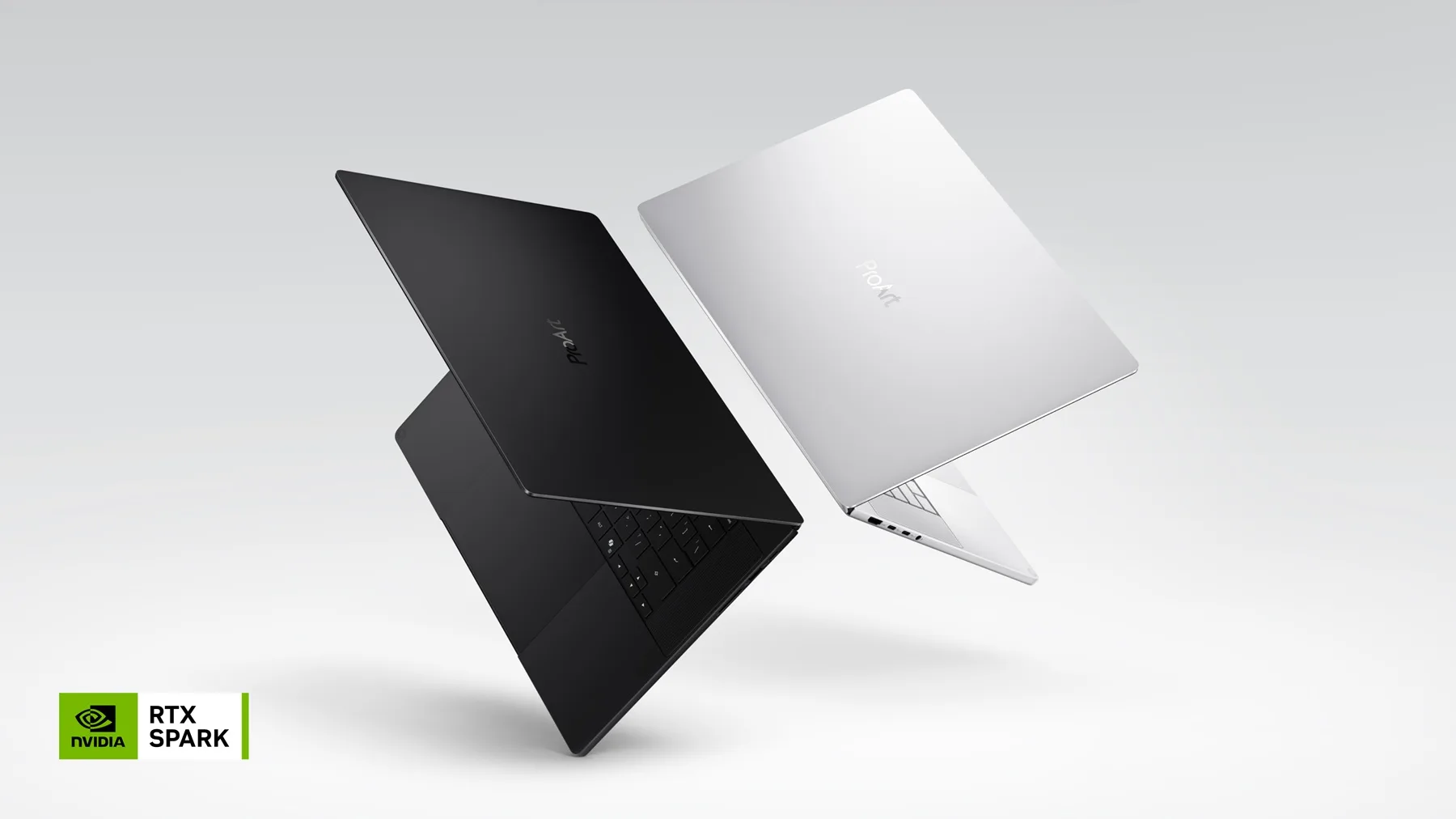
(Image source: ASUS)
They look sleek and refined—right? But that’s not the main point. According to ASUS, both the ProArt P16 and P14 can natively run LLMs with up to 120 billion parameters—and handle 3D scenes exceeding 90GB or generate 4K AI video.
In other words, configurations previously reserved for high-end workstations have now been squeezed into ultraportable notebooks.
The emergence of integrated high-performance chips like RTX Spark and Ryzen AI Max+ has fundamentally disrupted decades-old PC industry paradigms. Historically, high performance meant bulkier chassis, heavier weight, and aggressive thermal solutions. Today, thinness, aesthetics, and raw performance are finally converging in a single device.
The newly unveiled ProArt GR1X follows the same philosophy: a desktop Mini PC powered by RTX Spark and supporting up to 128GB of unified memory. Compared to laptops, it’s better suited for sustained local AI inference, Agent orchestration, and creative production tasks.
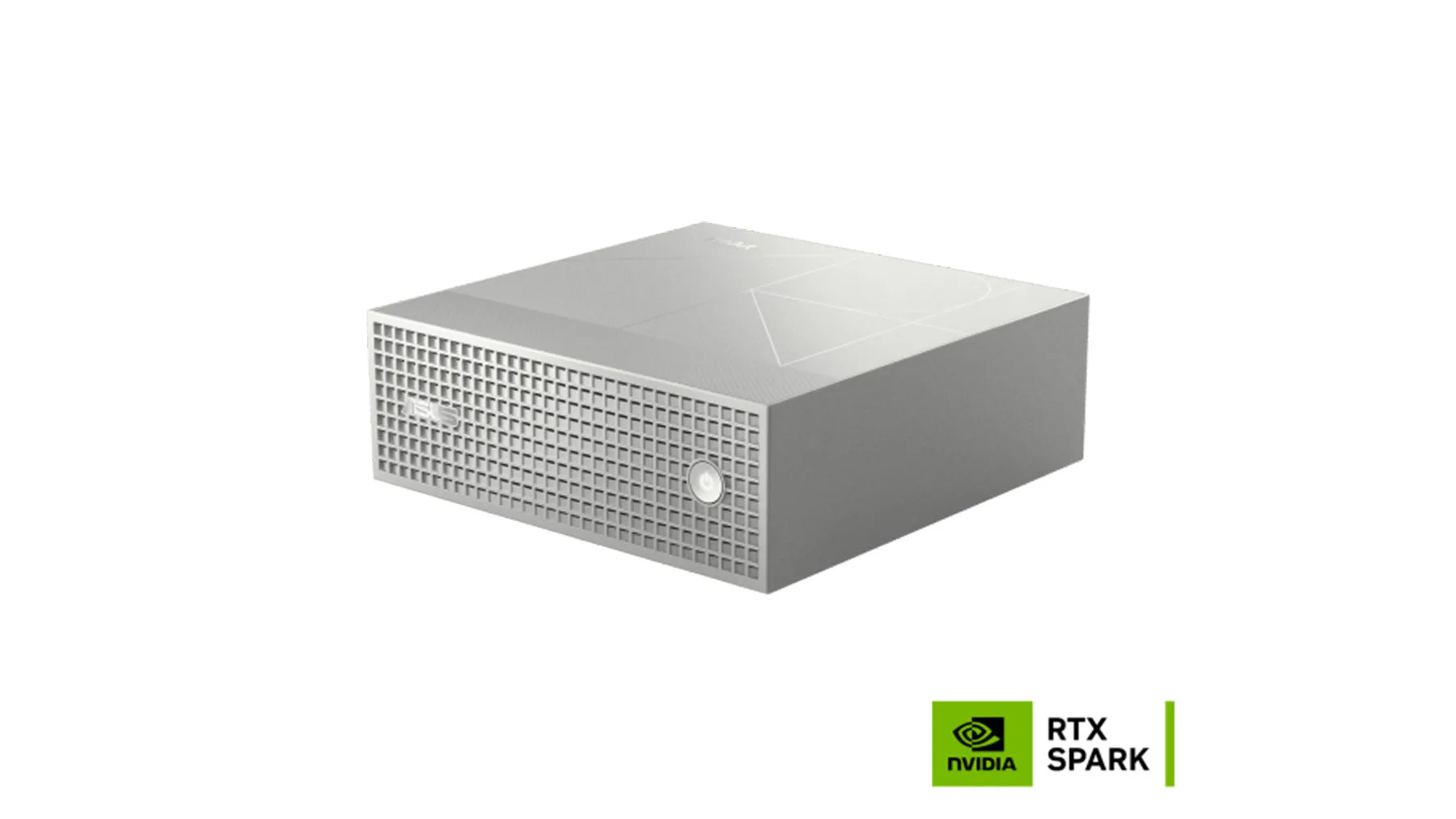
(Image source: ASUS)
Of course, hardware alone isn’t enough—ASUS is really showcasing its end-to-end AI workflow ecosystem.
Its on-site demo of MuseTree already enables on-device AIGC using FLUX, WAN, and other models—and seamlessly integrates with ComfyUI. ASUS’s proprietary Zenni Claw Agent flexibly orchestrates generation, editing, and asset management, letting users switch fluidly between local and cloud processing depending on task requirements.
Put simply, ASUS is deeply focused at IFA 2026 on enabling PCs to “work autonomously”—and competitors will likely follow suit very soon.
Acer: Handhelds, AI Desktops—Master of the Novel Concept
For some reason, Acer always seems to unveil an unusually diverse range of products at major electronics expos.
This year is no exception.
First up is the Acer SFF RTX Spark: a compact desktop PC powered by RTX Spark, delivering up to 1 petaFLOPS of AI compute and supporting 128GB of unified memory. Its positioning mirrors the aforementioned Mini PCs—targeting Mac Mini users seeking local Agent execution, AI creation, and development workloads.
However, Acer gave this unit distinctive styling: a black chassis accented with copper trim, evoking a subtle retro aesthetic—though wooden side panels would’ve completed the vibe perfectly.
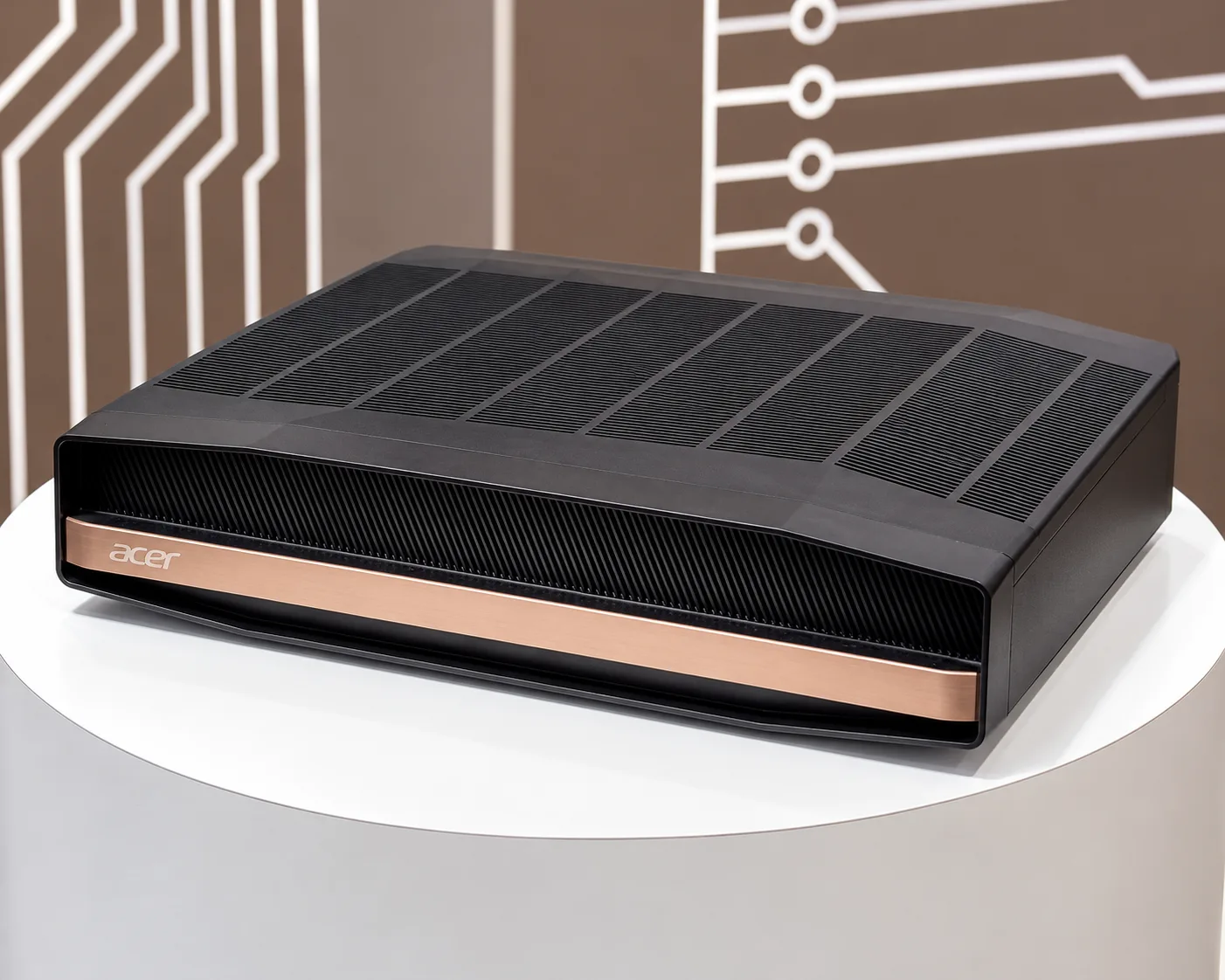
(Image source: techpowerup)
Then there’s the more conventional Veriton RI110—so ordinary it’s practically unremarkable.
This Mini PC packs Intel’s Ultra X7 358H CPU and Arc B390 integrated graphics, supports deployment of models up to ~120B parameters, and includes an OCuLink interface for adding discrete GPUs or high-speed storage expansion.
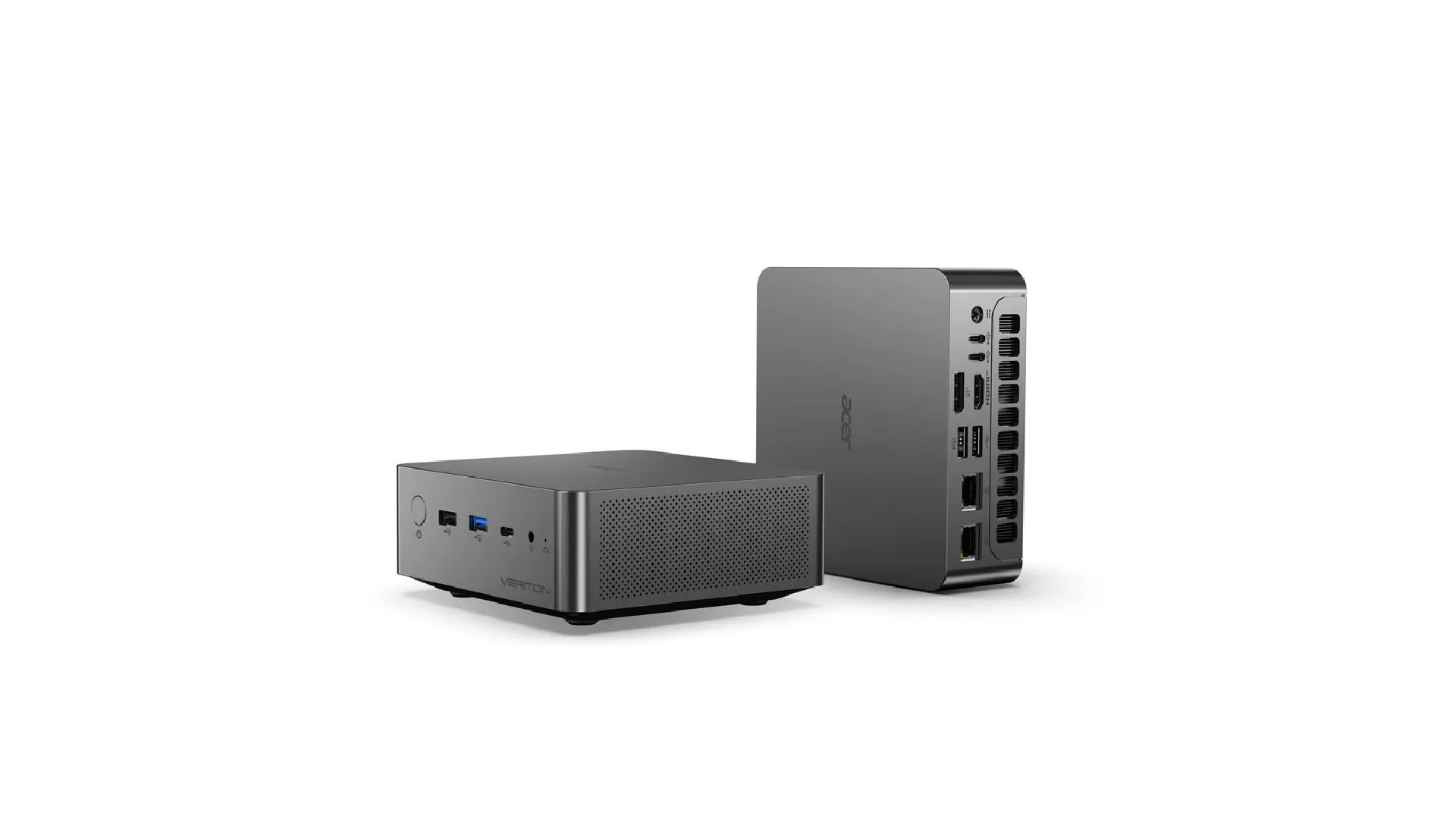
(Image source: techpowerup)
Still, if we had to pick Acer’s most captivating IFA 2026 launch, it’d probably be its handheld gaming console.
The new Predator Atlas 7 features a 7-inch display, tops out with an Arc G3 Extreme processor and Arc B390 iGPU, incorporates dual-fan cooling, packs an 80Wh battery, and even offers optional TMR analog sticks.
Yet Acer clearly felt a standard handheld wasn’t enough—so it introduced Project DualPlay Mini. This 8-inch concept device functions as a Windows handheld in its default mode; flip the screen, and a full physical keyboard emerges beneath—transforming it instantly into a mini laptop.
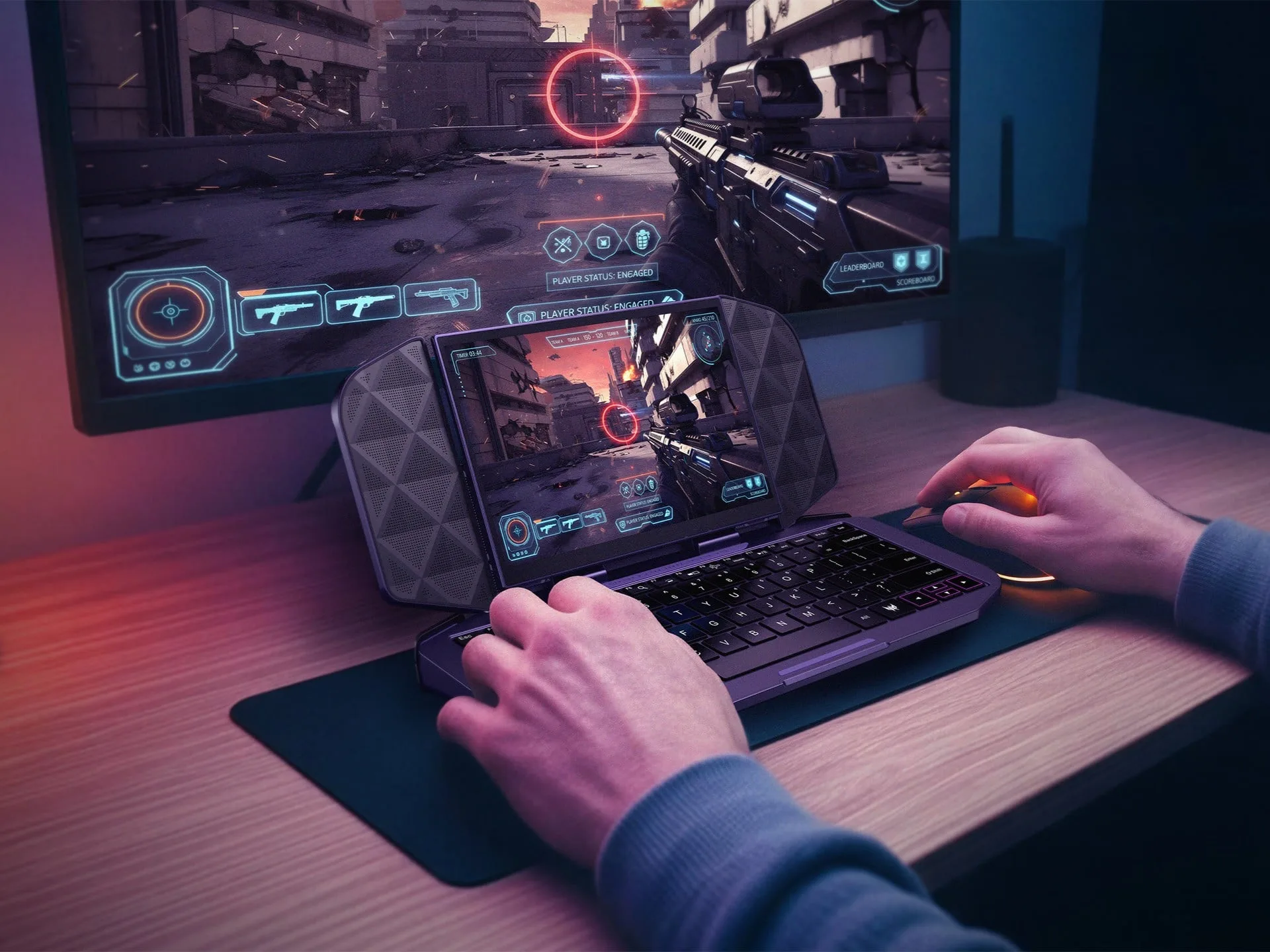
(Image source: Notebookcheck)
Who would’ve thought—after years of handheld innovation, the category would circle back to laptops?
I know the concept sounds abstract—but imagine using it on a business trip: gaming during downtime, quickly replying to emails, or jotting down notes. It suddenly feels surprisingly plausible.
Beyond those, Acer also launched the Swift Blade 14—weighing just 799g and measuring 12.9mm thick, with an optional 3K OLED display—and the Aspire G 3D 16, featuring Ryzen AI Max+ 395 and delivering glasses-free 3D visuals without a dedicated GPU.
All told, Acer’s IFA 2026 portfolio may lack cohesive focus—but it certainly delivers variety.
HP: Going All-In on Both NVIDIA and AMD!
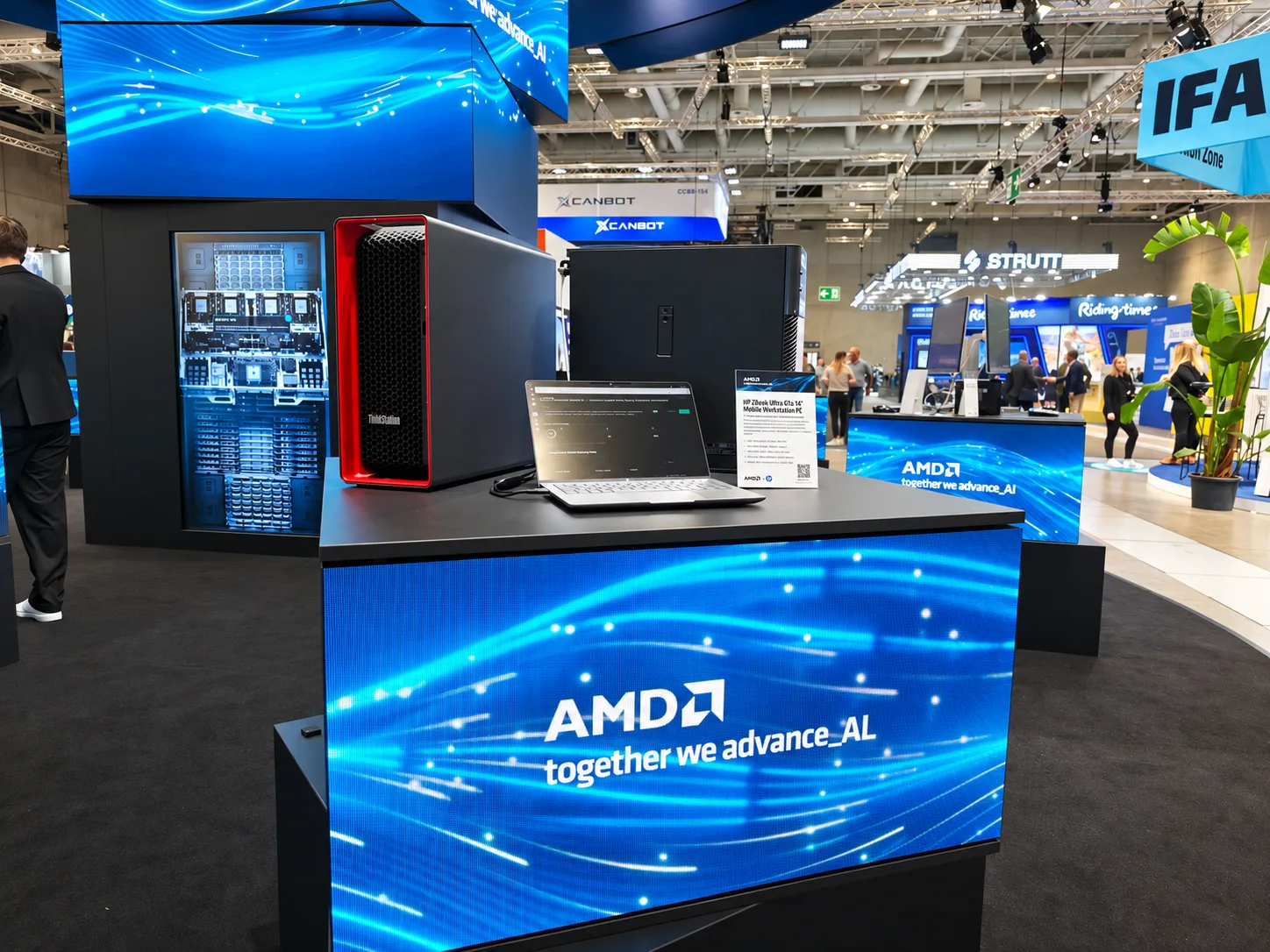
Since we’ve covered AMD, how could we omit HP—the first OEM to launch products based on AMD’s new platform?
According to official information, the next-generation HP ZBook—codenamed “Sundance”—will debut with AMD’s Ryzen AI Halo processor and feature a staggering 190GB of unified memory. AMD demonstrated local AI capabilities on this system at IFA, including generating immersive 3D worlds from a single text prompt—and even running Microsoft Flight Simulator.
Clearly, this ultra-large unified memory platform targets far more than just LLMs—it’s engineered for AAA gaming, professional 3D modeling, and demanding creative workloads.
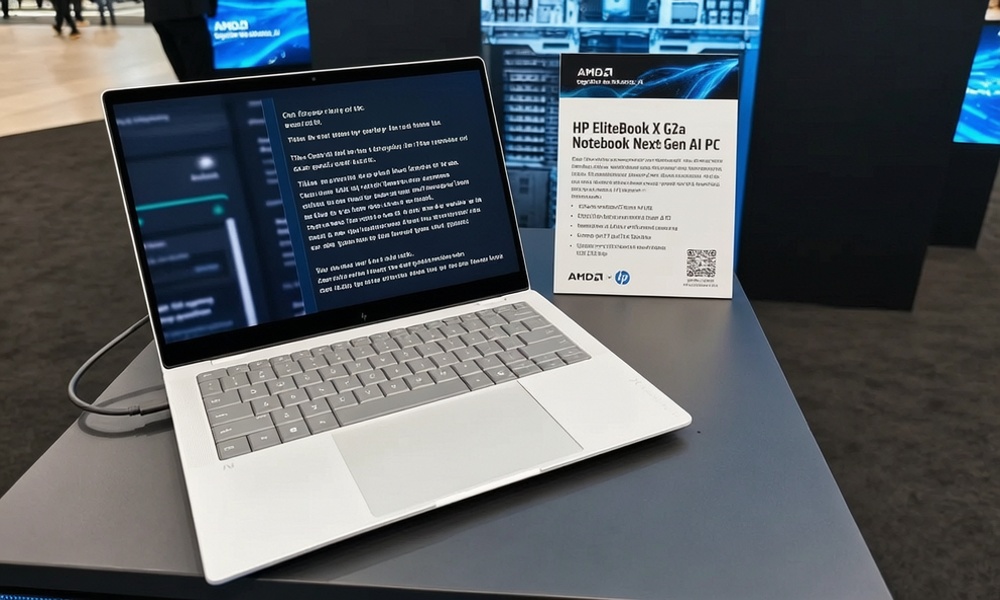
Beyond this unreleased flagship, HP also showcased several recently launched products—including the EliteBook X G2a, configurable with up to the Ryzen AI 9 HX PRO 470 (a refreshed version of last-gen silicon, featuring 12-core Zen 5/Zen 5c CPU and Radeon 890M iGPU, with modest improvements to clock speeds and NPU performance).
And yet, the overseas price tag for this configuration starts at $4,199.99—truly jaw-dropping.
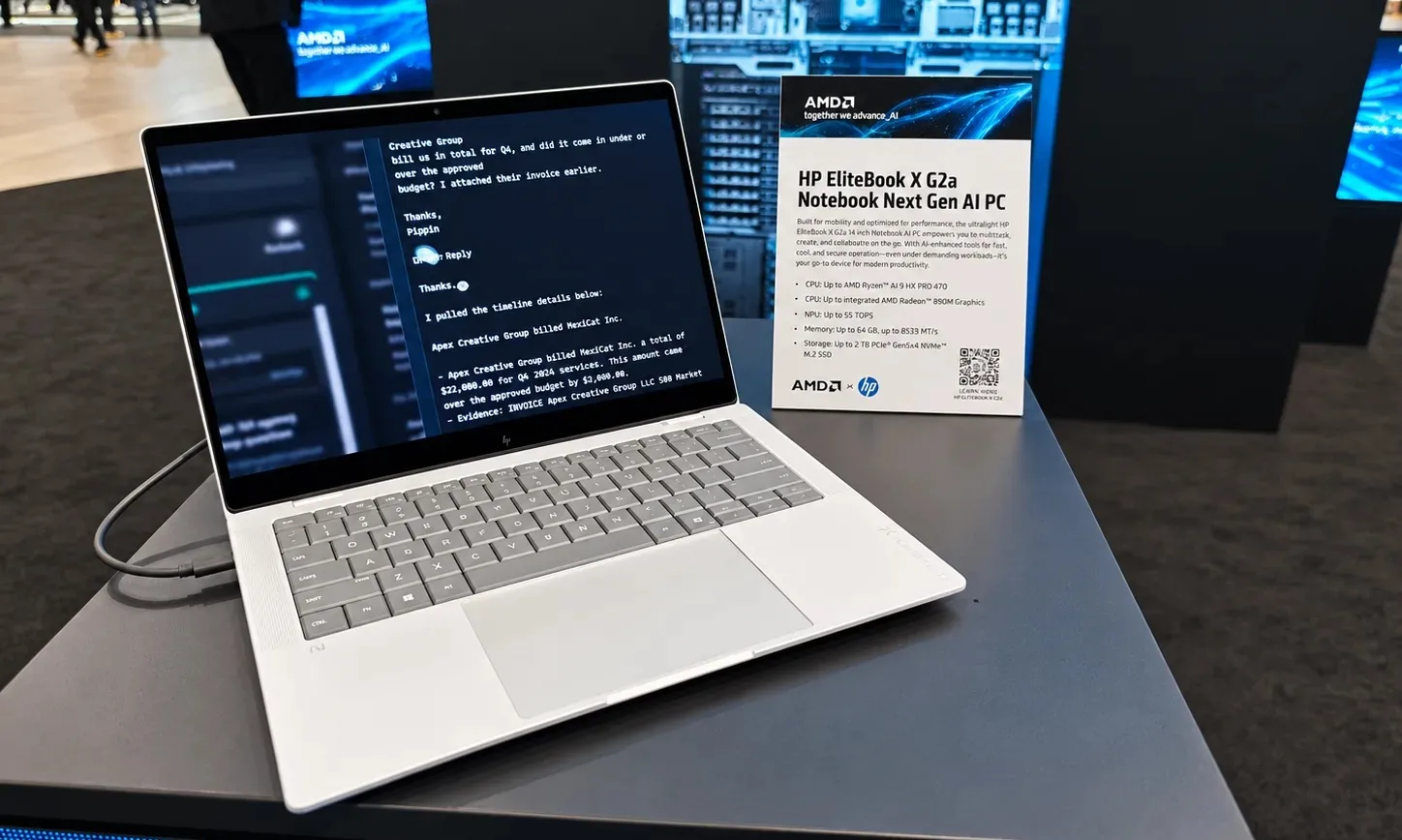
(Image source: LeiTech IFA Reporting Team)
Another model is the ZBook Ultra G1a, powered by Ryzen AI Max+ 395—the strongest chip available before the arrival of RTX Spark and the Ryzen AI Max+ 400 series. Performance-wise, it’s unquestionably capable—but the domestic price of ¥30,000 for the 64GB + 2TB configuration gives many pause.
Rest assured: Once Agent Computers built on these chips reach mass-market availability, they’ll only get pricier.
(Image source: LeiTech IFA Reporting Team)
HP also debuted two RTX Spark–powered laptops—the OmniBook Ultra 16 and OmniBook X 14—plus the OmniDesk, a desktop PC optimized for persistent local Agent execution. All support up to 128GB of unified memory and are marketed as purpose-built for everyday creators.
In HP’s view, rather than powering down a high-performance PC each night, it makes more sense to keep it running on your desk—executing long-running Agent and AI tasks continuously in the background.
HP OmniBook Ultra 16 and HP OmniBook X 14 are expected to launch overseas this fall; no domestic release details have been announced yet. Based on prior naming conventions, they’ll likely be rebranded in China as the StarBook Ultra 16 and StarBook X 14—representing HP’s highest-tier consumer ultraportables.
Oh—and HP explicitly positions these devices as “always-on.” I suspect that’s precisely the baseline expectation for future Agent Computers.
Dell: Student Laptops Get a Style Upgrade
Unlike Lenovo, ASUS, and HP—whose IFA 2026 efforts revolve around high-performance Agent Computers—Dell took an unexpectedly understated approach this year.
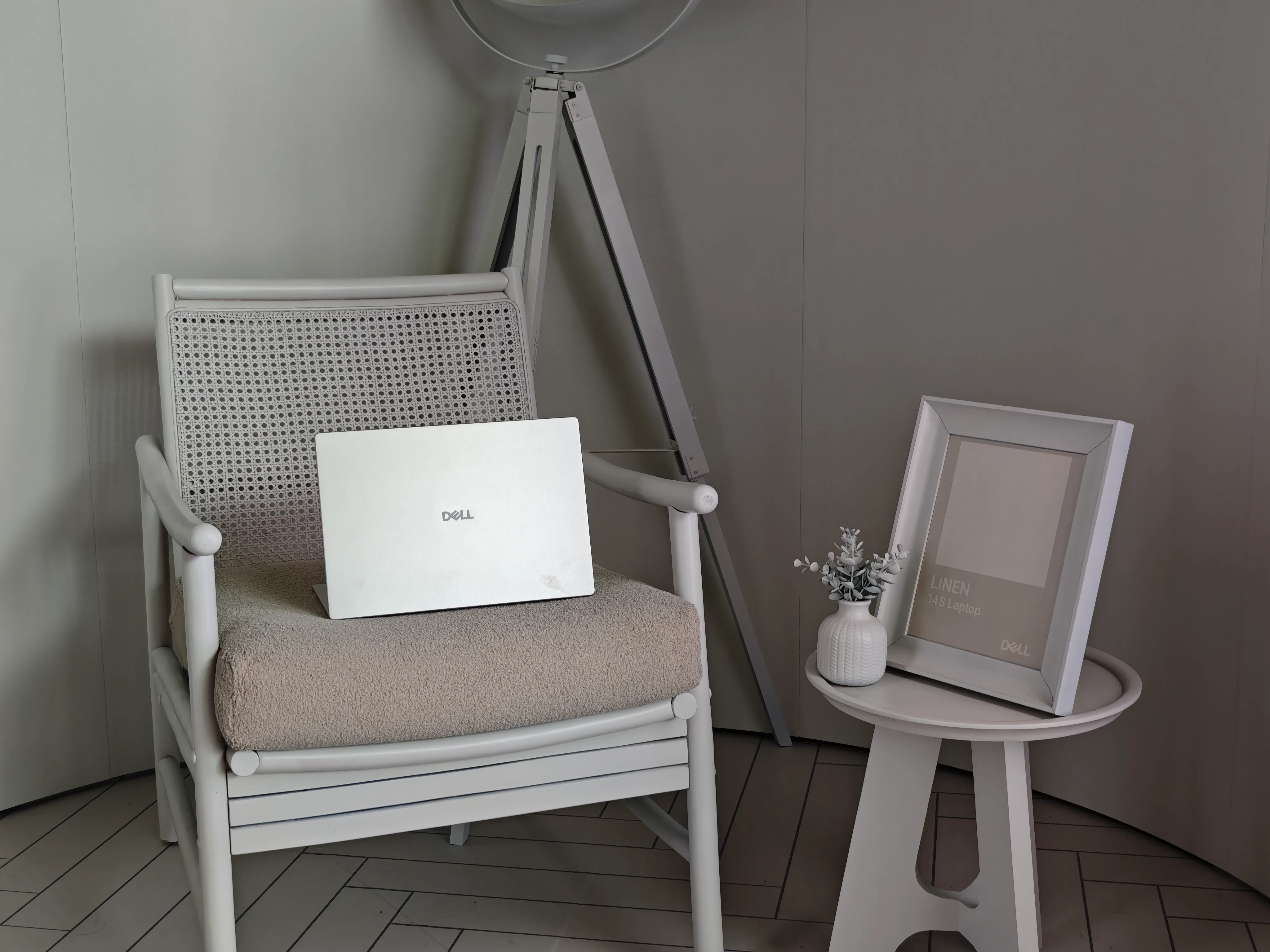
Its headline launch? The Dell 14S: a laptop designed specifically for students and young professionals.
No 128GB unified memory. No local 120B-parameter LLMs. No Agent clusters. Its most prominent selling point? Color options.
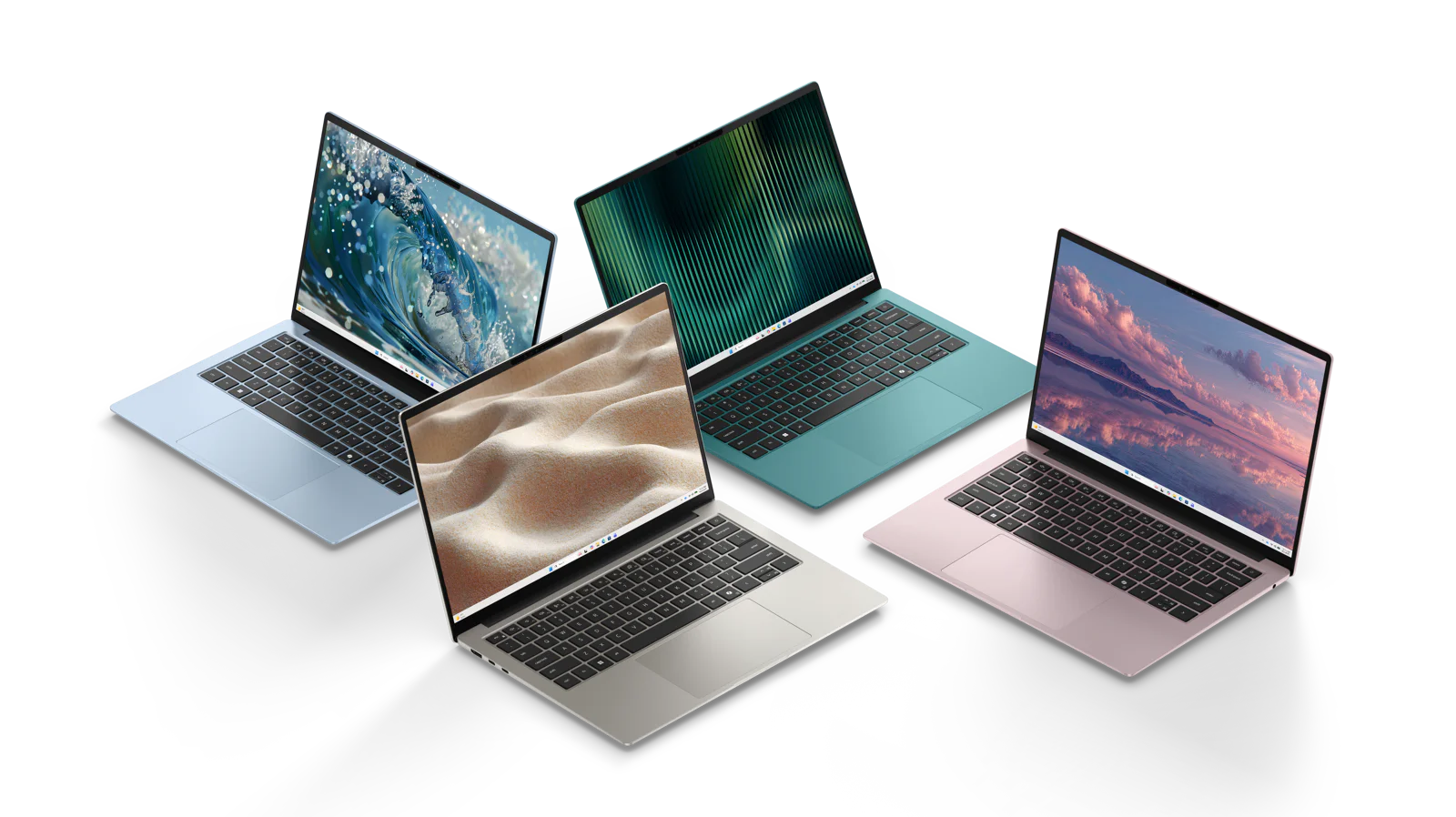
The Dell 14S comes in four vibrant hues: Linen, Dusty Rose, Washed Denim, and Velvet Green. Built with an all-aluminum chassis, it measures ~13.5mm thick and weighs ~1.15kg. Under the hood sits Intel’s entry-level Wildcat Lake processor—marketed as the Core 300 Series (non-Ultra)—optimized for web browsing and office productivity.
(Image source: LeiTech IFA Reporting Team)
And it’s not just the CPU that’s entry-level—other specs are equally modest: onboard LPDDR5x RAM options of 8GB or 16GB; storage capacities ranging from 256GB to 1TB; and a default display of a 1920×1200 LCD panel with a 60Hz refresh rate.
Does this sound familiar?
Clearly, this product was inspired by Apple’s MacBook Neo—targeting the same student demographic, emphasizing lightness, thinness, visual appeal, and relative affordability. Even the strategy of offering youthful color variants feels strikingly similar.
(Image source: Dell)
Still, Dell preserved a few classic Windows laptop traits.
For example, the Dell 14S includes two USB-C ports, HDMI, and a 3.5mm audio jack—not reduced to a single USB-C port like some rivals. Its 61Wh battery delivers up to ~21 hours of official streaming playback endurance.
Honestly, beside today’s Agent-capable “monsters,” the Dell 14S feels almost quaint.
But consider it differently: A student laptop doesn’t need gimmicks. Keeping weight at 1.15kg, maximizing battery life, and offering lively color choices—that’s sensible design. At least Dell didn’t force irrelevant “AI PC” features onto a device students might never use.
Dell hasn’t disclosed pricing yet, but the Dell 14S is expected to launch overseas this fall.
AMD: Building the Infrastructure for Personal AI
Compared to the OEMs above, AMD occupied a unique position at IFA 2026.
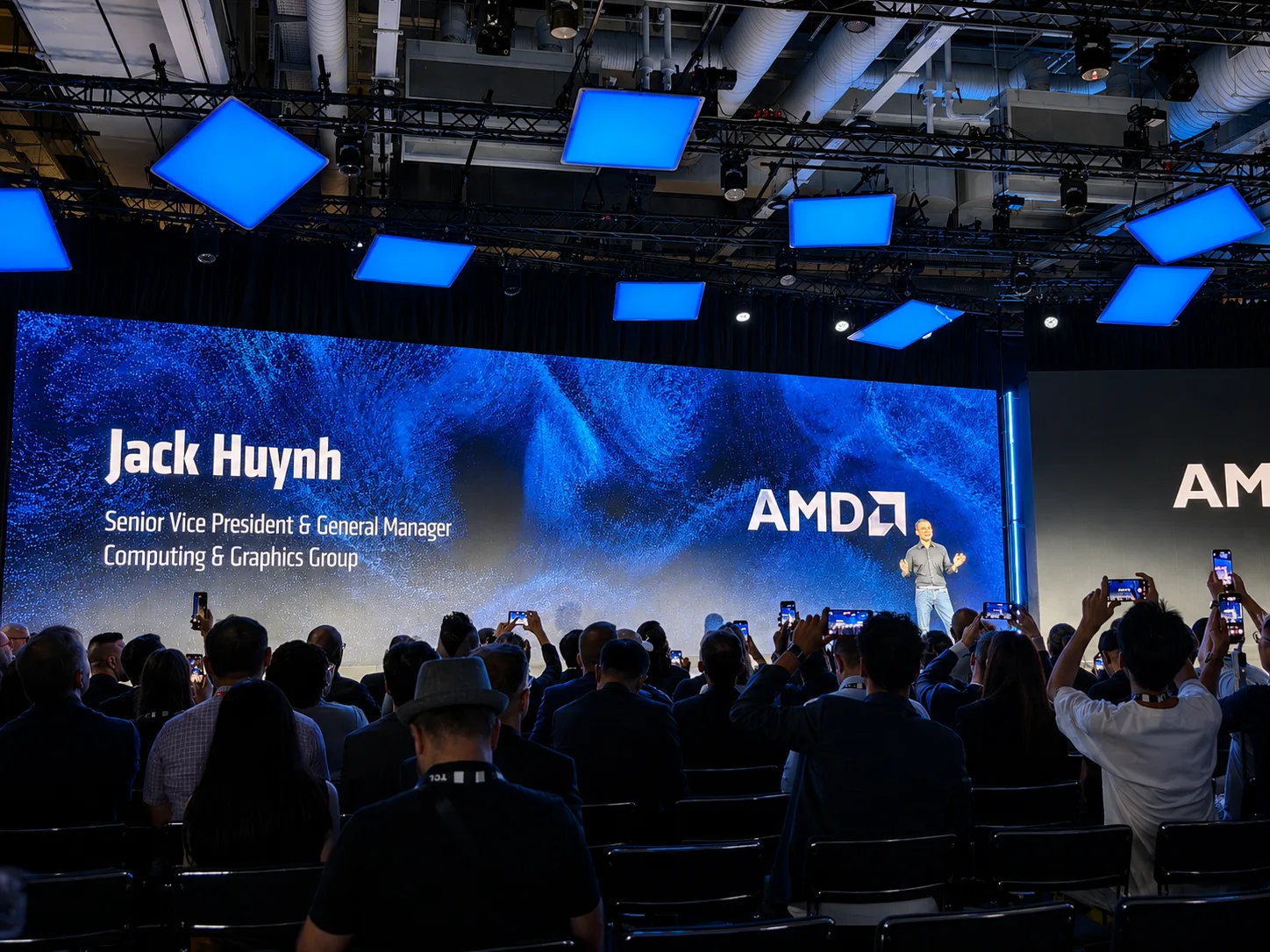
On September 4, Jack Huynh, Senior Vice President and General Manager of AMD’s Computing & Graphics Business Group, took the stage at the IFA Innovation Stage for the opening keynote—“The Era of Personal AI: The Future of Imagination.”
According to AMD, AI is evolving beyond simple dialogue into multimodal understanding, reasoning, and Agent-driven action. Future PCs will no longer be passive tools executing commands—they’ll become intelligent personal terminals that understand individual habits, workflows, and contextual needs, proactively assisting users.
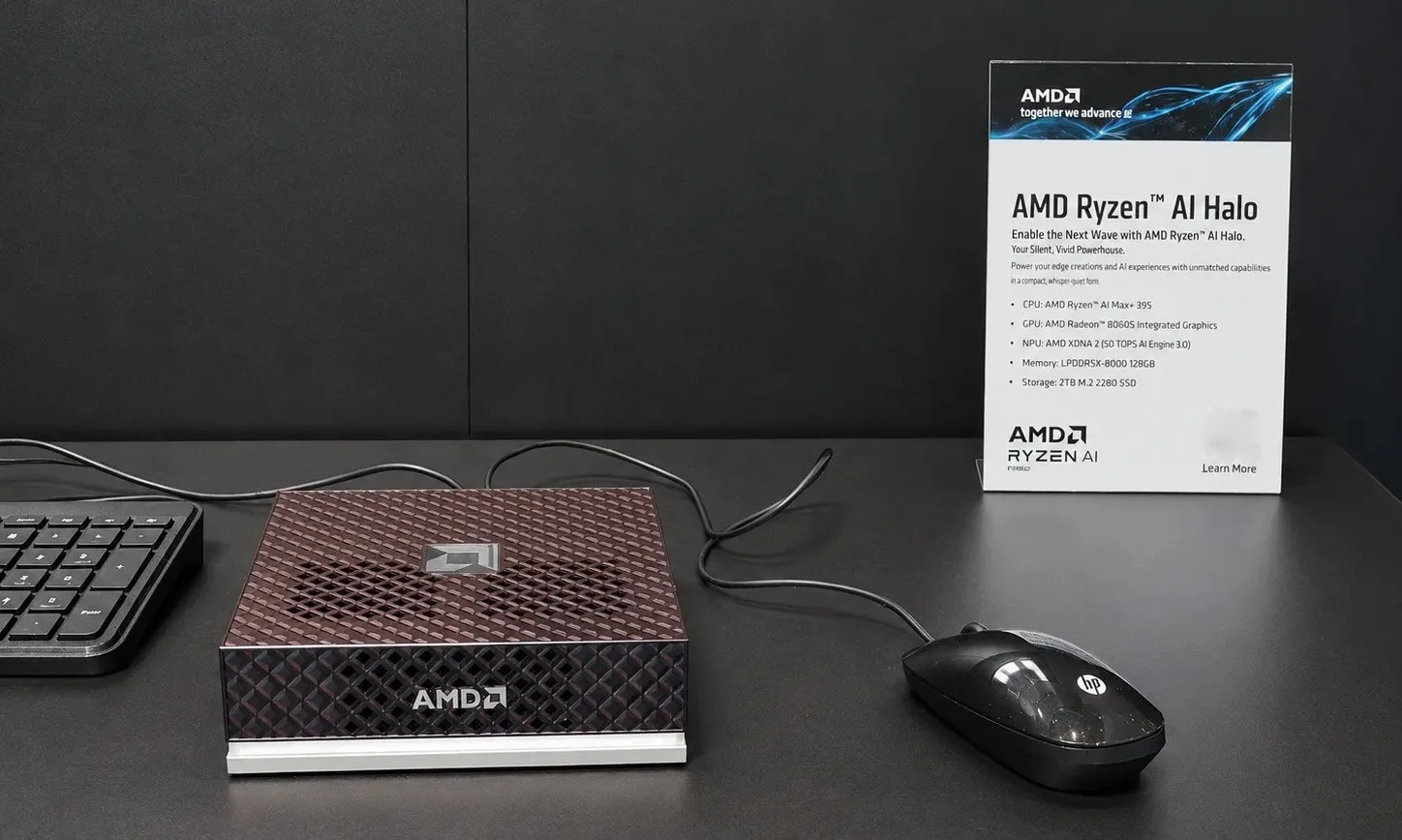
On the product front, AMD spotlighted the Ryzen AI Halo platform.
The current Ryzen AI Halo already supports 128GB of unified memory—capable of running local LLMs up to ~200B parameters. Its successor, powered by Ryzen AI Max+ PRO 495, pushes unified memory further—to 192GB—to accommodate even larger local AI models.
(Image source: LeiTech IFA Reporting Team)
AMD’s IFA booth even featured a Ryzen AI Halo development platform—a compact box designed for developers to build, test, and deploy large models and Agent workflows directly on their desks.
But AMD truly pushed specs to extremes with its new Threadripper Halo Station.
This workstation pairs a 96-core / 192-thread Ryzen Threadripper PRO 9995WX CPU with two Instinct MI350P accelerators. It ships with 2TB of system memory and 288GB of HBM3E VRAM—and can scale to support up to four MI350Ps, for a total of 576GB of VRAM.
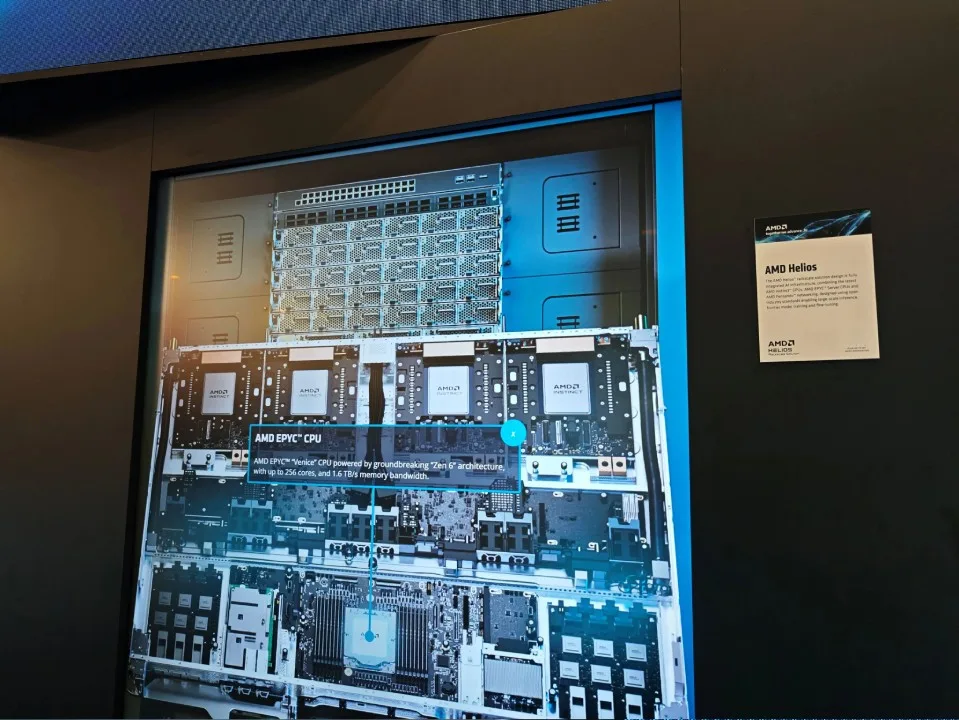
(Image source: LeiTech IFA Reporting Team)
Per AMD, this system can run AI models exceeding 1 trillion parameters locally.
This is clearly no longer a “personal computer” for average users—it’s positioned as a compact AI server for small and midsize businesses.
Yet AMD’s message is unmistakable: It envisions most Agent workloads being performed locally—from ultraportables and developer kits to top-tier workstations. Whatever AI compute power Agents require, AMD intends to bring it directly to the user.
Summary: A Defining Moment for PCs—Local AI Compute Takes Center Stage
Taking stock of today’s show floor, the PC industry is clearly evolving along increasingly complex and diversified paths.
On one hand, platforms like RTX Spark and AMD’s new silicon have catapulted local AI into the spotlight. Lenovo, ASUS, HP, and Dell are all racing to adopt them—prioritizing tighter hardware integration, ever-larger memory capacities, and robust foundations for running large models, Agents, and generative workflows locally.
(Image source: LeiTech IFA Reporting Team)
That said, discrete GPUs now face an awkward moment—not obsolete, but no longer the sole focus. Many games and rendering tasks still depend on them, yet OEMs seem less obsessed with “slipping in one more powerful GPU.” For AI workloads, unified memory’s advantages are simply too compelling—many tasks that previously demanded professional GPUs now have viable alternatives.
In that sense, NVIDIA’s decision not to refresh its mobile GPU lineup this year may be quite deliberate.
Turning to ultraportables: For years, “high-performance ultraportables” sounded like marketing fluff. Today, that phrase is becoming reality. ASUS’s ProArt line, HP’s OmniBook series, and Lenovo’s Yoga models are aggressively trimming weight and thickness—even concepts like Project AeroBlade (under 10mm) are emerging.
Conversely, entry-level and mainstream segments saw little revolutionary advancement this year.
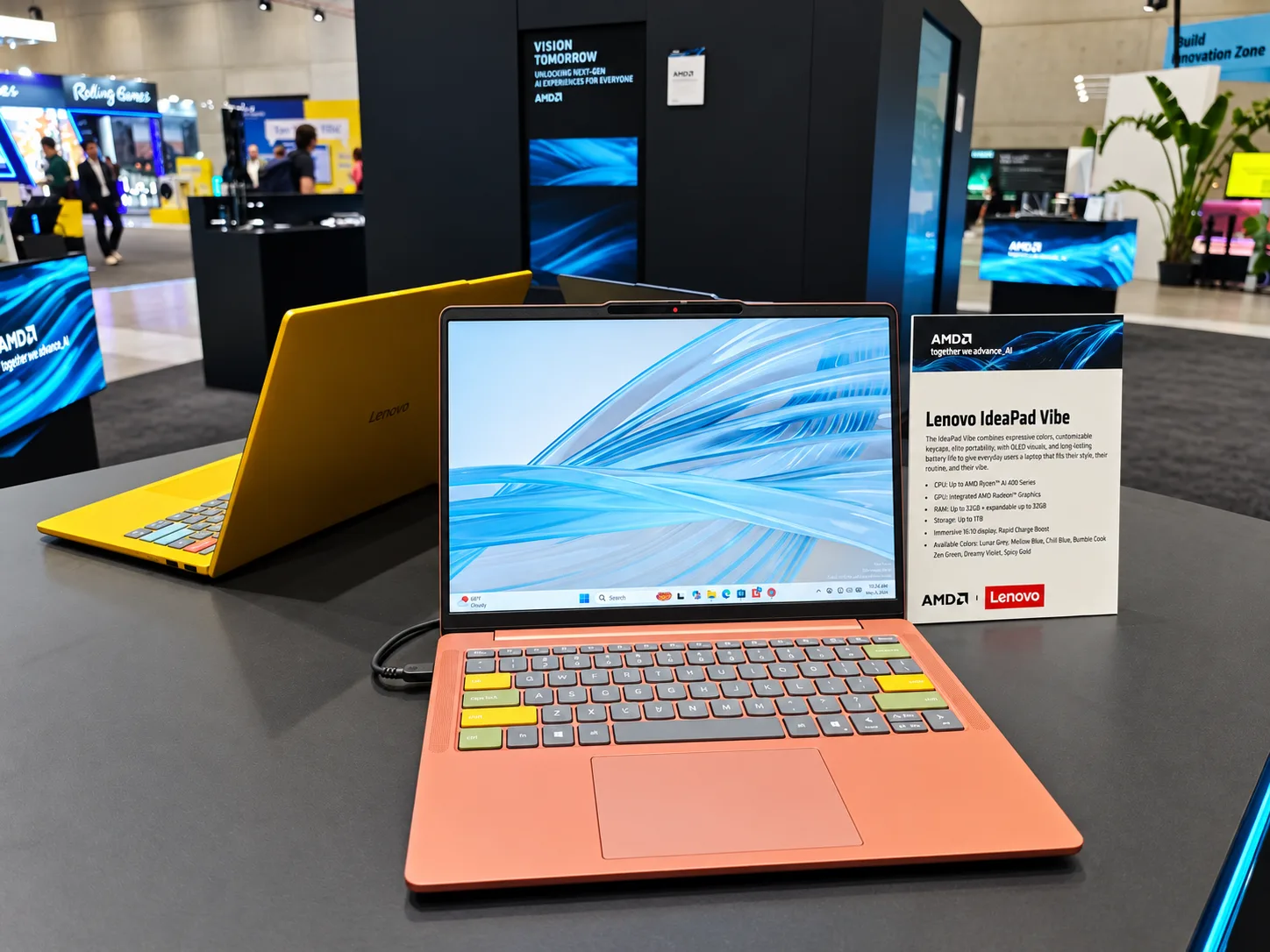
Anyone tracking the PC market knows mainstream CPUs have seen only incremental updates lately. OEMs respond pragmatically—focusing instead on aesthetics: colors, materials, weight, displays, and form factors. Products like Lenovo’s IdeaPad Vibe and Dell’s 14S exemplify this trend—designed to stand out visually in retail environments.
(Image source: LeiTech IFA Reporting Team)
Truth is, OEMs are facing real pressure.
The seemingly endless AI wave has sent memory and storage prices soaring. Browse any major e-commerce platform today: Gaming laptops routinely exceed five-digit price points, while ¥5,000 ultraportables often ship with specs from two years ago.
To gain competitive advantage, OEMs must differentiate relentlessly—crafting products that stand apart from the crowd.
As for RTX Spark and Agent Computers—I won’t predict whether they’ll ignite mass-market demand as vendors hope. But I can say definitively: They’re vastly more compelling than last year’s vague “AI PC” claims.
The market has been dormant for too long. Whether it reignites—only time will tell.
From September 4–8, the world’s largest consumer electronics and home appliance trade show—IFA 2026—is taking place in Berlin.
As the “most influential new media outlet covering IFA” recognized globally for its comprehensive AI coverage, LeiTech has dispatched its largest and most elite reporting team to Berlin this year. Deploying a “2+N” model—two live hosts plus multiple on-site editors and backend editors—LeiTech is delivering live, multidimensional, and first-hand coverage of IFA 2026, with special focus on AI Agent integration with home appliances and hardware, robotics in domestic environments, emerging trends in human-vehicle-home digital lifestyles, and Chinese brands’ global presence.
LeiTech’s IFA 2026 reporting team is actively covering the event from Berlin—stay tuned!