 雷科技
雷科技





On September 4, 2026, IFA 2026—the Internationale Funkausstellung Berlin (Berlin International Consumer Electronics Show)—officially opened in Berlin, Germany, drawing over 1,900 exhibitors from 49 countries and regions. As one of the world’s top three consumer electronics trade shows, this year’s IFA theme is “The Future is Now.” LeiTech (ID: LeiTech) has deployed its “LeiTech IFA26 Reporting Team” to Berlin for on-the-ground, multi-dimensional, and first-hand coverage of IFA 2026.
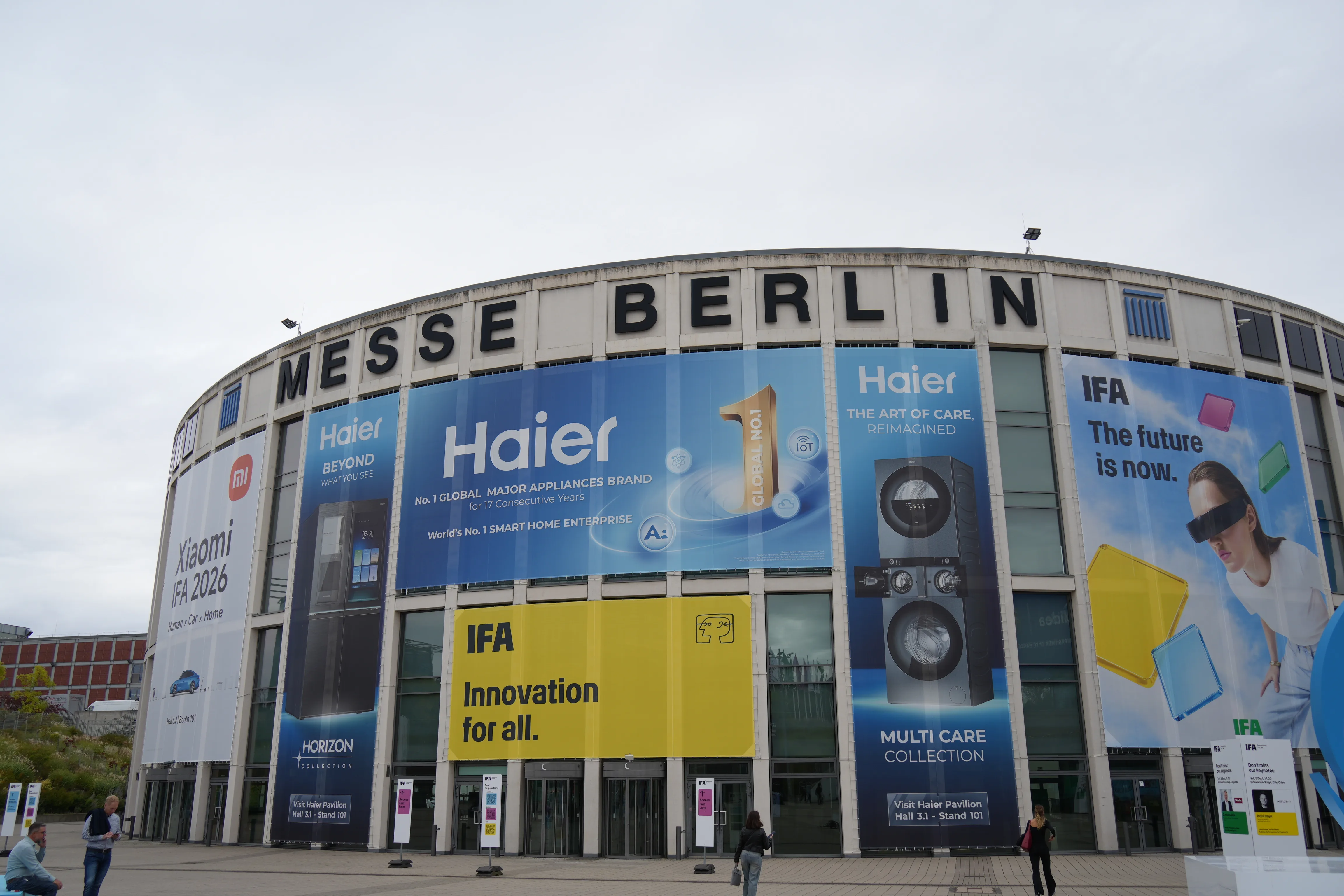
Image source: LeiTech IFA Reporting Team
AI remains the unavoidable keyword at this year’s IFA—featured across smartphones, TVs, PCs, smart glasses, and robots. Yet stepping onto the exhibition floor this year, another category—perhaps less glamorous but increasingly compelling—is air conditioners.
Especially in Europe.
For a long time, air conditioners have not been considered mainstream household appliances across Europe. Relatively mild climates, complex residential infrastructure, high energy costs, and strong environmental awareness have all contributed to cautious attitudes toward AC installation.
However, after consecutive years of extreme heat—including temperatures exceeding 40°C in multiple regions this summer—air conditioning has become an increasingly essential need for European households. Market research firm MarketsandMarkets projects that the European HVAC (Heating, Ventilation, and Air Conditioning) market will grow from USD $36.4 billion in 2025 to USD $48.1 billion by 2030.
So what kind of air conditioner do European consumers actually need? How can traditional wall-mounted units adapt to Europe’s energy systems and housing conditions? What solutions exist for renters and historic buildings where installation is difficult or prohibited? And can technologies honed in China—such as human-perception-based control, fresh-air ventilation, and AI-powered energy efficiency—find renewed relevance in Europe?
This year’s IFA offers several distinctly different answers.
Beyond Features: Europeans Prioritize “No-Drill Installation”
Midea’s first-generation PortaSplit entered the European market in summer 2024. By this year, it has evolved from a niche novelty into a rare blockbuster in Europe’s air conditioning market.
In essence, Midea’s PortaSplit has virtually pioneered an entirely new product category—the portable split-system air conditioner—and inspired numerous brands to launch similar designs across Europe.
At IFA 2026, while Midea’s current-generation PortaSplit remains its flagship offering in the portable split-system segment, the next-generation model made its preliminary debut. Key upgrades reportedly include a transition from R32 to the more environmentally friendly R290 refrigerant, alongside revisions to the condensate drainage system and software controls.
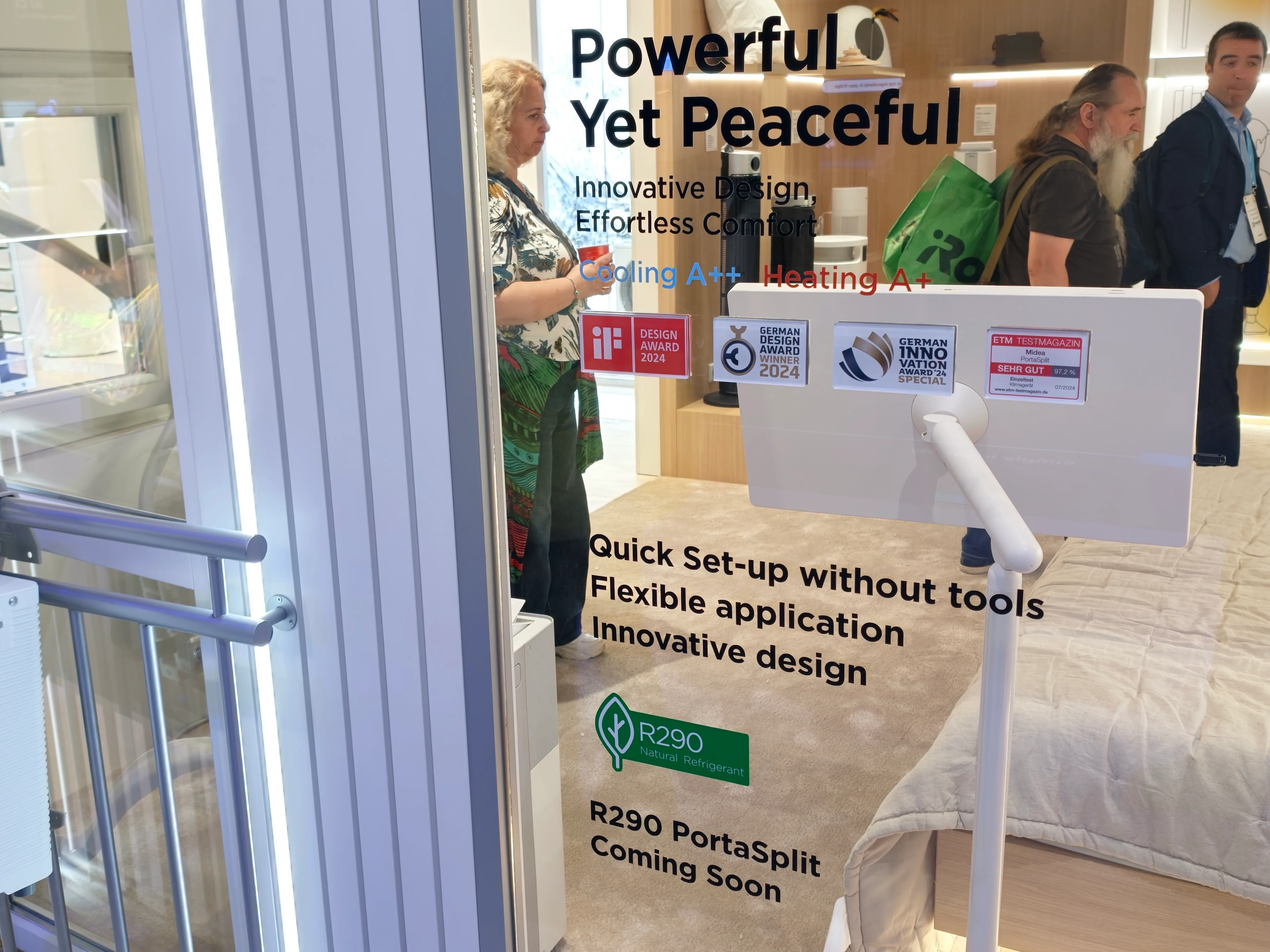
Next-generation model not yet officially unveiled; image source: LeiTech IFA Reporting Team
Notably, R290 is flammable, imposing stricter requirements on refrigerant charge volume, sealing integrity, leak detection, and overall unit safety design. One key upgrade in the next-generation PortaSplit involves enhanced leak-protection mechanisms specifically designed for R290.
Nonetheless, the current-generation Midea PortaSplit remains unmatched in its class.
In fact, many European households aren’t opposed to installing air conditioners—they simply face genuine practical barriers. In countries like Germany, France, and Italy, large numbers of rental apartments and historic buildings prohibit exterior modifications. Many condominiums also involve landlord consent, property management approval, or even heritage conservation regulations. Even when installation is permitted, professional installation services pose another hurdle.
According to an interview Xinhua News Agency conducted with Midea’s European team this summer, installation fees for conventional split-system air conditioners in Europe may exceed €1,000—and during peak summer months, installation wait times can stretch to several weeks.
Conventional monoblock portable air conditioners house the compressor indoors and exhaust hot air outdoors via a bulky exhaust hose. This results in indoor noise, low efficiency, and negative indoor pressure—which draws hot outdoor air back inside through gaps around doors and windows.
But Midea executed a clever solution: splitting the portable AC into two parts.
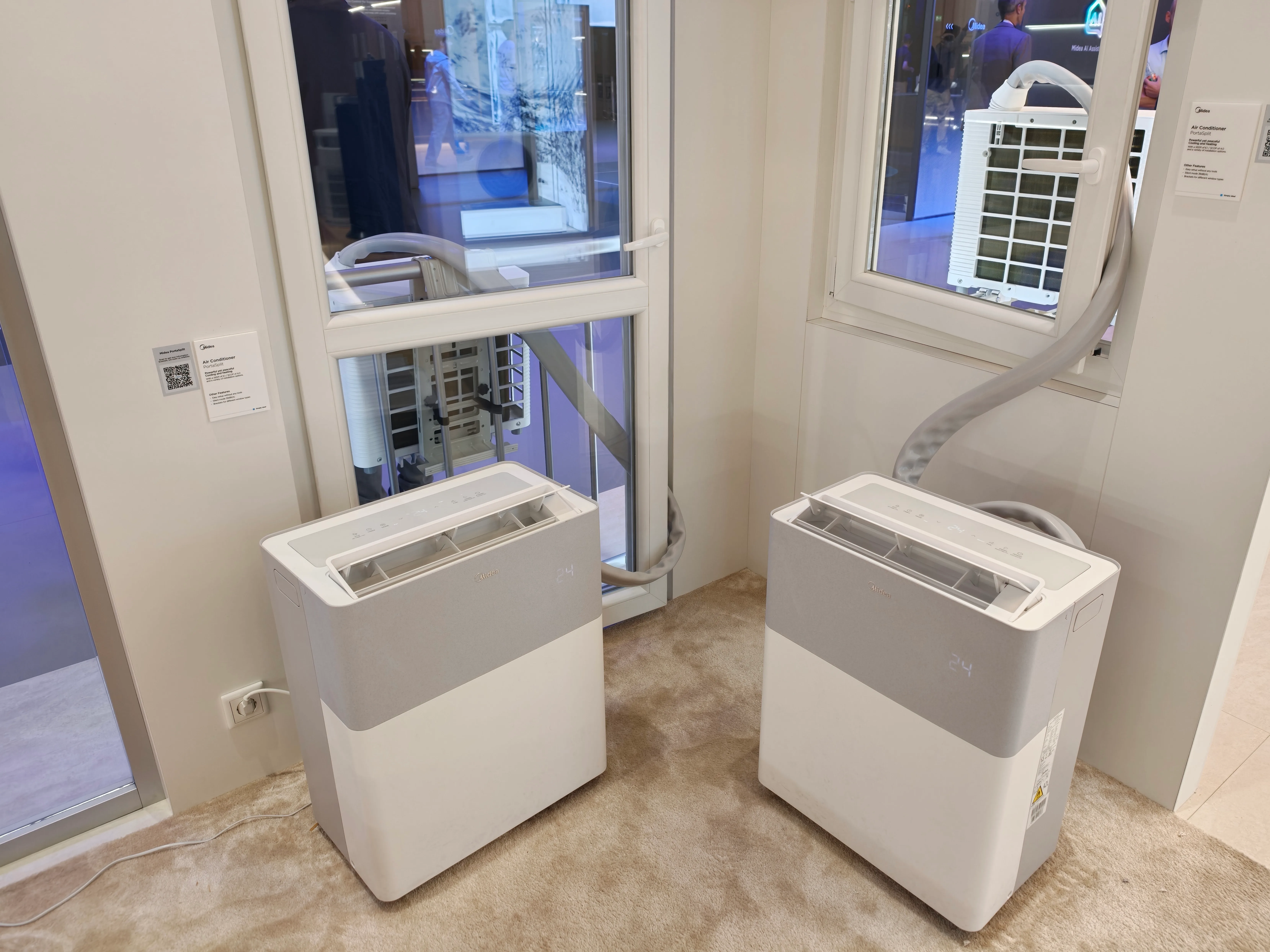
Currently available model; image source: LeiTech IFA Reporting Team
The PortaSplit places its compressor and primary heat source in the outdoor unit, while keeping the indoor unit inside the room—connected via thin refrigerant lines passing through a window. The outdoor unit can be mounted directly onto a window sill or balcony railing, eliminating the need for wall drilling or professional installers.
Regarding the next-generation PortaSplit, Midea has not yet disclosed further details. However, considering the current flagship model delivers cooling capacity up to 3.5 kW, supports cooling, heating, dehumidification, and fan-only modes, achieves A++ energy-efficiency rating, and operates as quietly as ~39 dB(A) in silent mode, the next generation is expected to deliver further enhancements.
Undoubtedly, Midea PortaSplit’s success can no longer be attributed solely to “extreme heat.” All European air conditioner manufacturers faced this summer’s heatwave—but not every unit prompted customers to drive hundreds of kilometers to purchase it. PortaSplit’s value lies in identifying the real bottleneck hindering air conditioner adoption across Europe.
This may be a point frequently overlooked by Chinese home appliance exporters.
Domestically mature products already offer strong performance, energy efficiency, and cost advantages—so exporting them overseas can certainly generate revenue. Yet truly distinctive product differentiation often hinges on deep understanding of local lifestyles.
The PortaSplit was co-developed by Midea’s German R&D center. According to Midea’s European R&D team, the product underwent three years of development—with the outdoor unit ultimately weighing under 10 kg precisely to enable self-installation by average adults:
Transforming a previously niche product form into an entirely new category.
For such a highly mature category as air conditioners, this kind of innovation is rare: the compressor remains unchanged, and the heat exchange system stays the same—yet manufacturers have rethought how European users actually bring an air conditioner home.
Year-Round Comfort Requires Energy Efficiency—Far More Critical Than in China
From a purely physical standpoint, LG and Bosch’s new air conditioners showcased at this year’s IFA are fairly conventional—wall-mounted units.
In mature markets like China, Japan, and South Korea, wall-mounted air conditioners are ubiquitous household appliances. Yet in today’s Europe, their emergence signals a profound market shift. This summer, multiple European regions again experienced near- or above-40°C temperatures—propelling air conditioners, once relegated to the periphery of Europe’s appliance market, rapidly toward essential status.
Yet Europeans’ growing adoption of air conditioners doesn’t mean Asian product logic can be transplanted wholesale. LG’s newly unveiled DUALCOOL AI series exemplifies this well.
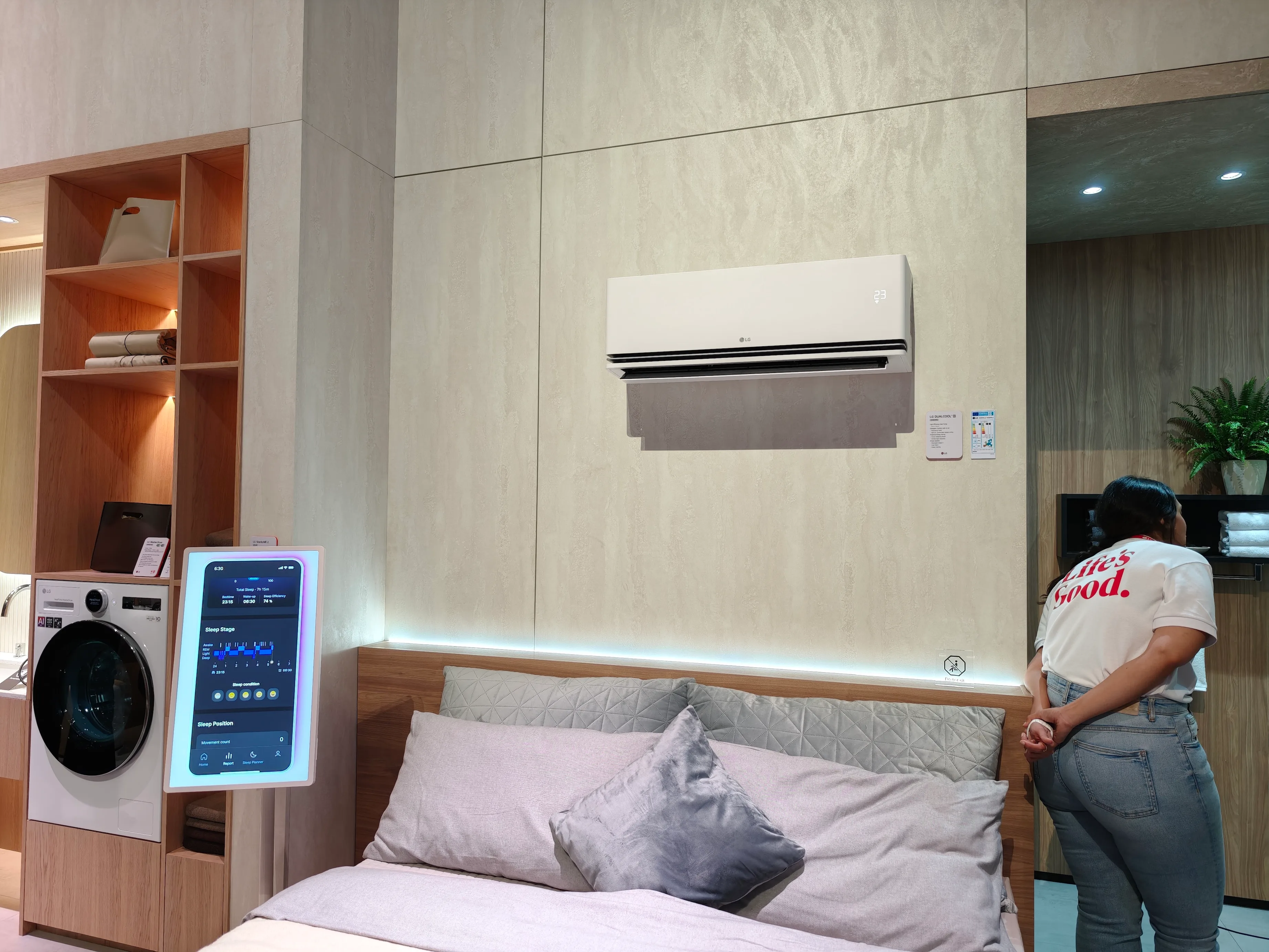
Image source: LeiTech IFA Reporting Team
This is a wall-mounted cooling-and-heating unit. The DUALCOOL AI Air automatically adjusts airflow direction and volume based on indoor temperature and humidity, rapidly reaching the setpoint before switching to gentler, indirect airflow. Its occupancy sensor triggers automatic entry into energy-saving mode when no one is detected in the room.
Via ThinQ’s kW Manager, users can even assign a specific electricity consumption budget, prompting the unit to intelligently modulate operation within that limit. It proactively adjusts operations when windows open or indoor temperatures fluctuate unexpectedly—avoiding unnecessary cooling.
Occupancy detection, gentle airflow, integrated temperature-humidity control, and app-based energy management—all familiar features in China’s domestic AC market.What truly merits attention is how these technologies are reconfigured to better serve European market needs.
In fact, one of the biggest current barriers to air conditioner adoption in Europe is energy anxiety. High household electricity prices are part of the story—but equally important is Europe’s long-standing consumer culture built around energy conservation and carbon reduction.
Historically, many European households viewed air conditioners as inherently power-hungry and non-essential appliances. Thus, as air conditioners begin entering homes, their first critical challenge is energy efficiency.
Hence, LG’s DUALCOOL AI emphasizes practical details—“Is anyone present?” “Are windows open?” “How much electricity am I willing to spend this month?”—with AI playing a pragmatic role: minimizing waste.
Then there’s Bosch.
At IFA 2026, Bosch launched its new Climate 6000iP—a single-split air conditioner and the first fully R290-natural-refrigerant-designed unit in the Bosch Home Comfort lineup, capable of both cooling and heating. Specific models cover capacities including 2.6 kW and 3.5 kW, with the 2.6 kW variant achieving A+++ cooling efficiency and A++ heating efficiency.
R290 is propane—offering extremely low global warming potential (GWP), making it an increasingly pivotal refrigerant direction for Europe’s heat pump and air conditioning industries. As noted earlier, Midea’s next-generation PortaSplit likewise upgrades to R290.
This design choice itself is profoundly “European.”
The EU continues tightening regulations on fluorinated greenhouse gases, steadily shrinking the usage space for traditional high-GWP refrigerants. This year, designing new products around natural refrigerants from the outset has essentially become an unavoidable industry imperative.
Notably, Bosch also showcased its Compress 8800i AW heat pump at IFA 2026, along with a home energy management solution integrating the heat pump with the Bosch Smart Home thermostat. Germany’s heat pump sales reached 194,500 units in the first half of this year—an increase of 40% year-on-year—and the German Heat Pump Association forecasts full-year sales to reach 400,000 units.
This means, within Bosch’s ecosystem, air conditioners are no longer just seasonal devices pulled out for summer cooling—Bosch is building an integrated whole-home climate system.
This highlights a fascinating distinction between Europe’s and China’s air conditioning markets.
When Chinese consumers think of air conditioners, cooling remains the primary function—followed distantly by heating. Many households rely on underfloor heating, radiators, or other dedicated heating systems during winter. Europe, however, already possesses a mature infrastructure of boilers, radiators, and heat pumps. With summers growing hotter, manufacturers now face a new challenge: seamlessly integrating “cooling” into existing winter heating systems.
Thus, although LG and Bosch both focus on wall-mounted units, they’re ultimately solving a quintessentially European problem: one air conditioner must reliably serve throughout the entire year.
Wall-mounted design, high efficiency, and dual cooling/heating capability are thus emerging as key themes in Europe’s air conditioning market.
Technologies Commonplace in China Deliver “Cross-Dimensional Competitive Advantage” in Europe
Turning to Xiaomi and TCL, their air conditioner strategies at this year’s IFA take yet another direction.
While LG and Bosch primarily adapt to Europe’s existing heating-and-cooling infrastructure, and Midea solves uniquely European installation challenges, Xiaomi and TCL directly export technologies already highly refined—and intensely competitive—in China’s domestic air conditioning market.
Xiaomi participated in IFA for the first time this year, and its air conditioners represent a cornerstone of Mi Home’s broader expansion into European major appliances.
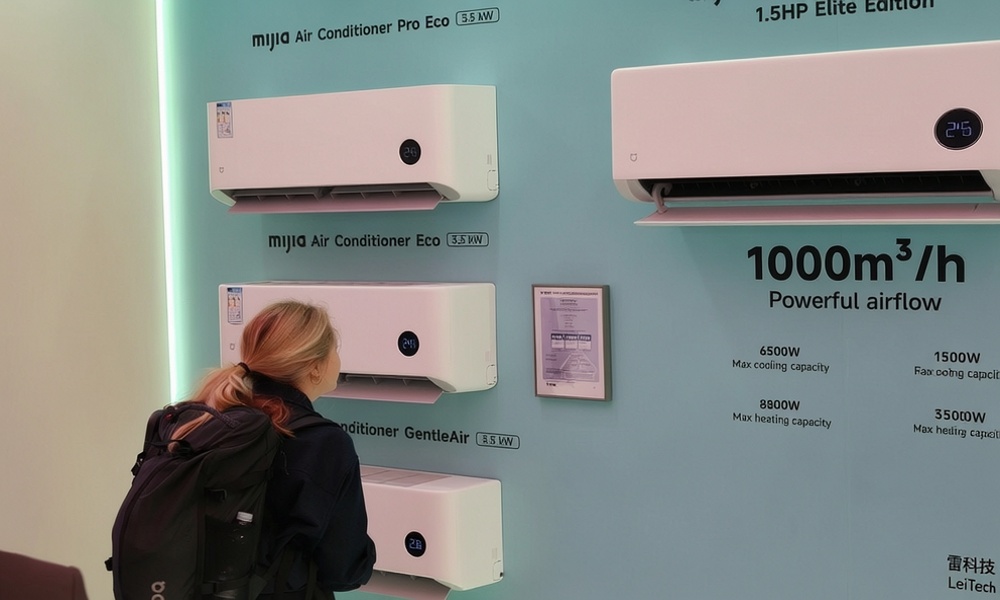
Xiaomi’s showcased Mi Home air conditioner integrates millimeter-wave radar, enabling precise detection of human position—even subtle movements—to direct airflow only toward occupied zones, reducing energy waste from cooling unoccupied areas.
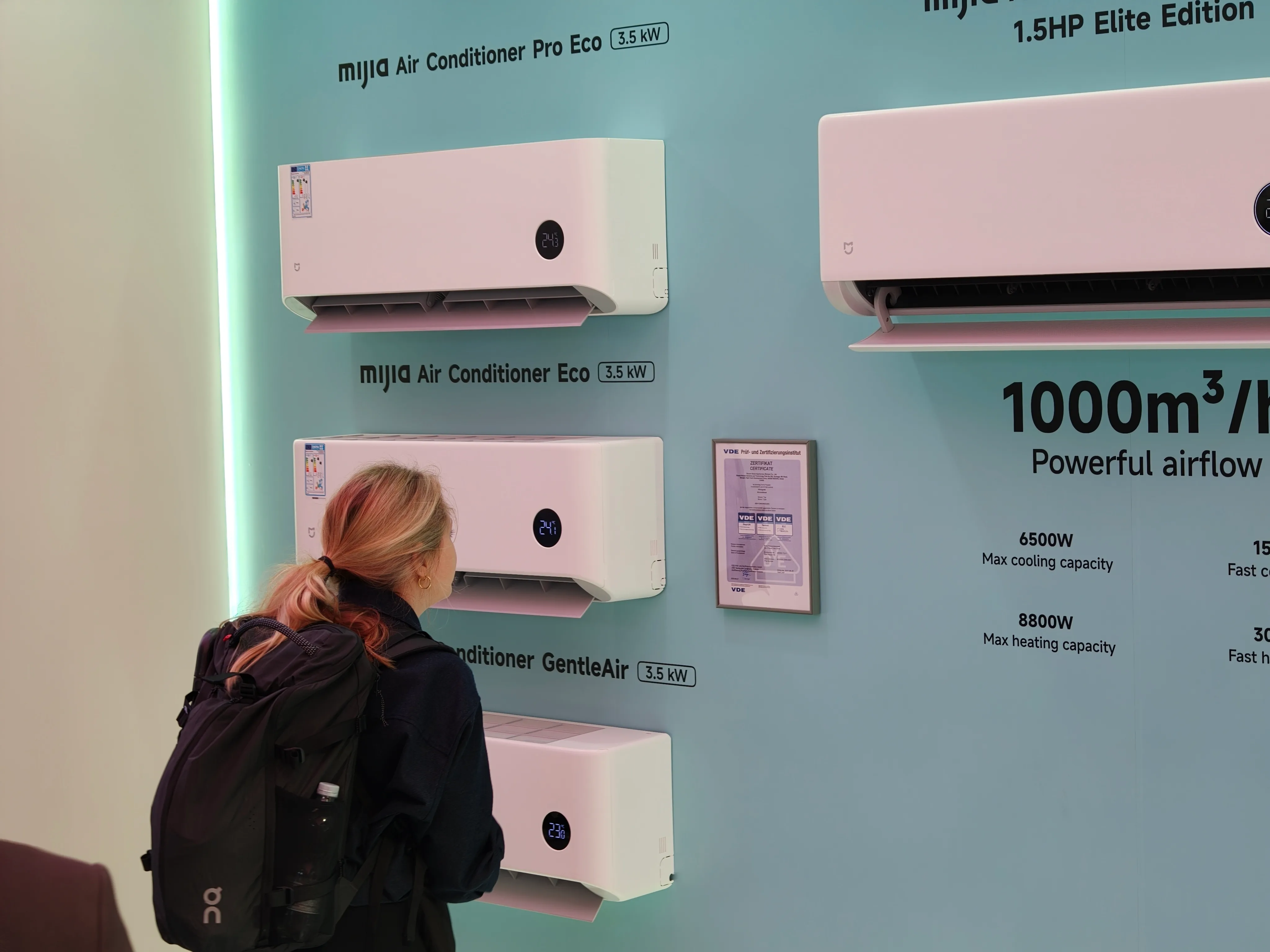
Image source: LeiTech IFA Reporting Team
Millimeter-wave radar has seen rapid adoption across China’s smart home sector in recent years—outperforming traditional infrared sensors in detecting “human presence.” When someone sits on a sofa watching TV or lies in bed sleeping, bodily movement is minimal; conventional sensors may misidentify the room as unoccupied, whereas millimeter-wave radar can detect breathing and subtle shifts in posture.
Xiaomi also revealed this year that its air conditioner division has jointly developed a dual-millimeter-wave-radar module with sensor partners—using two 24 GHz radar beams to achieve 180° room coverage, with algorithmic optimizations for multi-person scenarios, stationary states, and micro-movements. These capabilities reportedly deliver over 70% energy savings through automatic temperature adjustment or shutdown when no occupants are detected.
Naturally, Xiaomi’s cited 70% figure reflects laboratory test data under specific conditions—but the underlying product logic is sound.
Traditional air conditioners treat the “room” as their sole operational target: set to 24°C, the unit strives to cool the entire space to that temperature. With more precise human sensing, however, the operational target becomes the person themselves—where they are, whether they’re present, asleep, or active—all gradually integrated into the AC’s control model.
Chinese consumers have grown increasingly familiar with this approach. Over recent years, competition among mid-to-high-end Chinese air conditioners has long surpassed simple comparisons of cooling speed and energy efficiency. Anti-direct-blow technology, person-following airflow, person-avoidance airflow, millimeter-wave presence detection, sleep curve optimization, and AI-driven energy-saving algorithms have all become standard battlegrounds among manufacturers.
Europe’s historically lower competitive intensity and smaller installed base meant slower advancement of many such features.
Now that European air conditioner demand is surging rapidly, technologies refined in China’s market over the past few years are perfectly positioned for comprehensive export.
This includes TCL’s Xiao Lan Yi P7 Ultra (overseas model name: FreshIN 3.0 Ultra), a highly representative example.
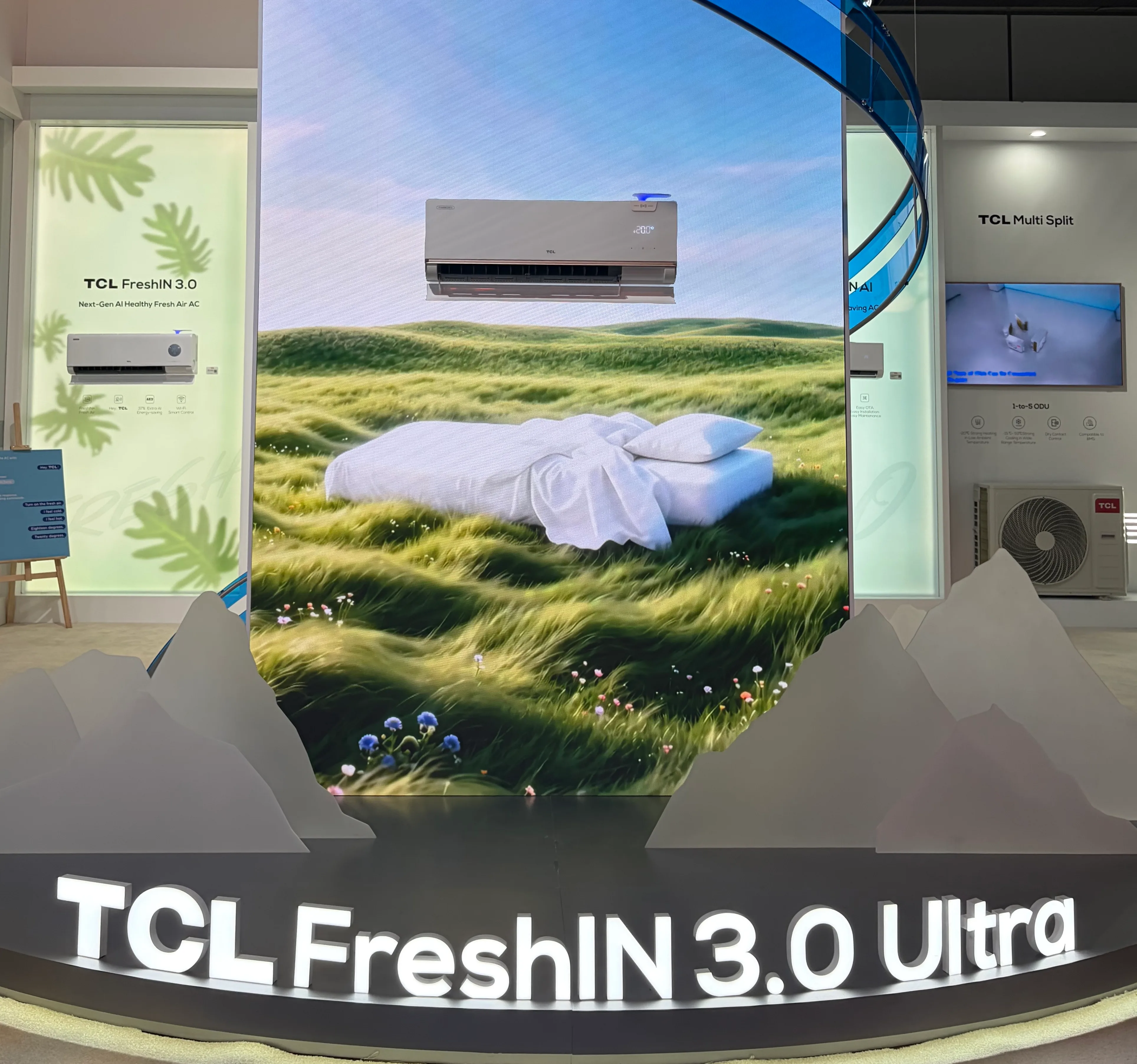
Image source: LeiTech IFA Reporting Team
The core innovation of the Xiao Lan Yi series is “fresh air.” Beyond conventional cooling, the P7 Ultra introduces up to 60 m³/h of fresh outdoor air into indoor spaces via a dual-circuit fresh-air system—while simultaneously monitoring indoor air quality.
The user need is straightforward: air conditioners require closed windows during cooling, causing indoor CO₂ levels to rise and triggering stuffiness. Opening windows resolves this—but also lets cooled air escape. Hence, Chinese manufacturers have long sought to integrate fresh-air systems into wall-mounted units, enabling partial indoor-outdoor air exchange without opening windows.
The Xiao Lan Yi P7 Ultra adds another layer of AI.
TCL’s highlight this year—AI Sleep Eye 2.0—also employs millimeter-wave radar to recognize sleep-related body movements, dynamically adjusting room temperature in real time. The unit further adapts compressor operating frequency according to indoor temperature fluctuations—minimizing excessive cooling and ineffective dehumidification. TCL’s testing indicates up to 37% additional energy savings versus comparable units without this AI energy-saving algorithm enabled.
Millimeter-wave radar, sleep optimization, fresh air, and algorithmic frequency control—again.
China’s air conditioner market has experienced slowing growth and intense saturation over the past few years—forcing manufacturers to compete relentlessly on ever-finer technical details. Many features initially seemed like “innovation for innovation’s sake,” but years of iteration have since matured them into robust, standardized technological stacks.
Europe’s market happens to be ready for exactly these innovations right now.
This summer’s heatwaves prompted more consumers than ever to seriously consider air conditioner installation—but issues like electricity bills, energy consumption, noise, nighttime comfort, and indoor air quality quickly follow. Europe’s regulatory environment will further amplify the importance of energy efficiency.
At this juncture, Xiaomi and TCL’s millimeter-wave radar, human-perception technologies, AI-driven frequency control, and fresh-air systems suddenly find an ideal application context.
Final Thoughts
Historically, “Chinese home appliances” evoked associations with value-for-money pricing and supply-chain scale—but Midea’s PortaSplit demonstrates that Chinese manufacturers can redefine product categories entirely around European housing realities. Meanwhile, Xiaomi and TCL showcase how the product expertise forged in China—the world’s largest and most fiercely competitive air conditioning market—has evolved into an exportable capability.
Of course, whether these capabilities ultimately translate into tangible value European consumers are willing to pay for remains subject to ongoing market validation. How sophisticated human-perception systems European consumers truly need, how widely they’ll embrace fresh-air air conditioners, and whether AI-driven energy savings meaningfully reduce actual electricity bills—all will determine which technologies endure.
Yet one thing is unmistakably clear from IFA 2026:Chinese manufacturers’ hard-won technological and product prowess—forged in the crucible of domestic market competition—is now meeting a European air conditioning market just beginning its rapid growth phase. For Xiaomi, TCL, and indeed the entire Chinese air conditioning industry, the European market is simply too significant to overlook.
From September 4–8, the world’s largest consumer electronics and home appliance trade show—IFA 2026—takes place in Berlin.
As the “most influential new media outlet covering IFA” globally—with widespread recognition for its AI-focused reporting—LeiTech has dispatched its largest and highest-caliber exhibition team to Berlin this year. Deploying a “2+N” model (two live hosts + multiple on-site editors + multiple backend editors), LeiTech delivers real-time, multi-dimensional, and first-hand coverage of IFA 2026—with special emphasis on AI agents integrated with home appliances and hardware, robotics technologies applied to home environments, emerging digital lifestyle trends spanning people, vehicles, and homes, and Chinese brands’ global stage presence.
LeiTech’s IFA 2026 Reporting Team is actively delivering intensive on-the-ground coverage from Berlin—stay tuned!