 雷科技
雷科技





On September 4, IFA 2026 officially opened in Berlin, Germany. As one of the world’s top three consumer electronics trade shows, this year’s IFA attracted over 1,900 exhibitors from 49 countries and regions, with the theme “The Future is Now.” LeiTech (ID: LeiTech) deployed its “LeiTech IFA26 Reporting Team” to Berlin for on-the-ground, comprehensive, and first-hand coverage of IFA 2026.
Each year, IFA serves as a barometer for global kitchen appliance technologies—and this edition was no exception, drawing numerous leading kitchen appliance brands. Siemens, AEG, LG, Hisense, Haier, Dreame, and CASO, among others, showcased refrigerators, ovens, cooktops, range hoods, air fryers, pizza ovens, and more.In previous years, smart connectivity and large AI models dominated discussions around kitchen appliances at IFA; by 2026, while intelligence remains central, it has evolved several levels beyond what we saw just a few years ago.
Single-Appliance Intelligence and Cross-Device Scenarios Advance in Tandem—AI Remains the Star
In the kitchen appliance sector, AI is no longer novel—but undeniably, AI features that deliver tangible improvements in user experience remain pivotal drivers of product iteration and upgrades.
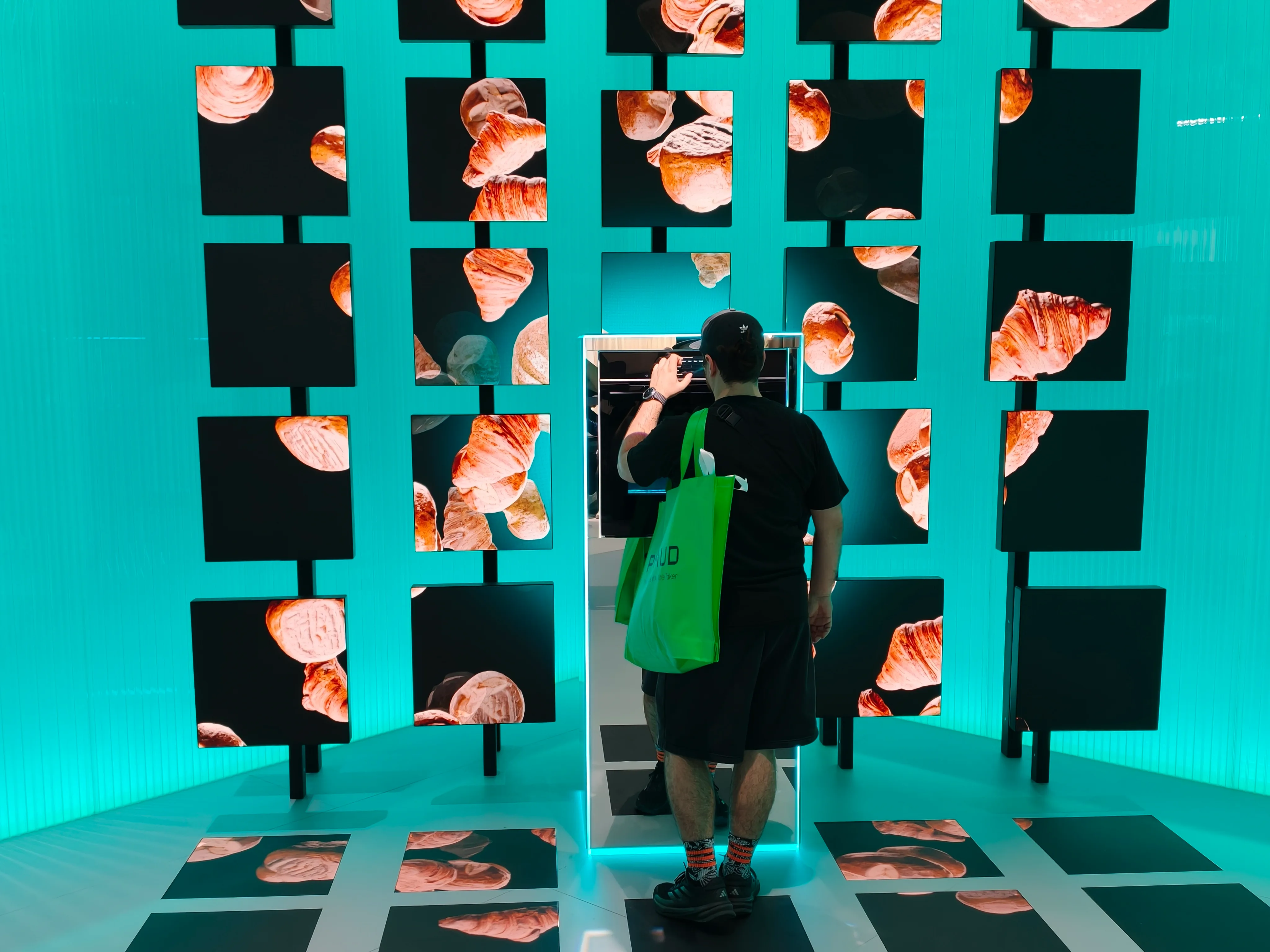
Take ovens as an example: Siemens’ iQ700 oven integrates a built-in camera and dish-recognition capability, identifying over 100 dishes and recommending optimal cooking modes. Similarly, Haier’s AI VISION oven features an embedded camera capable of recognizing ingredients, temperature, and time.
(Image source: LeiTech IFA Reporting Team, on-site)
An oven can now autonomously assess what happens after ingredients are placed inside—and dynamically adjust operational parameters accordingly, rather than merely executing preset time and temperature instructions mechanically. This design is truly a blessing for novice cooks: users no longer need to calculate ideal temperatures or durations, nor decide when to adjust heat settings.
All users need to do is place ingredients into the oven—the rest is handled by AI.
AI integration extends well beyond ovens—virtually all cooking appliances now incorporate AI functionality, including even range hoods designed solely for ventilation. For instance, Haier’s range hood unveiled at IFA 2026 not only coordinates seamlessly with other cooking appliances (e.g., automatically activating upon ignition), but also supports gesture control. When users’ hands are covered in flour or grease and touch interaction is impractical, a simple wave suffices to adjust fan speed.
Miele’s G8 Diamond dishwasher marks the brand’s first use of an integrated camera to monitor cleaning progress in real time. Leveraging large AI models, it intelligently analyzes load conditions and autonomously determines optimal detergent dosage and water volume—parameters users can also fine-tune via the companion app. AI integration not only enhances cleaning performance but also reduces consumption of detergent, water, and electricity—aligning with sustainability goals.
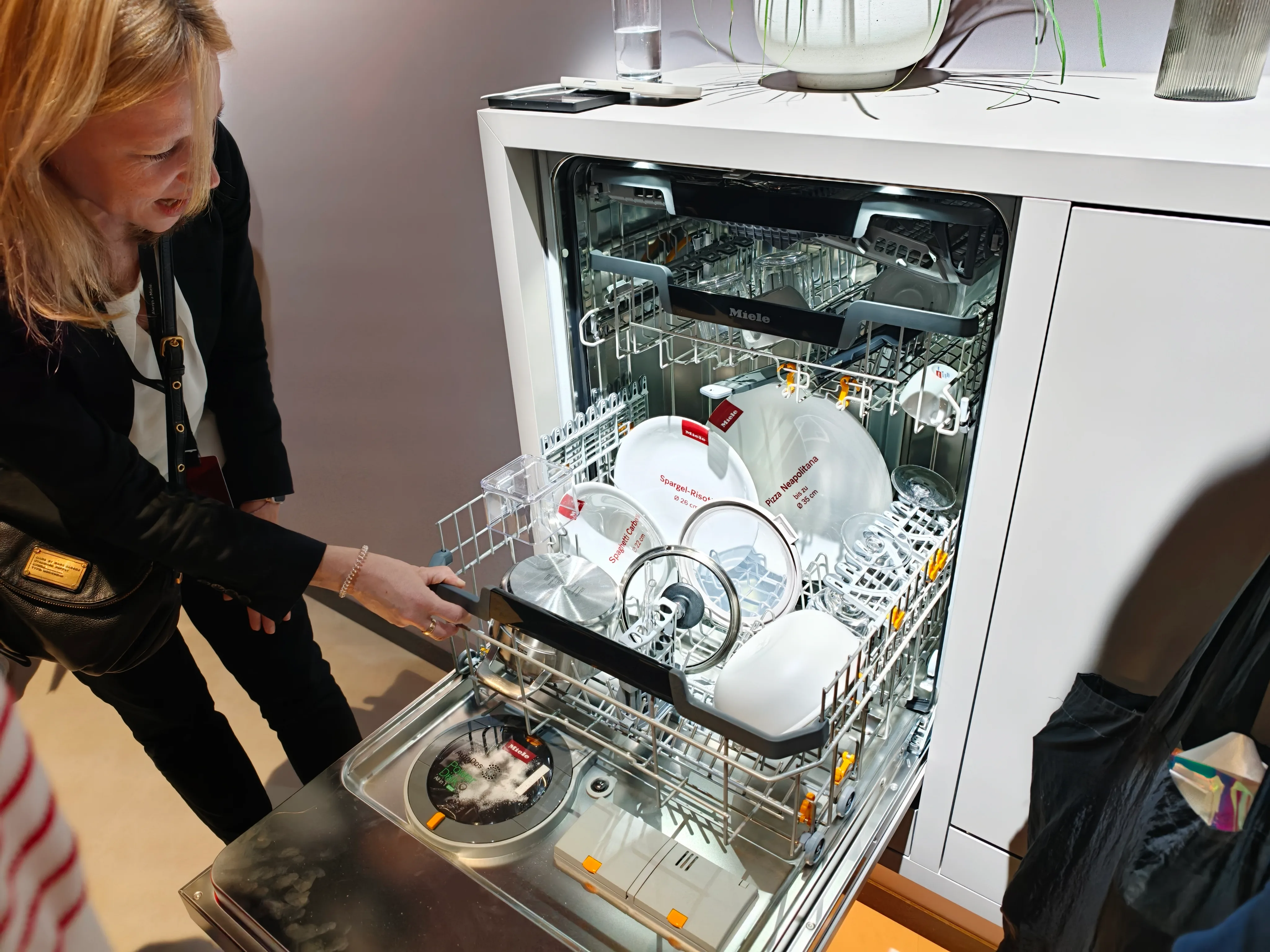
(Image source: LeiTech IFA Reporting Team, on-site)
As diverse kitchen appliances adopt AI and connectivity capabilities, standalone intelligent devices collectively form a unified “smart kitchen.”
Hisense’s AI Kitchen Companion suite exemplifies this best: it links with the refrigerator to identify available ingredients and synchronizes with the oven to generate corresponding recipes. The newly upgraded AI Companion Oven employs food probes and AI-driven cooking algorithms to dynamically optimize settings—and continuously learns users’ taste preferences, moving beyond rigid recipe-based execution.
Midea’s SMART MASTER smart home ecosystem follows suit, enabling coordination between refrigerators and cooking appliances to devise recipes based on existing ingredients.
This evolution signifies a fundamental shift—from viewing smart appliances as a “collection of tools” to treating them as an integrated “task-oriented system.” The most immediate benefit for users is convenience: no more deliberating over what dishes to prepare using available fridge contents, nor repeatedly adjusting individual appliance settings. Instead, devices automatically switch to appropriate operating modes at optimal times—significantly lowering the barrier to home cooking.
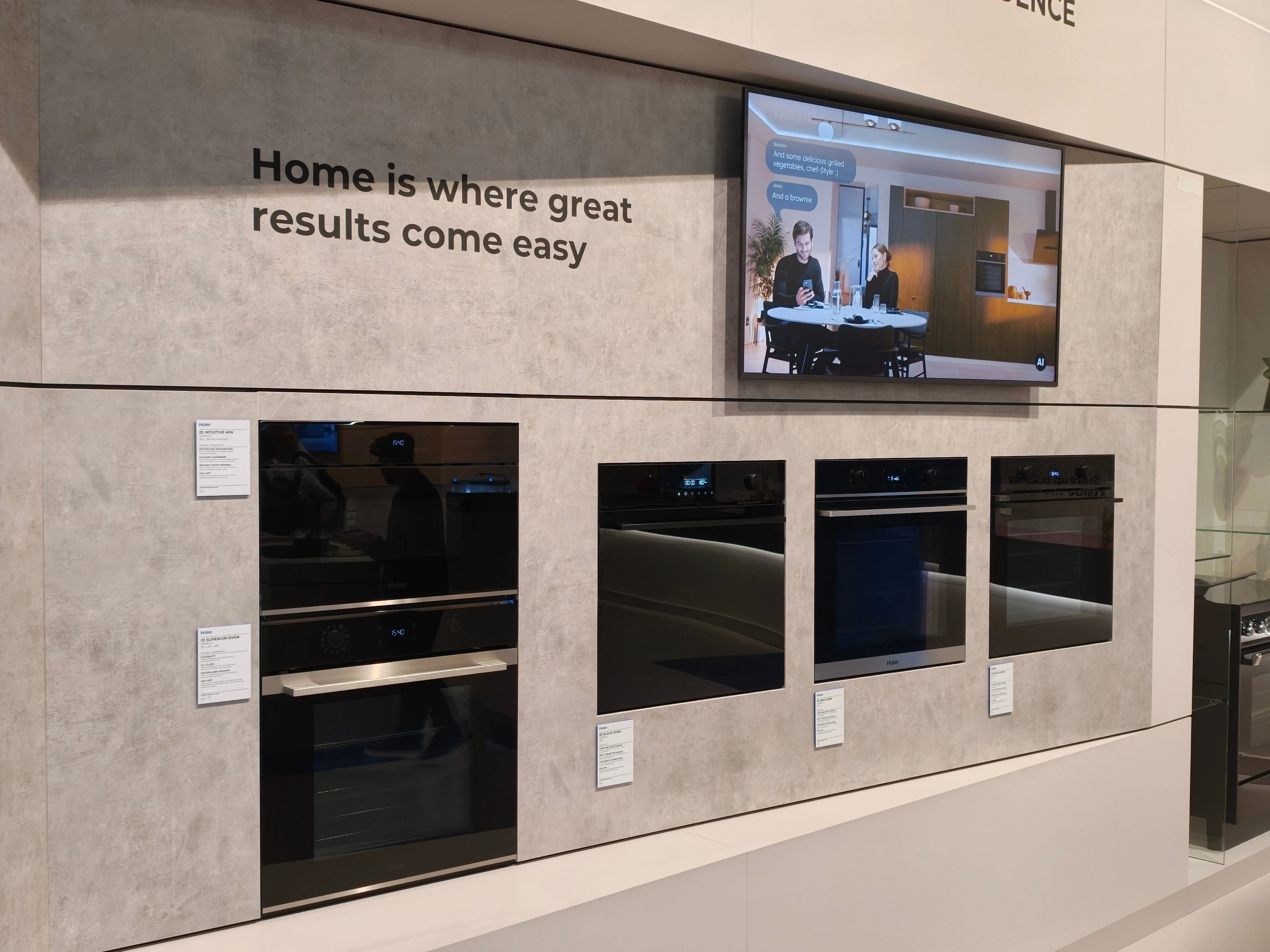
(Image source: LeiTech IFA Reporting Team, on-site)
LeiTech believes AI in kitchen appliances has moved past the “novelty phase.” What truly matters now is how it is gradually transforming the very act of cooking.
In the past, ovens, cooktops, and range hoods operated independently—users bore full responsibility for ingredient assessment, parameter configuration, and mode switching. Today, cameras, sensors, and algorithms are taking over these tedious sensing and decision-making tasks.
More importantly, appliances—including refrigerators, ovens, and cooktops—are beginning to collaborate. Consequently, kitchens are evolving from collections of isolated devices into cohesive systems capable of completing end-to-end tasks. Ultimately, integrating AI into kitchen appliances isn’t about making kitchens look “smarter”—it’s about offloading repetitive, labor-intensive steps in meal preparation to machines. Only when users need only decide “What’s for dinner?”—without worrying about how to prepare it—does AI-powered kitchen technology truly fulfill its promise.
Integration vs. Specialization: Some Appliances Go Multifunctional, Others Focus on Excellence
“All-in-one” designs have long been a dominant trend in kitchen appliances—and Dreame’s dual-chamber air fryer Feast DS50 Pro stands out as a prime representative. Featuring a vertical dual-compartment layout and dual-engine airflow system, each chamber enables independent and precise temperature control—resolving the cross-compartment interference issues plaguing traditional dual-chamber units.
You might find it hard to believe: although Dreame rose to prominence through intelligent cleaning solutions, its kitchen appliances drew crowds rivaling those at its cleaning product booths during this year’s IFA—with European visitors packing around every display.
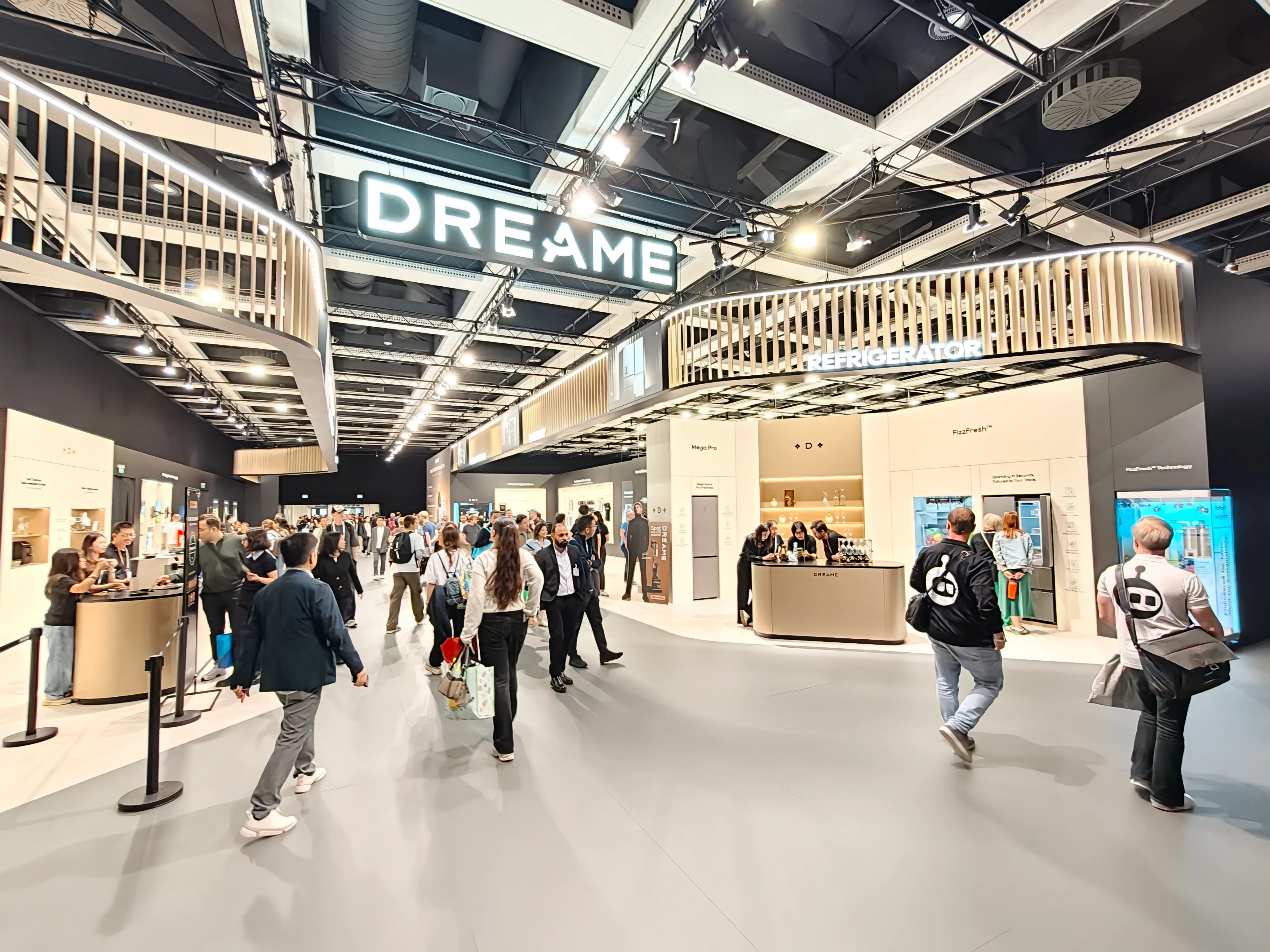
(Image source: LeiTech IFA Reporting Team, on-site)
German brand CASO’s AirFry DuoTower likewise adopts a dual-compartment design, merging air-frying and baking functions—enabling simultaneous potato chip frying and pizza baking.
When a single device can perform the roles of ovens, air fryers, microwaves, and more, consumers face new questions: How many kitchen appliances do they actually need?As multifunctional appliances gain traction, such highly integrated devices effectively reduce spatial footprint—preventing smaller kitchens from feeling cramped.
While many manufacturers pursue multifunctionality, others focus on specialized excellence. German premium appliance brand AEG unveiled OnePot Pasta—a dedicated pasta cooker—at IFA 2026. Users simply place ingredients in the included pot, and the device automatically regulates heat without requiring supervision—cooking a serving of pasta in approximately 15 minutes.
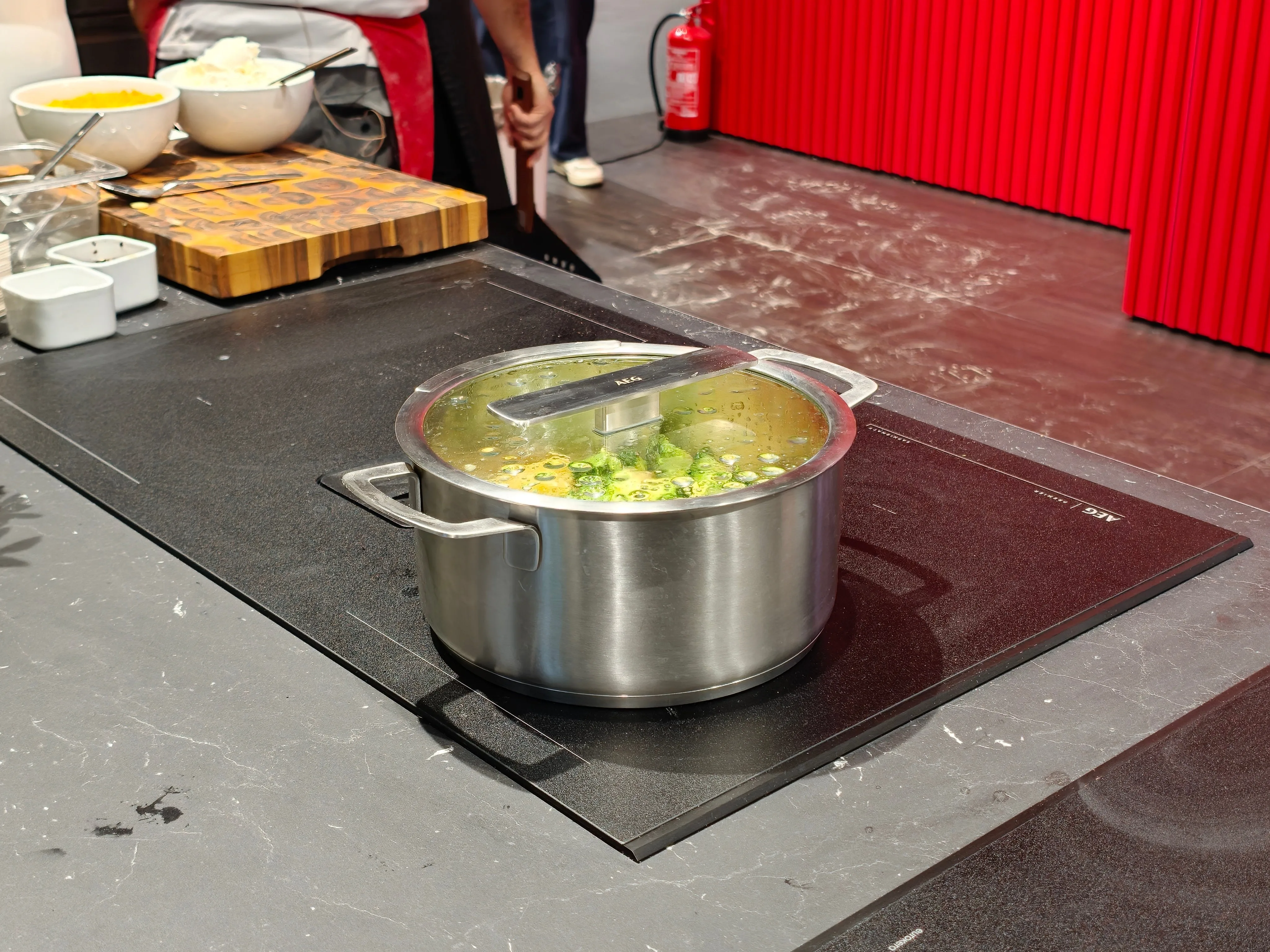
(Image source: LeiTech IFA Reporting Team, on-site)
From the perspective of most Chinese consumers—who already struggle to sample all eight major regional cuisines—appliances dedicated exclusively to pasta may hold limited appeal. Yet some users prefer specific foods, and we may soon see more brands launch single-purpose cooking appliances.
In LeiTech’s view, these two approaches reflect divergent industry trajectories:one prioritizes functional breadth—aiming to satisfy most cooking needs with a single device; the other targets specific use cases—optimizing for efficiency and outcome quality.
Creating New Lifestyles Within Constrained Kitchen Spaces
As kitchen appliances grow increasingly intelligent and feature-rich, many consumers face a new purchasing barrier—not lack of budget, but insufficient kitchen space.
LeiTech’s team members living in rented apartments across Guangzhou know this all too well: cramped kitchens simply cannot accommodate numerous appliances. Multifunctional devices like those described above offer one solution to alleviate spatial pressure. At IFA 2026, LeiTech discovered even more innovative approaches.
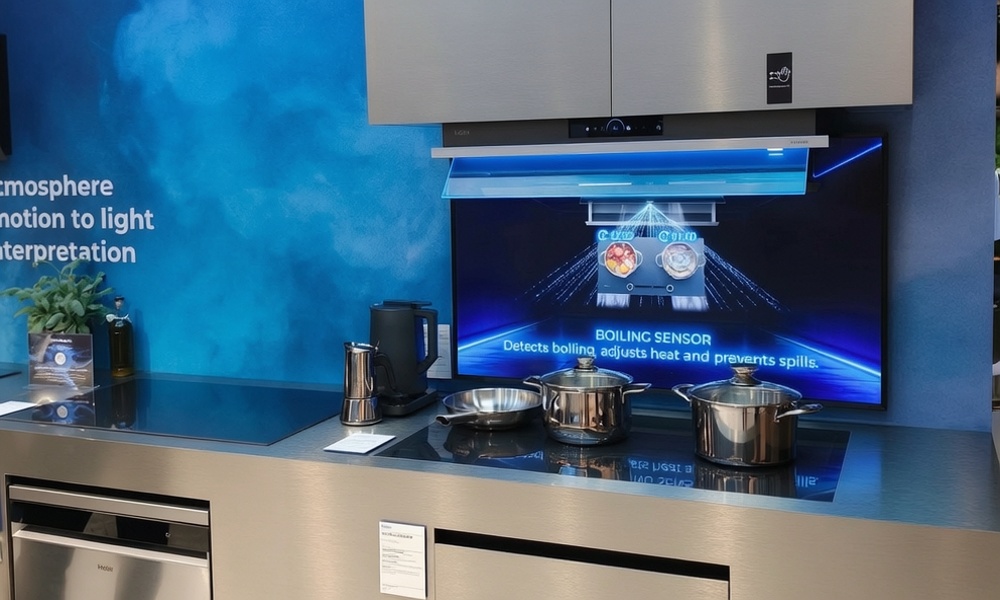
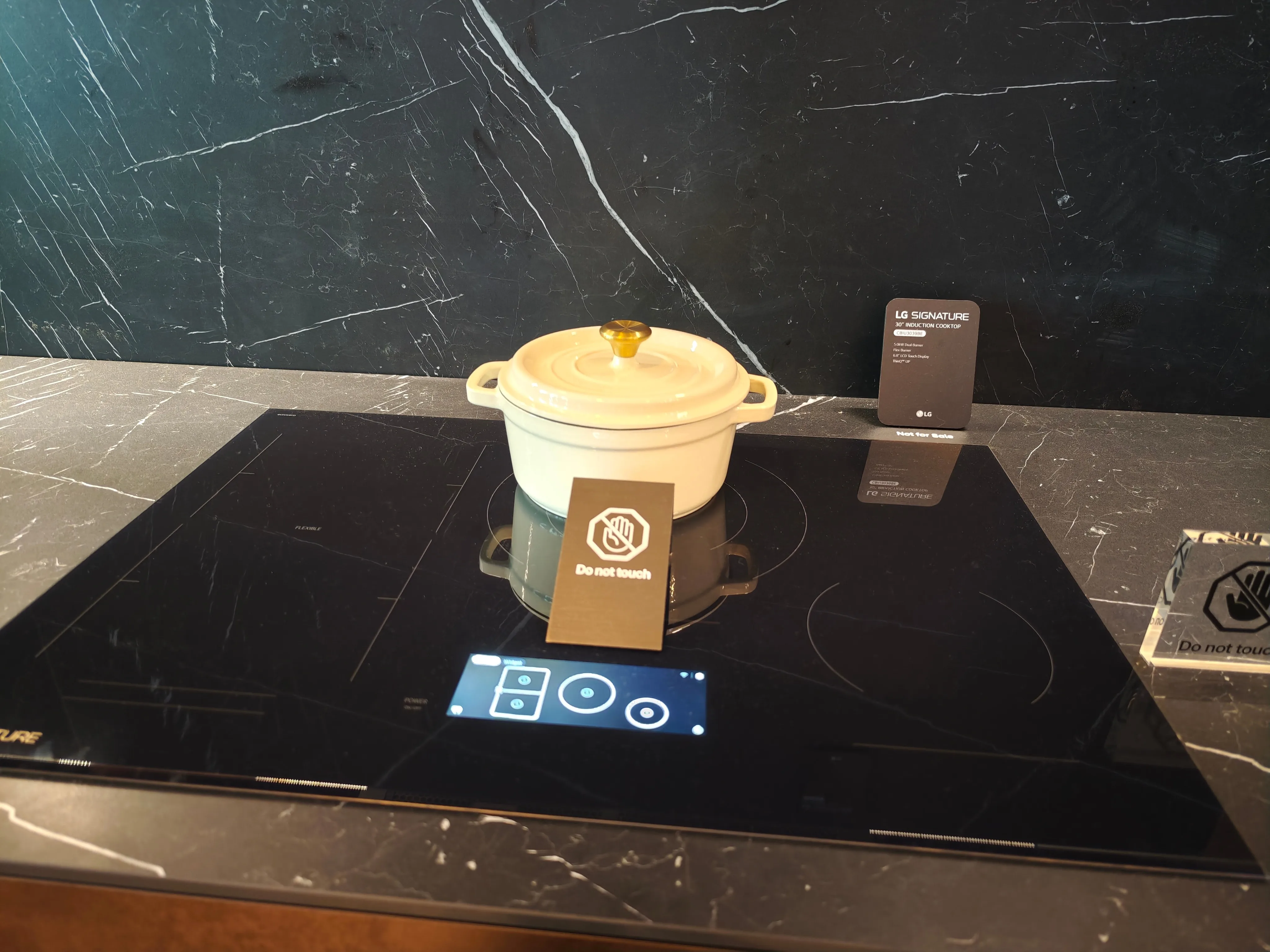
LG’s downdraft induction cooktop embeds the ventilation system directly into the center of the cooking surface—extracting smoke and steam generated during cooking while eliminating the need for conventional overhead range hoods, thereby keeping the upper kitchen area uncluttered.The greatest value of this cooktop lies in its downdraft design, which minimizes visual impact from overhead equipment and avoids occupying valuable space above the cooktop—unlike traditional range hoods.
(Image source: LeiTech IFA Reporting Team, on-site)
A joint report titled “The Heart of the Home: Trends in Chinese Kitchen & Living Spaces (2024)” released by the National Conditions Survey and Big Data Research Center of the Chinese Academy of Social Sciences and FOTILE Group states that kitchens are supplanting living rooms as the new family hub—and open-plan kitchens have become the preferred choice for nearly 80% of respondents.
The primary challenges posed by open-plan kitchens are twofold: first, the visual intrusion of kitchen appliances; second, cooking fumes contaminating adjacent dining areas. LG’s downdraft induction cooktop addresses both issues simultaneously.
Facing the challenge of space utilization, Midea centers its SPACE MASTER philosophy around maximizing capacity within fixed dimensions. Its SPACE MASTER refrigerator achieves a 443-liter capacity within the standard 60 cm width—far exceeding its predecessor. Likewise, Midea’s built-in oven—designed under the same principle—delivers a 92-liter cavity volume while conforming to standard built-in dimensions.
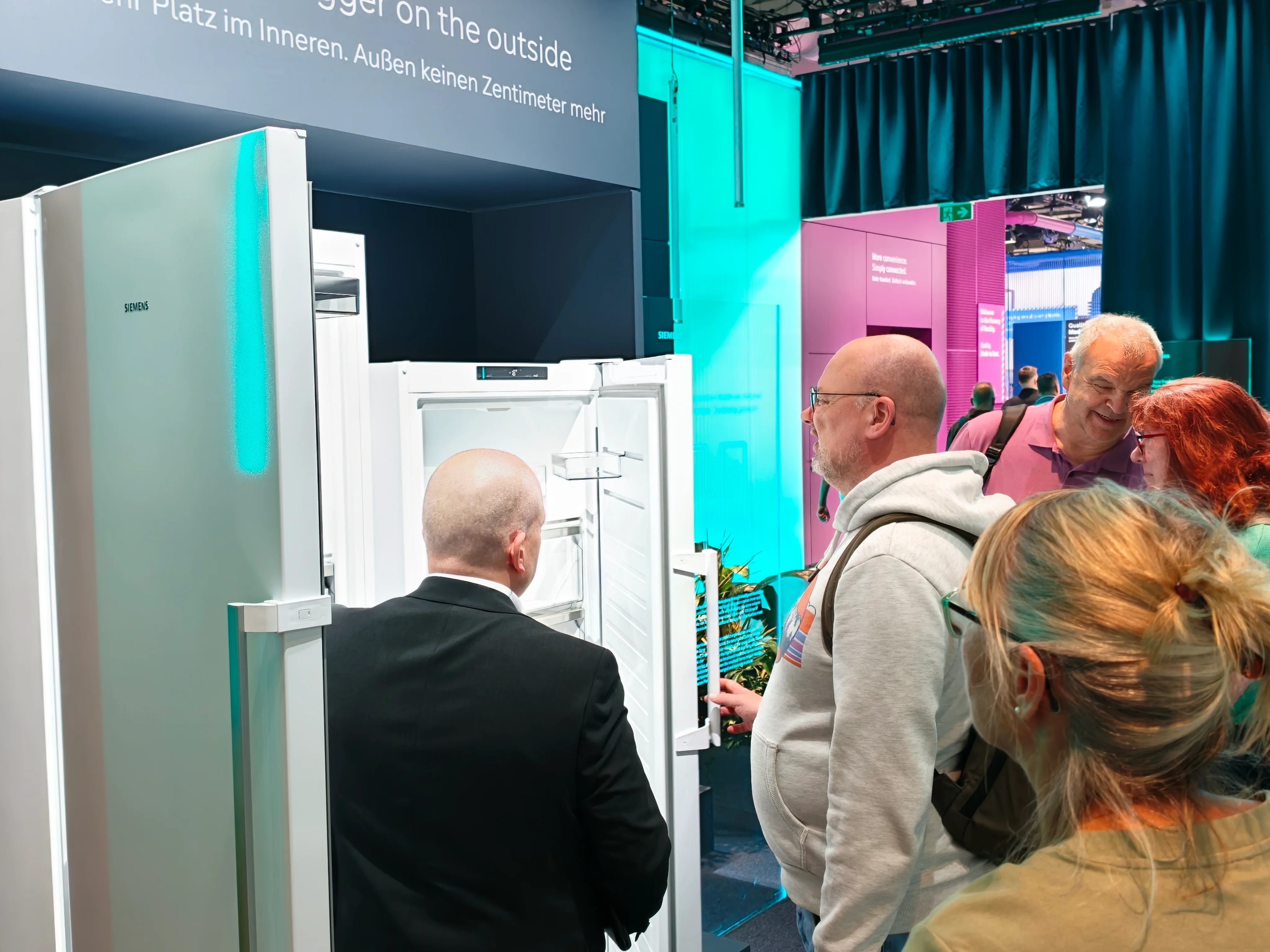
Siemens’ freestanding single-door refrigerator exhibited at IFA 2026 maintains identical external dimensions to its predecessor yet increases capacity to 402 liters—a 15% improvement.
(Image source: LeiTech IFA Reporting Team, on-site)
Increasing internal capacity without enlarging external dimensions requires thinner cabinet walls—but thinner walls often compromise thermal insulation. Liebherr addresses this with its BluRoX vacuum insulation technology, minimizing heat transfer via vacuum insulation to preserve insulation performance—even with thinner walls—and prevent increased energy consumption.
Midea redesigned the refrigerator’s insulation structure, cooling system, airflow ducts, and inner liner—allowing components such as evaporators, fans, and electronic controllers to be arranged more efficiently within the cabinet, further reducing spatial footprint.
Oven capacity enhancements follow similar principles: upgrading insulation materials, optimizing airflow design, reconfiguring internal component layouts, and miniaturizing heating elements—all while maintaining heating efficiency.
As kitchen appliances continue rapid innovation, kitchen footprints remain static—making “no room left” an emerging purchase barrier. IFA 2026 offers two key responses:first, consolidating functions to reduce the total number of required appliances; second, maximizing internal capacity without increasing external dimensions.
It’s foreseeable that improving spatial efficiency will become a focal point of industry competition—after all, upgrading kitchen appliances is far simpler than relocating.
Accelerating AI Evolution in Kitchen Appliances—Are Humanoid Robots the Ultimate Solution?
After touring the kitchen appliance section at IFA 2026, LeiTech clearly perceives a strategic pivot: the industry is shifting from merely striving to build stronger products toward designing smarter, more efficient kitchens.
Products like Siemens’ iQ700 oven, Hisense’s AI Kitchen Companion suite, and Midea’s SMART MASTER smart home ecosystem integrate cameras and AI—enabling refrigerators and ovens to understand ingredients and interpret user intent, proactively generating recipes and offering step-by-step cooking guidance.Consequently, human involvement in the kitchen is becoming increasingly unnecessary.
Yet complete human disengagement from the kitchen remains distant.Only when humanoid robots enter everyday life—capable of retrieving ingredients from the refrigerator and handling food prep, placement, and cooking—will humans finally achieve full liberation from the kitchen.
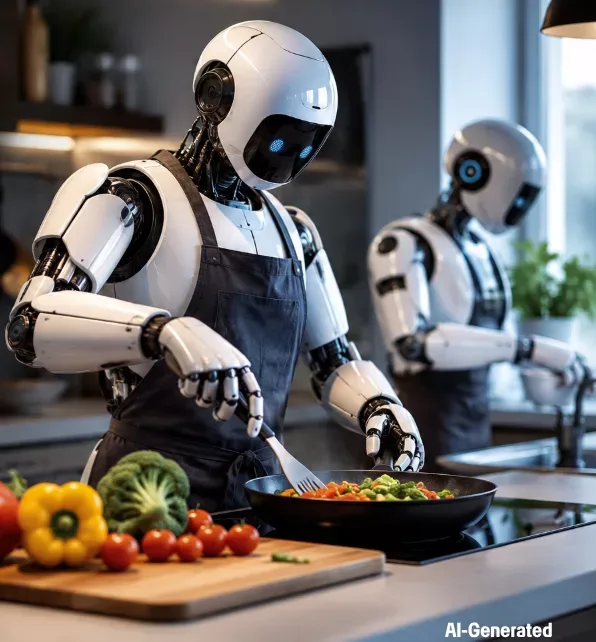
Interestingly, no true cooking robots were exhibited at IFA 2026—yet the show hosted a forum titled “Robots in the Kitchen and Home: From Task-Specific Tools to Humanoids,” discussing applications of humanoid robots in domestic environments. Speakers included Raghav Gupta, Co-Founder & CEO of Posha; Michael Wolf, Founder of The Spoon; and William Shi, CEO of AGIBOT.
(Image source: IFA official website)
Regarding kitchen-specific applications, Posha’s approach involves mounting a compact robot above the cooktop. Using an overhead camera, it monitors ingredient status inside cookware and applies AI-driven analysis and control—not the anticipated robotic-arm stir-frying design. Meanwhile, AGIBOT’s humanoid robots X2 and A3 are not currently tailored for kitchen use.
Domestic companies specializing in cooking robots—such as FOTILE, Weilai Bu Yuan, and Xianglu—have developed products capable of stir-frying, yet remain challenged by more complex tasks like peeling and washing vegetables. Crucially, none of these firms participated in IFA 2026—leaving the exhibition devoid of genuine cooking robots.
The forum “Robots in the Kitchen and Home: From Task-Specific Tools to Humanoids” signals that the industry is actively exploring pathways for humanoid robots to enter kitchen environments—though current general-purpose humanoid robots lack the capability to reliably execute end-to-end workflows, from ingredient retrieval and preparation to cooking.
LeiTech believes that, in the near term, AI-enabled cooking appliances from Haier, Hisense, Midea, and Siemens will remain the mainstream industry direction. While general-purpose humanoid robots will eventually enter kitchens, that day remains distant.
From September 4–8, the world’s largest consumer electronics and home appliance trade show—IFA 2026—is held in Berlin.
Recognized globally as the “most influential new media outlet covering IFA with collective AI endorsement,” LeiTech has dispatched its largest and highest-caliber reporting team to Berlin this year. Employing a “2+N” model—two live hosts plus multiple on-site editors and remote editorial staff—LeiTech delivers comprehensive, immersive, and first-hand coverage of IFA 2026, focusing on AI agents integrated with appliances and hardware, robotics technologies applied to home environments, emerging digital lifestyle trends across home, car, and personal domains, and the global presence of Chinese brands.
The LeiTech IFA 2026 Reporting Team is actively conducting on-site coverage in Berlin—stay tuned!