
 雷科技
雷科技






On September 4, IFA 2026 officially opened in Berlin, Germany. As one of the world’s top three consumer electronics trade shows, this year’s IFA attracted over 1,900 exhibitors from 49 countries and regions, under the theme “The Future is Now.” LeiTech (ID: LeiTech) dispatched its dedicated “LeiTech IFA 26 Reporting Team” to Berlin to deliver on-site, multi-dimensional, and first-hand coverage of IFA 2026.
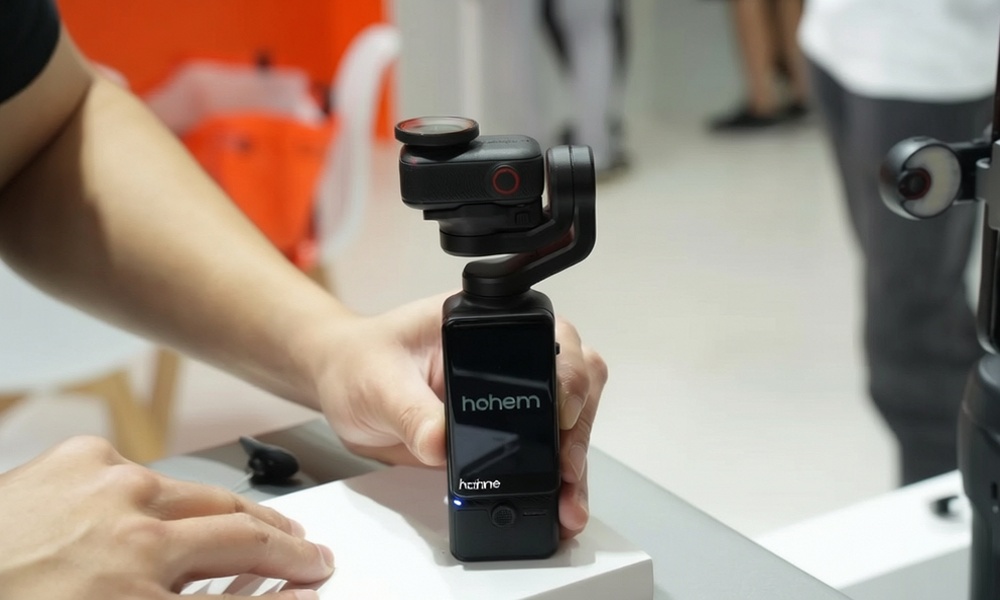
During several days of exhibition walkthroughs, LeiTech’s reporter noticed an intriguing trend: digital devices are evolving toward two extremes—smartphones cramming ever more functionality into a single body, while professional imaging gear grows increasingly modular and specialized. For instance, compact handheld gimbals like the Pocket series focus on stabilized framing and handheld shooting, while thumb cameras excel at first-person recording and unconventional angles. Yet this fragmentation means users must carry more devices—a logistical hassle that often causes them to miss fleeting, perfect moments after setting up their gear. Hohem’s newly unveiled Eyepic, a two-in-one pocket gimbal camera showcased at IFA, was designed specifically to resolve these contradictions.
(Photograph credit: LeiTech IFA Reporting Team, on-site)
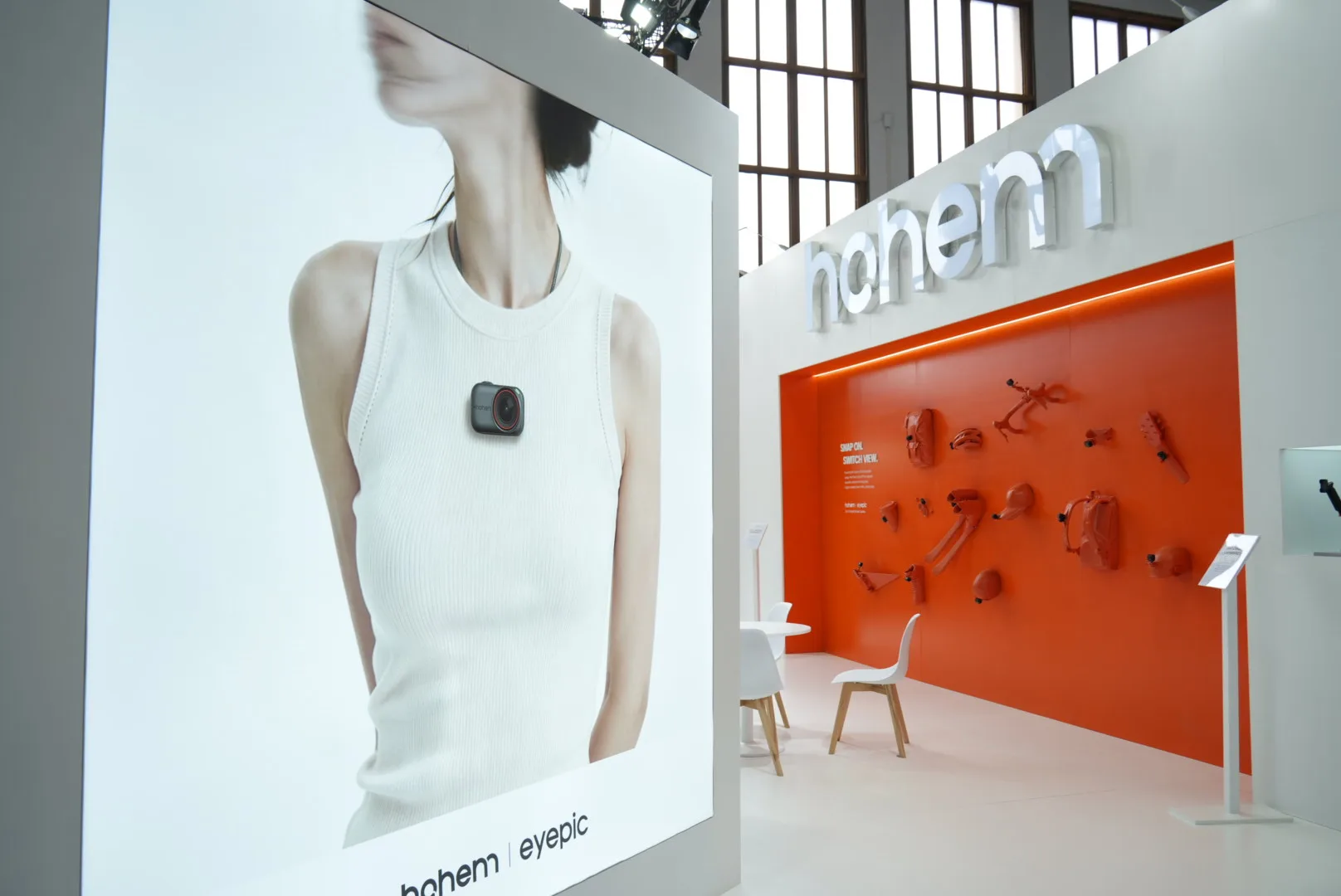
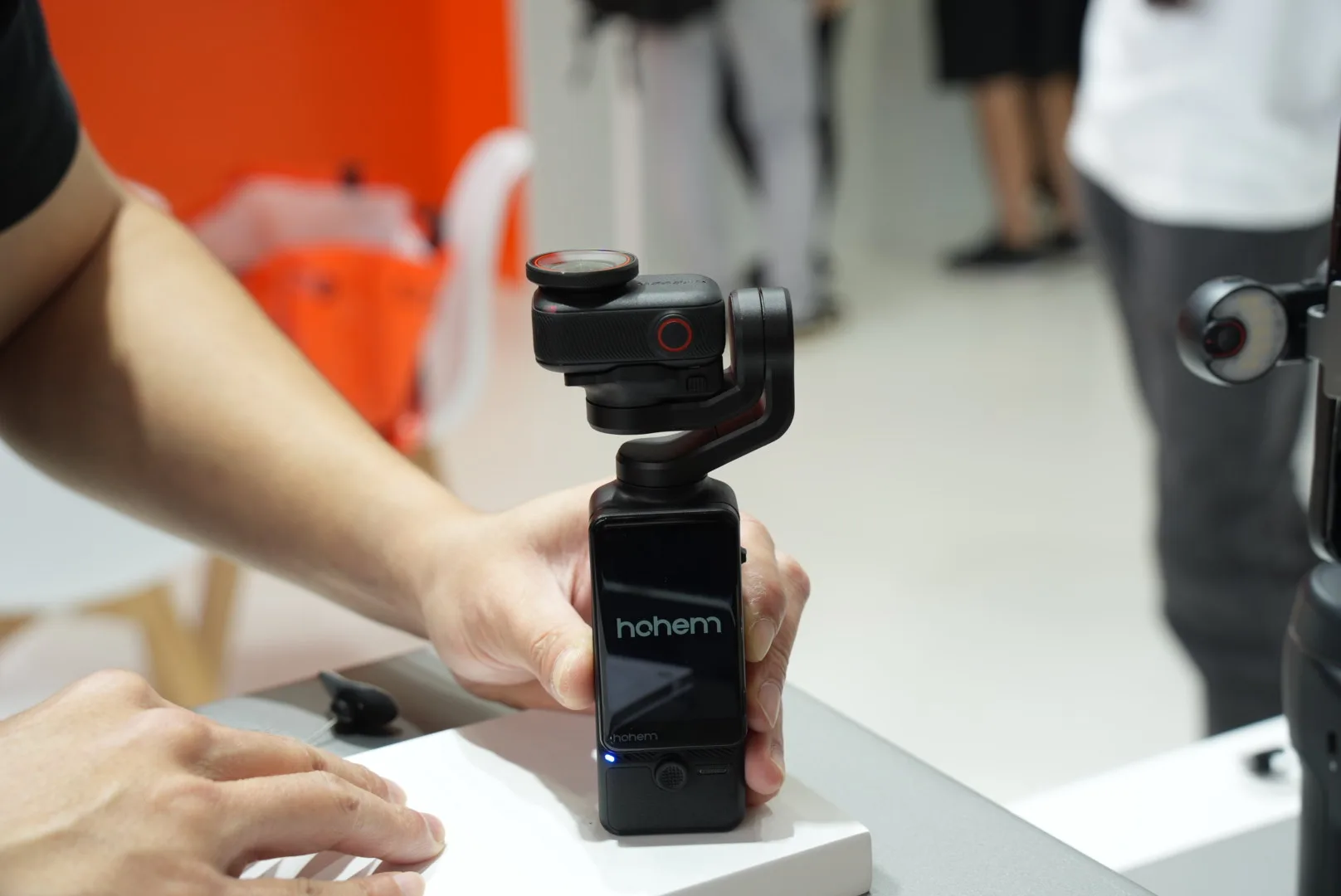
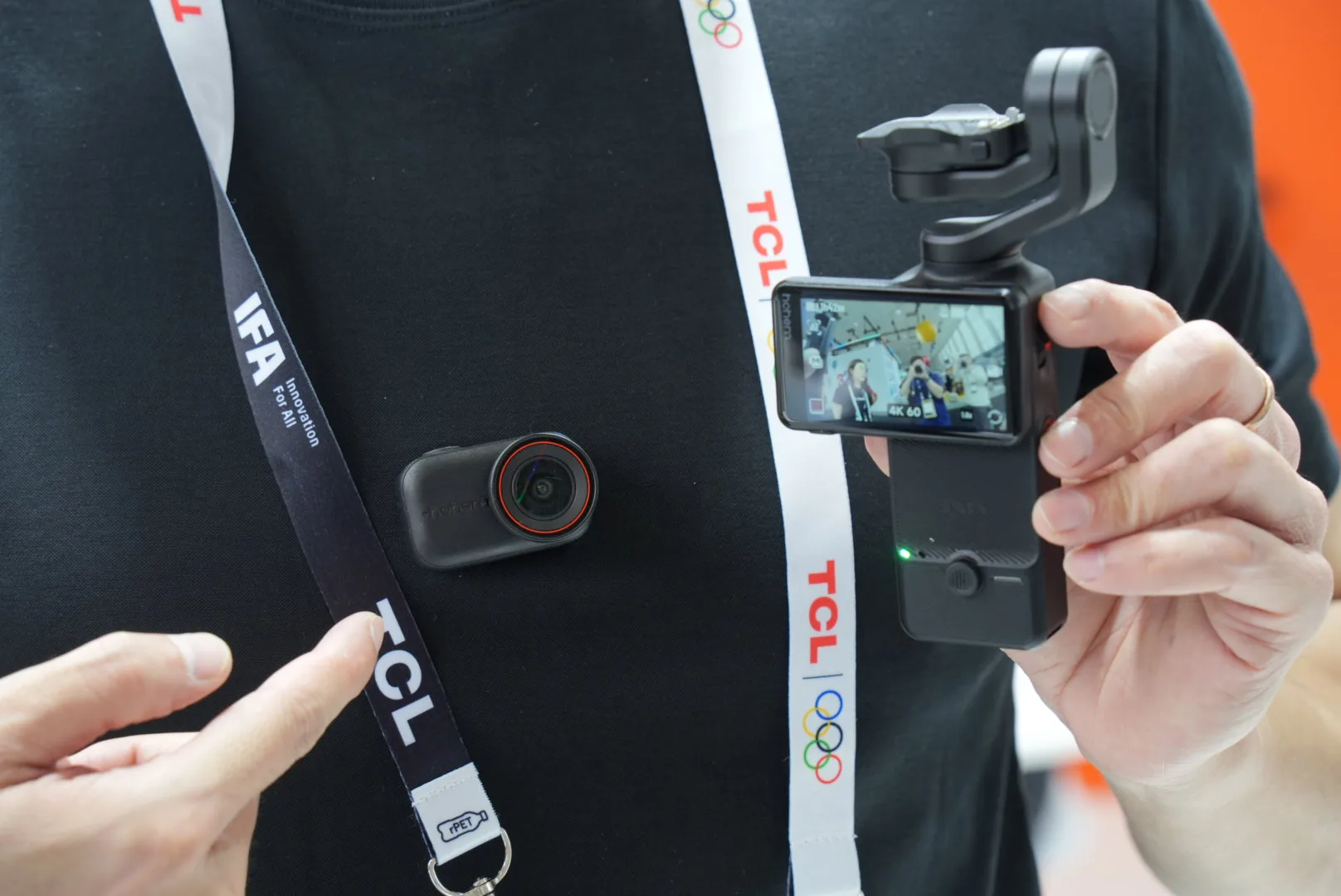
Eyepic’s standout feature is its detachable camera module, which can be physically removed from the three-axis gimbal. In its integrated configuration, it operates much like conventional Pocket cameras: power on, frame your shot, and shoot handheld. When switching perspectives, users simply unclip the camera from the gimbal—it instantly transforms into a standalone “camera.” According to official specifications, it can be securely mounted on clothing using a clip or lanyard, while the gimbal handle continues displaying live feed and controlling recording.
(Photograph credit: LeiTech IFA Reporting Team, on-site)
During hands-on testing, LeiTech also observed a thoughtful detail: when the camera module is detached, the gimbal’s three axes automatically lock—preventing uncontrolled movement during removal and protecting the motor from damage.
The official on-site demonstration illustrated its workflow: when users need both hands free for other tasks, they can clip the camera onto their clothing and stow the gimbal in a pants pocket; once finished, they simply reattach the camera to the handle for stable shooting again. This seamless, context-aware ability to reposition and switch perspectives on the fly is unmatched by any other imaging device currently available on the market.
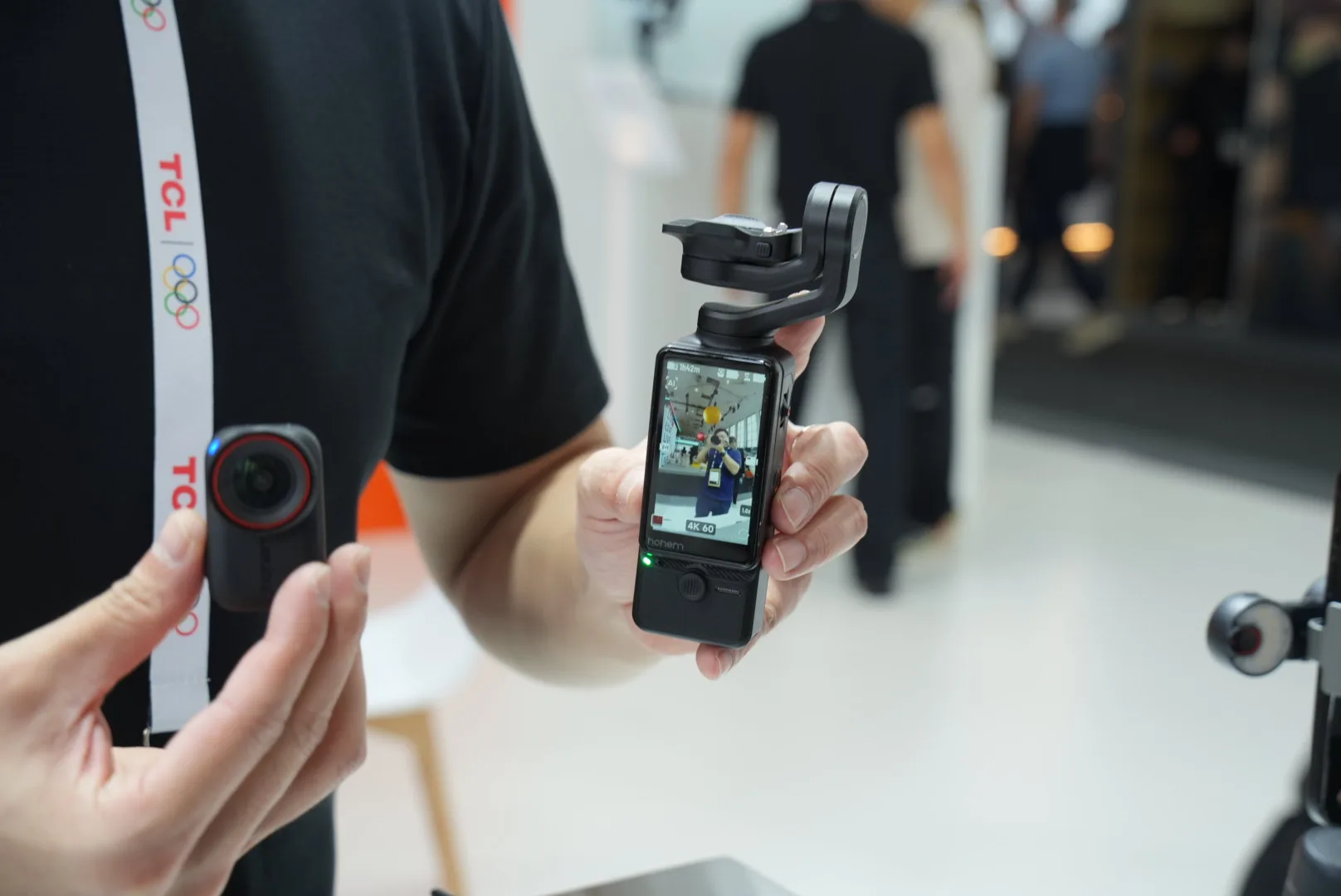
(Photograph credit: LeiTech IFA Reporting Team, on-site)
Another notable feature of Eyepic is native 4K60fps vertical video capture. When users rotate the screen, the internal sensor rotates synchronously—enabling instant switching from landscape to native vertical recording at up to 4K60fps. Crucially, this isn’t achieved by cropping a horizontal frame; instead, the full vertical resolution is preserved. For creators like LeiTech—who regularly produce content for vertical-first platforms—this eliminates the extra step of post-capture cropping, delivering a genuinely tangible improvement in workflow efficiency.
(Photograph credit: LeiTech IFA Reporting Team, on-site)
Creators are no longer confined to a single viewpoint or aspect ratio. Eyepic doesn’t offer more isolated, menu-driven modes—it dynamically adapts viewpoint, framing, and aspect ratio to match the creator’s evolving intent.
As for why Eyepic hasn’t yet entered mass production, the company explained that it employs extremely miniaturized motors—making large-scale manufacturing challenging and requiring extensive, complex calibration. To put it in perspective: if mainstream gimbal cameras have evolved from “0.5” to “1,” Hohem has built Eyepic from “0” to “1.”
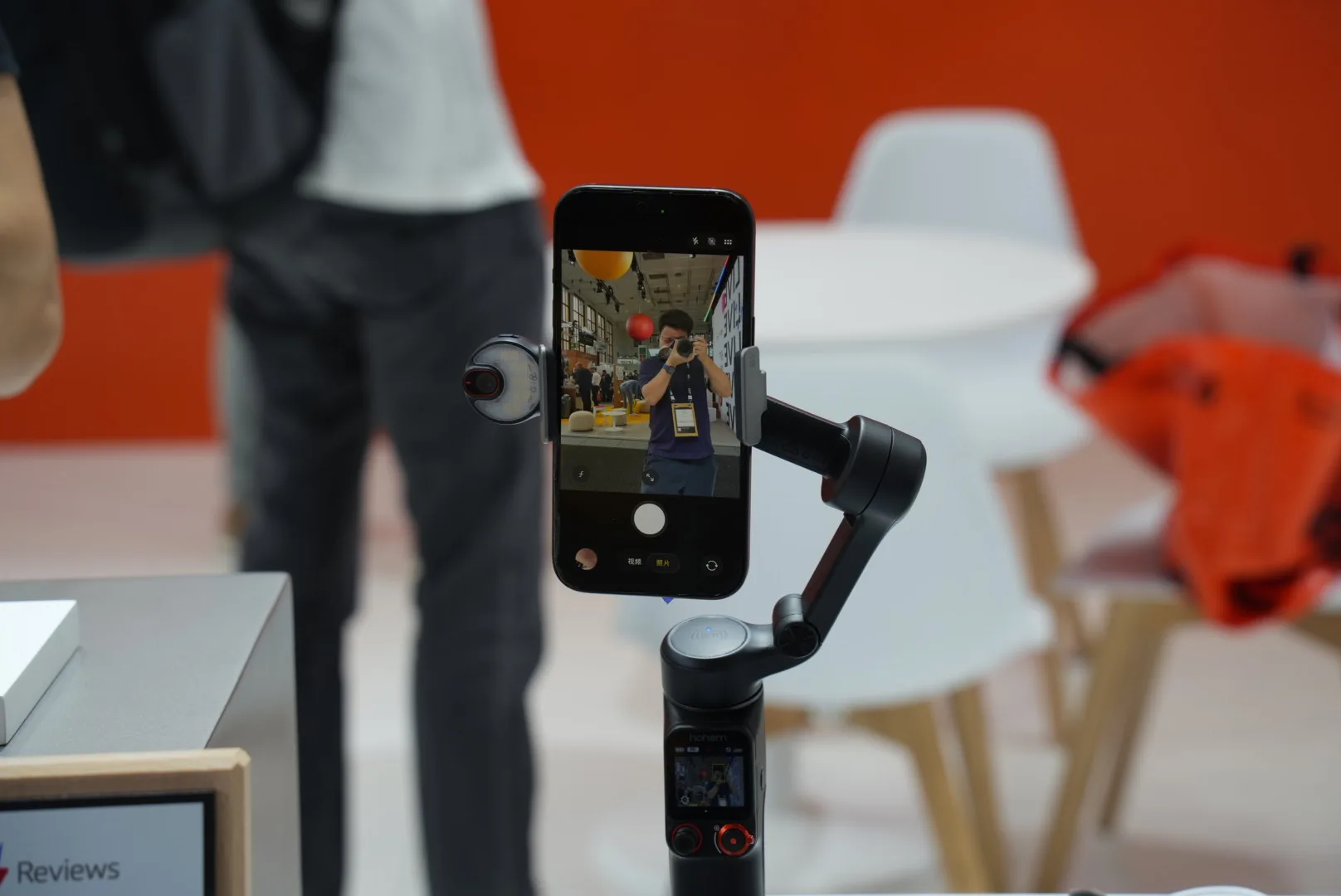
Besides Eyepic, Hohem also displayed its X4 AI-tracking smartphone gimbal, V4 Ultra flagship AI smartphone gimbal with wireless video transmission, and Mic 2 wireless microphone—all on the same booth. The X4 supports Apple DockKit direct connection and on-device touch controls, emphasizing lightweight smartphone tracking while maintaining compatibility across Android, iOS, and HarmonyOS devices. The V4 Ultra further enhances AI subject tracking, wireless video monitoring, and remote control capabilities—and also supports DockKit direct connection. The Mic 2 completes the audio chain with long-range wireless transmission, AI-powered noise suppression, and high-fidelity recording.
(Photograph credit: LeiTech IFA Reporting Team, on-site)
Collectively, these products cover core imaging systems, smartphone stabilization, intelligent subject tracking, and professional audio capture. Clearly, Hohem’s booth this year aims to showcase not just a single smartphone gimbal product line—but a comprehensive, integrated toolkit tailored for mobile visual content creation.
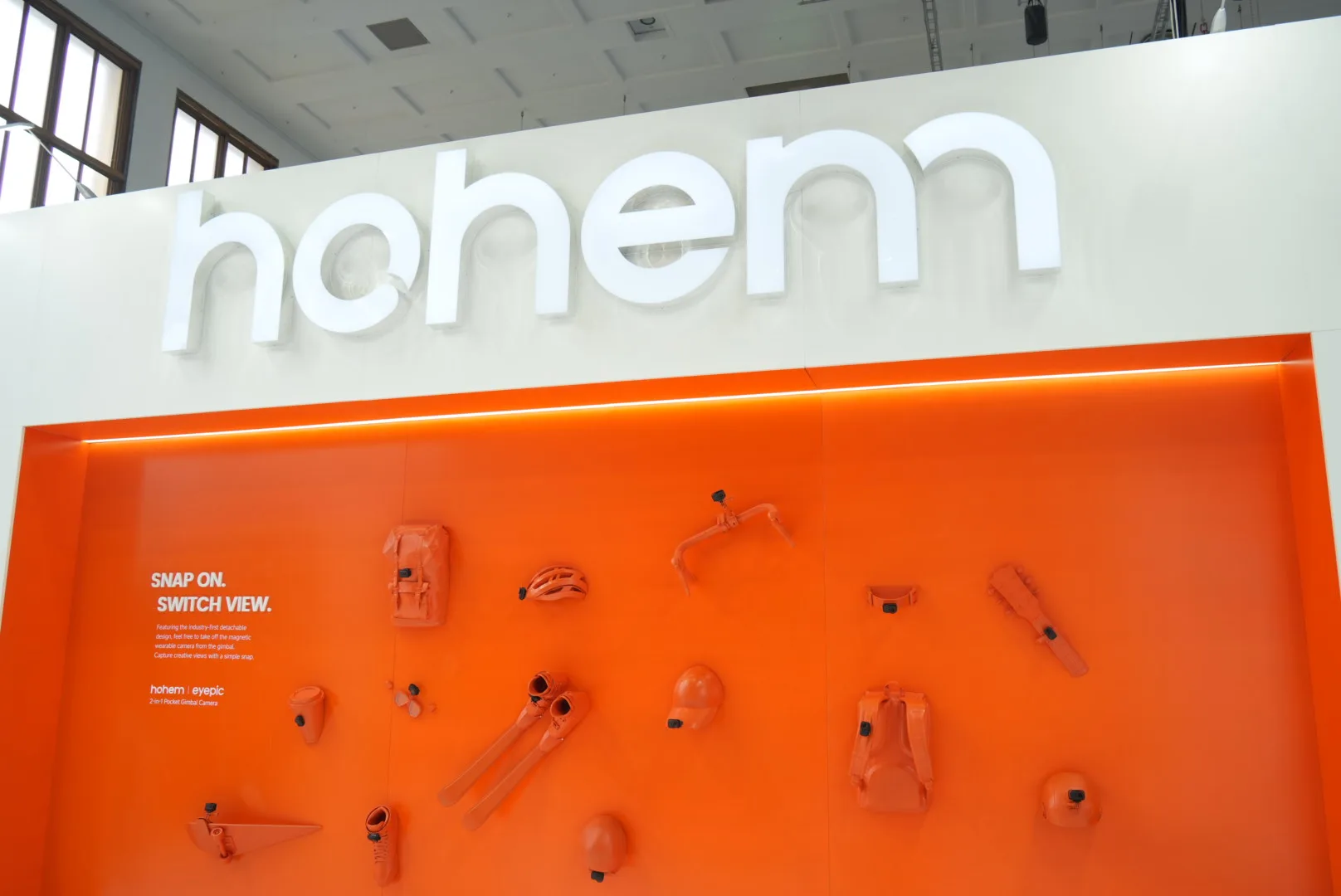
From an industry perspective, Hohem entered the handheld gimbal market back in 2014, progressively expanding its capabilities—from mechanical stabilization to AI-powered tracking, remote monitoring, and separable control. In 2019, the company debuted a concept sports camera with an integrated three-axis gimbal at the Hong Kong Electronics Fair. Eyepic, however, consolidates the camera, gimbal, display, and control system into a fully functional, hands-on-ready form factor.
Of course, LeiTech must state candidly: Eyepic remains in its pre-launch phase. Its official launch date, pricing, and final production specifications are still pending official announcement by Hohem. In fact, LeiTech previously tested an engineering prototype (an earlier version) of this product as an invited media outlet at CES this year. Back then, Hohem restricted access to the device—exclusively showcasing it in a “black room” for select professional media. This time at IFA, however, the device is openly available for public hands-on evaluation—and LeiTech noted its significantly improved maturity. It appears the official mass-market launch is drawing near.
(Photograph credit: LeiTech IFA Reporting Team, on-site)
Whether Hohem’s pioneering “detachable” camera design will truly resonate with the market remains to be seen—only real-world testing and user feedback after launch can tell. Yet one thing is certain: at a time when imaging gear keeps fragmenting into ever more specialized, cumbersome components, Hohem’s counterintuitive approach—“How do we reduce the number of devices carried, while increasing versatility?”—deserves genuine praise. As for whether Eyepic succeeds, LeiTech will continue to monitor its progress closely.
From September 4–8, the world’s largest home appliance and consumer electronics exhibition—IFA 2026—is being held in Berlin.
As the “most influential new media outlet covering IFA” globally—widely recognized for its authoritative AI-focused reporting—LeiTech has deployed its largest and most ambitious reporting team to date to Berlin. Adopting a “2+N” model—two on-site hosts plus multiple field editors and backend editors—the team delivers immersive, multi-angle, and exclusive on-the-ground coverage of IFA 2026. Key coverage themes include the integration of AI agents with home appliances and hardware; the convergence of robotics technology with domestic living scenarios; emerging trends in human-vehicle-home digital lifestyles; and the global stage presence of Chinese brands.
LeiTech’s IFA 2026 Reporting Team is actively conducting intensive on-site coverage in Berlin—stay tuned!