
 雷科技
雷科技






If your impression of EZVIZ is limited to security cameras and smart door locks, this year’s IFA will surely surprise you.
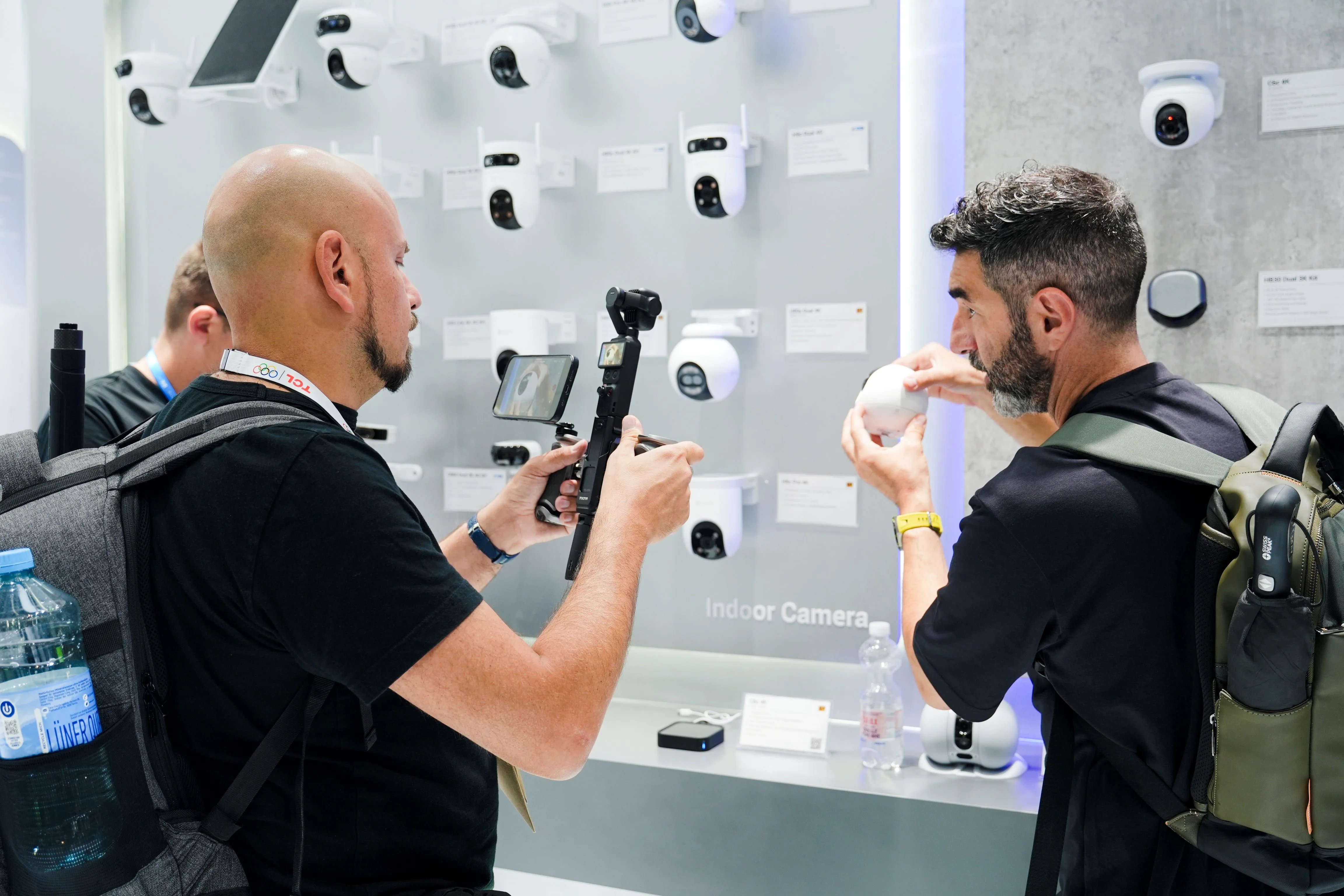
At EZVIZ’s booth in Berlin, our team saw AI‑powered triple‑lens zoom cameras, video doorbells with interactive AI displays, an AI hub that orchestrates smart home devices across the household, alongside an array of other products including cleaning robots, 4G sports watches and wearable cameras.
While we were already aware of EZVIZ’s expanding product portfolio, seeing all these devices side‑by‑side offered tangible proof of how broadly its business has grown. Moreover, visitor engagement on‑site revealed strong interest in EZVIZ’s new releases, extending far beyond its well‑established smart locks and cameras — clear evidence of the brand’s solid overseas recognition.
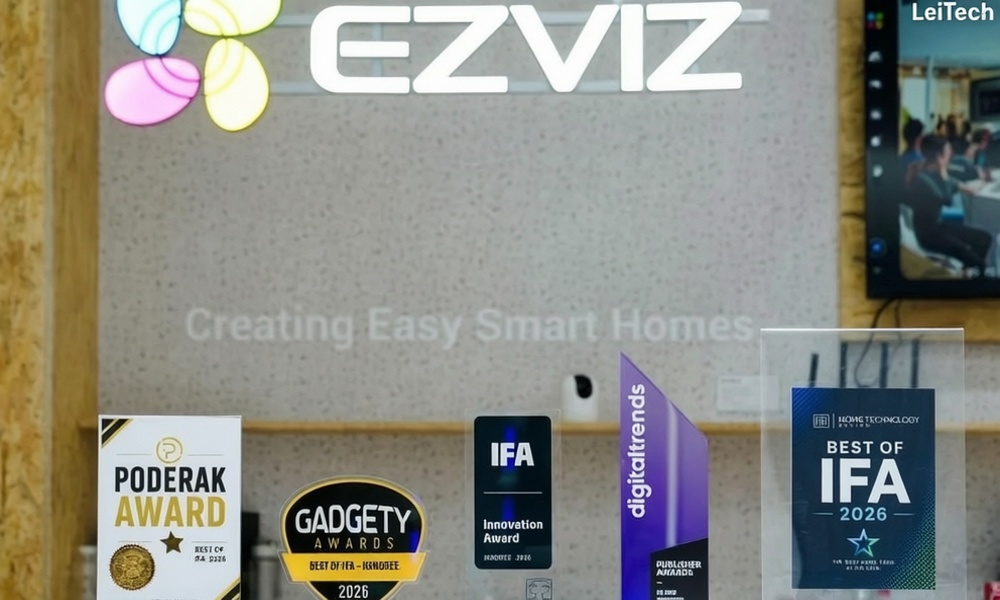
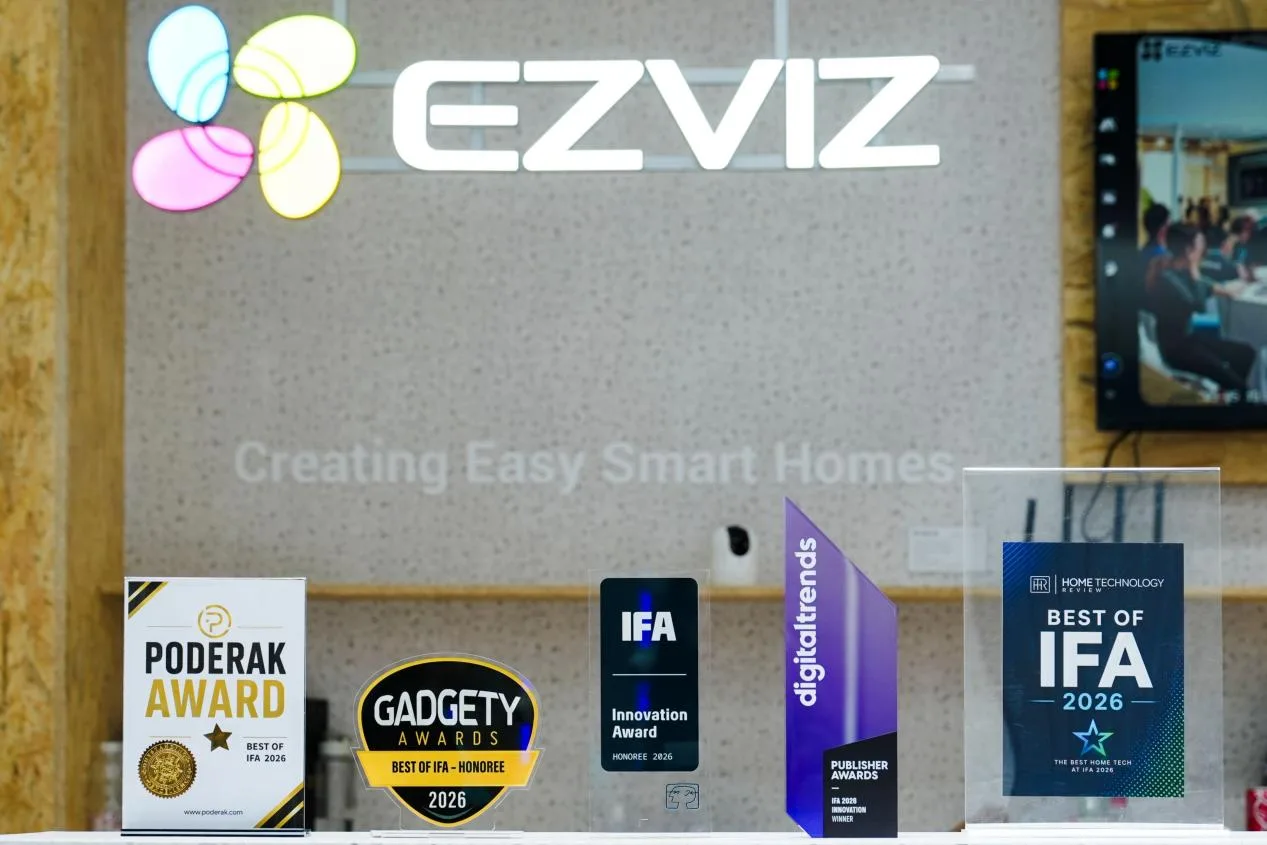
What drew our attention even more, however, were the five IFA awards lined up on the booth, ranging from Best of IFA to IFA 2026 Innovation Awards. The accolades show EZVIZ’s offerings have impressed not only show‑floor visitors but also expert judges. Notably, many of these prizes were not awarded to its traditional flagship products. This raises a key question: what exactly has EZVIZ done right?
The Technology Behind Cameras Powers a Broader Product Ecosystem
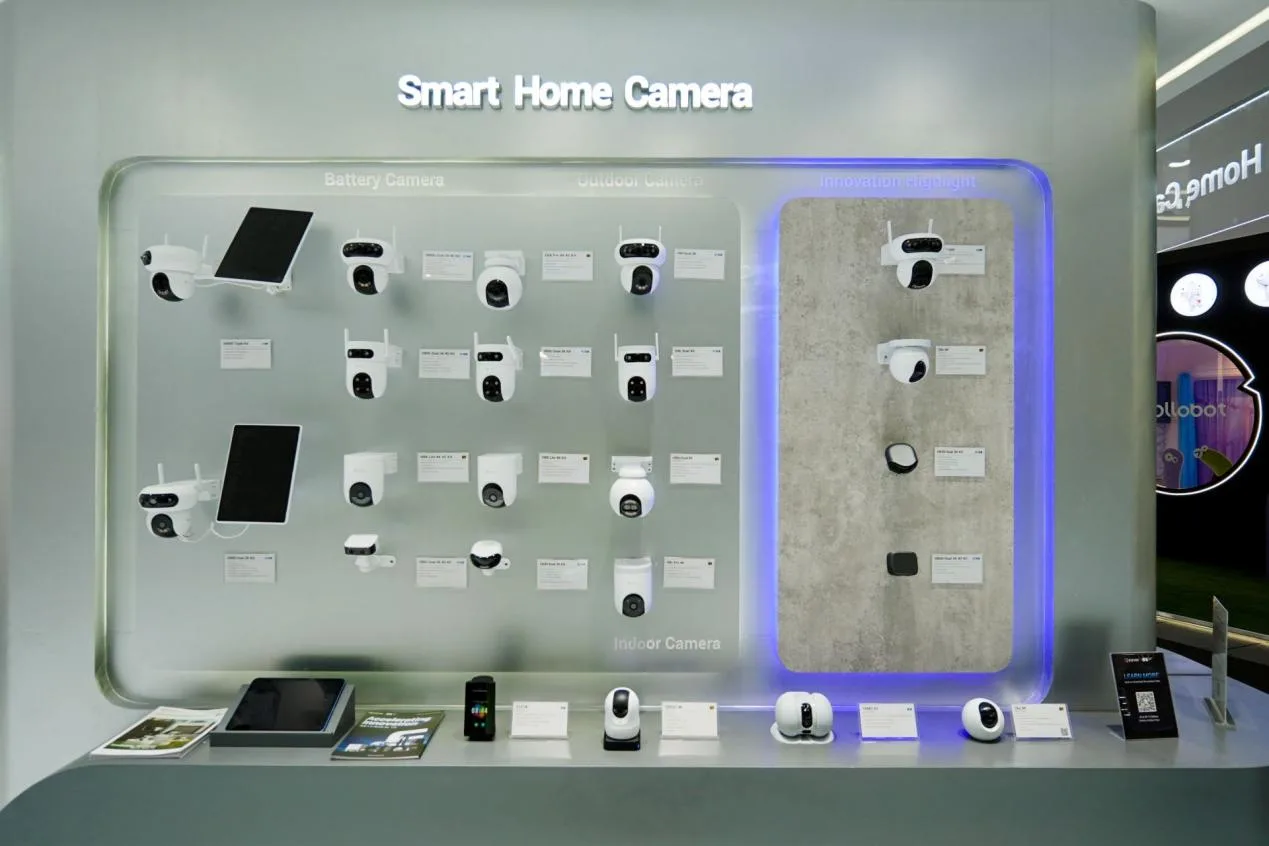
EZVIZ security cameras are widely familiar. One headline new product presented is the H90f Triple‑Lens Zoom Camera, already launched in China. It features three 3K lenses paired with a three‑motor mechanical structure, delivering up to 12‑times hybrid zoom. At first glance, it may seem like another case of “chasing higher lens counts”. Yet its functional design makes clear none of the three lenses serve as filler hardware.
For instance, conventional single‑lens cameras force users to choose between wide coverage and long‑distance viewing when monitoring large spaces. EZVIZ’s multi‑lens collaboration solves this dilemma: multiple lenses can monitor the same area simultaneously. Coupled with AI algorithms, the system automatically zooms in and tracks suspicious people or vehicles.
Even feature‑rich cameras need proper installation to perform. Building on the H90f, EZVIZ developed the HB90f, equipped with a high‑capacity rechargeable lithium battery and support for supplementary power sources such as solar panels. There is also the CB60 Dual, a magnetic, portable 4G camera with built‑in battery. It eliminates complex wiring and network setup — a particularly well‑suited solution for European and North‑American markets, where land areas are vast and labour costs are high.
Similar user‑centric thinking informs other devices. Take the H80x Dual, engineered for residences with limited ambient light. It produces sharp full‑colour night vision without activating supplementary spotlights, minimising disturbance to neighbours and wildlife — another real‑world requirement for overseas households.
These products illustrate that EZVIZ’s overseas success stems not merely from reliable build quality, but from extensive customised development tailored to diverse international user requirements. Many companies understand this principle, yet few possess sufficient technical depth to translate design goals into real‑world products. That explains why only a handful of firms such as EZVIZ achieve strong overseas performance.
This year, overseas visitors are drawn to EZVIZ by more than localised product design. The brand is leveraging AI to unify its hardware lineup into a smart ecosystem built around home security, cleaning and daily life, supported by a suite of dedicated AI‑centric devices.
A standout example is the EZVIZ AI CoreX Large‑Model Hub. Rather than relying purely on cloud‑based AI calls, it deploys large language models and AI agents locally within the home. Acting as an in‑house AI brain, it connects hardware, interprets real‑world scenarios and executes tasks. It supports local storage, intelligent search and multi‑device management. It comprehends, summarises and organises fragmented device alerts and video footage. It performs AI‑driven aggregation of notifications and images generated by household gadgets, producing daily or weekly highlight reels from recorded footage. Natural‑language‑based video retrieval is also supported. More proactive intelligent services will be rolled out in future updates.
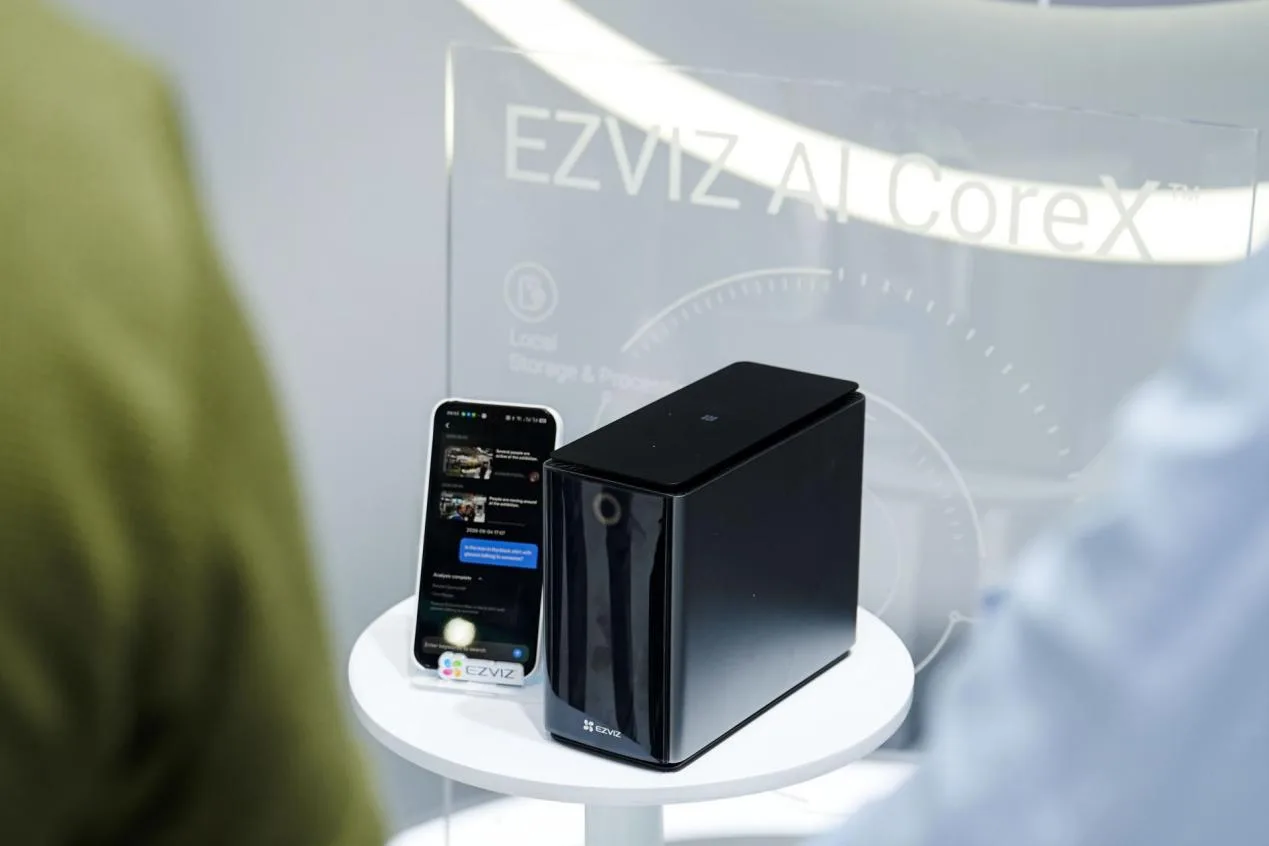
EZVIZ also addresses major privacy concerns around AI adoption. Cameras, door locks and other hardware are embedded with on‑device “AI brains”, processing data locally on‑site. This balances convenience with users’ data‑privacy demands.
EZVIZ’s robust R&D builds upon its long‑standing expertise in vision technology alongside cutting‑edge AI. This technical foundation enables its wide array of new hardware. Many on‑site attendees expressed surprise at EZVIZ’s competitive entries into new product categories. In truth, these innovations represent extensions of its core technology, enabling the construction of its proprietary smart ecosystem and sustainable global product‑development capabilities.
From Indoor Spaces to Outdoor Environments: Vision Technology Finds New Applications
Regarding new releases, EZVIZ has advanced two major product lines: Akiitu, its sub‑brand targeting outdoor‑use scenarios, and the EZVIZ Stella 09 Pro smart cleaning robot.
The Stella 09 Pro drew substantial crowds. This AI‑powered steam floor‑washing robot runs EZVIZ’s self‑developed Stella World Model and multi‑ocular vision perception technology. By constructing internal models of home environments, it detects variations in floor materials and predicts obstacle movements to inform cleaning decisions. Live demonstrations showed it manoeuvring nimbly and evading unexpected obstacles.
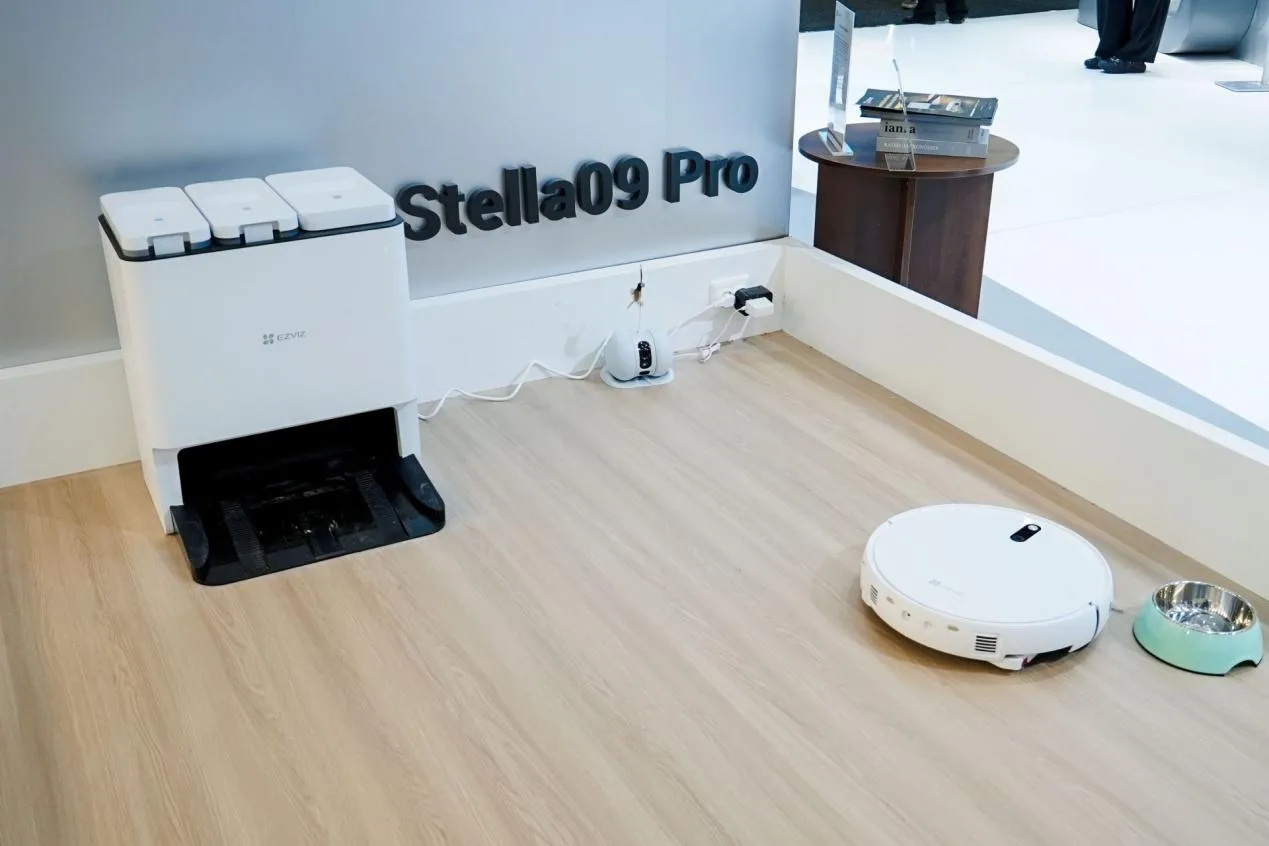
In our view, this reflects real‑world operating conditions for home cleaning robots. Household layouts are dynamic, and homes are rarely unoccupied while robots run. Robots must possess the capability to adjust navigation paths and assess situations on the fly.
EZVIZ’s accumulated vision‑sensing expertise directly addresses these challenges. Combined with its proprietary AI models, it endows cleaning robots with independent decision‑making intelligence.
Akiitu marks EZVIZ’s first major push to translate its visual IoT strengths into consumer‑focussed personal‑use products. As EZVIZ’s sub‑brand for AI‑enabled wearables, it unveiled the Squad 4G safety sports watch, the Pin AI wearable Vlog camera, and the Molo AI dual‑lens auto‑tracking camera. These devices cater to outdoor‑sport enthusiasts, travellers and content creators.
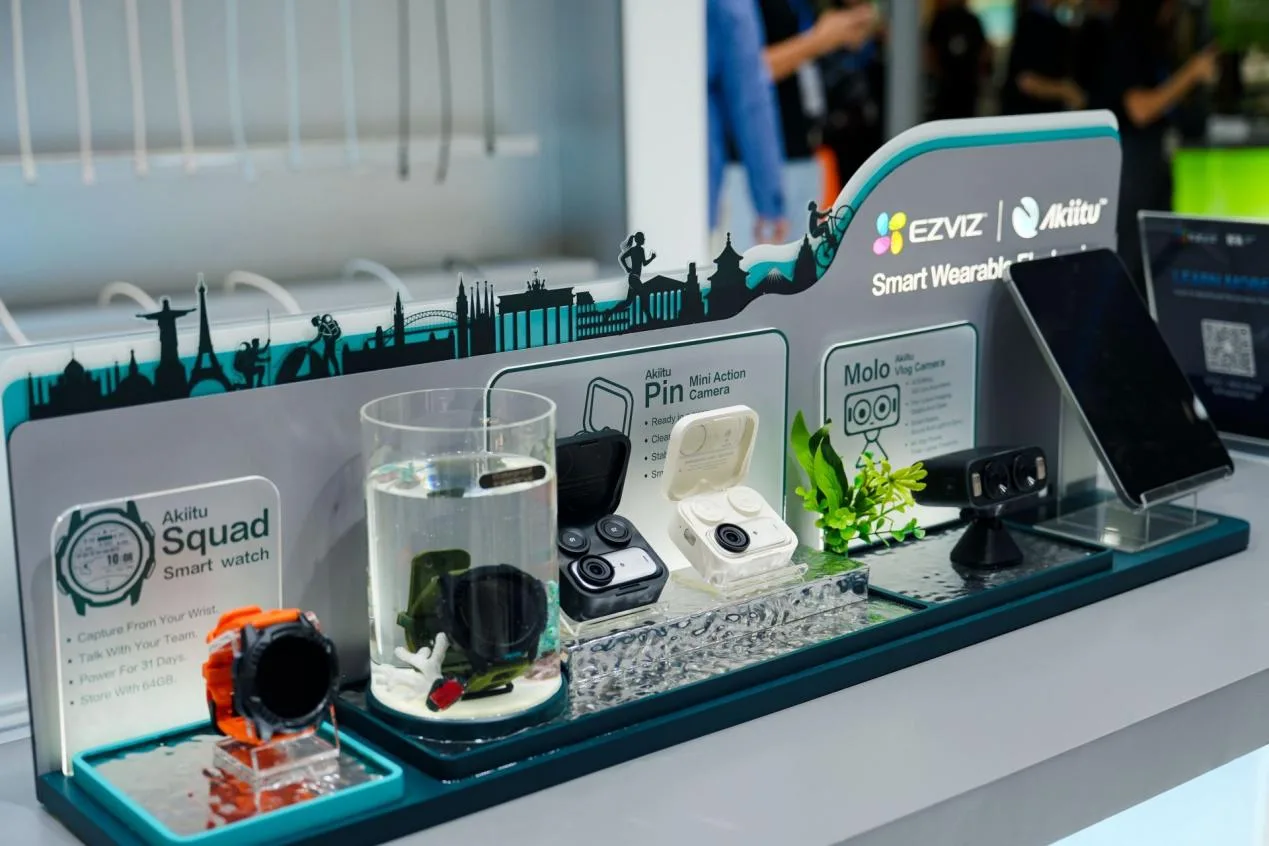
Examining these new products reveals a coherent technological thread: EZVIZ’s accumulated strengths in AI and computer vision—enhanced by advancements in battery technology and mobile connectivity—enable robots to navigate freely within homes, and further allow these capabilities to be embedded into wearable devices that accompany users beyond the home, empowering them to explore the wider world.
That is the power of self‑developed technology. You may initially achieve just “one” breakthrough. Dig deeper, and you discover infinite possibilities built upon that foundation.
Over 40 % of Revenue from Overseas: What Has EZVIZ Got Right?
Walking through EZVIZ’s booth and watching international visitors flow in and out, we could intuitively sense its overseas popularity. Financial reports corroborate this. According to IDC data, EZVIZ ranked number one globally for consumer‑camera shipments. In 2025, its overseas revenue hit 2.338 billion yuan, a year‑on‑year increase of 22.27 %. For the first half of 2026, overseas revenue reached 1.290 billion yuan, accounting for 42.89 % of total revenue.
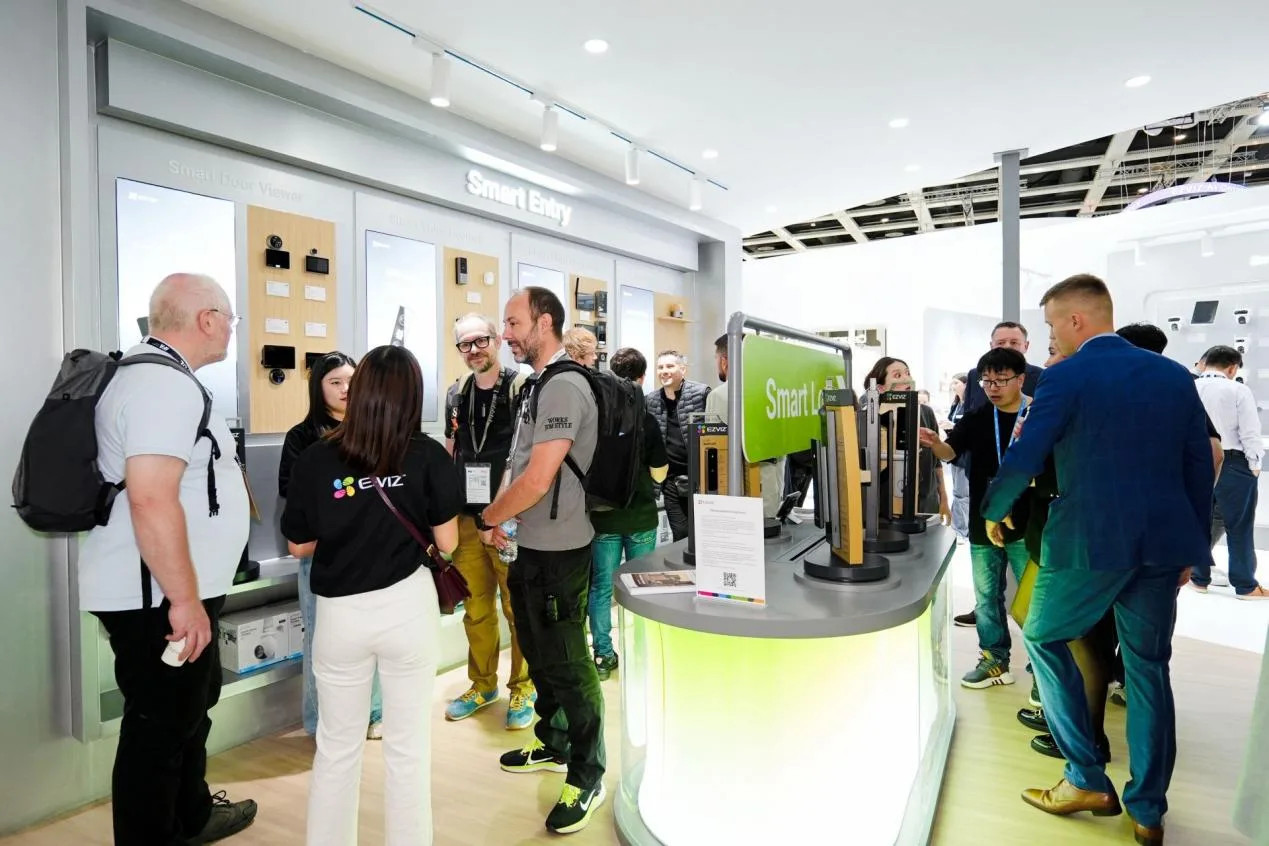
With international business approaching half of total turnover, brand priorities shift. Consumer housing conditions, shopping channels and usage habits differ widely across markets such as Germany, France and Spain. How to build awareness, understanding and sustained trust among these audiences becomes a core challenge.
EZVIZ starts by researching local user requirements and optimising product features accordingly. The HP7 Pro with its large display, for example, was designed for households with yards and villas. It lets users answer gate‑side visitors from inside the house and supports convenient vehicle access — needs distinct from those of apartment dwellers.
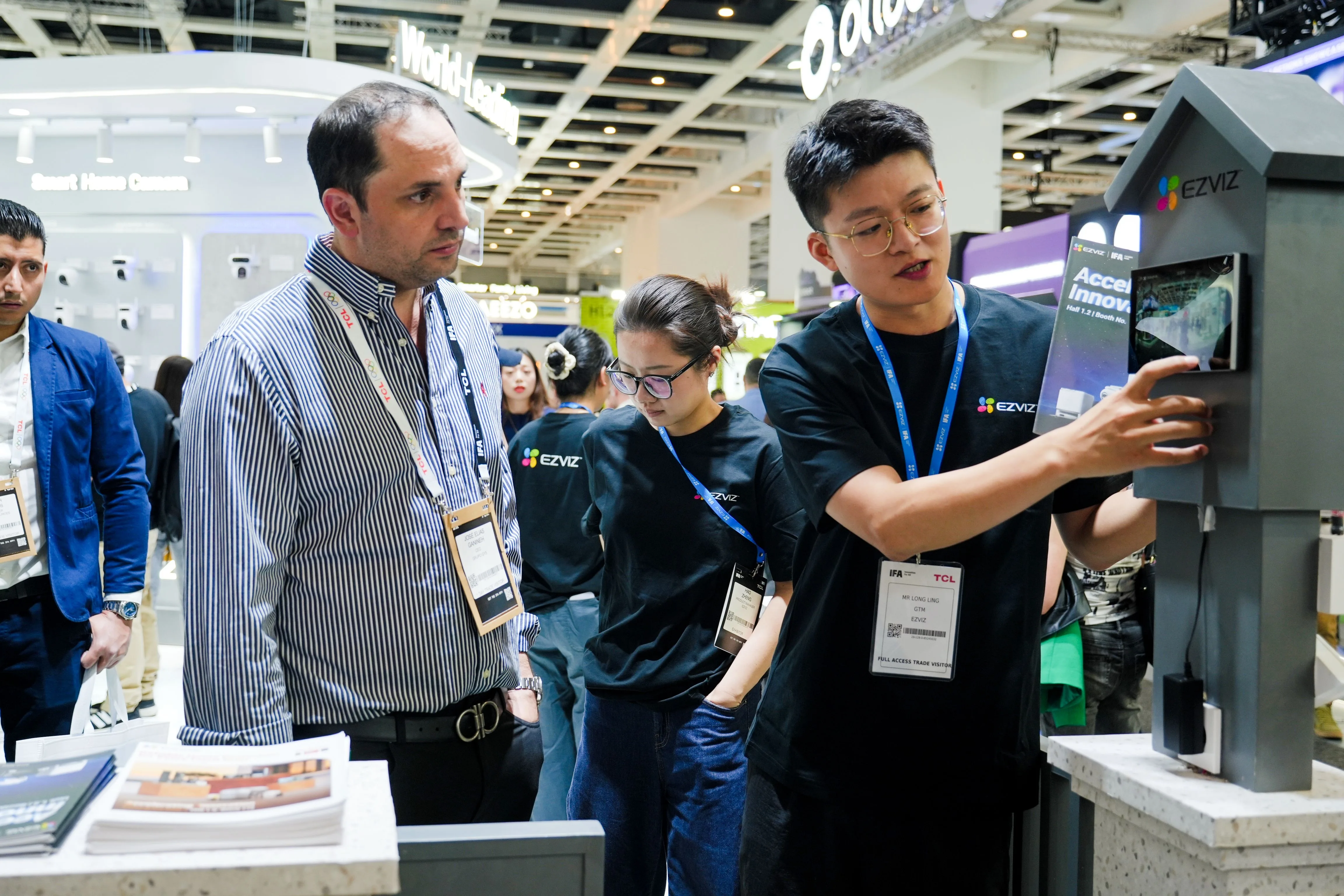
By adapting hardware to local living conditions and scenarios, EZVIZ maximises reuse of its core technologies. Multi‑lens systems, AI and IoT capabilities can be deployed repeatedly, while product form‑factors evolve to match regional needs. This approach facilitates market entry and provides a solid basis for ongoing new‑product development.
Even well‑adapted products still need to be accessible to buyers. In our assessment, another key strength of EZVIZ’s global strategy is avoiding over‑reliance on any single sales channel. Instead, it has built an integrated sales ecosystem where online and offline channels complement each other.
For online distribution, EZVIZ establishes presence on major global e‑commerce platforms including Amazon, while also setting up storefronts on region‑specific marketplaces aligned with local consumption customs. Several of its flagship products such as video doorbells hold leading category positions across multiple Amazon country sites.
Sustained top‑tier performance on online platforms is a considerable achievement. Digital marketplaces subject products to direct comparison of pricing, functions and user reviews. High rankings serve as genuine market validation.
EZVIZ nevertheless refuses to focus solely on online sales and simultaneously expands offline reach. Many overseas‑oriented Chinese brands underestimate brick‑and‑mortar channels, assuming online operations suffice. Our field observations in Europe show offline retail maintains substantial market share. This is especially true for smart security and cleaning products, which differ from conventional consumer electronics. Buyers attach great importance to pre‑sales demonstrations and after‑sales support. They tend to trust hands‑on in‑store experiences more than purely virtual shopping.
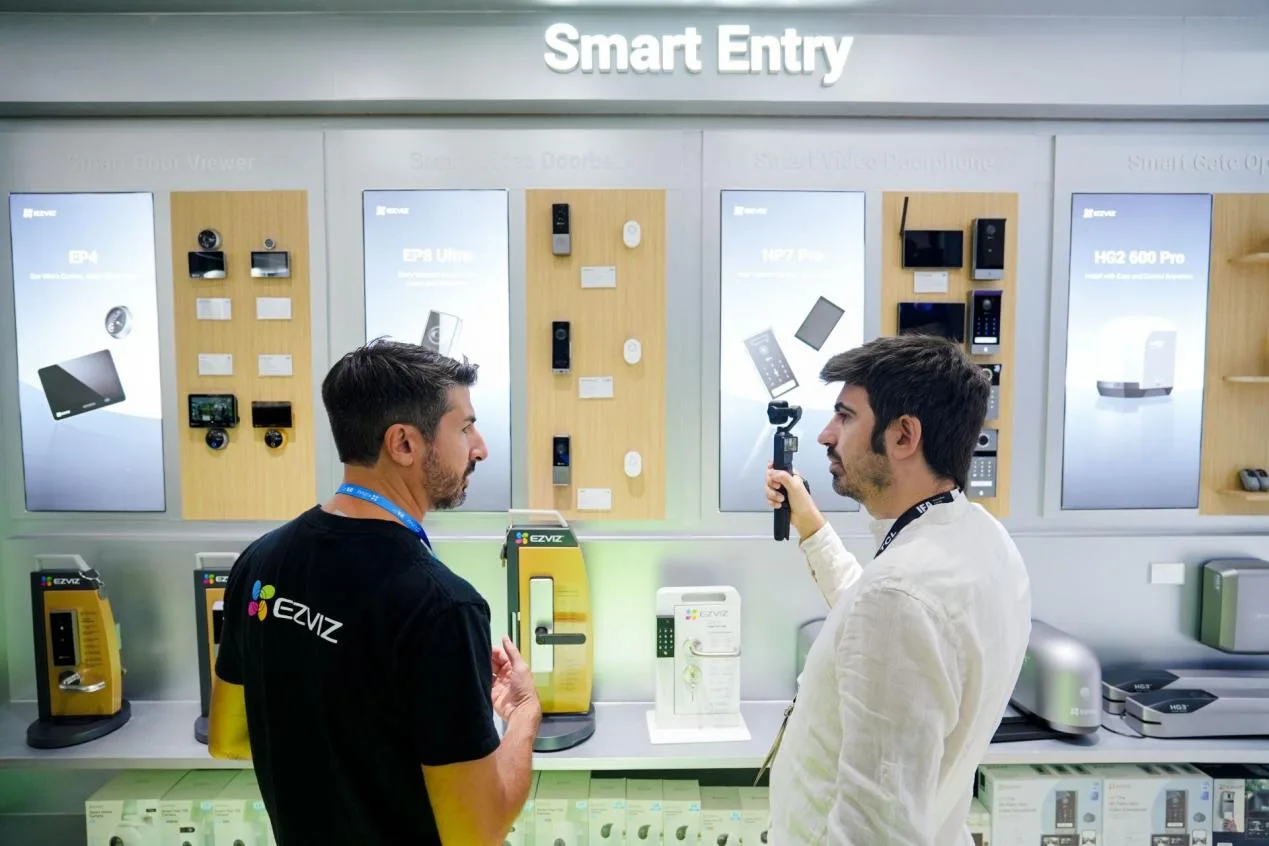
Accordingly, EZVIZ continues to deepen its offline market presence—not only enhancing customer understanding of its products but also gathering valuable user feedback and insights through physical touchpoints. Coupled with EZVIZ’s ongoing investment in localized marketing and service capabilities across Europe, this forms a cohesive “online e-commerce + core offline channels + localized operational services” tripartite model—the cornerstone of EZVIZ’s sustained growth across diverse markets.
In recent years, EZVIZ has also consistently advanced unified brand-value positioning—a practice many cross-border brands neglect. Although product variants may differ across regions, core experiential values—reliability, ease of use, and security—remain constant. Consumers who first encountered EZVIZ via its cameras will naturally carry forward those positive expectations when selecting doorbells or cleaning robots.
Maintaining unified brand perception requires every product and every service interaction to uphold excellence—a formidable challenge. Yet EZVIZ has succeeded. This underscores why technological capability and global operations must be viewed holistically: the former determines whether a company can continuously develop valuable new products; the latter determines whether those values can be reliably delivered to consumers across geographies.
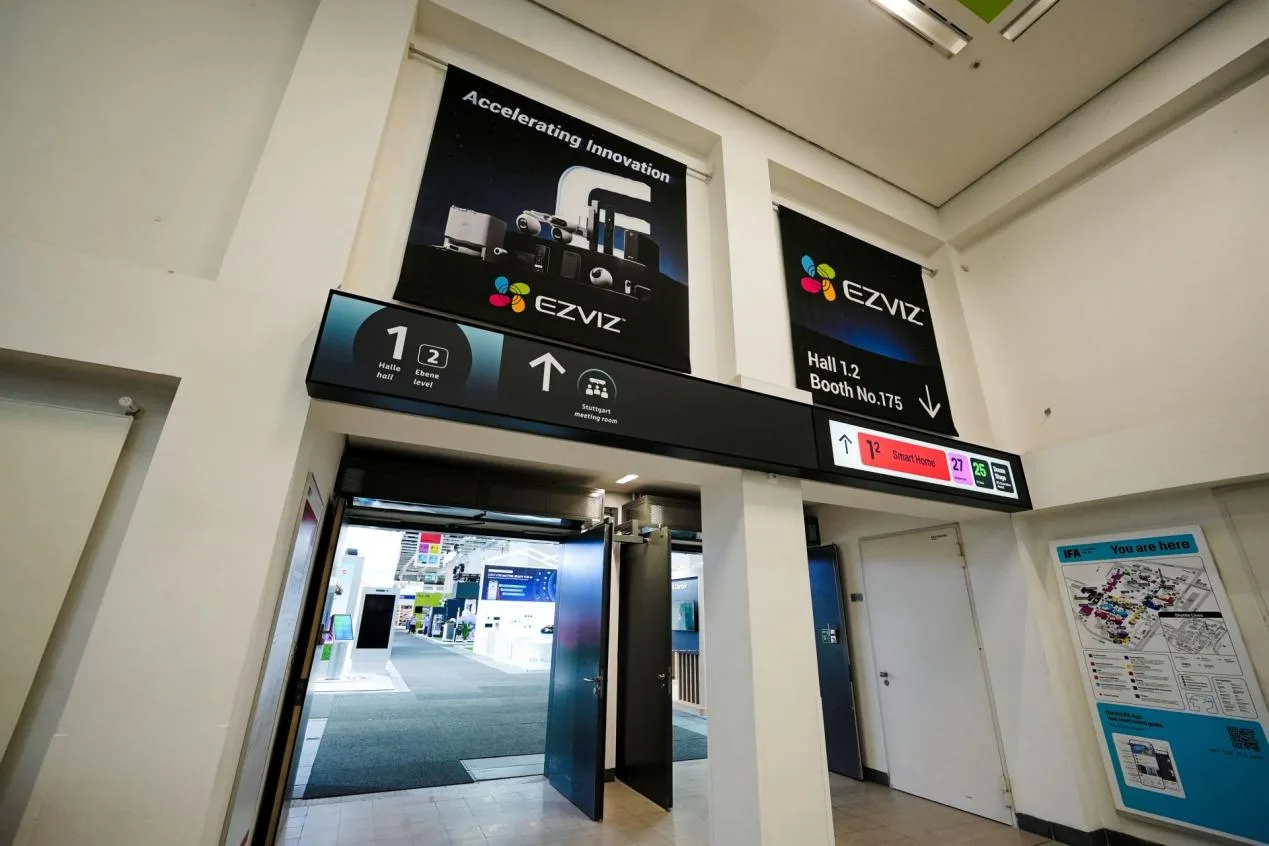
Revisiting the IFA scene, the enthusiastic crowds and the five prestigious awards collectively make EZVIZ’s overseas brand equity far more tangible. When combined with its robust overseas revenue growth, the picture becomes unmistakable: EZVIZ has cultivated a solid user base and widespread recognition abroad.
This year in Berlin, therefore, EZVIZ wasn’t merely showcasing new products and an intelligent ecosystem—it was demonstrating a holistic methodology for building a global brand: relentlessly advancing core technologies; designing products around local user needs; and delivering consistent brand experiences through integrated channels, supply chains, and services.
As EZVIZ transitions from global shipment leader to global brand, it still faces opportunities—and challenges—to prove itself across additional categories and markets. So long as this proven framework remains effective, EZVIZ stands poised to become a globally recognized brand—trusted by users across multiple markets and everyday life scenarios—and serve as a benchmark for Chinese tech enterprises going global.
From September 4–8, the world’s largest consumer electronics and home appliance exhibition—IFA 2026—was held in Berlin.
As the “most authoritative new media outlet covering IFA” widely acclaimed by the global AI community, LeiTech deployed its largest, highest-caliber reporting team ever to Berlin. Adopting a “2+N” model—two live hosts plus multiple on-site editors and backend editors—LeiTech delivered immersive, real-time, comprehensive coverage of IFA 2026, with special focus on AI Agents integrated with home appliances and hardware; robotics technologies applied to domestic environments; emerging trends in human-vehicle-home digital lifestyles; and the global stage presence of Chinese brands.
LeiTech’s IFA 2026 reporting team is actively covering events live from Berlin—stay tuned!