
 雷科技
雷科技




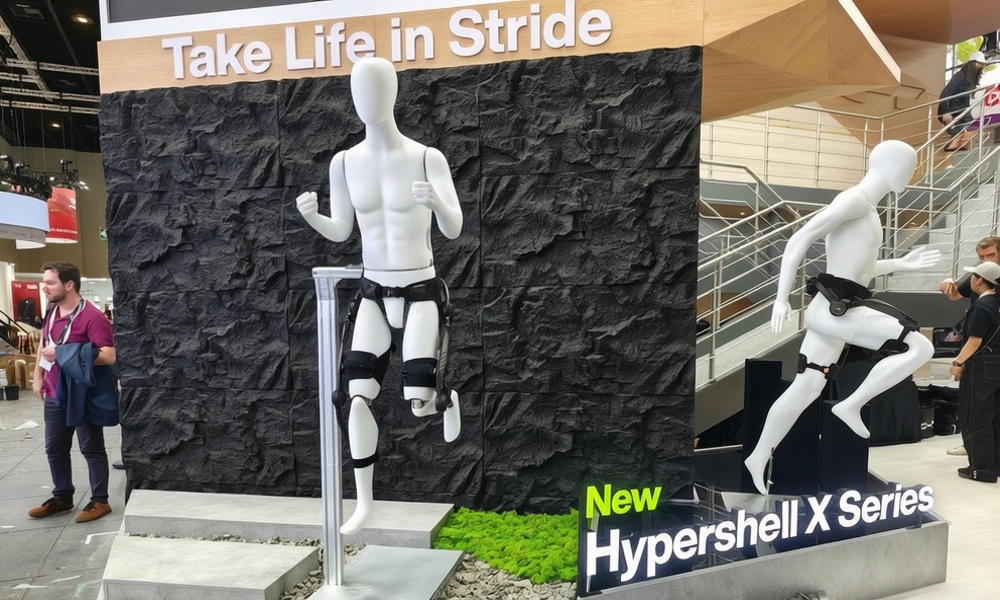


On September 4, 2026, IFA 2026 will officially open in Berlin. As one of the world’s premier annual consumer electronics exhibitions, this year’s event continues to draw leading technology companies and home appliance manufacturers from around the globe. LeiTech (ID: leitech) has dispatched an on-site reporting team to Berlin, Germany, to deliver live coverage.

(Photograph credit: LeiTech IFA Reporting Team)
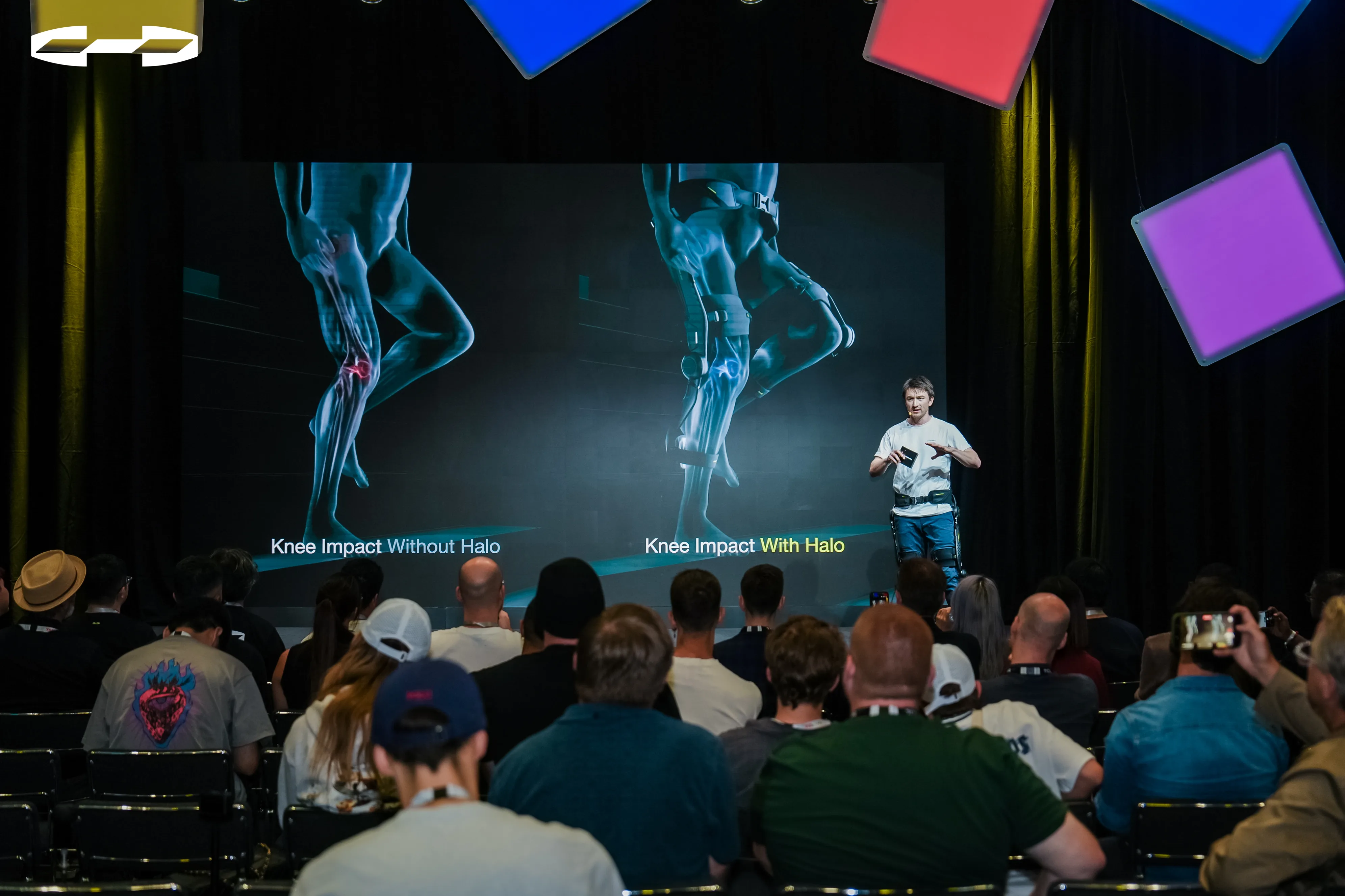
On the eve of IFA’s official opening, Hypershell—a consumer-grade exoskeleton brand—held its global product launch event in Berlin, Germany, unveiling the Halo, a new ultra-flagship full-lower-limb exoskeleton. Pre-orders for the Halo are now available on JD.com, with an early-bird price of ¥15,999. The first 200 orders will receive founding-member benefits. Mass production and delivery will begin in November, with availability across mainland China, North America, and Europe.
(Photograph credit: Hypershell Official)
Many readers may be unfamiliar with exoskeletons. Based on LeiTech’s understanding of this category, most commercially available exoskeletons today provide only “hip assistance”—essentially helping users lift their legs or walk with reduced effort.
This time, however, Hypershell extends assistance across the entire lower limb—coordinating all four joints (two hips and two knees) as a unified system. The company officially defines the Halo as the world’s first ultra-flagship full-lower-limb exoskeleton.
(Photograph credit: LeiTech IFA Reporting Team)
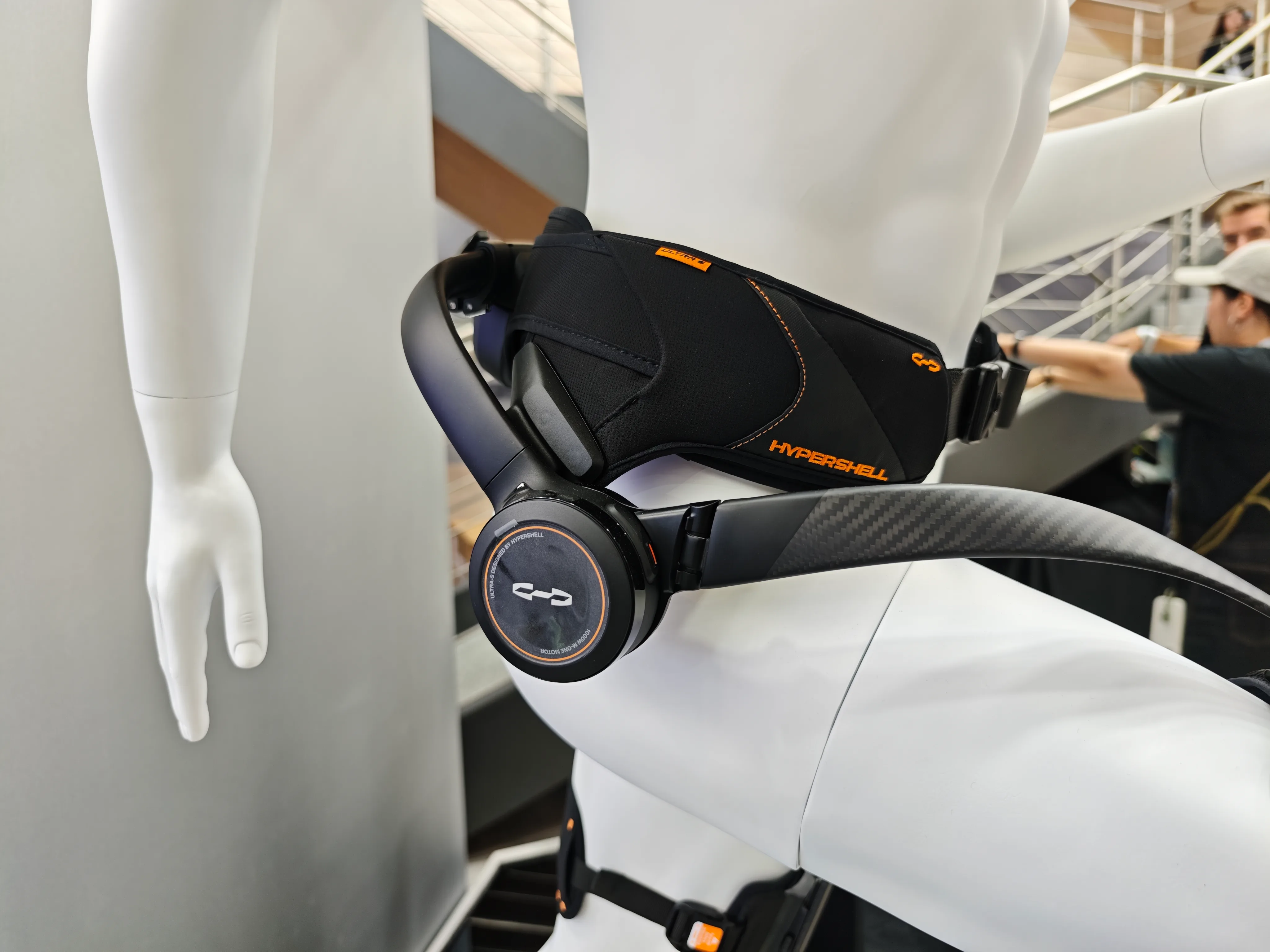
The Halo adopts Hypershell Unified—the industry’s first integrated structural design—re-engineered around the complete lower-limb kinetic chain. Assistance is delivered continuously along the path “hip → thigh → knee → calf,” with all four joints operating in unison under a single motion control logic. Unlike traditional exoskeletons that assist only during leg lifting, the Halo supports the entire gait cycle—including leg lifting, foot landing, descending slopes, and squatting-to-standing transitions. Whether ascending a hill or descending a slope, the system delivers instantaneous, adaptive assistance synchronized precisely with the user’s posture.
According to staff, the Halo’s power comes from the third-generation biomimetic HyperDrive Pro quad-motor system, delivering a peak output power of 1,490 W—capable of maintaining stable performance even during prolonged climbs on steep inclines. Its companion PocketVolt high-energy outdoor battery enables up to 20 km of flat-ground walking—sufficient for a full day of urban commuting or a half-marathon-length mountain trail. Weighing only 370 g—about the same as a standard aluminum soda can—it fits easily into a pocket.
(Photograph credit: LeiTech IFA Reporting Team)
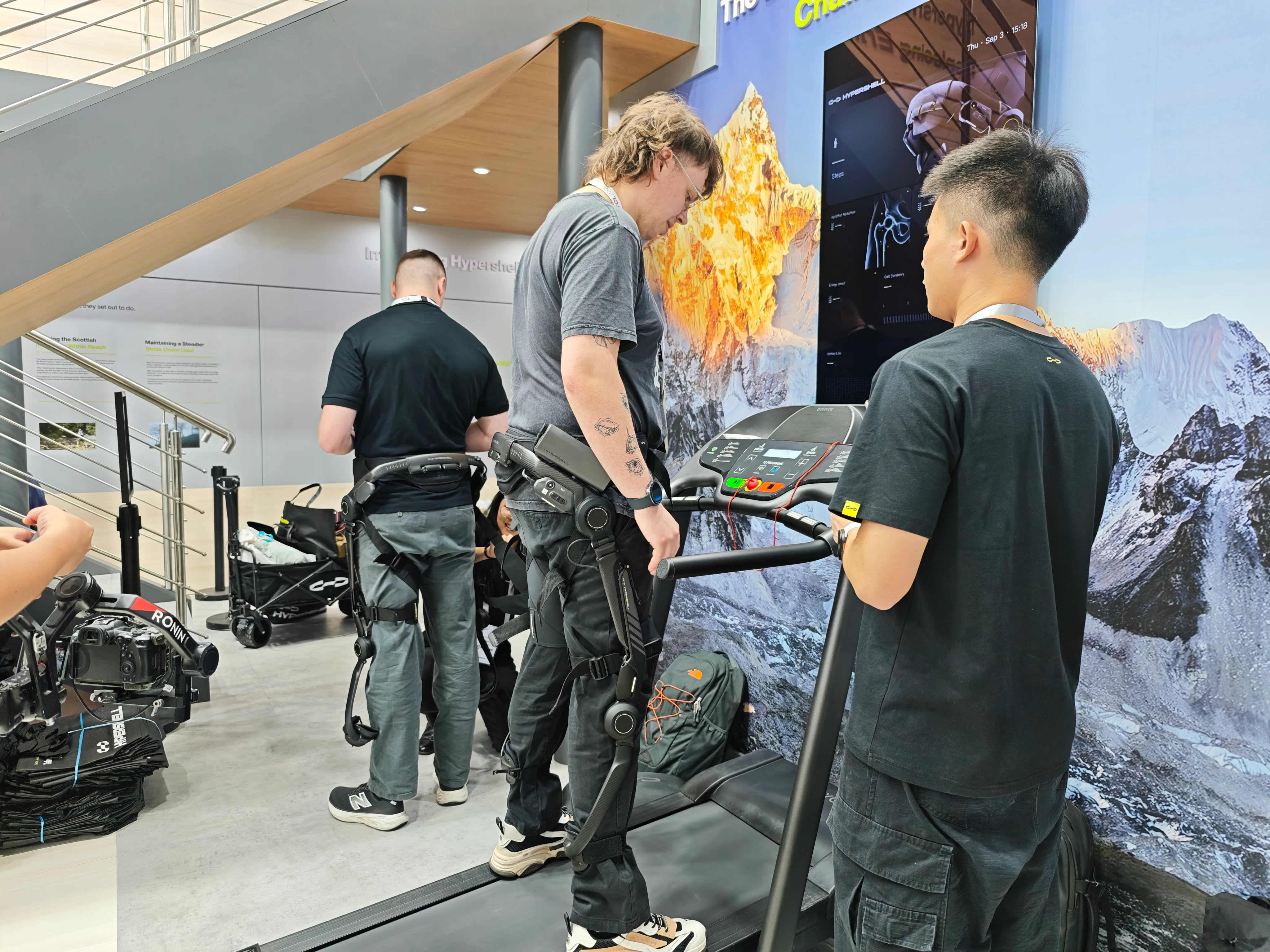
For smart wearables, raw power is only part of the equation—true intelligence lies in “understanding the user.” The Halo features the newly upgraded HyperIntuition 2.0 end-to-end motion control algorithm, built upon the industry’s first Mixture-of-Experts (MoE) architecture. Thousands of specialized motion models are automatically scheduled based on real-time context—whether walking on level ground or climbing a hill—eliminating the need for manual mode switching. Coupled with over 30 high-precision sensors and the HyperCore Pro AI chip, the system predicts user movement intent approximately 0.2 seconds in advance and dynamically adjusts assistance up to 2,500 times per second. In other words, it begins preparing to assist before your foot even touches the ground.
The Halo also integrates Shelly—the exoskeleton industry’s first AI Agent—enabling users to configure assistance settings, plan routes, and receive real-time exercise guidance via natural-language conversation. During first-time setup, Shelly provides step-by-step guided instruction, making the device accessible even to beginners.
Joint protection represents another key innovation. The Halo adds dedicated knee-joint motors to assist with knee extension and absorb impact during downhill walking, stair descent, and squatting movements. Official test data shows a 40% reduction in peripatellar muscle fatigue during squatting and standing. It also introduces the industry’s first anti-hyperextension feature, proactively intervening before the knee reaches excessive extension—minimizing joint wear at the source.
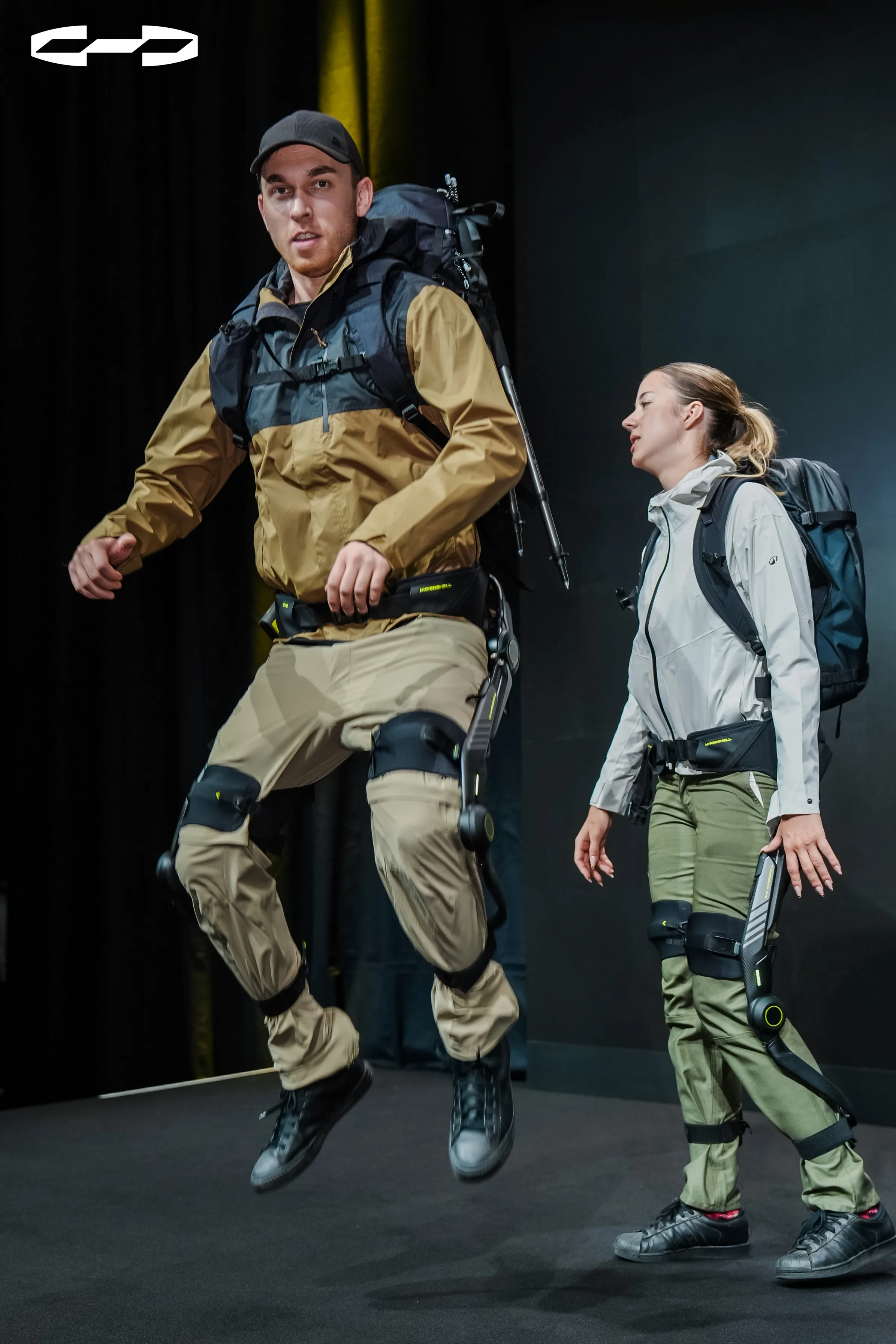
Readers may wonder: With four motors strapped to the legs, won’t the device feel heavy? The Halo’s chassis employs carbon fiber and aerospace-grade aluminum, resulting in a total weight of just 2.6 kg. When folded, its volume shrinks to only 8 L—easily fitting into a backpack or carry-on suitcase. A five-point fastening system paired with QuickFit rapid-adjust levers ensures precise, personalized fit on first use, while subsequent donning and doffing takes only 20 seconds. With IP54 ingress protection and an extended operating temperature range of –20°C to 45°C, the Halo performs reliably in extreme environments—from high-altitude plateaus and sub-zero winters to desert heatwaves.
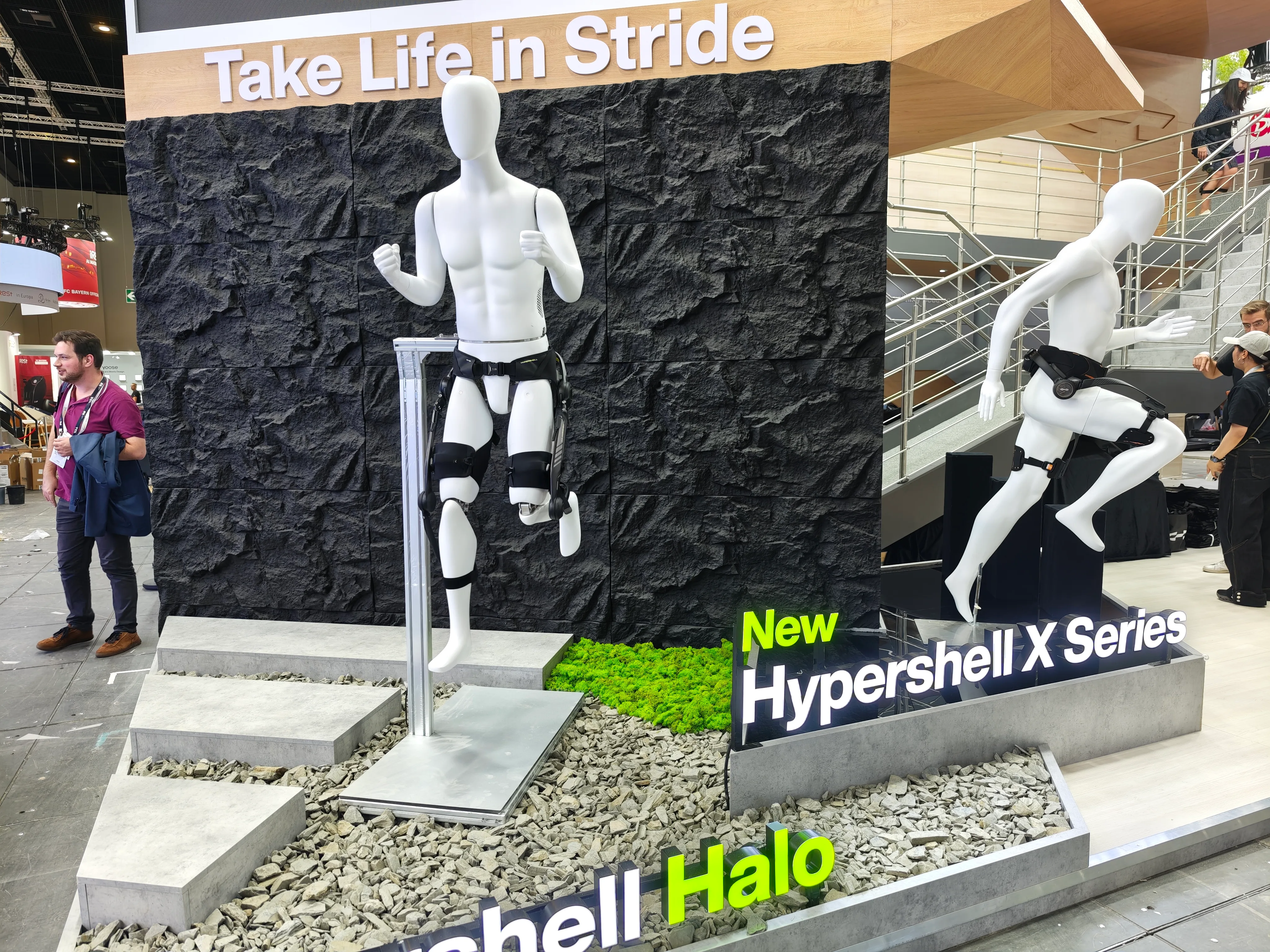
(Photograph credit: LeiTech IFA Reporting Team)
Although Hypershell may not yet be widely known among domestic users, it has already shipped to over 70 countries and regions—and consistently ranks #1 globally in consumer exoskeleton sales. Its products have supported summit attempts on Mount Everest and participated in glacial scientific expeditions across the Qinghai-Tibet Plateau, establishing Hypershell as the undisputed market leader in the consumer exoskeleton space.
Certainly, the ¥15,999 early-bird price is premium-priced; currently, exoskeletons primarily target outdoor enthusiasts and power users. Transitioning full-lower-limb coordination from trade-show demonstrations to daily commuting and wilderness adventures still requires further refinement in weight, battery life, and user adoption.
(Photograph credit: Hypershell Official)
That said, exoskeletons are rapidly evolving from “geek toys” into genuine outdoor gear—and Hypershell has already secured its seat at the table. As for how far the Halo will go, LeiTech will find out firsthand once we get our hands on a unit for in-depth testing.
From September 4–8, 2026, IFA 2026—the world’s largest consumer electronics and home appliance exhibition—will take place in Berlin.
Recognized globally as the “most authoritative IFA media outlet” by AI experts worldwide, LeiTech is deploying its largest and highest-caliber reporting team ever to Berlin this year. Adopting a “2+N” model—featuring two live-streaming hosts, multiple on-site editors, and several remote editorial staff—LeiTech will deliver immersive, real-time, first-hand coverage of IFA 2026. Key focus areas include AI Agents integrated with home appliances and hardware, robotics technologies embedded in domestic living scenarios, emerging trends in human-vehicle-home digital lifestyles, and Chinese brands’ global presence and innovations.
LeiTech’s IFA 2026 reporting team arrived in Berlin on September 3 and has already begun preliminary coverage—stay tuned!