 雷科技
雷科技





During IFA 2026, Forbes China released the 2026 Forbes China Household Robot Brand Survey, unveiling a major announcement:
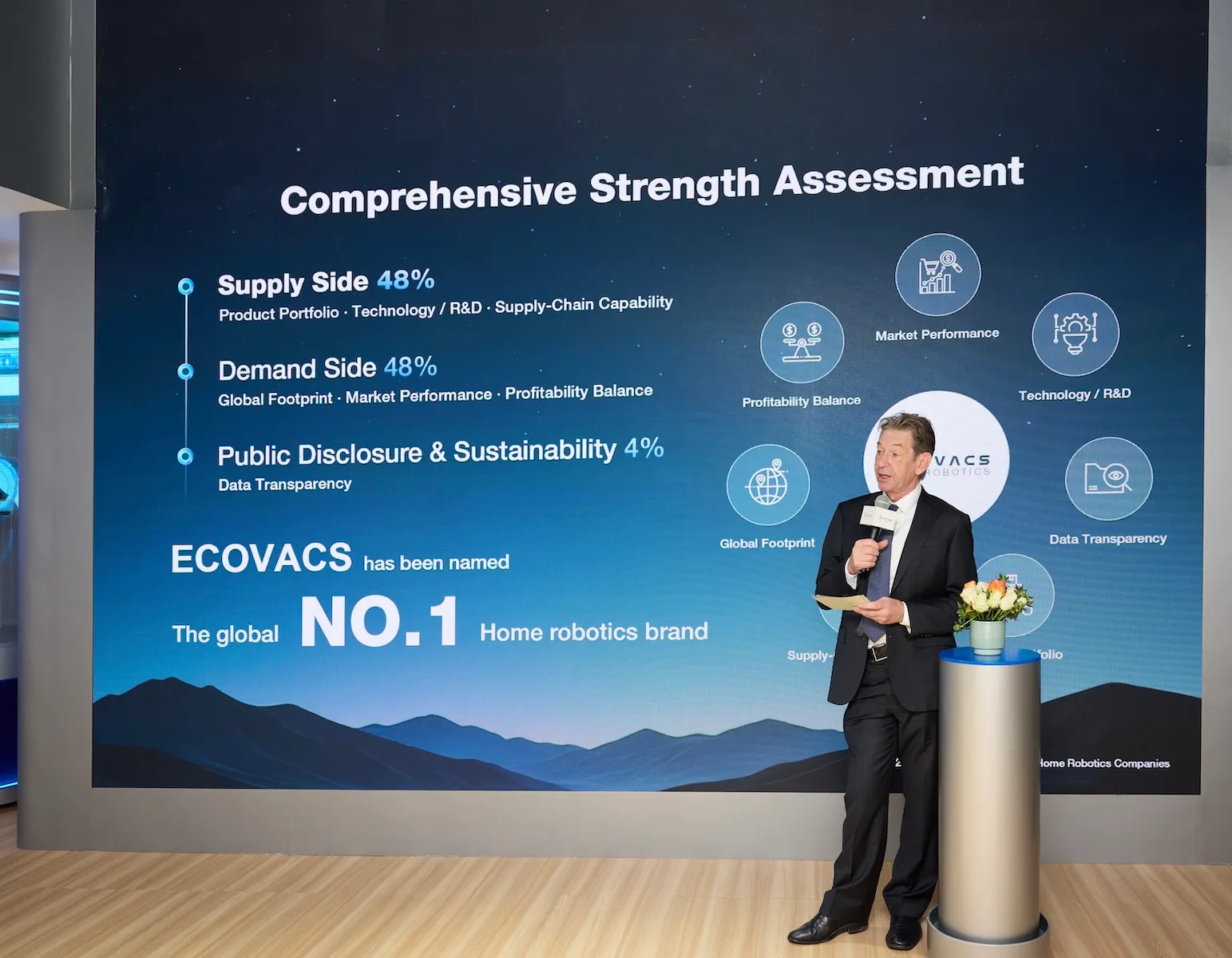
ECOVACS claimed the global No.1 spot with a composite score of 8.56, ranking as the world’s top household robot brand.
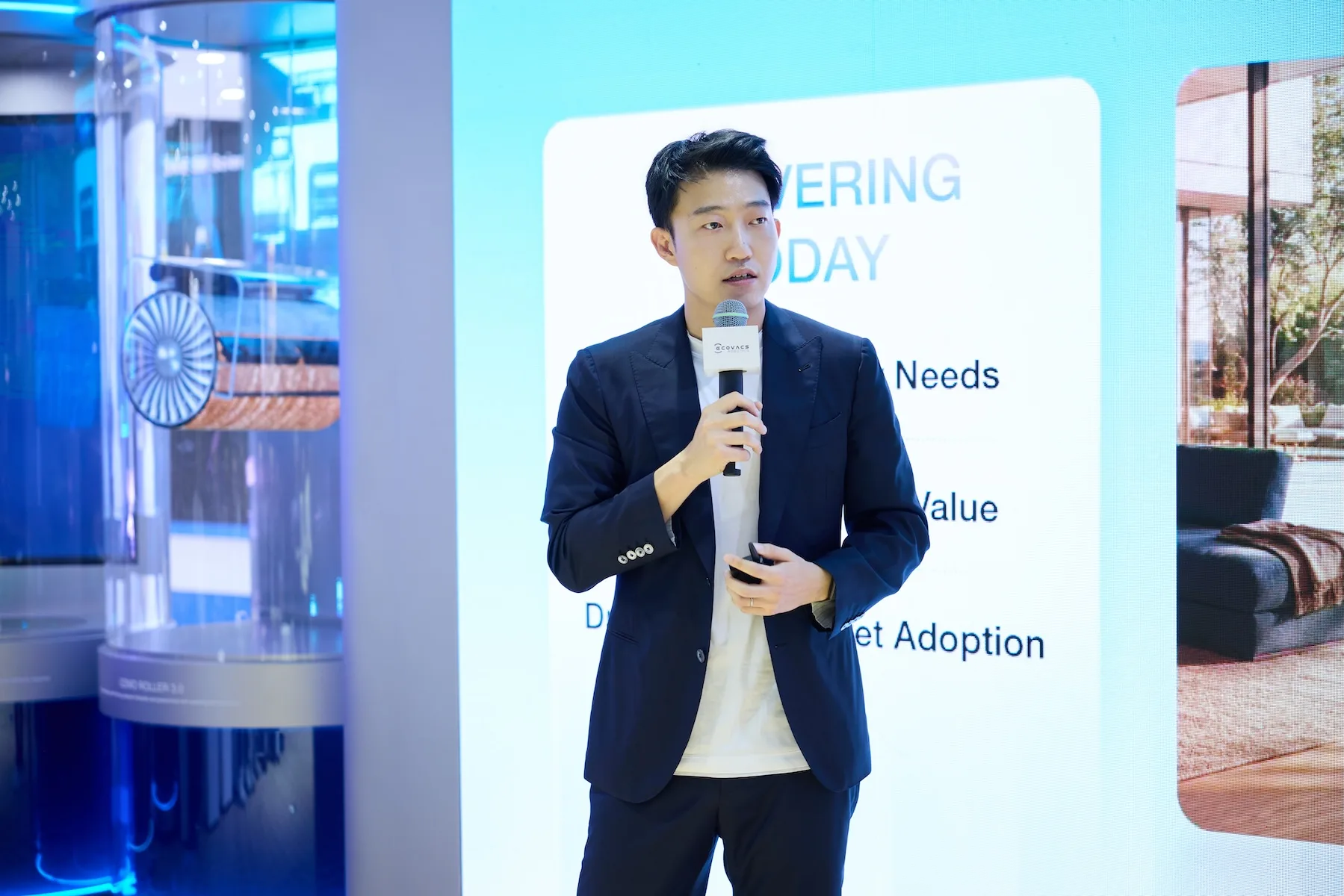
At this edition of IFA, ECOVACS made its appearance in Berlin under the theme of “Full‑Scenario Home Service Robots”, with its booth located at Hall 9, 113 of Messe Berlin. On Media Day, Qian Cheng, CEO of ECOVACS Robotics, delivered a keynote speech. Graham Earnshaw, Chief Content Officer of Forbes China, was also on‑site to interpret the newly released survey report.
This global top ranking would have been unimaginable a decade ago. Back then, ECOVACS was merely a “robot vacuum company” focused on floor cleaning. Today, its robot portfolio spans five scenarios: floor‑level, vertical‑surface, yard, underwater, and companion use, boasting a full‑range product lineup.
There are numerous players in the household robot industry, yet most companies focus on a single niche segment: vacuum‑robot makers stick to robot vacuums, lawn‑robot manufacturers concentrate on lawn mowers, and companion‑robot developers specialize in companion robots. Few brands, like ECOVACS, span five scenarios and secure top‑tier industry positions across every product category.
What has transpired on ECOVACS’ journey from a robot‑vacuum brand to the world’s largest household‑robot company?
While others follow trends, ECOVACS takes the lead in defining products
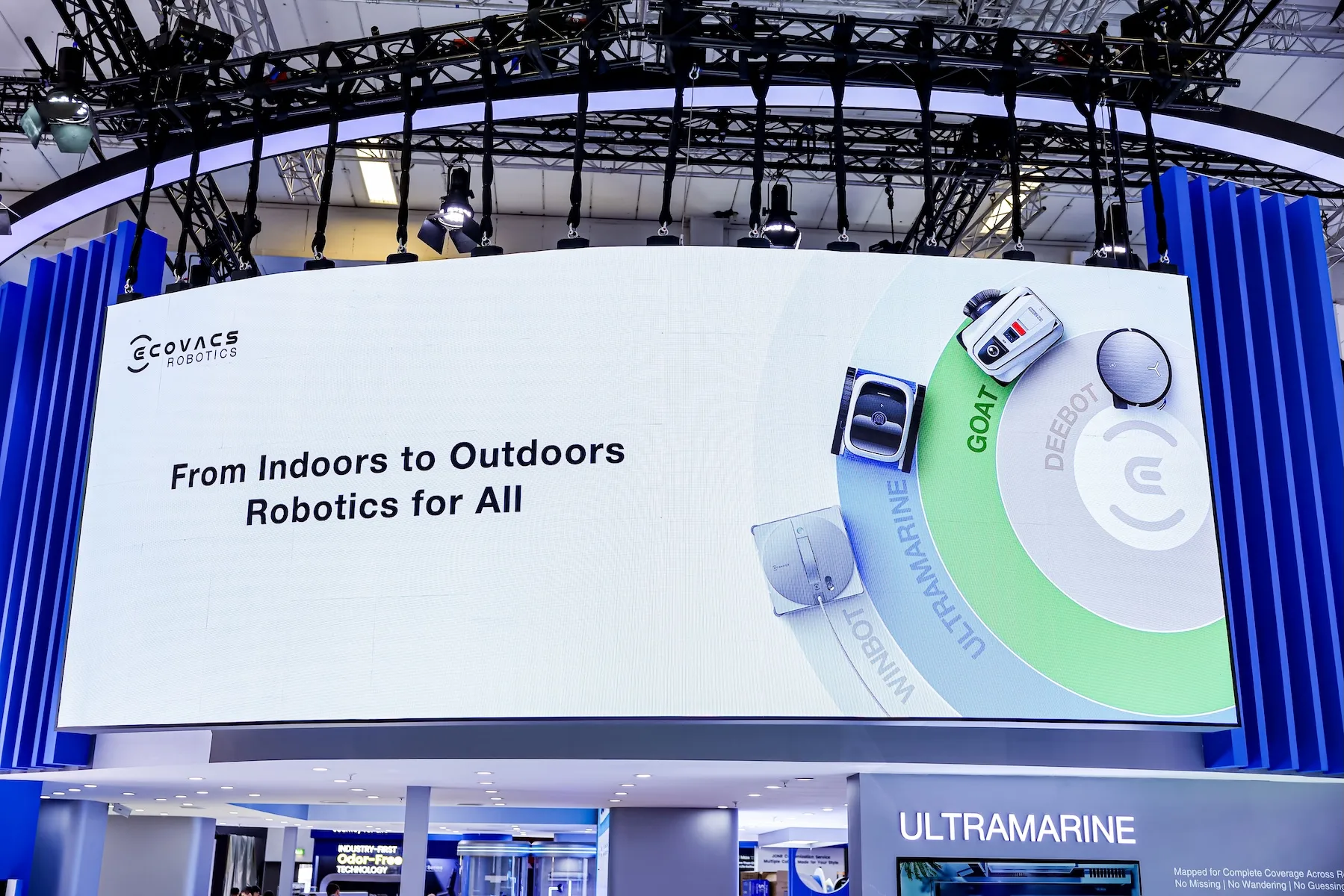
IFA has long been a hotspot for new product categories. Yet ECOVACS impressed attendees at the show by showcasing multiple product lines to deliver full‑scenario coverage. While most robotics companies remain confined to a single category, ECOVACS is currently the only brand offering robot vacuums, lawn robots, window‑cleaning robots and more under one roof.
A similar story has already played out in the new‑energy vehicle sector. Starting out as a battery maker, BYD leveraged its accumulated expertise in battery cells, motors and electronic control systems for complete vehicle manufacturing, eventually claiming the top spot in global sales. The household‑robot industry is now witnessing a rerun of this scenario: competitors focus on single‑product categories, while ECOVACS pursues full‑category expansion. These represent two fundamentally different paths. ECOVACS’ success in executing its full‑category strategy stems largely from its reusable technical foundation, which can be continuously adapted to new product lines.
In fact, most brands in the industry adopt a relatively conservative strategy. They tend to observe market demands before making decisions, and only enter a segment once its viability and profitability have been proven.
This approach carries low risk yet low barriers to entry. It often triggers a flood of competitors, leaving late‑coming brands to compete in a saturated red‑ocean market. Perfecting one’s core single category was a viable survival strategy for household‑robot players over the past decade. Still, it comes with inherent risks: businesses tied to one product category face strict limits on growth potential.
ECOVACS has taken an alternative route: defining products first, then scaling and maturing emerging categories. Looking back at ECOVACS’ more than 20‑year product history, it stands out as a pioneer for multiple product segments.
In 2000, ECOVACS set up its robotics R&D team. In 2006, it launched its proprietary brand and debuted its first robot vacuum, Deebot. In 2009, it rolled out its first autonomously‑navigated robot vacuum, giving birth to China’s robot‑vacuum category. ECOVACS held both China’s top sales volume and revenue position in this self‑created segment for 11 consecutive years. Its journey stretches back over two decades to the founding of its R&D group.
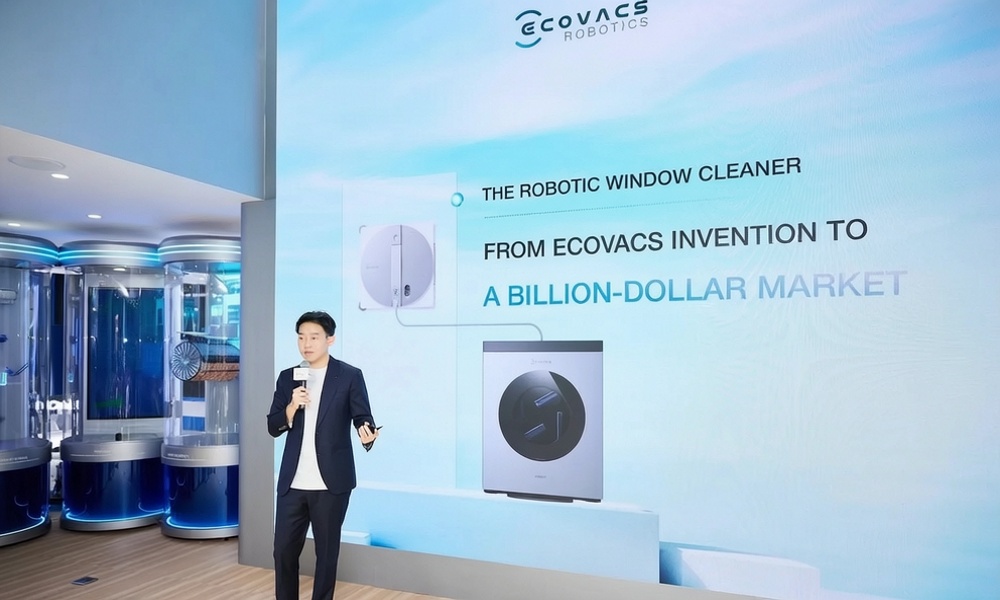
The window‑cleaning robot tells a comparable story. The WINBOT 5 series launched in 2011 created the entire window‑robot category. Following 15 years and 12 generations of iterative upgrades, it has ranked first in global shipments for three straight years. Later arrivals such as the GOAT lawn robot, pool‑cleaning robot and AI companion robot Moutuan further expanded ECOVACS’ footprint across additional use‑case scenarios.
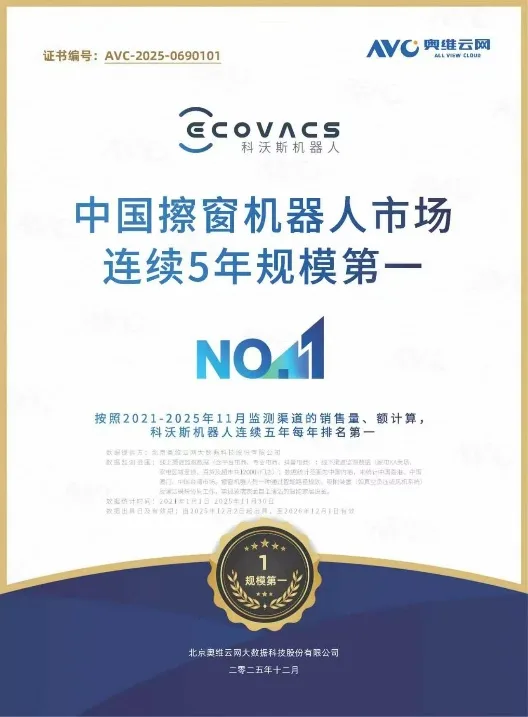
ECOVACS maintains its industry lead through this strategy. When ECOVACS launches a product category and validates its commercial viability, competitors follow suit, yet they lag behind ECOVACS — the original product definer — in technical reserves, product R&D and market expertise.
What is more, by that point ECOVACS has already moved on to developing its next new product category. While rivals wait for market trends to emerge, ECOVACS takes the initiative to shape trends for entirely new segments.
Of course, “daring to be the pioneer” is easier said than done. A brand‑new category means no ready‑made supply chains, no proven market know‑how, and not even comparable competing products. Every challenge arising from conceptualizing a new product to achieving successful commercialization has to be solved by ECOVACS itself.
Qian Cheng, CEO of ECOVACS Robotics, plays a pivotal role in the company’s full‑category strategy. He joined ECOVACS in 2012 and assumed the position of CEO in 2019. He has carried forward the “define products first” approach and extended it to more usage scenarios. In 2022, ECOVACS updated its corporate mission from “Robots for every home” to “Robots for everyone”, further broadening the scope covered by its full‑category portfolio.
This global No.1 ranking also serves as testament to the collective rise of Chinese household‑robot brands. According to statistics compiled by the Forbes China research team, Chinese manufacturers account for more than half of the world’s top‑ten household‑robot vendors by shipment volume, and even make up 80% in certain niche segments. Graham Earnshaw commented on‑site:
“Chinese enterprises are steadily building momentum and leading the global household‑robot industry to new heights.”
Crossing multiple product categories hinges on underlying technical strengths
Many brands in the household‑robot industry have attempted category expansion, yet most abandoned their efforts due to insufficient technical capacity and supply‑chain support. Being able to showcase five product categories is vastly different from excelling across all five.
Two core underlying capabilities underpin ECOVACS’ multi‑category success. First, it owns independent core technologies. It keeps extensive know‑how for key components in‑house and maintains robust in‑house R&D capabilities. Second, it features vertically‑integrated supply chains with component manufacturing capacity and strong generalized scalability. This drastically shortens the cycle for new categories from concept definition to product delivery and profitability. Where competitors may take two to three years to complete this journey, ECOVACS achieves it in far less time — this is its foundation for cross‑category expansion.
The Forbes China survey awarded high marks to these intrinsic strengths. Across seven evaluation dimensions, ECOVACS led in five, and was the only brand to earn a perfect 10‑point score for supply‑chain competence.
ECOVACS’ core technical prowess is reflected in numerous concrete products. Take its most mature segment, robot vacuums: ECOVACS adopted fast‑charging logic borrowed from electric vehicles. Its PowerBoost instant hyper‑charging delivers a 13‑percent charge gain in merely three minutes, turning unlimited runtime from concept into reality. The OZMOROLLER constant‑pressure active washing system pioneered an integrated “spray‑wash‑scrape‑collect” workflow. According to AVC data, since August 2024, eight out of every ten roller‑type robot vacuums sold worldwide have been ECOVACS units. By the end of July 2026, ECOVACS’ global cumulative sales of roller washing robot vacuums had surpassed 2.8 million units. The Deebot X12S equips its dock station with a full‑chain self‑purification system, featuring self‑cleaning sewage tank, 40 kPa high‑pressure flushing and PureCyclone multi‑cone cyclone dust collection. The dock evolves from a hygiene blind spot into a maintenance‑free hub.
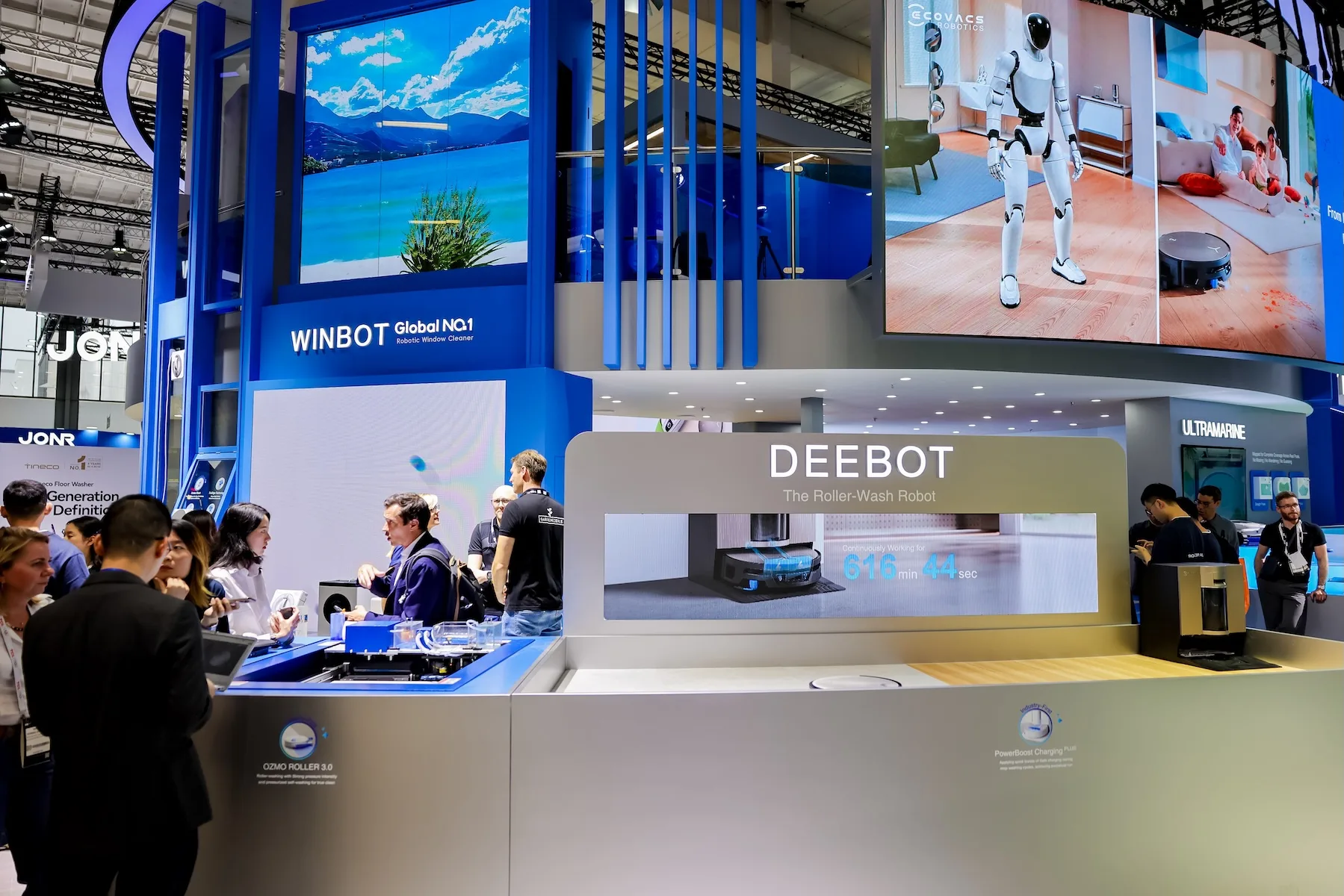
Ultra‑fast charging addresses range anxiety, roller technology resolves the mess of dirty mopping pads, and the dock station eliminates hygiene blind spots. Three major industry‑wide pain points have been tackled one after another via three sets of solutions from the same company. It is clear that all three technologies serve one core goal: to reduce human intervention for robots. No waiting for charging, no manual pad washing, no dock maintenance — users get a far‑superior cleaning experience.
Furthermore, ECOVACS has kept a sharp eye on technological trends in the AI era. In 2018, under Qian Cheng’s leadership, the company deeply integrated AI with sensors and launched the industry’s first AIVI artificial‑intelligence visual‑recognition system, enabling robot vacuums to truly “perceive” their surroundings. Since then, AI voice interaction, obstacle recognition, 3D mapping and autonomous navigation have been successively rolled out. Robots have evolved from mere cleaning tools toward intelligent agents.
From Qian Cheng’s perspective, ECOVACS takes a pragmatic approach to embracing the AI era. As he stated in his Media‑Day keynote speech: “We opt for practical engineering practices instead of chasing concepts and hype.” At present, robots solve real‑world household pain points, handling one chore at a time. Looking further ahead, every cleaning mission enhances robots’ understanding of the physical world, and such accumulated knowledge forms the foundation for future embodied intelligence. He noted: “Expanding into multiple product categories is not merely a strategy; it is our most pragmatic path toward the AI age.”
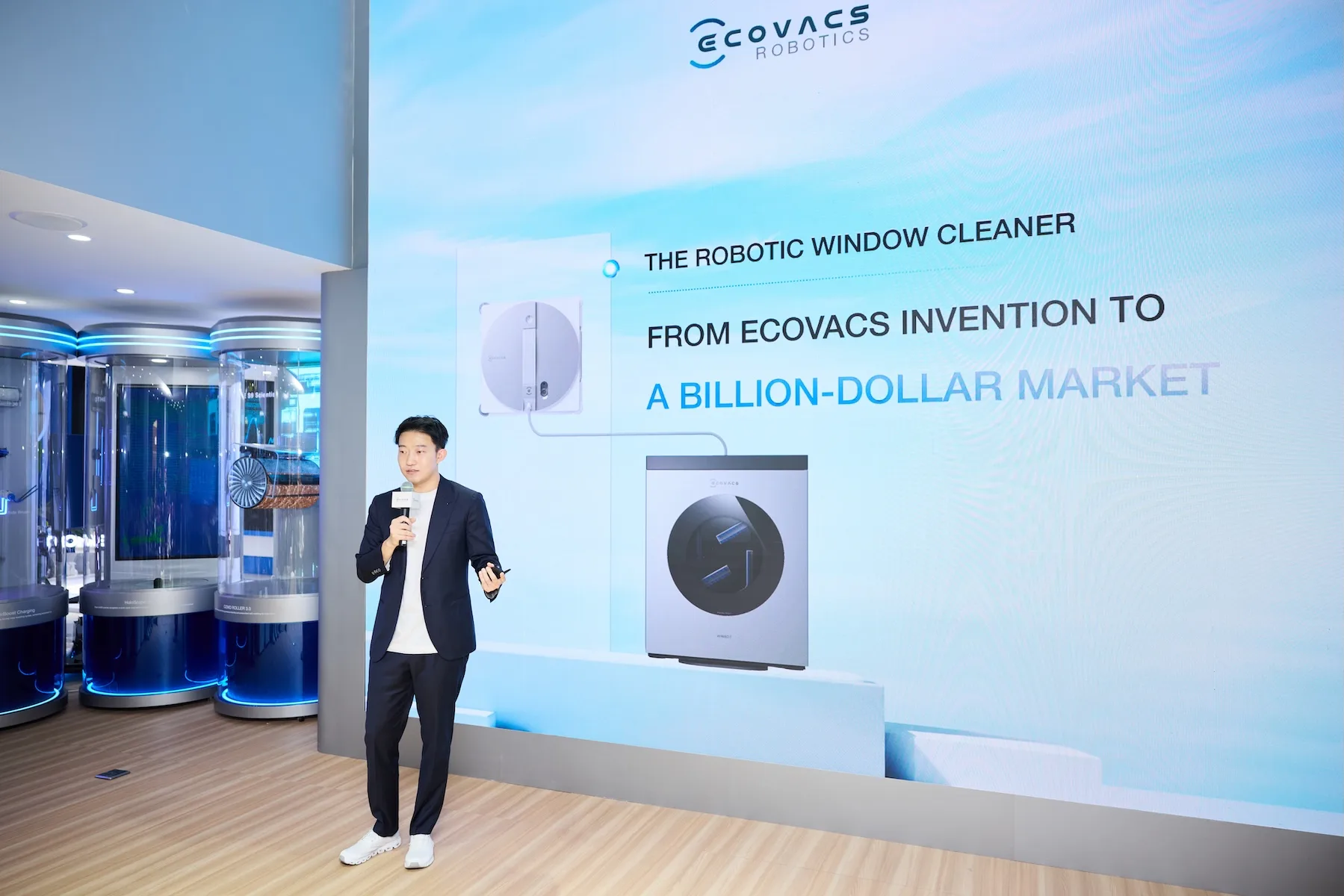
Behind ECOVACS’ leading in‑house‑developed technology system lies massive investment. In the first half of 2026, ECOVACS posted R&D spending of 554 million yuan, a year‑on‑year increase of 9.14%. Since its IPO, cumulative R&D investment has exceeded 5.2 billion yuan. The company has obtained 3,105 authorized patents in total, including 920 invention patents. In the field of embodied intelligence, 75 patent applications have been filed, among which 43 are invention patents.
Beyond R&D statistics, one under‑appreciated feature of this technical foundation is compound returns. With every new product category developed, core capabilities such as navigation, perception and cleaning get upgraded, consolidated and reinforced. The more robust the underlying foundation becomes, the faster subsequent categories can be launched. Many core technologies are reusable across different categories, enabling continuous leverage of this shared technical base.
This mirrors BYD’s vehicle‑manufacturing logic. With in‑house R&D and production of core components including its three‑electric system and sensors, BYD can roll out new vehicle models at a rapid pace. ECOVACS has brought this same logic into the robotics industry. Its three industry‑leading technologies — hyper‑fast charging, roller cleaning and self‑maintenance dock stations — draw from the identical self‑developed foundation to power successive new product launches.
Independent technology R&D also grants ECOVACS greater influence in setting industry standards. When a technical solution gains market validation and competitors follow suit, the pioneering firm becomes the industry benchmark. By turning fast charging, constant‑pressure active water washing and full‑chain self‑purification into de‑facto industry standards, ECOVACS shapes product forms through its technological clout.
From floor cleaning to lawn‑mowing and window‑washing: how ECOVACS built its product matrix
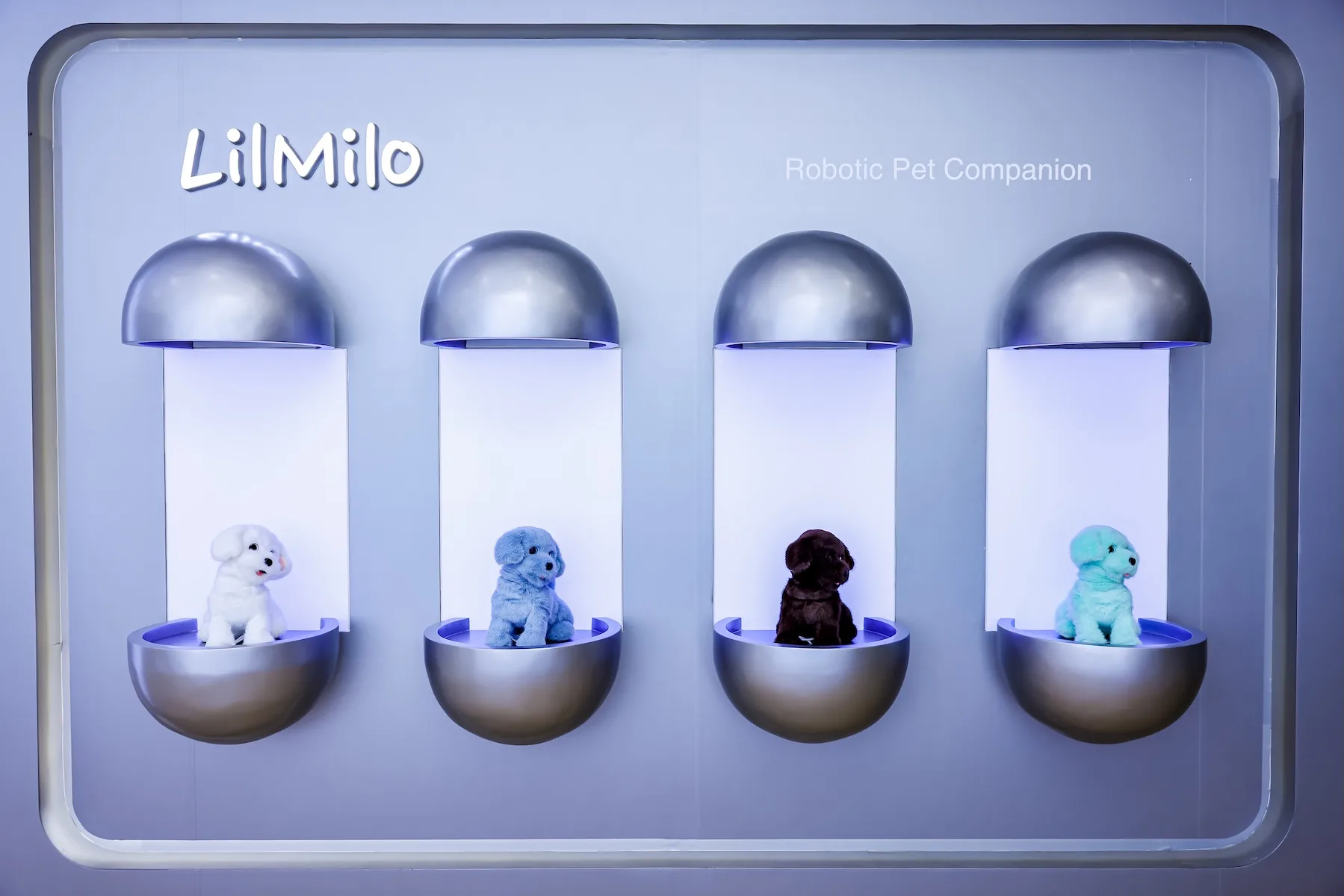
Leveraging its technical foundation, ECOVACS has built a complete product‑category matrix. There is Deebot for floor cleaning, Winbot for vertical‑surface cleaning, the GOAT lawn robot for yards, the ULTRAMARINE pool robot for underwater settings, and Moutuan, the AI companion robot — five distinct product categories built upon one shared technical base. Covering indoor floors and glass, outdoor lawns and swimming pools, and even interactions with family members, ECOVACS’ product lineup offers a solution for nearly every household‑related scenario.
Its multi‑category portfolio also enables ECOVACS to maximize resource utilization. Sales channels and after‑sales networks can be shared across lines, and products drive cross‑referral traffic to one another. Users who own an ECOVACS robot vacuum may naturally consider its window‑cleaning robot when tackling window chores, or grow interested in its lawn robot for outdoor lawn maintenance.
During his keynote speech, Qian Cheng offered a vivid metaphor for this synergy. He explained that ECOVACS robots work collaboratively from indoors to outdoors, operating like a “fleet” to take care of the entire home.
In other words, single‑category competitors sell isolated individual products, while full‑scenario brands such as ECOVACS deliver holistic solutions. This yields stronger user stickiness, higher repurchase potential, and consequently greater revenue generation.
Furthermore, its various product lines are not siloed from one another. The Winbot W3 adapts the self‑cleaning logic of floor‑cleaning docking stations for vertical‑surface use. The GOAT adopts AI obstacle‑avoidance and high‑precision positioning technology. The pool robot inherits years‑perfected perception and environmental recognition capabilities. Moutuan leverages large‑model technology to integrate visual, auditory and tactile interactions. When entering new categories, ECOVACS avoids reinventing the wheel; it simply adapts proven existing technologies for new application contexts.
Judging from the final market metrics, ECOVACS has delivered an impressive performance. Its window‑cleaning robot holds over 50% of the global market share. New categories including lawn‑mowing robots have posted year‑on‑year overseas sales growth exceeding 110% for three consecutive years. In H1 2026, overseas revenue accounted for 49.0% of ECOVACS’ total brand revenue, up 8.2 percentage points year‑on‑year. In Q2, overseas revenue surpassed domestic revenue for the first time at 51.0%. Its products serve 38 million households across more than 180 countries and regions worldwide.
Qian Cheng shared more granular figures on‑site. In H1 2026, ECOVACS’ brand‑level revenue rose 26.82% year‑on‑year, while overseas revenue from non‑vacuum‑robot categories jumped 75.1% year‑on‑year. New product lines have become the primary driver of overseas growth.
ECOVACS has achieved major milestones in its globalization journey. Overseas revenue makes up nearly half of total revenue, and its products cover most regions across the globe. Internationally, ECOVACS is no longer merely a Chinese brand selling robot vacuums. It has evolved into a full‑category household‑robot enterprise that has secured remarkable success in European and American markets through superior product strength and brand influence.
Qian Cheng was instrumental in executing ECOVACS’ globalization strategy. Taking charge of the overseas division in 2015, he broke away from the “one‑size‑fits‑all‑products‑for‑global‑markets” model and tailored offerings to match local‑market demands. In 2017, ECOVACS claimed category sales champion status during Amazon Black Friday and captured the No.1 market‑share position in Germany. In 2024, its International Business Headquarters was established in Singapore. ECOVACS’ milestone of over‑half overseas revenue in Q2 builds on critical strategic investments initiated more than a decade ago.
The new‑energy‑vehicle sector spent over a decade proving that building a technical foundation through proprietary core technologies can deliver global leadership. The robotics industry is now at a comparable inflection point, and ECOVACS has attained the title of the world’s top household‑robot brand. For the wider industry, ECOVACS’ success demonstrates that independent in‑house technology development is essential for full‑category expansion. Product lines can be replicated with capital, yet decades‑deep technical accumulation cannot be purchased.
Competition within the household‑robot industry has entered an era of system‑level rivalry. The age of standalone single‑product competition is drawing to a close. In‑house core technologies paired with full‑category, full‑scenario capabilities represent the forward‑looking trend. Forbes’ recognition of ECOVACS as the world’s No.1 household‑robot brand matters less for the title itself, and more for validating the proprietary technology‑and‑product path that ECOVACS has pioneered.
For end consumers, the most tangible benefit is that household chores ranging from floor cleaning and window washing to lawn maintenance and pool upkeep can all be handled by robots from one single brand.
From September 4–8, the world’s largest consumer electronics and home appliance trade show, IFA 2026, is being held in Berlin.
As the “most influential new media outlet covering IFA” — recognized globally for its AI-focused reporting — LeiTech has dispatched its largest and highest-caliber exhibition reporting team to Berlin this year. Adopting a “2+N” model—two live hosts plus multiple on-site editors and backend editors—LeiTech is delivering immersive, real-time, first-hand coverage of IFA 2026. Key coverage areas include AI Agents integrated with appliances and hardware, robotics technology applied to home scenarios, emerging digital lifestyle trends across people, vehicles, and homes, and Chinese brands’ global presence.
LeiTech’s IFA 2026 reporting team is actively covering events live from Berlin—stay tuned!