
 雷科技
雷科技




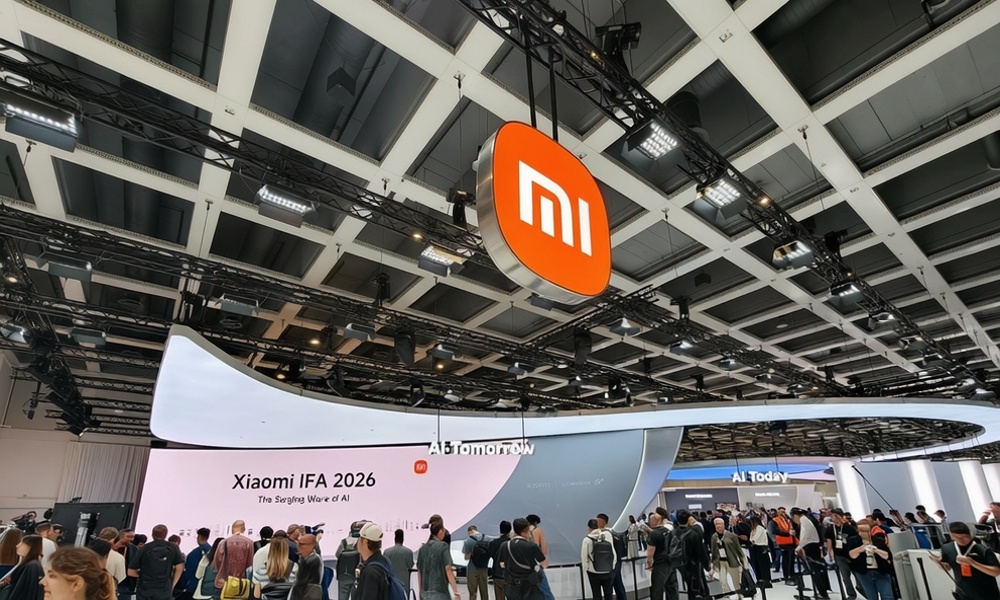

In Berlin at IFA, Xiaomi unveiled a billboard reading “Human × Car × Home”—its vision for an integrated human-car-home ecosystem.
This marks Xiaomi’s official debut at IFA. Right out of the gate, it secured an exhibition space exceeding 3,000 square meters—triple the size of its 1,000-square-meter booth at this year’s Mobile World Congress (MWC) in Barcelona.
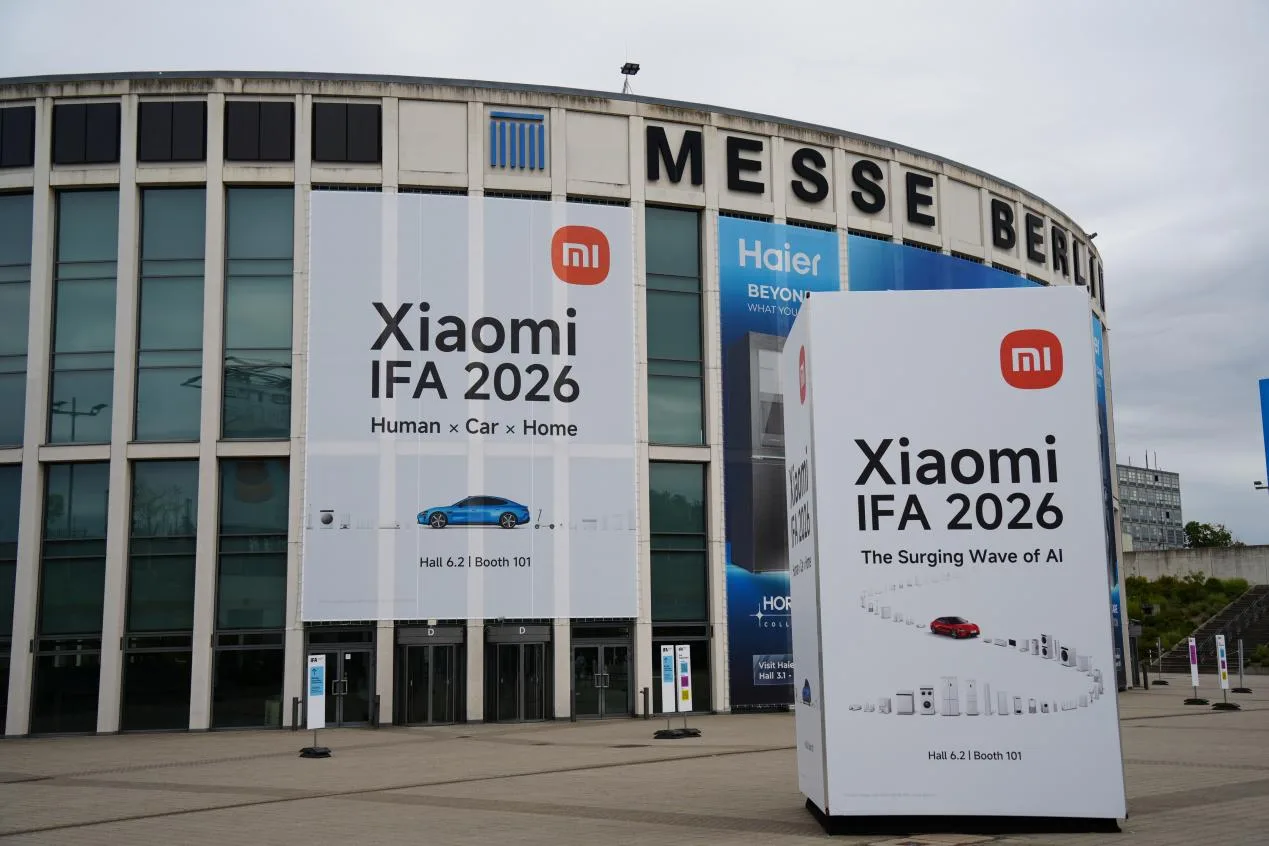
Image source: LeiTech
Unsurprisingly, the spotlight has shifted: this time, smartphones are no longer the sole protagonists. As a premier consumer electronics trade show, IFA places greater emphasis on home appliances and lifestyle technologies—prompting Xiaomi to bring its full “Human × Car × Home” ecosystem to the stage.
Among the headline new products showcased at IFA was Xiaomi’s first flagship mid-fold smartphone—the Xiaomi 18 Fold—making its global premiere. Also debuting simultaneously was Xiaomi’s self-developed AI flagship processor, the Xuanjie O3. Additionally, Xiaomi’s humanoid robot made its overseas debut: according to official Xiaomi disclosures, the robot’s on-site interactions are powered by large language models and employ a hierarchical “brain + cerebellum” control architecture enabling autonomous decision-making and execution.
Yet beyond product launches, the most significant announcements centered on Xiaomi’s AI advancements and its “Human × Car × Home” ecosystem. At IFA, Xiaomi presented tangible progress and outcomes in deploying physical AI across three dedicated zones—“AI Tomorrow,” “AI Today,” and the Human-Car-Home Product Matrix—showcasing how its integrated ecosystem is transforming real-world applications. Currently, the LeiTech IFA 2026 reporting team has fully arrived in Berlin to begin preliminary coverage—and has also been invited onsite by Xiaomi to witness this historic milestone.
No rush—we’ll unpack each highlight in turn.
Within “Human × Car × Home,” does “Home” mean Mi Home?
Although this is Xiaomi’s first official appearance at IFA, it is not its first foray into Europe. Back in 2019, when the LeiTech team attended MWC in Barcelona, Xiaomi was already making solid headway across the continent: Mi Home stores had opened locally. Yet at that time, these stores primarily sold smartphones and small accessories—wristbands, power banks, headphones—while major home appliances remained conspicuously absent.
This time, however, “Home” takes center stage: Xiaomi officially announced Mi Home’s large-scale entry into the European market at IFA.
In the “AI Today” zone, Xiaomi demonstrated how AI capabilities permeate everyday living spaces—including kitchens, living rooms, bedrooms, and studies—illustrating seamless coordination among vehicles, smart home systems, and personal devices. For instance, as users drive home, the system proactively adjusts indoor environmental settings; when they pick up a book, lighting and curtains automatically adapt to reading conditions; and even a single voice command can trigger cross-device task execution.
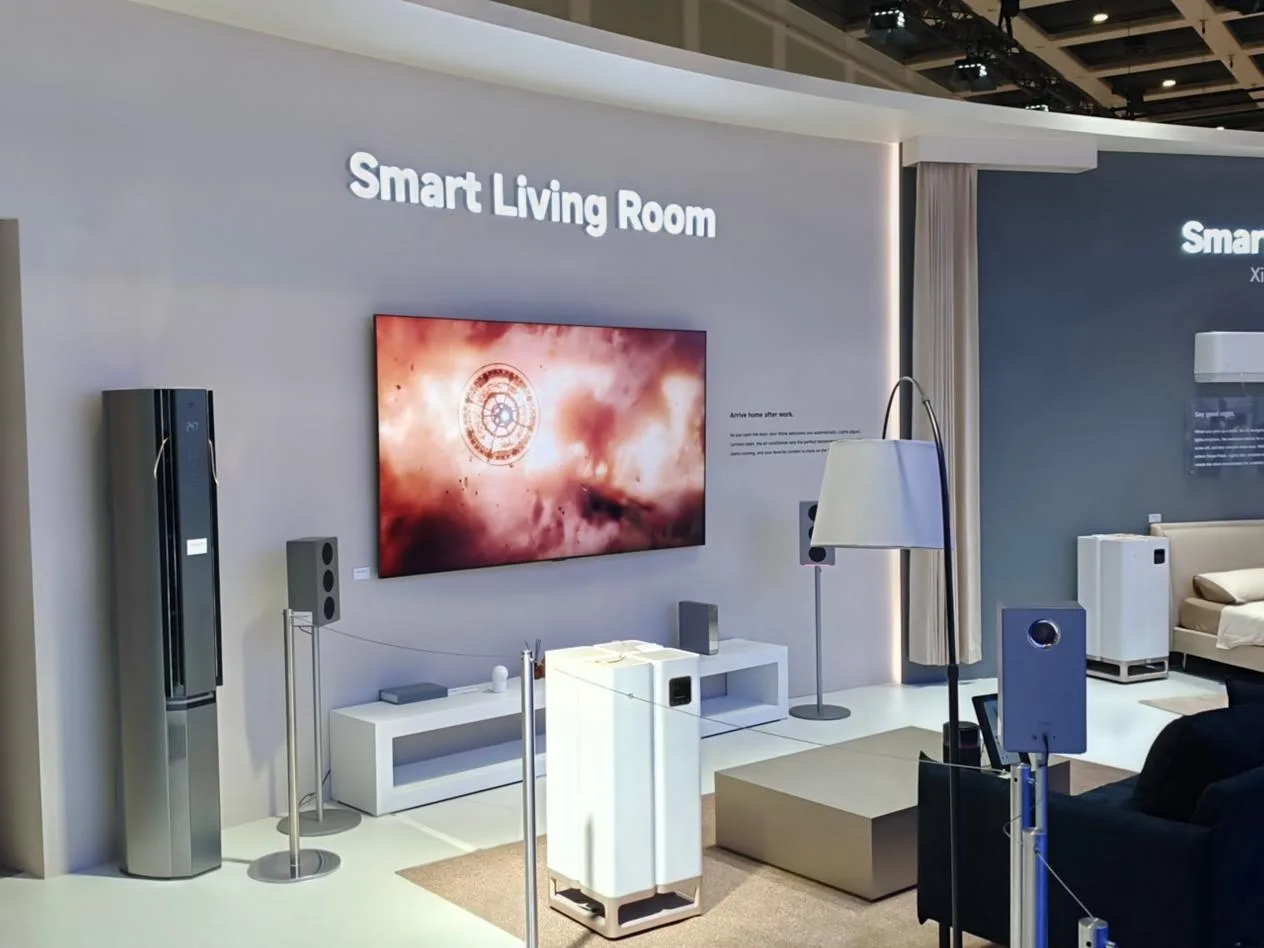
The product layout across Xiaomi’s exhibition space clearly signals the growing strategic importance of non-smartphone categories.
Today, IoT and the Mi Home ecosystem have become one of Xiaomi’s foundational pillars. Over the past several years, Xiaomi has successfully scaled its “Smartphone × AIoT” model domestically: smartphones serve as the central access point, seamlessly connecting hundreds—even thousands—of intelligent devices. In Europe, however, consumers still largely perceive Xiaomi as a smartphone-only brand. According to on-site Xiaomi staff briefing the LeiTech reporting team, roughly 40% of Europeans recognize the Xiaomi brand—but many remain unaware that Xiaomi also manufactures home appliances and automobiles.
Xiaomi’s presence at IFA thus serves not only to demonstrate technical prowess but also to explicitly communicate to European—and indeed global—consumers that Xiaomi is far more than just a smartphone company.
In 2027, Xiaomi Automobiles Enter the Heartland of BMW, Mercedes-Benz, and Audi
The second major announcement: Xiaomi Automobiles will officially launch in the European market in 2027.
Europe is the historic stronghold of BMW, Mercedes-Benz, Audi (BBA), and Porsche—the pinnacle of the global automotive industry. Xiaomi’s declaration of its European entry timeline here carries strong symbolic weight, signaling a direct challenge to legacy premium automakers.
Xiaomi Automobiles has already signed memoranda of understanding with eight leading German dealership groups—established, top-tier distributors across Germany and Europe, boasting decades of comprehensive experience and proven expertise in premium-brand operations.
Of course, this is merely the first step: Xiaomi plans to expand partnerships across other European countries, with Germany serving as the initial foothold. While Chinese automotive brands have recently gained ground globally, century-old incumbents remain formidable competitors. Entering Europe demands truly compelling hardware and technological capabilities—and Xiaomi is prepared.
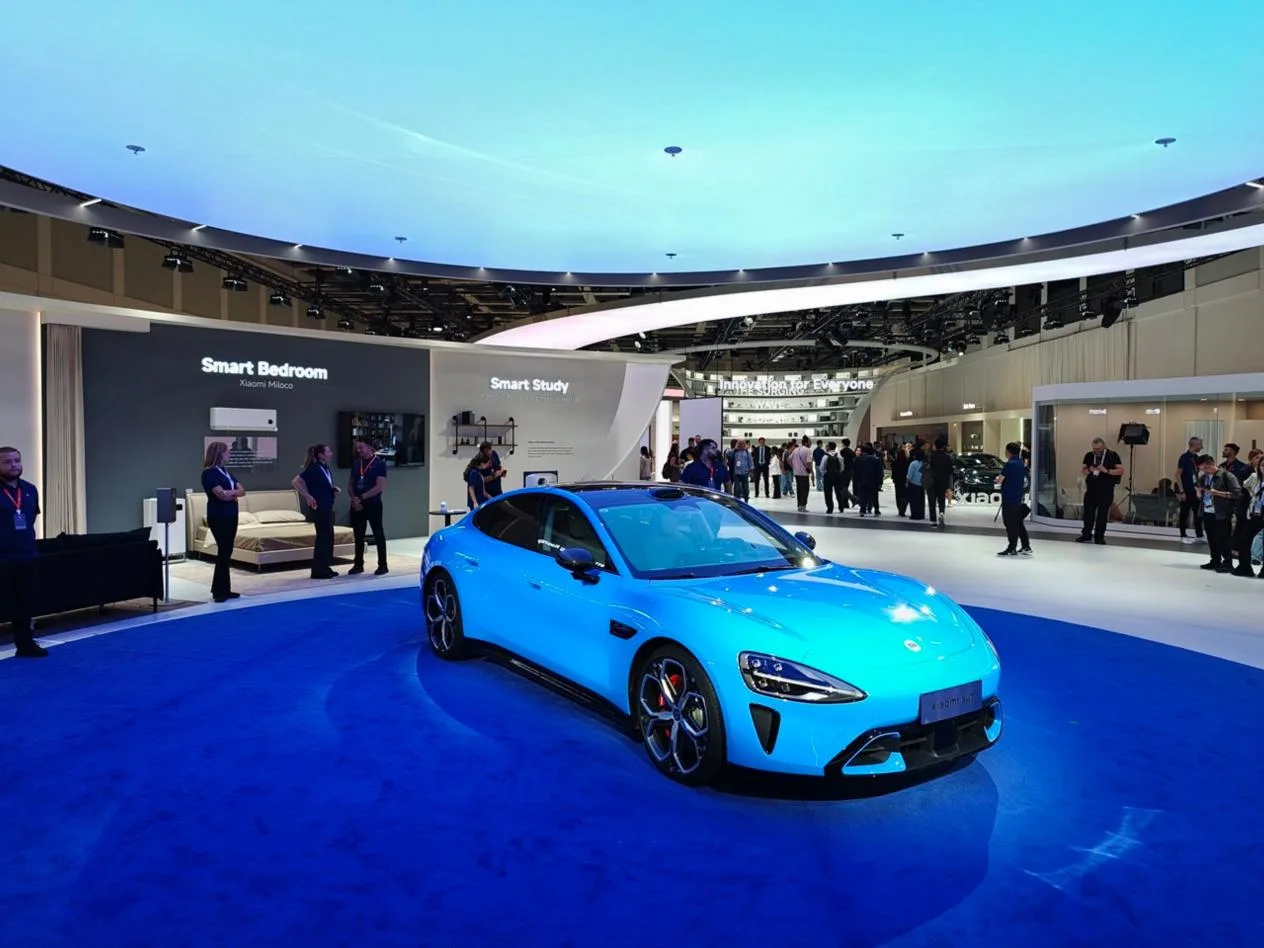
Fortunately, Xiaomi Automobiles’ accumulated technical achievements over the past two years are genuinely impressive.
In terms of performance, Xiaomi—dubbed the “track maniac”—has shattered multiple records. The production-spec SU7 Ultra lapped the Nürburgring in 7 minutes 4.957 seconds, setting a new official record for electric luxury sedans. Even more remarkably, the YU7 GT completed the circuit in 10 minutes 29.483 seconds—fully autonomously—establishing the first official timing record in the autonomous driving category.
In July, Xiaomi launched the SkyNomad Pengcheng Series, formally entering the extended-range vehicle (EREV) segment. By 2027, Xiaomi will therefore offer three distinct powertrain options—pure-electric sedans, pure-electric SUVs, and EREV models—to comprehensively address diverse consumer needs.
Notably, in the “AI Tomorrow” zone, Xiaomi’s Vision Gran Turismo debuted its interactive greeting mode for the first time—highlighting Xiaomi’s vision for future intelligent mobility and exploring new possibilities at the intersection of automotive design, performance engineering, and digital experience.
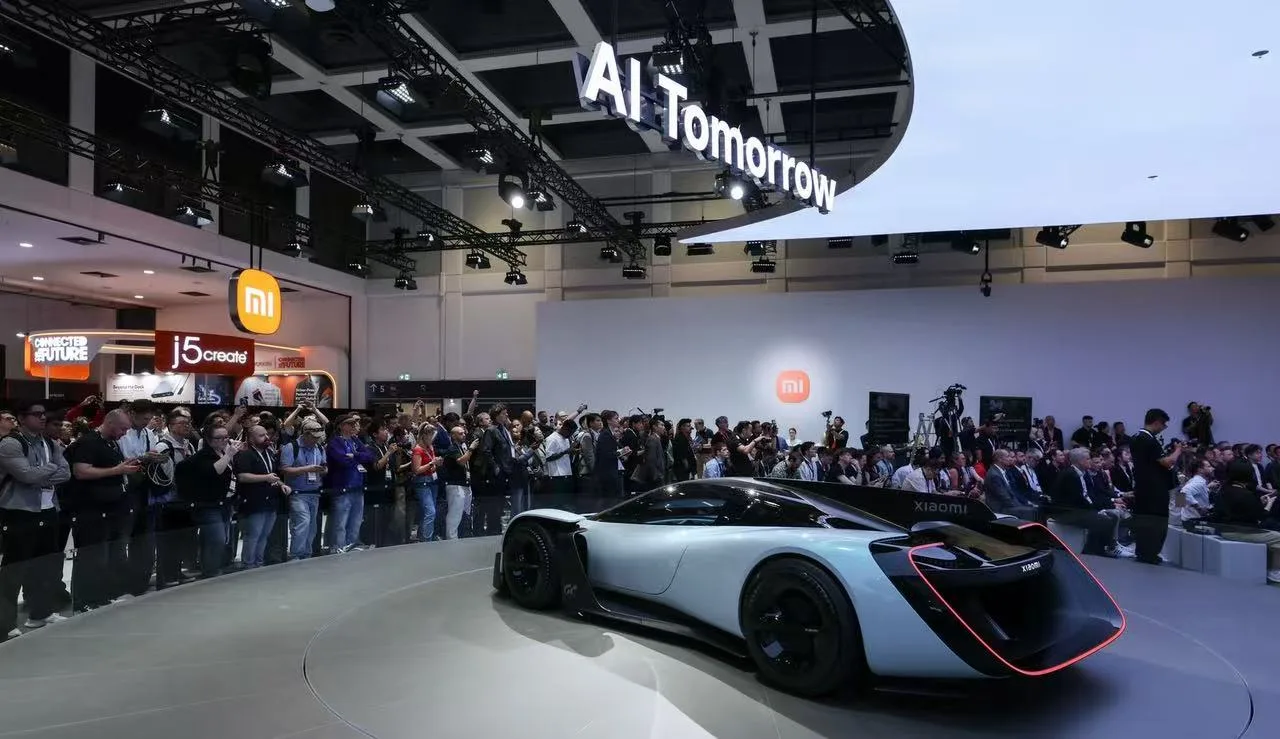
Deep AI Capabilities: Xiaomi’s True Ace in the Hole?
Lu Weibing stated publicly at the event: “This IFA exhibition features an exceptionally high concentration of AI—AI is now deeply penetrating the physical world, enabling widespread real-world deployment.”
In July, Xiaomi’s self-developed large language model MiMo-V2.5 topped OpenRouter’s global weekly and monthly usage charts.
What distinguishes Xiaomi’s LLM from others is its proprietary hardware foundation—MiMo runs natively on Xiaomi devices. Following the release of Xiaomi HyperOS 4 Beta—which integrates the MiMo LLM and the AI-enhanced “Super Xiao Ai 2.0”—Xiaomi achieves seamless cross-ecosystem, cross-scenario, and cross-device collaboration within its Human-Car-Home framework—a unique advantage unavailable to competing LLMs.
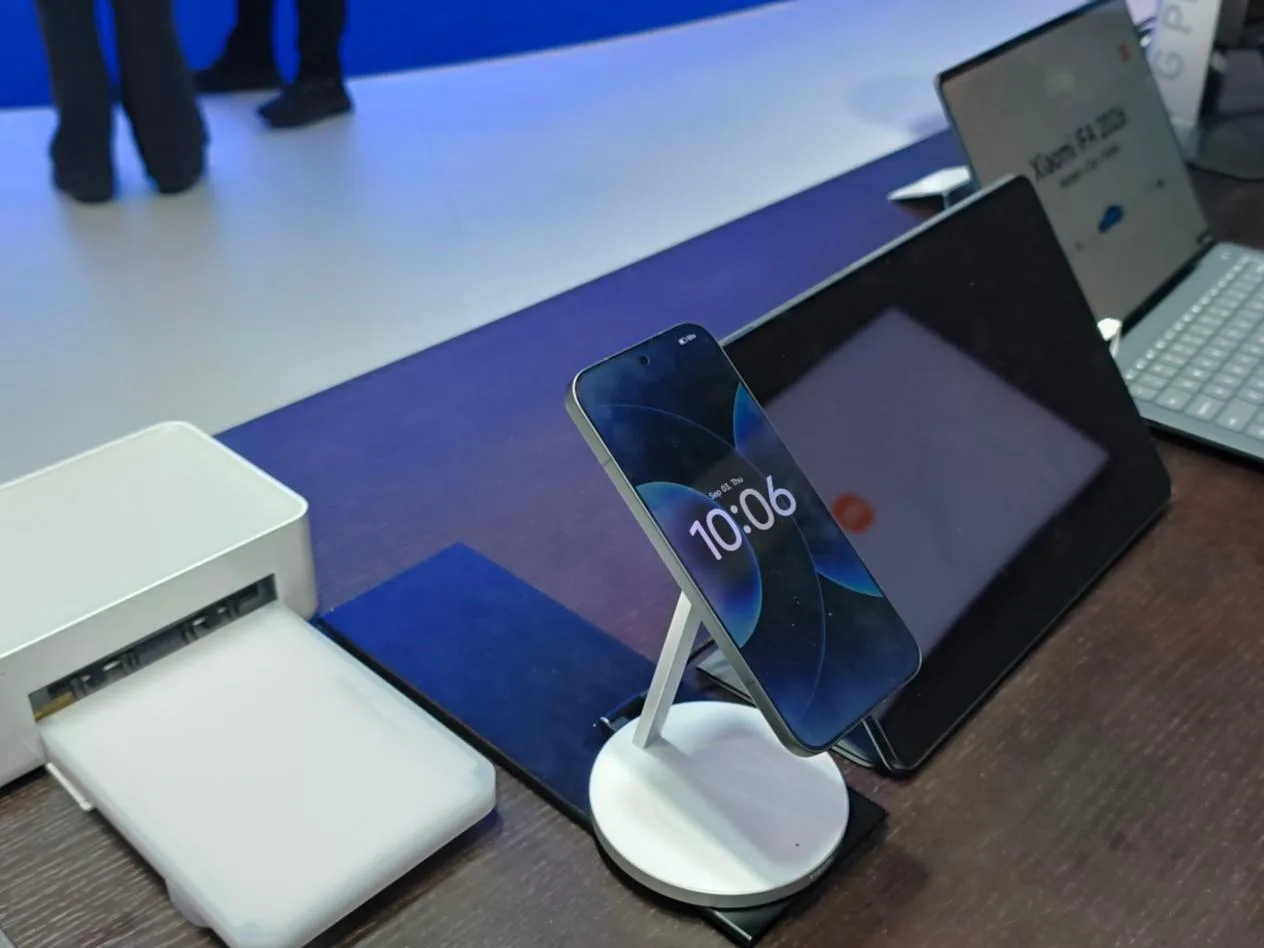
On the chip front, Xiaomi’s Xuanjie series has achieved its “three-chip rollout”: the upcoming flagship AI processor Xuanjie O3 integrates 24 billion transistors and scores 5.22 million points on AnTuTu; the Xuanjie O100 is a high-bandwidth AI acceleration chip—the world’s first 6nm wafer-level 3D vertical stacking chip; and the Xuanjie D100, designed specifically for automotive applications, is a high-compute-power intelligent driving AI chip—the first domestically developed 3nm intelligent driving chip, scheduled for commercial deployment in 2027.
Xiaomi has now established three smart factories covering smartphones, automobiles, and smart home appliances. These R&D breakthroughs will soon translate directly into tangible product capabilities.
Underpinned by its “Human × Car × Home” strategy, Xiaomi has achieved remarkable results across multiple domains:
As of Q2 this year, Xiaomi’s smartphone shipments have ranked among the global top three for 24 consecutive quarters;
As of July this year, cumulative deliveries of Xiaomi Automobiles have surpassed 700,000 units;
Xiaomi tablets rank among the global top five in shipments for nine consecutive quarters;
The Xiaomi AIoT platform now connects over 1.16 billion devices;
This is not the ceiling: with Mi Home and Xiaomi Automobiles expanding internationally, Xiaomi’s global footprint is poised for further substantial growth.
From September 4–8, the world’s largest consumer electronics and home appliance exhibition—IFA 2026—will take place in Berlin.
Recognized globally as the “premier new media outlet for IFA coverage” and lauded by the international AI community, LeiTech has dispatched its largest and highest-caliber reporting team ever to Berlin. Deploying a “2+N” model—two on-site hosts plus multiple field editors and remote editors—LeiTech will deliver immersive, real-time, first-hand coverage of IFA 2026, with special focus on AI agents integrated with home appliances and hardware; robotics technology converging with domestic life scenarios; emerging trends in human-car-home digital lifestyles; and how Chinese brands showcase innovation on the world stage.
The LeiTech IFA 2026 reporting team arrived in Berlin on September 3 to commence preliminary coverage—stay tuned!